Physiologiae Libri Duo



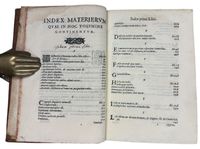
| Macro-category | Rare Books and Manuscripts |
| Subcategory | Medicine |
| Author | BRESCIANO, GIROLAMO |
| Place of printing | Venetiis |
| Publisher / Maker | apud Damianum Zenarium |
| Year | 1596 |
the persistence of classical physiology:
the endurance of Aristotelian and Galenic doctrine
at the threshold of modern science
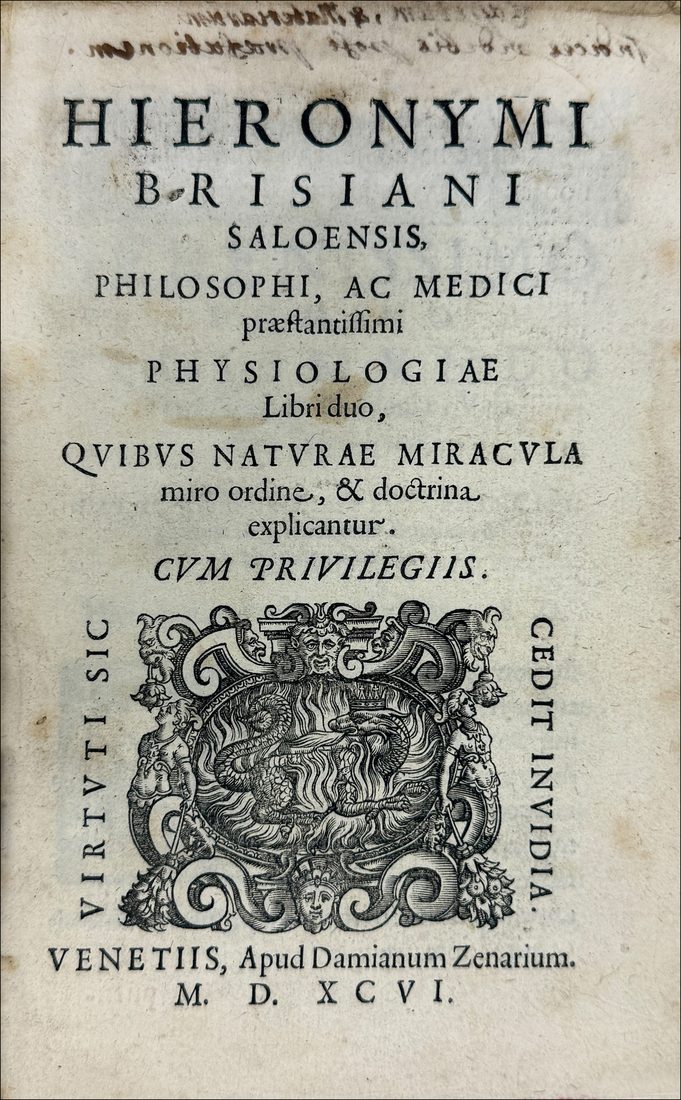
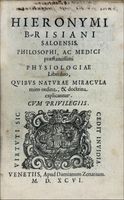
Bresciano, Girolamo. Physiologiae libri duo, quibus naturae miracula miro ordine, & doctrina explicantur. Venetiis: apud Damianum Zenarium, 1596.
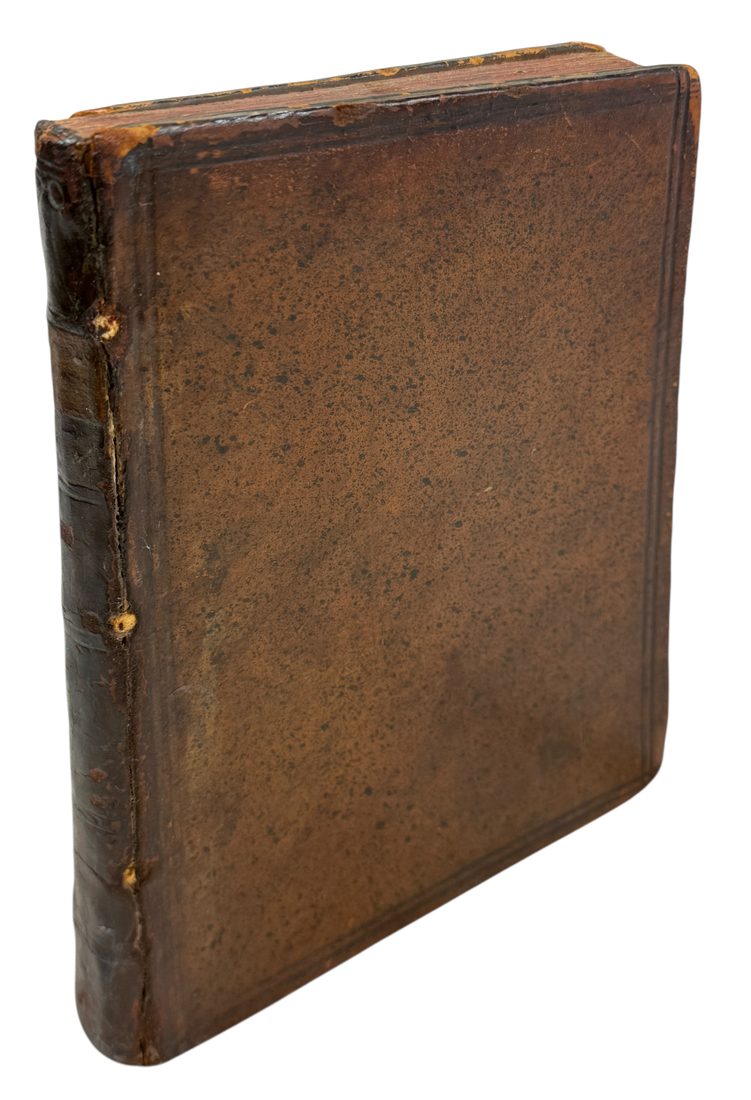
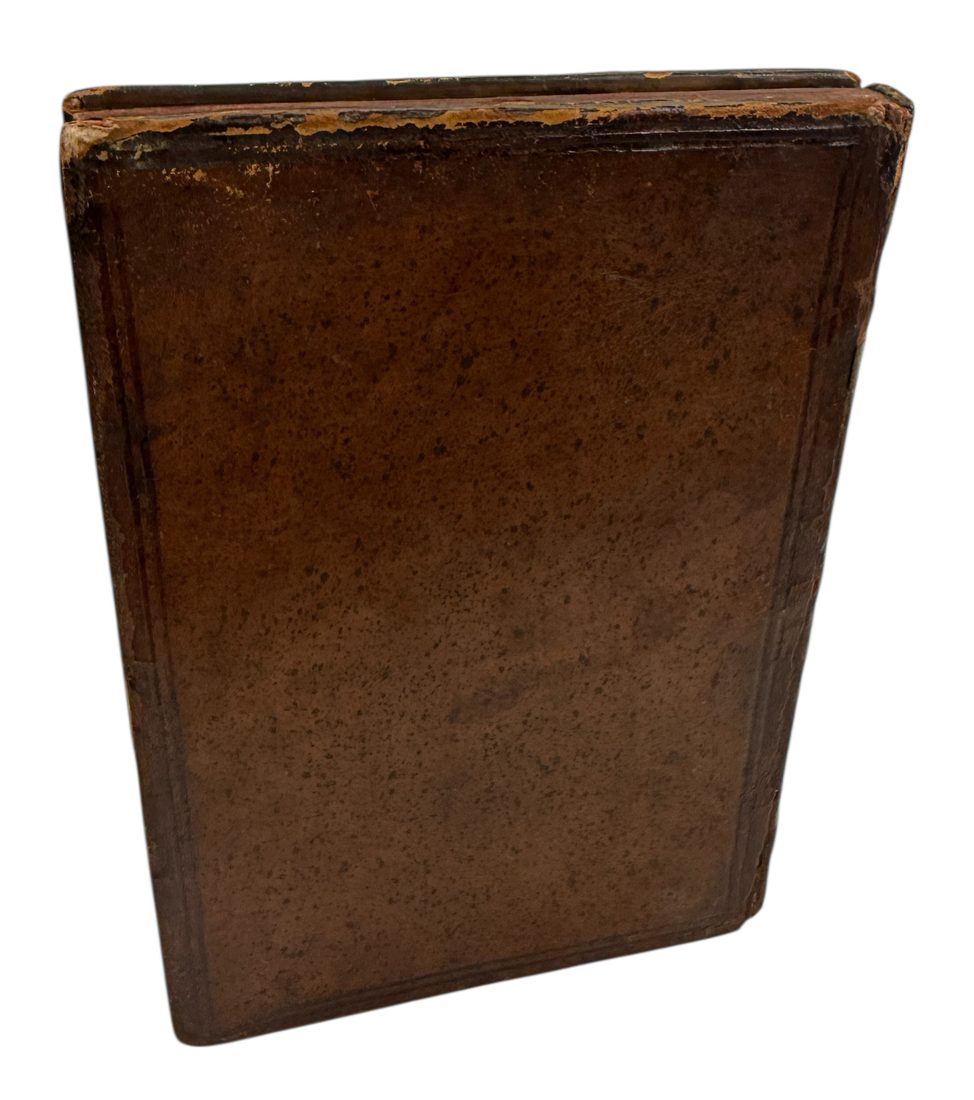
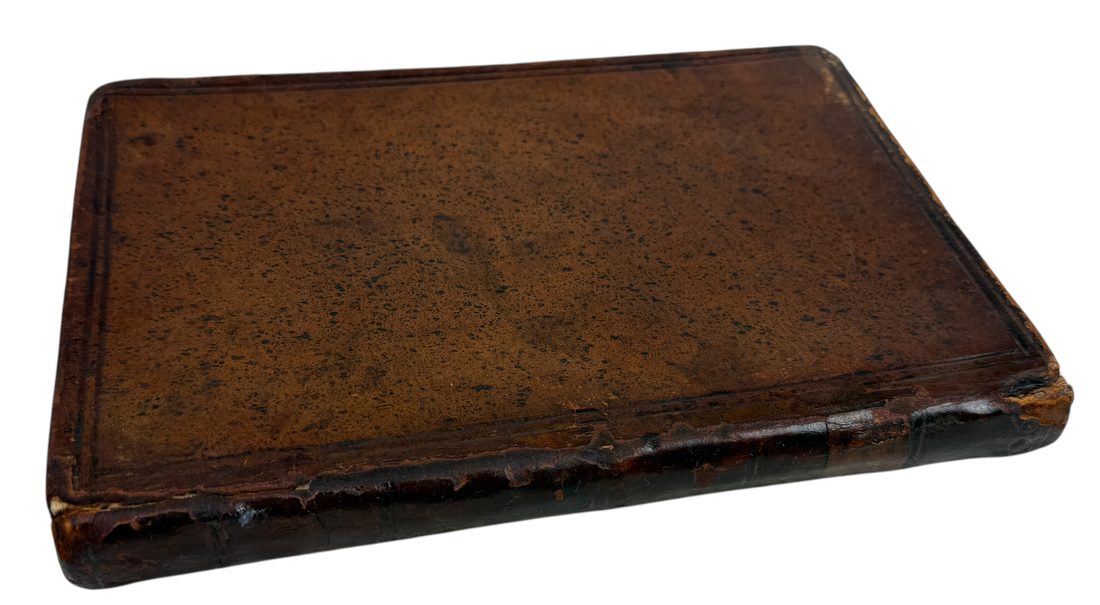
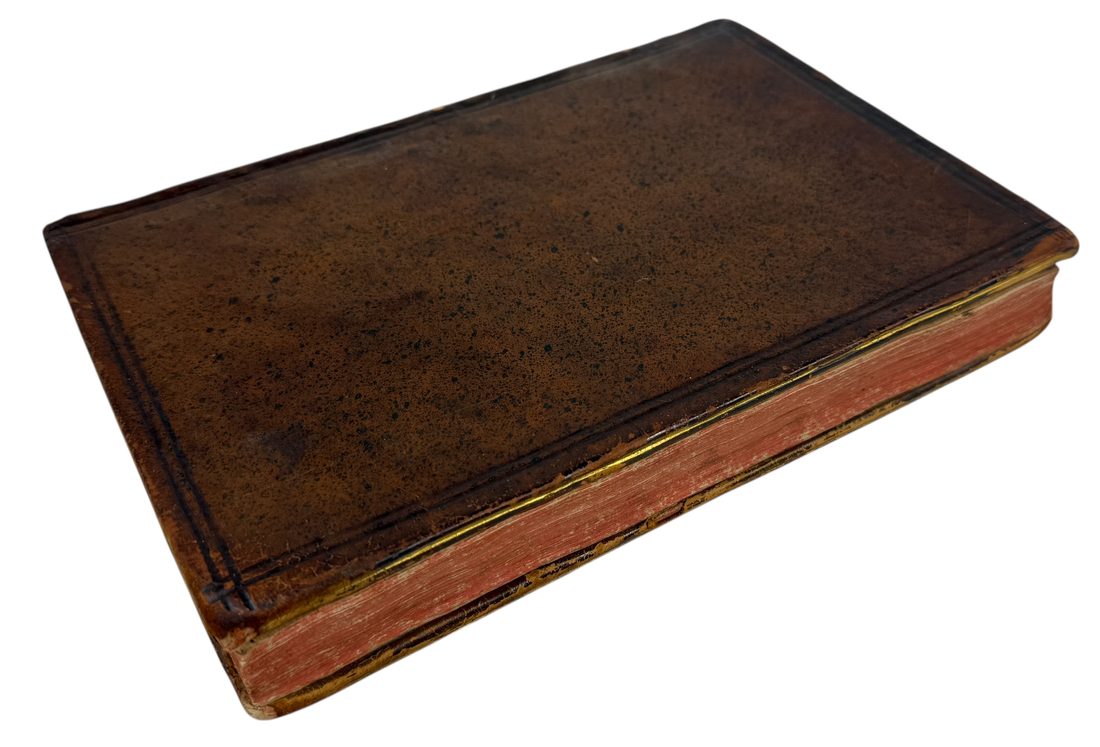
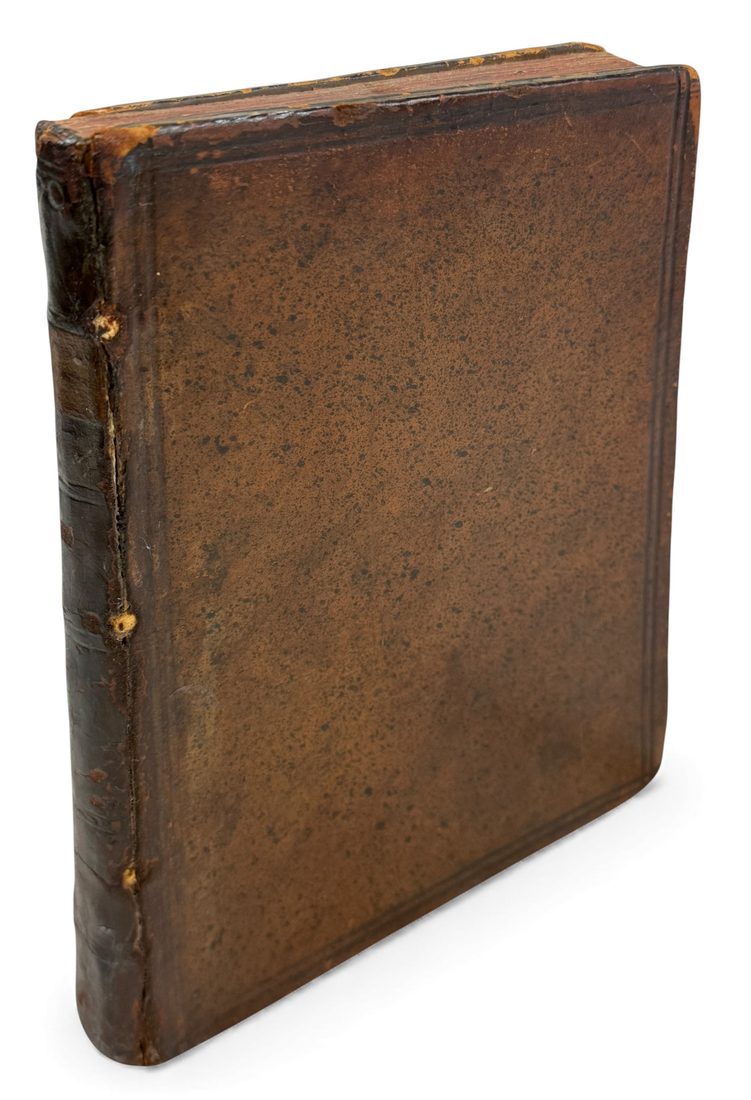
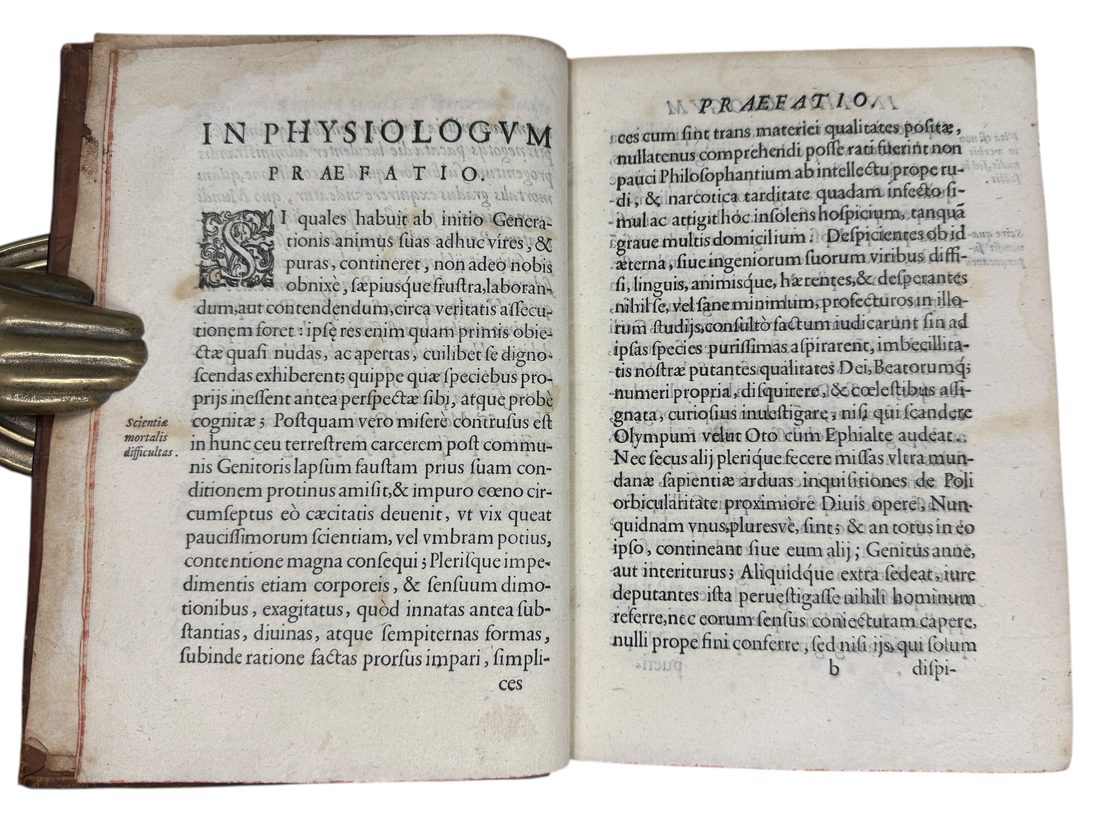
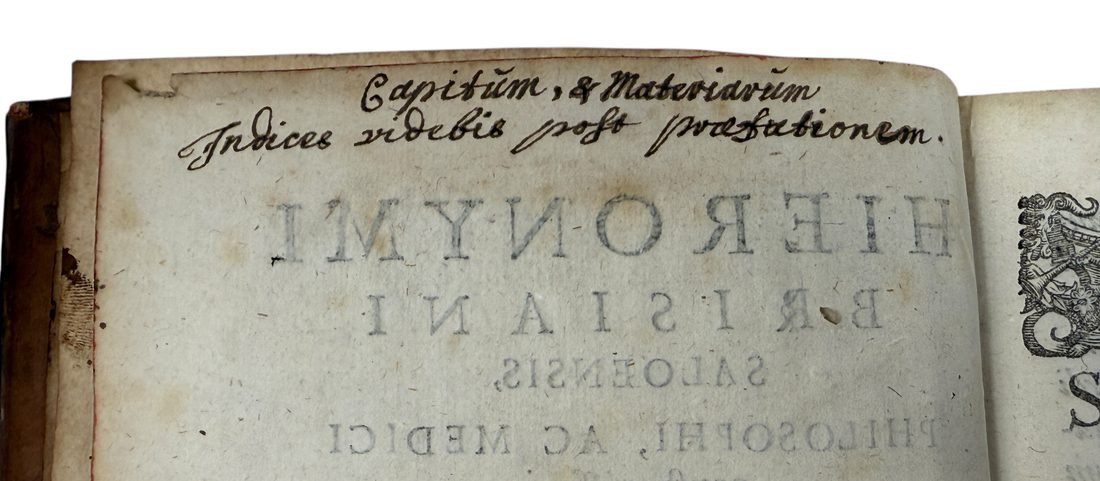
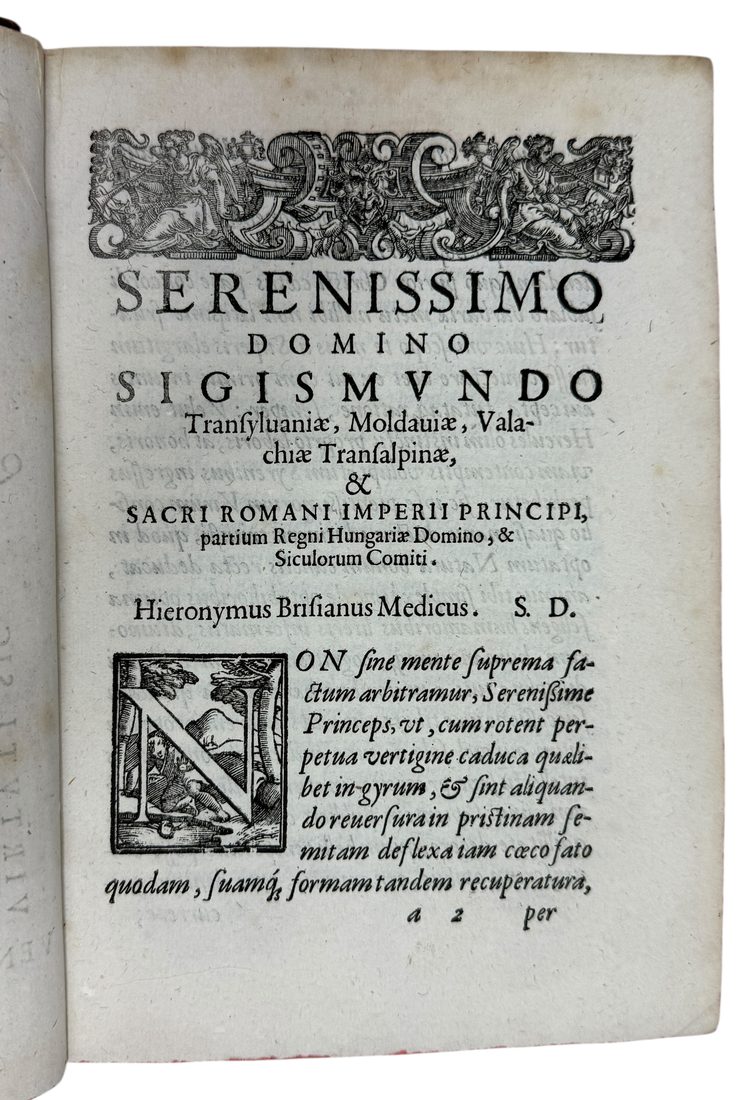
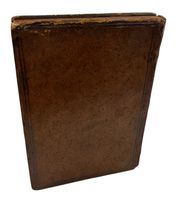
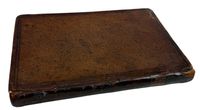
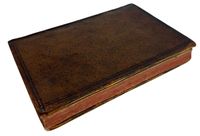
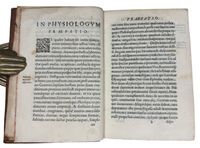
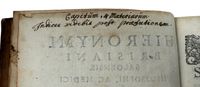
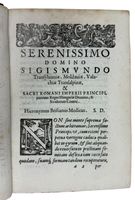
4to (200 x 140 mm), contemporary full calf, blind-tooled with double-fillet border on both boards, red sprinkled edges, plain spine with faint vestiges of raised bands, ff. [12], 108. Text in Latin, printed in roman and italic types with occasional Greek; single column throughout. Woodcut ornamental headpieces and large historiated initials. Printer’s device on title: a crowned salamander amid flames within an ornate frame bearing the motto Virtuti sic cedit invidia. Early ink notes at head of title-leaf verso. Signatures: a–c⁴ A–2D⁴.
Rare first edition of a late Renaissance compendium of physiologia, in the classical sense of natural philosophy and general physiology, divided into two books and arranged as short, interrogative quaestiones. Drawing on Aristotelian and Galenic authorities, Bresciano examines the structures, powers, and operations of nature, from the faculties of the soul and the constitution of bodies to zoological and botanical phenomena. Interwoven with these are medical commonplaces and themes of “natural magic,” such as sympathies and antipathies, treated within a dialectical framework that privileges system and order over experimentation.
Produced within the conservative Venetian-Padovan milieu of the 1590s, the work exemplifies the enduring vitality of scholastic natural philosophy at a moment when new iatro-chemical and empirical trends were emerging.
The preliminaries include the title bearing Zenaro’s salamander device, a dedicatory epistle to Sigismund Báthory, Prince of Transylvania, Moldavia, Wallachia, and of the Holy Roman Empire, framing the treatise as a restitution of sound doctrine to a world intellectually unsettled, and a concise Preface.
Book I opens with the general Prohemium Naturam esse verè, et in rebus singulis animadverti, then proceeds through a long sequence of compact quaestiones that address the four elements, qualities, mixture, generation and corruption, and the faculties of the vegetative and sensitive souls, with excursuses on nutrition, growth, sensation, and motion. Written in the Problemata style, each chapter poses a question, discusses it through authorities and reason, and concludes with a brief probatio.
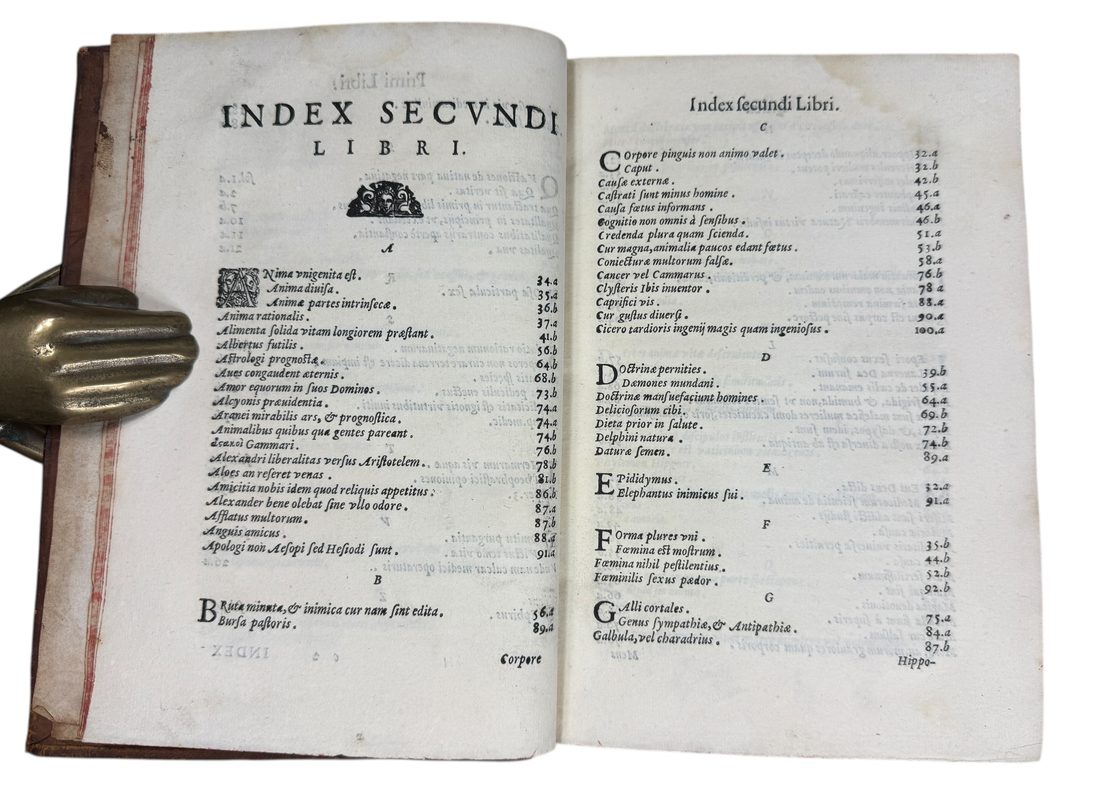
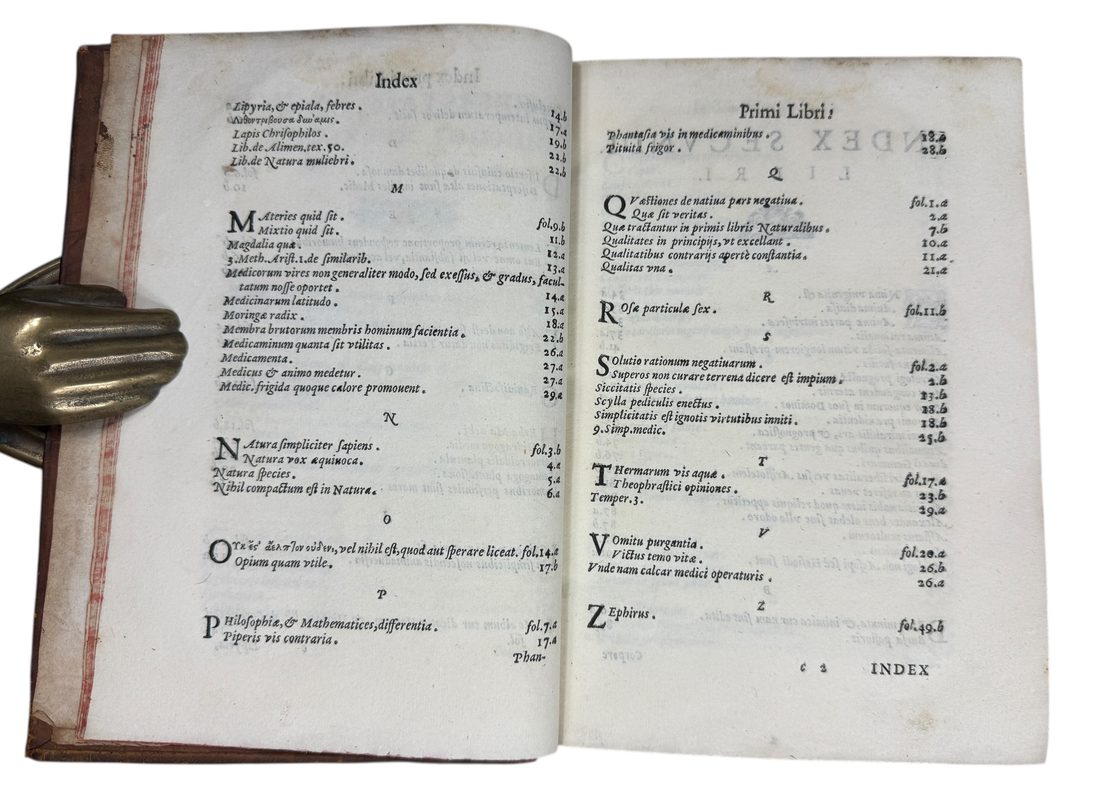
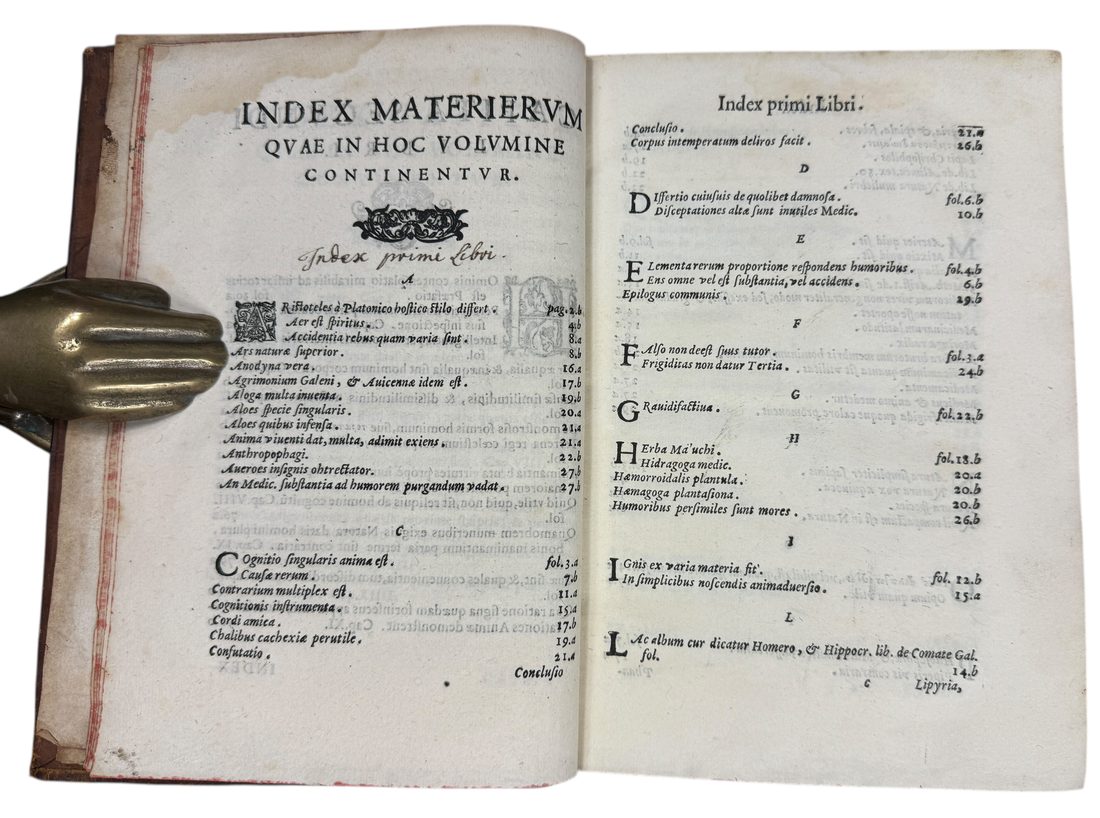
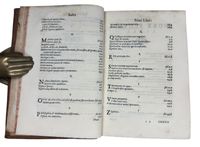
Book II begins with a separate preface headed Hominis contemplatio mirabilis ad instar totius est, signalling a shift toward anthropological inquiry. The ensuing quaestiones examine the human microcosm, complexion, stature, passions, sleep and dreams, memory, imagination, and the humoral foundations of health and disease, supplemented by zoological and botanical observations and occasional references to medical practice. Both books conclude with alphabetical indices of principal matters, underscoring the author’s programmatic insistence on ordo and pedagogical clarity.
Printed by Damiano Zenaro, a prominent Venetian printer active in scientific and philosophical texts from the 1560s to the early seventeenth century, the Physiologiae libri duo represents the conservative current of late sixteenth-century natural philosophy rooted in Aristotle and Galen. In the Veneto, particularly around the University of Padua, such treatises remained central to scholastic and medical education even as Paracelsian iatro-chemistry, mathematical natural philosophy, and empirical observation began to gain ground.
Bresciano’s emphasis on ordered exposition, doctrinal clarity, and his polemical tone against contemporary “errors” align him with the didactic and restorative ethos of traditional medicine and philosophy. The book’s sober yet elegant mise-en-page, with woodcut initials and headpieces but no illustrations, and its comprehensive indices mark it as a typical learned quarto intended for university students and literati, rather than for experimental practitioners
Girolamo Bresciano Latinized Hieronymus Brisianus Saloensis, was a physician and philosopher from Salò (Lake Garda), active in the late sixteenth century. Trained in the liberal arts and philosophy before obtaining his medical degree at Padua, he practiced in Brescia and Venice, within a conservative intellectual milieu that sought to reaffirm classical natural philosophy against emergent Paracelsian and empirical doctrines.
His small yet coherent corpus, all printed by Damiano Zenaro, reflects a consistent effort to restore order and method to the sciences and to defend Galenic orthodoxy. His Methodus scientiarum (Venice, 1588) establishes a systematic hierarchy of the sciences; the Nova medicina (Venice, 1591) is a polemical refutation of what he considered the “errors of modern physicians”; and the Physiologiae libri duo (Venice, 1596) synthesizes natural philosophy and anthropological reflection into a comprehensive account of nature and man. Collectively, these works form a didactic trilogy that seeks to preserve the rational and ordered structure of Aristotelian-Galenic thought on the eve of the scientific revolution.
Conditions: Few marks of use at binding; internally perfectly preserved.
Provenance: Editorial comment at verso of title page, Capitum, & Materiarum Indices videbis post praefactionem (“The tables of contents and subjects appear after the preface”).
References: G. Mazzuchelli, Gli scrittori d'Italia: cioè notizie storiche e critiche intorno alle vite e agli scritti dei letterati italiani, Brescia: Bossini, 1753; P. Brunati, Dizionarietto degli uomini illustri della Riviera di Salò, Salò: Tipografia Giordani, 1837; Ateneo Di Salò. Catalogo cinquecentine, no. 171: entry for Bresciano, Physiologiae libri duo, with collation a–c⁴ A–Z⁴ Aa–Dd⁴, impronta and inventory note: pdf, Salò 2017: pp. 12–13.