De Caloris fontium medicatorum causa
| Macro-category | Rare Books and Manuscripts |
| Subcategory | Medicine |
| Author | SOLENANDER (Reinier) |
| Place of printing | Lione |
| Publisher / Maker | Jean-François de Gabiano |
| Year | 1558 |
First Edition of an important treatise
on thermal hot waters and their use in medicine
bound with
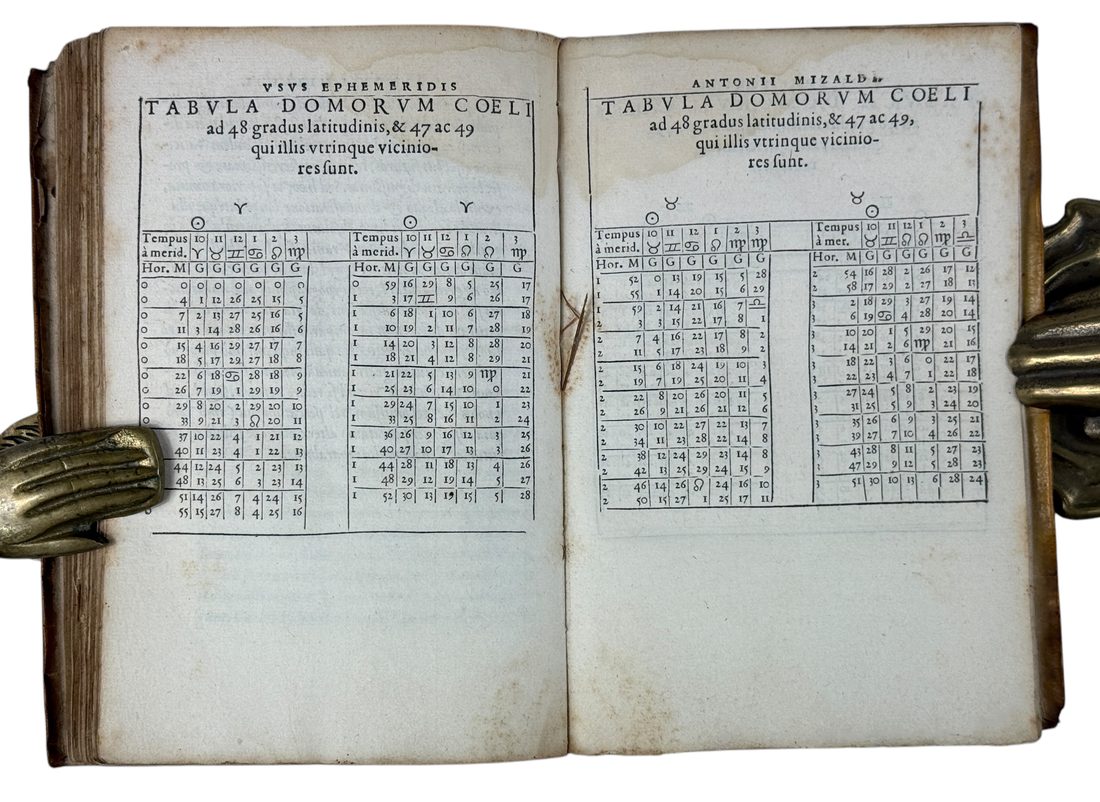
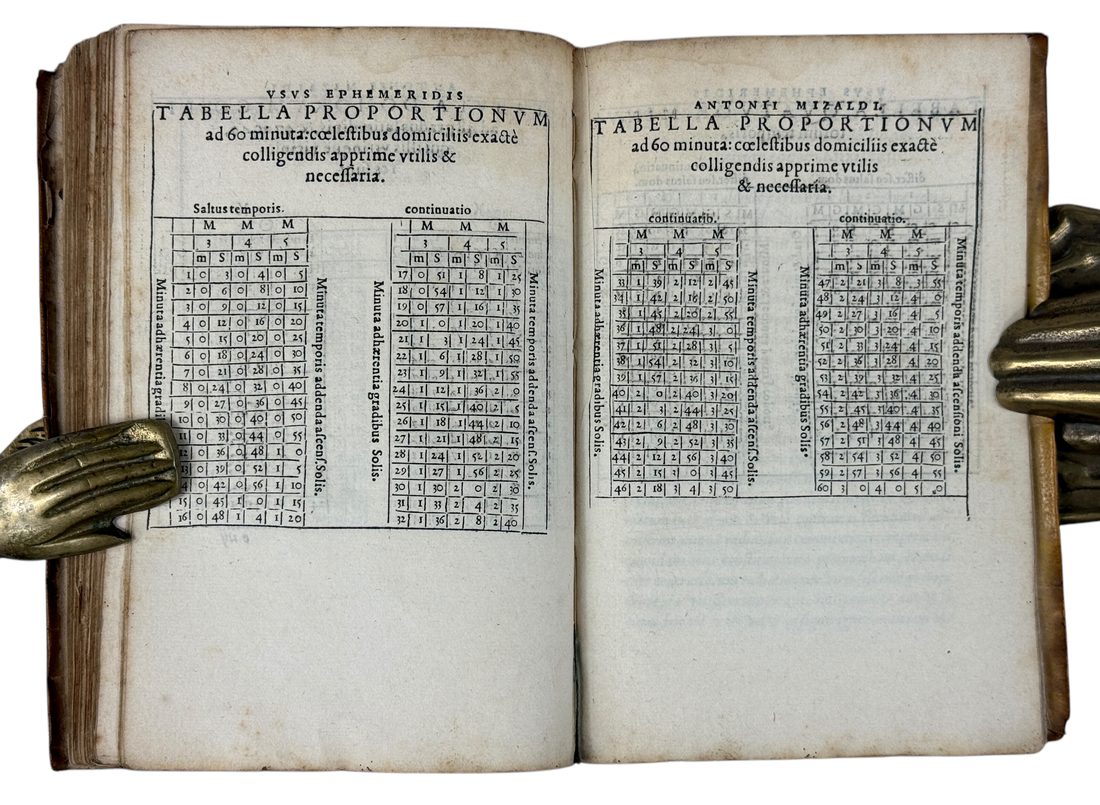
First and only edition of the practical guide to celestial ephemerides and their use in astronomy and astrology
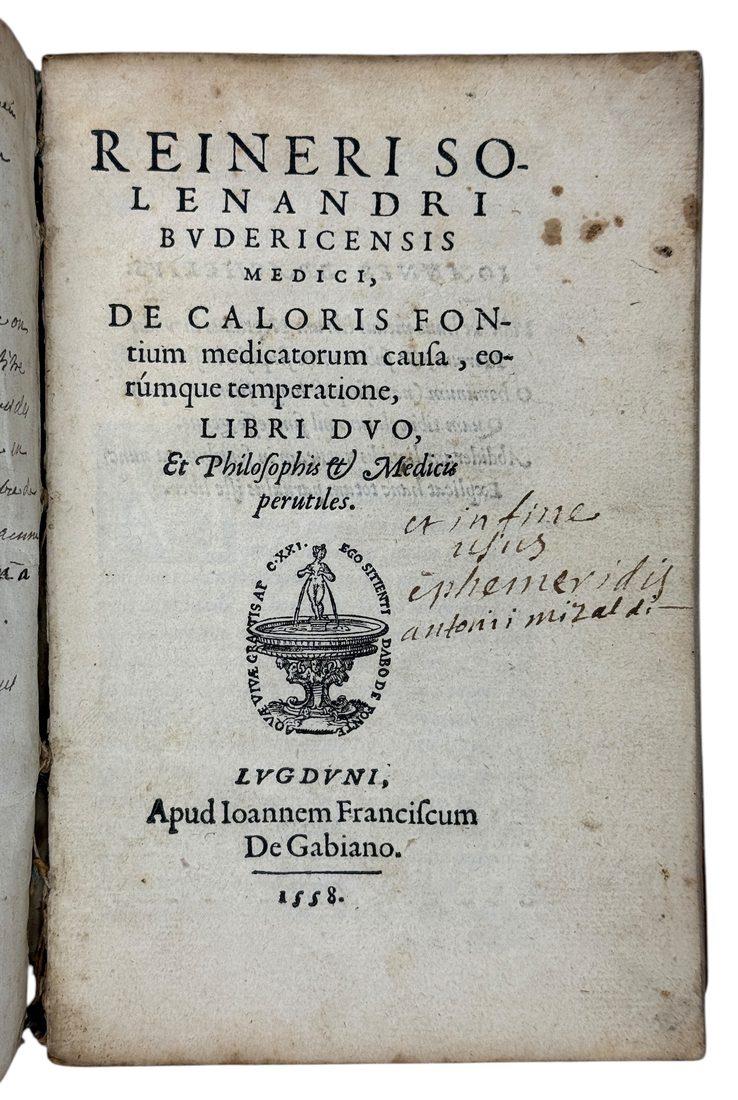
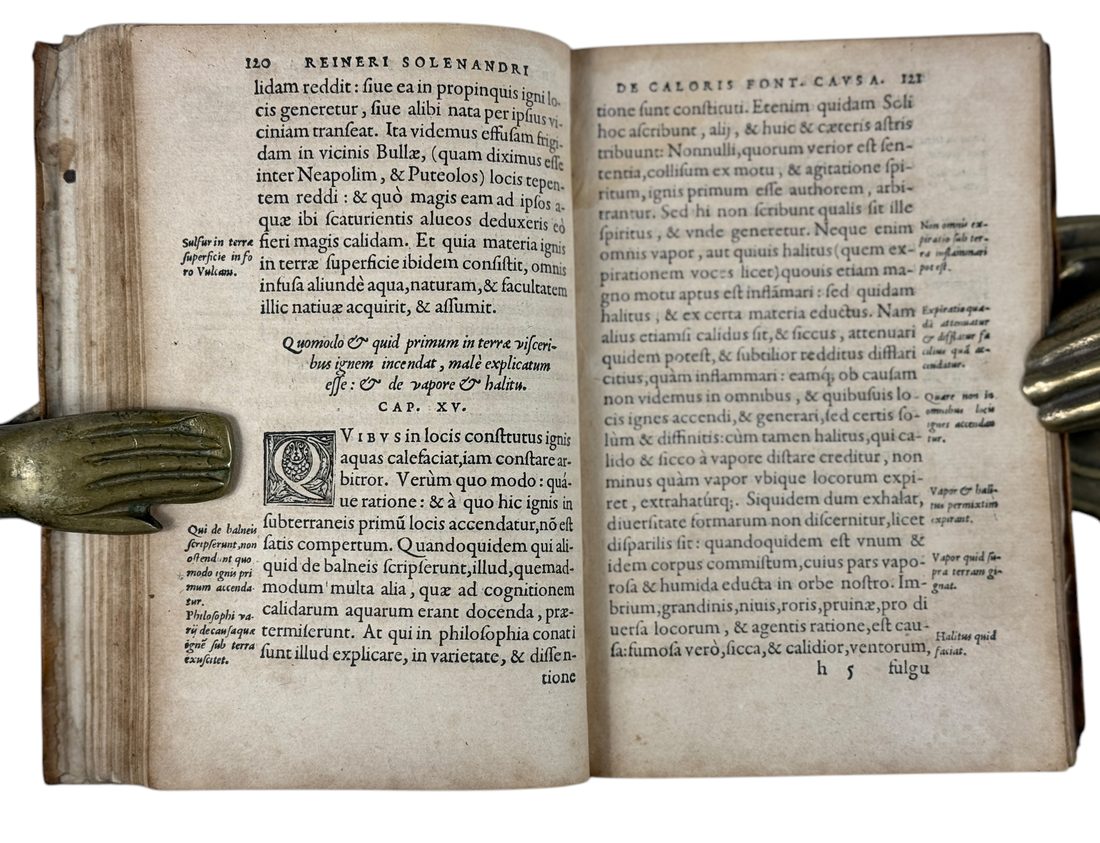
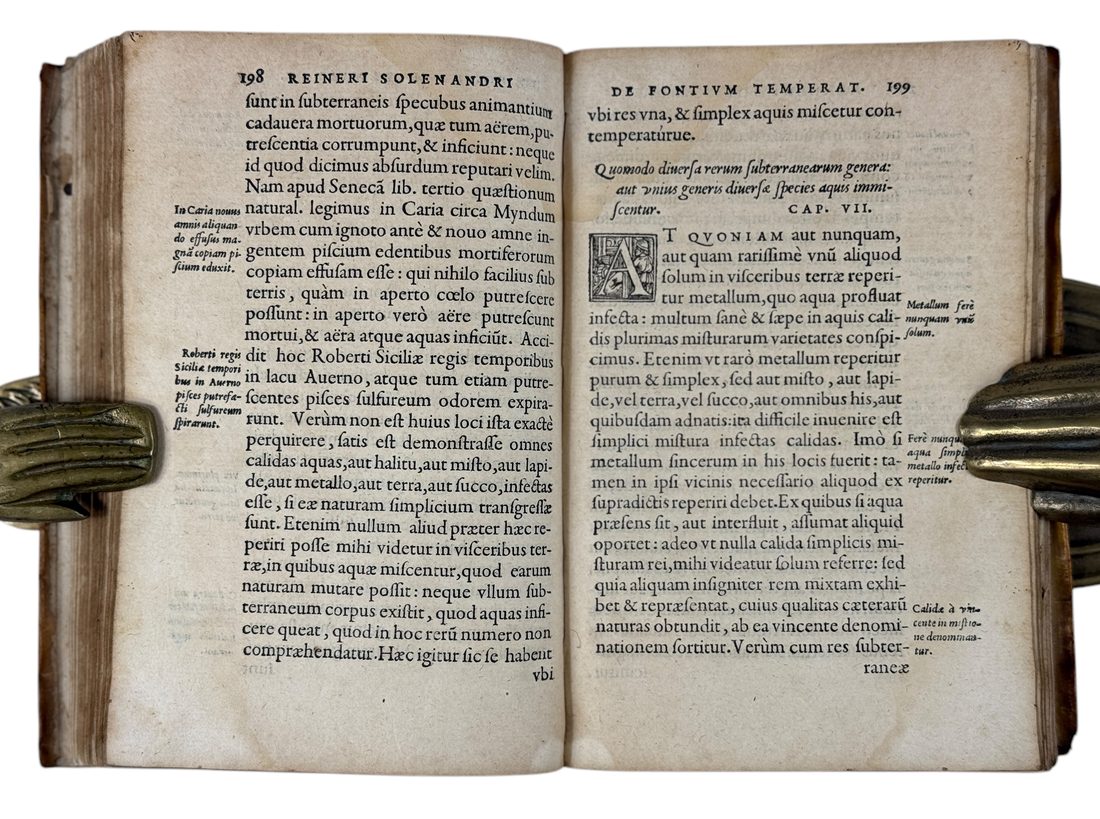
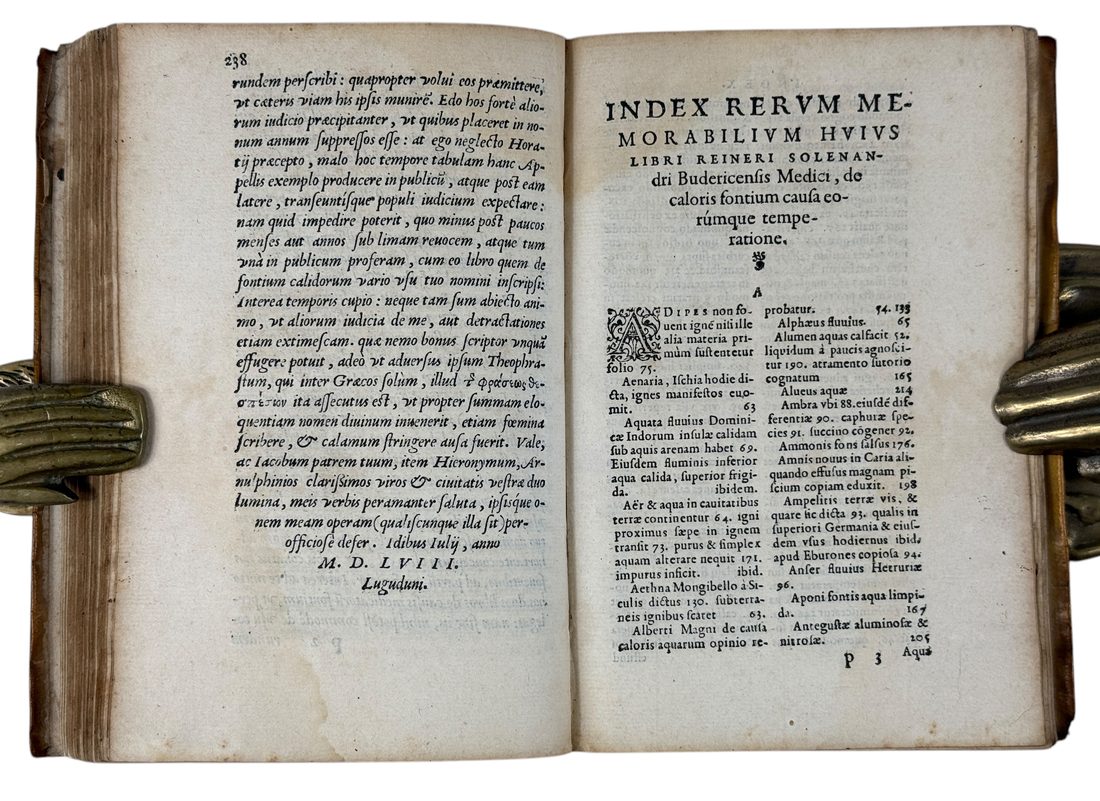
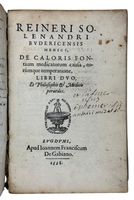
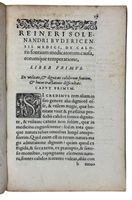
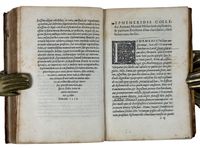
[Medicine] Solenander, Ranierus. De Caloris Fontium medicatorum causa, eorumque temperatione, Libri Duo. Et Philosophis et Medicis perutiles. Lugduni (Lyon), Apud Ioannem Franciscum De Gabiano, 1558.
[bound with:]
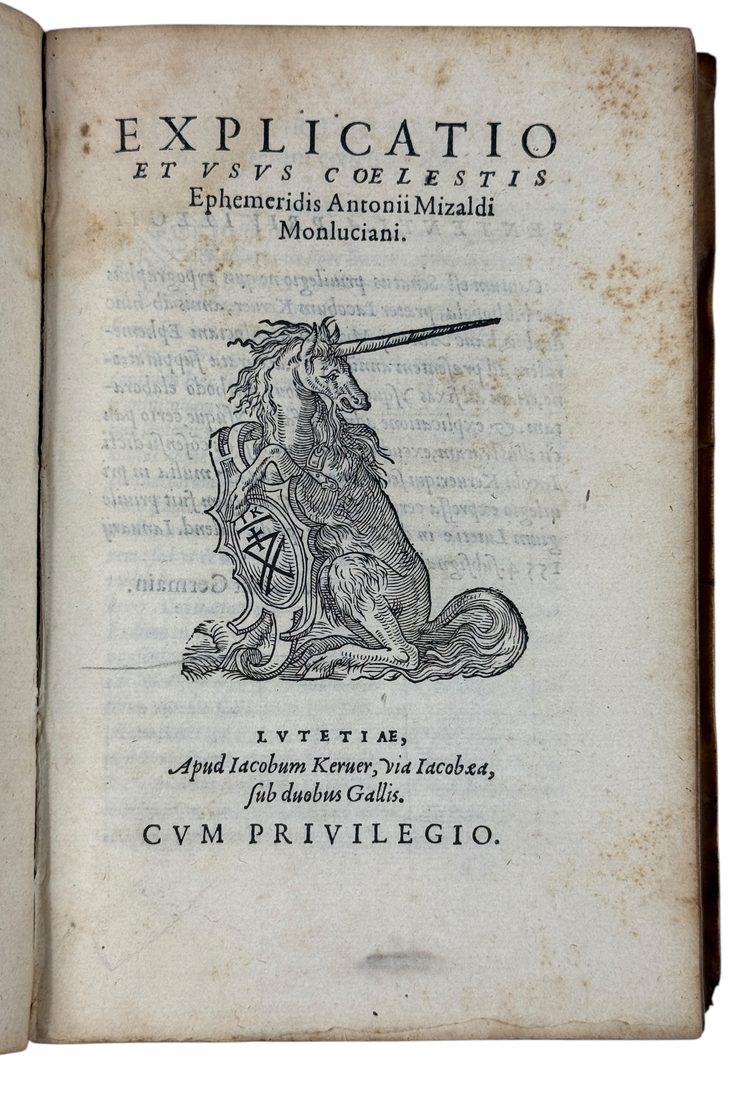
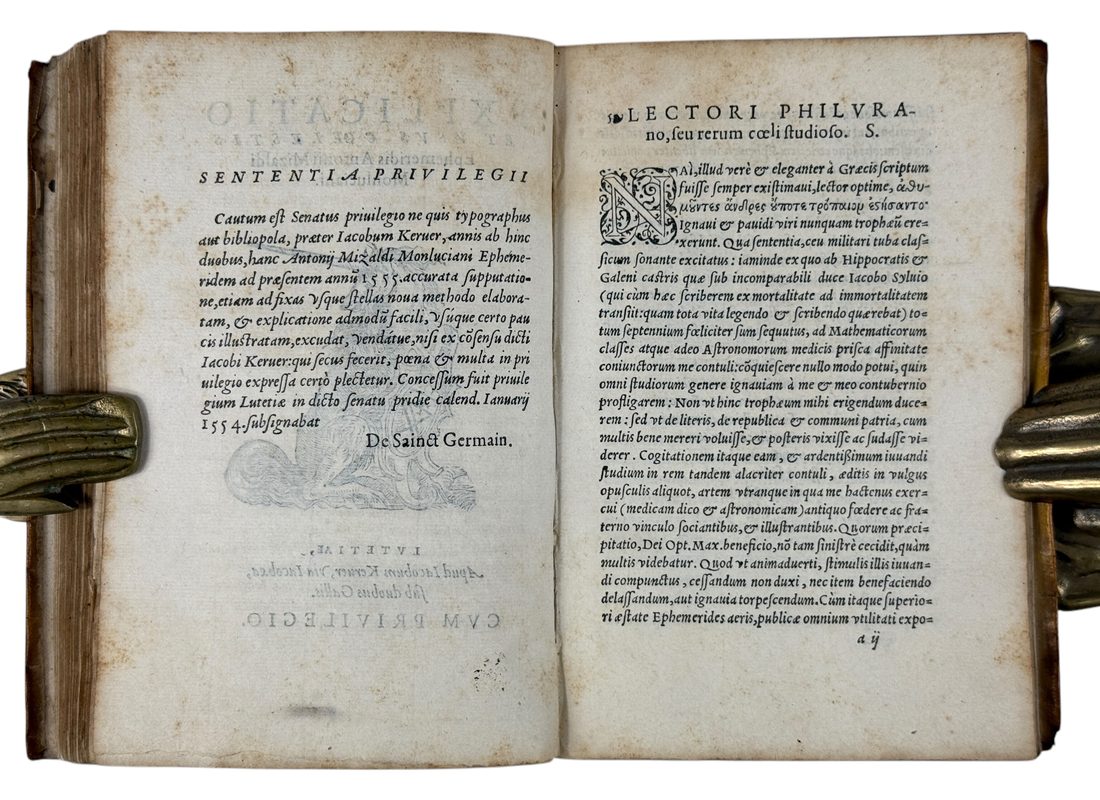
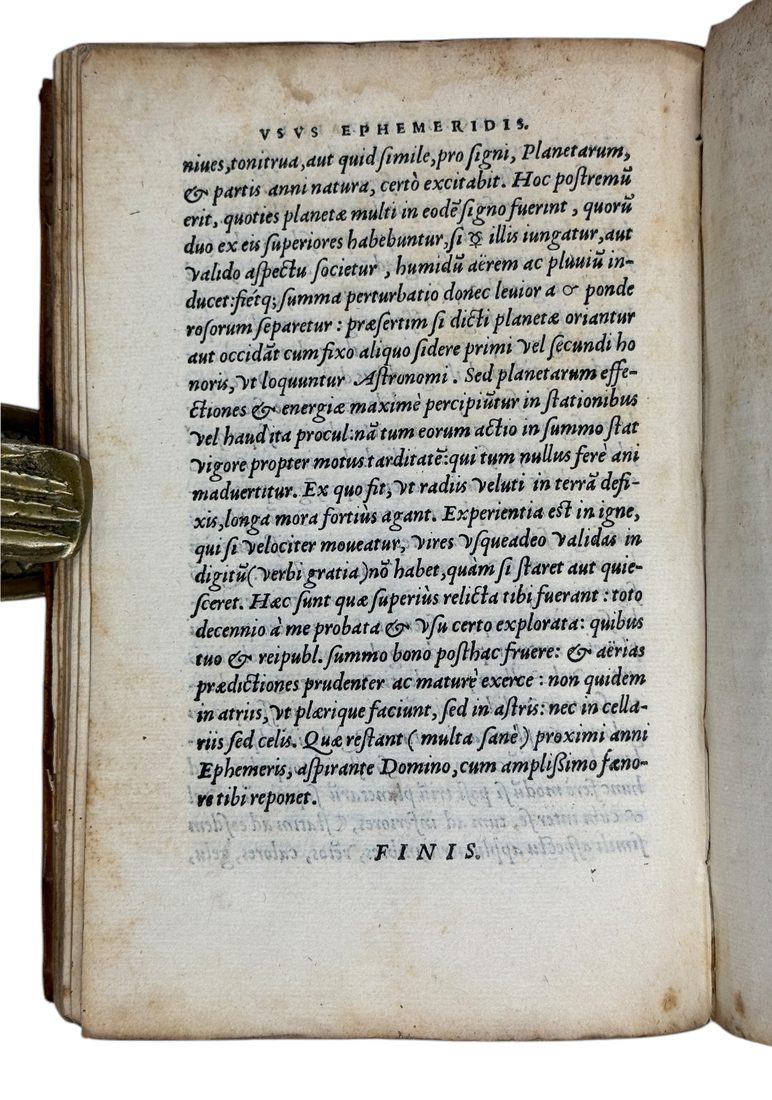
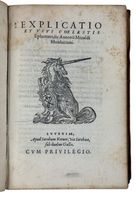
[Astrology] Mizaldus Monlucianus, Antonius (Antoine Mizaud). Explicatio et usus coelestis ephemeridis Antonii Mizaldi Monluciani. Lutetiae (Paris), Apud Iacobum Keruer, via Iacobea, sub duobus Gallis, [1555].
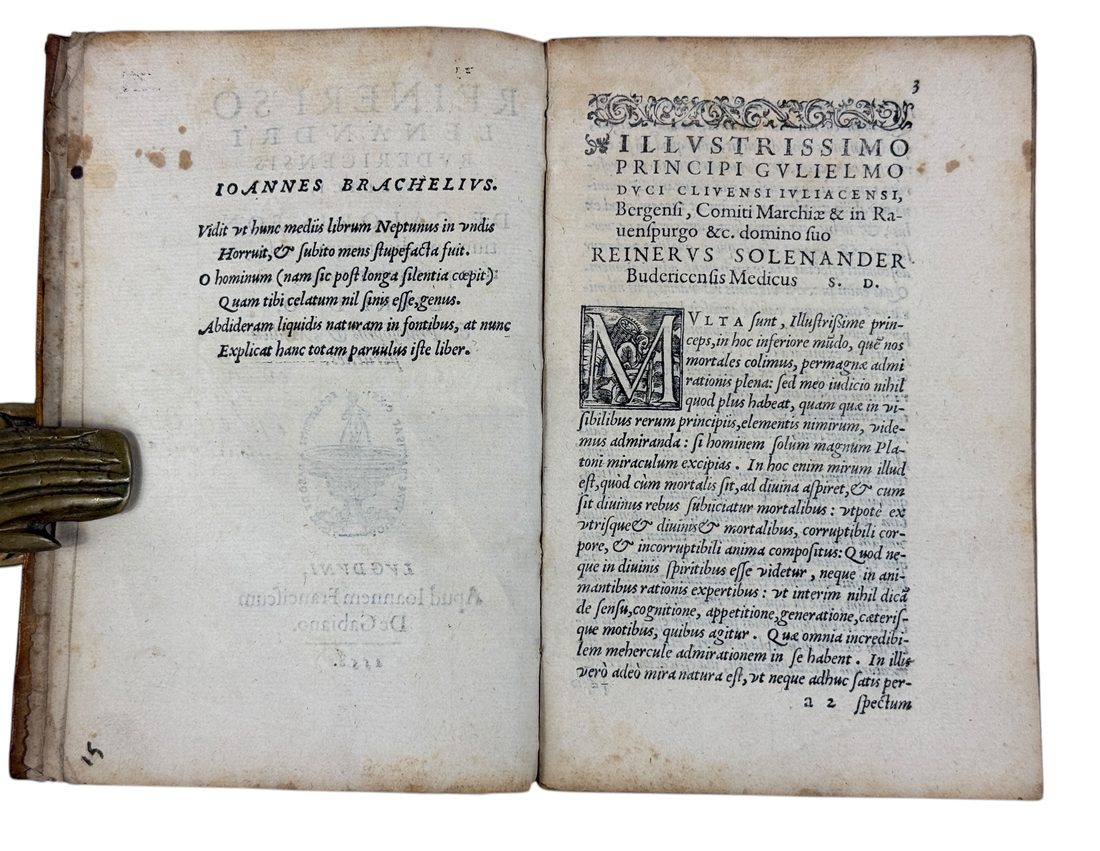
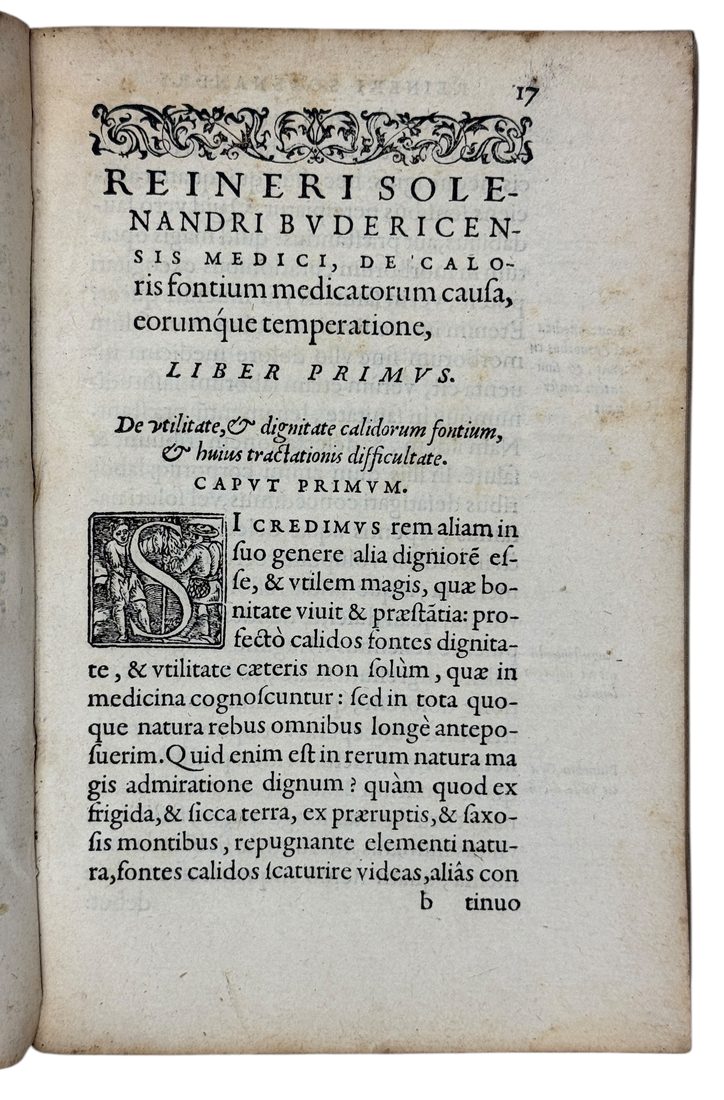
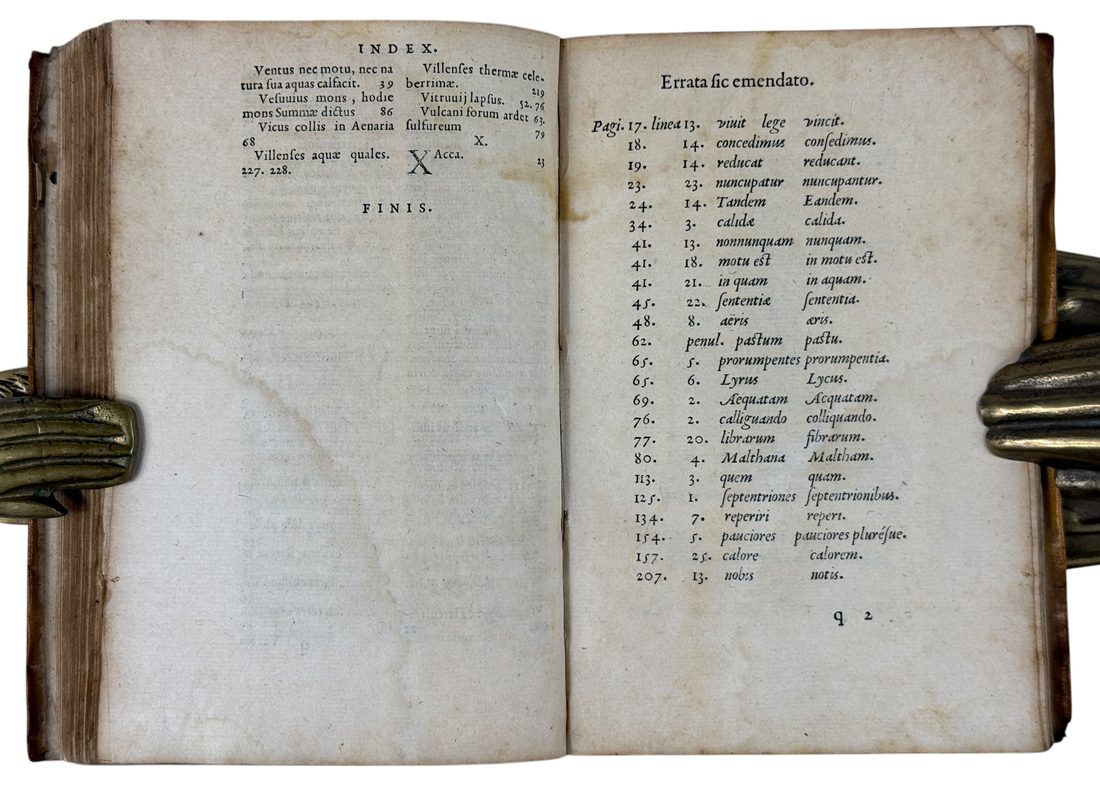
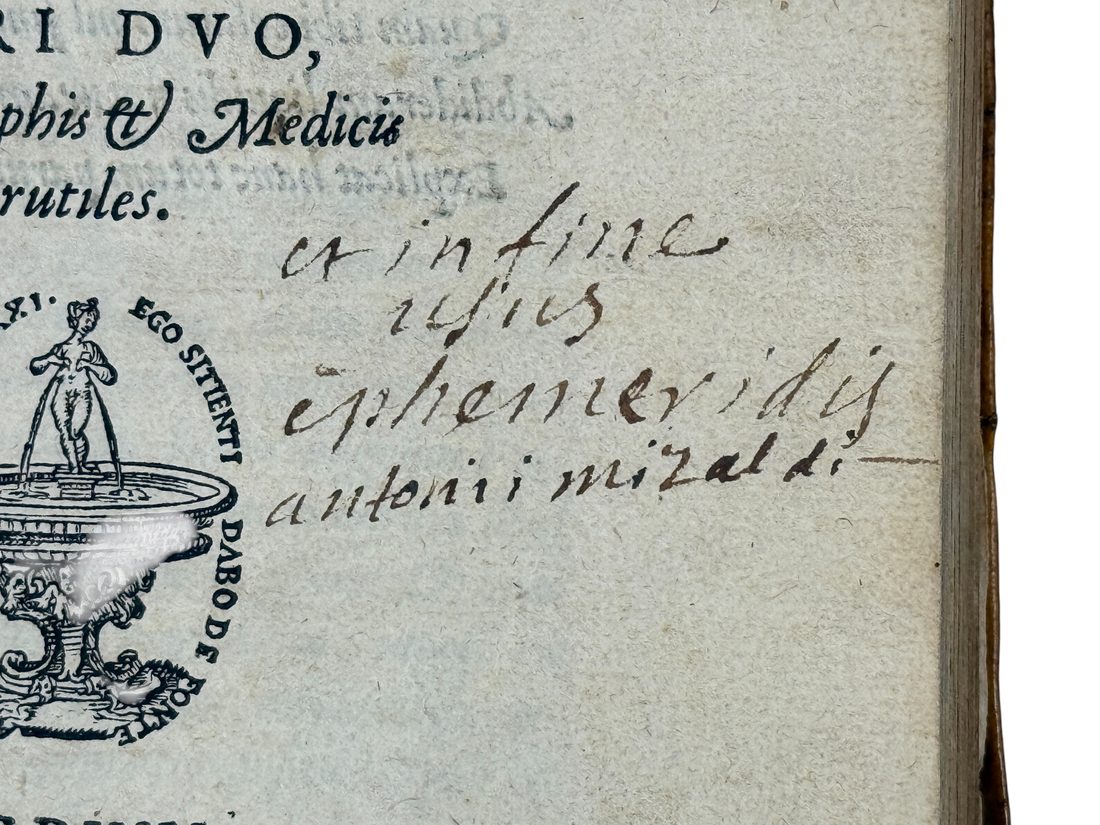
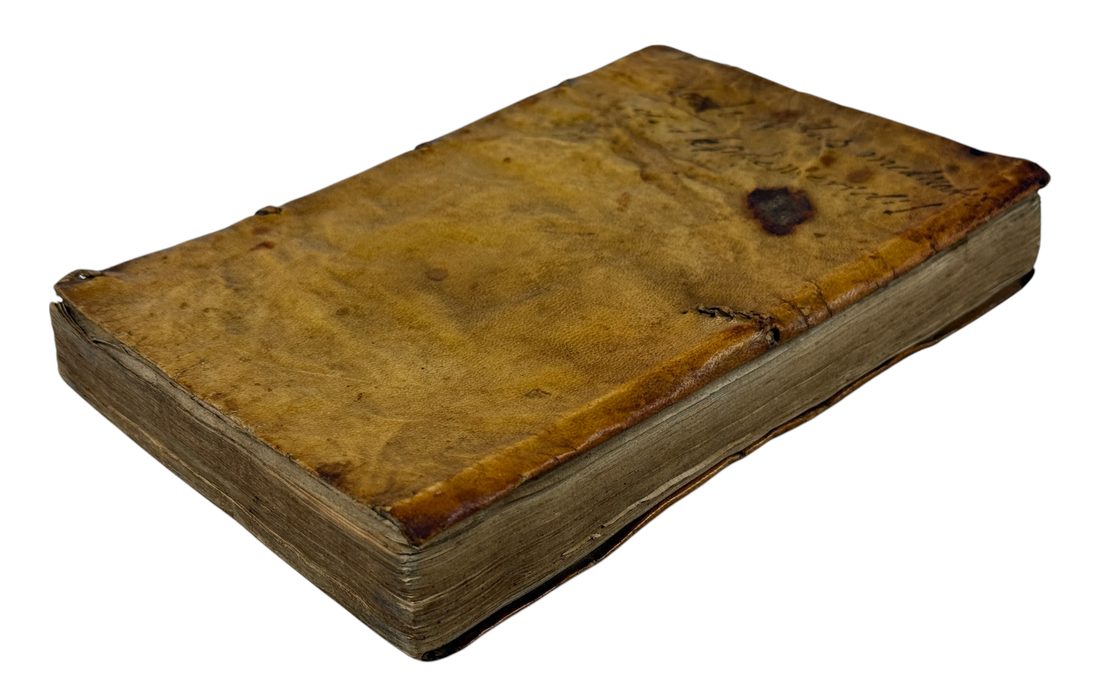
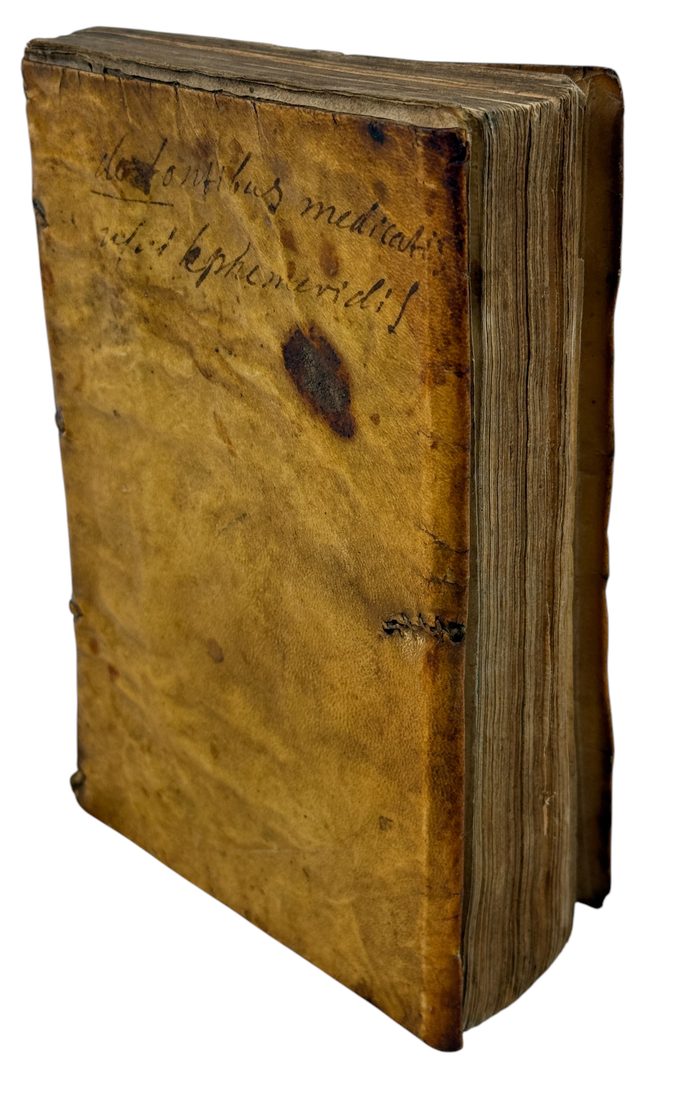
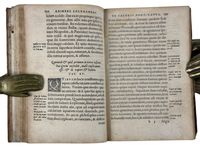
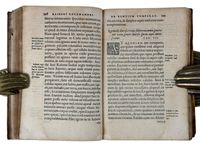
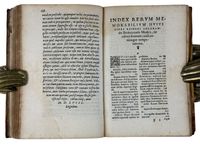
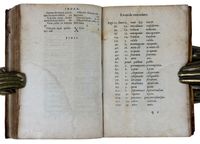
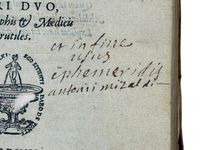
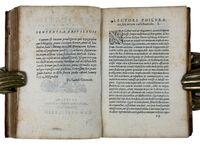
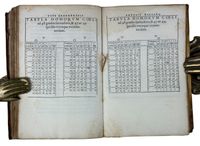
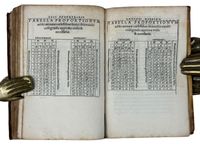
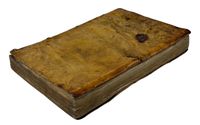
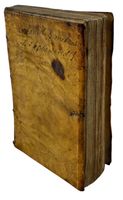
8vo (170 x 110 mm), contemporary limp vellum binding with yapp edges (small tear at the lower part of spine), handwritten title in sepia ink on spine with three raised bands, handwritten note at front board, pp. 238 [pages 178–187 omitted in pagination], [16, last is blank], printer’s device (L7193) on title page, a fountain with motto Ego sitienti dabo de fonte aquae vivae gratis, woodcut initials and ornaments, Roman and Italic typefaces, for volume 1; ff [40], 16 tables along the text, Kerver’s unicorn device on title for volume 2. Signatures vol 1: a–p⁸ q⁴; vol 2: a–e⁸.
First edition of this rare medical treatise by Ranierus Solenander, the distinguished physician and scholar of the Renaissance. In De Caloris Fontium Medicatorum Causa, Eorumque Temperatione, Solenander investigates the natural causes behind the heat of medicinal springs and explores methods for regulating their temperature for therapeutic applications. Drawing upon classical authorities such as Hippocrates and Galen, as well as contemporary scientific thought, he provides a thorough analysis of the mineral compositions and healing properties of thermal waters. The author supposes that this temperature is due to a central fire burning beneath the Earth's crust.
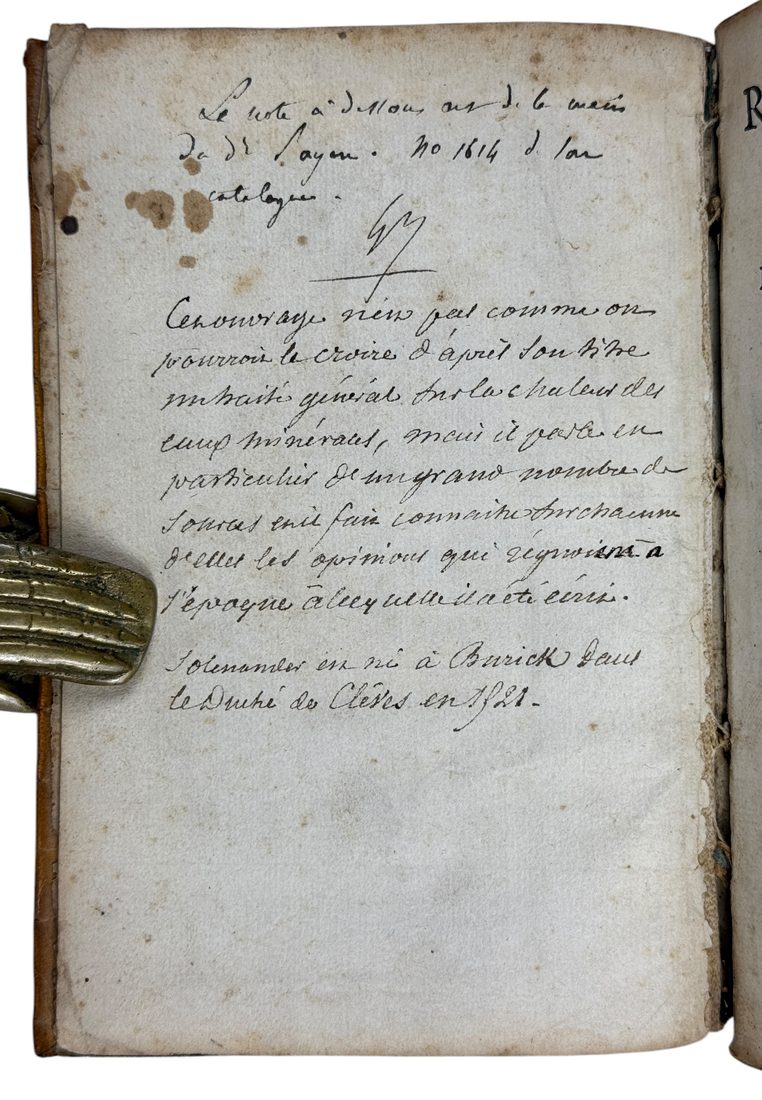
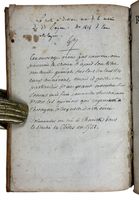
Moreover, as stated in the handwritten note at front flyleaf: “This work is not, as one might believe from its title, a general treatise on the warmth of mineral waters, but rather deals specifically with a large number of springs made known by Arckmann, along with the opinions he expressed when they were communicated to him”.
This work is significant for its early contribution to the fields of geothermal science and hydrotherapy. It reflects the intellectual milieu of the time, characterized by a burgeoning interest in natural philosophy and a shift toward empirical observation and experimentation in medicine.
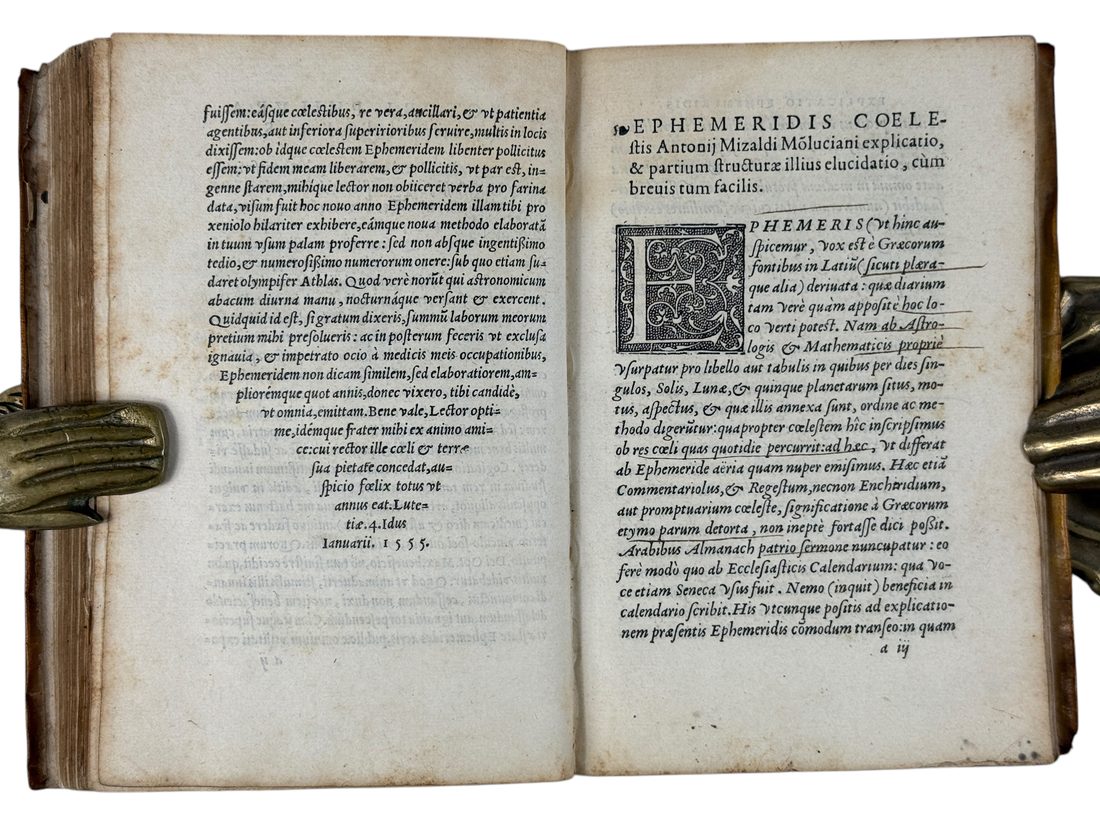
The rare treatise about astronomy and astrology by Antoine Mizauld, Explicatio et usus coelestis ephemeridis, is a 16th-century work that provides a comprehensive explanation and practical guide to celestial ephemerides, tables listing the positions of celestial bodies at regular intervals, essential for astronomical observations and astrological predictions.
In this treatise, Mizauld elucidates the structure and use of these tables, offering insights into their application and providing detailed methodologies for calculating the positions of celestial bodies, aiding in astronomical observations and maritime navigation.
In the context of astrology, Mizauld illustrates how to interpret planetary positions to predict influences on human lives.
In relation to navigation, the work underscores the utility of ephemerides for determining geographical position in the open sea. Mizauld describes methods for using stellar and planetary positions as references for navigation, highlighting the importance of astronomical instruments for determining latitude and longitude.
Reiner Solenander (1524–1601), originally named Reiner Gathmann, was a distinguished German physician and scholar of the 16th century. Born in Büderich, near Wesel, he pursued his education in medicine and philosophy at the University of Leuven, followed by advanced studies in Bologna, Pisa, Rome, and Naples, supported by a stipend from Duke Wilhelm III of Jülich-Cleves-Berg. During his time in Italy, Solenander engaged in the contemporary medical debates, notably aligning with Giovanni Argenterio in challenging the prevailing Galenic doctrines, as evidenced in his 1556 publication Apologia qua Iulio Alexandrino respondetur pro Argenterio.
His interest in balneology led him to study the therapeutic properties of thermal springs, culminating in his 1558 work De caloris fontium medicatorum causa, eorumque temperatione libri duo, which examined the causes and regulation of heat in medicinal springs. Upon returning to Germany, Solenander served as a court physician to Duke Wilhelm V in Düsseldorf, where he collaborated with fellow physician Johann Weyer. His tenure at court was marked by significant medical contributions, including the successful treatment of Duke Wilhelm's post-stroke condition through dietary interventions and the alleviation of cartographer Gerhard Mercator's eye ailment using the herb Euphrasia.
In his later years, Solenander compiled his extensive clinical experiences into the comprehensive Consiliorum Medicinalium sectiones quinque, published in 1596, which detailed 133 medical cases ranging from nephrolithiasis to melancholia, reflecting the medical knowledge and therapeutic practices of his era. Solenander’s works are notable for their empirical approach and critical engagement with traditional medical theories, positioning him as a progressive figure in the medical landscape of the Renaissance.
Antoine Mizauld (1510–1578), also known as Antonio Mizauld or Antoninus Mizaldus, was a prominent French physician, astrologer, and astronomer of the Renaissance period. Born in Montluçon, he pursued medical studies in Paris, where he became a professor of medicine and served as the personal physician and astrologer to Marguerite de Valois. A close associate of Oronce Finé, Mizauld was deeply engaged in the scientific discourse of his time, particularly in the fields of meteorology, botany, and astronomy.
His scholarly contributions include Phaenomena, sive aeria Ephemerides (1546), a pioneering work in meteorology that offered methods for weather prediction based on empirical observations, marking a departure from the Aristotelian meteorological framework. In De hortensium arborum insitione opusculum (1560), he explored advanced techniques in horticulture, specifically the grafting of fruit trees, reflecting the era’s burgeoning interest in botanical sciences. Mizauld's Centuriae XII. Memorabilium utilium, ac iucundorum in aphorismos arcanorum omnis generis locupletes (1566) is a compendium of twelve hundred aphorisms encompassing natural curiosities and medical knowledge, indicative of the Renaissance’s blend of empirical inquiry and mystical thought. His works were widely disseminated and translated, underscoring his influence on contemporary scientific thought and the broader intellectual milieu of 16th-century Europe.
Conditions: Few marks of use, light waterstain on upper part of central quires, lower part of spine missing; overall, a good copy, in its contemporary binding.
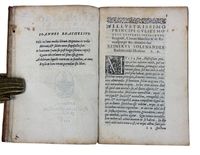
Provenance: 1. Handwritten catalogue note at verso of front flyleaf. 2. Handwritten later comment explaining the content of the first work at verso of front flyleaf. 3. Handwritten comment introducing the second work at title page.
References: Durling, n°4236.