Experiences sur le principe de vie




| Macro-category | Rare Books and Manuscripts |
| Subcategory | Medicine |
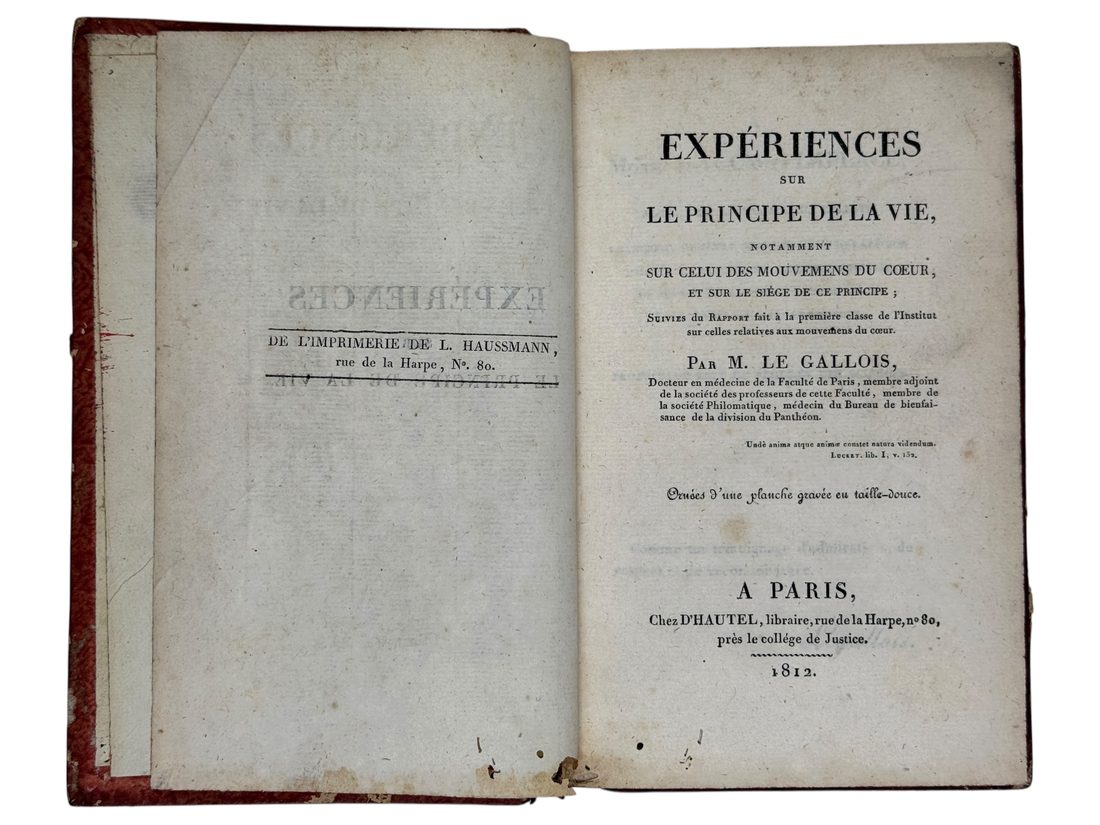
| Author | LE GALLOIS, Cesar Julien Jean |
| Place of printing | Paris |
| Publisher / Maker | D'Hautel |
| Year | 1812 |
experimental physiology at the dawn of the nineteenth century
Legallois and the search for the principle of life:
life, respiration, and cardiac motion
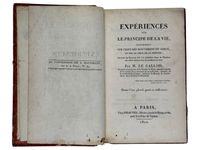
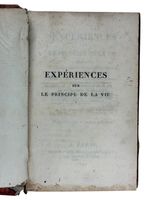
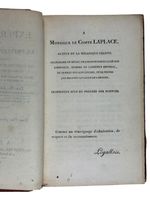
Legallois, César Julien Jean. Expériences sur le principe de vie, notamment sur celui des mouvements du cœur, et sur le siège de ce principe, suivies du rapport fait à la première classe de l’Institut sur celles relatives aux mouvements du cœur. Paris: Chez D’Hautel, libraire, rue de la Harpe, no. 80, près le Collège de Justice, 1812.
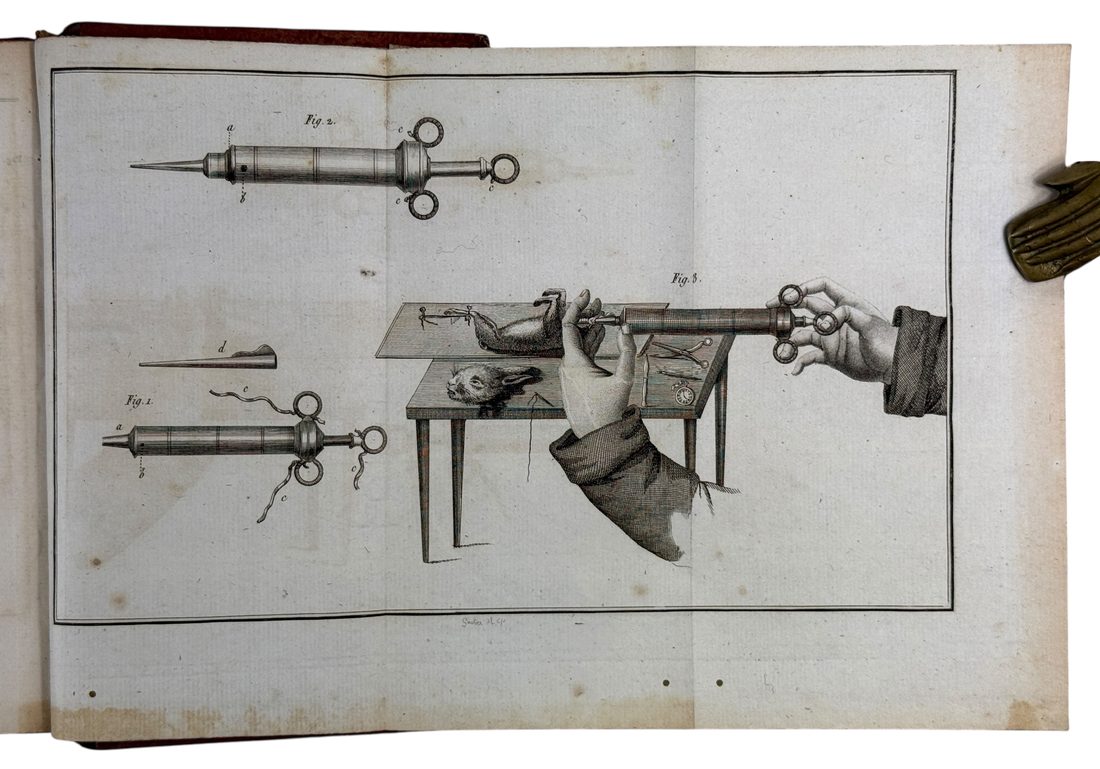
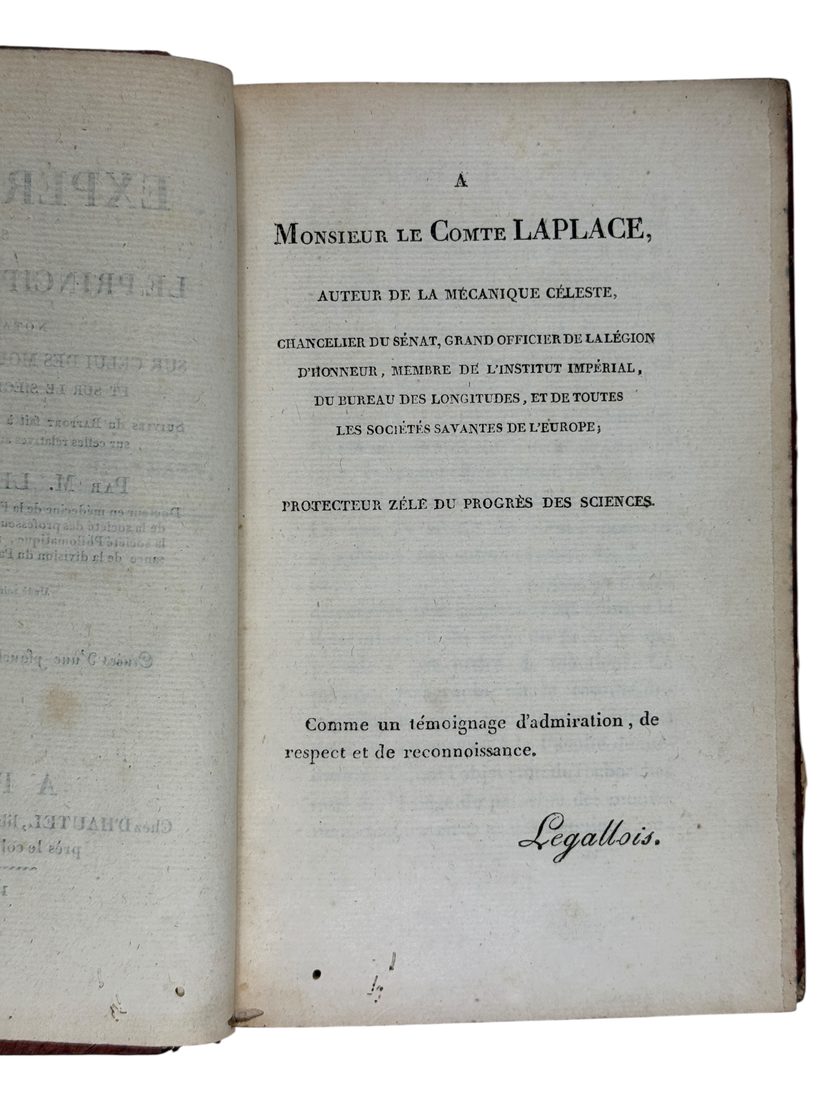
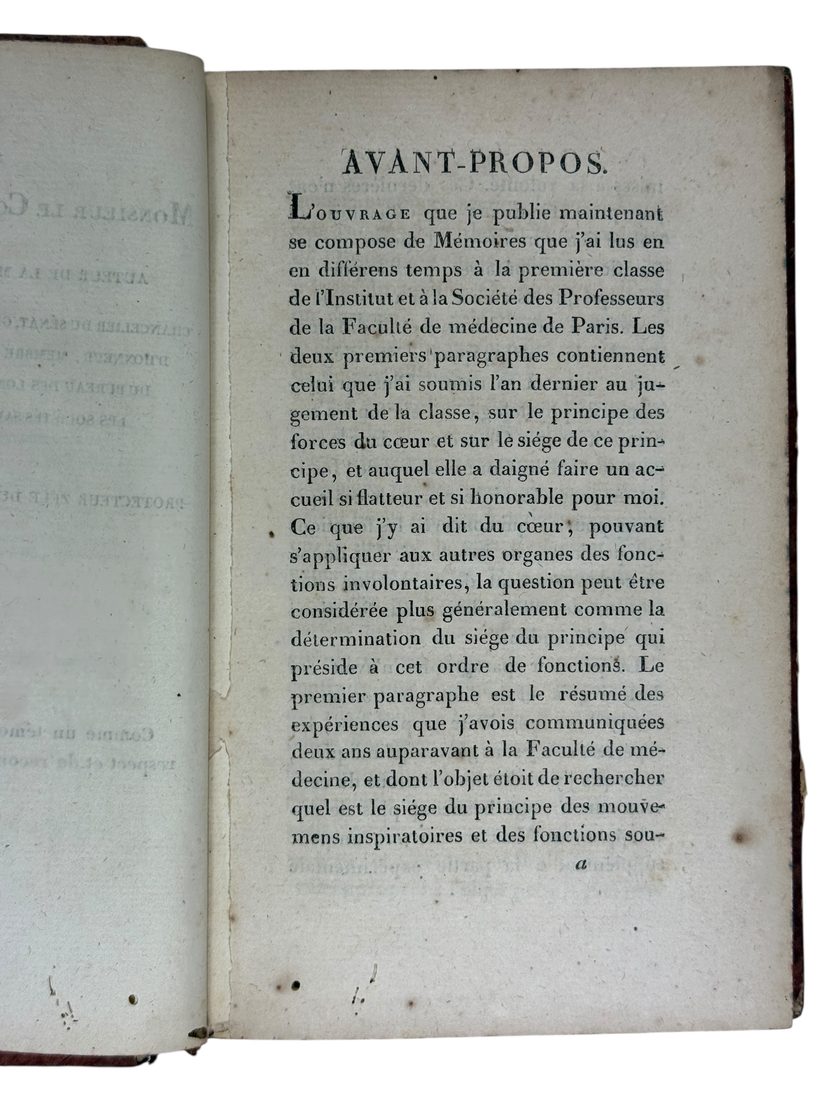
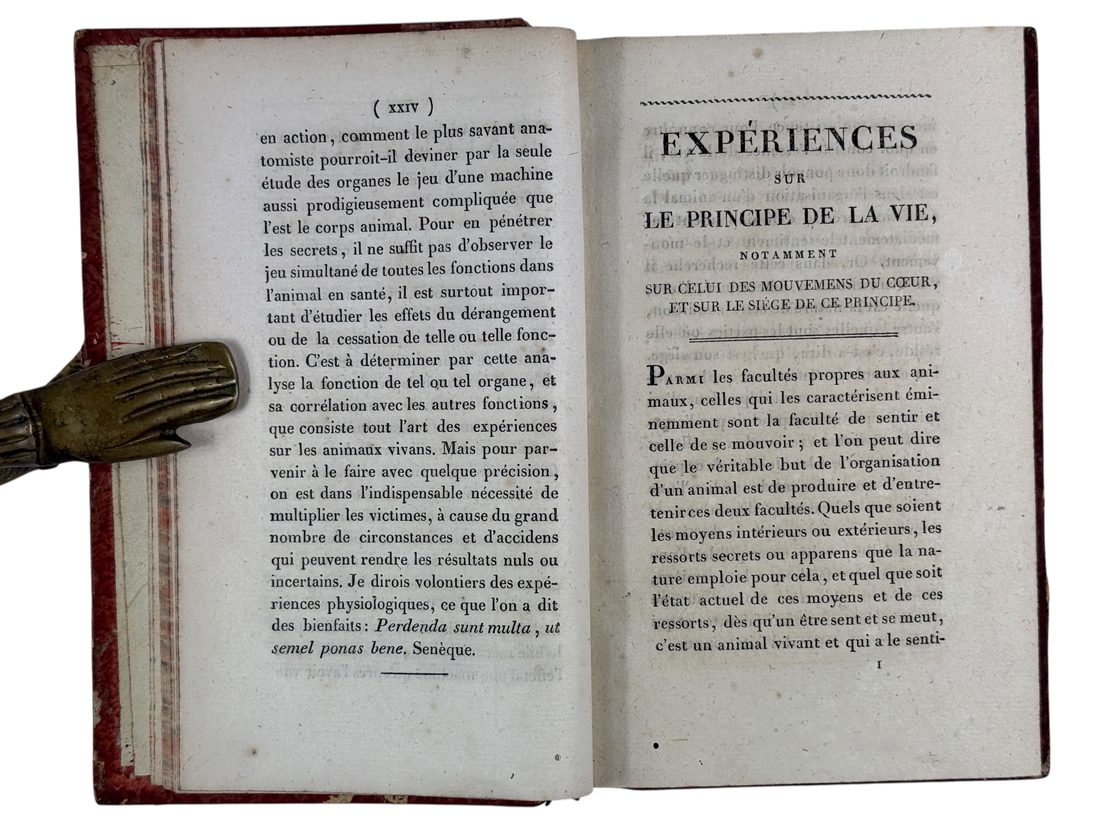
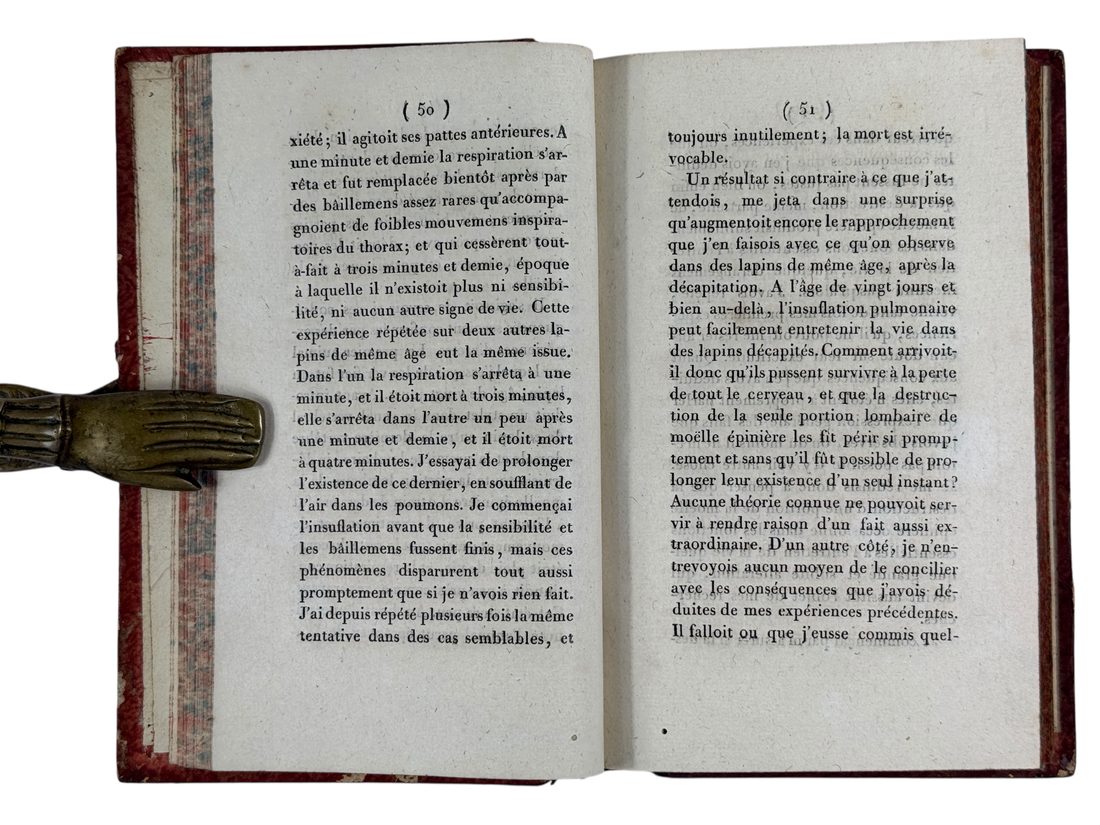
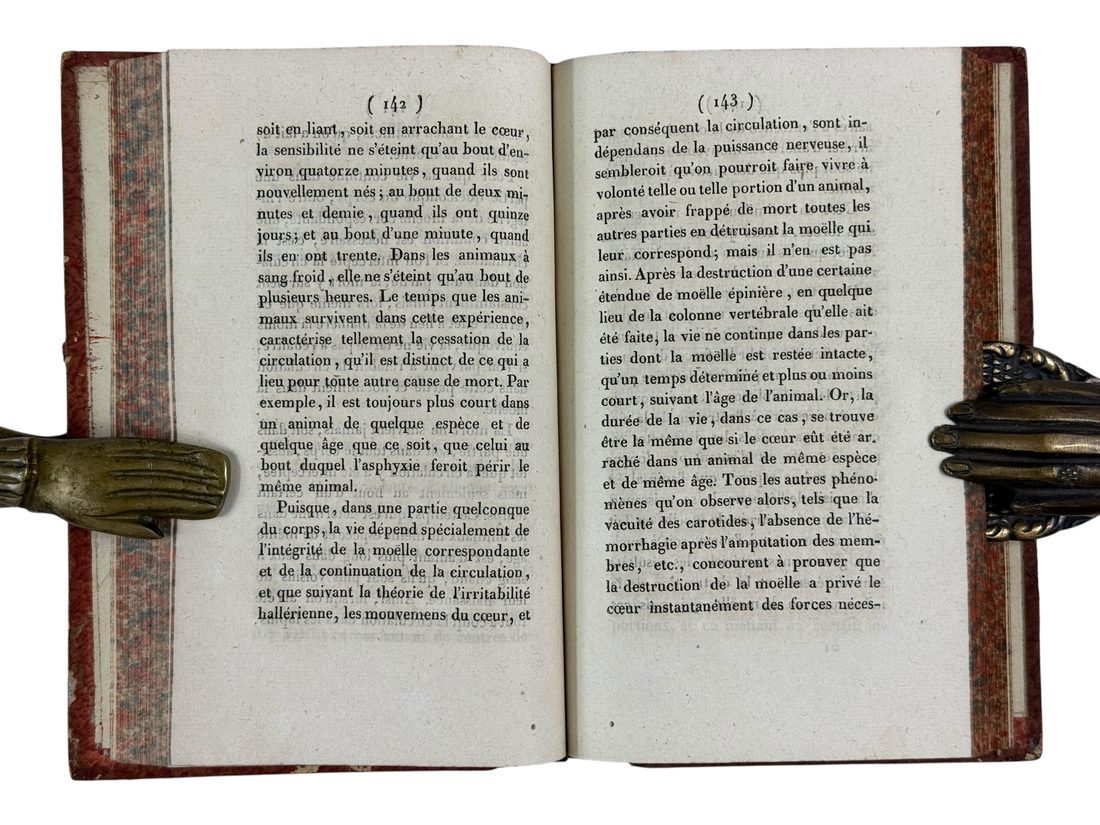
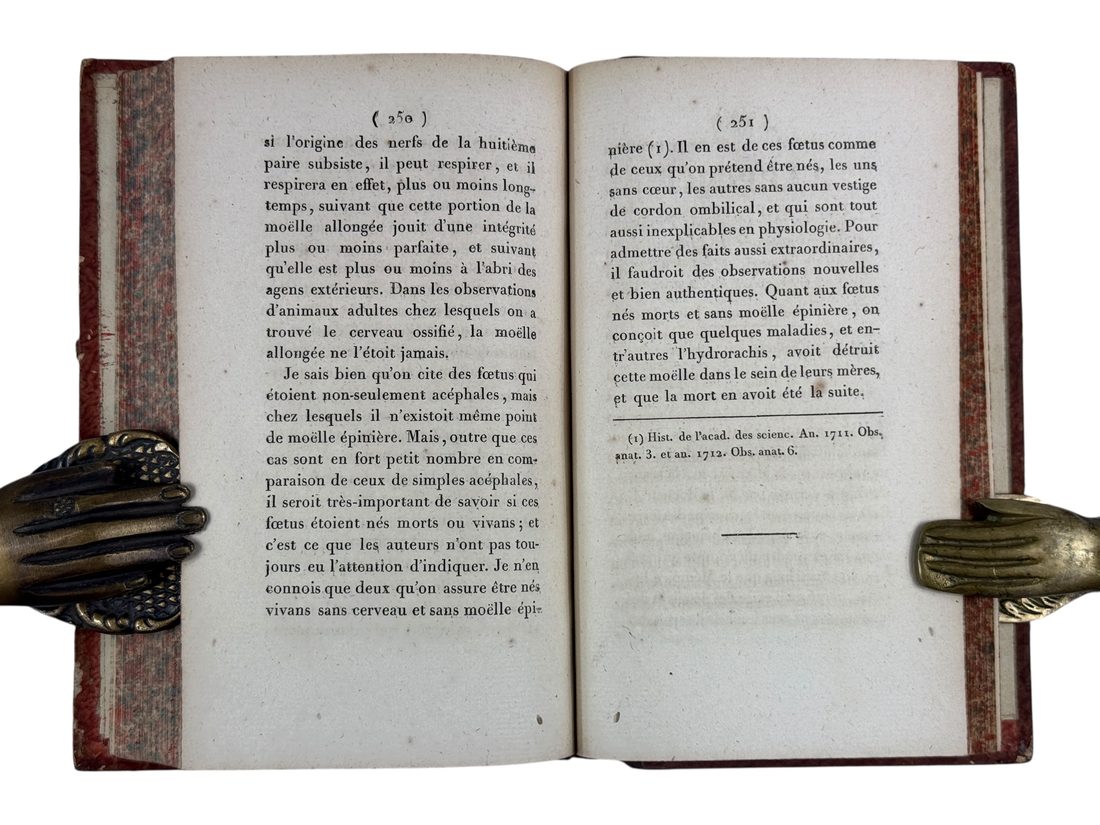
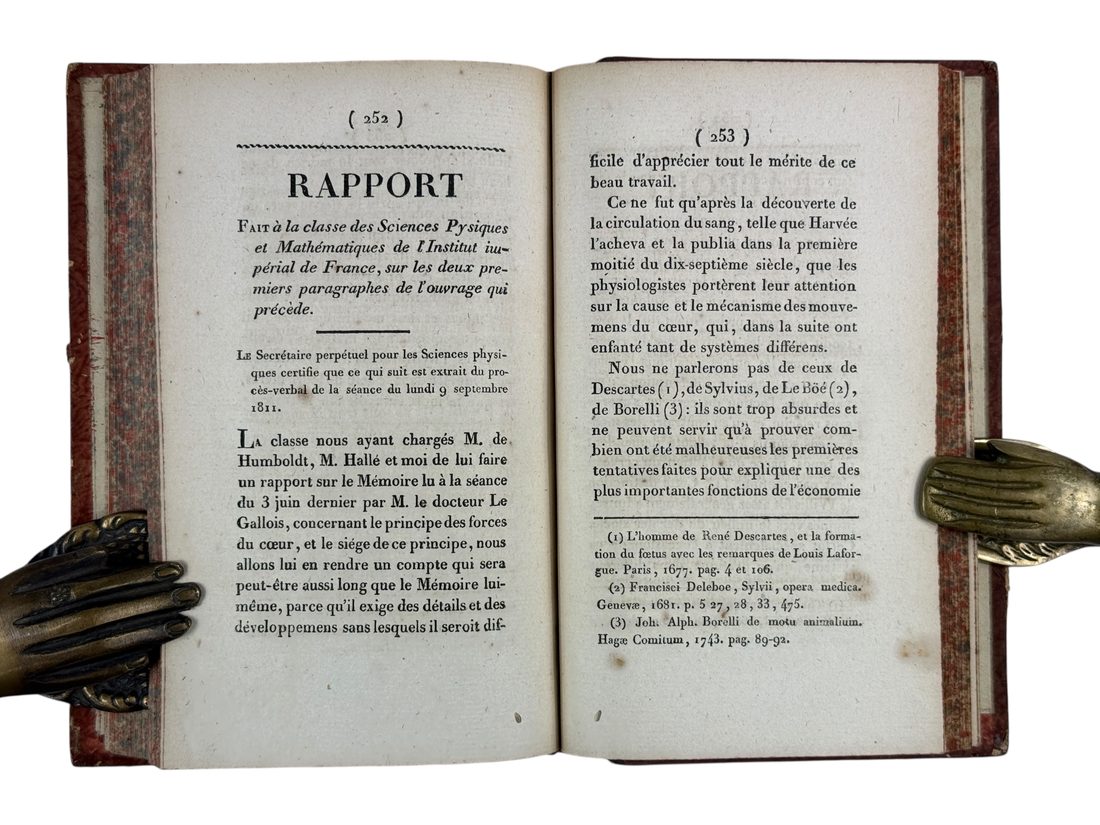
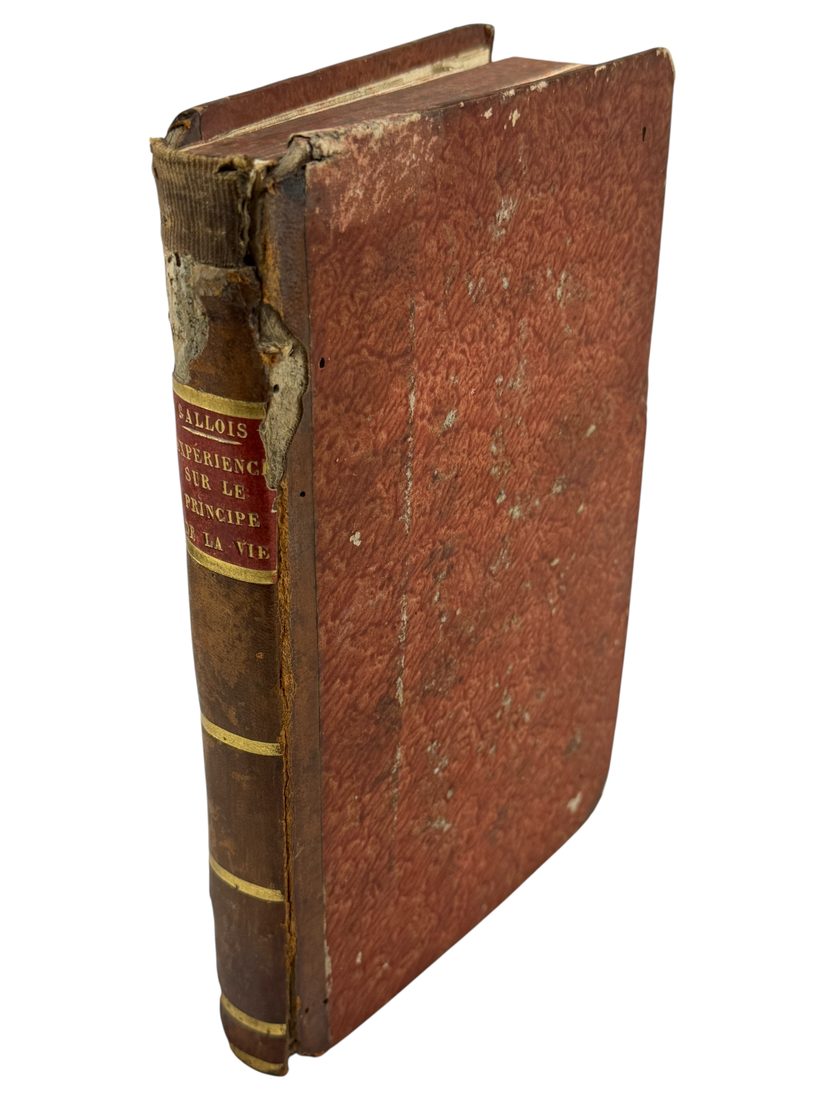
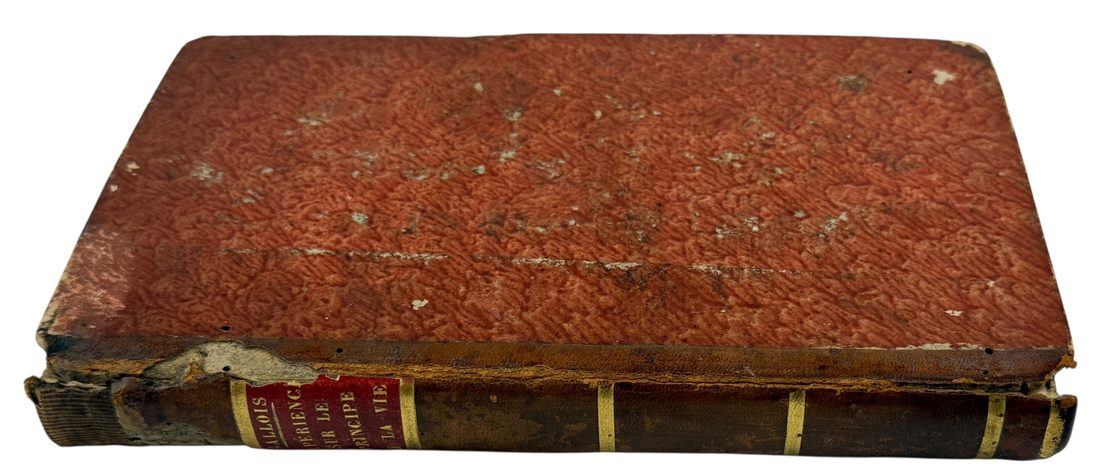
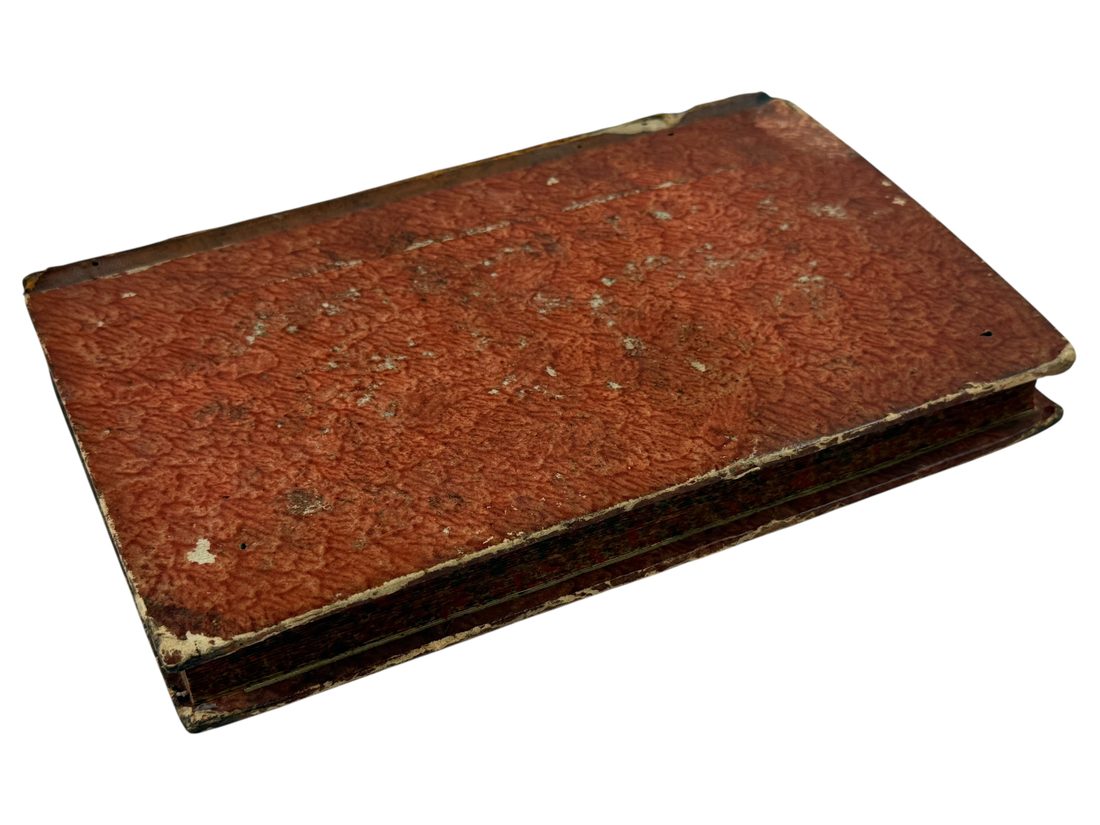
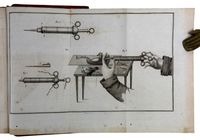
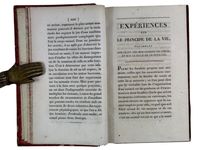
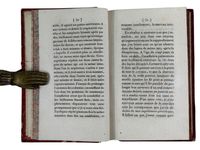
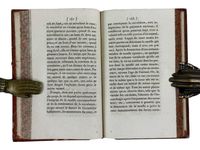
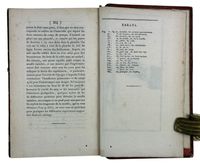
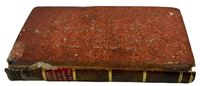
In-8 (203 × 127 mm), contemporary French half calf binding over hand-coloured paper boards, smooth spine gilt with horizontal fillets and red morocco lettering-piece, edges speckled red, pp. [6], [i], ii–xxiv, [1], 2–364, [2], complete with half-title, title, dedication leaf, final errata leaf, and one large folding engraved plate printed in copperplate and bound at the end. Text printed in Roman type, with occasional italic, ornamental rules, and typographic headpieces. The folding plate depicts experimental apparatus and a vivisectional scene involving a rabbit, illustrating syringes, cannulae, and instruments employed in physiological experiments on respiration and cardiac function.
First autonomous edition of César Julien Jean Legallois’s experimental investigations into the principle of life, with particular emphasis on respiration and cardiac motion. Through a systematic programme of animal experimentation, Legallois seeks to determine the physiological seat of vital functions, arguing for a central role of the spinal cord and the nervous system in sustaining respiratory and cardiac activity. The volume concludes with the official report of the First Class of the Institut Impérial, conferring authoritative institutional validation upon the experiments and firmly situating the work among the most advanced physiological inquiries of its time.
“Legallois described the action of the vagus nerve on respiration. He showed that bilateral section of the vagus can produce fatal broncho-pneumonia. The above work includes (p. 37) his location of the respiratory centre in the medulla.” (Garrison-Morton).
“A pupil of Magendie, Legallois was one of the earliest neurophysiologists. In this, his most celebrated work, he describes the role of the vagus nerve in cardiac and pulmonary functioning, gives the location of the medullary center for respiratory control, and revives the neurogenic theory of the heartbeat, last expounded by Borelli .“ (Heirs Of Hippocrates).
“Gallois is also remembered for his reviving, after Borelli, the neurogenic theory of the heart’s action; namely that the motor power of the heart comes from the spinal cord via branches of the sympathetic nerves.” (Garrison-Morton).
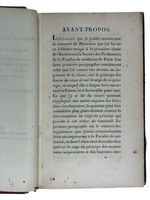
The book opens with a theoretical introduction (pp. i–xxiv), in which Legallois delineates the epistemological limits of anatomical observation when isolated from experimentation and argues for the necessity of experimental intervention to understand living functions. The main body of the text (pp. 1–364) is structured as a sequence of memoir-like sections, each corresponding to experiments communicated before learned societies, notably the First Class of the Institut and the Société de la Faculté de Médecine de Paris.
Legallois describes experiments conducted primarily on rabbits, involving decapitation, ligature of nerves, destruction of defined segments of the spinal cord, and artificial pulmonary insufflation. These procedures are designed to isolate the mechanisms governing respiration and cardiac motion and to determine whether the activity of the heart is autonomous or dependent upon nervous influence. The folding engraved plate constitutes an integral visual complement to the text, documenting both the experimental apparatus and the operative techniques employed.
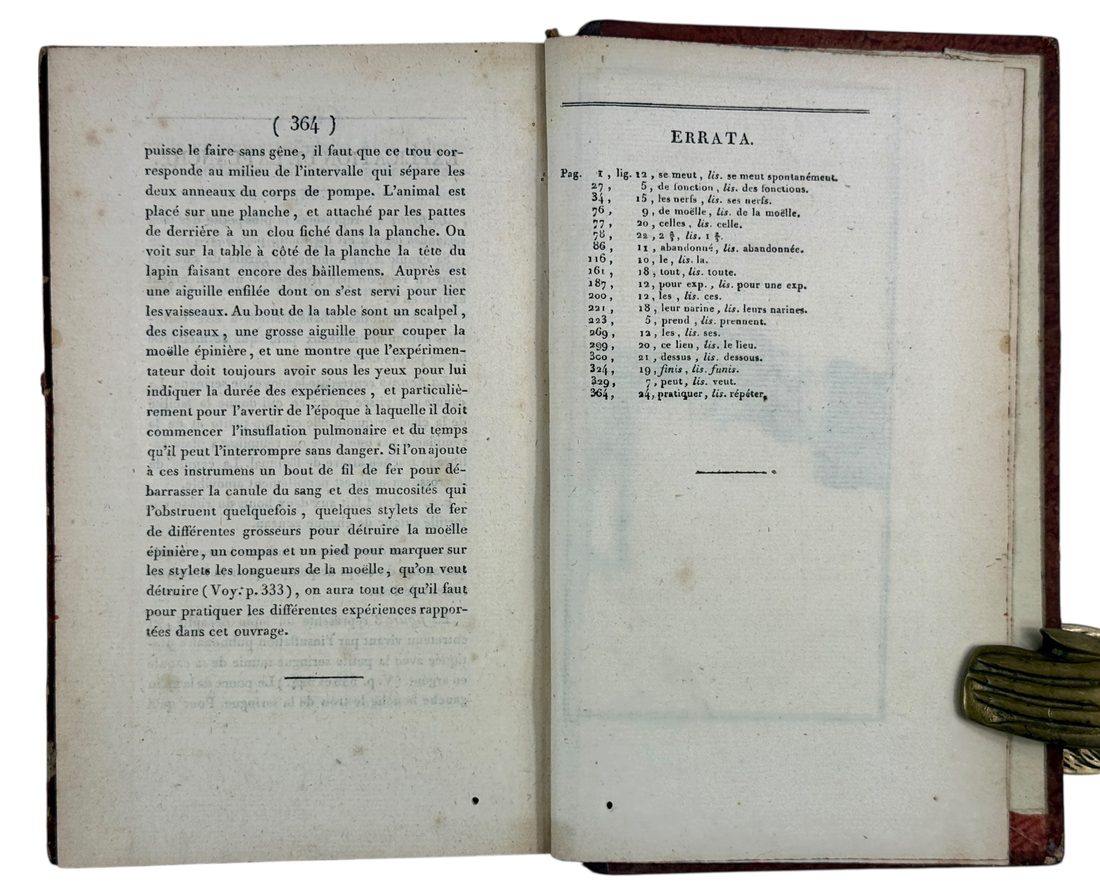
The final section comprises the Rapport of the Institut (pp. 252–253), a formal evaluation by appointed members, emphasizing the originality, methodological rigor, and scientific importance of the work. The volume concludes with a printed errata leaf.
Published in Napoleonic Paris, this treatise belongs to a decisive phase in the transformation of physiology into an experimental science. Building upon the legacy of Albrecht von Haller and contemporaneous with the work of Xavier Bichat, Legallois contributes to the emerging neurophysiological paradigm by localizing vital functions within the nervous system rather than attributing them to diffuse vital forces. The explicit integration of an institutional report into the printed book reflects the close relationship between scientific authority and print culture in early nineteenth-century France. The engraved plate, sober and technical in conception, exemplifies the didactic visual language of medical publishing of the period, privileging functional clarity over aesthetic elaboration.
César Julien Jean Legallois (1770–1814) was a French physician and physiologist educated in Paris during the revolutionary period. Closely associated with the leading medical and scientific institutions of his time, including the Institut Impérial, he is remembered for his pioneering and systematic use of animal experimentation to investigate the nervous regulation of respiration and cardiac activity. His premature death curtailed a promising scientific career, yet his work exerted a lasting influence on nineteenth-century physiology. His principal contribution, Expériences sur le principe de la vie (1812), was later incorporated into collected editions of his writings and cited extensively in physiological literature throughout the century.
Conditions: Binding with cracked joints, losses of leather at the spine, and surface wear to the boards. The internal text is perfectly preserved. The folding engraved plate is complete and clean, with marginal worming not affecting the engraved surface.
Reference: Garrison, F. H., Morton, L. T., A Medical Bibliography, Aldershot: Scolar Press, 1983, no. 928; Heirs Of Hippocrates, An Annotated Catalogue of the History of Medicine. New Haven: Yale University Press, 1958, no. 1251; Wellcome, Catalogue of Printed Books in the Wellcome Historical Medical Library, London: Wellcome Trust, 1962, vol. III, p. 479; E. Waller, Bibliotheca Physiologica. Stockholm, 1910, no. 5679; H. Cushing, Bio-Bibliography of Andreas Vesalius. New York: Schuman, 1943, L31; C. C. Gillispie, ed. Dictionary of Scientific Biography, New York: Scribner, 1970–1980, vol. VIII, p. 132.