Polyorama Lorgnette, or Lorgnette Pittoresque, with Thirty Circular Optical Views






| Macro-category | Ancient Games and Pre-cinema |
| Subcategory | Optical Devices |
| Author | Anonymous |
| Year | 1850 |
a portable theatre of light
rare «Polyorama Lorgnette» with advanced «Aplanatic» optics:
nineteenth century transforming imagery in an intimate format
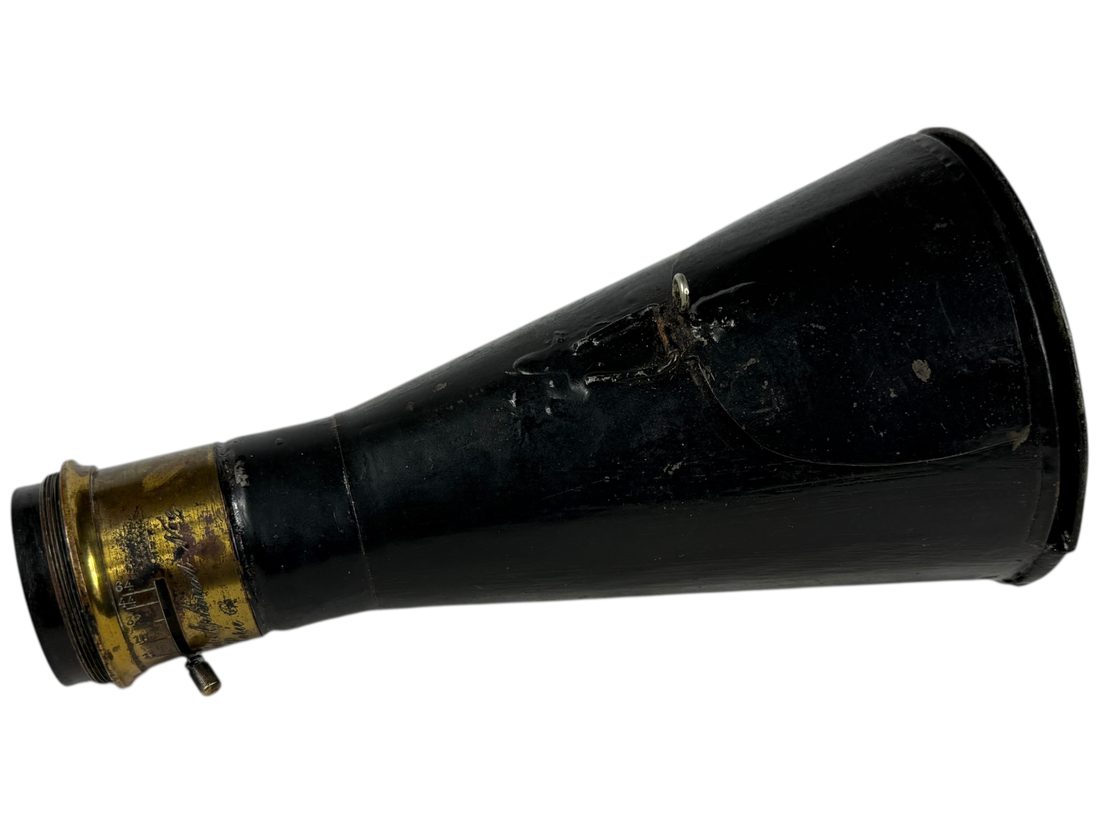
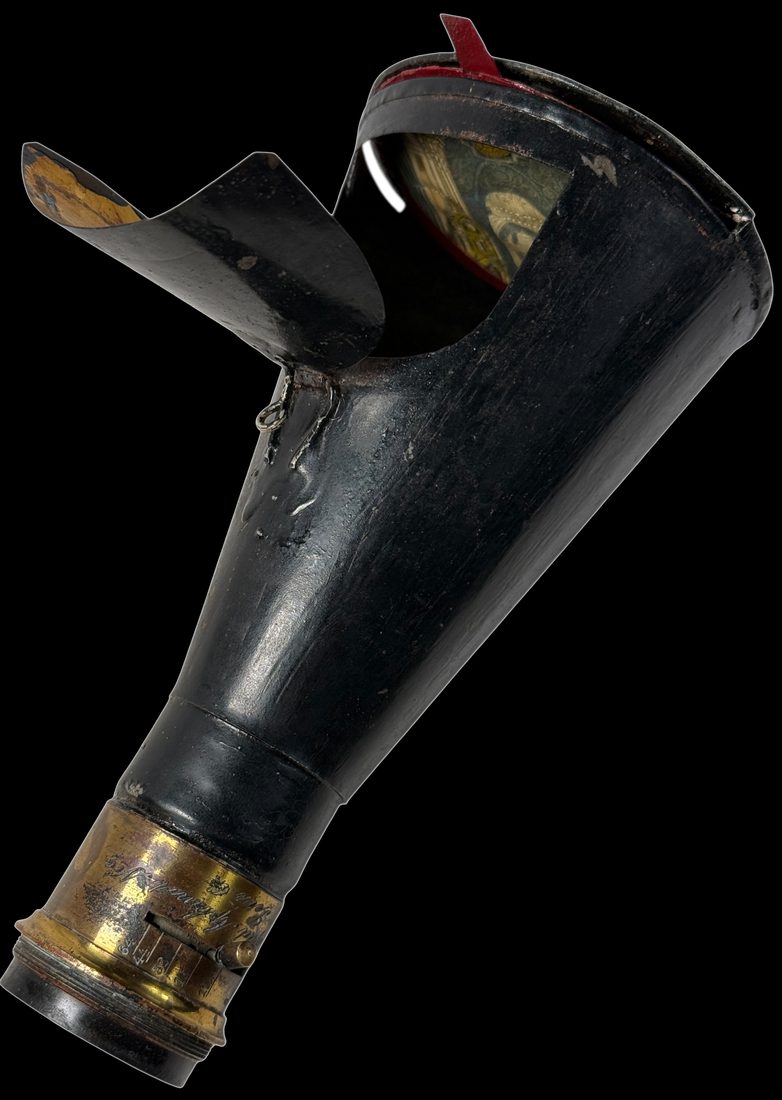
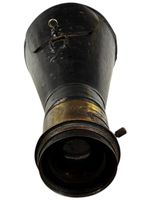
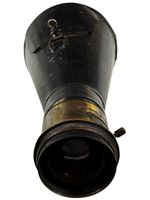
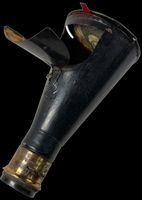
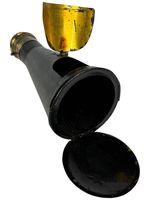
Polyorama Lorgnette, or Lorgnette pittoresque. France (probably Paris), ca.1850.
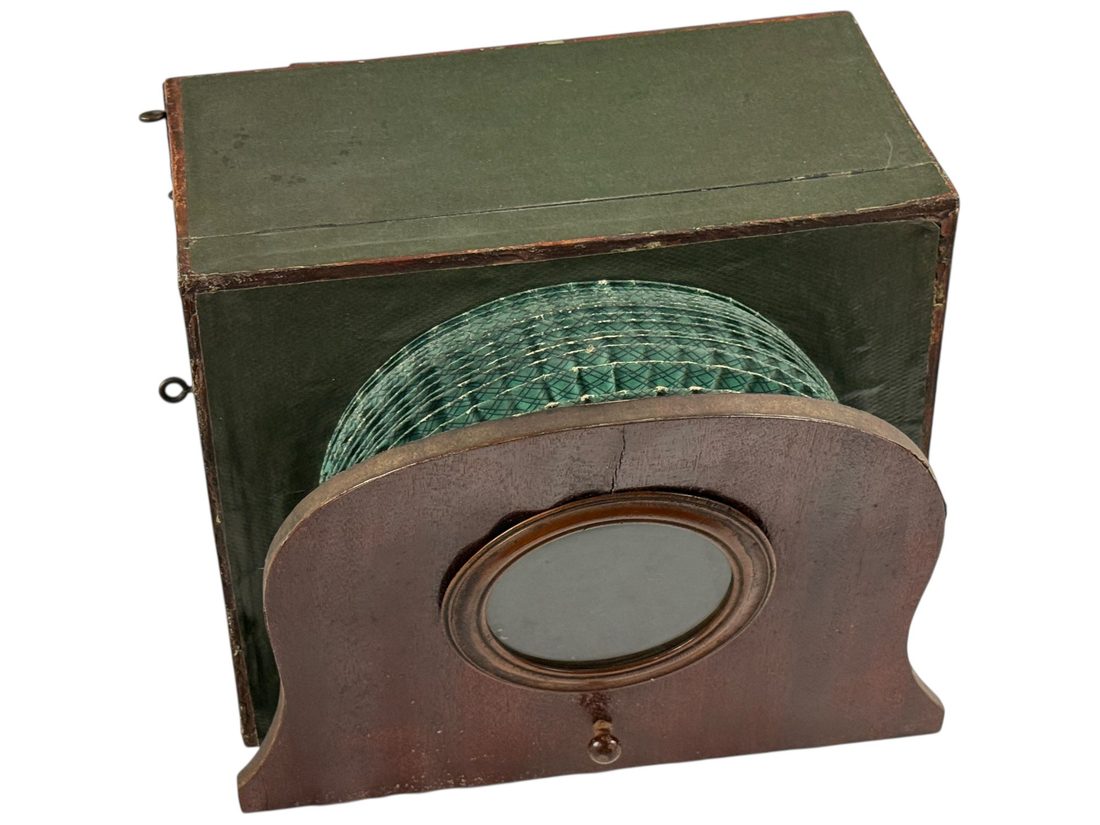
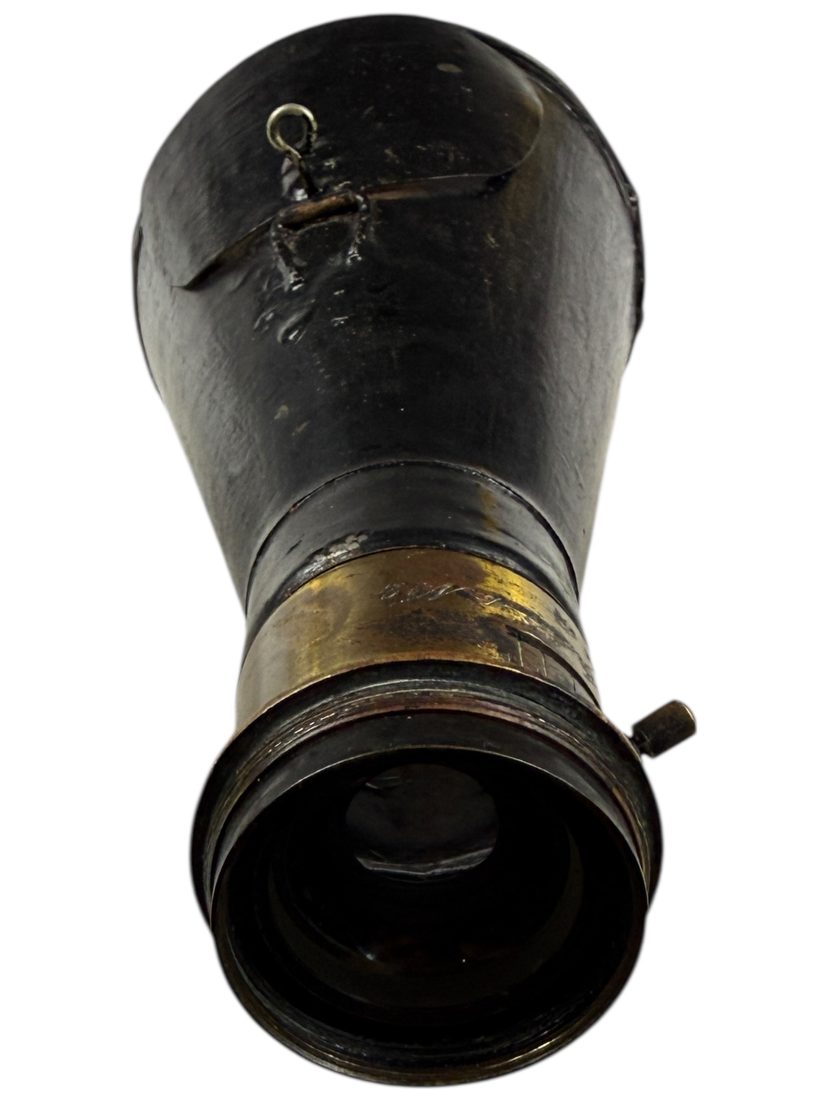
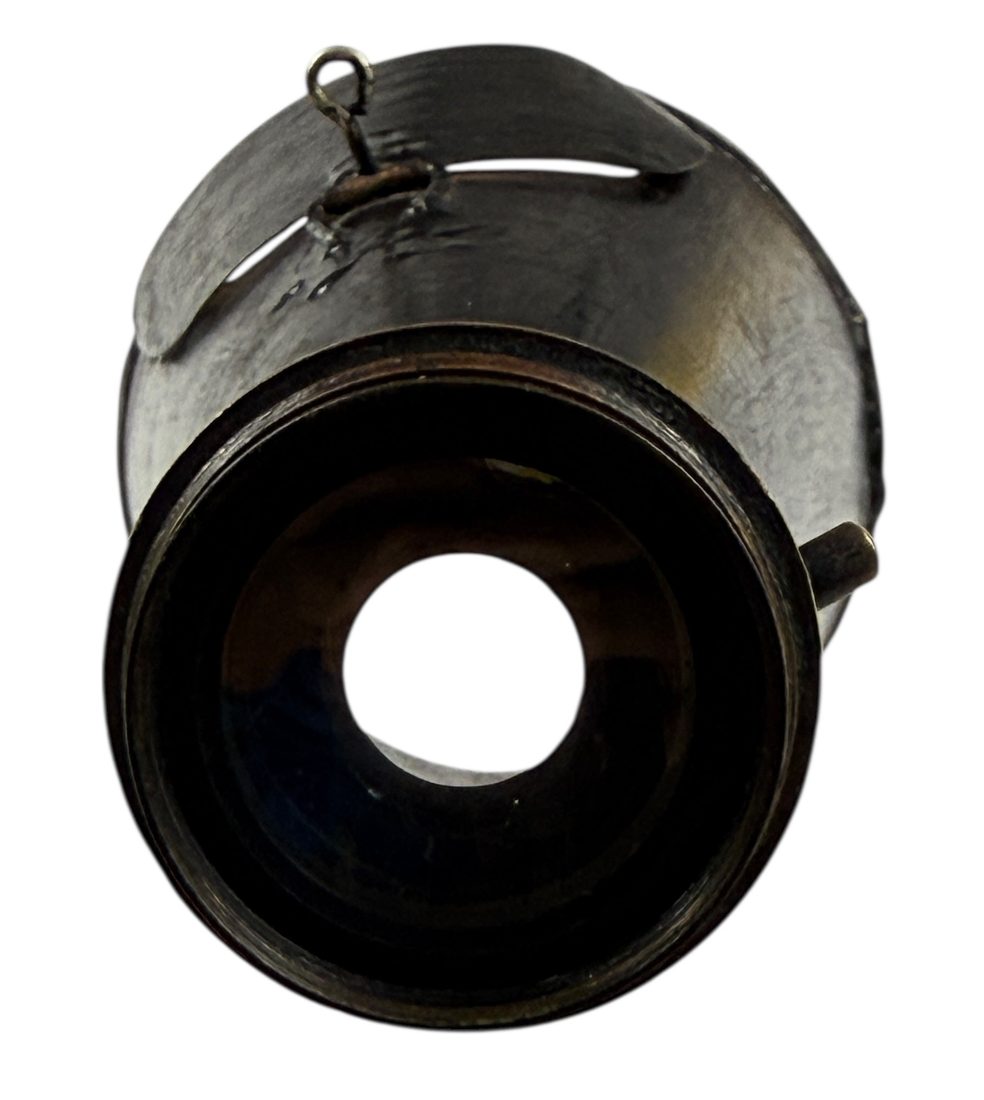
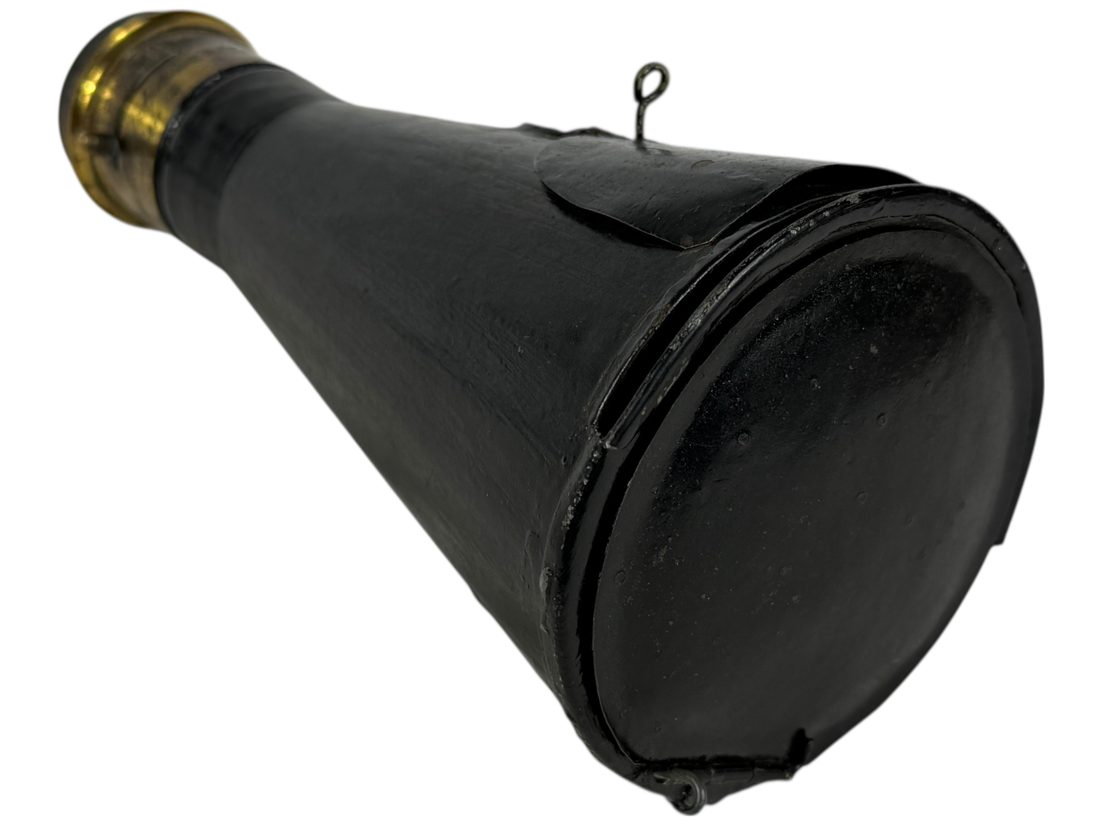
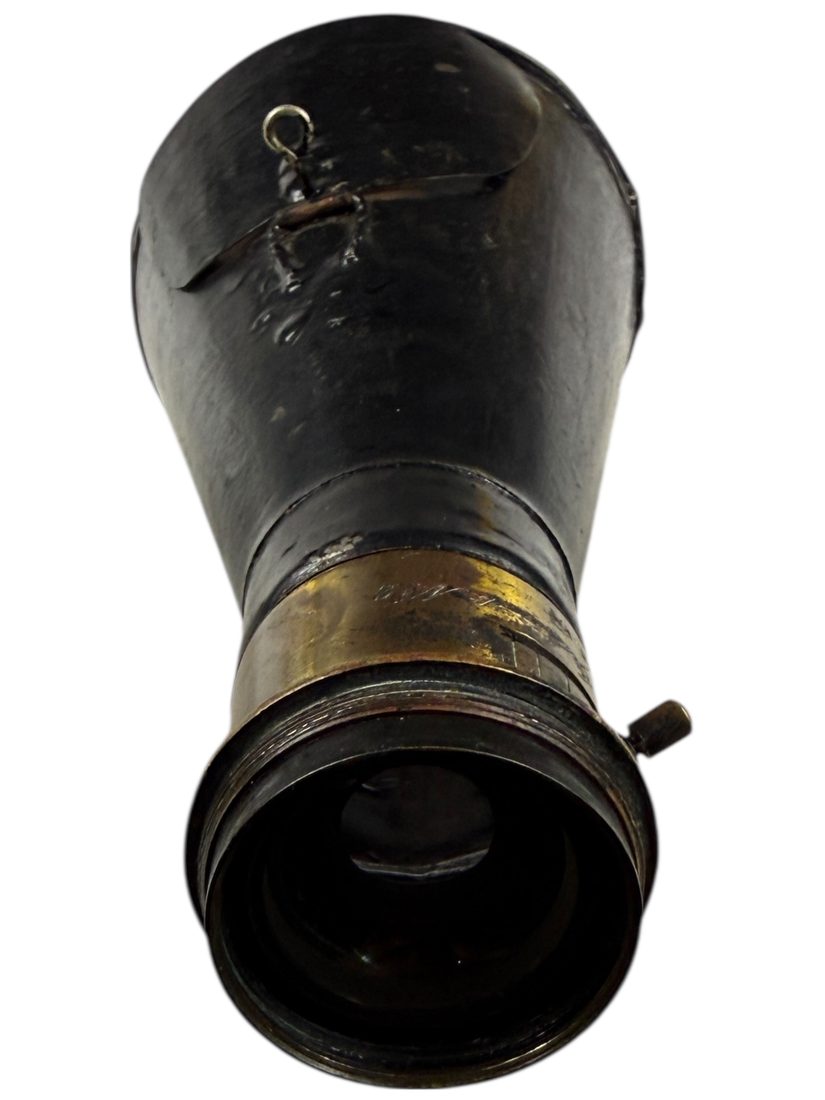
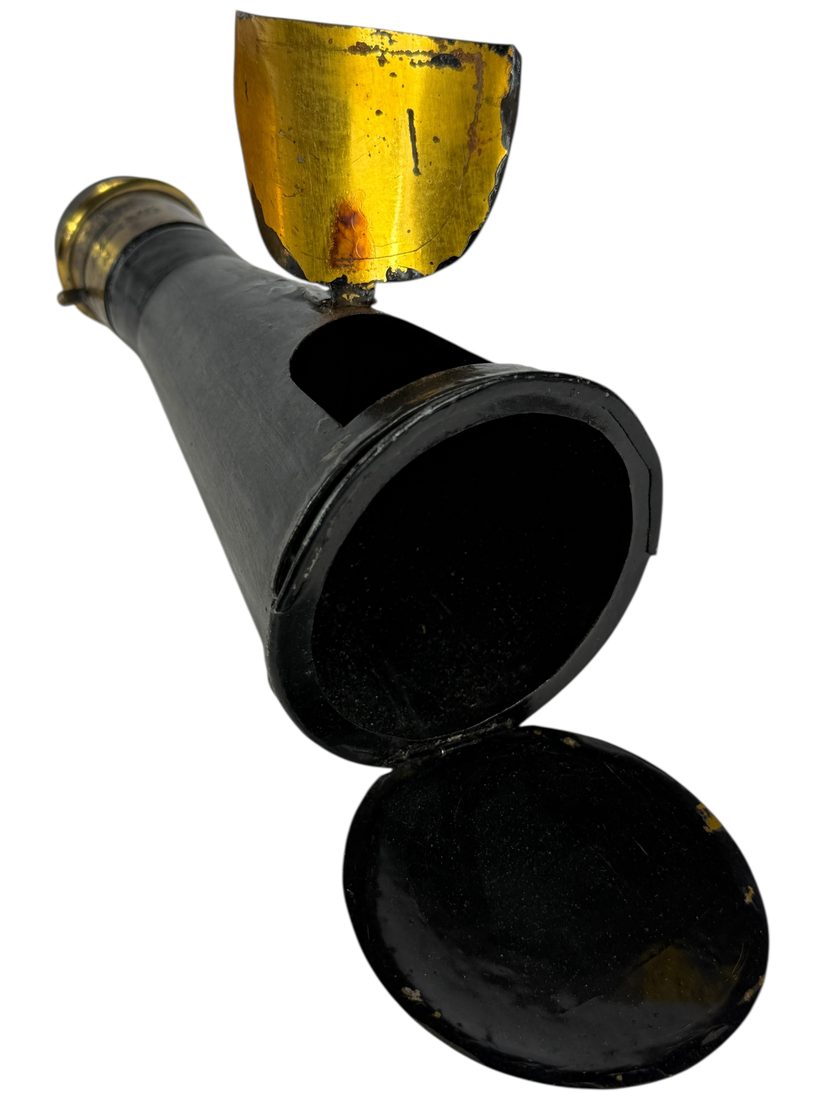
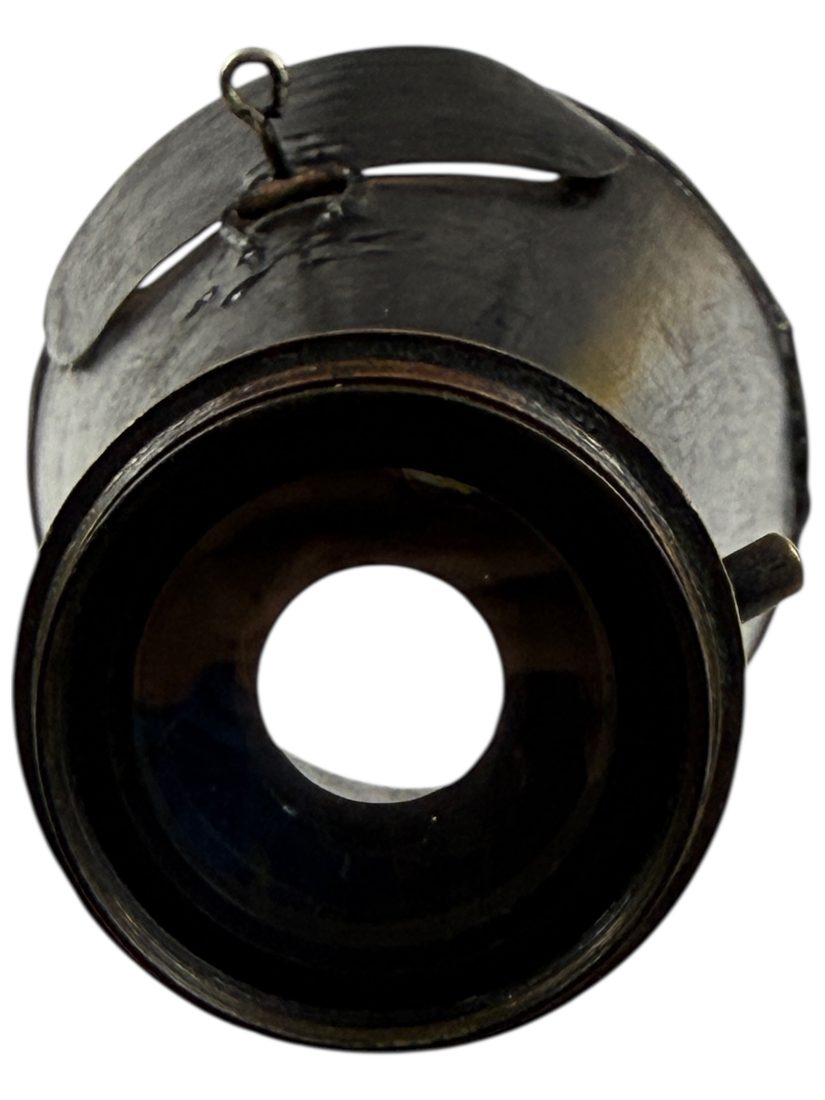
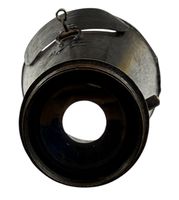
Hand-held optical viewing instrument (overall length 170 mm, maximum bell diameter 90 mm, objective diameter 40 mm), with a turned, black-lacquered metal body, fitted with a brass optical mount and focusing ring. The brass mount bears the engraved designation Extra Rapid Aplanat No. 2, indicating the deliberate adoption of a corrected, high-luminosity objective of advanced optical design, technically sophisticated and comparatively uncommon in small-format transforming-image viewers. The instrument incorporates a hinged primary shutter and a secondary reflective baffle, externally blackened and internally gilt, engineered to regulate, redirect, and modulate light with precision in order to produce controlled transforming visual effects.
[togheter with]
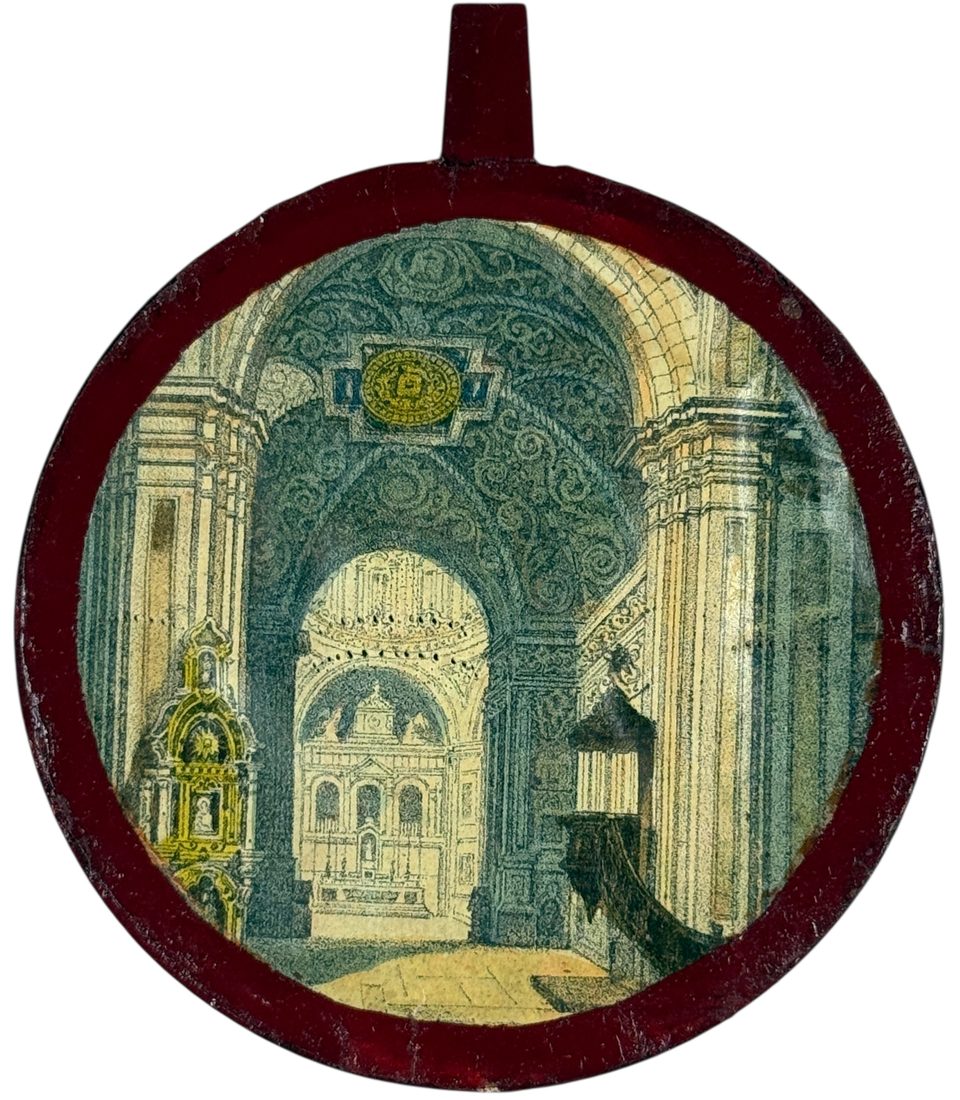
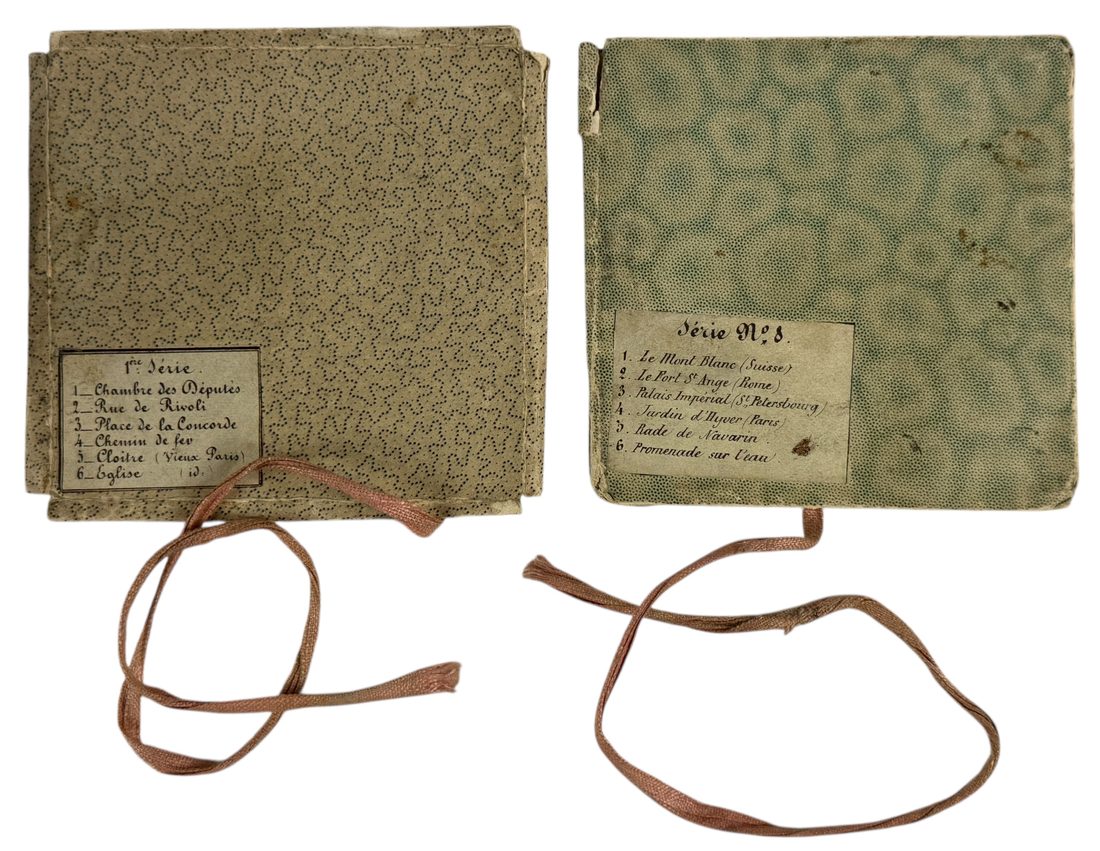
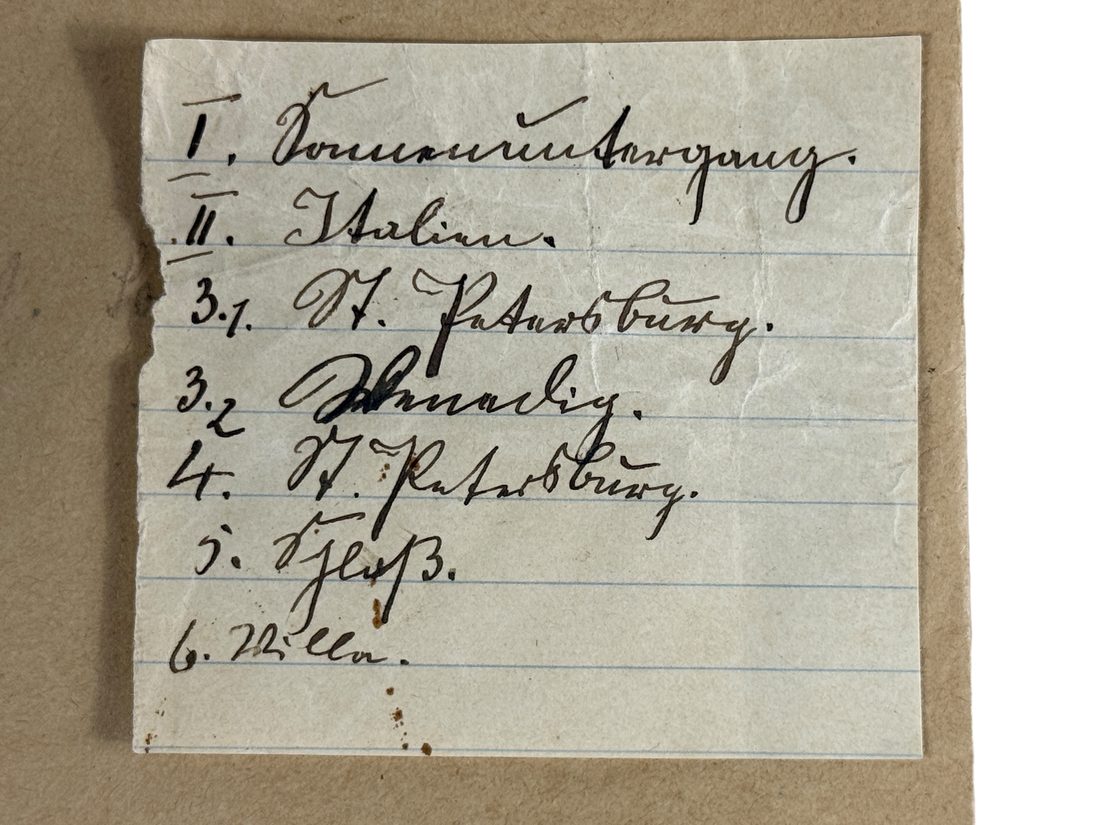
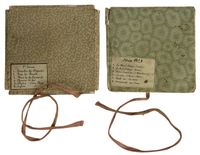
Thirty circular optical views on card (diameter 80 mm), each provided with an insertion tab. The views are hand-coloured and specifically constructed for day-and-night transformation through calibrated contrasts of translucency and opacity. They are organised into three series (nineteen views in total) and eleven additional loose plates. Two complete series are preserved in their original containers, each retaining its original printed index label (six views each). A third, unnumbered series, comprising seven views, is documented by an original handwritten index.
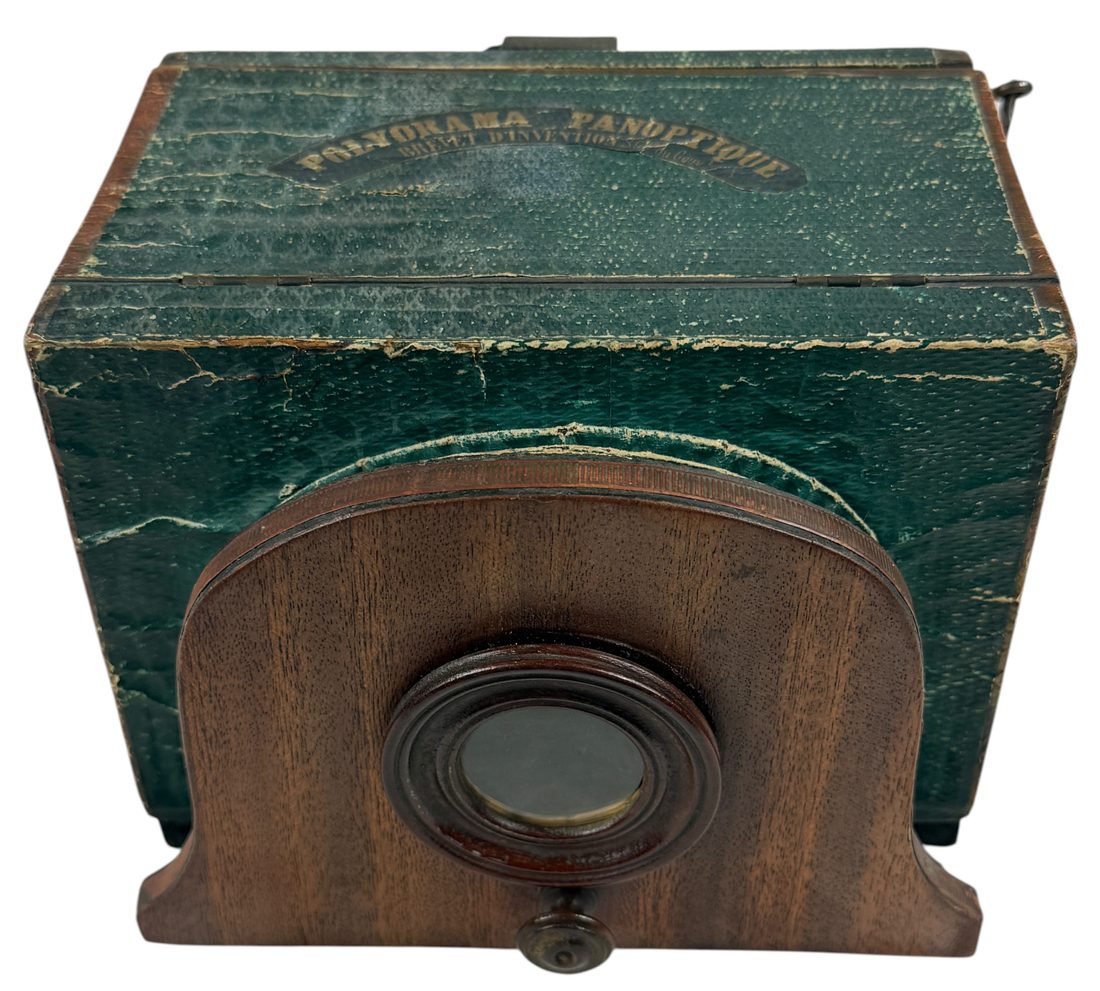
This Polyorama Lorgnette represents a particularly rare and technically refined form of nineteenth century transforming-image apparatus. While the Polyorama Panoptique is itself an uncommon survival, the lorgnette variant is distinctly scarcer, having been produced in smaller numbers and being more exposed to loss through its portable use. The present example is exceptional not only for the survival of the instrument but also for its association with a large, coherent, and well-preserved corpus of thirty original transforming views, including two complete boxed series with printed indices and a third complete series documented by a manuscript index.
The apparatus operates on the principle of transforming transparencies, a refined optical technique by which a single image is conceived to produce two distinct visual states depending on illumination. The circular views, printed and hand-coloured on paper, are constructed with carefully calibrated areas of opacity and translucency.
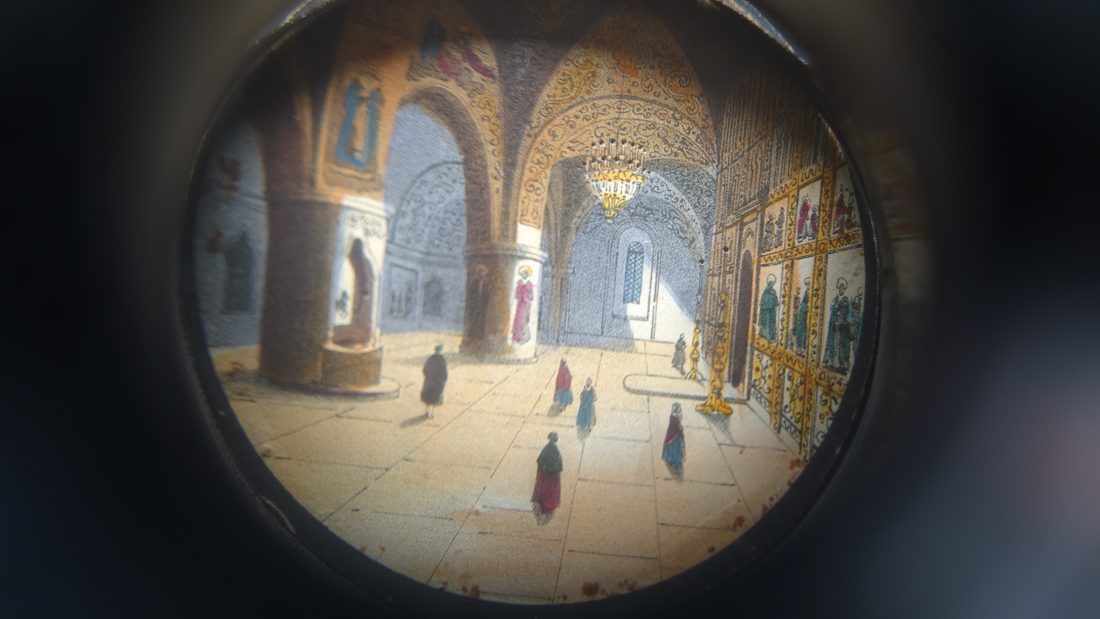
Each image is inserted into the upper slot of the instrument. When the upper shutter alone is opened and the image is illuminated from the front, the viewer, looking through the ocular lens, perceives the daylight scene, rendered through surface colouring and opaque pigments.
Day View
When the upper shutter is closed and the rear shutter is opened, light is allowed to pass from behind the image, activating the transparent and semi-transparent areas of the paper. Under this rear illumination, secondary pictorial elements emerge, transforming the same view into its nocturnal or illuminated state, with effects such as lit windows, moonlight, or artificial lighting.
Nigh view
This controlled alternation between reflected and transmitted light lies at the core of the polyorama tradition and is here decisively enhanced by the presence of a high-performance Extra Rapid Aplanat objective, designed to maximise luminosity and optical correction. Such objectives are uncommon in hand-held transforming-image instruments and play a crucial role in the clarity, contrast, and effectiveness of the transformation. The conjunction of superior optics, an intact and intelligible image corpus, and original organisational elements places this ensemble among the most complete and technically accomplished surviving examples of the Polyorama Lorgnette.
The objective: optical design, performance, and rarity
The engraved designation Extra Rapid Aplanat is of particular significance. In nineteenth-century optical terminology, aplanatic objectives were lenses corrected for spherical aberration, ensuring improved sharpness across the visual field, particularly toward the periphery. Such correction was not standard in popular optical amusements and required both superior optical glass and a high degree of precision in lens grinding and assembly.
The qualifier Rapid indicates a lens configuration optimised for brightness and efficient light transmission. This characteristic is crucial in transforming-image devices, in which the visual success of the nocturnal state depends on the intensity, uniformity, and control of transmitted or redirected light. Inferior optics typically produce muted, uneven, or poorly defined night effects, whereas a rapid aplanatic objective allows crisp architectural outlines, legible detail, and convincing illumination.
Given that the effectiveness of day-and-night imagery depends fundamentally on optical performance, the presence of an Extra Rapid Aplanat objective in a compact, hand-held lorgnette is therefore noteworthy and comparatively rare. Such objectives are more commonly documented in larger and more expensive optical instruments, and their survival intact in small-format viewers represents an exceptional circumstance.
The views: corpus, organisation, and iconography
The instrument is accompanied by an unusually coherent corpus of thirty original circular transforming views, preserved in a configuration that clearly reflects their original commercial distribution and functional organisation.
Two complete series are housed in their original containers, each retaining its printed index label, a circumstance seldom encountered for optical objects of this type.
The first series, devoted to Paris, presents emblematic images of institutional, urban, and infrastructural modernity, including the Chambre des Députés, Rue de Rivoli, Place de la Concorde, and a striking representation of the Chemin de fer, juxtaposed with views of Vieux Paris, such as cloisters and ecclesiastical architecture. Together, these images articulate a deliberate contrast between historical continuity and contemporary transformation, a central theme of mid-nineteenth-century visual culture.
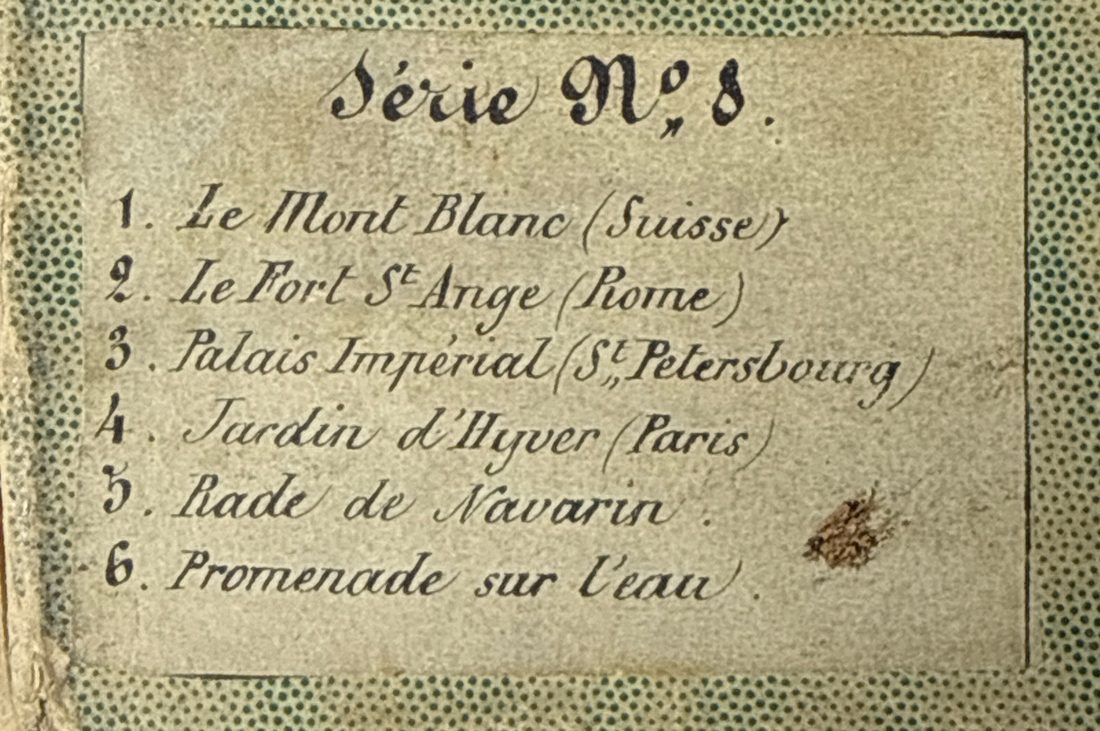
The second boxed series, broadens the geographical and thematic scope, offering an international panorama that combines alpine landscape (Mont Blanc), major European monuments (Fort St Ange, Palais Impérial de Saint-Pétersbourg), modern architectural interiors (Jardin d’Hiver, Paris), and maritime or leisure scenes (Rade de Navarin, Promenade sur l’eau). This selection reflects the cosmopolitan ambitions of optical amusements, condensing travel, spectacle, and instruction into a domestic and portable visual format.
A third complete series, preserved outside its original container, is documented by an original handwritten index, confirming its integrity as a structured set. Its imagery is predominantly architectural, with a pronounced emphasis on religious buildings, monumental interiors, and historic urban views, largely drawn from Central European contexts and particularly well suited to nocturnal transformation effects.
In addition, a small group of loose views, stylistically and technically consistent with the organised series, completes the ensemble.
The Polyorama Lorgnette belongs to the culmination of a long European tradition of optical mediation, rooted in eighteenth-century peepshows and Vues D’Optique and evolving through increasingly complex forms of transparent and transforming imagery. Far from being marginal amusements, such devices occupied a central position within nineteenth-century visual culture, responding to contemporary fascinations with light, temporality, urban modernity, and technological progress.
The transforming image, alternating between day and night states, embodies a conceptual shift from static representation toward simulated temporal experience. In this sense, these images anticipate later visual media by introducing sequential perception and controlled visual change within a single artefact.
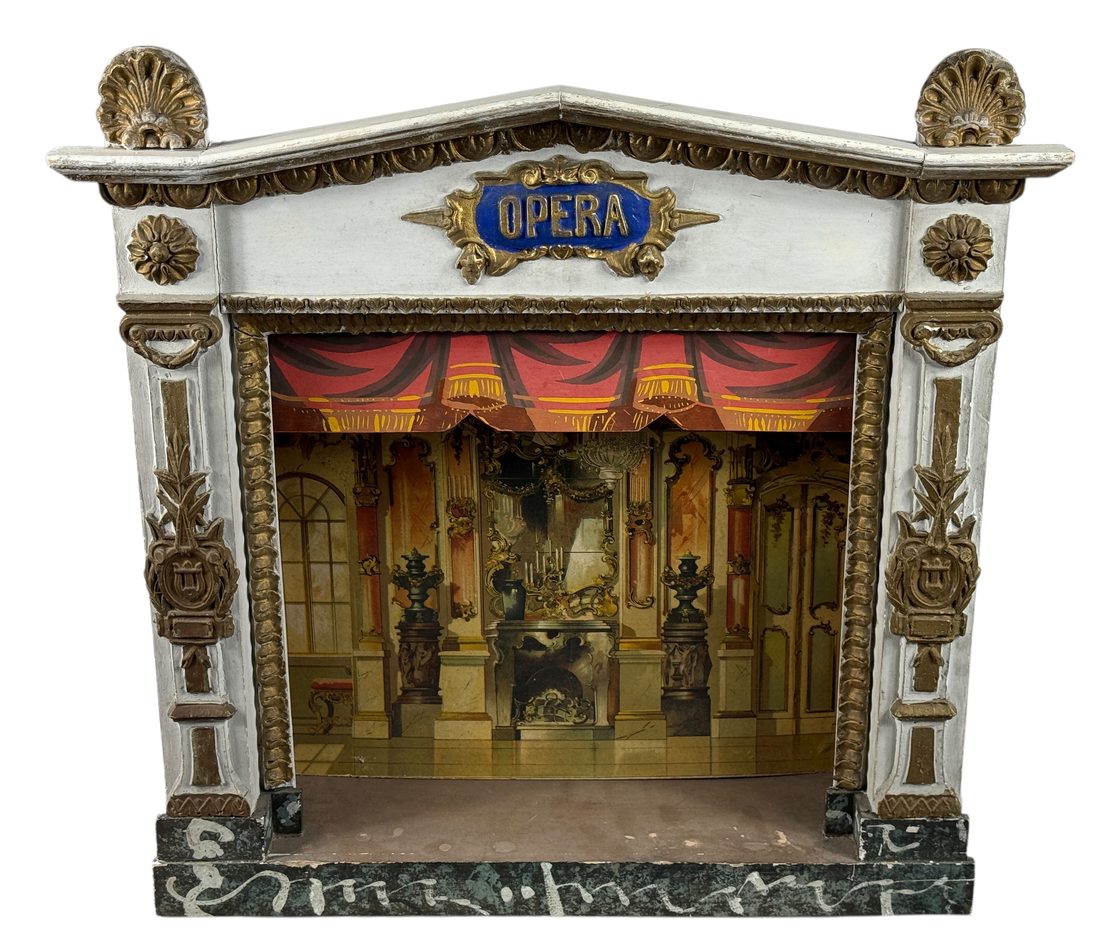
Within this tradition, the Polyorama Panoptique represents the architectural and immersive scale of transforming imagery, while the Polyorama Lorgnette translates the same principles into an intimate and portable format. This reduction in scale did not entail technical simplification. On the contrary, the successful functioning of the lorgnette depended even more critically on optical precision and luminosity, hence the adoption of advanced objectives such as the Extra Rapid Aplanat.
Interactive viewer simulating the transition between standard and back-lit illumination, as originally experienced through the lorgnette
Day View Night view
Click to Explore the Day/Night Effect
First Series (1)
Day View Night view
Click to Explore the Day/Night Effect
Second Series (8)
Day View Night view
Click to Explore the Day/Night Effect
Third Series
Day View Night view
Click to Explore the Day/Night Effect
11 loose views
As with most optical instruments of this category, authorship is collective rather than literary and must be understood within the framework of mid-nineteenth-century Parisian optical manufacture. Pierre Henri Amand Lefort, who patented a Polyorama Panoptique in 1849, is generally regarded as a pivotal figure in the formalisation of transforming-image apparatuses. His patent represents one of the earliest attempts to stabilise, both technically and conceptually, the principles of day-and-night transforming imagery within a dedicated viewing device. Lefort’s work is often associated with the transition from earlier, loosely standardised peepshow traditions to more sophisticated, purpose-built instruments capable of controlled optical effects.
Parisian opticians, notably Lemaire, played a central role in the practical realisation, refinement, and commercial dissemination of such devices. The name Lemaire appears recurrently in nineteenth-century trade records and later bibliographic studies as one of the principal Paris-based workshops engaged in the production of optical instruments combining scientific ambition with popular appeal. Instruments attributed to, or associated with, Lemaire are regularly characterised by careful optical execution and by the adoption of advanced lens systems, reflecting the firm’s position at the intersection of artisanal precision and emerging optical science.
Although no direct attribution to a named maker can be established for the present lorgnette, its technical execution, optical configuration, and overall conception align closely with this Parisian milieu shaped by Lefort’s conceptual contributions and by workshops such as Lemaire, which translated patented ideas into tangible objects for a cultivated and increasingly image-literate public.
Conditions: The lorgnette shows wear consistent with nineteenth-century use, including surface abrasion to the black lacquer and oxidation of the brass components. The optic is in excellent condition, with no defects observed. The optical mount and engraved inscriptions remain clear and fully legible. The hinged shutter and reflective baffle display expected wear but retain full structural integrity.
The views preserve strong hand-colouring and clear transformation effects. Minor edge wear at the insertion tabs and light surface abrasions are present. Overall, the condition is notably good for an object of this type, complexity, and intended use.
Reference: R. Balzer, Optical Amusements: Magic Lanterns and Other Transforming Images, Balzer, 1987; G. Füsslin, Der Guckkasten: Einblick, Durchblick, Ausblick, Füsslin Verlag, 1995; B. Verwiebe, Vom Guckkasten zum Transparentbild, in Der Guckkasten, Füsslin Verlag, 1995; B. Verwiebe, Faltperspektiven: Die Illusion in der Tasche, in Der Guckkasten, Füsslin Verlag, 1995; G. Füsslin, Die Guckkastenblätter, in Der Guckkasten, Füsslin Verlag, 1995.