Polyorama Panoptique, medium size, with eight transforming views
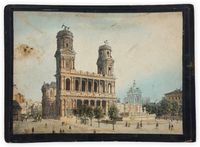
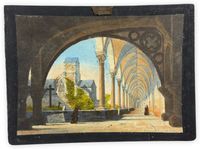
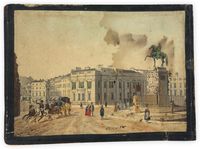
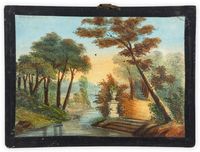
| Macro-category | Ancient Games and Pre-cinema |
| Subcategory | Optical Devices |
| Author | LEFORT, Pierre-Henri Amand (inventor) |
| Provenance | Paris |
| Publisher / Maker | Alphonse Giroux & Cie |
| Year | 1850 |
A Theatre of Light in a Box
A Complete Mid-19th Century
Medium-Size «Polyorama Panoptique» Retailed by Alphonse Giroux & Cie,
With Eight Original Dual Day-and-Night Effect Slides
Lefort, Pierre-Henri Amand (inventor). Polyorama Panoptique. Paris: Alphonse Giroux & Cie, ca. 1850.
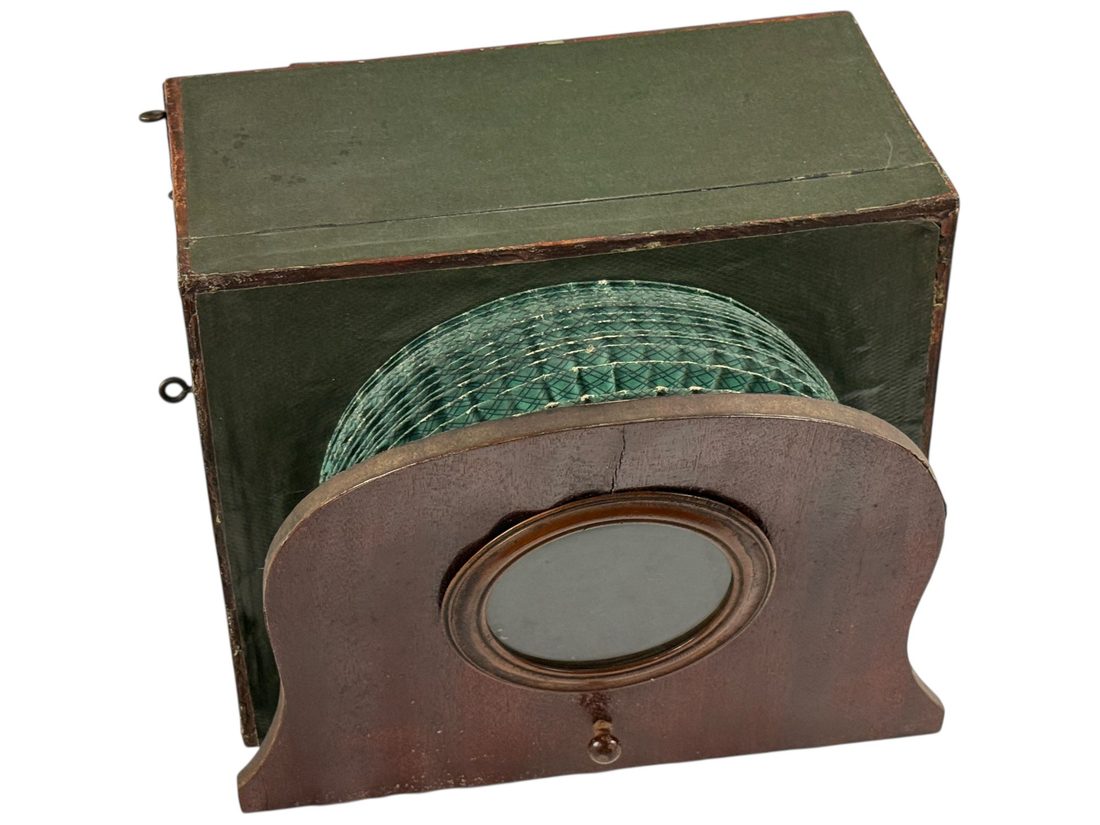
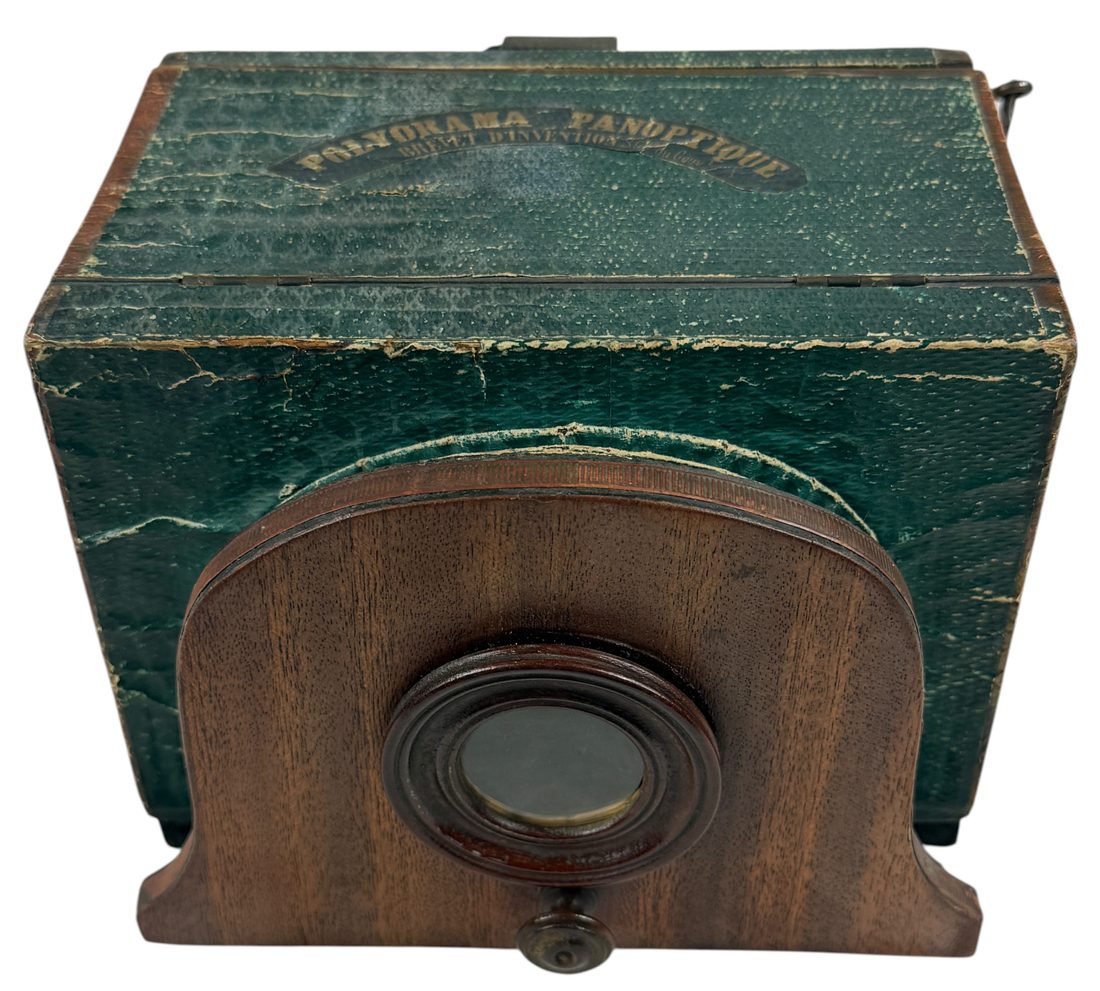
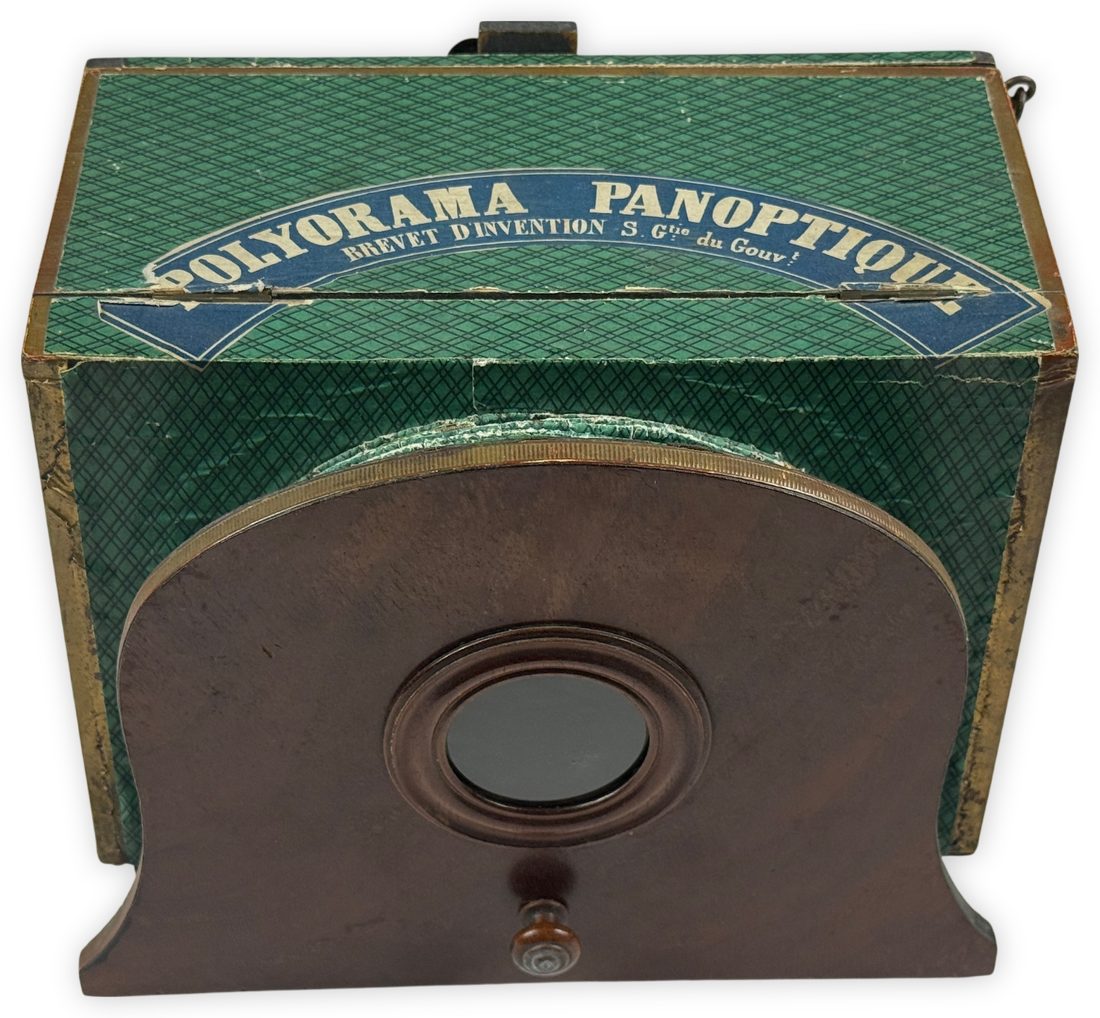
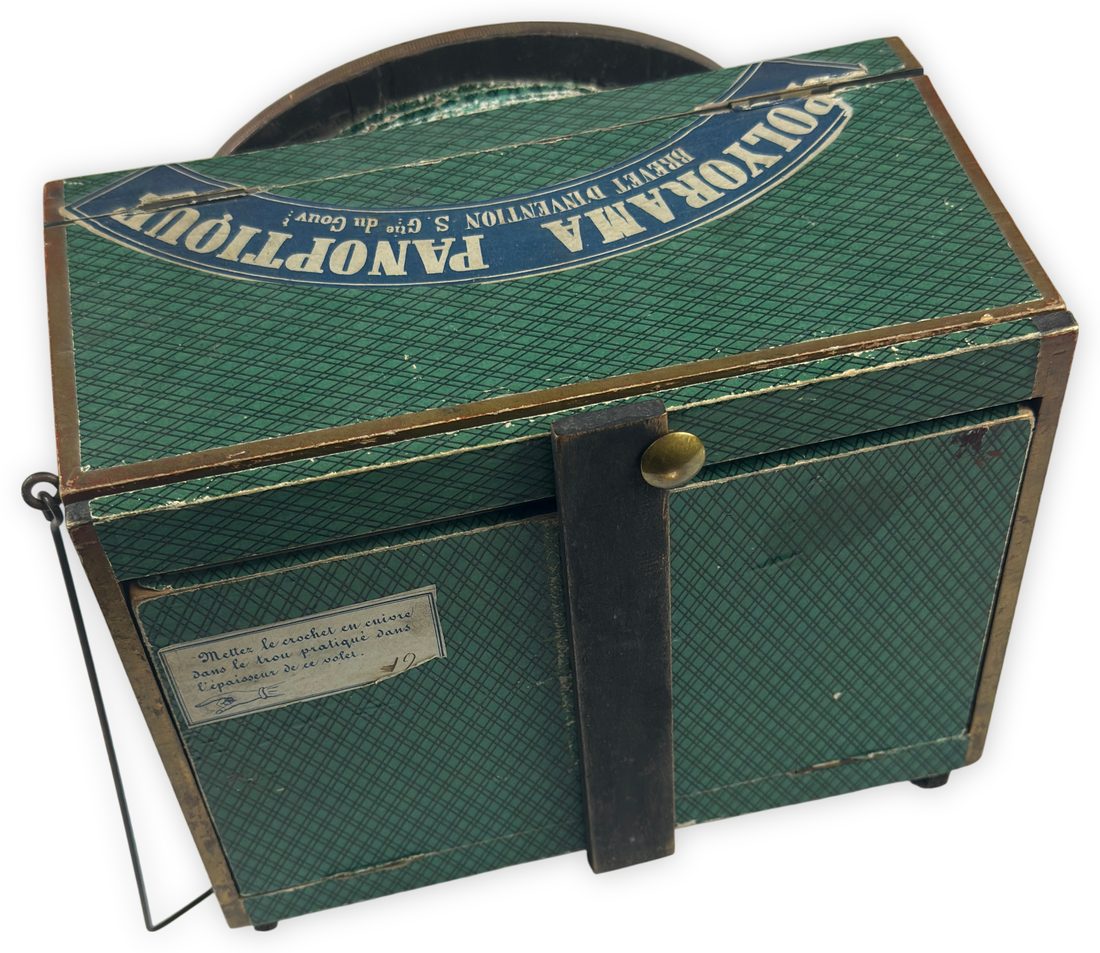
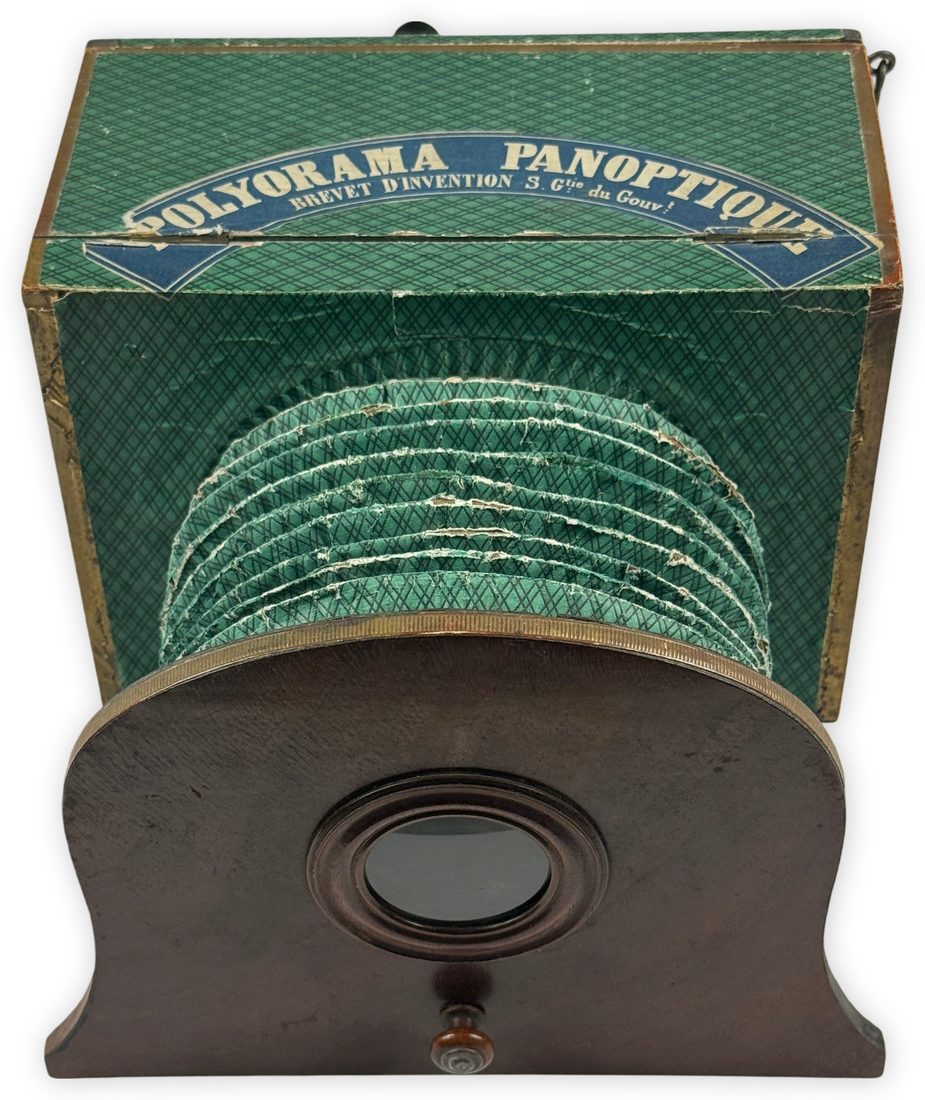
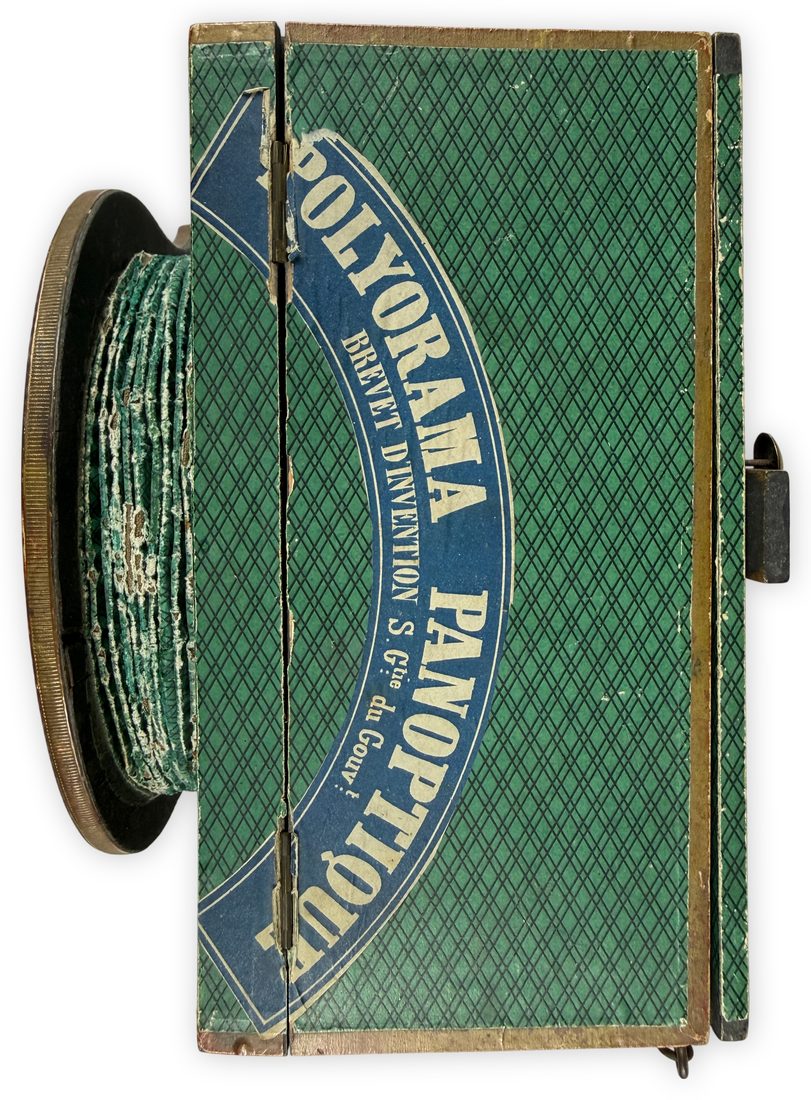
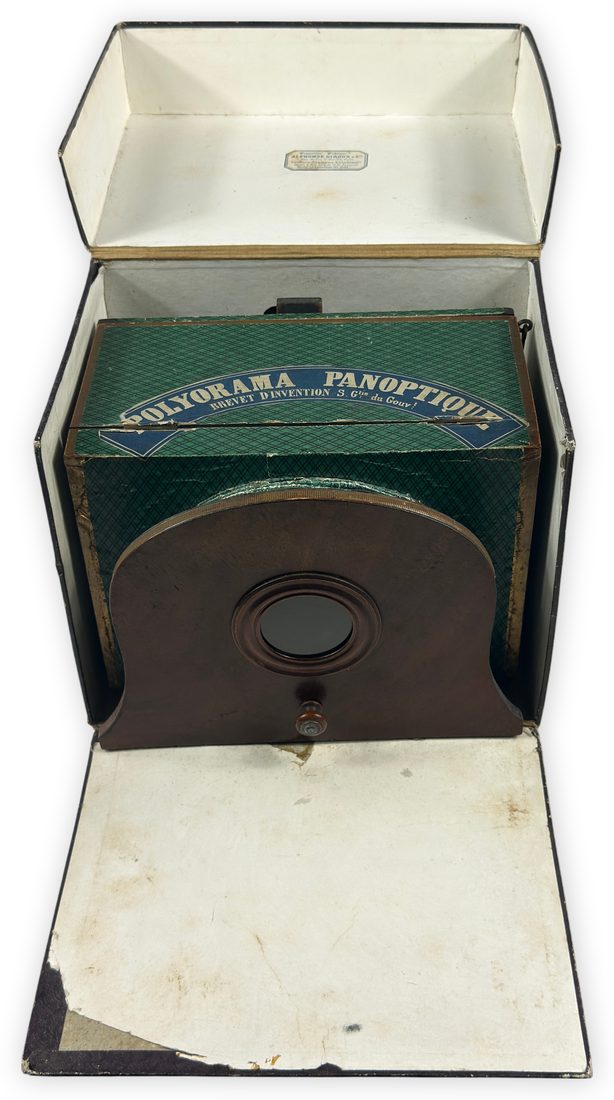
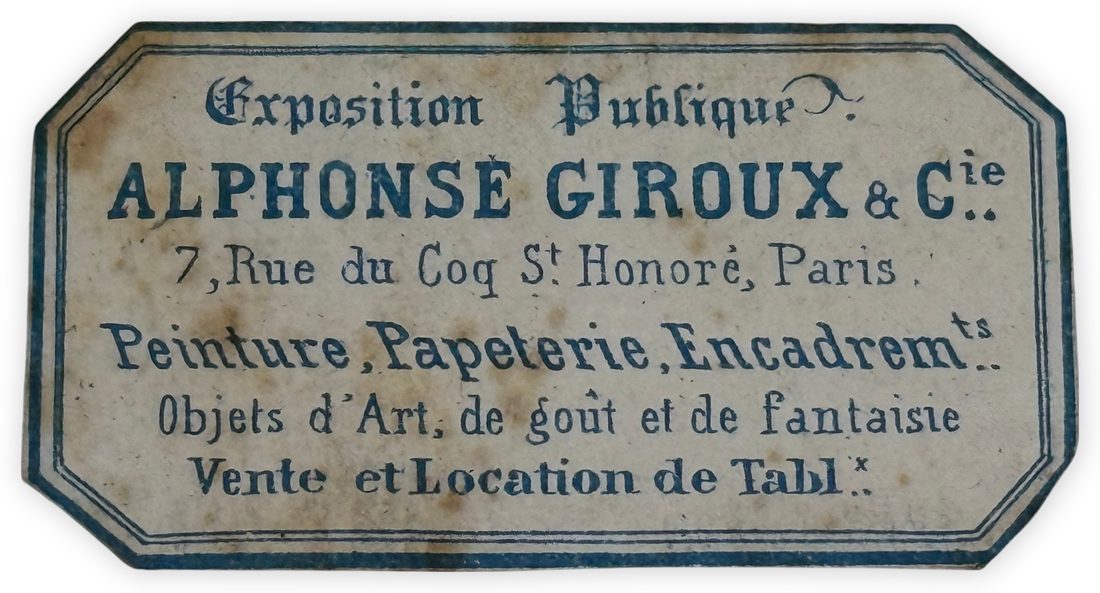
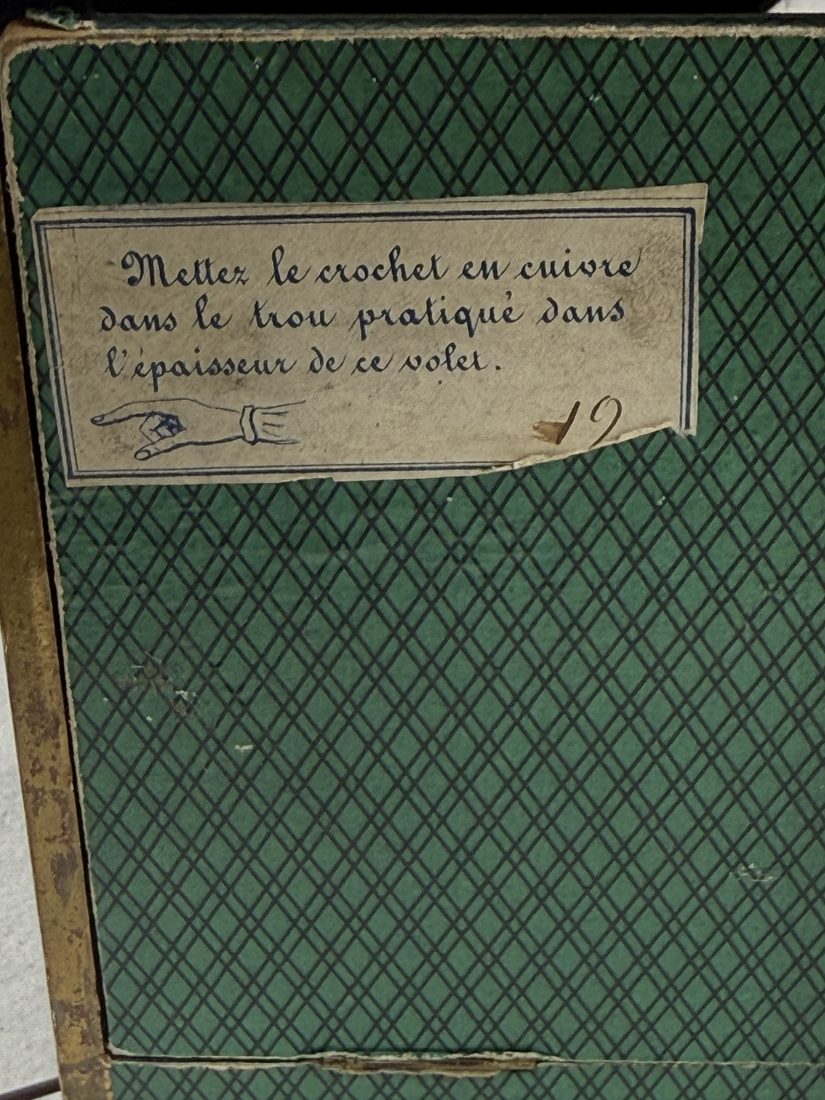
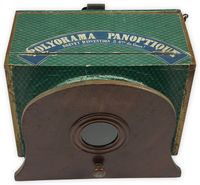
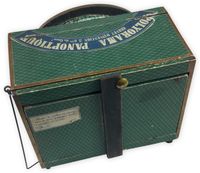
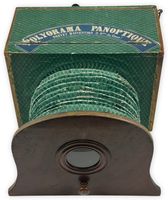
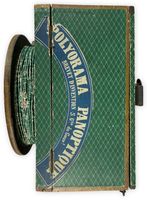
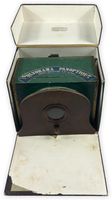
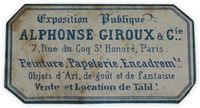
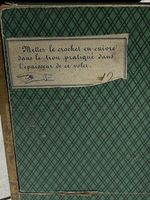
Wooden box viewer (220 × 150 × 140 mm with box closed, extending to c. 300 mm with bellows), covered in green and black patterned paper with gilt-stamped label, front panel of polished mahogany with round ocular lens and focusing bellows of blackened paper; hinged upper lid and rear trapdoor for light modulation. The label on the lid reads “Brevet d’Invention S.Gᵗᵉ du Gouvᵗ”, the abbreviation of “Sans Garantie du Gouvernement.” This legal formula, introduced in France in the early nineteenth century, appears on numerous patents and inventions of the period. It signified that the device had indeed been patented, but that the French government did not provide any guarantee regarding its functionality, safety, or commercial value. A dealer’s label pasted to the inner lid identifies the retailer as Alphonse Giroux & Cie, 7 rue du Coq-Saint-Honoré, Paris, purveyors of paintings, stationery, picture frames, and objects of art and fantasy; a printed instruction slip on the inner shutter reads “Mettez le crochet en cuivre dans le trou pratiqué dans l’épaisseur de ce volet” (“Place the copper hook in the hole made in the thickness of this shutter”). Eight original hand-coloured lithographic paper slides mounted in thin wooden frames (each approximately 170 × 220 mm), with selective perforations and reverse painting to produce a dual day-and-night effect under alternated reflected and transmitted light.
The Polyorama Panoptique is a celebrated mid-nineteenth-century domestic optical device, conceived to recreate in miniature the spectacular transformations of Daguerre’s
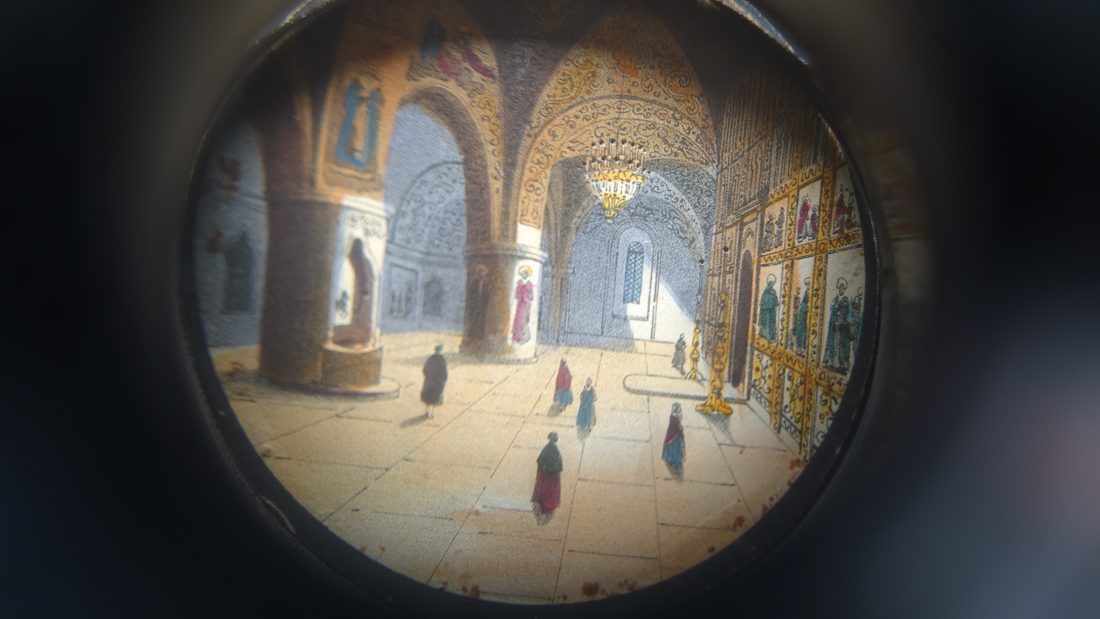
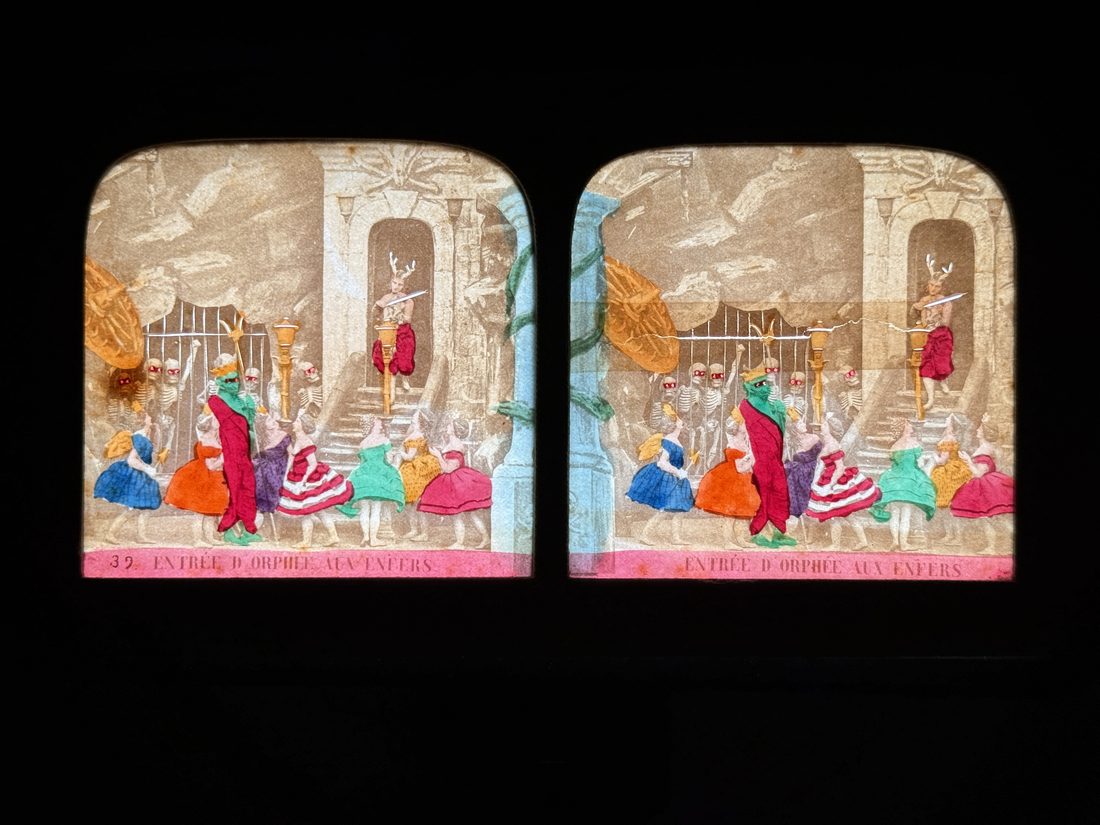
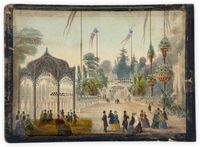
Diorama for a private audience. Its ingenious system of shutters and rear illumination allowed viewers to alternate seamlessly between two contrasting states of a single image: a clear diurnal scene visible in reflected light, and, when backlit, a dramatic nocturnal transformation punctuated by glowing windows, lanterns, or celestial bodies. This specific example, preserved with eight original and finely hand-coloured lithographic slides, demonstrates both the technical sophistication and the aesthetic ambitions of nineteenth-century visual culture. It encapsulates the fascination with “images in transformation,” uniting scientific curiosity, artisanal craftsmanship, and the bourgeois interest for domestic spectacles of light and illusion.
This portable optical viewer, patented in Paris in 1849 by Pierre-Henri Amand Lefort and retailed by Alphonse Giroux & Cie, consists of a rectangular wooden box covered in green-printed paper, its lid inscribed Polyorama Panoptique, Brevet d’invention S.G.D.G. The front panel, in mahogany, carries a convex ocular lens mounted in a wooden ring, connected to an extending bellows that permits focusing. The internal slot accommodates lithographic transparencies mounted on frames. Each transparency is executed with meticulous hand-colouring and secondary painting on the reverse, often with applied opaque pigments or metallic foils. Perforations in the paper correspond to windows, lanterns, or celestial bodies, which, when backlit, glow with extraordinary verisimilitude.
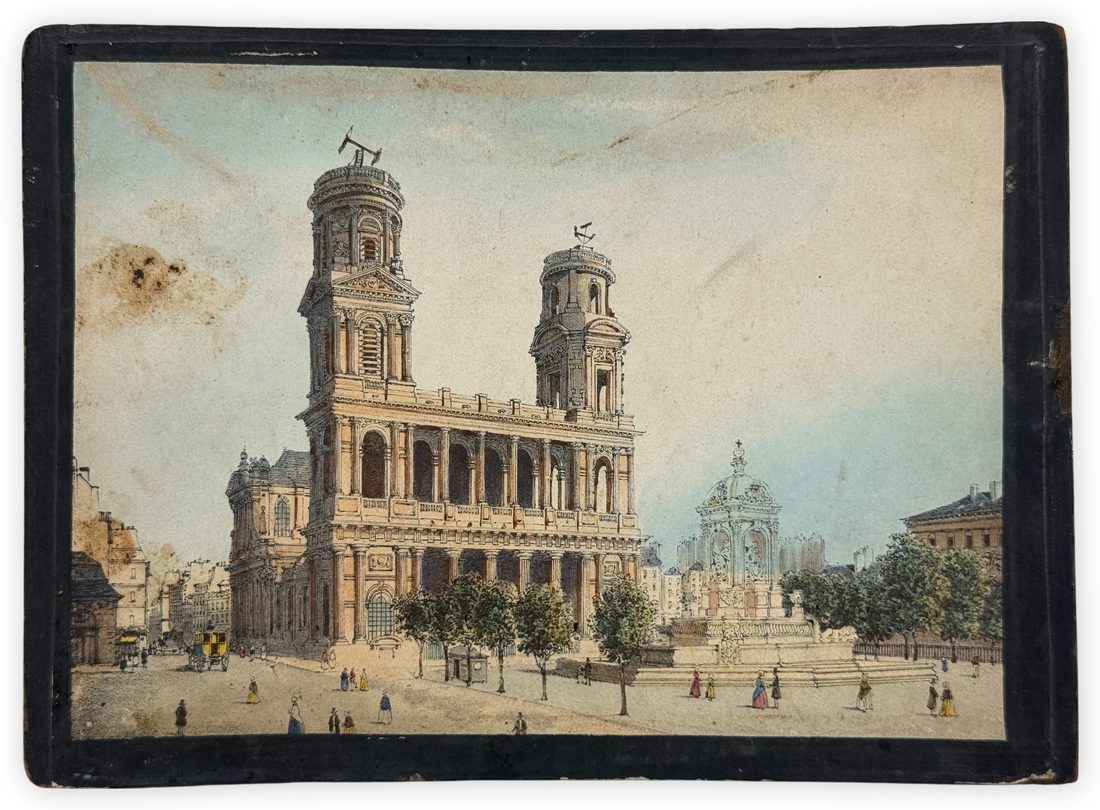
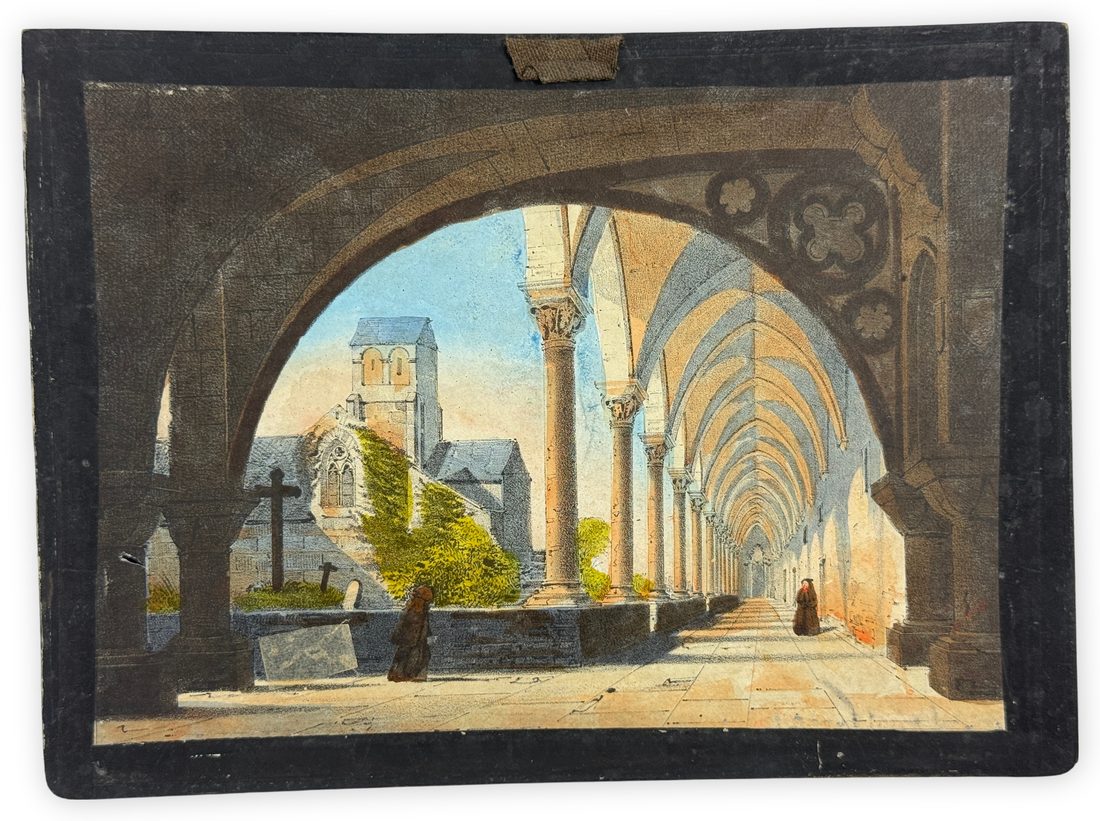
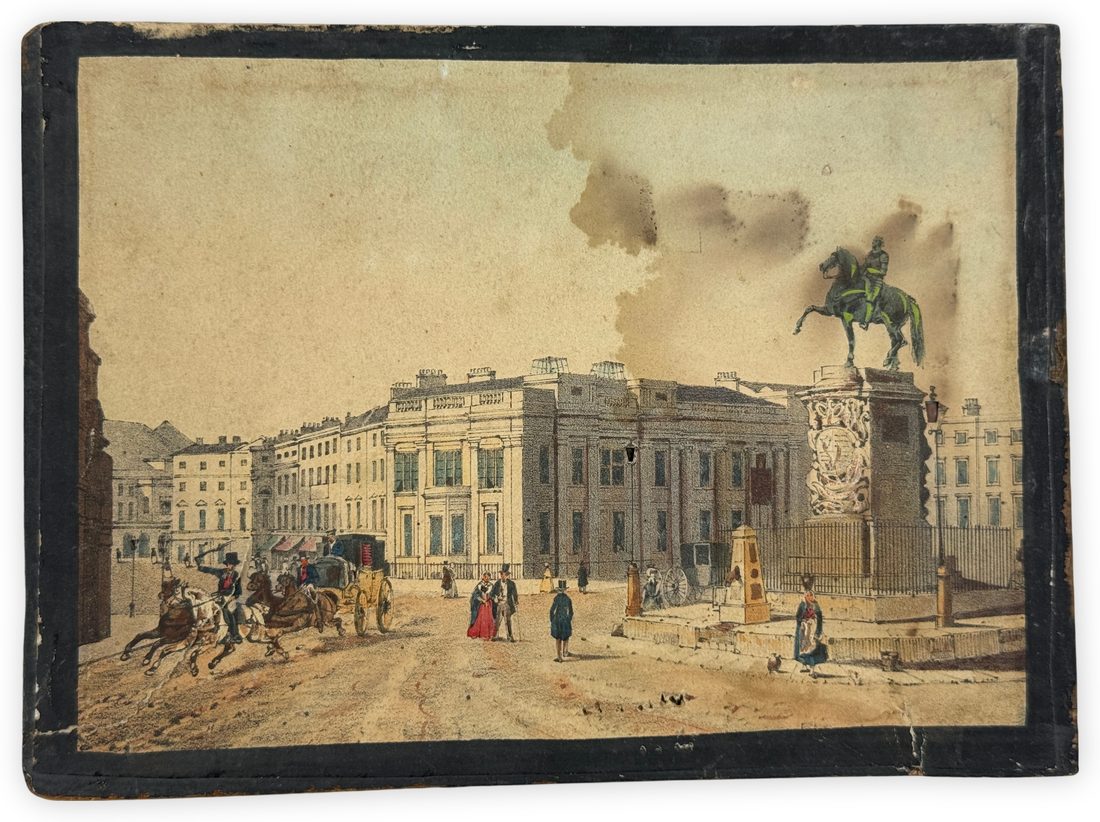
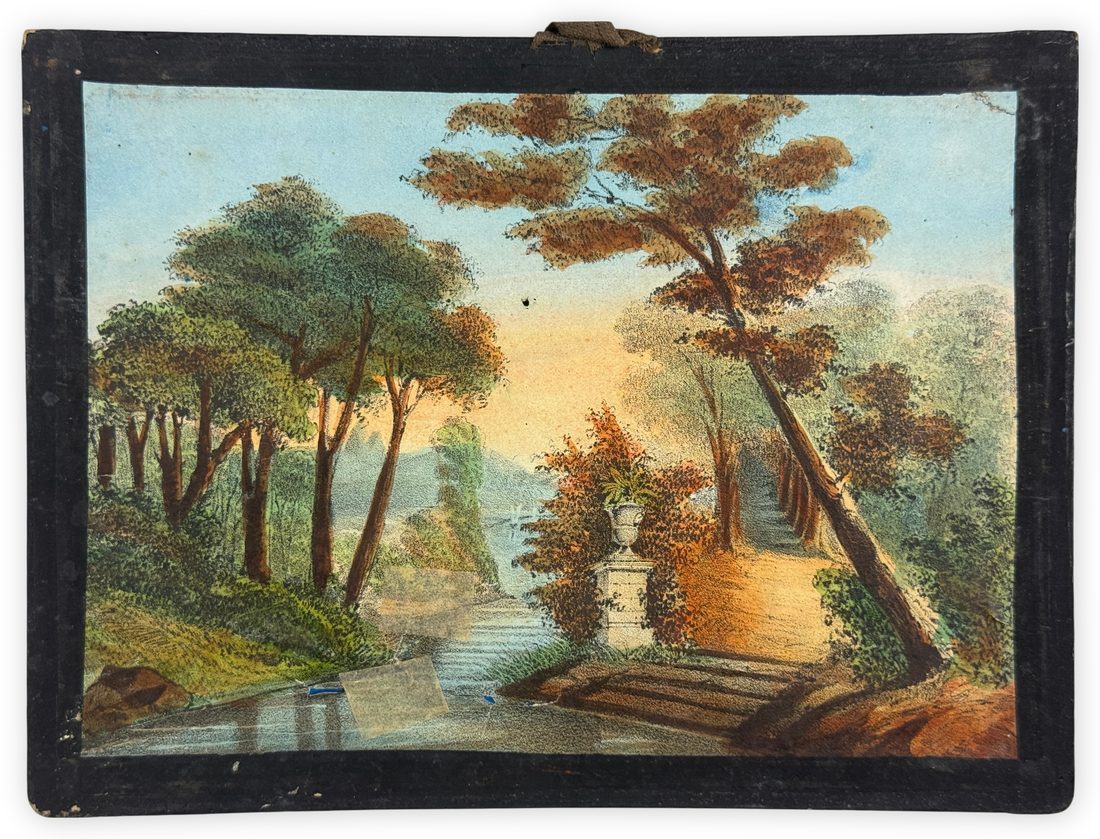
The 8 preserved views are:
No. | View (original caption) |
1 | Architecture Moyen Âge (a Gothic cloister walk, with a church beyond; descriptive title, from the surviving fragment of the original caption) |
2 | Interior of a Church (descriptive title assigned here, since the original caption is lost: only a damaged, illegible strip of paper remains on the verso) |
3 | Parc de la Malmaison (Environs de Paris) |
4 | Le Peintre dans la Nature (by day the painter is shown at work in the open air; by night the same figure reappears within an interior) |
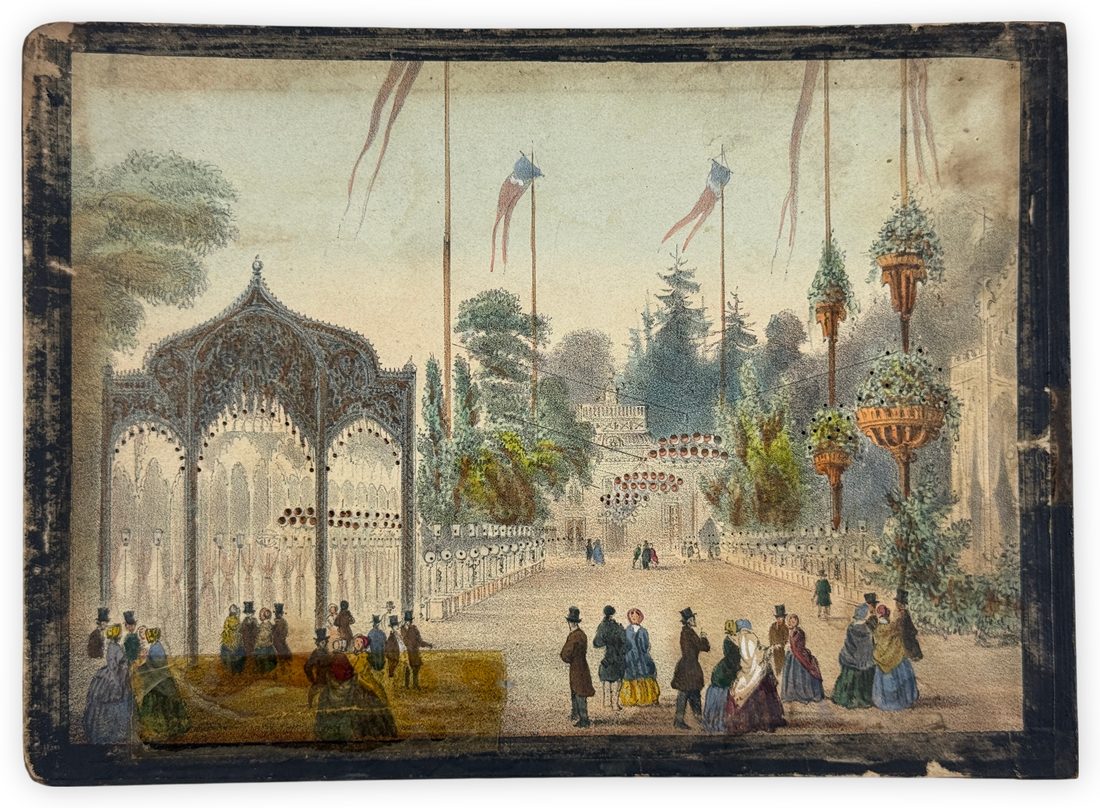
5 | Château des Fleurs aux Champs-Élysées (Paris) |
6 | Charing Cross (Londres) |
7 | Boulogne-sur-Mer, Bords de… (caption trimmed at the edge of the label) |
8 | Église St. Sulpice, Paris |
The simplicity of operation was part of its genius: with the lid open, ambient light revealed the day view; closing the lid and opening the rear trap allowed light to shine through, unveiling the nocturnal transformation. The spectator, peering through the lens, became immersed in the miniature theatre of metamorphosis.
Interactive viewer simulating the transition between standard and back-lit illumination, as originally experienced through the Polyorama
The Polyorama Panoptique must be situated within the broader history of “images transparentes.” Beginning in the late seventeenth century with the lanterna magica and the guckkasten (mondo nuovo), artists and inventors experimented with illuminated images for private amusement and public display.
By the 1780s, Philipp Hackert in Rome was producing Mondscheintransparente, landscapes that, when lit from behind, created atmospheric moonlit scenes. Parallel experiments in Paris by Carmontelle, and in London by Gainsborough, Ackermann, and Loutherbourg, explored similar effects. Daguerre’s Diorama, opened in Paris in 1822, brought this art to monumental scale, enthralling audiences with vast paintings that changed from day to night under shifting illumination.
The Polyorama Panoptique, invented in 1849, miniaturised this principle for domestic use. Lefort’s patent described it as “une chambre obscure portative” capable of showing “two effects in one picture.” Lemaire soon mass-produced the device, and it became a fashionable jouet scientifique, marketed to bourgeois families and exhibited at the Great Exhibition of London (1851).
In terms of iconography, the slides catered to contemporary tastes: exoticism (China, Constantinople), Catholic devotion (St Antoine), romantic vedute (Naples), and topical war events (Crimea). These themes mirror the visual culture of mid-nineteenth-century Europe, blending curiosity, nationalism, and spectacle.
Placed in the lineage of optical amusements, the Polyorama Panoptique represents the domestic, intimate pendant to the public diorama. Later developments such as the Polyorama Lorgnette (a pocket-sized version) and Carlo Ponti’s Megalethoscope (applying the same principles to photography) continued this trajectory until the cinema supplanted them by the century’s end.
Pierre-Henri Amand Lefort (active Paris, mid-19th century) was a French manufacturer of optical toys and instruments. His principal contribution was the 1849 patent for the Polyorama Panoptique, described as “une lunette pliante et un filtre optique” designed to create multiple lighting effects. While Lefort secured the invention, it was the optician Lemaire who commercialised it extensively, producing large quantities and exporting them throughout Europe. Beyond the Polyorama, Lefort also experimented with stereoscopes and related devices, though none achieved the same widespread impact. His work belongs to the tradition of Parisian artisans who bridged the worlds of science, pedagogy, and entertainment.
Conditions: light wear to paper covering, some defects minor restorations to some slides still enjoyable, but generally well preserved; colours vivid, bellows intact
References: R. Balzer, Optical Amusements: Magic Lanterns and Other Transforming Images. A Catalog of Popular Entertainments, New York: Harry N. Abrams, 1987; B. Verreycken, Der Guckkasten, Marburg: Jonas Verlag, 2015; Mannoni, Laurent, The Great Art of Light and Shadow: Archaeology of the Cinema, Exeter: University of Exeter Press, 2000.