How to Make Night Fall in Your Hand
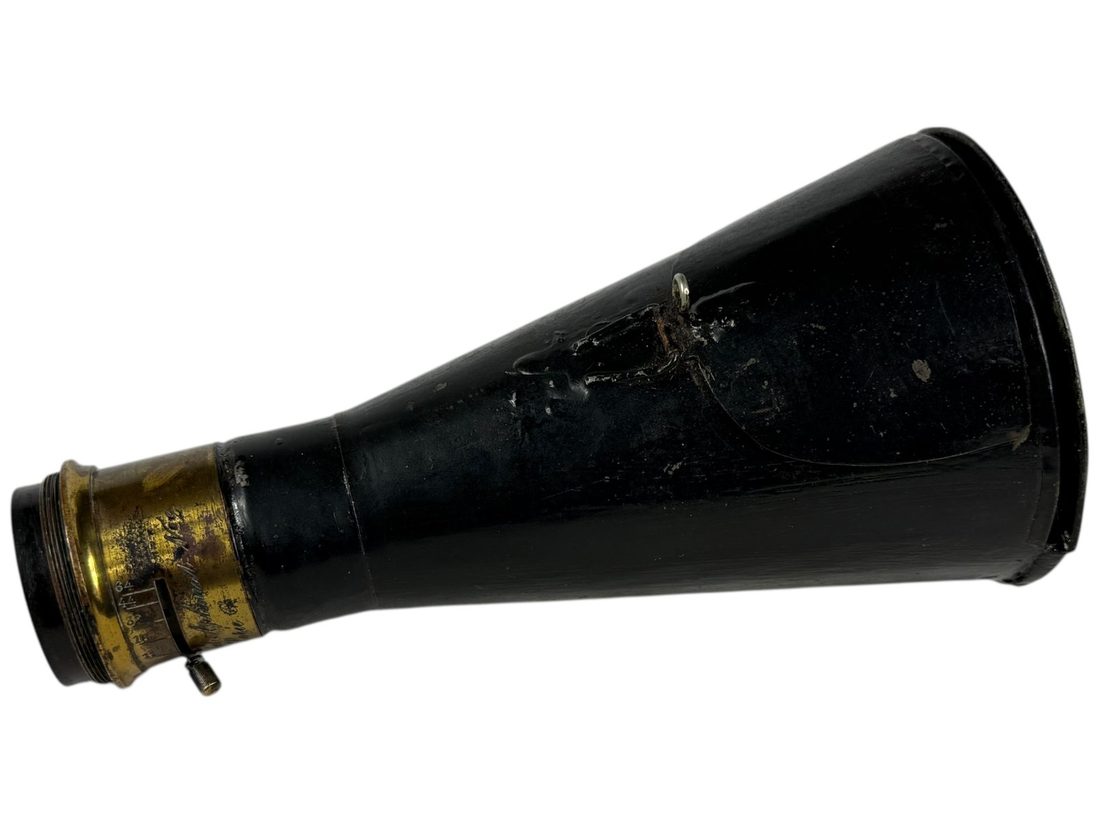
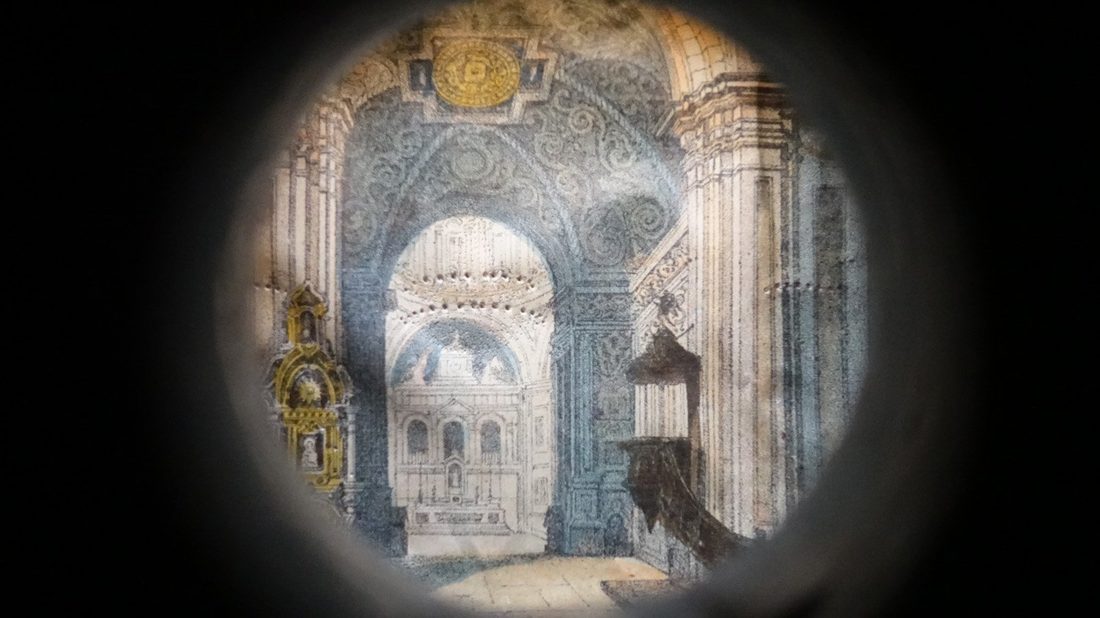
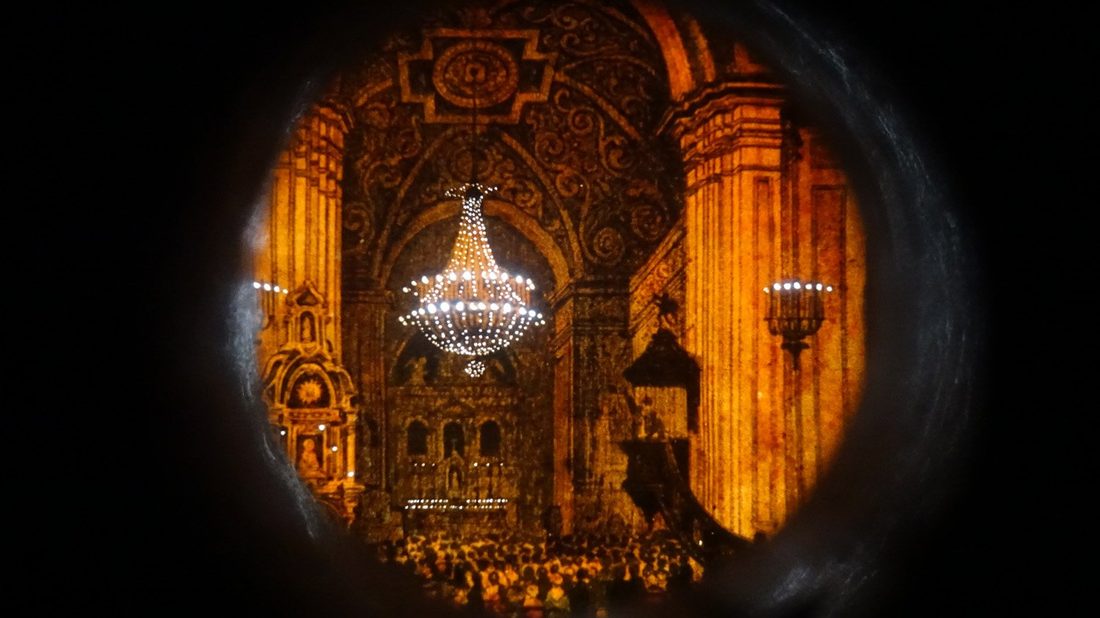
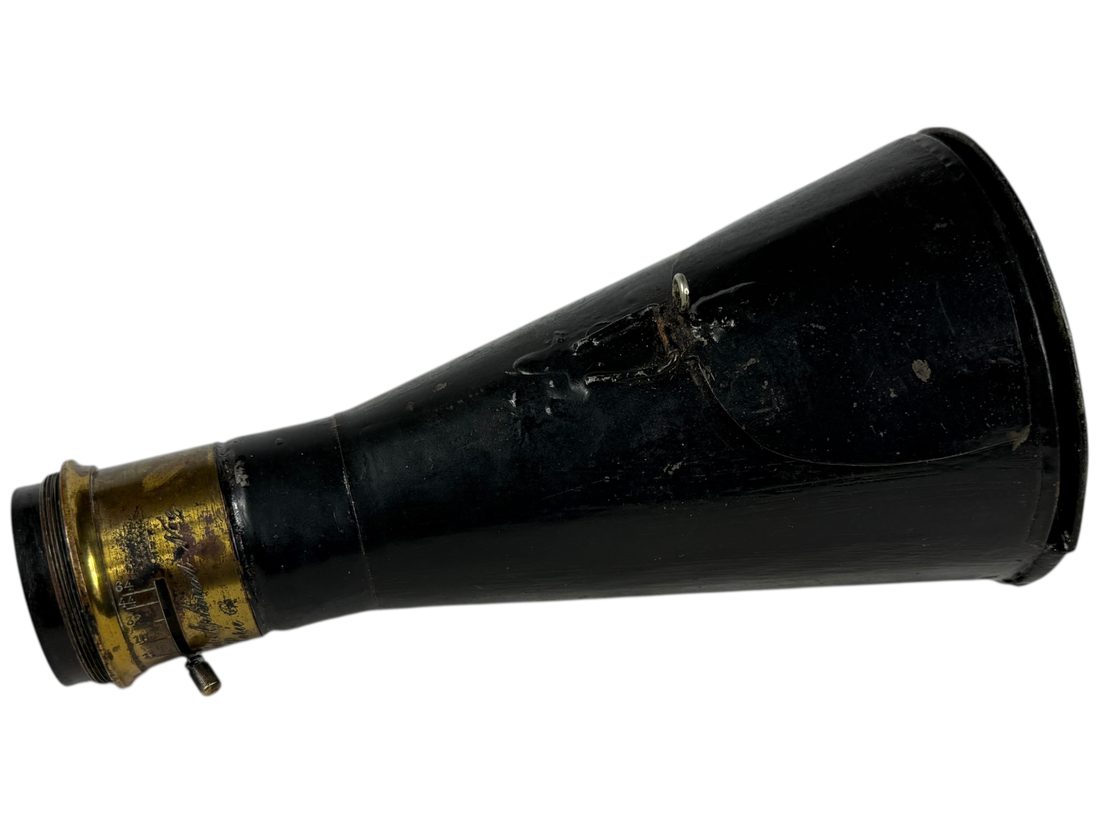
Hold a small black cone to your eye and look. A cathedral opens in front of you, seen in daylight: pale stone, a quiet nave, the ordinary colours of an afternoon. Now a hidden shutter closes over the front of the instrument and a second one opens at the back. Nothing else moves, and yet the same scene falls into night. Chandeliers come alight, windows begin to glow, the arches fill with a warm interior darkness. You have not changed the picture. You have changed the light, and the picture has answered.
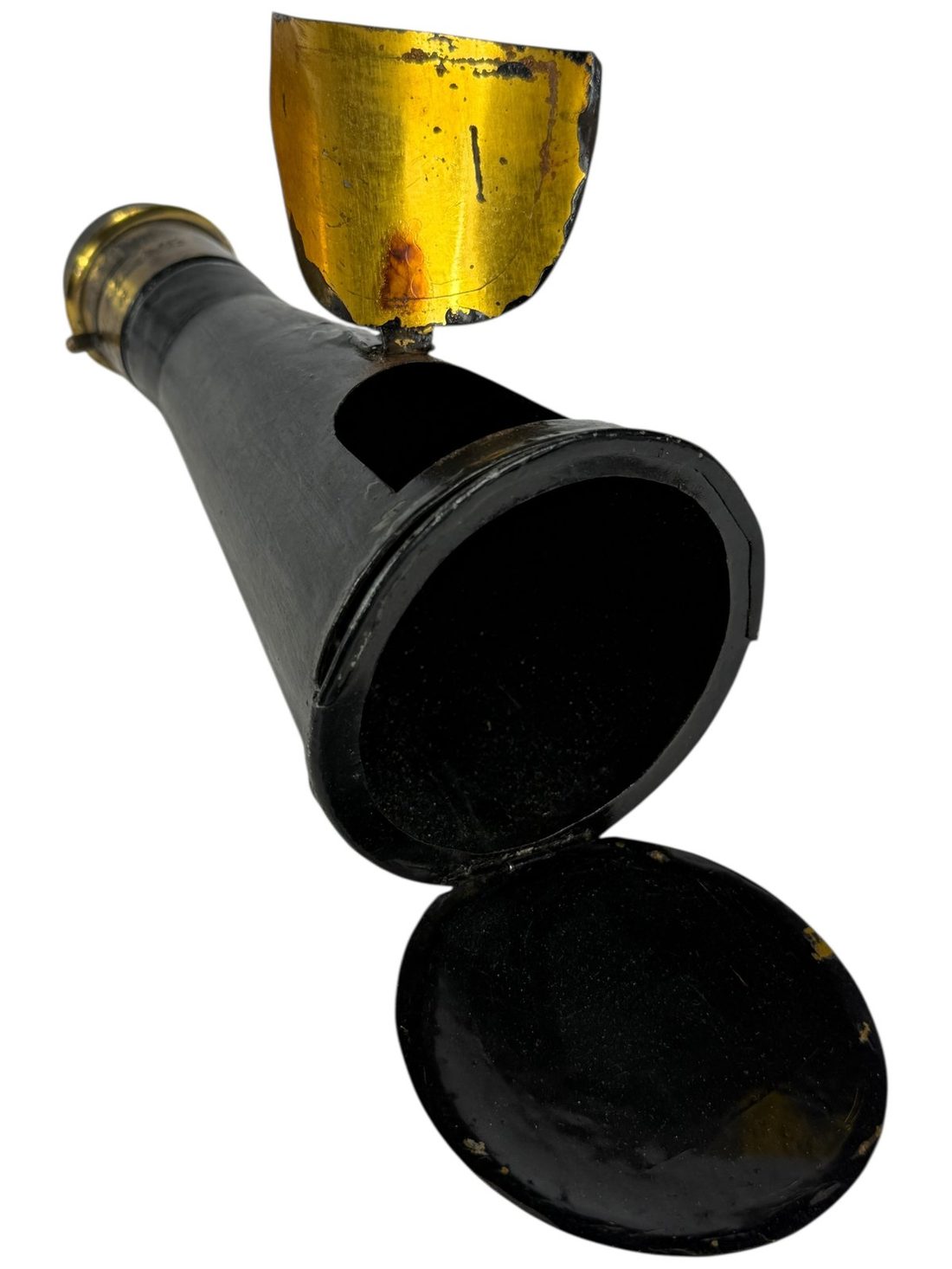
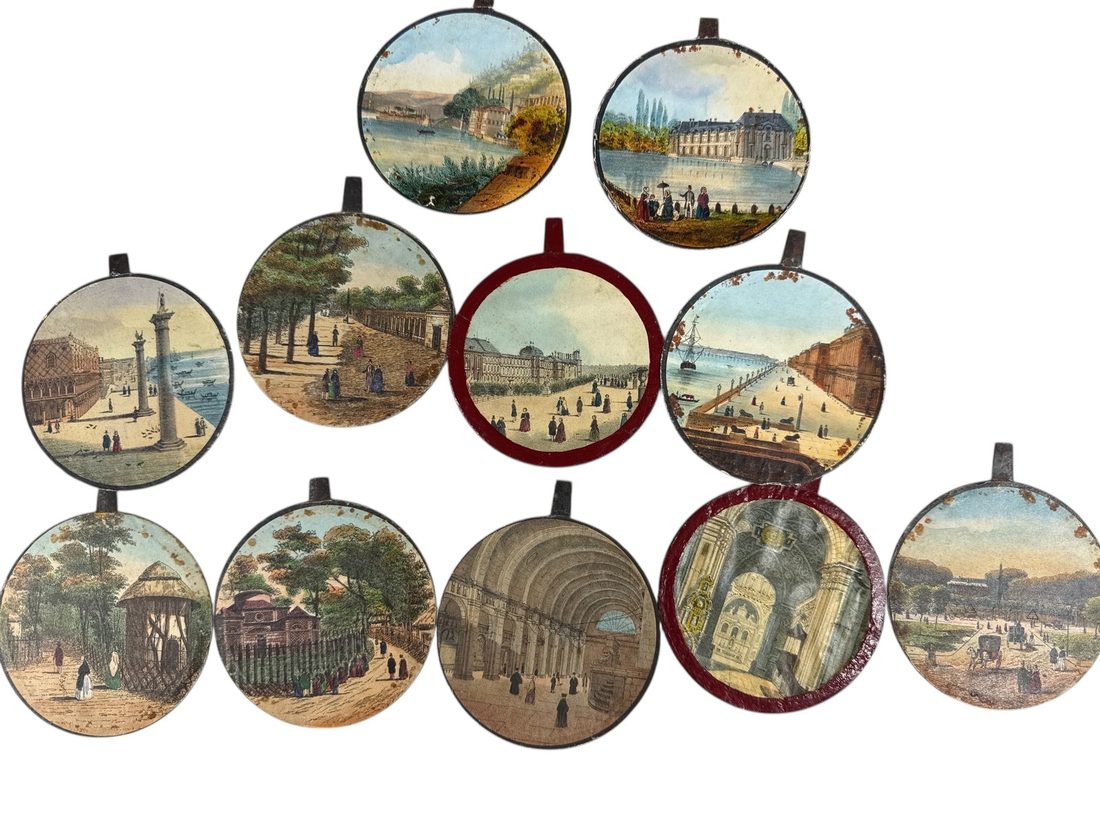
This is the trick at the heart of a nineteenth-century optical instrument called the polyorama lorgnette, a hand-held viewer no longer than a forearm, fitted with a brass eyepiece and two small shutters. Into a slot at the top you drop a circular card, painted by hand, and through the lens you watch a single image live two lives, day and night, at your command.
The puzzle is worth pausing on, because a picture is normally one thing. To make one surface hold two states, and to switch between them cleanly, is a real optical problem, and the harder half of it is the night. A dim or blurred nocturne kills the illusion at once; the magic depends on the second state being as convincing as the first.
The answer comes in two parts. The first is the paper. Each view is printed and coloured with carefully measured zones of opacity and translucency. Some elements are painted to be seen only by light bouncing off the front of the card, the way we see any ordinary picture: this is the daytime scene, in surface colour. Other elements are hidden in the translucent areas and appear only when light is allowed to pass through the card from behind. That rear light switches on the windows, the lamps, the moon. The two shutters on the instrument, one at the front and one at the back, are simply the switch between reflected light and transmitted light, between day and night.
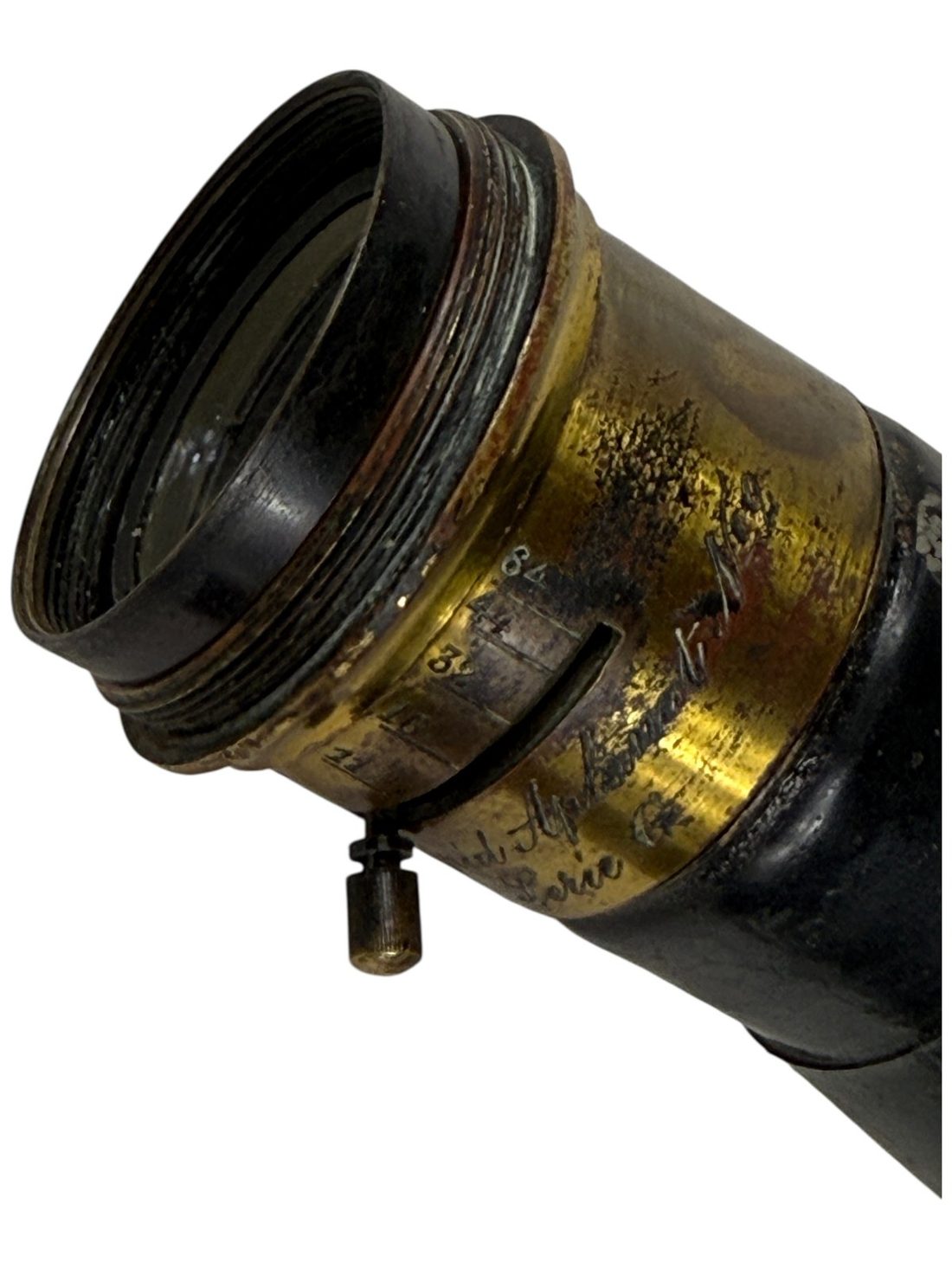
The second part is the one people tend to forget. Making the night state sharp and bright is an optical task, and the finer viewers of this kind were fitted with a serious lens for it, the brass mount engraved with a name such as Extra Rapid Aplanat. Two plain words carry the whole quality of the thing. Aplanatic means the lens is corrected for spherical aberration, the common flaw that lets the centre of an image look sharp while the edges go soft; a corrected lens keeps the picture crisp right across the field. Rapid means it is built to gather as much light as possible. That combination was the mark of a photographer's objective, not of a parlour toy, and it is exactly what a good night effect needs: enough light, evenly delivered, to render lit windows as clean points and a chandelier as legible detail rather than a smear. Whoever built such a viewer understood that the illusion would only ever be as good as the glass in front of it, and paid for the good glass.
You can try it for yourself. One of these views has been recreated as an interactive image: move the slider from day to night, and watch the same scene change its hour.
The views themselves were sold in sets, each a small theatre of places to visit by lamplight without leaving a chair: cathedrals and city squares, harbours and foreign palaces, chosen for how well they turned from day to night. The instrument belongs to a long European habit of looking, running back through peepshows and vues d'optique to the crowds who filed out of Daguerre's Diorama and wanted to take a little of that wonder home.
What they were really holding, without a word for it yet, was an idea about time. A photograph fixes one instant. A painting holds one mood. Here instead is a single image made to contain two moments at once and to move between them, a small machine for the passage from day to night, worked by nothing more than a shutter and a well-made lens. Long before a switch on the wall, before the cinema learned to dissolve one scene into another, someone could sit by a window, tilt a black cone to the light, and make the evening come. The trick has not aged: the shutter turns, and it is night.