Les Émotions chez les hypnotiques
| Macro-category | Rare Books and Manuscripts |
| Subcategory | Medicine |
| Author | LUYS, Jules Bernard |
| Place of printing | Paris |
| Publisher / Maker | Librairie Ém. Lefrançois |
| Year | 1888 |
second edition, revised and enlarged
an untrimmed copy with full margins
photographing the emotions of hypnosis:
the Charité experiments in twenty-eight original albumen prints
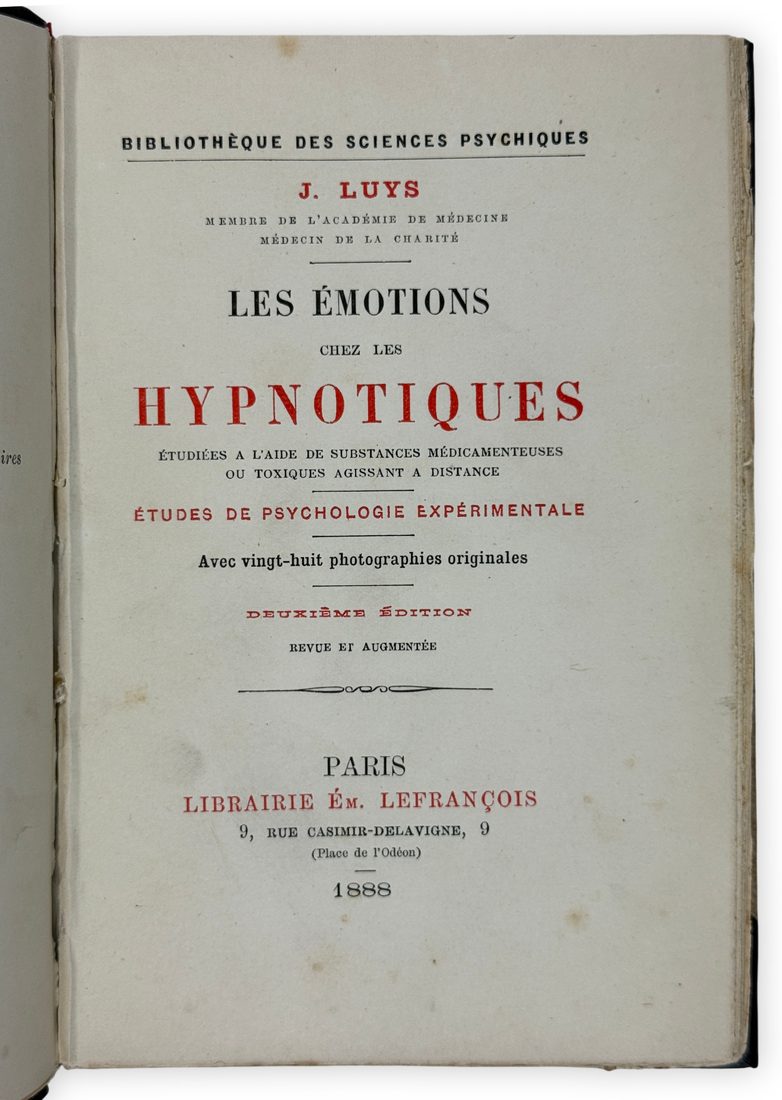
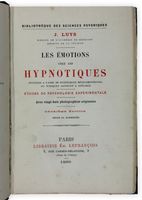
Luys, Jules Bernard. Les Émotions chez les hypnotiques étudiées à l’aide de substances médicamenteuses ou toxiques agissant à distance. Études de psychologie expérimentale. Avec vingt-huit photographies originales. Deuxième édition revue et augmentée. Paris: Librairie Ém. Lefrançois, 1888. (Bibliothèque des sciences psychiques, I.)
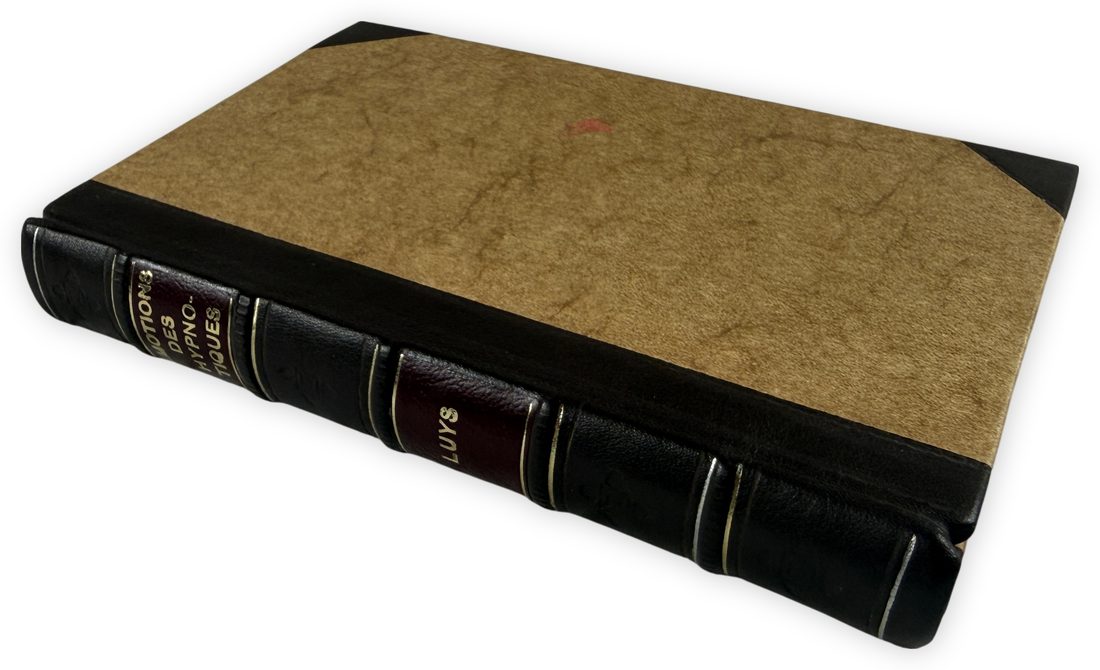
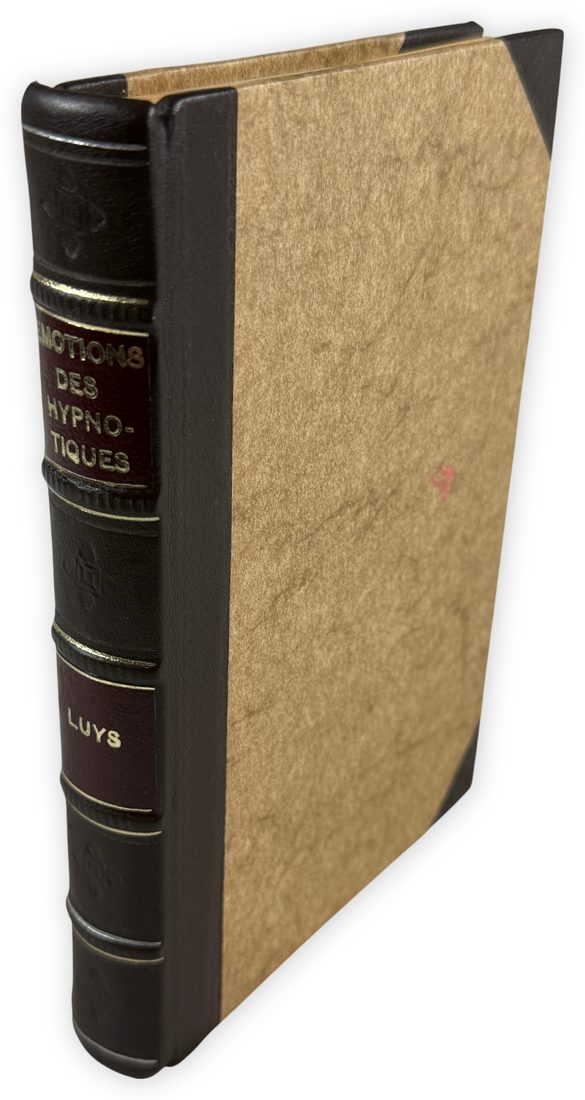
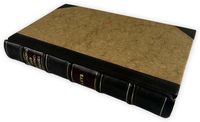
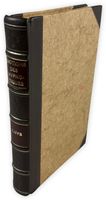
18mo (182 × 125 mm), twentieth-century dark brown half leather with corners over mottled buff paper boards, spine with five raised bands, gilt fillets and blind-stamped fleurons, two burgundy labels lettered in gilt, edges uncut and margins untrimmed, pp. 164, with seven unnumbered leaves of letterpress explanation and seven plates inserted after p. 162. Series half-title and title printed in red and black; the verso of the half-title announces thirty numbered copies on Holland paper, the present copy being one of the ordinary issue, on wove paper. Printed in Roman type by A. Lanier et ses Fils, rue Séguier, with imprint at the foot of p. 164. Signature: 1–4¹⁸ 5⁸ 6².
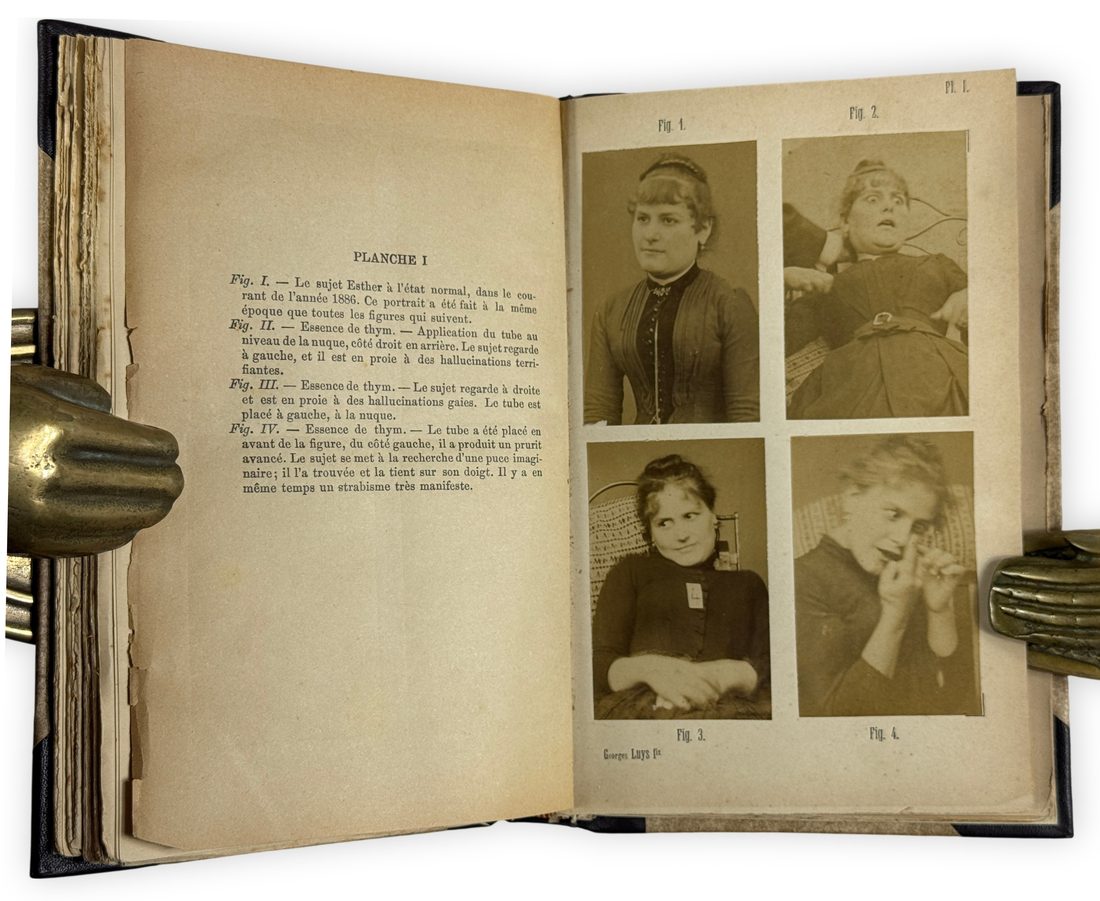
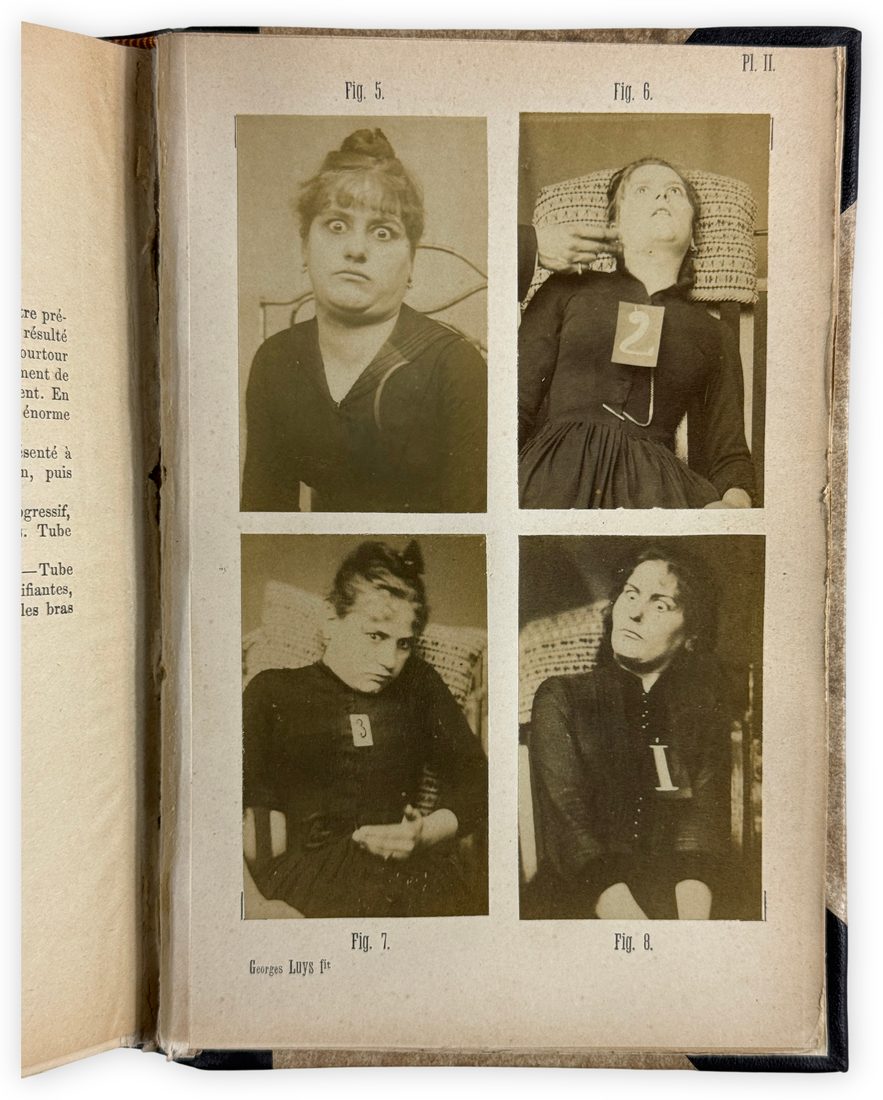
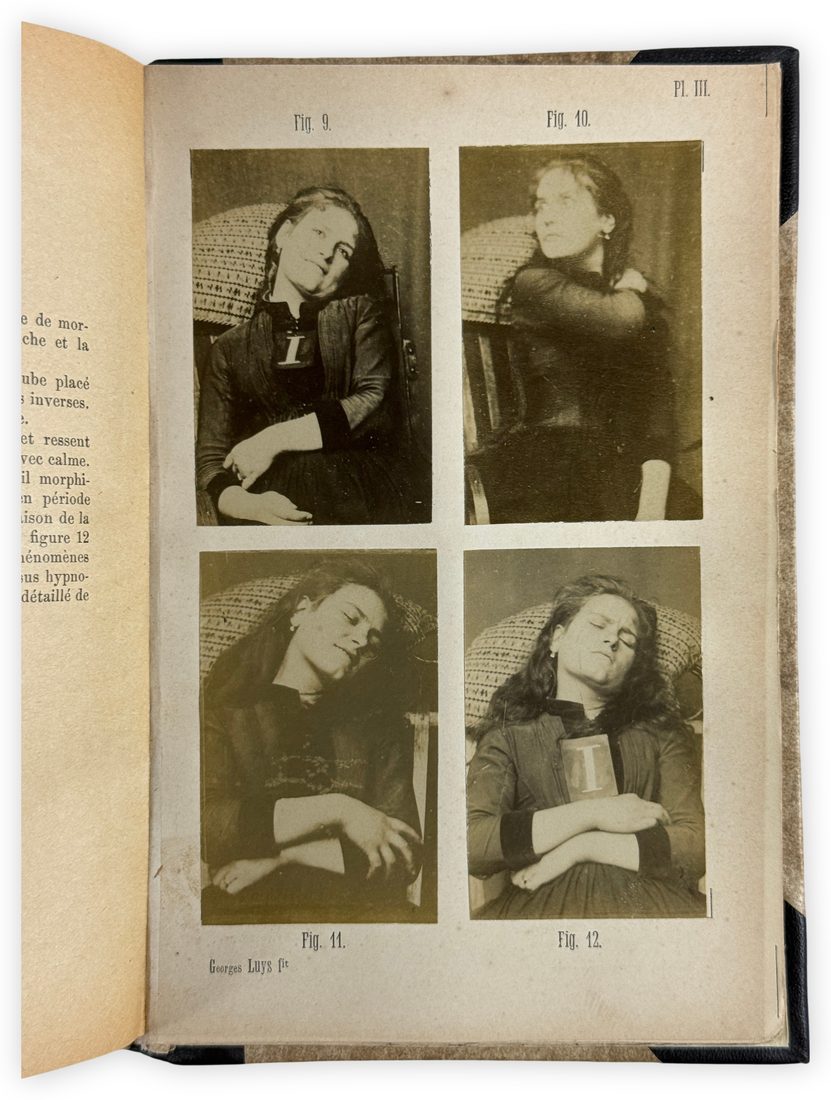
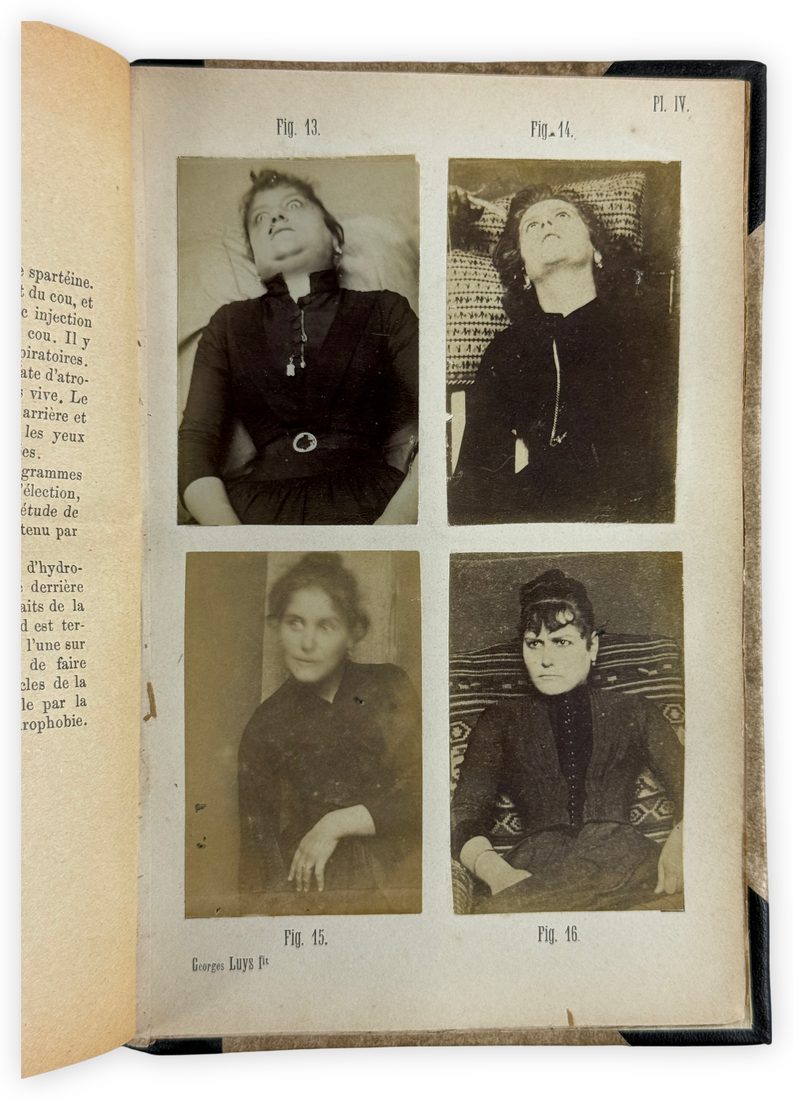
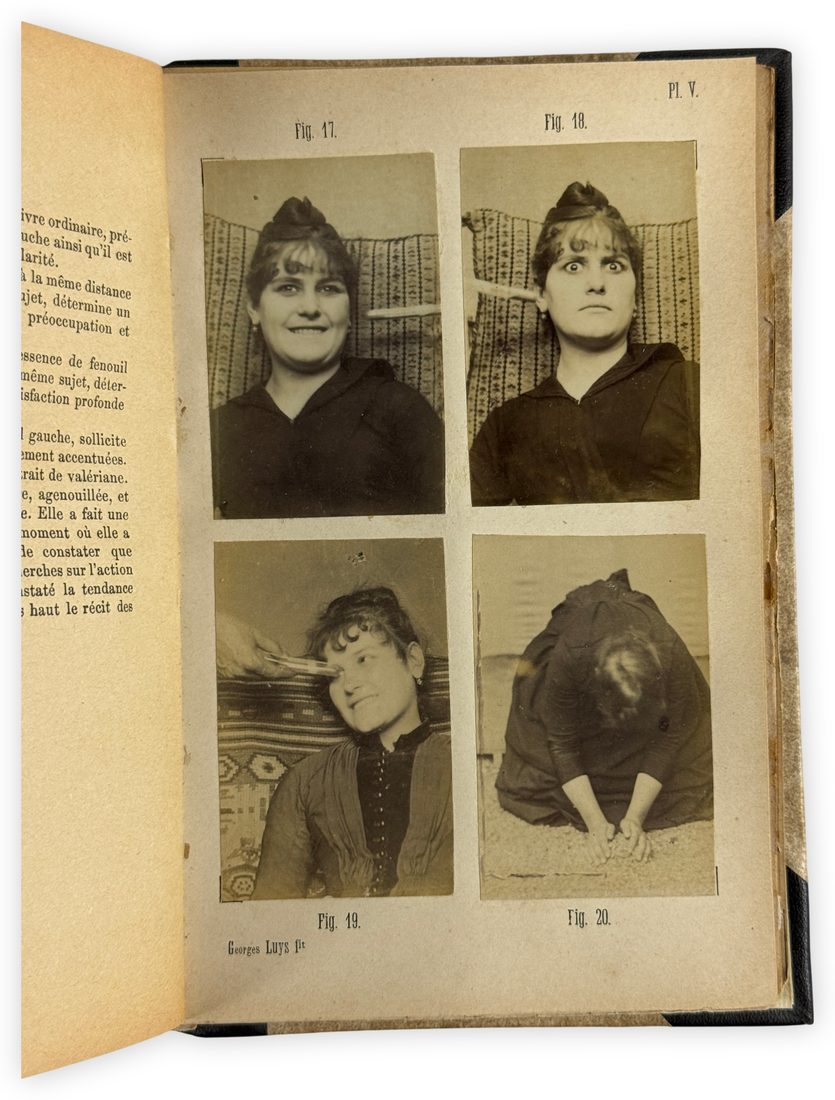
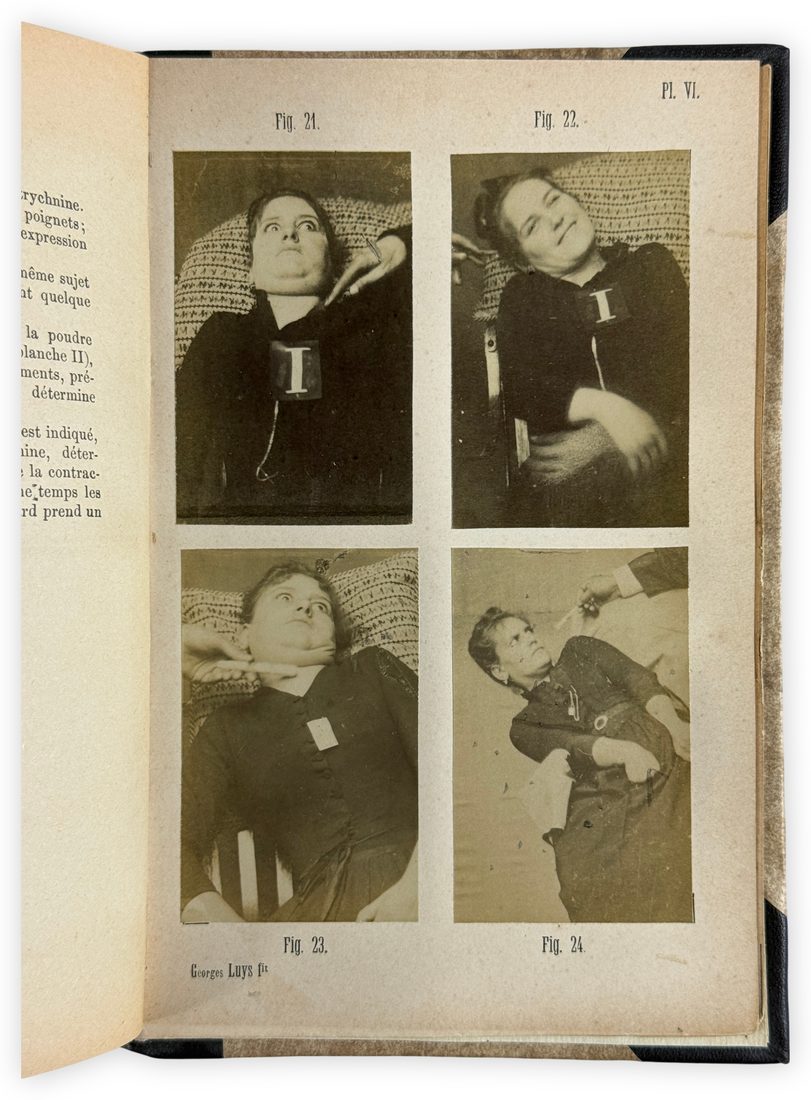
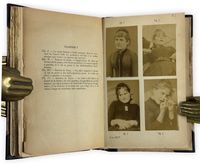
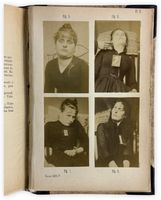
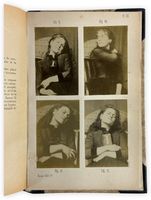
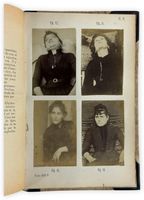
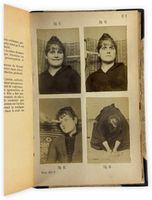
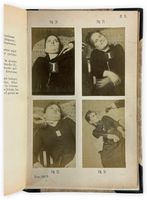
Twenty-eight original albumen prints by Georges Luys (70 × 46 mm each), mounted four to a plate on seven card mounts with printed captions, show two young women under hypnosis, Esther and Gabrielle, reacting to substances presented at a distance.
The second, revised and enlarged edition of Jules Luys’s study of the emotions provoked in hypnotised subjects by drugs and poisons sealed in glass tubes and held at a distance from the body. With a preface dated 10 June 1888, three months after a commission of the Académie de médecine had rejected these experiments, it is the author’s public reply, and it rests its case on twenty-eight photographs taken by his son Georges.
It is the only edition illustrated with actual photographic prints: the first, of 1887, used Lemercier’s photoglypties, the third, of 1890, photogravures.
The seven plates form a continuous photographic sequence, each preceded by a leaf of letterpress naming the substance, the point at which the tube was presented and the response observed.
Plate I opens with Esther “à l’état normal”, a portrait taken in 1886 in the same period as all the figures that follow, and then shows her under essence of thyme, seized in turn by terrifying and cheerful hallucinations and by an itch that sends her in search of an imaginary flea.
Plate II records the thyroid swelling and staring eyes produced by thyme, the depression attributed to potassium bromide, the nausea of ipecacuanha and the terror of morphine hydrochloride.
Plate III follows morphine further, from beatitude when the tube is held before the left eye to dread before the right, and on into morphine sleep and a lethargy of return.
Plate IV gathers sparteine sulphate, atropine sulphate, ten grams of cognac producing progressive drunkenness, and distilled water, read by Luys as the symptoms of hydrophobia.
Plate V sets the same tube of pepper against the two cheeks, provoking laughter on one side and vague unease on the other, then fennel, and valerian, under which Esther believes herself in a cemetery and kneels to scratch the earth.
Plate VI returns to strychnine and ipecacuanha, with contractures and a menacing gaze.
Plate VII introduces a second subject, Gabrielle, first in her normal state and then under water and cognac, the circumference of her neck recorded as rising from 33 to 41 centimetres before she slides from her chair in complete prostration. In several images the subjects wear numbered cards pinned to the chest, and in eight the hand of the experimenter is seen holding the tube to the neck or face.
The text comprises a preface and eight chapters. The Préface de la deuxième édition (pp. 5–12) answers the astonishment, scepticism and epigrams that had greeted the first edition. Chapter I, Considérations générales (p. 13), traces the inquiry to the Rochefort experiments and records that Luys had tested some eighty-seven bodies in gaseous, liquid and solid form, photographing each reaction as it appeared. Chapters II and III (pp. 22 and 51) set out technique and method: the preparation of the subject, the stages of hypnosis, the sealed tubes, and a protocol in which the tubes were prepared and numbered by a third person, the key being kept in a sealed envelope, and invoke Brown-Séquard’s recent work on the action of the sensory nerves upon the brain. Chapter IV, Symptomatologie (p. 64), classifies the somatic and emotional responses. Chapter VII, Déductions thérapeutiques (p. 108), proposes clinical applications, develops the notion of a “dédoublement” of emotional aptitudes, whereby one substance produces gaiety on one side of the body and sadness on the other, and warns the experimenter of the risk of an “homicide par imprudence”. Chapter VIII, Récit des expériences (pp. 119–162), is a laboratory journal of forty-two entries, one for each substance or agent, from strychnine, morphine, laudanum, hashish, chloral and absinthe to garlic, raw onion, rose leaves, Eau de Cologne, beer, tobacco smoke, oxygen and nitrous oxide, ending with plain water and an empty glass tube.
Two chapters are new to this edition: Chapter V (p. 98), on the stimulation of the “emotional regions” by glasses of different colours, and Chapter VI (p. 103), on the transmission of emotions at a distance from one hypnotised subject to another, whose feelings were said to fall into unison. Both share their titles with notes read by Luys to the Société de biologie on 16 and 23 June 1888, and with them the text grows from the 106 pages of 1887 to 164. The explanatory leaves number the figures in Roman numerals, the mounts in Arabic. The edition carries a misprint at p. 129, where Gabrielle is referred to “pl. VIII, fig. 25” although the plates are seven, and an error of unit in the explanation of fig. V, where the neck is said to measure “0,31 cent.” before swelling to 36.
In 1885 Henri Bourru and Prosper Burot, of the naval medical school at Rochefort, reported to the Association française pour l’avancement des sciences, meeting at Grenoble, that medicinal substances could act on hysterical subjects without being administered, merely brought near the body. Luys took up the claim at the Hôpital de la Charité, the old Paris hospital on the rue des Saints-Pères where he then held his service, and turned it into a programme. At the time the school of the Salpêtrière under Charcot treated hypnosis as a pathological state of hysteria, while the school of Nancy, with Liébeault and Bernheim, explained it by suggestion. Luys stood with neither: he sought in hypnosis a means of isolating the emotional centres of the brain and of making them answer to physical agents.
On 30 August 1887 he presented his results to the Académie de médecine. A commission was appointed; Charcot declined to sit, and the experiments were examined by Hérard, who presided, Bergeron, Brouardel, Gariel and Dujardin-Beaumetz as rapporteur. For the test a person unconnected with the commission prepared sixteen numbered tubes, ten of solutions and six of powders wrapped in paper, to which an empty tube was added, their contents recorded under seal and unknown to experimenter and subject alike. The report, read on 6 March 1888, concluded unanimously that none of the effects observed bore any relation to the nature of the substances, the empty tube producing reactions as strong as any other, and that neither therapeutics nor forensic medicine need take them into account. Luys objected at once and replied formally on 7 August, maintaining that the trial had been badly conducted and that his photographs bore witness to the contrary. The preface of the present edition is dated 10 June 1888, between the report and the reply. In January 1893 the English surgeon Ernest Hart, editor of the British Medical Journal, having watched Luys’s demonstrations at the Charité, repeated the trials on the same subjects in his own rooms, secretly exchanging the tubes, and found that the reactions followed expectation rather than substance.
The photographs continue the line opened by Duchenne de Boulogne’s Mécanisme de la physionomie humaine (1862) and pursued at the Salpêtrière in the Iconographie photographique of Bourneville and Regnard (1876–1880) and by Albert Londe, and they extend Luys’s own use of photography in his atlas of the brain of 1873. Here, however, the camera records an emotion said to have been produced on demand, in numbered sequence, rather than a lesion or a spontaneous attack. What the images show and what the captions claim do not coincide: the photographs record the subjects’ reactions, and the captions attribute them to substances that the blind trials showed to be irrelevant.
The 1888 edition is held by the Getty Research Institute in its Photography Incunabula Collection, catalogued as illustrated with mounted albumen prints, by the Graphic Arts Collection at Princeton, and by Harvard’s Countway Library of Medicine in the Julio Mario Santo Domingo Collection on altered states of consciousness; the Bibliothèque nationale de France has two copies. It belongs to the history of photography as much as to that of medicine and of hypnotism.
Jules Bernard Luys (Paris, 1828 – Divonne-les-Bains, 1897) became interne des hôpitaux in 1853 and médecin des hôpitaux in 1862, directed the private asylum at Ivry from 1864, and held a service at the Salpêtrière from 1869 before moving to the Charité in 1886; he was elected to the Académie de médecine in 1877. His Recherches sur le système nerveux cérébro-spinal (1865) describe the subthalamic nucleus, named corpus Luysii by Forel in 1877, and the centromedian nucleus of the thalamus. With the Iconographie photographique des centres nerveux (1873) he was among the first to illustrate the anatomy of the brain with photographs, and Le Cerveau et ses fonctions (1876) carried his views to a wide international readership. In 1881 he founded the journal L’Encéphale with Benjamin Ball. From the mid-1880s his work turned to hysteria, hypnosis and the action of metals, magnets and substances at a distance, and later to the “couronne aimantée”, a magnetised iron crown by which he claimed to store and transfer cerebral states, a theme he pursued with Gérard Encausse (Papus) in 1891. Les Émotions chez les hypnotiques is the central text of this later phase, which closed with the enlarged Hypnotisme expérimental of 1890.
The photographs are the work of his son Georges Luys (born 1870), who signed the plates “Georges Luys fit” while still in his teens. He later became a urologist at the Lariboisière hospital in Paris, devised a urine separator in 1901, and wrote treatises on cystoscopy and on the endoscopic treatment of the prostate.
Conditions: an excellent copy.
References: A. Crabtree, Animal Magnetism, Early Hypnotism, and Psychical Research, 1766–1925: An Annotated Bibliography, White Plains: Kraus International Publications, 1988, no. 1178 (first edition, 1887); A. L. Caillet, Manuel bibliographique des sciences psychiques ou occultes, Paris: Lucien Dorbon, 1912, vol. II, no. 6891; Revue de l’hypnotisme et de la psychologie physiologique, vol. 3, Paris, 1888–1889, pp. 65–66, 85–86; M. Bonduelle and J. Cambier, Le corps de Luys, Bulletin de l’Académie nationale de médecine, vol. 187, no. 4, 2003, pp. 759–770; A. Parent, M. Parent and V. Leroux-Hugon, Jules Bernard Luys: A Singular Figure of 19th Century Neurology, Canadian Journal of Neurological Sciences, vol. 29, 2002, pp. 282–288; C. S. Alvarado, Jules Bernard Luys on Magnetic Pathology, History of Psychiatry, vol. 30, no. 3, 2019, pp. 359–374; D. Canguilhem, Luys, Jules-Bernard (1828–1897), in J. Hannavy (ed.), Encyclopedia of Nineteenth-Century Photography, New York: Routledge, 2008, p. 878; E. Hart, Hypnotism, Mesmerism and the New Witchcraft, London: Smith, Elder & Co., 1893.
Online access: the Getty Research Institute copy of the 1888 edition, with its catalogue record, and a second copy from the University of Michigan are available in full on the Internet Archive, as are the first edition of 1887 (University of California) and the third of 1890 (Countway Library of Medicine). The edition is recorded in the catalogue of the Bibliothèque nationale de France, in SUDOC, in WorldCat (OCLC 23432347) and in the online catalogues of Princeton and Harvard. Crabtree’s bibliography is accessible online through the Esalen Center for Theory and Research, Caillet’s Manuel through the Internet Archive, and the article by Bonduelle and Cambier on the website of the Académie nationale de médecine. The volumes of the Revue de l’hypnotisme for 1887–1889 are digitised on the Internet Archive.