De capricci medicinali dell'eccellente medico
| Macro-category | Rare Books and Manuscripts |
| Subcategory | Medicine |
| Author | FIORAVANTI, Leonardo |
| Place of printing | Venezia |
| Publisher / Maker | Ludovico Avanzo |
| Year | 1568 |
LEONARDO FIORAVANTI AND HIS HERMETIC MEDICINE
THE «BAUME DE FIOREVANTI» AND THE PHILOSOPHER ‘S STONE
AS UNIVERSAL PANACEA
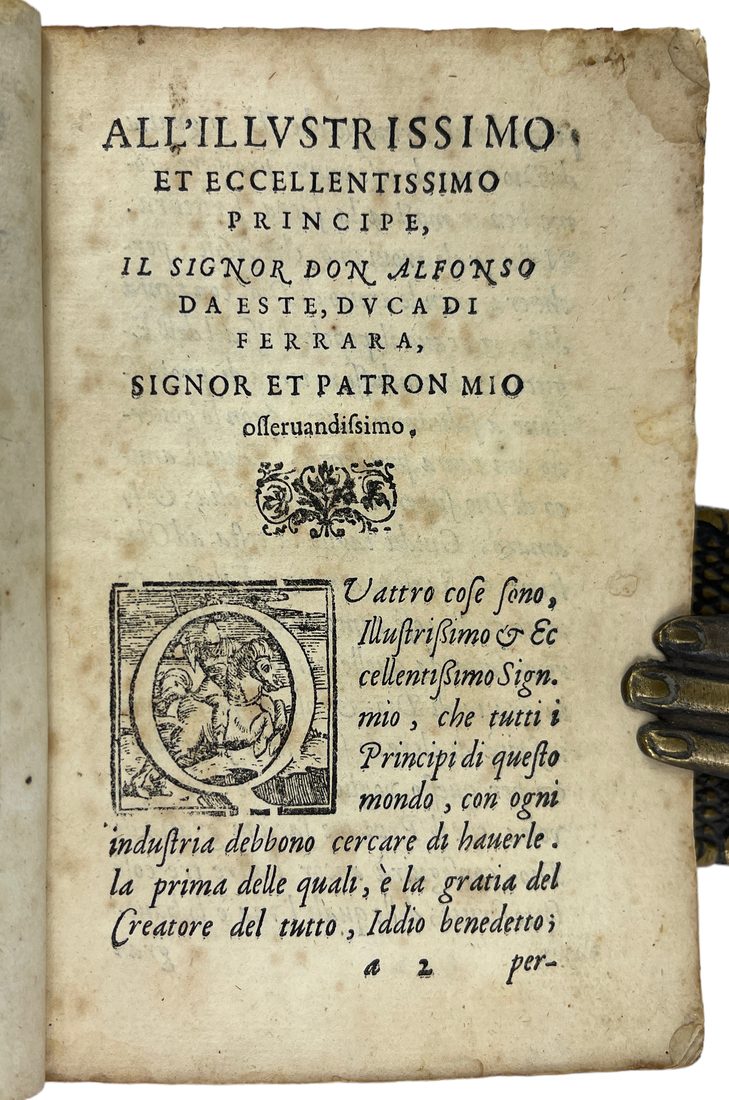
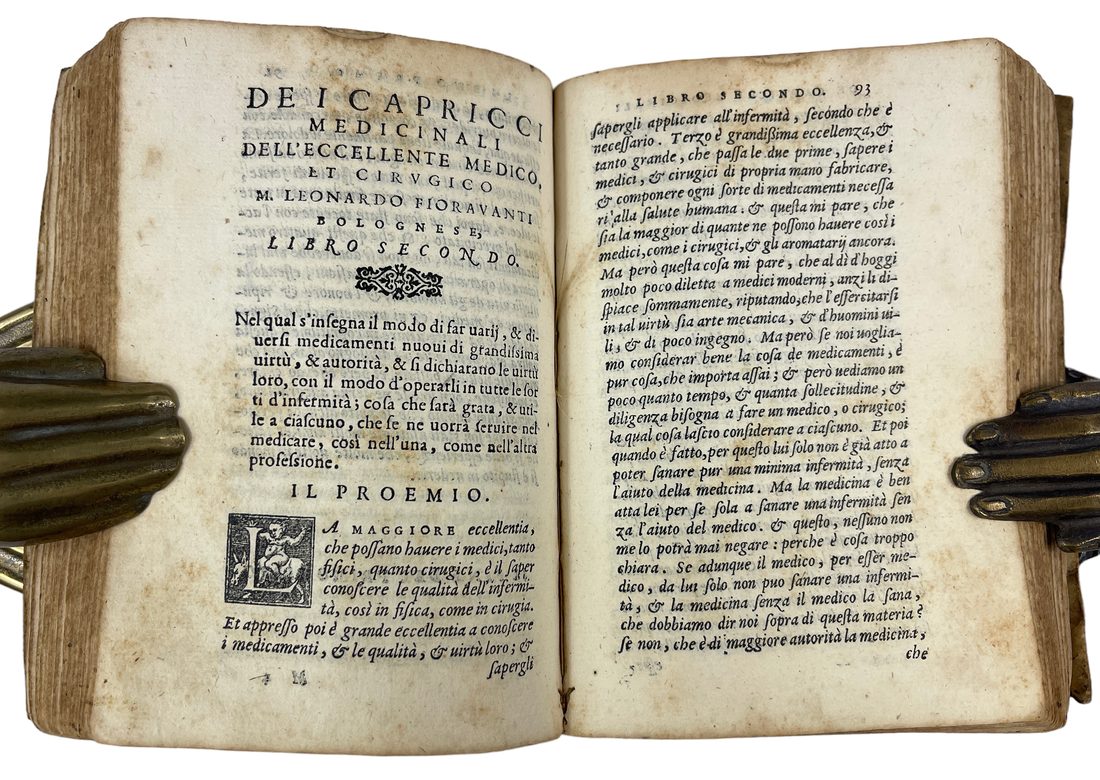
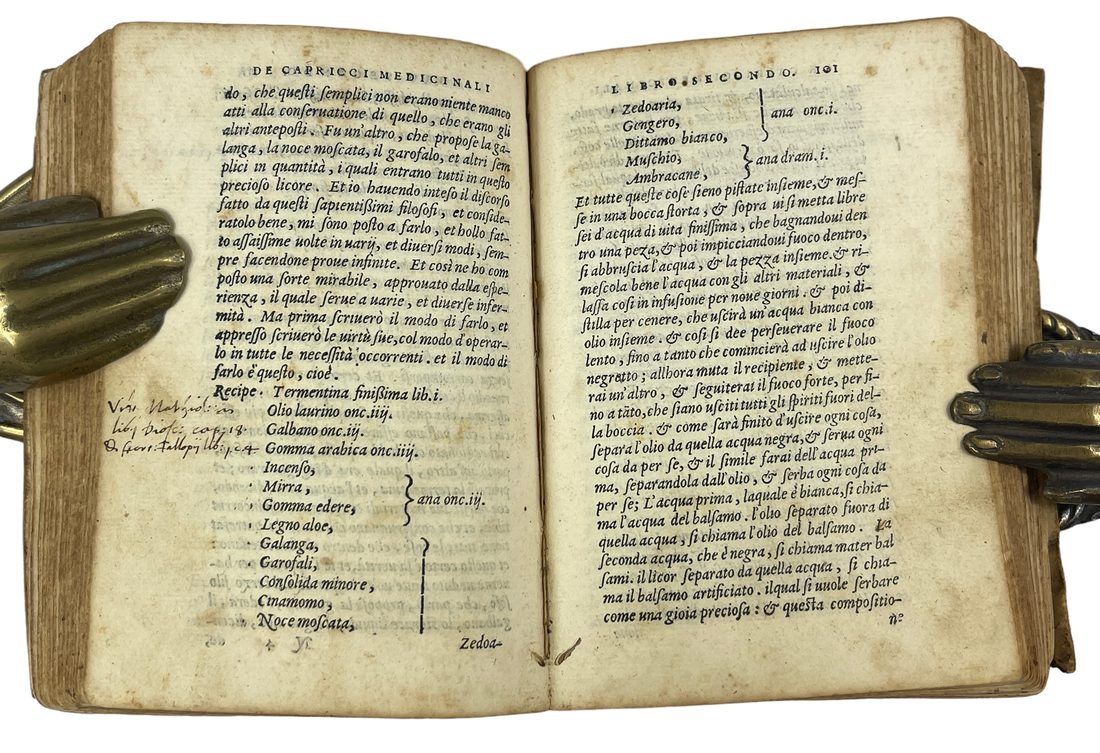
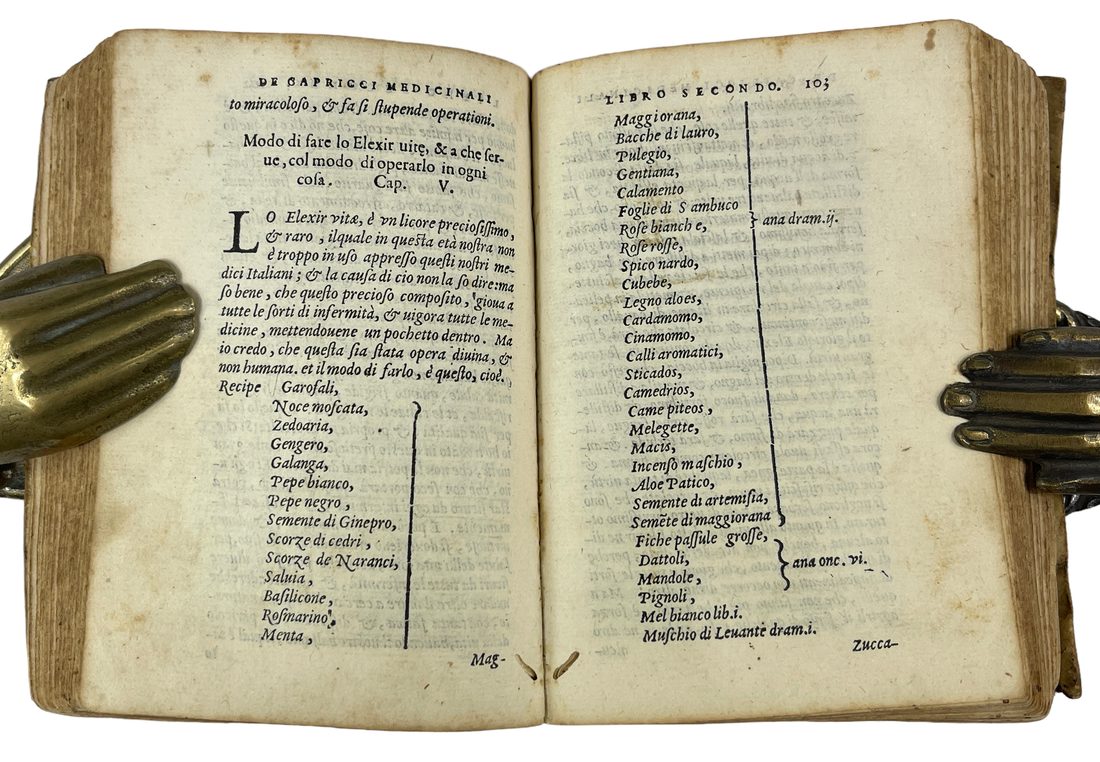
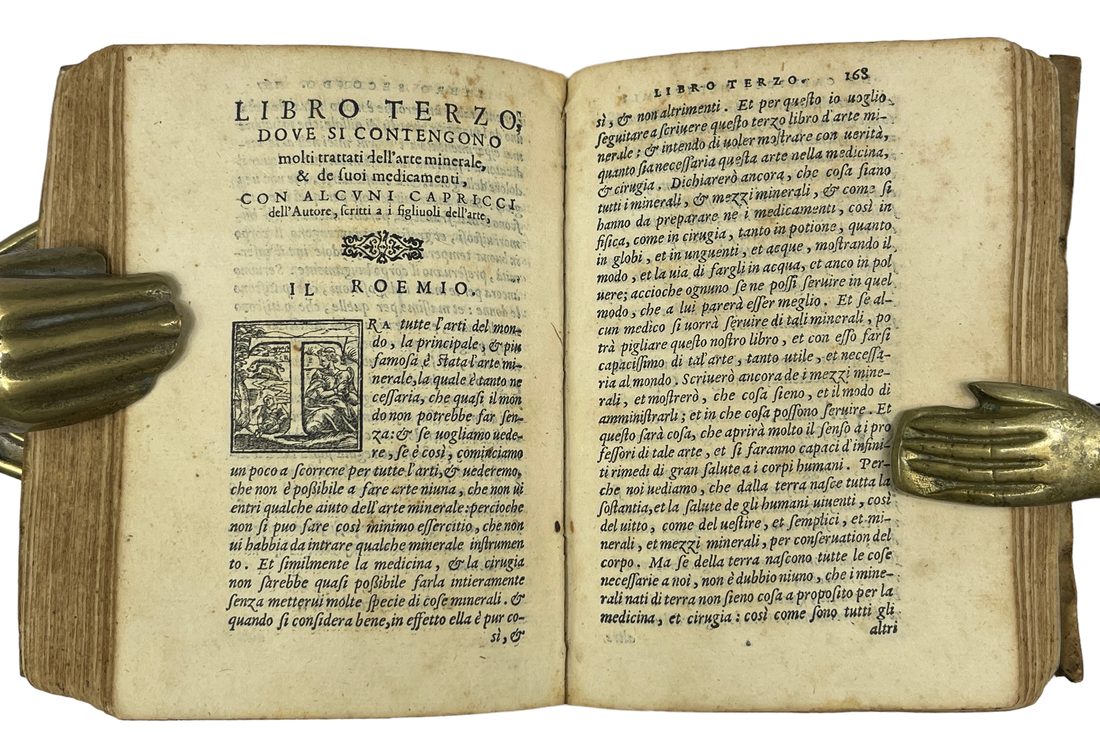
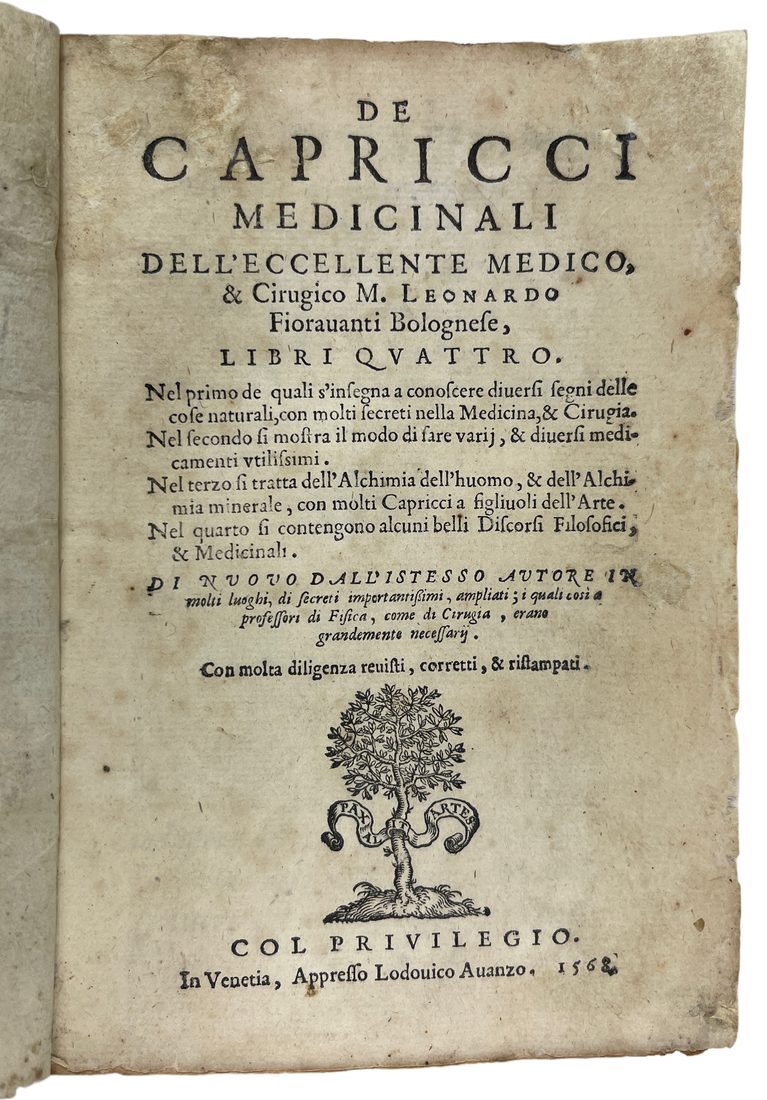
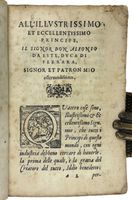
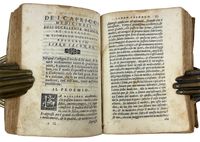
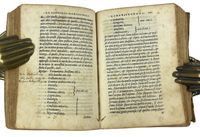
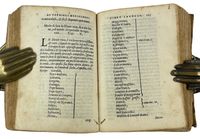
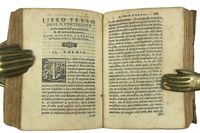
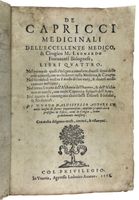
Fioravanti, Leonardo. De capricci medicinali dell'eccellente medico, & cirugico m. Leonardo Fiorauanti bolognese, libri quattro. Nel primo de quali s'insegna a conoscere diuersi segni delle cose naturali, con molti secreti della medicina, & cirugia. Nel secondo si mostra il modo di fare varij, & diuersi medicamenti vtilissimi. Nel terzo si tratta dell'alchimia dell'huomo, & dell'alchimia minerale, con molti capricci a figliuoli dell'arte. Nel quarto si contengono alcuni belli discorsi filosofici, & medicinali. Di nuouo dall'istesso autore in molti luoghi, di secreti importantissimi, ampliati; i quali cosi a professori di fisica, come di cirugia, erano grandemente necessarij. Con molta diligenza reuisti, corretti, et ristampati. In Venetia : appresso Ludouico Auanzo, 1568.
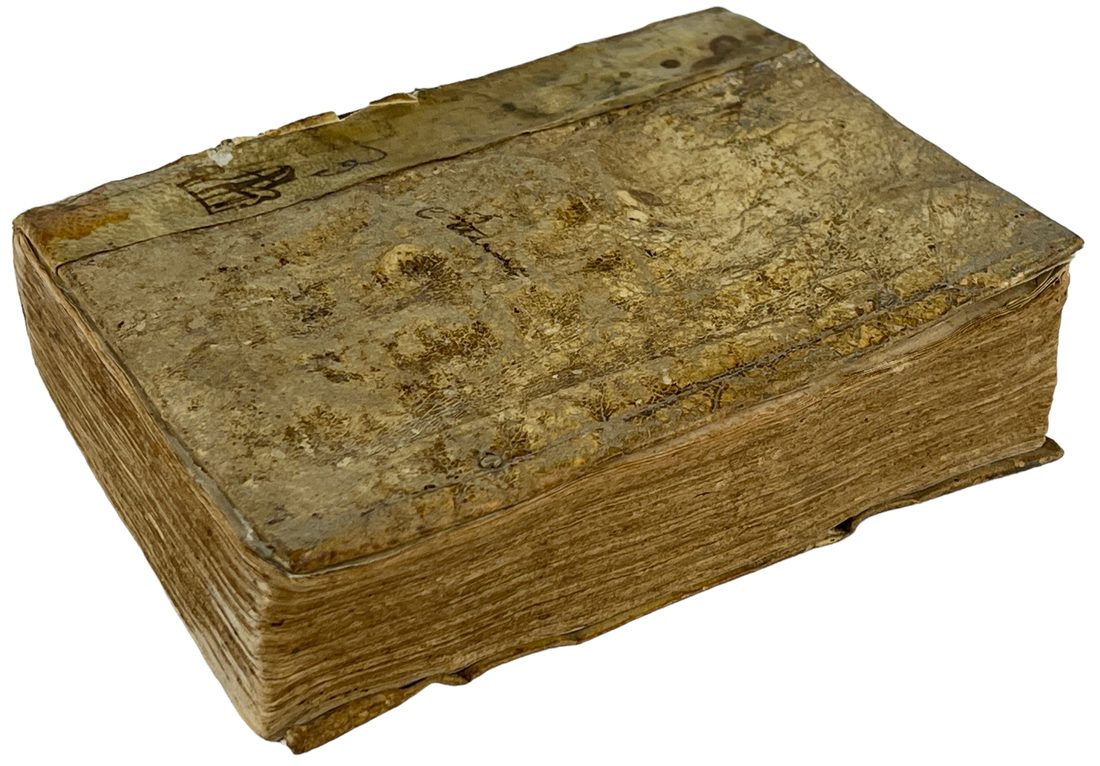
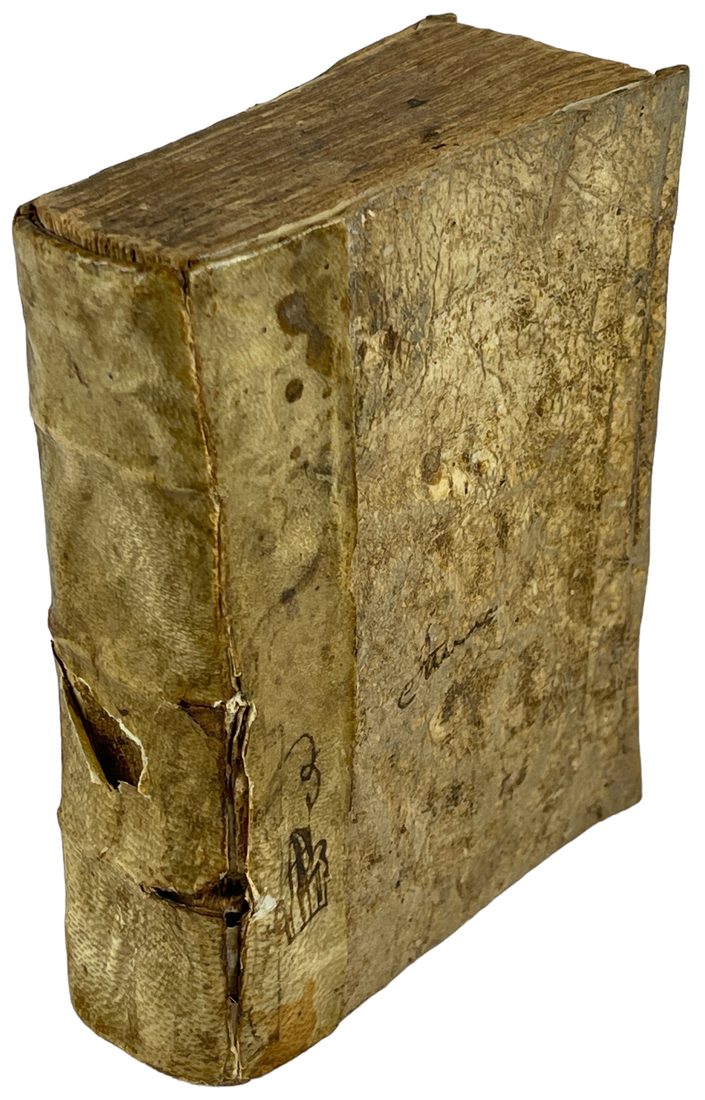
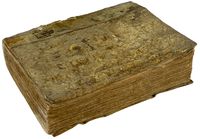
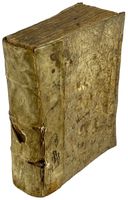
8vo (150 x 10,2 mm), contemporary limp vellum binding (small defects), cc. [24], 283, [1], printer device with motto pax alit artes at title page, xylographic headletters.
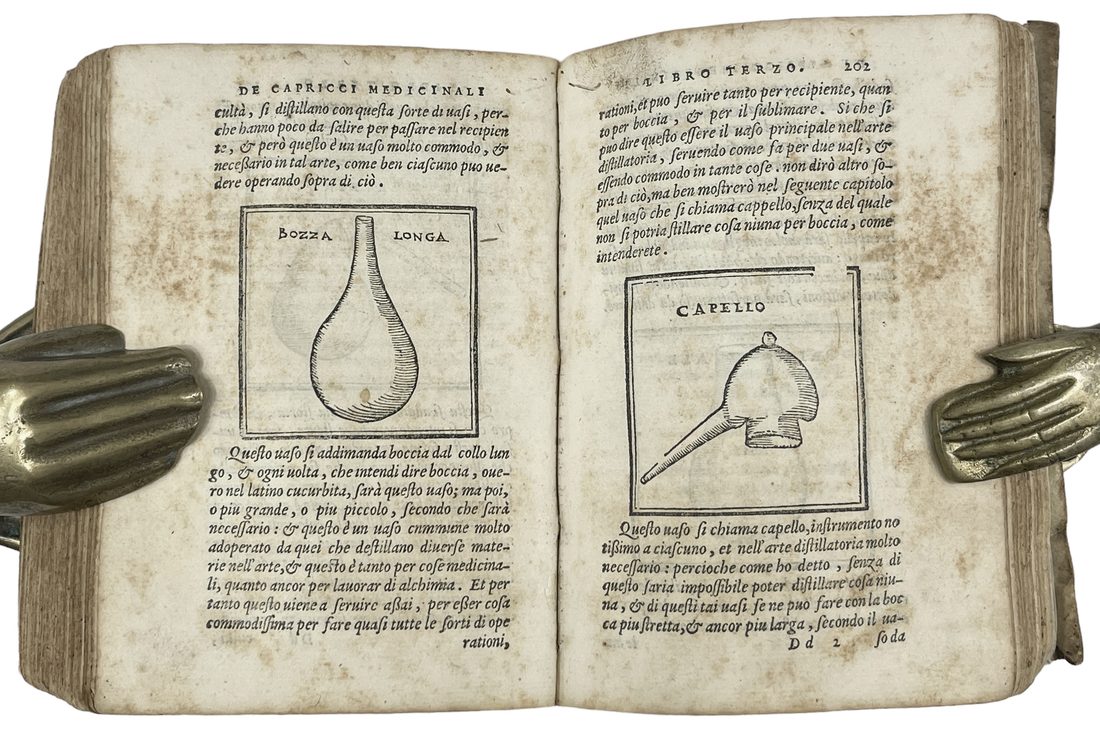
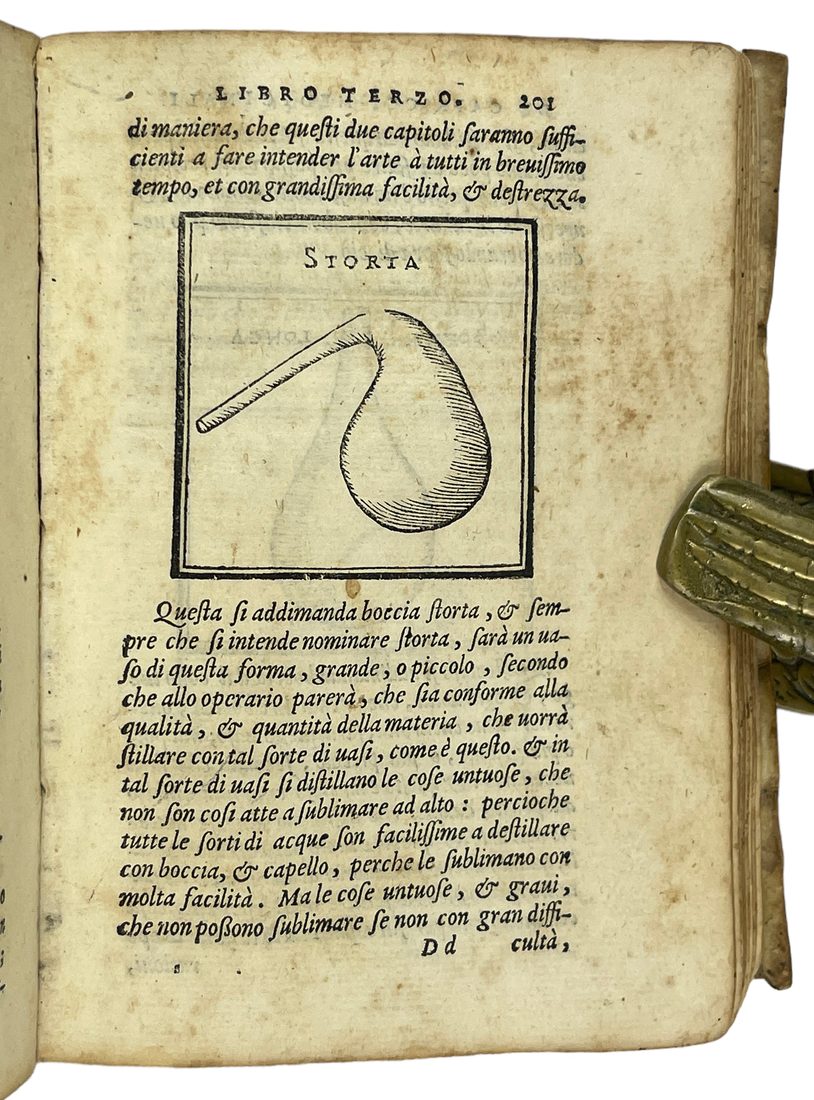
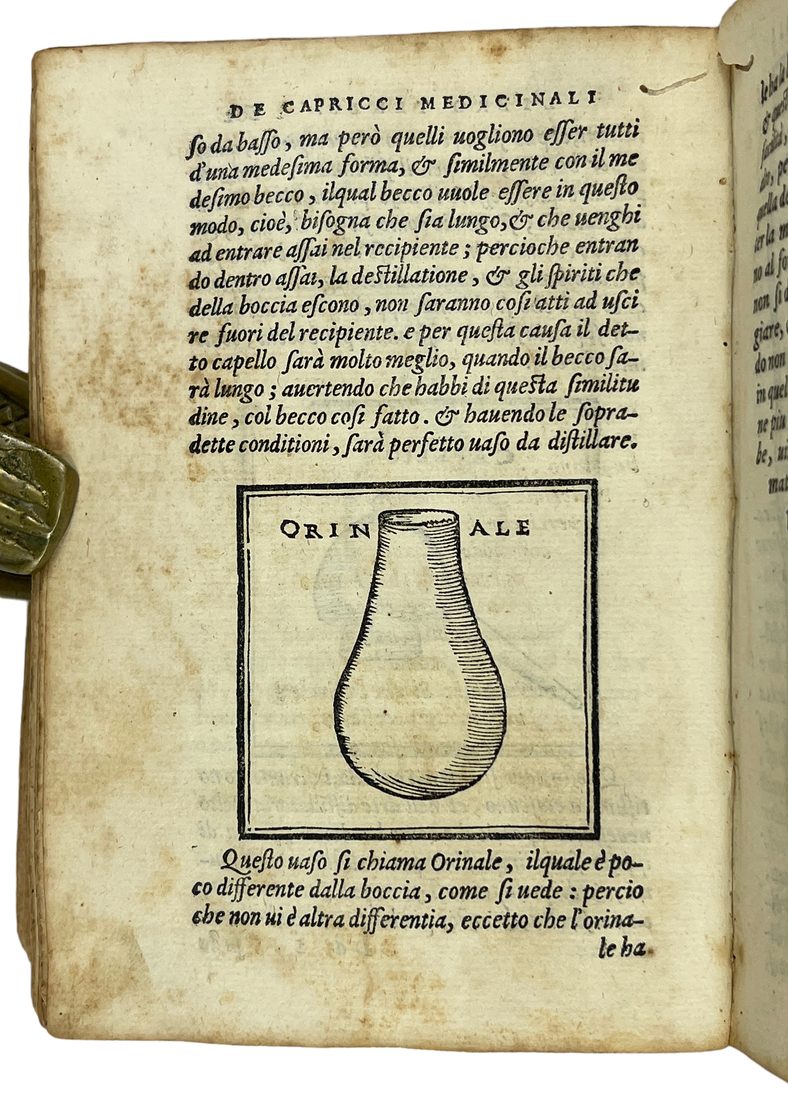
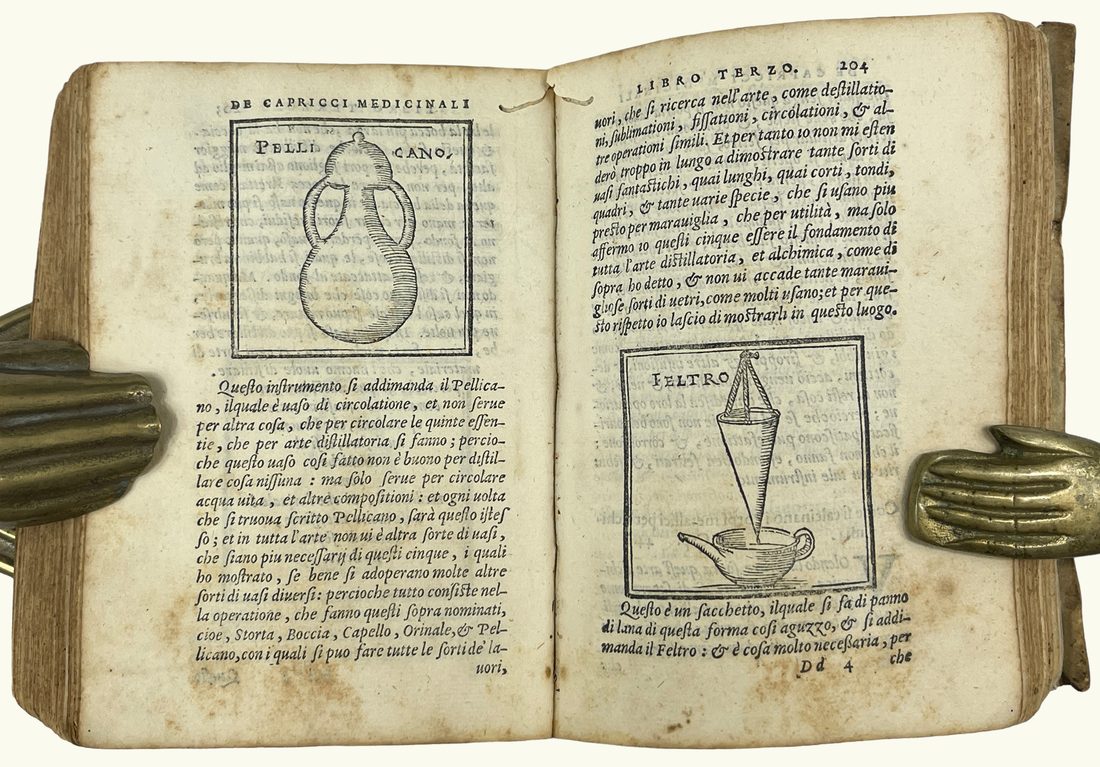
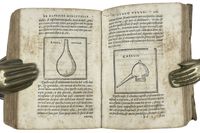
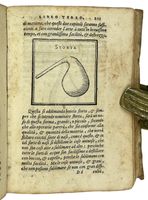
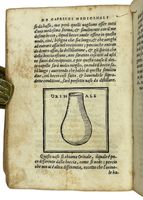
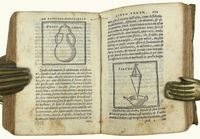
6 woodcuts along the text representing
Alembics and distillation devices
Third edition of the Medical/Alchemical work by the Italian alchemist and medic Leonardo Fioravanti.
In the work he describes his medical/alchemical theory, frequently resorting to distillation to obtain quintessences of great therapeutic value (distilling the simples meant in fact purifying them, preserving, and even amplifying their virtues).
Chemical medicine was experimented by Fioravanti first in Sicily, and then in Naples, where he immediately got in touch with the local alchemists and started distilling and experimenting with new compounds.
It was in Naples that he could have studied the alchemical theories attributed to Raimondo Lullo (ca. 1232-ca. 1315), widely disseminated, and discussed in the Neapolitan intellectual circles of the 16th century. At the basis of pseudo-Lullian alchemy was the Philosopher’s Stone, which in addition to transforming metals into gold would also be a powerful panacea.
The potential medical applications of alchemy were of extreme interest to Fioravanti, who believed that almost all diseases were attributable not to the imbalance of the humours, but to an indisposition of the stomach. This belief supported the search for a remedy which, by purging the stomach, was able to cure all diseases. It is no coincidence that he calls a strongly emetic distillation described in this work Philosopher ‘s Stone which he used extensively in his treatments to expel corruption from the stomach of patients.
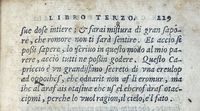
While three books of the work are dedicated to the secrets of medical science, its theories, and philosophies, and to the techniques to prepare medical potions and distillates, one book, the third, is dedicated to the science of alchemy, dividing what Fioravanti calls the Alchemy of Man from Mineral Alchemy.
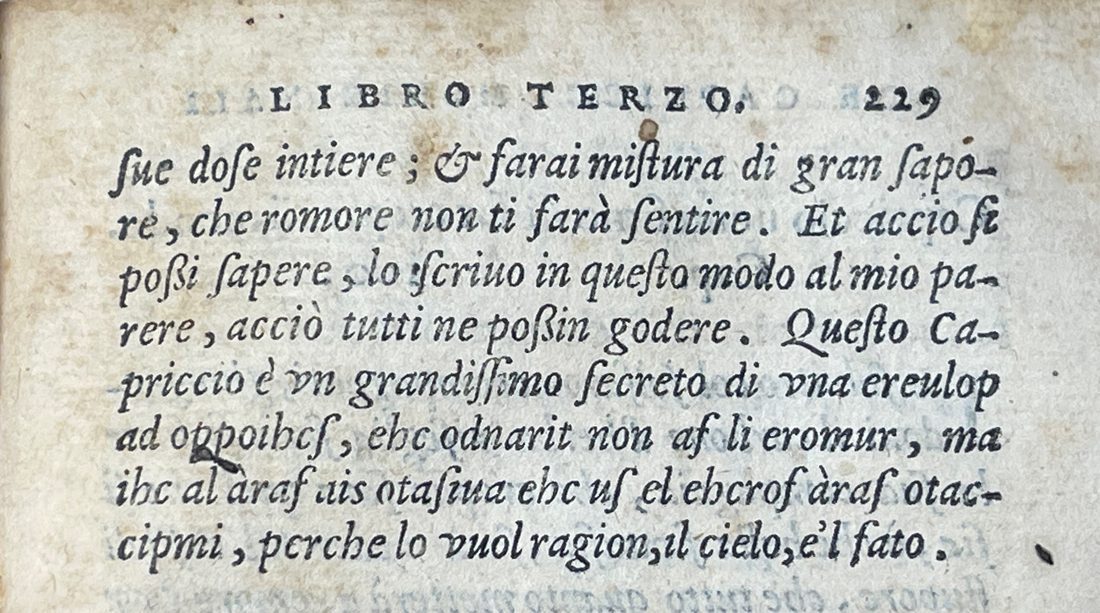
Some of the Paragraphs, called Capricci, contain secrets so important that they require the worlds to be encrypted and only through an appropriate reading key they will reveal themselves to the reader.
Leonardo Fioravanti (1518 – 1588) was an Italian medic and alchemist. He travelled in Spain and in Africa on a Spanish fleet and, once back to Italy, he practiced in Palermo, Naples, Rome, Venice and finally in Bologna.
With lively genius, but not without a certain amount of quackery, he wrote several works on medicine, surgery, physics, alchemy. He fought the bloodletting and performed the first splenectomy (removal of the spleen) in Palermo on a Greek woman. He composed, against arsenic poisoning, a famous balm, obtained by distillation from numerous aromatic plants, that bears his name. He also became interested in plastic surgery (he reportedly reattached a fighter's nose) and hydrotherapy.
Among his works we can mention:
Lo specchio di scienza universale (Venezia 1564); Del reggimento della peste (Venezia 1565); Li capricci medicinali (Venezia 1568); Il tesoro della vita umana (Venezia 1570); Il conpendio dei secreti razionali intorno alla medicina, chirurgia e alchimia (Venezia 1571); La fisica divisa in quattro libri (Venezia 1582); La cirugia distinta in tre libri, con una giunta di secreti nuovi (Venezia 1582).
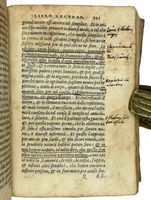
Conditions: Ancient restoration at margin of title page, wormholes at external margin of last 6 leaves and at internal margin o few central leaves, marks of use along the text but a fascinating, unsophisticated copy of an interesting medical/alchemical treatise.
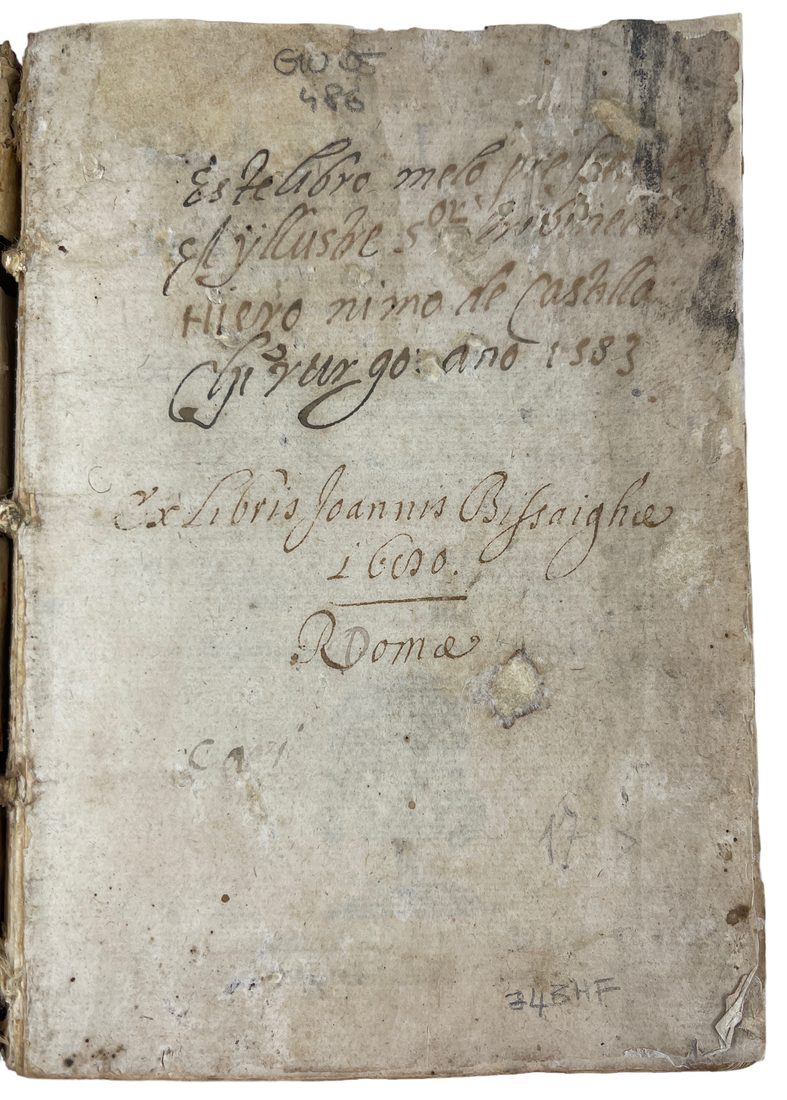
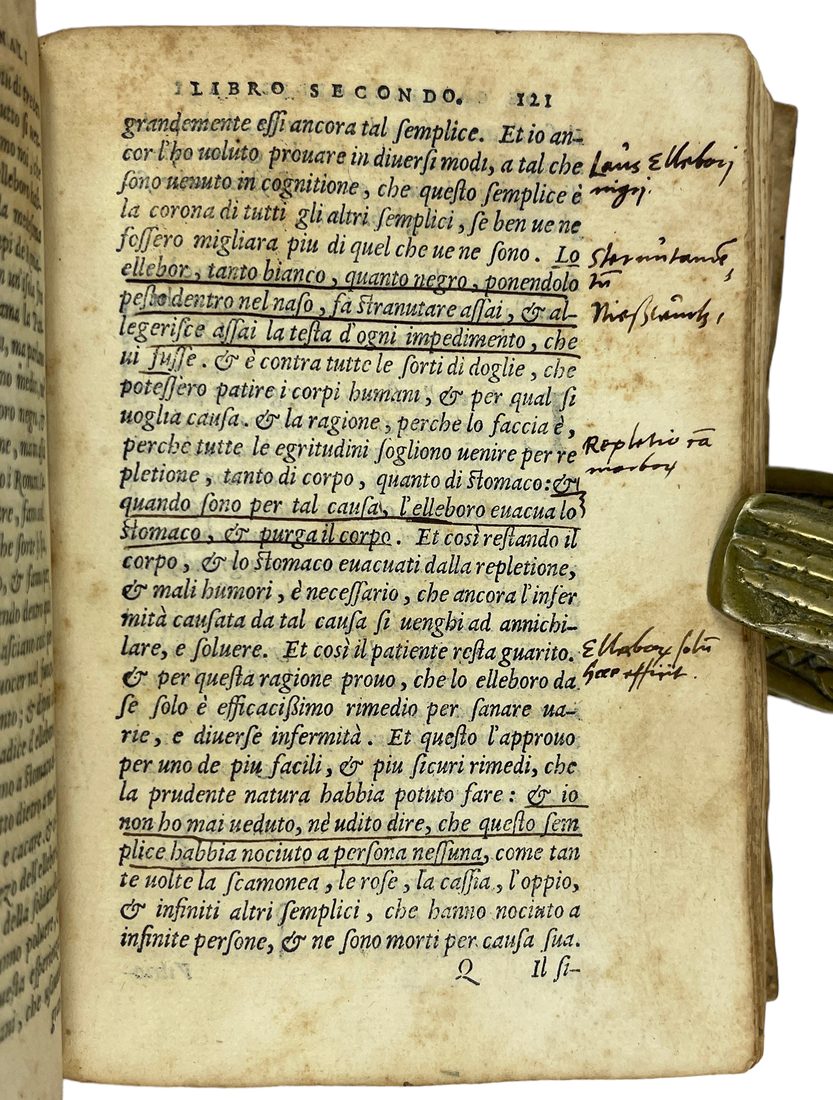
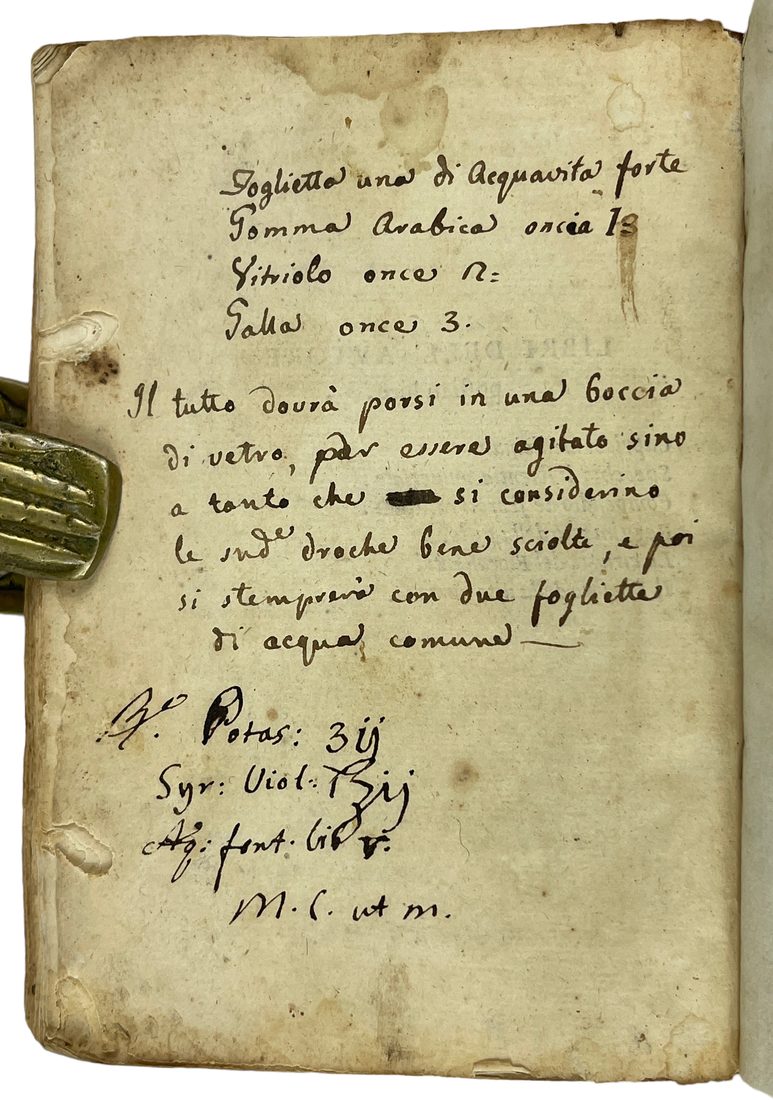
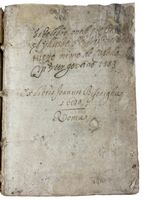
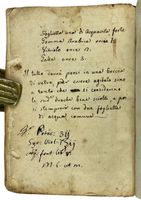
Provenance: I. Ownership note in Spanish Este libro me lo pre xxx (faded) el ilustre s[en]or xxxxx (faded) Hieronimo de Castilla chirurgo ano 1583. II. Ownership signature Ex libris Joannis Bissaighe 1600 Rome. III. Handwritten receipt at verso of last leaf. IV. Contemporary handwritten annotations and underlines.
References: Bibliotheca Esoterica, 1651.