Transparent Hold-to-Light Playing Cards
| Macro-category | Playing Cards and Tarot |
| Subcategory | Historical Playing Cards |
| Author | Anonymous |
| Year | 1860 |
“Hold to the Light”: A complete gilt-edged American translucent pack,
revealing hidden comic vignettes and English proverbs
a rare survival at the intersection of gaming and optical amusement
Transparent Playing Cards. New York, ca. 1860.
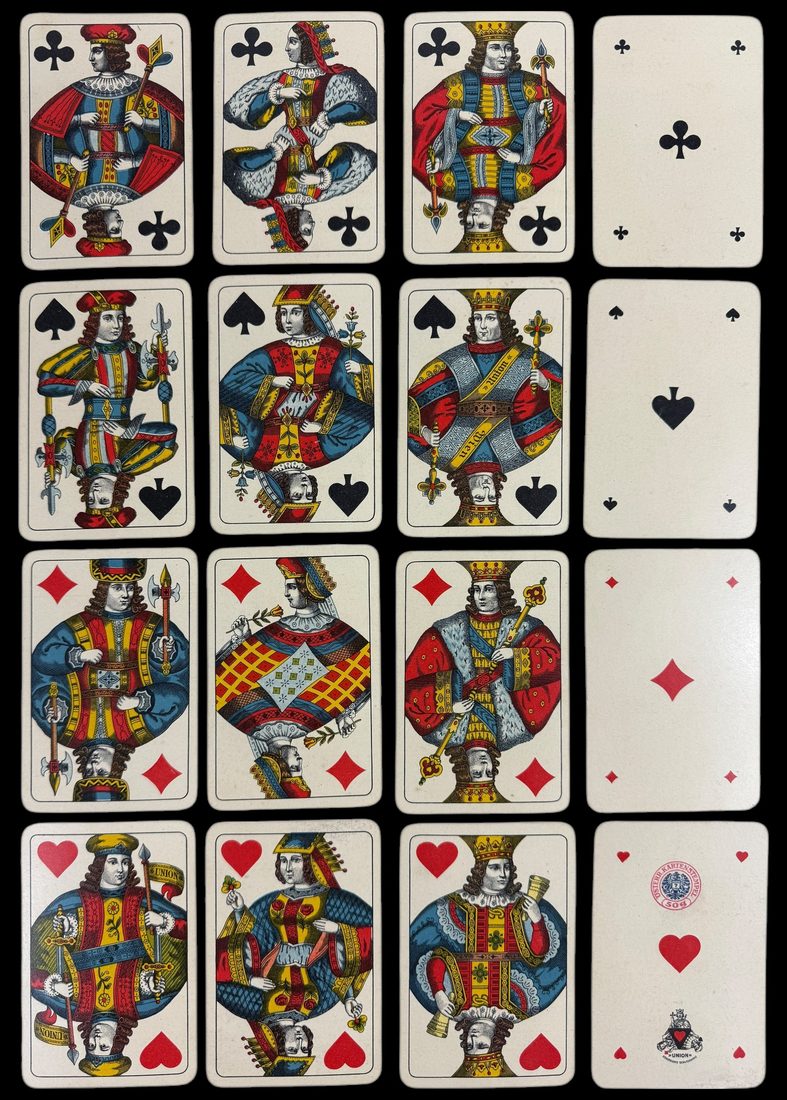
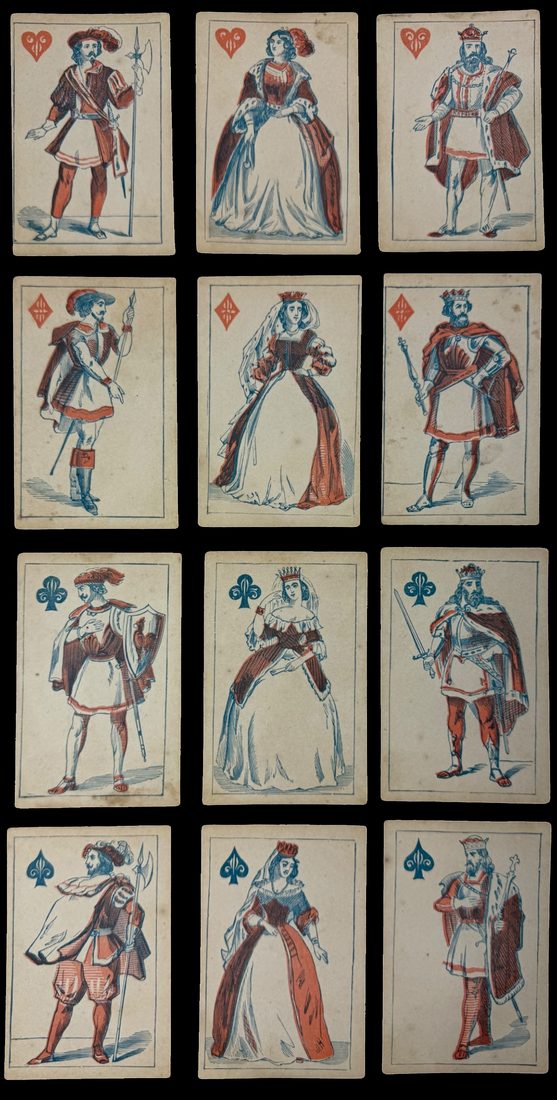
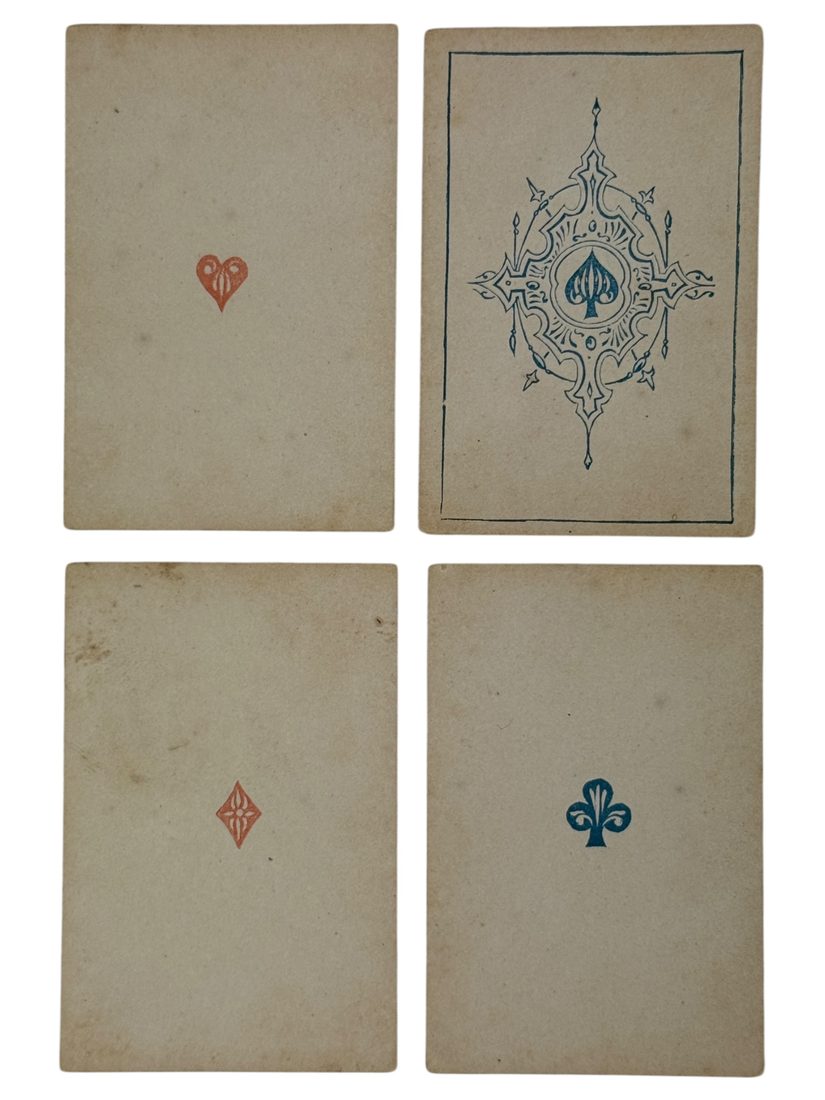
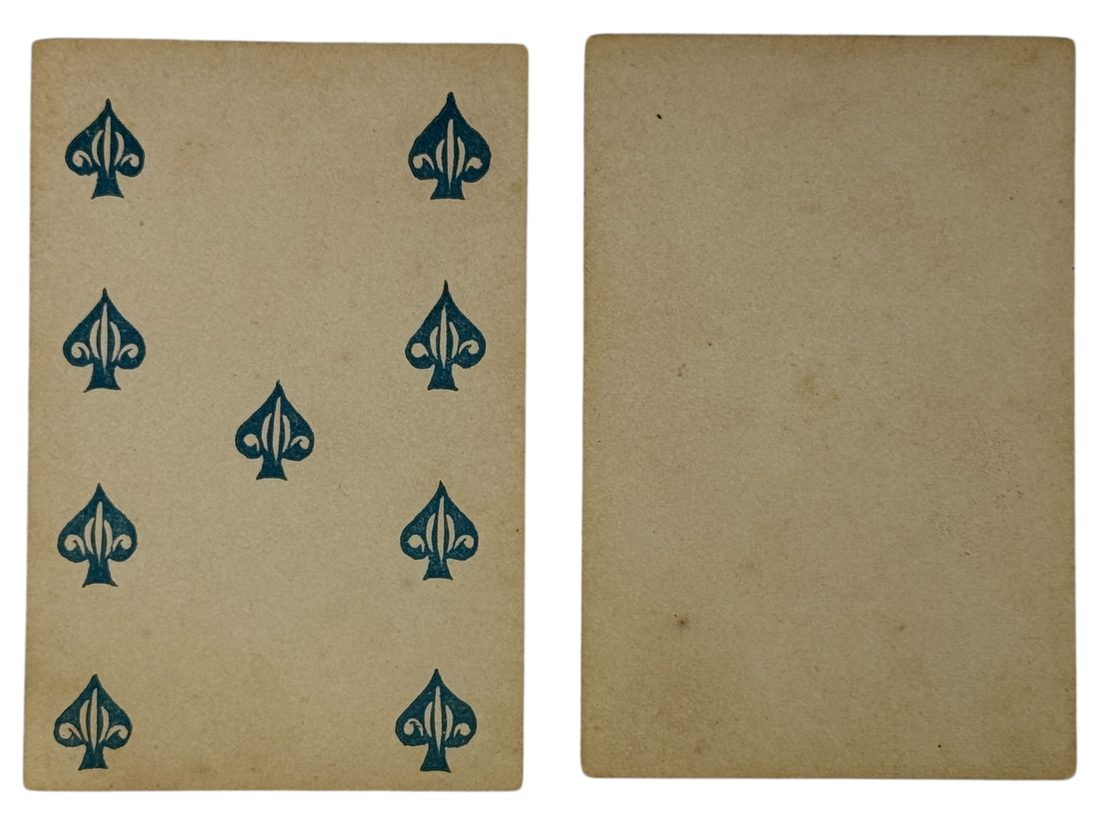
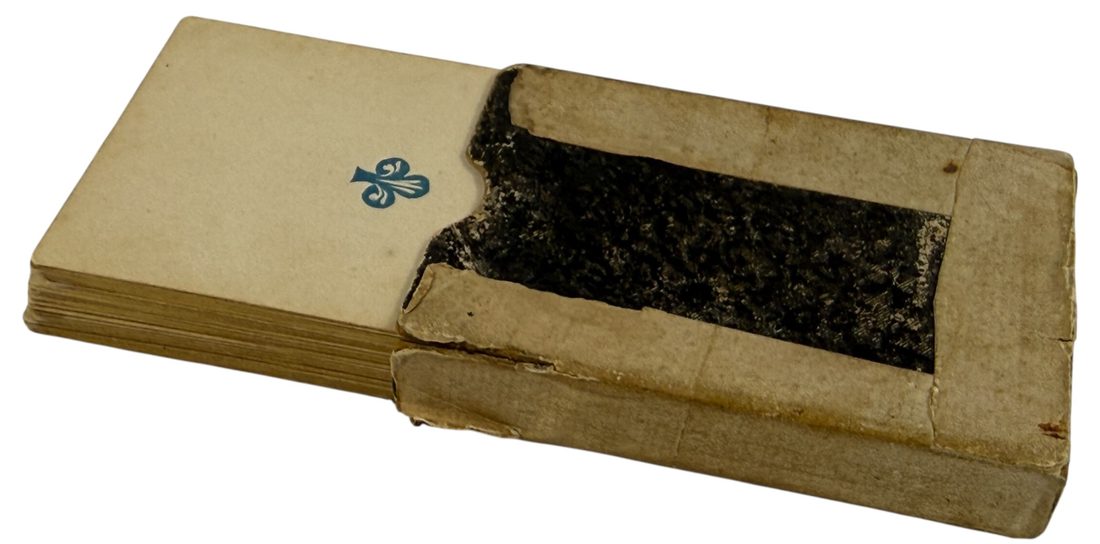
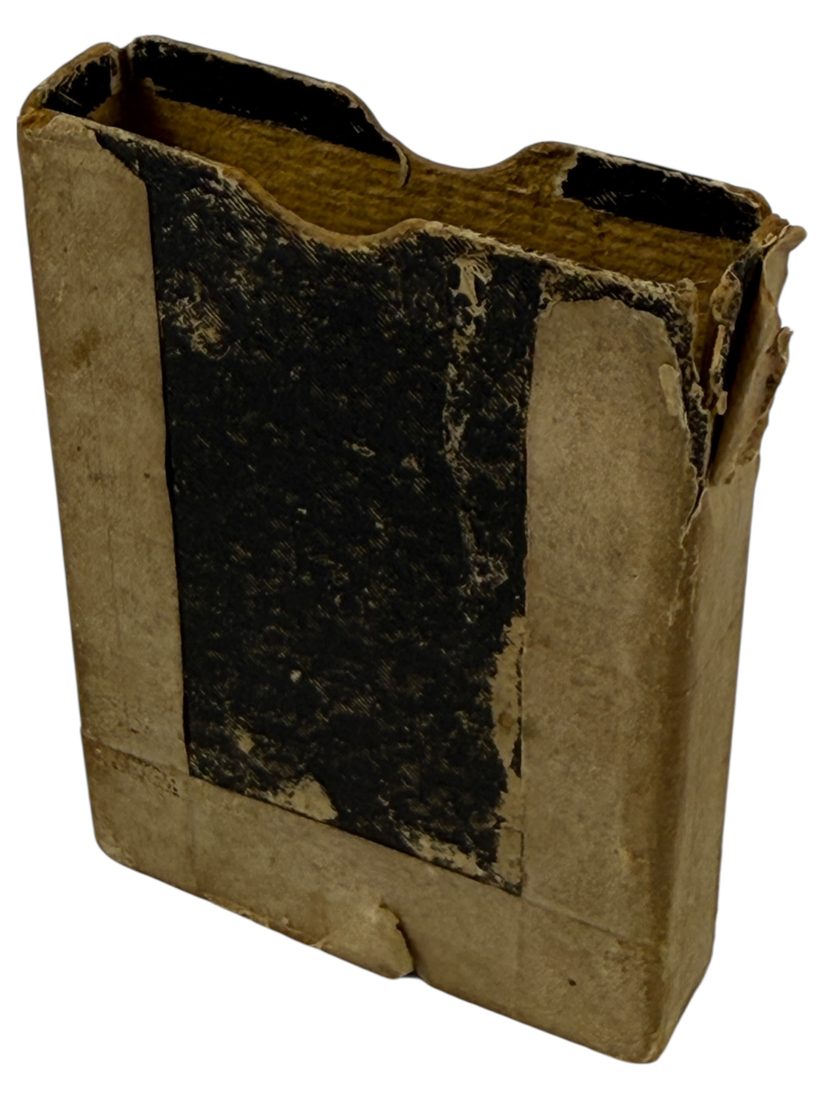
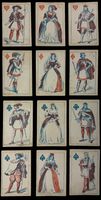
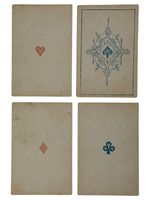
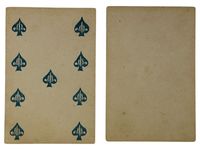
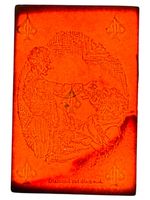
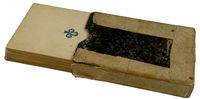
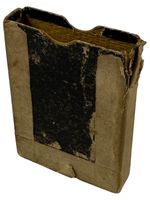
52/52 cards (83 × 51 mm), printed in colour (red and blue) on translucent paper pasteboard engineered to permit transmission of light, gilt edges. French suits (hearts, diamonds, clubs, spades), without indices. Courts full-length and single-ended. Backs plain white. The Ace of Spades bears an ornamental typographic composition consisting of a decorative central spade device framed by a symmetrical arabesque cartouche printed in blue line within a rectangular border. Suits rendered in highly stylised ornamental form: clubs and spades in blue, hearts and diamonds in red, all designed with a distinctive fleur-de-lis–derived graphic structure. Courts printed in two colours, showing standing figures in contemporary romanticised costume. Original box present.
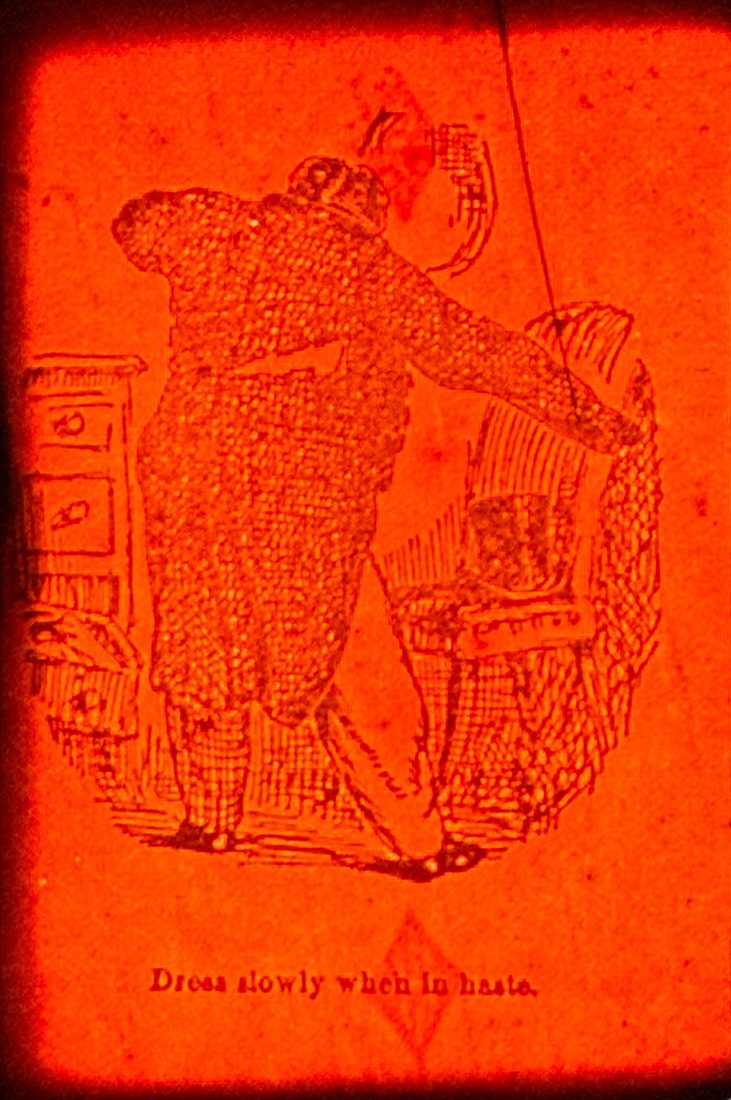
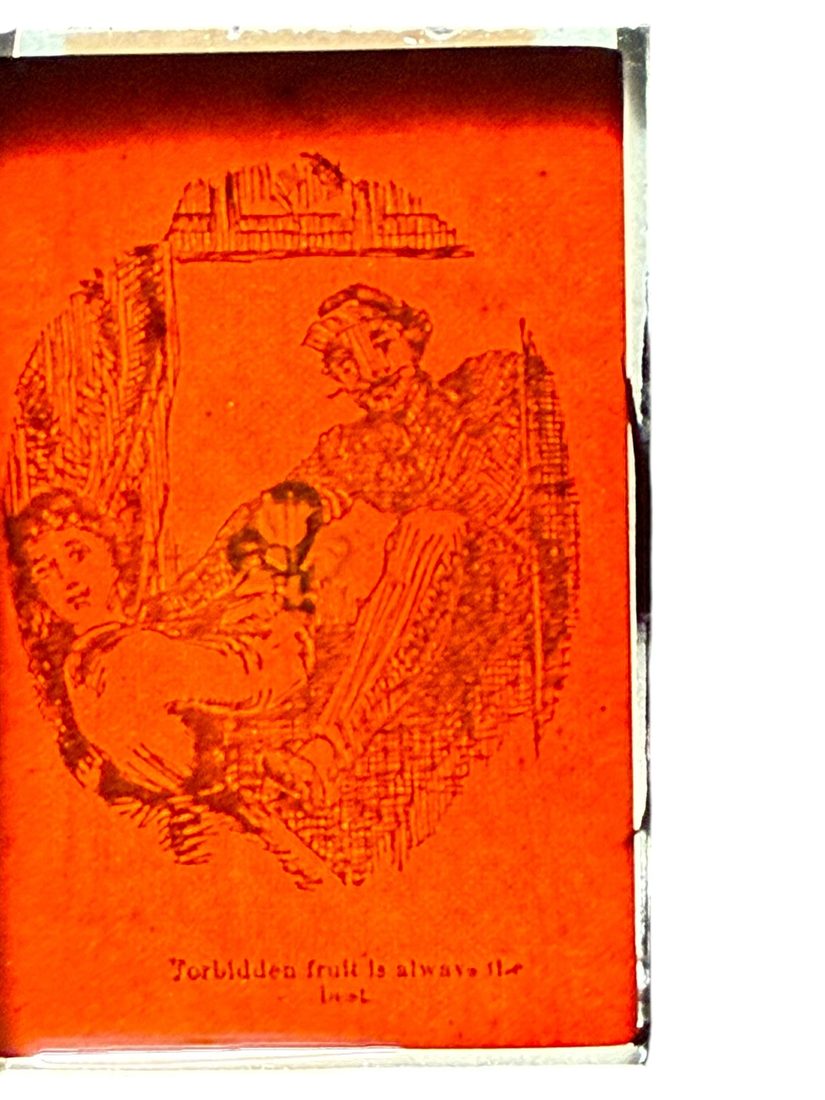
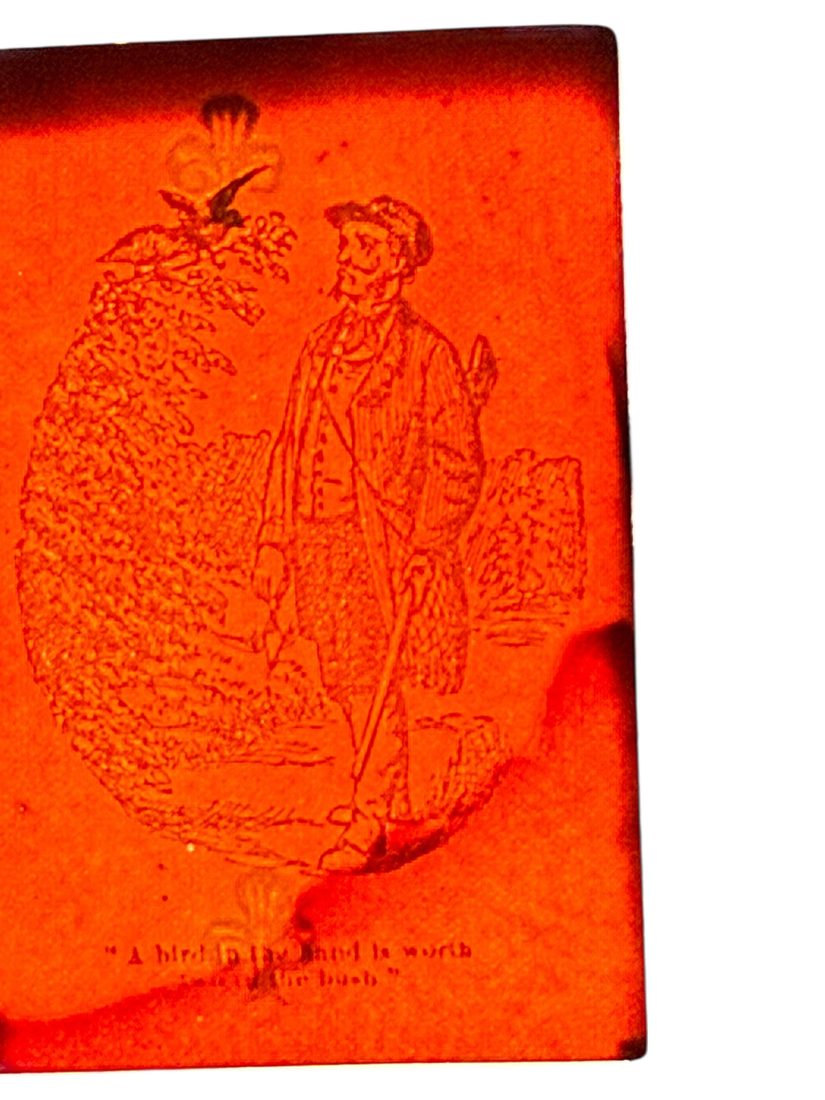
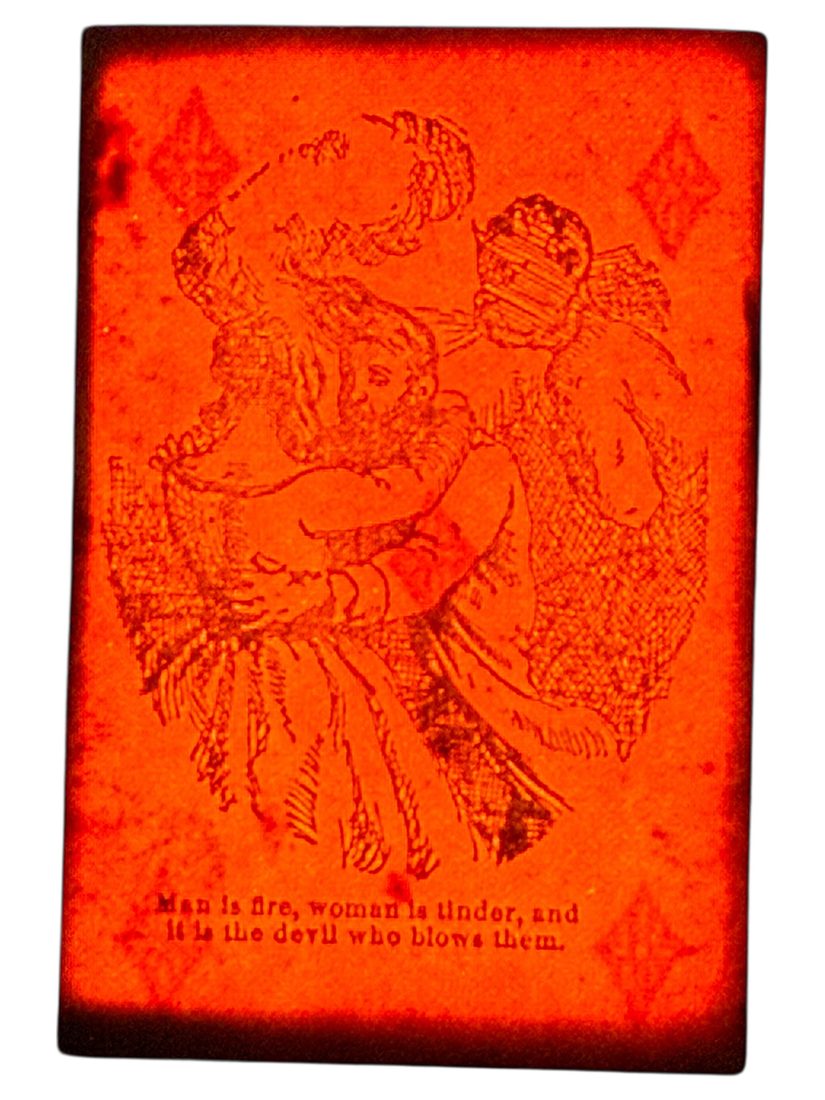
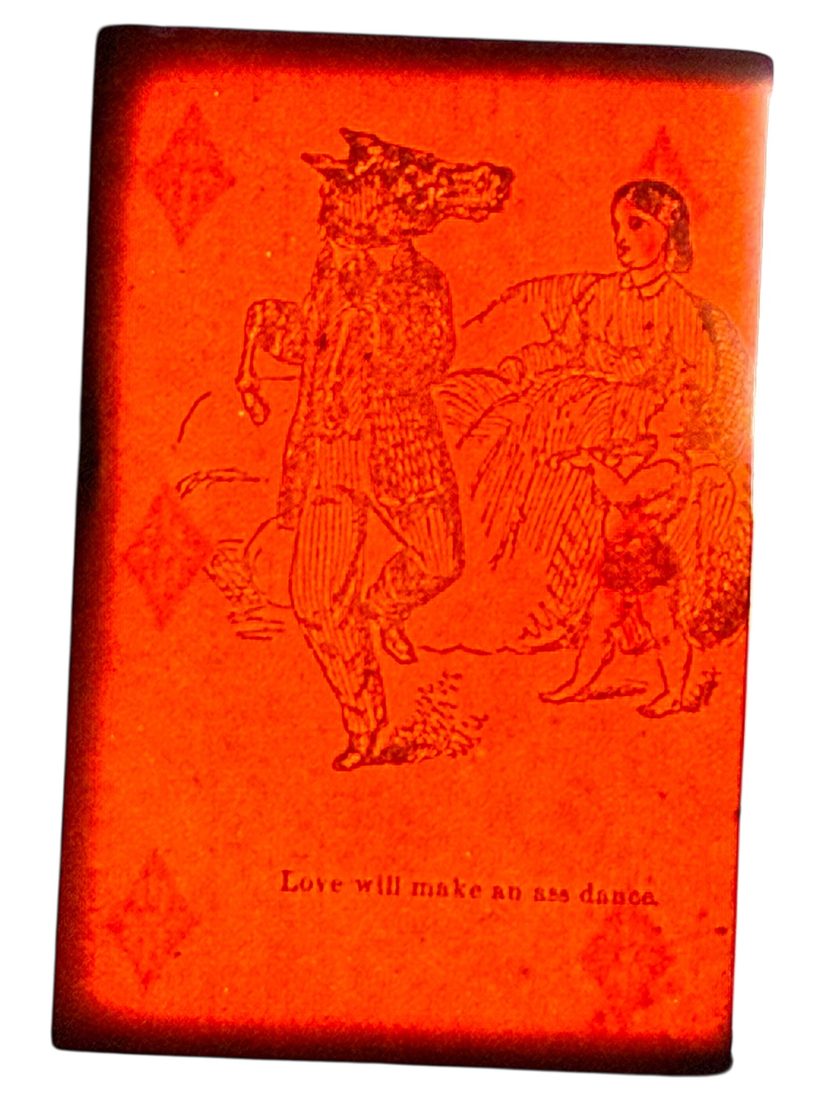
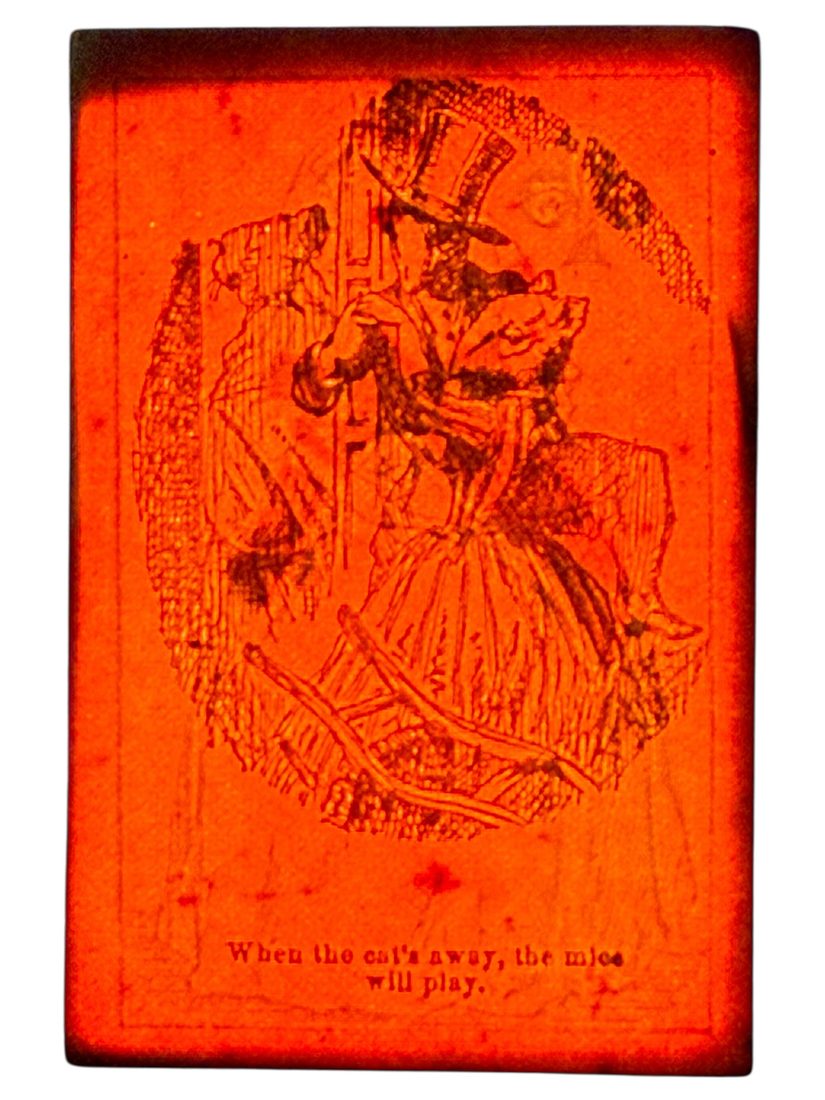
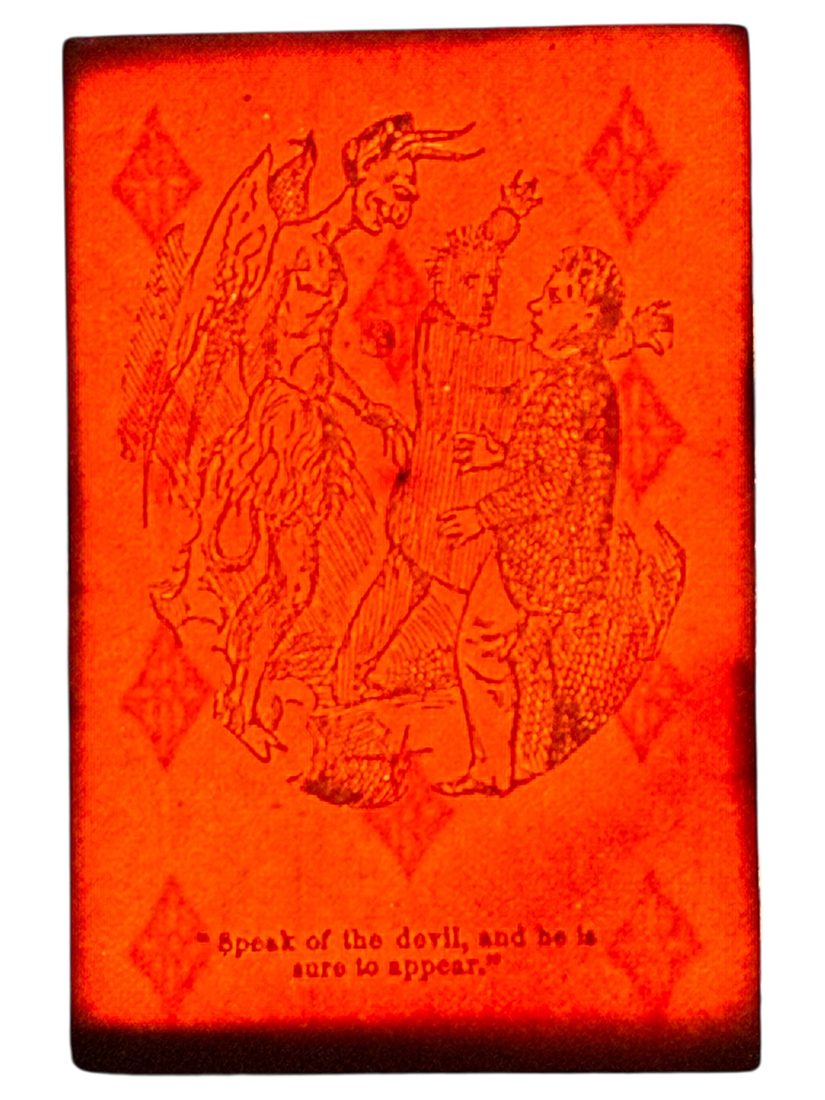
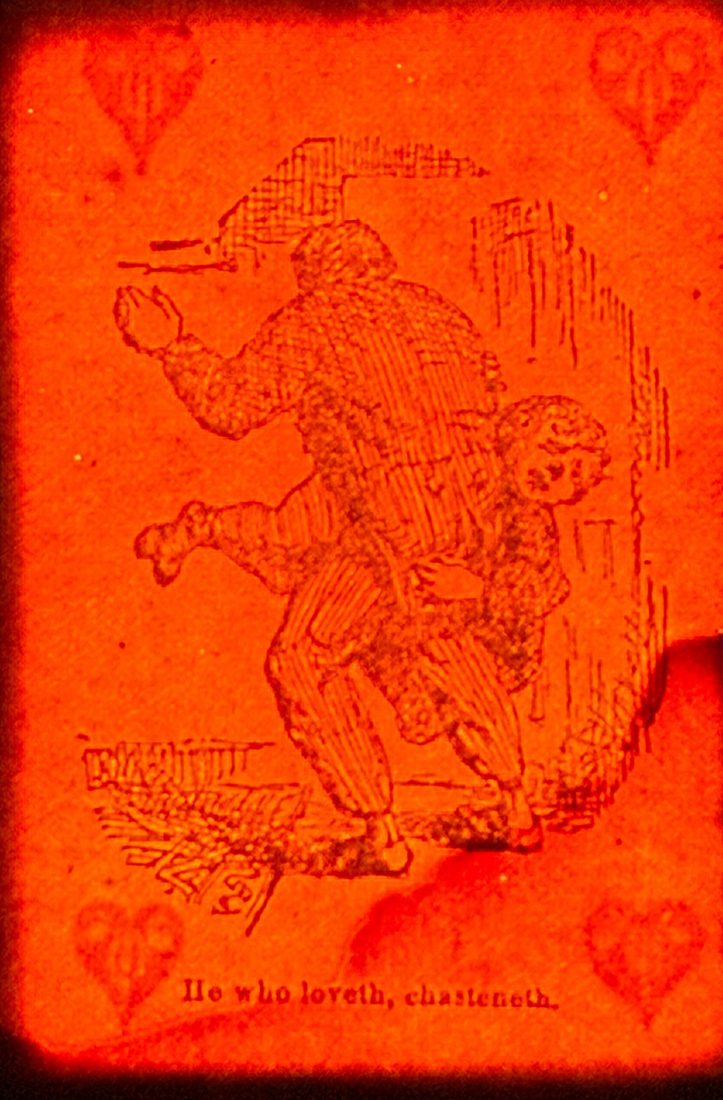
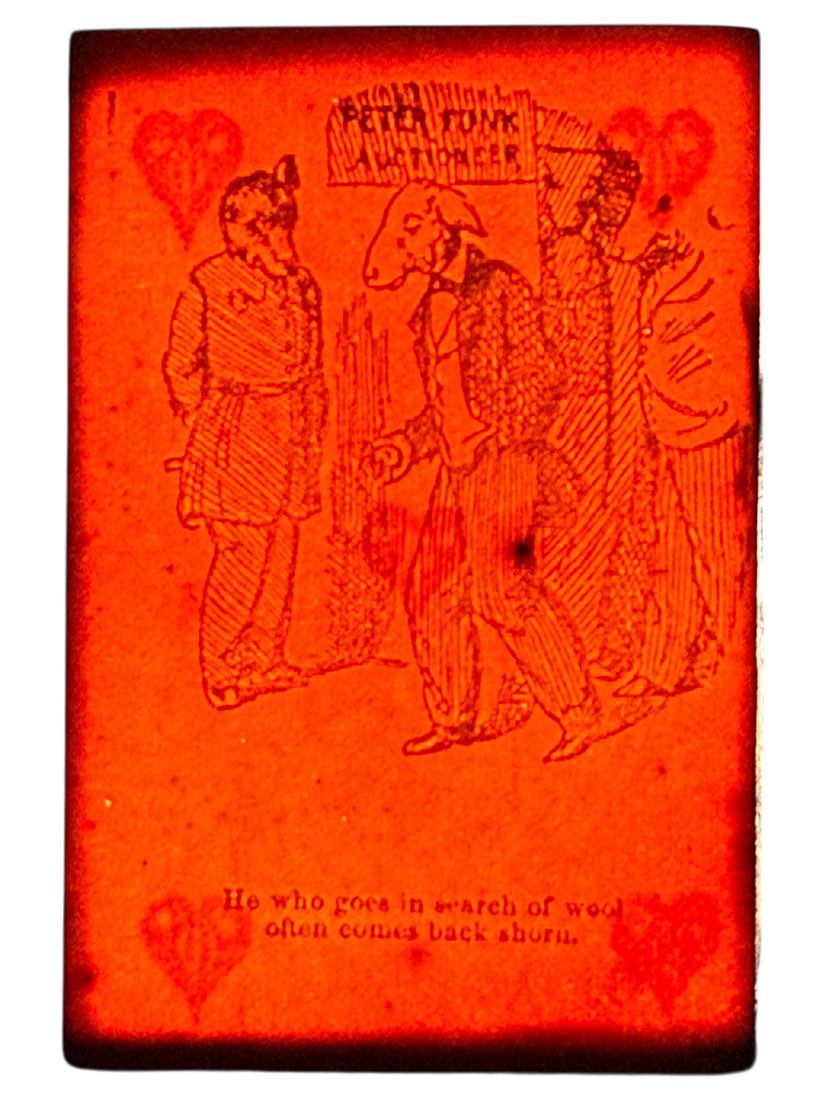
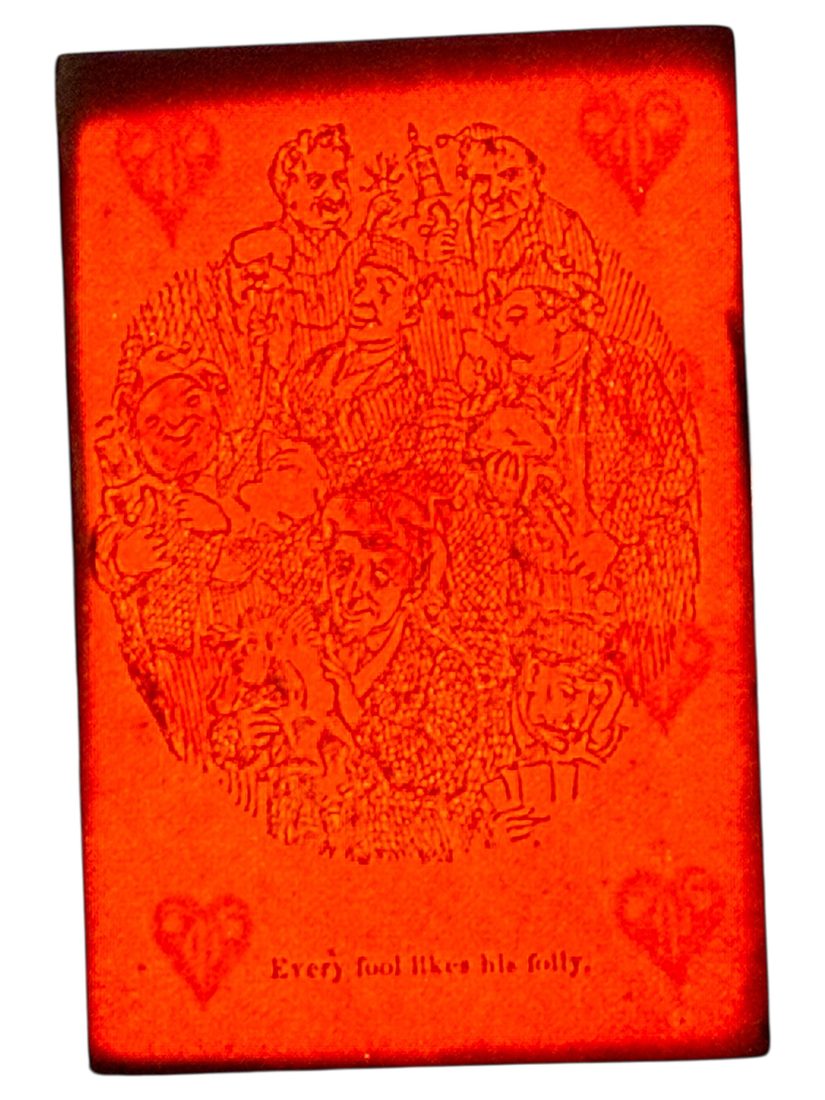
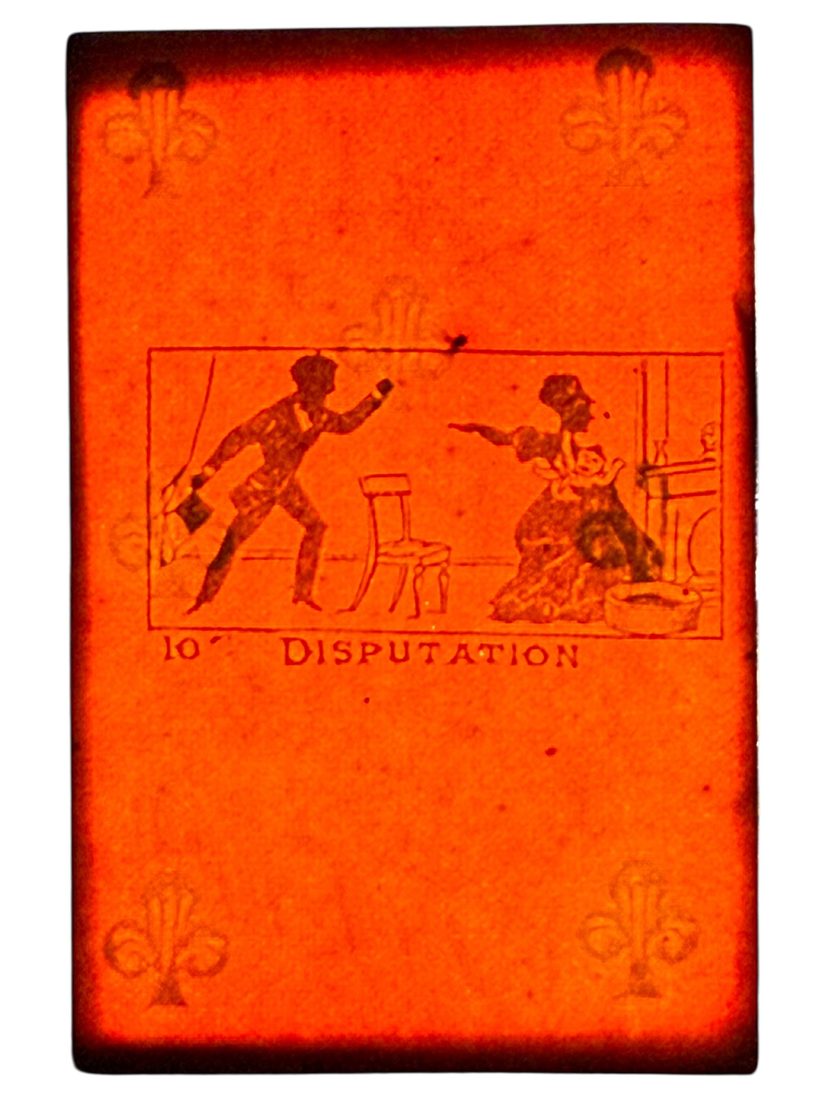
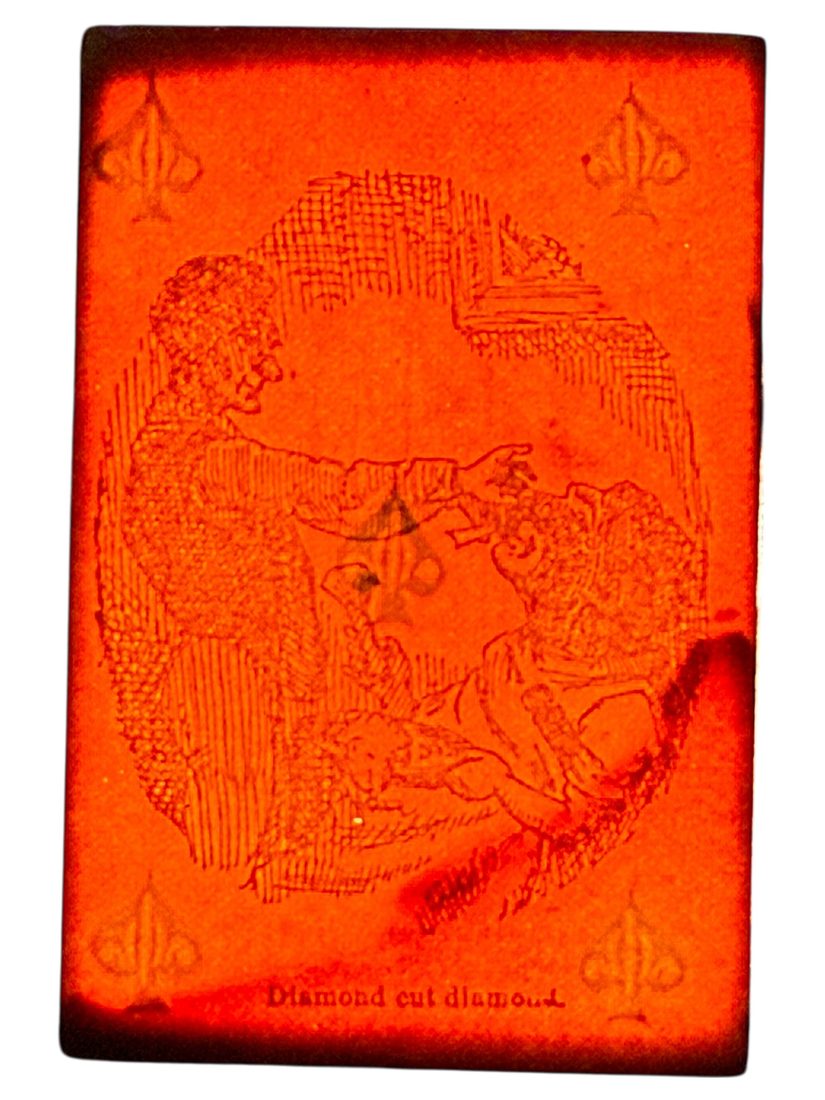
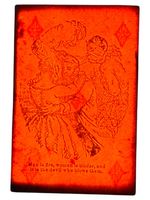
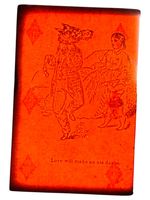
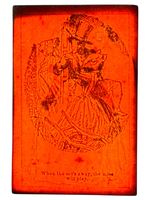
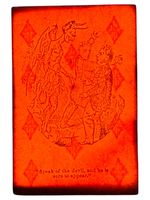
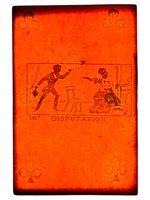
The deck possesses the distinctive structural feature of translucent construction: when held to a strong light the transparent cards reveal concealed comic illustrations accompanied by captions or wordplay. Several of these captions may contain offensive imagery or language reflective of the attitudes of their time.
This deck belongs to the rare class of nineteenth-century transparent or translucent playing cards, produced as a hybrid object combining the functions of a gaming pack with the optical novelty of a hidden image revealed by transmitted light. In normal viewing conditions the cards appear entirely conventional; when placed against a strong light source, however, each card reveals a concealed comic vignette accompanied by an English caption or proverb.
The language, structure, and proverbial character of these texts clearly place the deck within an Anglophone cultural context, consistent with the attribution to New York recorded in the Hochman classification.
Such translucent packs occupy a small but distinctive niche within the history of playing-card manufacture. Their appeal lies not merely in their novelty but in the technical ingenuity of their construction: the cards function simultaneously as ordinary playing cards and as miniature optical prints whose hidden imagery emerges only under particular viewing conditions. Complete examples survive only rarely, owing both to their fragile construction and to the curiosity value that encouraged repeated handling.
The deck follows the conventional structure of a standard 52-card pack in French suits, comprising thirteen ranks within each of the four suits: hearts, diamonds, clubs, and spades. The numeral cards display stylised pip arrangements rendered in an ornamental form derived from the fleur-de-lis motif, which lends the entire deck a distinctive decorative unity. The black suits are printed in blue rather than black, while the red suits appear in a warm red tone, creating the typical bicromatic palette associated with nineteenth-century printing economies.
The courts are depicted as single full-length figures, each occupying the entire vertical field of the card. Unlike the later Anglo-American double-ended courts, these figures are oriented in a single direction and belong stylistically to the broader continental tradition. Their iconography includes halberds or staffs carried by the Jacks and regal attributes borne by the Kings, while the Queens appear in elaborate dress characteristic of romanticised historical costume rather than contemporary fashion.
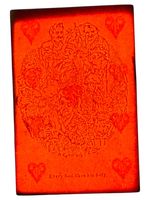
The Ace of Spades serves as the principal decorative card of the pack. Instead of bearing a maker’s imprint, it presents a purely ornamental composition: a central spade emblem enclosed within a symmetrical linear ornament reminiscent of typographic cartouches found in mid-nineteenth-century decorative printing.
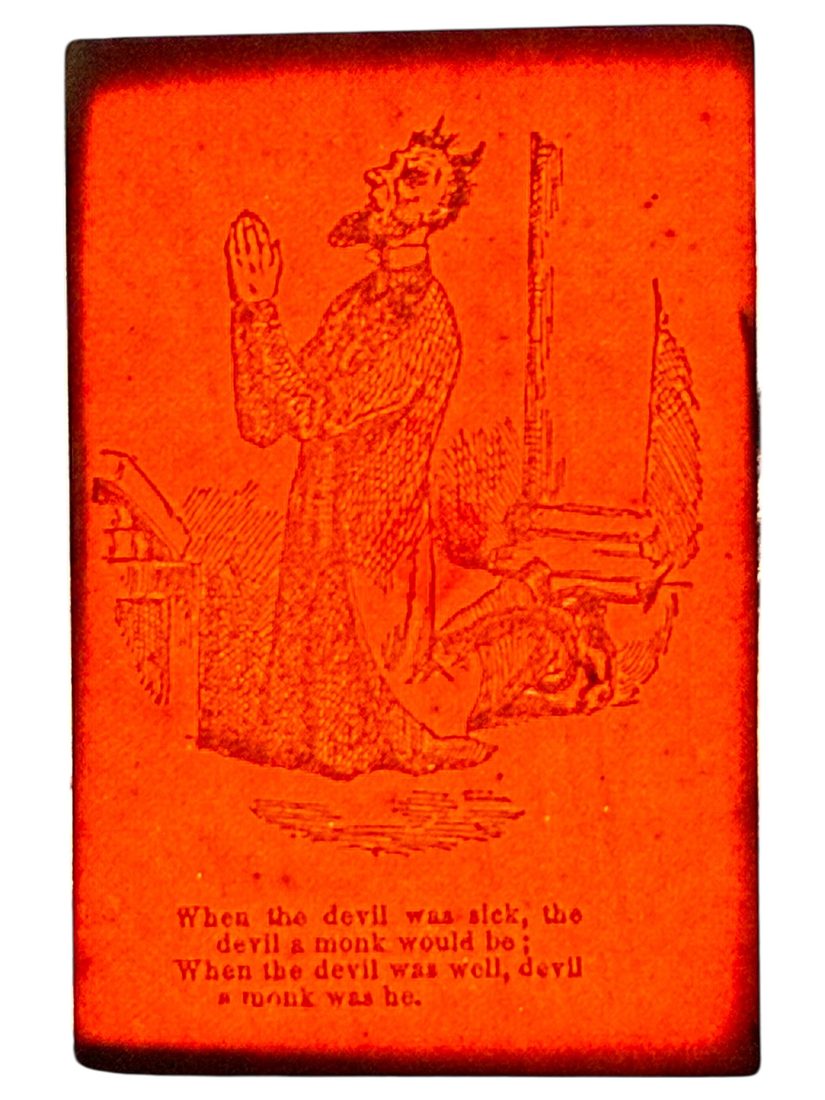
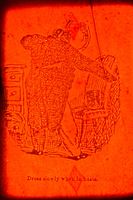
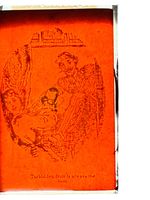
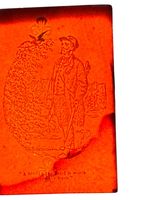
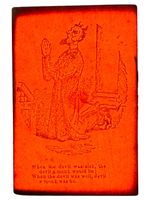
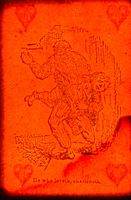
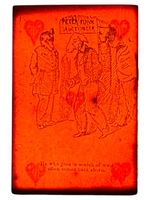
The deck’s most remarkable feature lies in the concealed pictorial layer embedded within the structure of each card. When the cards are held before a strong light source, the transmitted illumination reveals an interior vignette printed in fine black line accompanied by a textual caption. The imagery appears reversed or partially mirrored depending on the orientation of the card relative to the light source, confirming that the illustrations were intended specifically for viewing through the paper.
The hidden images consist of small narrative scenes illustrating proverbial sayings or humorous moral observations.
The captions visible in the photographs correspond to well-known English aphorisms. One card reveals a scene illustrating the maxim “Forbidden fruit is always the best,” depicting a clandestine encounter suggestive of moral transgression. Another card shows a rustic figure beneath a tree accompanied by the proverb “A bird in the hand is worth two in the bush.” A third depicts a kneeling figure in prayer before a desk or pulpit, illustrating the moralistic stanza: “When the devil was sick the devil a monk would be;When the devil was well the devil a monk was he.”
The combination of illustration and proverb transforms the deck into a miniature anthology of visualised moral sayings, a device that would have amused users while simultaneously rewarding the act of discovery.
Transparent playing cards must be understood within the broader nineteenth-century culture of optical amusements and parlour curiosities, which flourished alongside rapid developments in printing technology and paper manufacture. The period saw widespread fascination with visual effects dependent on lighting conditions: dissolving views, transparency prints, shadow pictures, and other forms of image transformation designed to surprise the viewer.
The present deck belongs to this tradition of interactive visual devices. Its novelty lies not in altering the visible design of the playing card itself but in embedding a second image within the card’s physical structure. This approach required a careful manipulation of paper thickness and printing layers so that the hidden image would remain invisible in ordinary light yet clearly legible when illuminated from behind.
The choice of proverbs and moral sayings reflects the didactic and humorous tone characteristic of popular print culture in the English-speaking world during the mid-nineteenth century. Collections of illustrated proverbs circulated widely in broadsides, chapbooks, and gift publications; the use of similar texts in this deck suggests that the concealed images were intended not merely as comic surprises but as recognisable fragments of familiar moral lore.
Conditions: A few cards with spotting or damp-soiling at the corners; otherwise in very good condition.
Reference: Trevor Denning. Translucent Playing-cards. Birmingham, Denning, 1976; T. Dawson and J. Dawson, The Hochman Encyclopedia of American Playing Cards, Stamford: U.S. Games Systems, 2000, no. O20c; C. Hargrave, A History of Playing Cards and a Bibliography of Cards and Gaming, New York: Dover, 1966; W. Gurney Benham, Playing Cards: History of the Pack and Explanations of Its Many Secrets, London: Spring Books, 1931.
Scan for High Resolution images