English Traditional Pattern Playing Cards

| Macro-category | Playing Cards and Tarot |
| Subcategory | Historical Playing Cards |
| Provenance | London |
| Publisher / Maker | Reynolds & Sons |
| Year | 1840 |
Rare complete
playing card deck
[Playing Cards]. London, Reynolds & Sons, c. 1840.
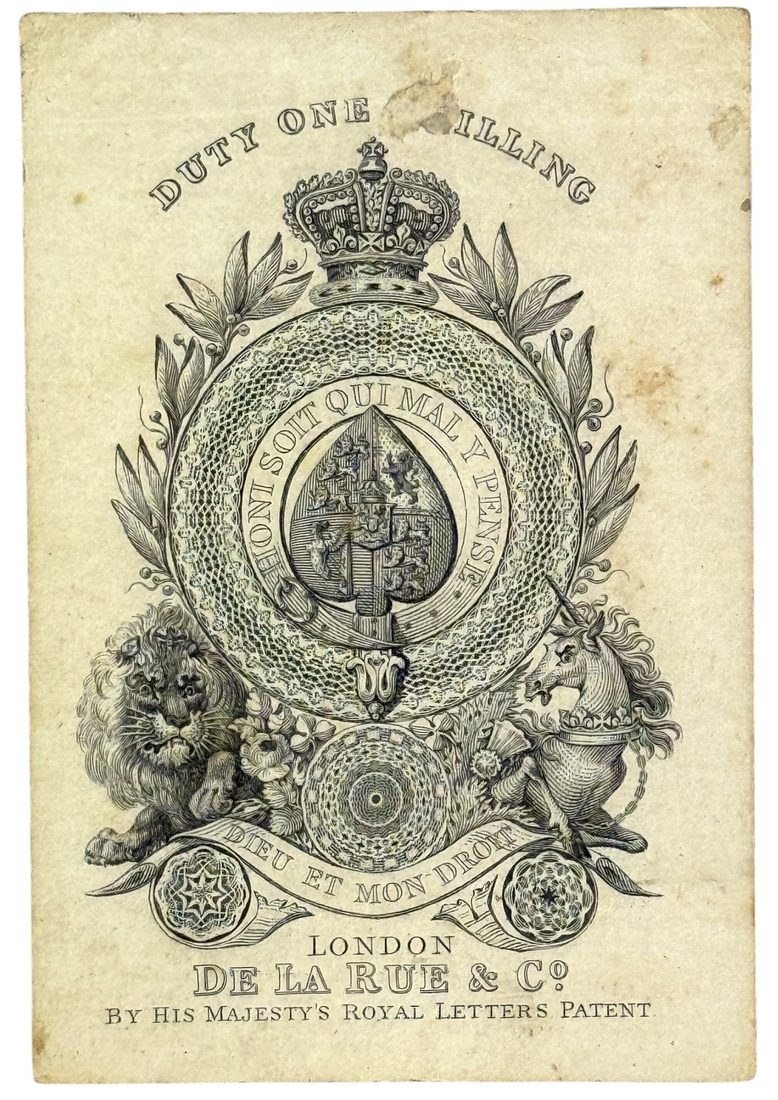
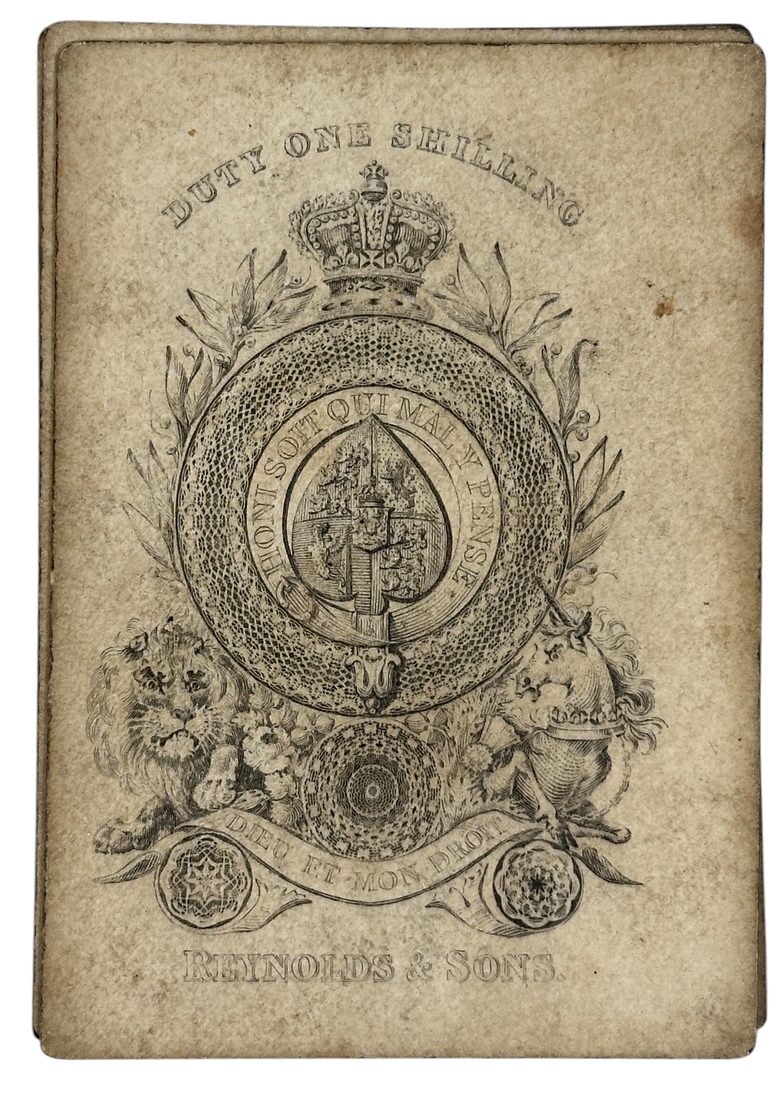
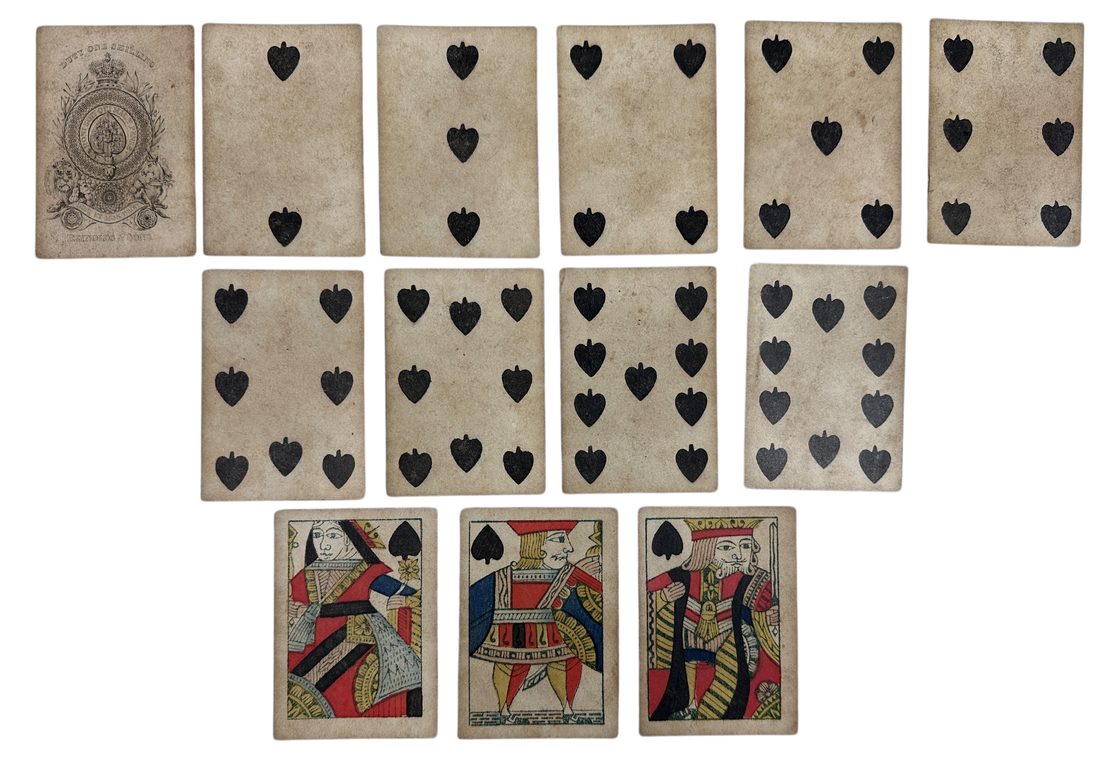
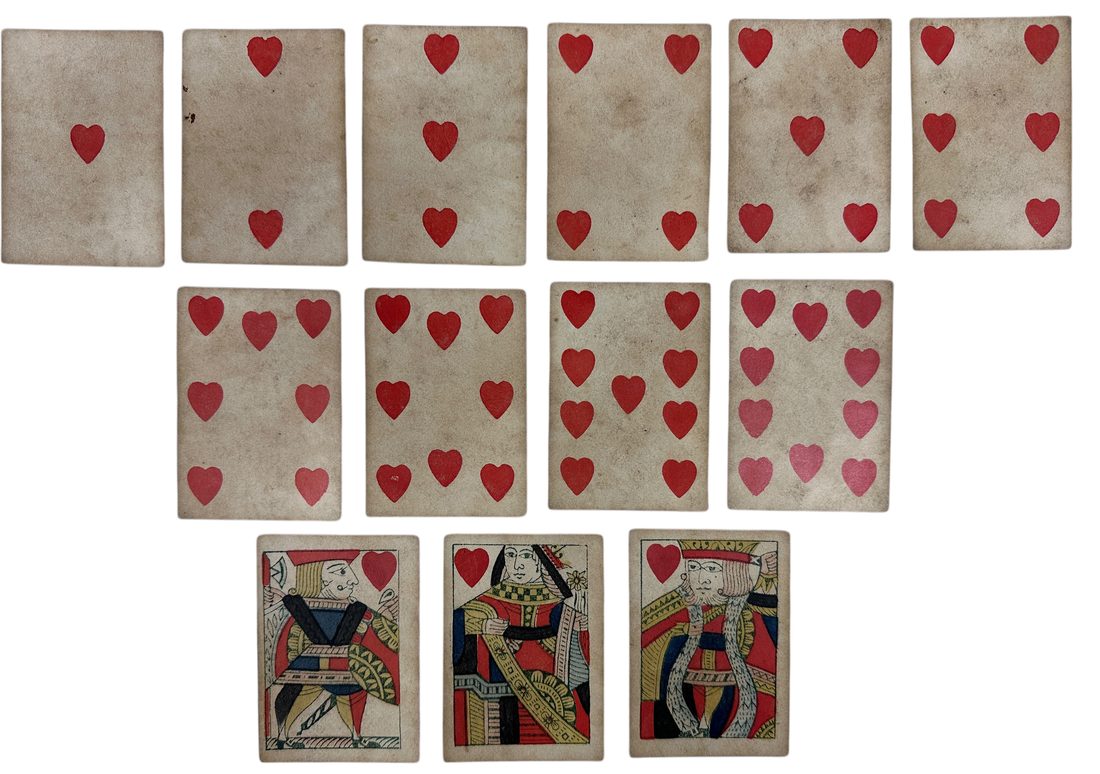
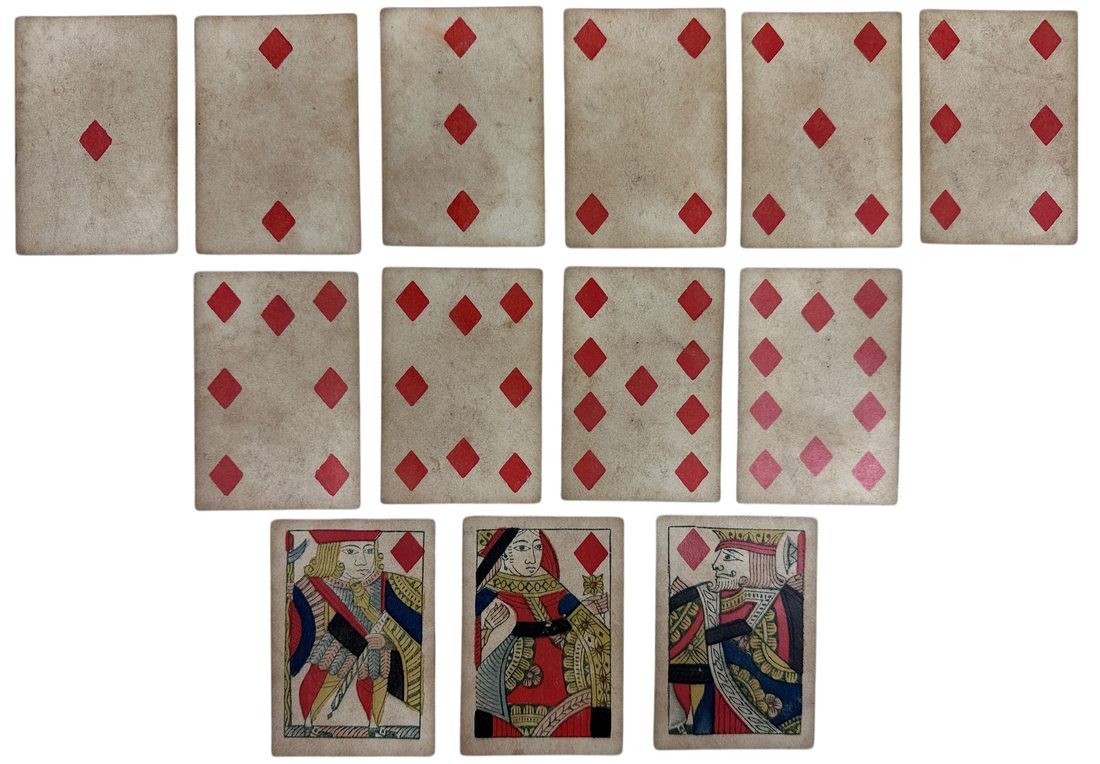
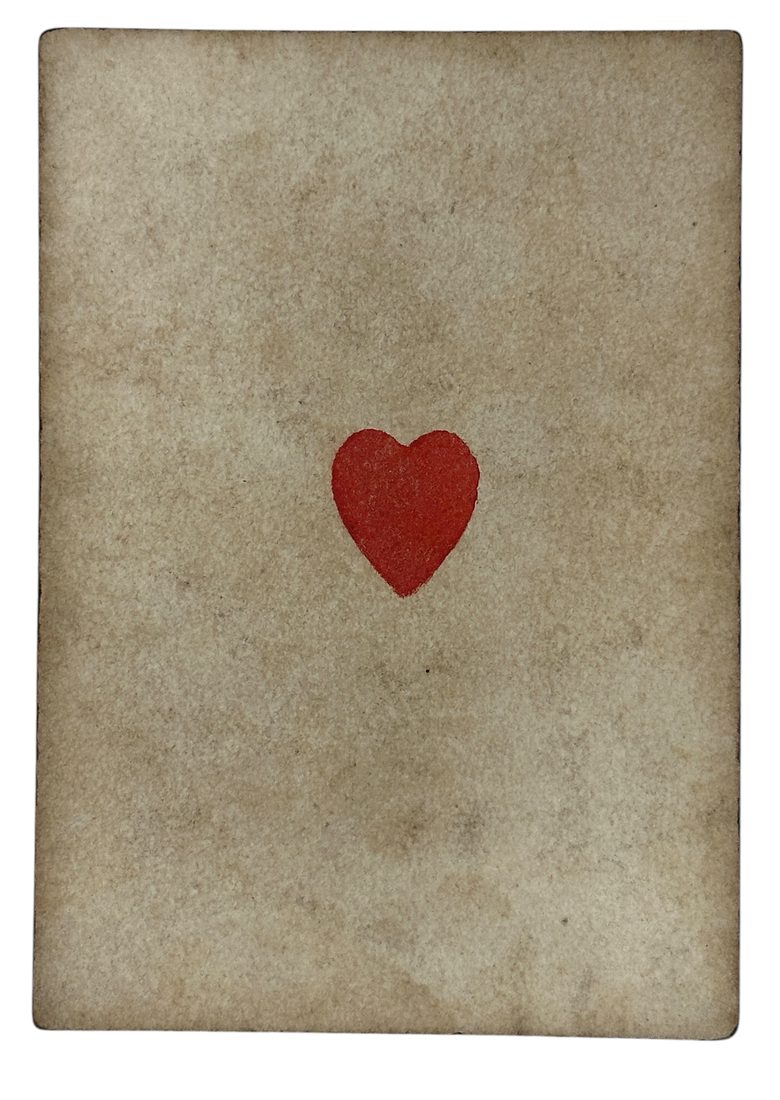
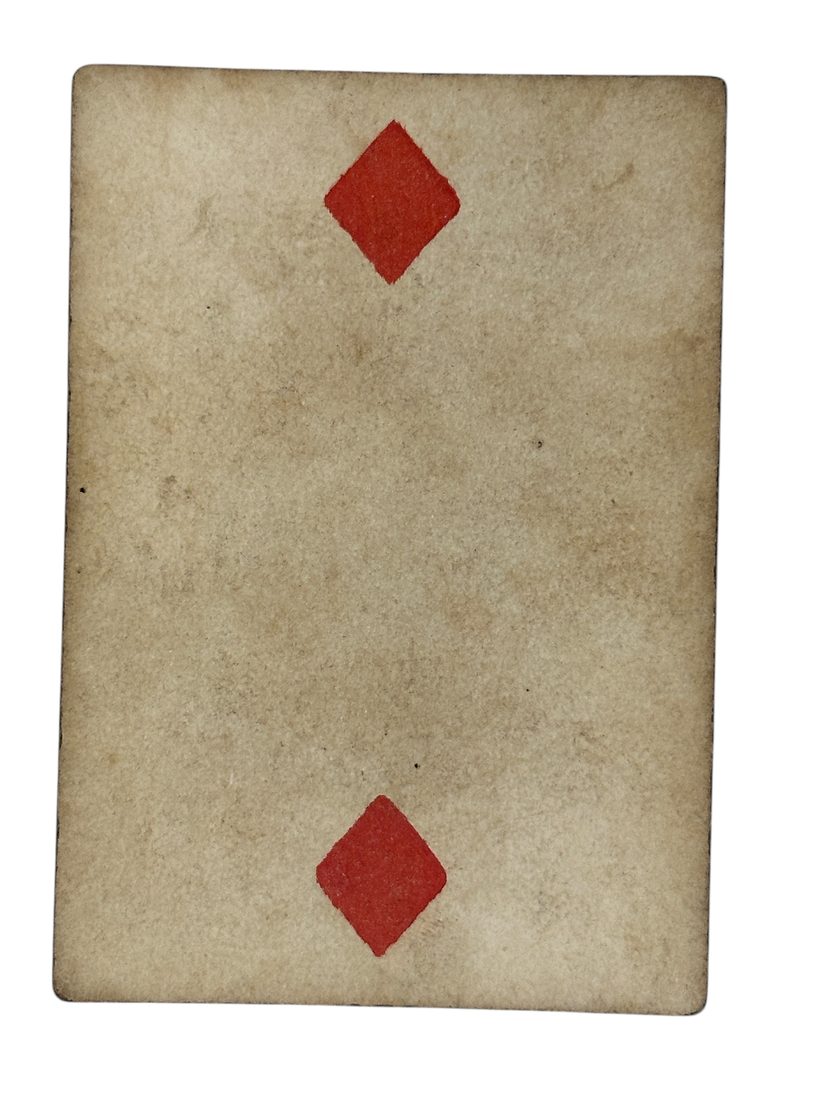
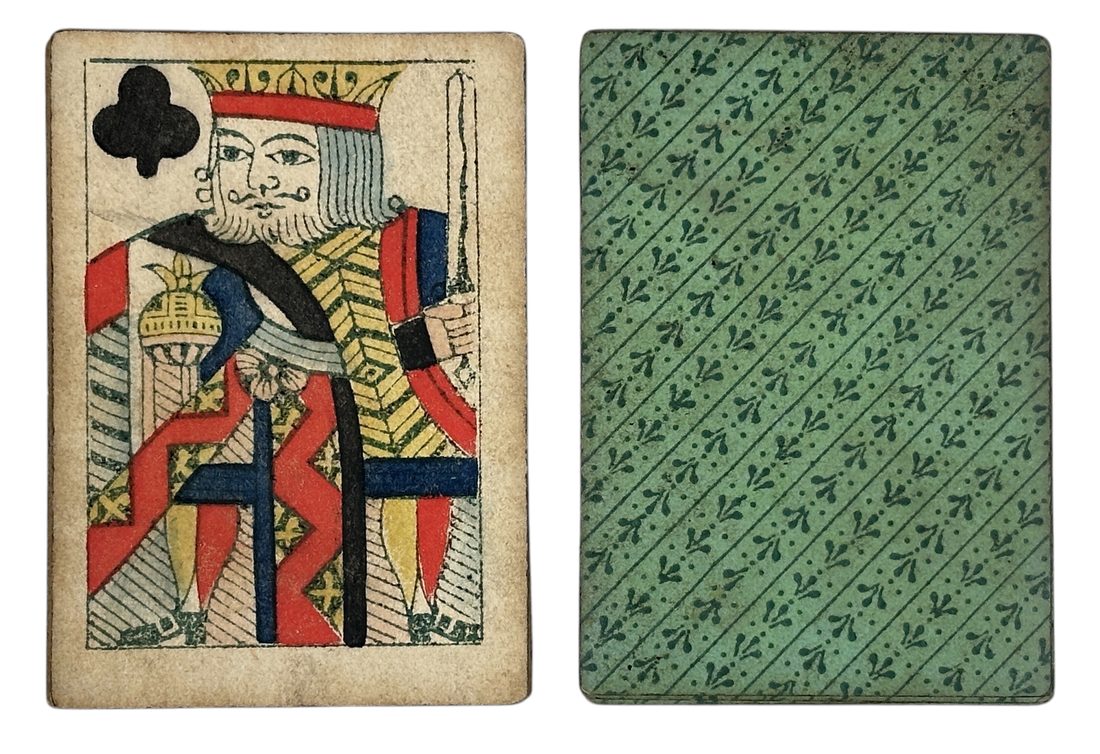
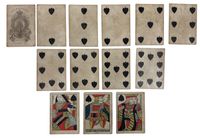
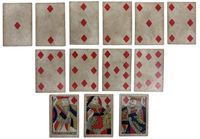
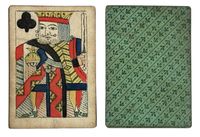
52 cards (95 x 65 mm), comprising 4 suits of 13, Duty One Shilling, Honi Soit Qui Mal Y Pense, Reynolds & Sons displayed on the Ace of Spades, single-ended design, square corners, green back with geometrical decoration in darker green.
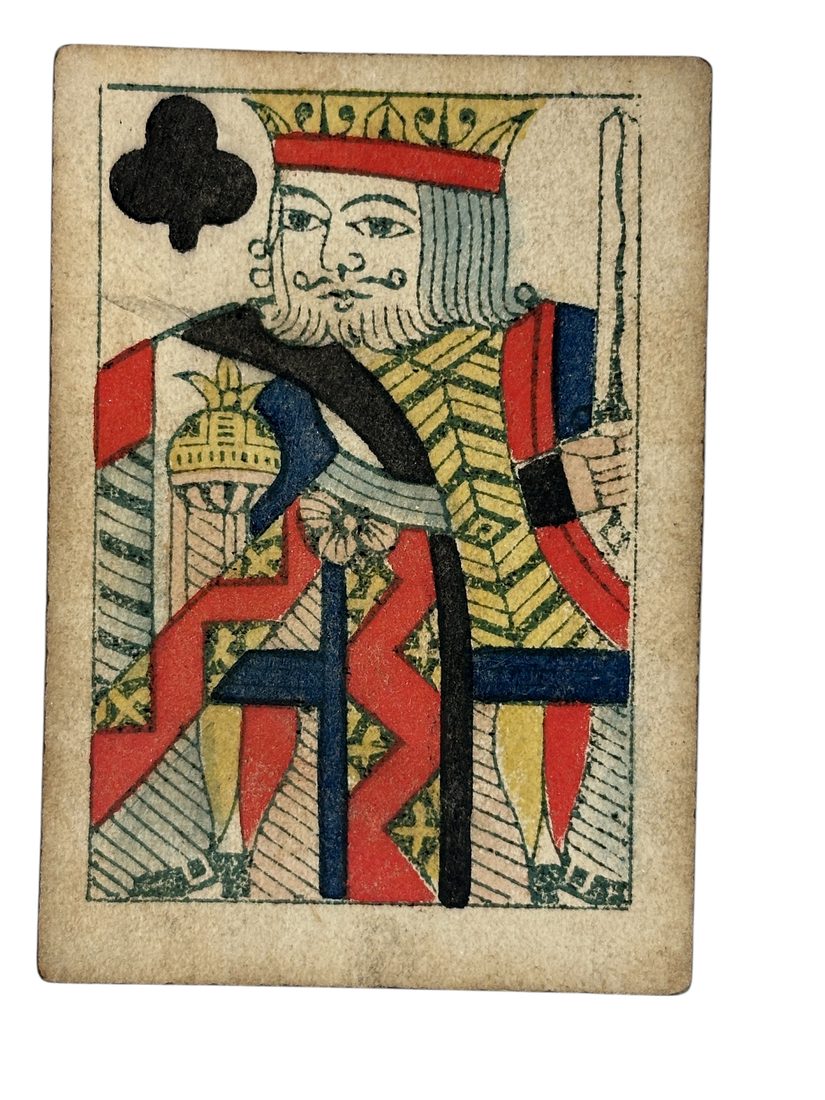
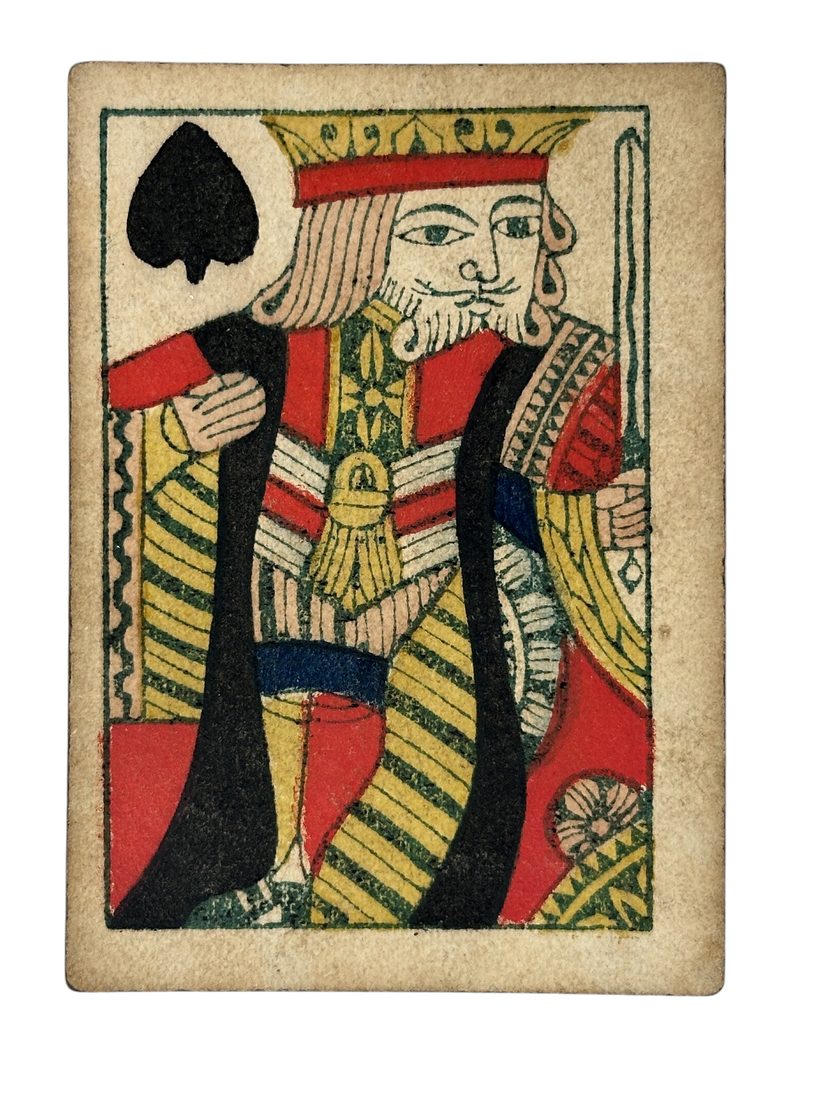
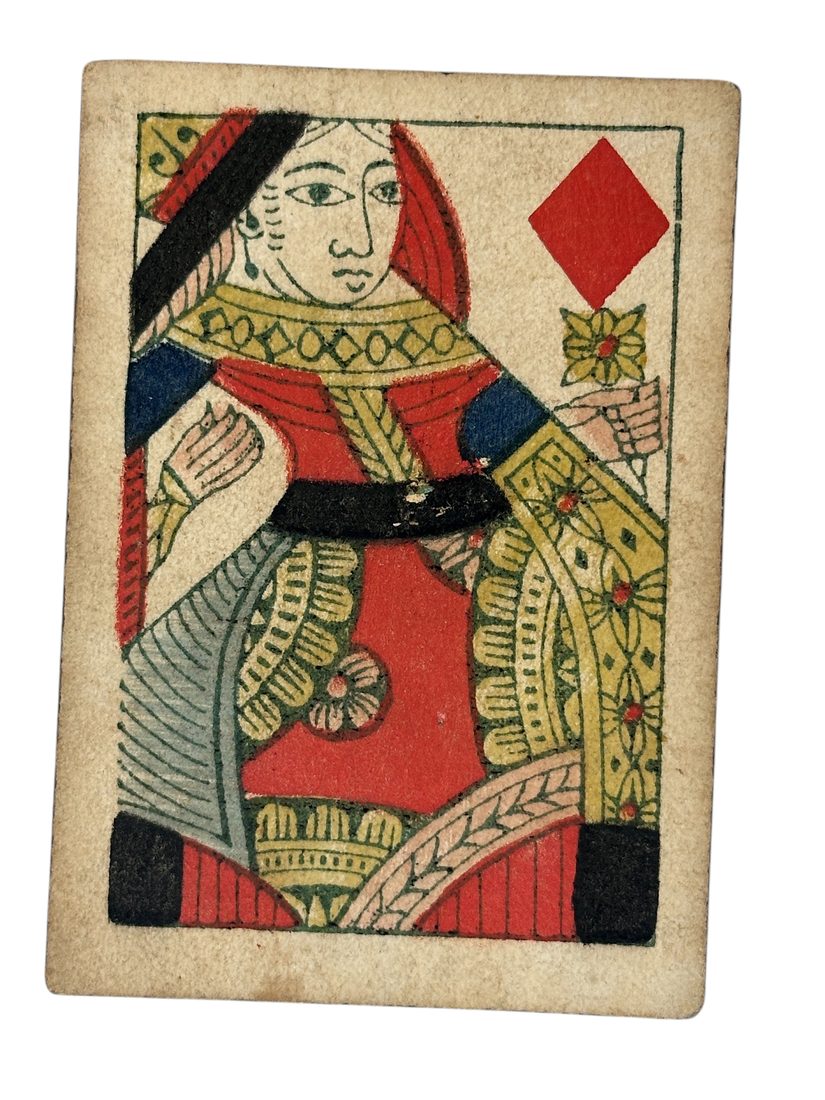
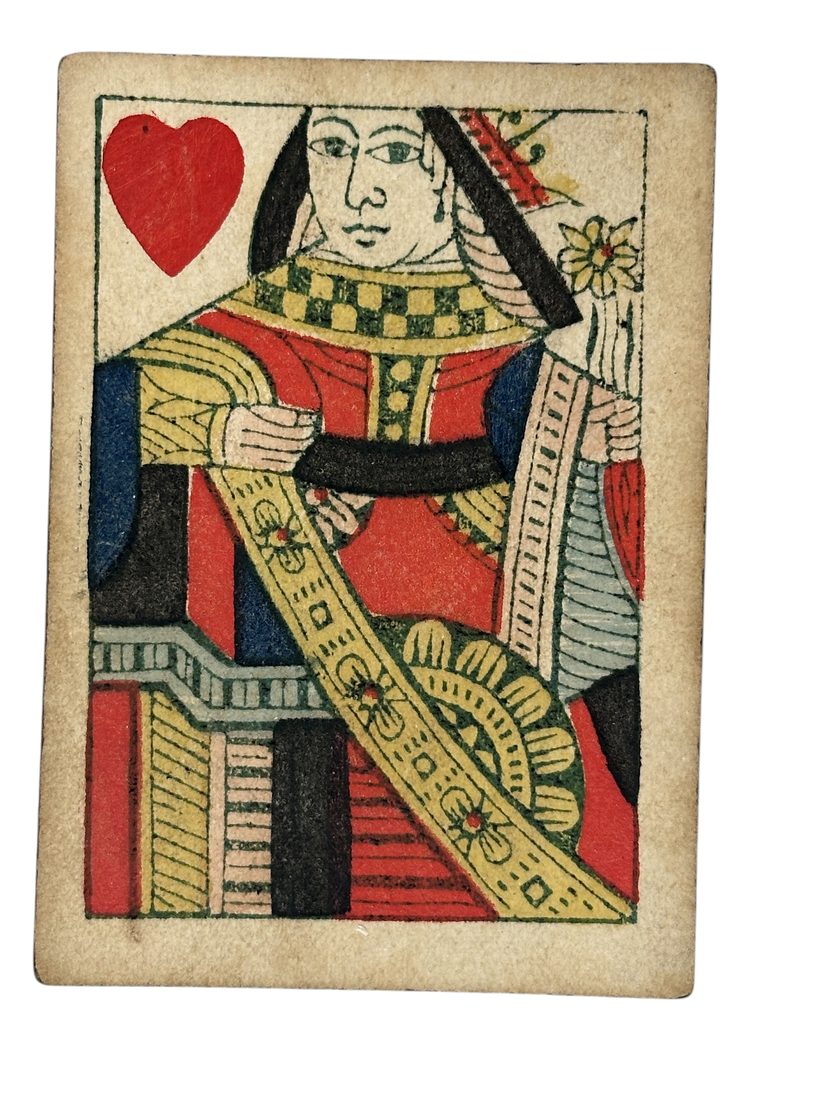
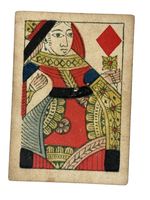
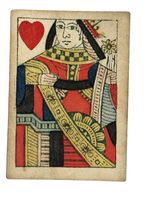
This deck is a perfectly preserved example of mid-19th-century British playing cards in the English traditional pattern, produced by the esteemed printing house Reynolds & Sons. The traditional English pattern faithfully reproduces the intricate designs of earlier cards made before the simplified versions of the twentieth century. Each card reflects the rich heritage and artistry of 16th to 18th-century playing card traditions, capturing historical nuances and emblematic figures.
Detailed Description:
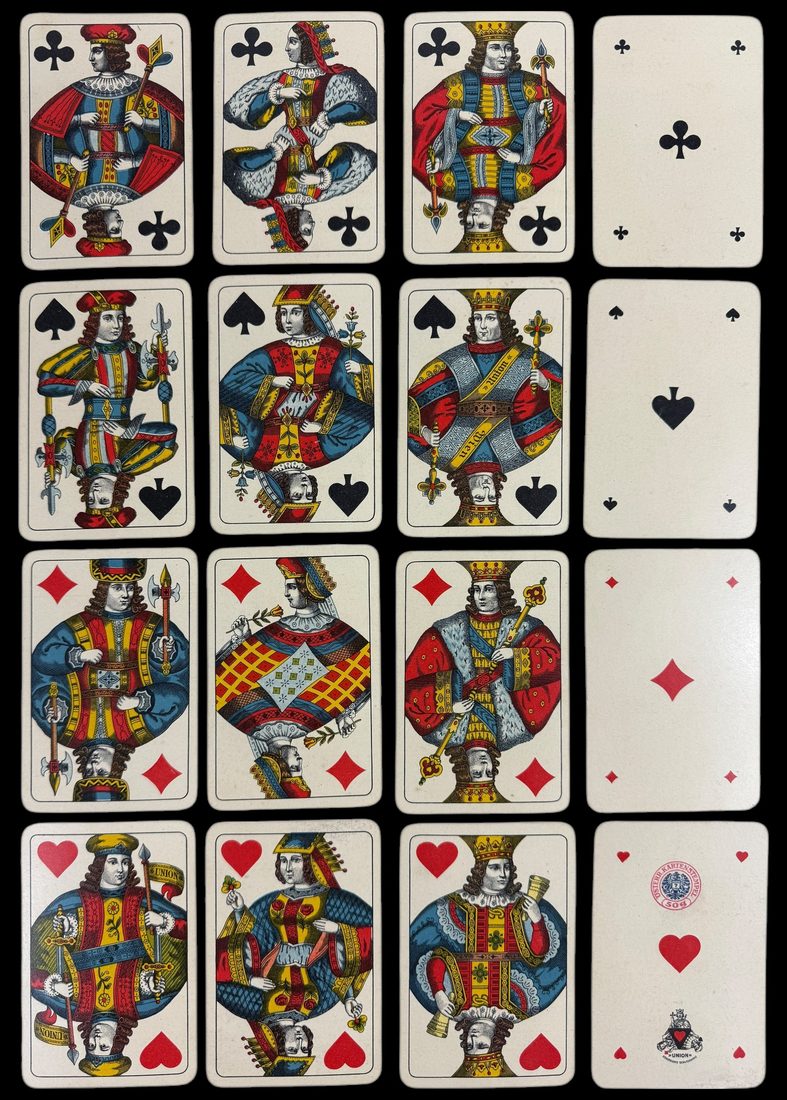
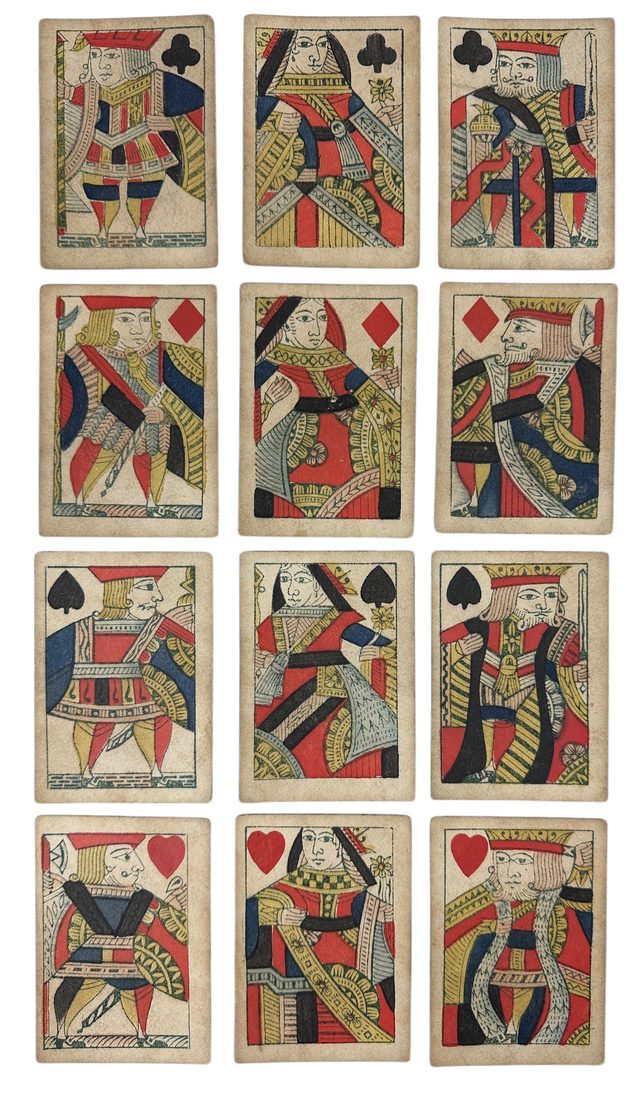
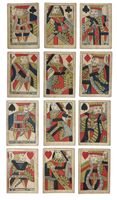
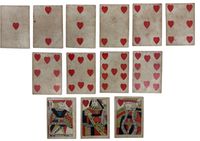
• King of Hearts: Originally depicted wielding a raised axe, a figure common in many parts of France, he now holds a sword hilt, showcasing the evolution of the card’s imagery over time.
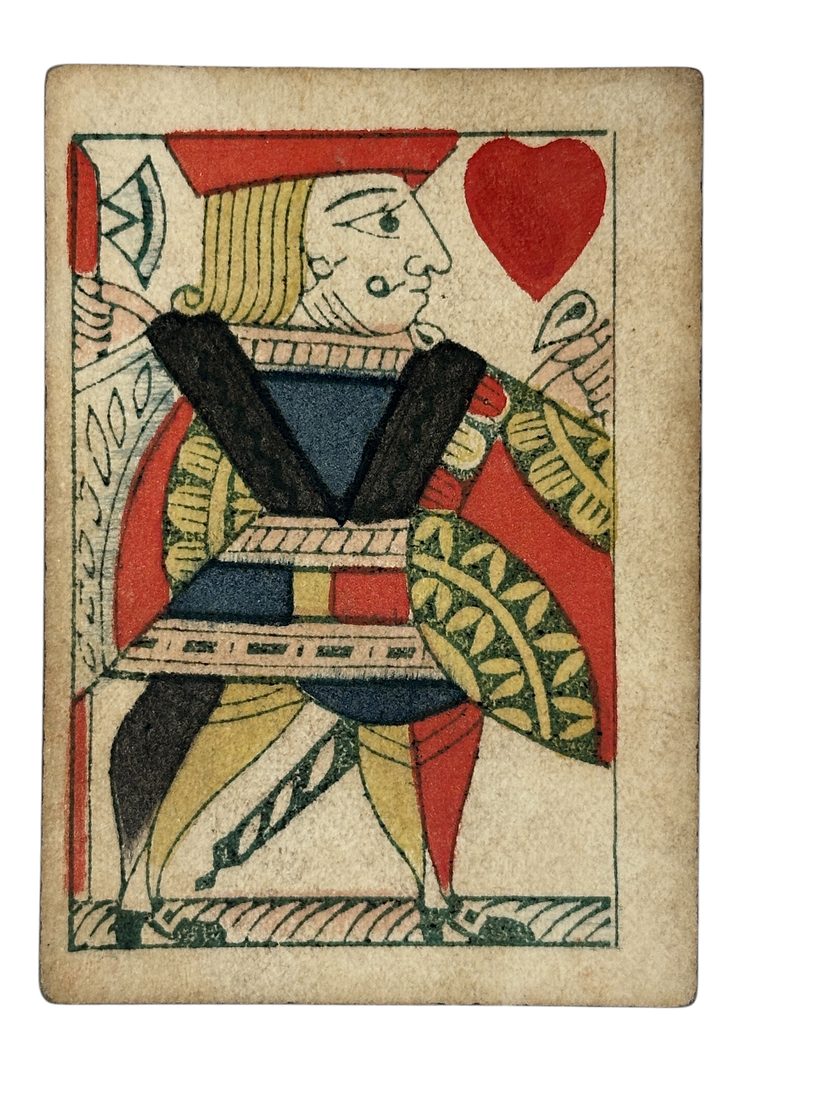
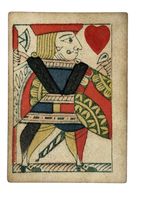
• Jack of Hearts: Shown in profile, he steps forward with one hand holding a halberd behind his back. His other hand, once resting on his sword hilt, has become distorted over time and now appears to clutch an indistinct leaf.
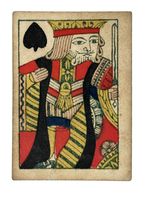
• King of Spades: Holds an upright sword (Spade is a a nod to the Italian word for sword, “spada”).
• Queen of Spades: The only queen to hold a sceptre; all other queens merely clutch flowers.
• Jack of Spades: Stands similarly to the Jack of Hearts but holds his halberd before him.
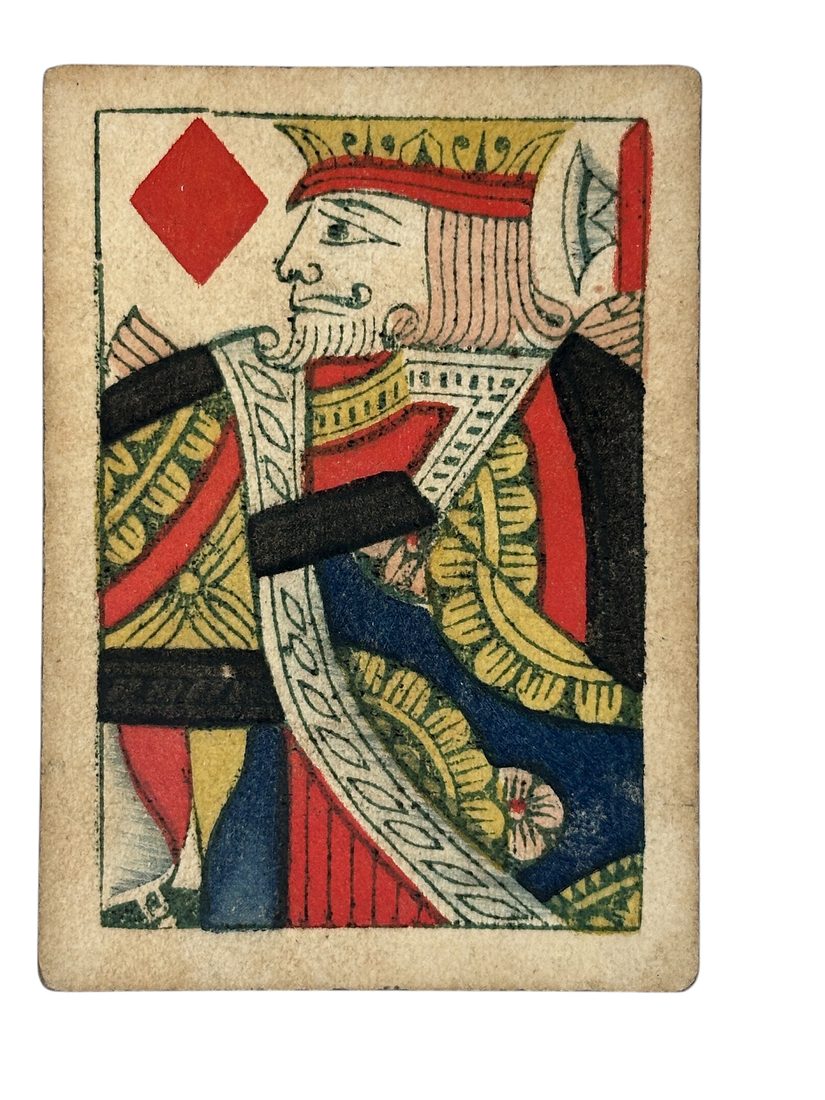
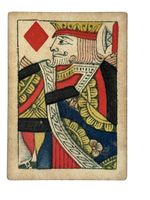
• King of Diamonds: Stands in profile and is similar to the Paris King of Diamonds.
• Jack of Diamonds: Facing forward, he wears knee-length breeches that appear feathery but likely represent chain mail. He wears a sword and carries a halberd.
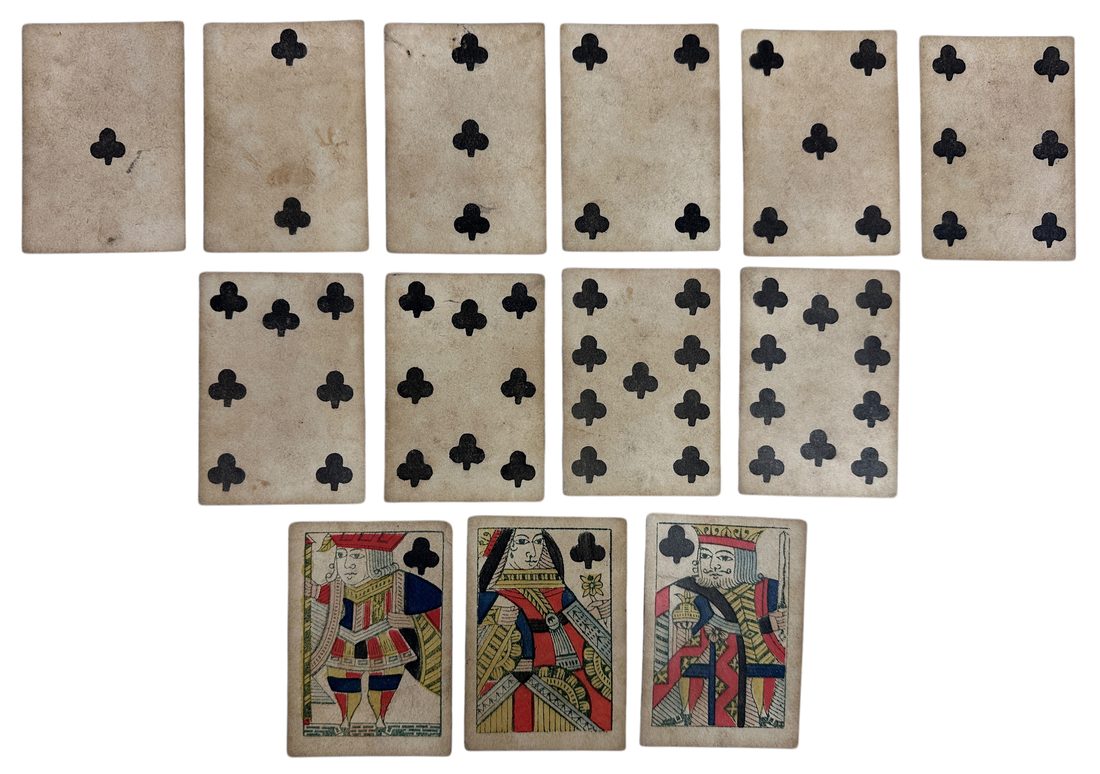
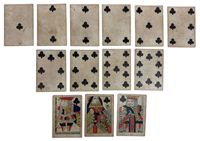
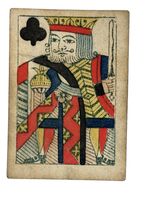
• King of Clubs: Originally identical to the Paris King of Hearts, holding a sword and the imperial orb topped with the Cross of Lorraine. Around 1780, English chauvinism led to the replacement of the French cross with a nondescript leafy figure atop the orb.
• Jack of Clubs: Also facing forward, he holds a long arrow-like spear reminiscent of those found in early French illuminated manuscripts depicting hunting scenes.
English pattern cards remained single-ended in the court cards until shortly after 1850. Even then, it was at least ten years before the conservative London clubs accepted double-headed cards.
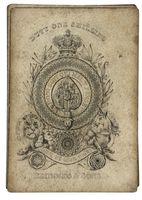
Honi Soit Qui Mal Y Pense, translating to “Shamed be he who thinks evil of it”, is an old French phrase, motto of the Order of the Garter, the most prestigious order of chivalry in the United Kingdom, established by King Edward III in 1348. The inclusion of this motto on the Ace of Spades was customary during this period, symbolizing authenticity and the deck’s compliance with tax regulations.
Duty One Shilling: between 1711 and 1960, playing cards in Britain were subject to a government-imposed tax, a significant source of revenue for the Treasury. In 1840, the duty was increased to one shilling per deck, a rate that remained until 1862. This tax was evidenced by a duty stamp on the Ace of Spades, known as the duty ace. The presence of the Duty One Shilling stamp on this deck’s Ace of Spades helps to date its production to between 1840 and 1862. However, in 1840 Reynolds introduced a modification to the traditional English pattern, modernizing the court card designs with an overlay of decorative engraved patterns. This trend was subsequently imitated by foreign manufacturers (e.g., Boisse). Reynolds also produced a double-ended version of their new designs as double-ended playing cards were becoming accepted during that time.
Pre 1840 traditional English pattern Post 1840 modified pattern
The present deck, still belonging to the traditional pattern, can therefore be precisely dated to 1840.
Reynolds & Sons, a notable British printing firm active in the mid to late 19th century, was based in London, the epicentre of the publishing industry. Specializing in the production of playing cards, the company was known for the high quality and durability of its products, which featured clear printing and strong cardstock. Reynolds & Sons contributed to the accessibility of playing cards, supplying both private households and public establishments. Their work reflects key technological advancements of the Victorian era, such as the use of steam-powered presses and lithographic techniques, which allowed for more intricate designs and higher production volumes. Although less documented than some contemporaries, the firm played a significant role in 19th-century British printing
Conditions: few marks of use; overall, a fine copy.
References: Sylvia Mann, All Cards on the Table, Verlag, 1990, p. 128; Kathleen Wowk, Playing Cards of the World, Lutterworth press, 1983, pp. 90-92; Sylvia Mann, Collecting Playing Cards, Arco Publications, 1966, pp. 65-66; Catherine Perry Hargrave, A History of playing Cards, Dover publications, 2021, p. 186. BNF, 12148/btv1b105326144; The International Playing-Card Society website.