Tarot de Besancon
| Macro-category | Playing Cards and Tarot |
| Subcategory | Tarot |
| Author | Georgin, Francois (Pellerin & Cie) |
| Provenance | Epinal |
| Publisher / Maker | Pellerin & Cie |
| Year | 1860 |
between Marseille and Switzerland: the Pellerin Besançon tarot, witness to a trans-confessional iconography
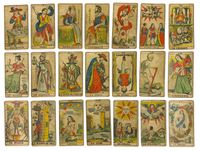
[Tarot]. Tarots de de Besançon. Épinal, Fabrique de Pellerin et Cie, ca. 1860.
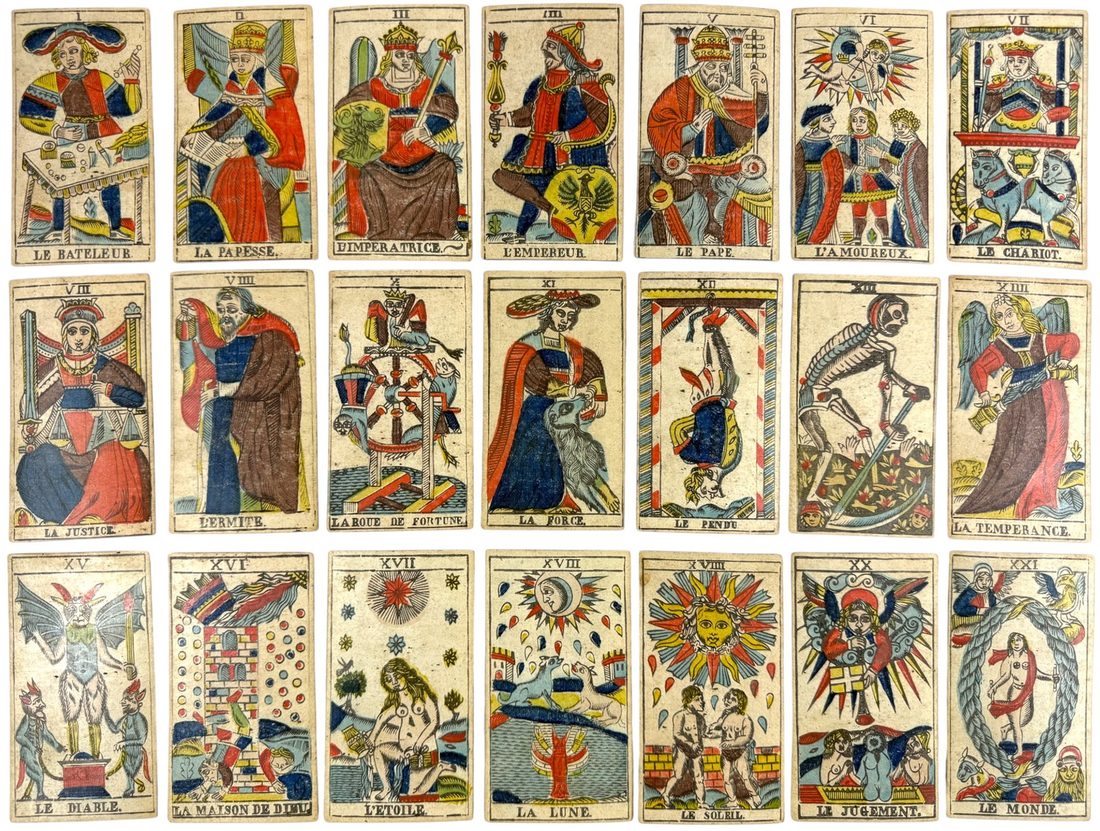
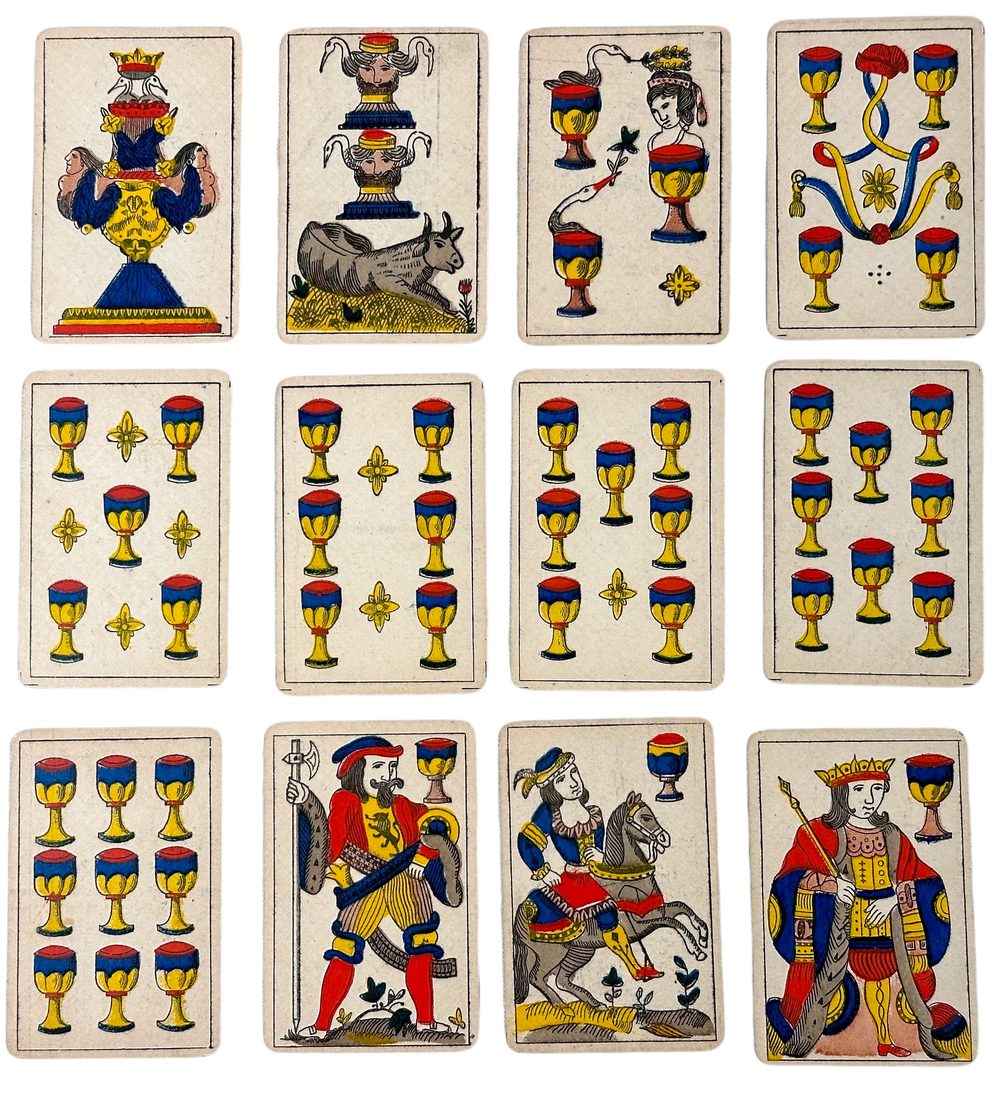
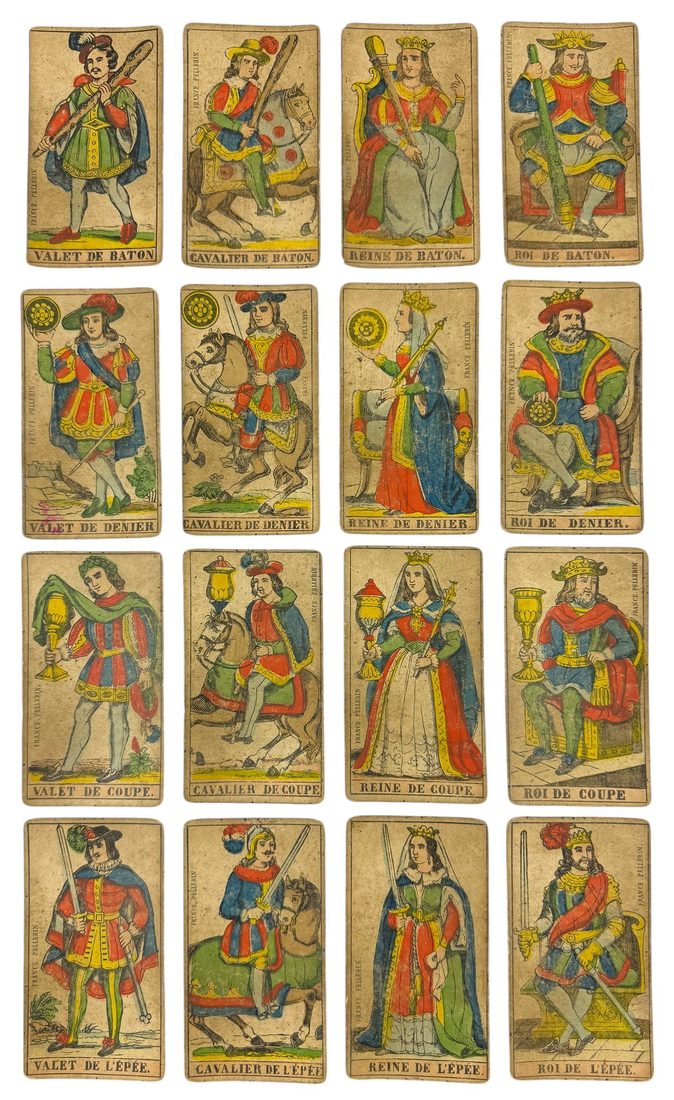
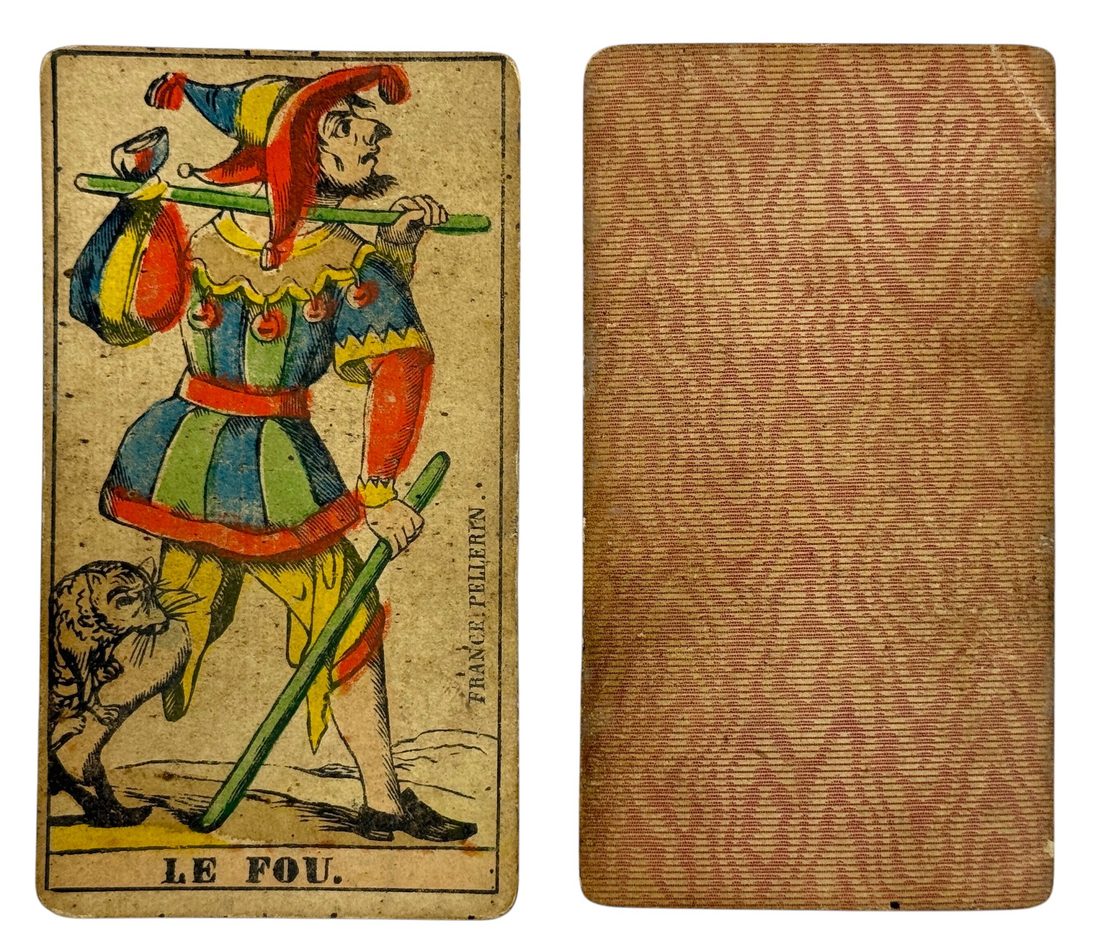
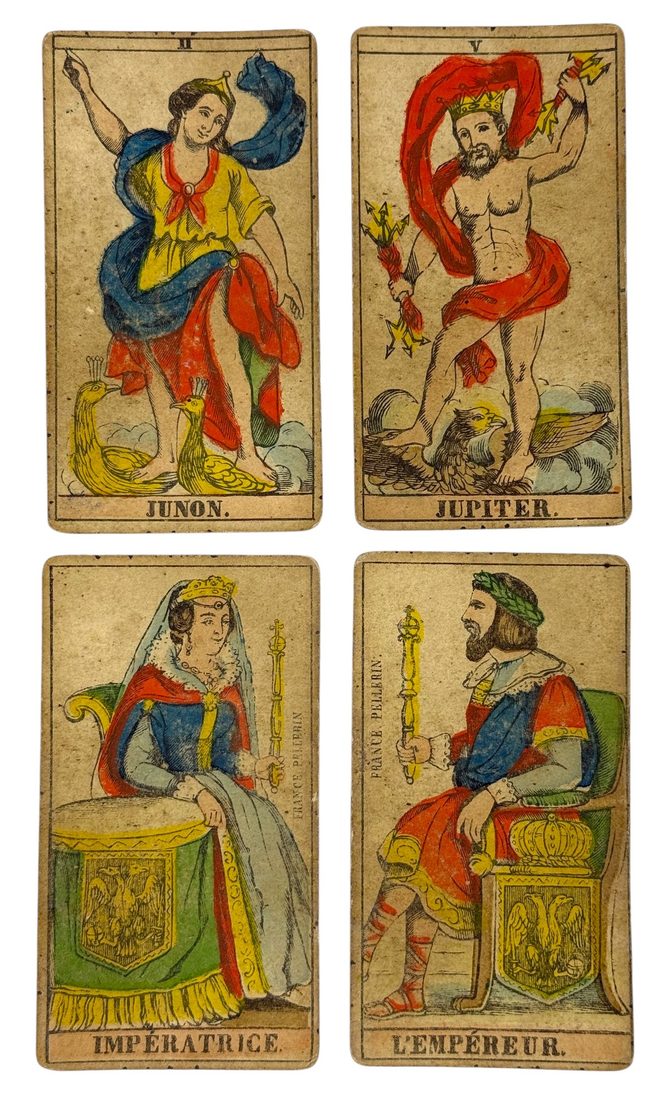
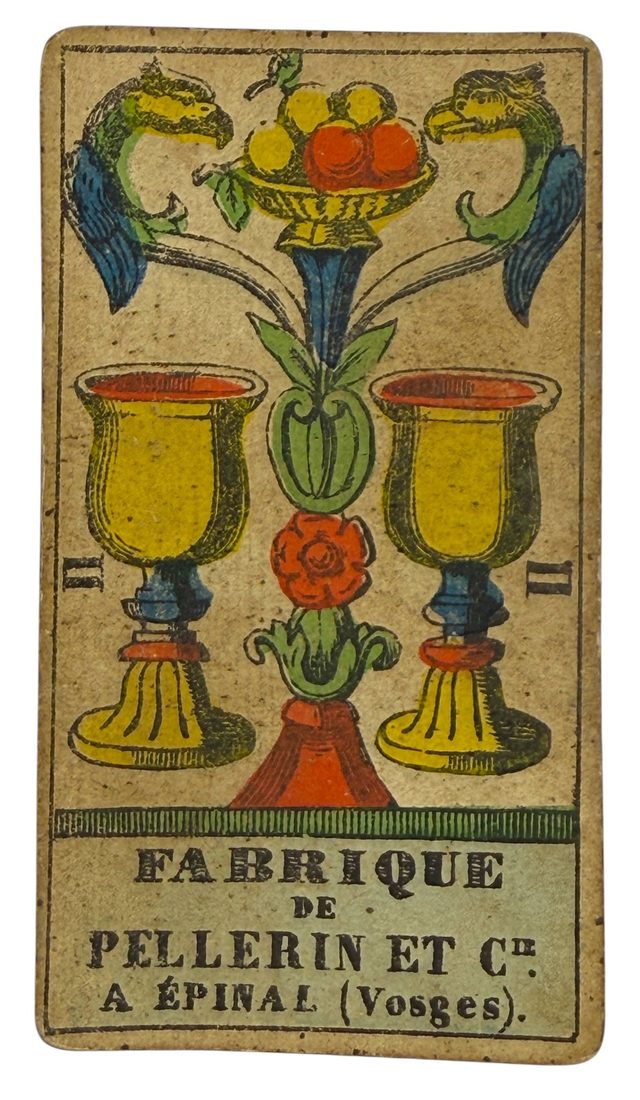
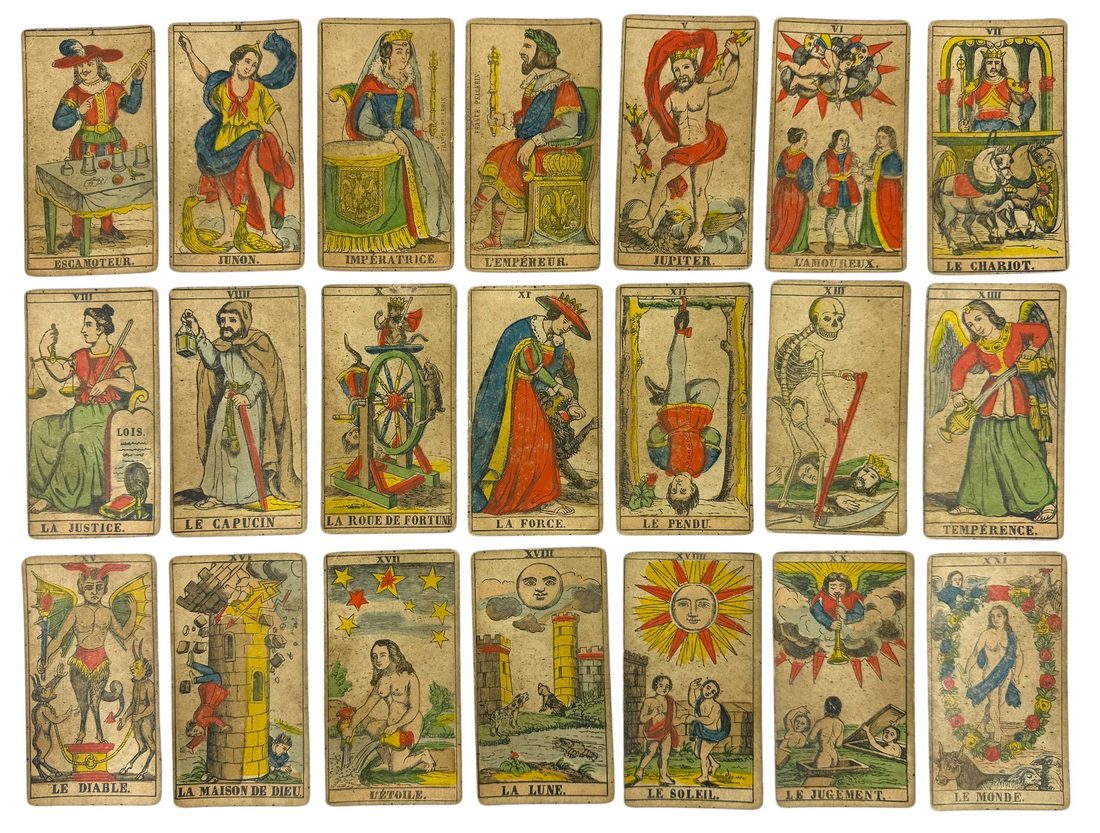
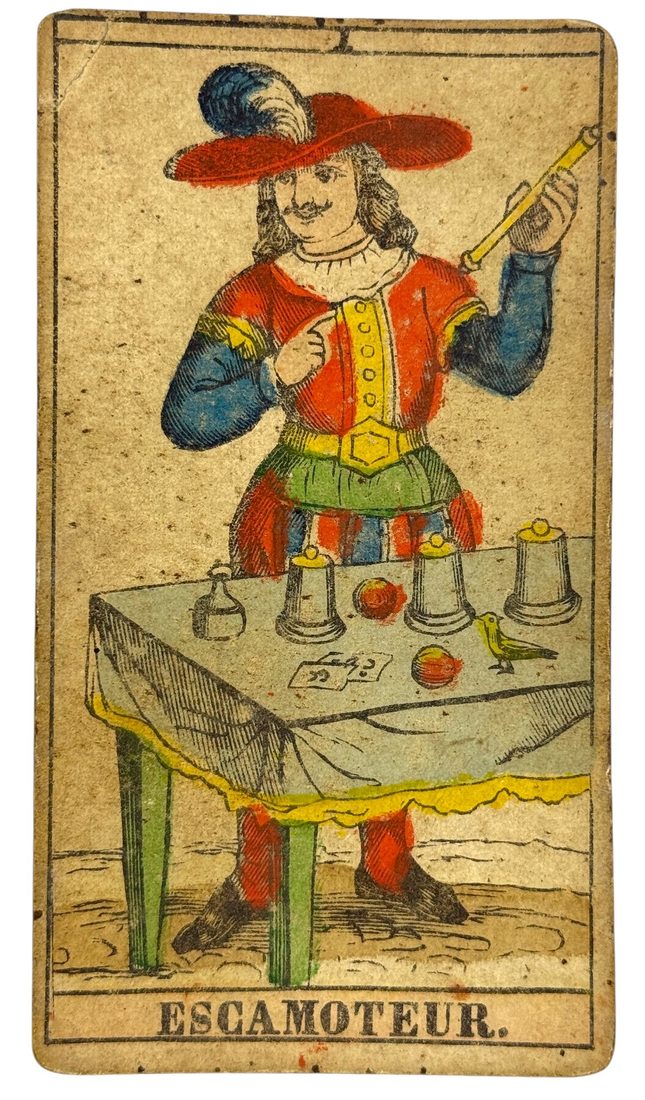
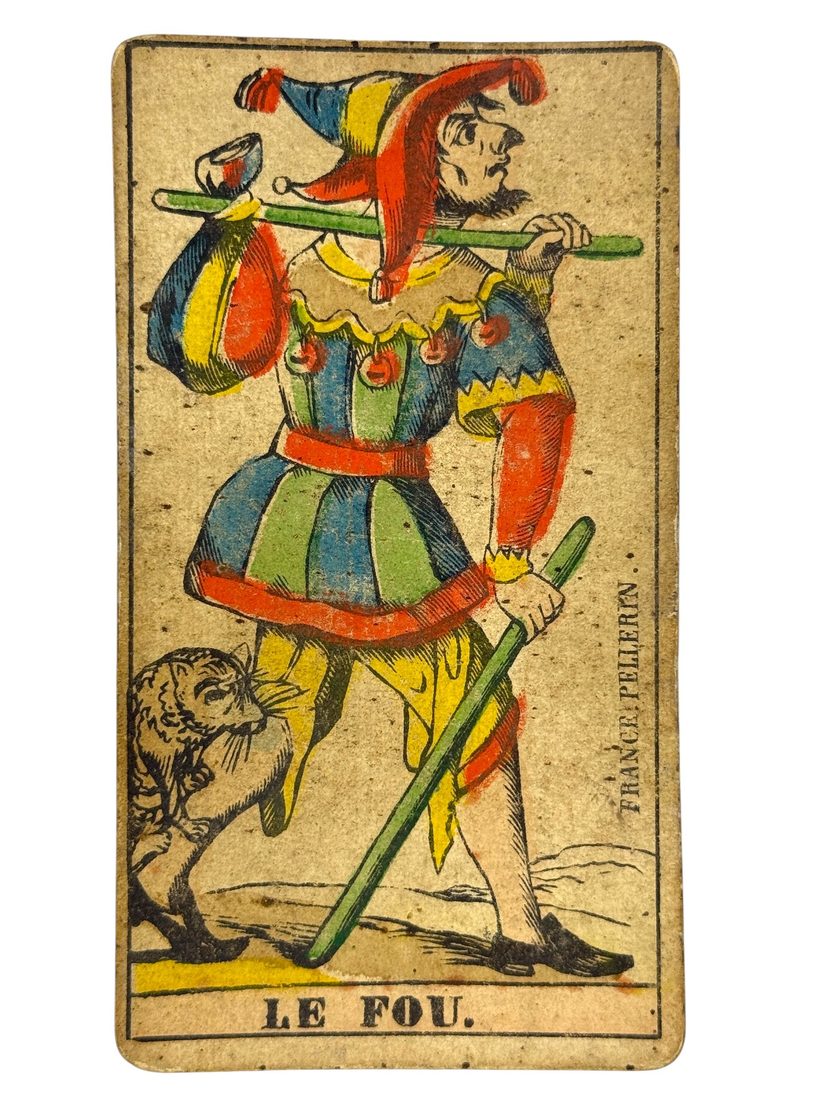
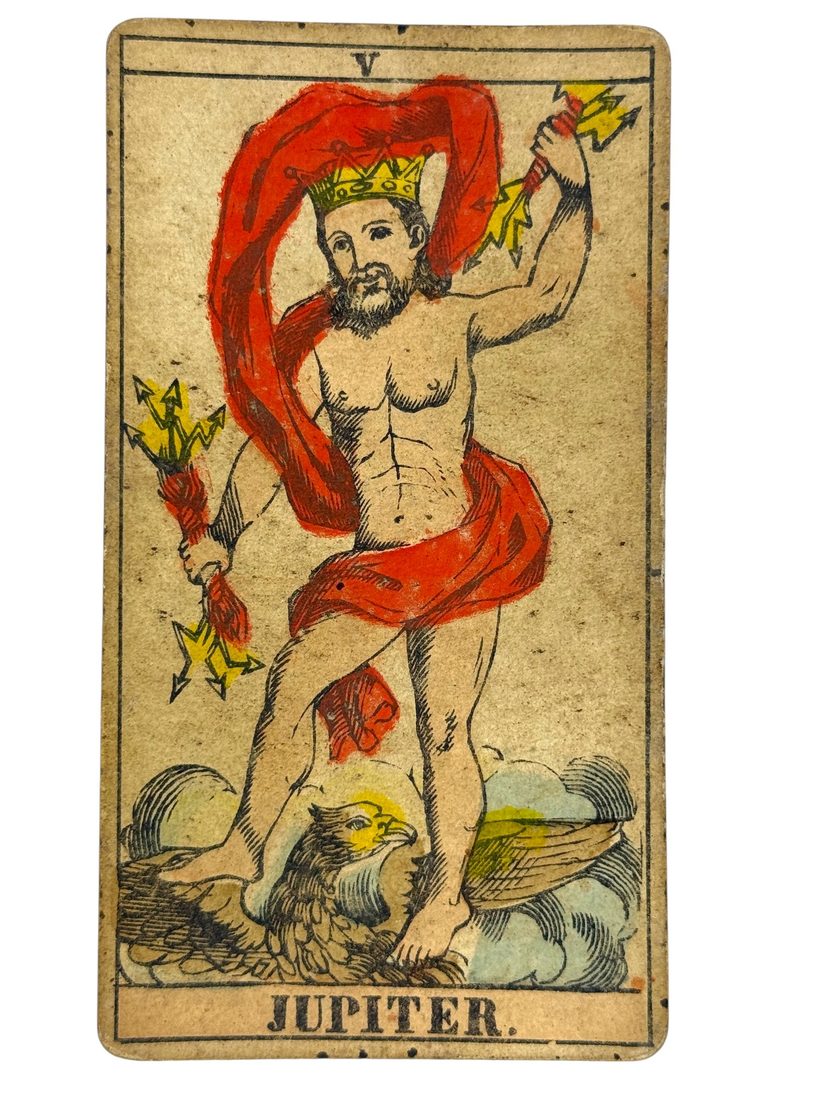
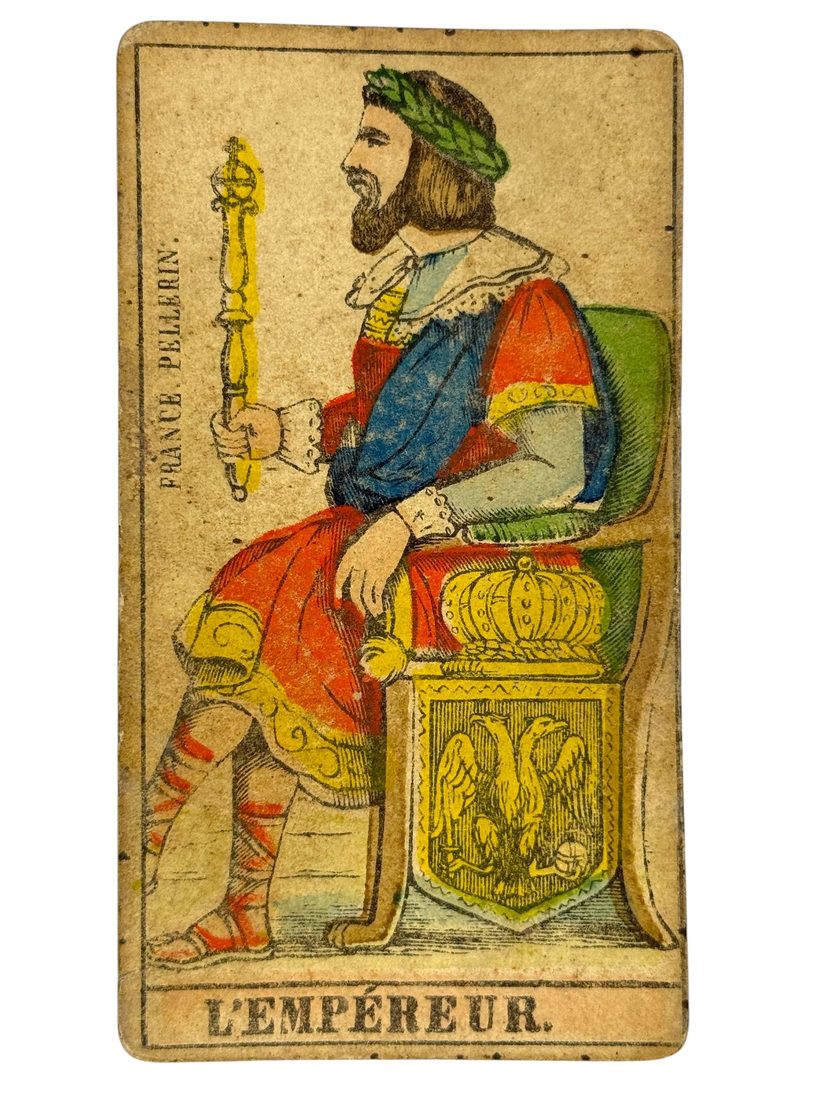
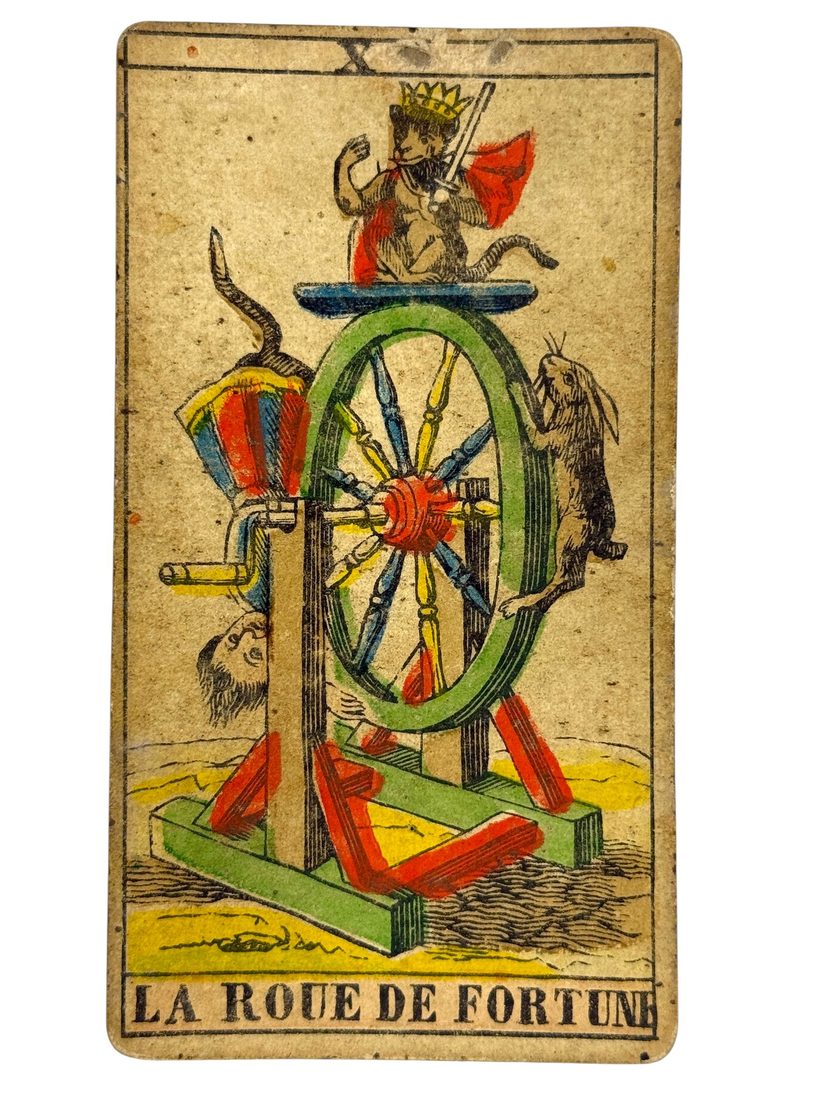
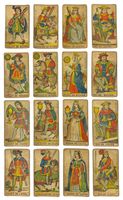
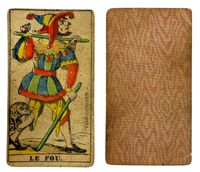
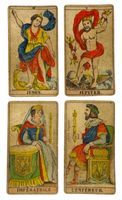
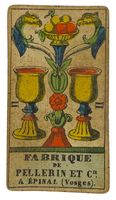
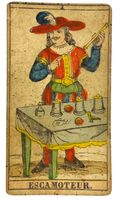
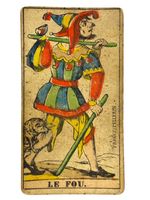
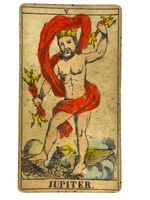
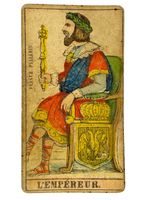
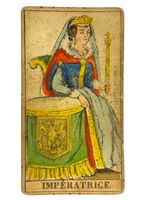
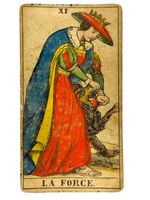
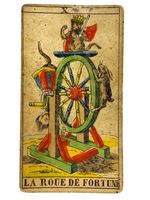
78/78 cards (115 × 65 mm), printed from woodblocks and coloured by stencil (pochoir) on thin card, typical of Epinal popular productions, back decorated with an orange pattern. The substitution of the Pope and Popess with Juno and Jupiter confirms the Besançon type. Titles are inscribed in French, with occasional peculiarities such as L’Escamoteur for the Bateleur and Le Capucin for the Hermit. The deck bears the printer’s identification on the Two of Cups: “Fabrique de Pellerin et Cie à Épinal (Vosges).” “France. Pellerin” is impressed along the margins of courts, on Le Fou and L’Empéreur. The woodcuts were produced by the famed engraver, François Georgin.
A complete deck of the “Tarots de Besançon” ipcs pattern sheet 6, printed by Imagerie d’Épinal, the most influential producer of popular prints in nineteenth century France.
This deck represents one of the most accomplished Epinal manifestations of the Tarots de Besançon. Its significance lies not only in the technical execution, woodcut outlines and vivid stencil colours, but also in its role as a mediator between the canonical Marseille model and regional variants acceptable to both Catholic and Protestant audiences. Pellerin’s imprint gave the Besançon tarot unprecedented diffusion across France, Switzerland, and Germany.
The Tarots de Besançon constitute a distinctive historical variant of the traditional Tarot de Marseille, emerging between the eighteenth and nineteenth centuries, especially in the Franco-Swiss regions and adjacent parts of Central Europe. Their name derives from the city of Besançon, in Franche-Comté, a principal centre for the manufacture and trade of playing cards.
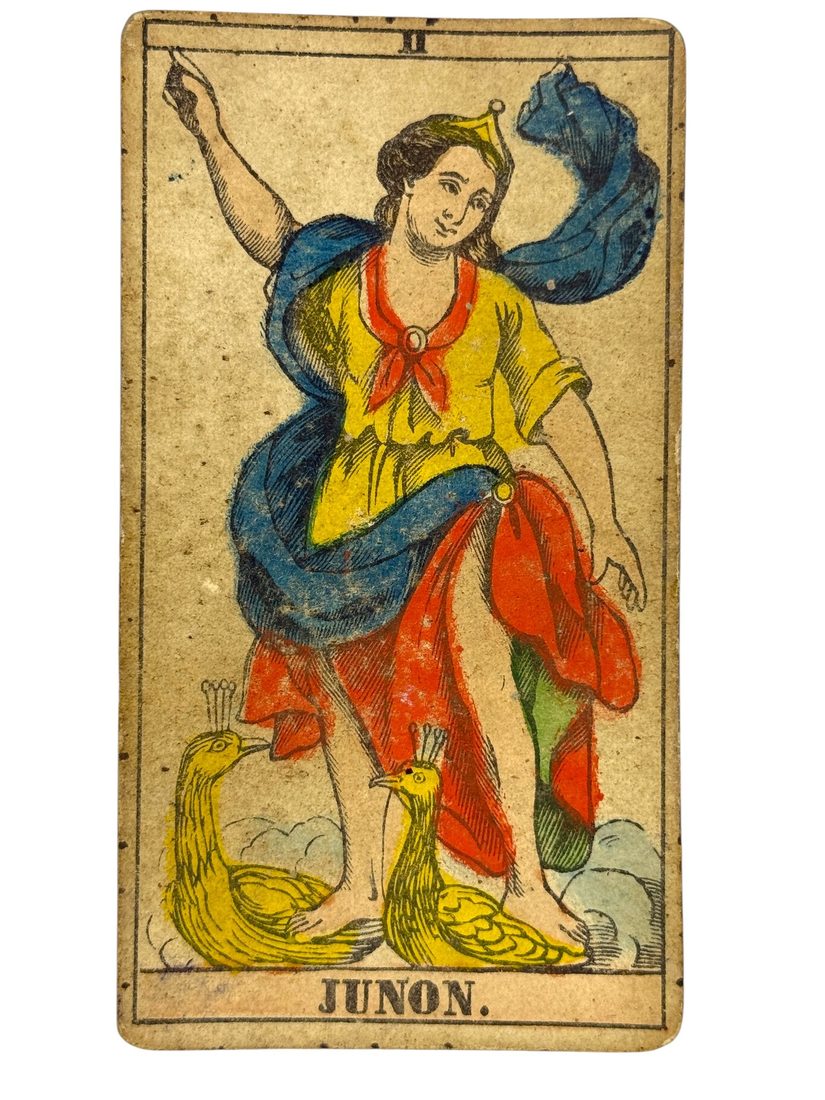
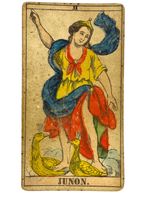
The most conspicuous difference from the Tarot de Marseille lies in the substitution of papal figures, the Pope and the Popess, with the classical deities Juno and Jupiter. This “secularisation” of the imagery may be seen as a deliberate compromise: while the tarot was initially associated with predominantly Catholic Italian and French contexts, for transregional markets papal figures risked being perceived as overly confessional. By introducing Roman divinities embodying power and wisdom, the cards acquired a more neutral, universally intelligible symbolism, thereby broadening their appeal.
Among other characteristics of this deck:
- The Magician titled L’Escamoteur, emphasising his role as conjurer or trickster.
- The Hermit styled Le Capucin, portrayed as a Capuchin friar rather than a generic old man.
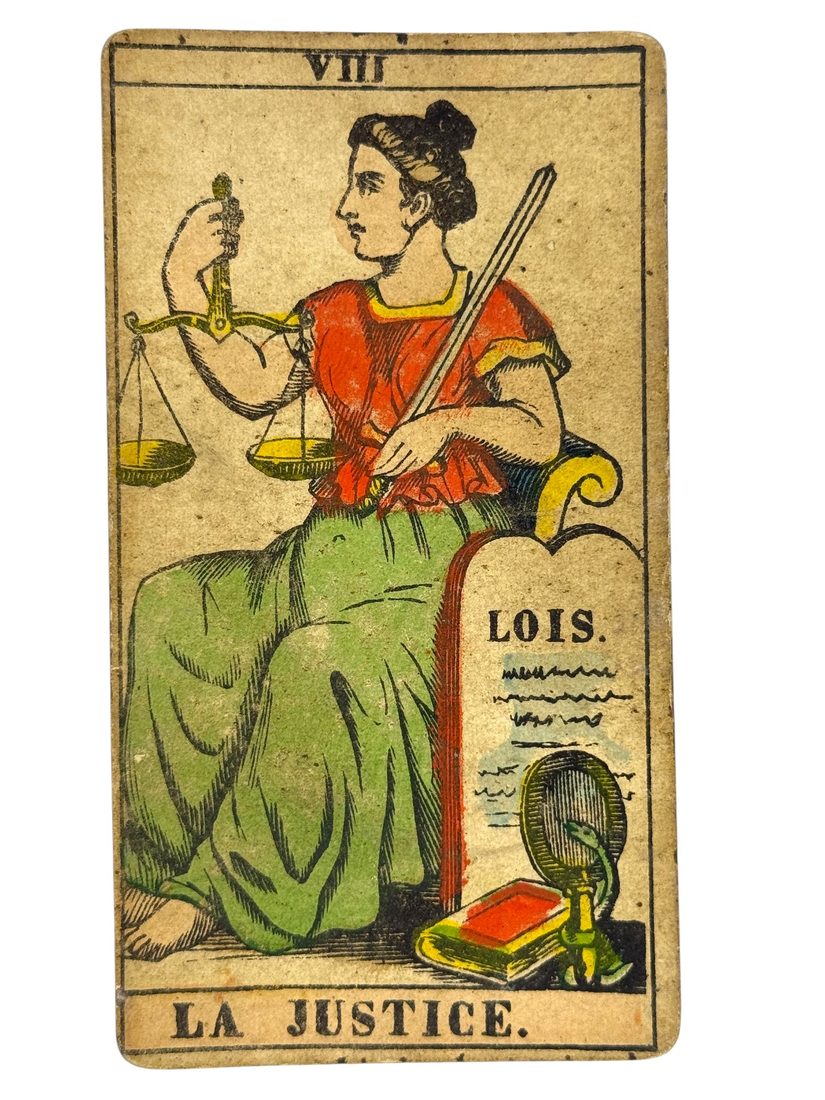
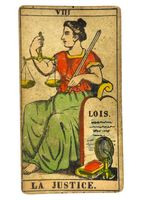
- Justice (VIII) bearing unusual allegories: a serpent and a mirror, alongside balance and sword, and the inscription “LOIS” on a stone table.
- Death, untitled, consistent with older traditions.
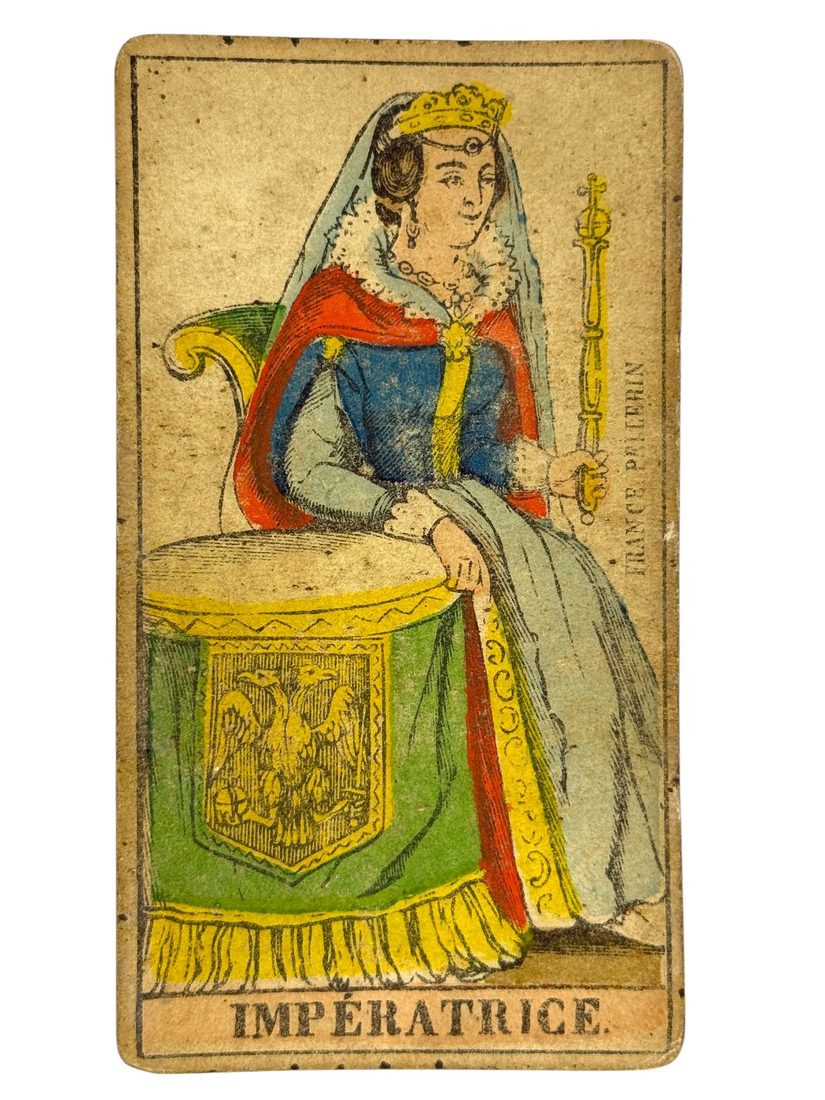
- The Empress and Emperor lacking numerical indices.
The pip cards are decorated with stylised floral and foliate motifs, enhancing the ornamental quality. Suits are Batons, Cups, Swords, and Coins, following French tarot convention.
The 21 “atouts” are:
- The Escamoteur (“The Conjurer”)
- Junon
- Imperatrice
- L’Empéreur
- Jupiter
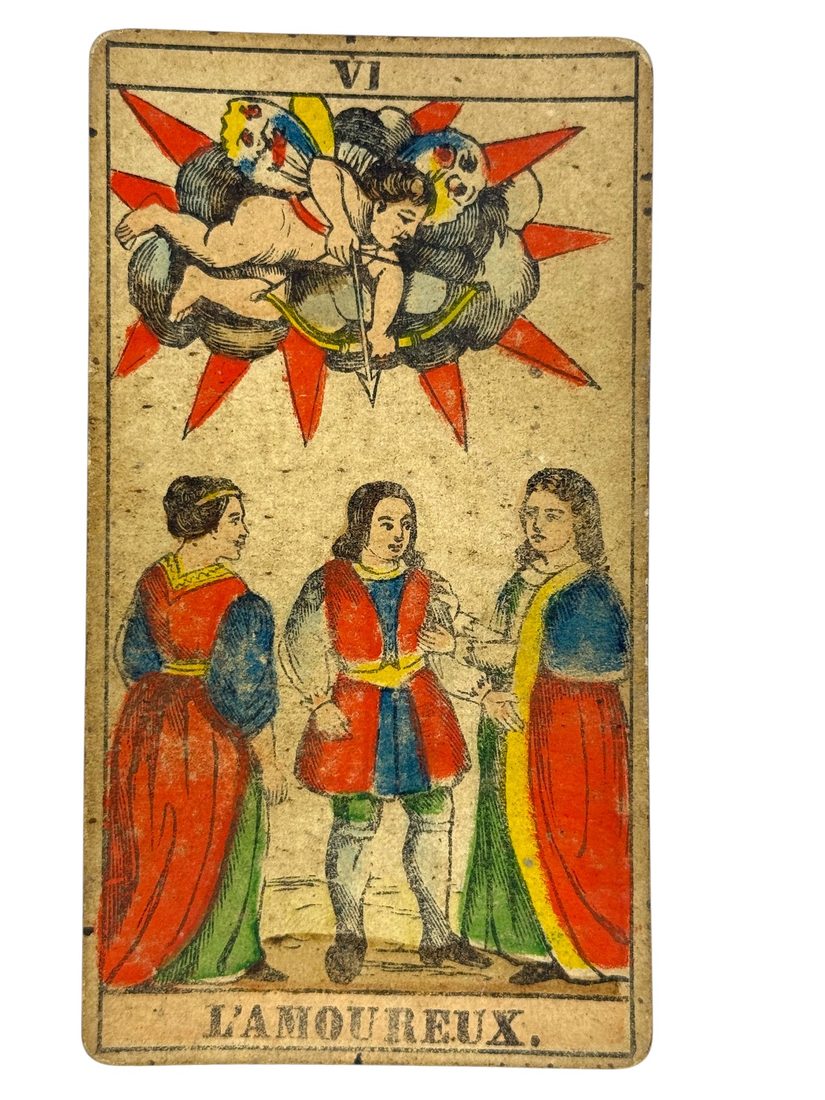
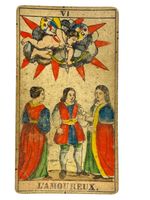
- L’Amoureux
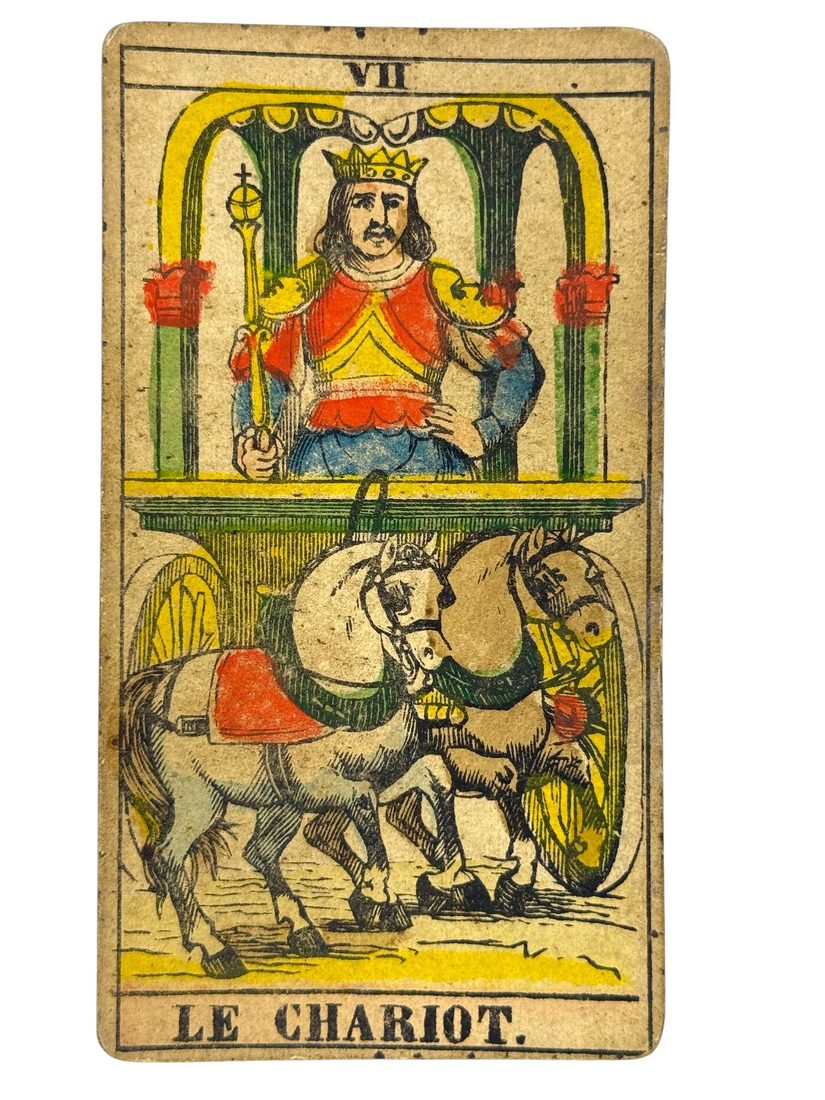
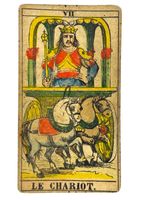
- The Chariot
- Justice
- Le Capucine
- La Roue de Fortune
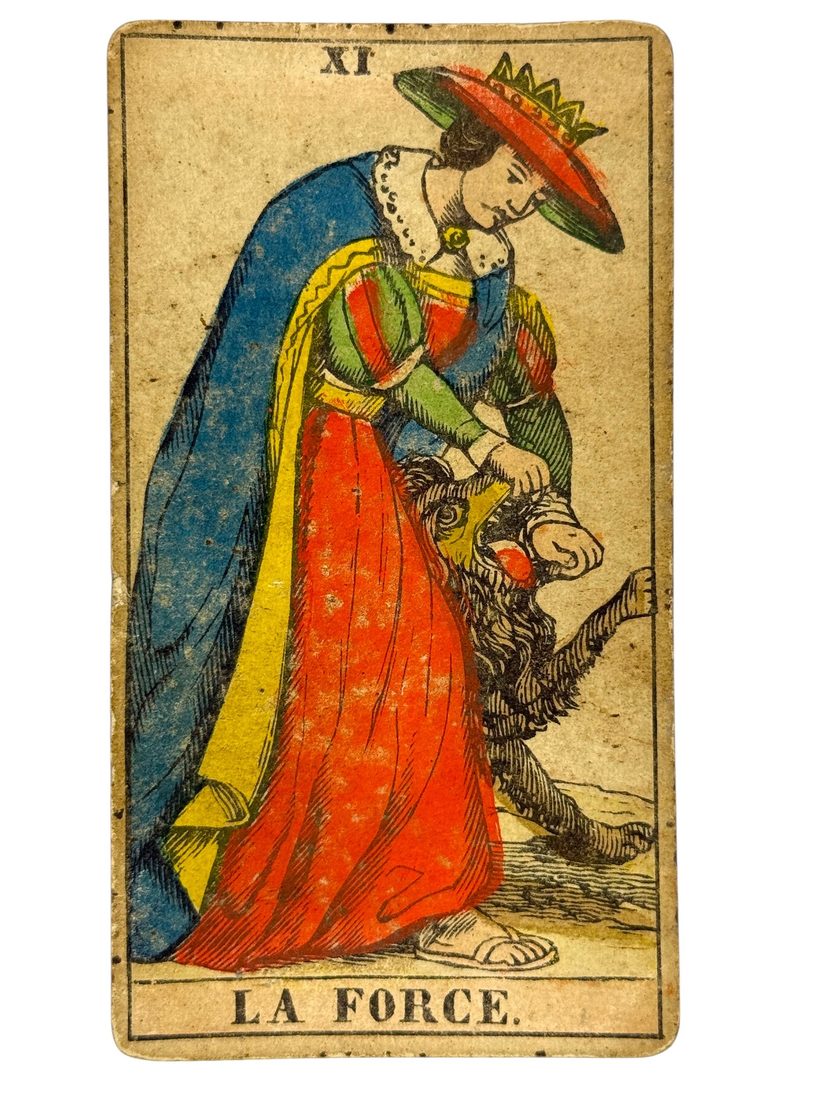
- Force
- Le Pendu
- Death (without caption)
- Tempérence
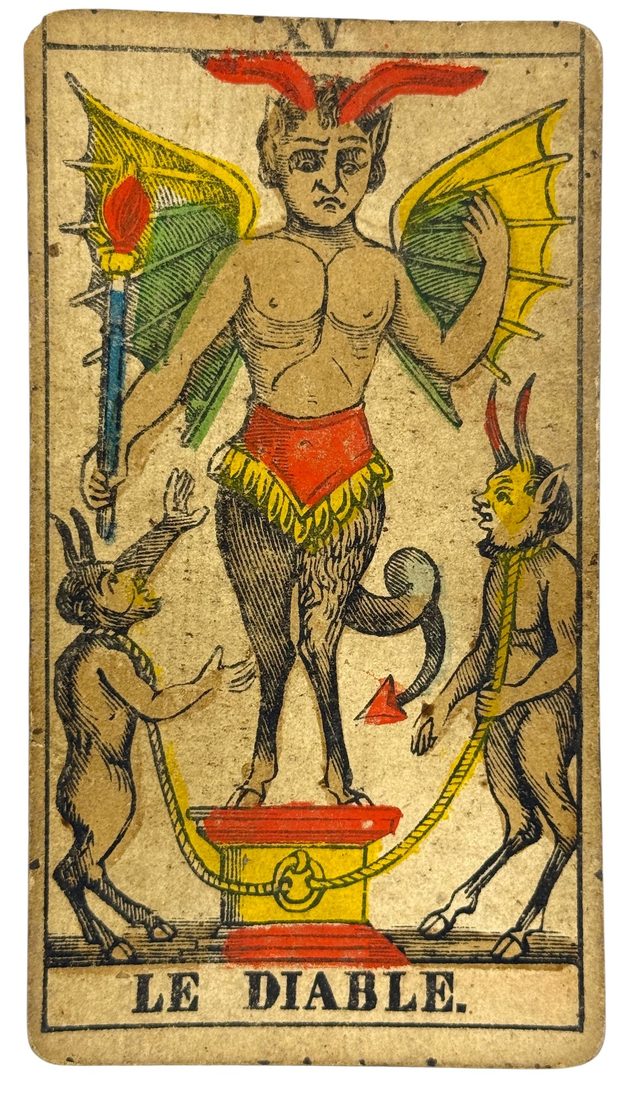
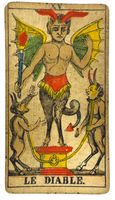
- Le Diable
- La Maison de Dieu
- L’ètoile
- La lune
- Le Soleis
- Le Jugement
- Le Monde
The origins of the Besançon Tarot lie within the flourishing card-making traditions of eighteenth-century France, Switzerland, and Germany. Playing cards, already long established in Italy and France, had spread throughout Europe; the Besançon variant developed within this multicultural, economically vibrant environment, drawing on French, German, and Swiss influences. Besançon’s geographical position as a commercial crossroads facilitated wide distribution: from the city the cards were exported to Switzerland (especially German-speaking cantons) and to southern Germany, thus securing circulation across Central Europe.
Regional reception may be summarised as follows:
• France: Beyond Besançon, cities such as Strasbourg and other locales in Alsace became important production centers. The aesthetics of the Besançon Tarot appealed to audiences who favored “exotic” decks in contrast to the classic Marseille style, or who were more sensitized to religious issues.
• Switzerland: In northern and central Switzerland—German-speaking lands with both Reformed and Catholic traditions—the Besançon Tarot was welcomed as an acceptable variant of an imported game. Swiss printers produced their own versions, distributing them locally.
• Germany and Central Europe: Through commercial networks, these cards reached southern Germany and other parts of Central Europe. The classical figures resonated well in Protestant areas, increasing the popularity of the Besançon Tarot as a less “confessional” choice than traditional decks bearing papal figures.
The pattern scarcely survived the early nineteenth century, being supplanted in most areas by French-suited Tarot packs. Yet its legacy endured in the “Swiss Tarot” produced in Diessenhofen c.1860. Far rarer than the Marseille pattern, the Tarots de Besançon stand as a compelling testimony to how card iconography was reshaped by sociocultural and religious contexts, illustrating the circulation of goods and ideas across political boundaries and underscoring the role of playing cards as instruments of cultural exchange.
Nicolas Pellerin, a maître-cartier originally from Mauvages, settled in Épinal in the mid-eighteenth century and established a family tradition of card-making; his son Jean-Charles Pellerin (1756–1836) succeeded the workshop in 1773 and in 1796 formally founded the Imagerie Pellerin, which soon became the most important popular print factory of Épinal, producing devotional images, almanacs, historical scenes and also tarot packs of the Besançon type; in 1818 he transferred the direction of the business to his son Nicolas Pellerin (1782–1854) and to his son-in-law Pierre-Gabriel Vadet, who enlarged the enterprise and diversified its output; after the death of Jean-Charles in 1836 the family maintained control of the press, and on 30 October 1858 the heirs reorganized the business under the corporate title Pellerin et Cᵉ, a designation never used by Jean-Charles himself but which became the standard imprint of the Épinal workshop during the second half of the nineteenth century, appearing on popular prints and on tarot decks such as the Tarot de Besançon, usually dated to ca. 1858–1865; the house continued to flourish under successive generations, adopting lithography after 1840 and establishing the enduring reputation of the Imagerie d’Épinal as the leading European publisher of popular imagery.
François Georgin (1801–1863) was a French engraver and illustrator, celebrated as one of the foremost exponents of nineteenth-century popular imagery and closely associated with the production of playing cards and tarots in Épinal. Born in Épinal in 1801, he trained as an engraver from a young age and soon entered the orbit of the Imagerie Pellerin, where he became the leading artistic collaborator of Jean-Charles Pellerin and later of his heirs. Georgin specialised in wood engraving for popular prints, contributing hundreds of designs that shaped the visual culture of nineteenth-century France. His work extended from devotional and moral scenes to historical tableaux, almanacs, caricatures, and educational images, but he also played a decisive role in the engraving of tarot decks of the Besançon type produced by the Pellerin press. His hand is often recognised in the vivid outlines of the trumps and figures, which were subsequently coloured by stencil in the characteristic Épinal style. By combining technical precision with a strong sense of popular taste, Georgin contributed decisively to the enduring success of the Imagerie d’Épinal as the leading publisher of images populaires. He remained active until his death in 1863, leaving a vast corpus of engraved blocks that continued to be used long after his passing, and securing his reputation as one of the most prolific and influential engravers of the French popular press in the first half of the nineteenth century.
Conditions: Light marks of use; overall a very good deck.
Reference: C. Perry Hargrave, A History of playing cards, Dover publications, 2021, pp. 37, 39, 81; H. Rene D’allemagne, Les cartes à jouer du XIVe au XXe siècle, Paris: Librairie Hachette, 1906; S. Kaplan, The Encyclopedia of Tarot Volume II, U.S. Games Systems, 1986, pp. 342, 358; K. Wowk, Playing Cards of The World, Lutterworth Press, 1983, p. 13; IPCS website.