Tarocchi Piemontesi (Masenghini, Bergamo)
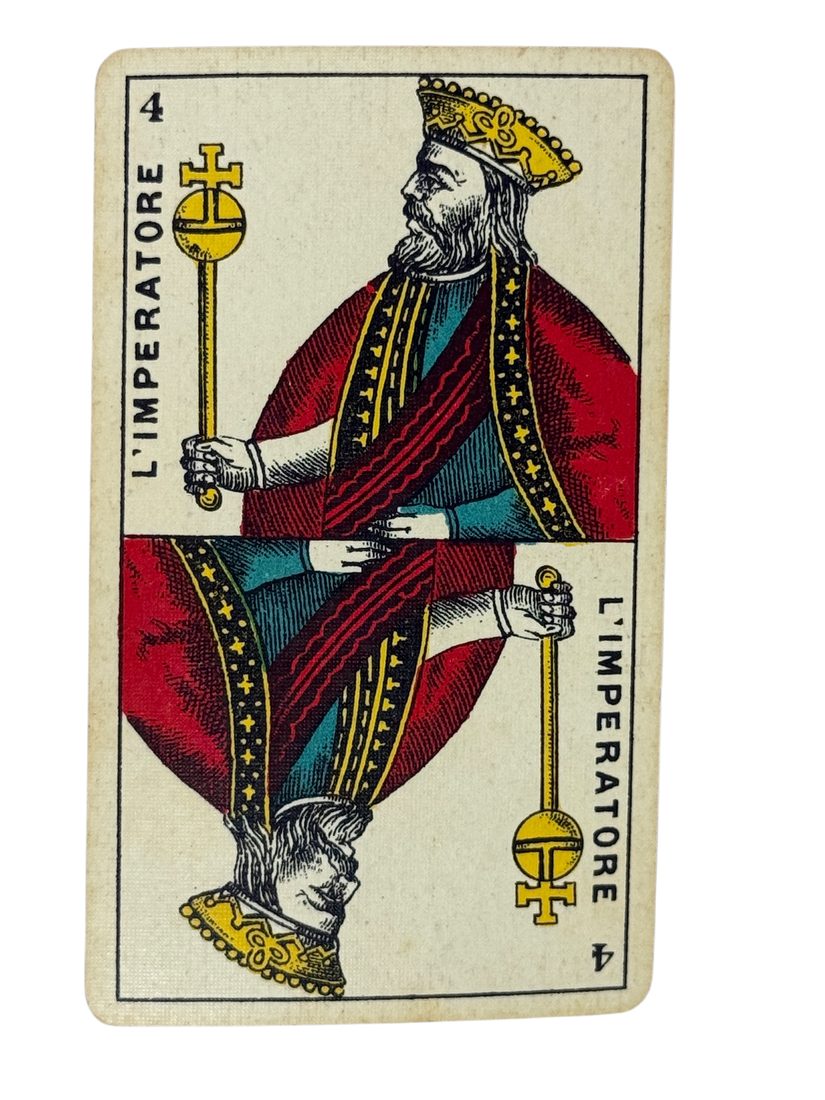
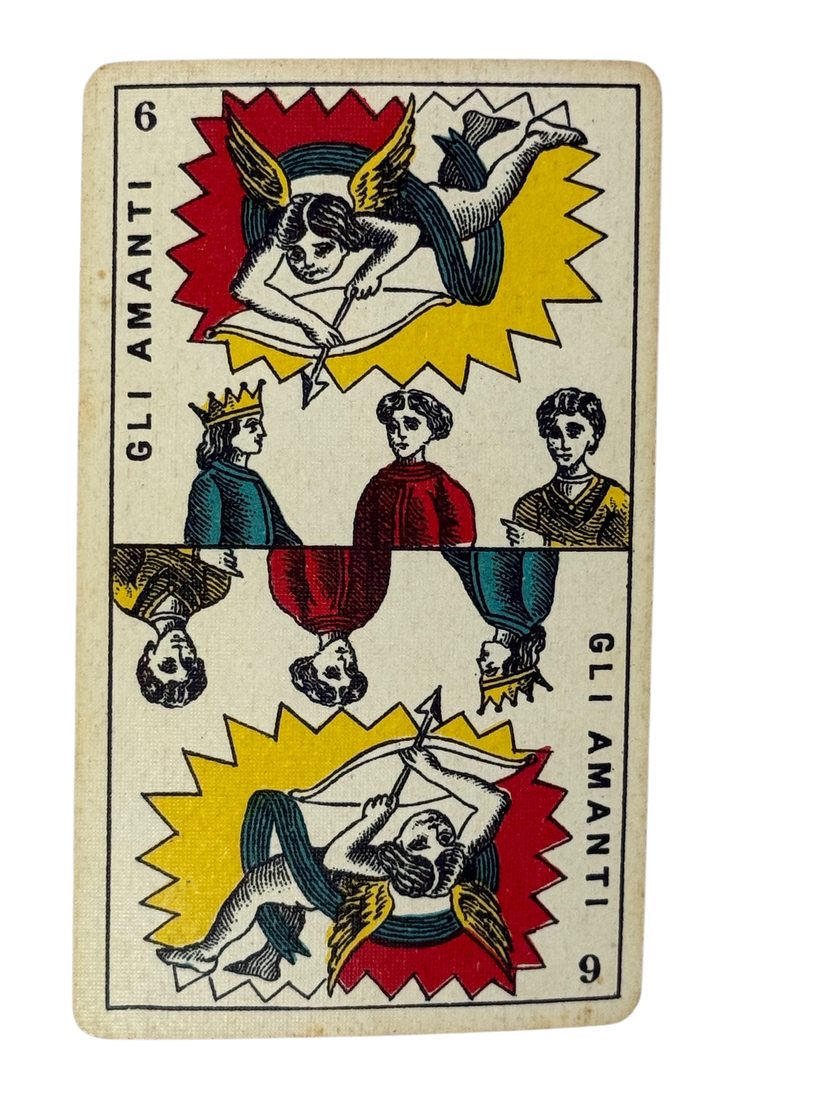
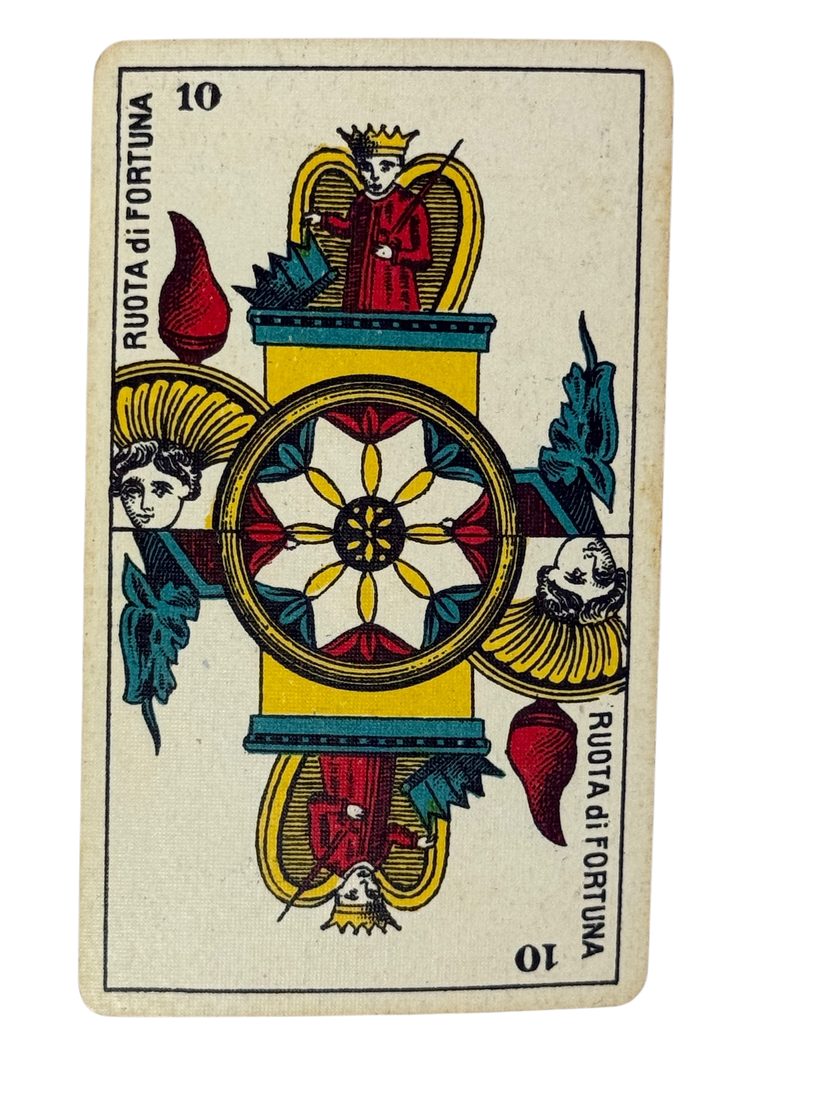
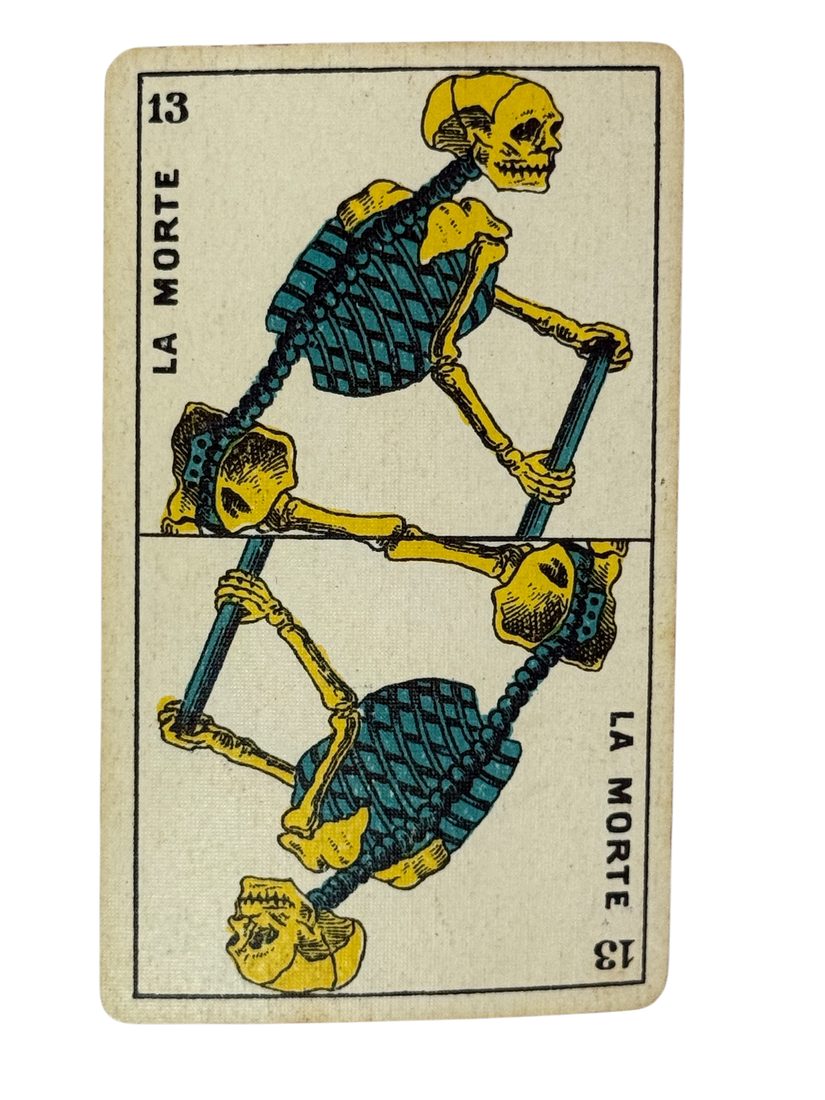
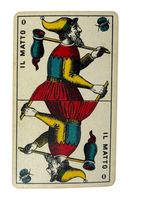
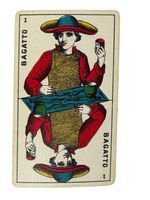
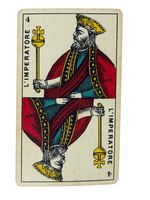
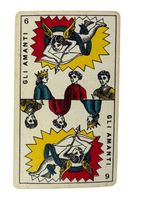
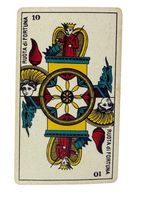
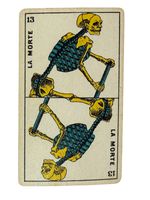
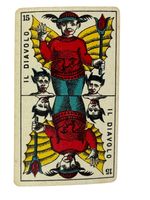
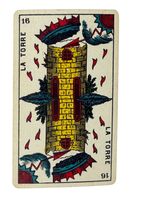
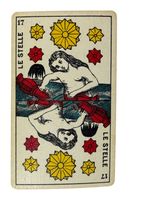
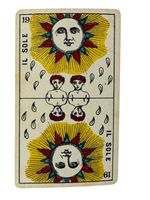
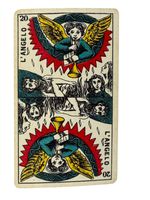
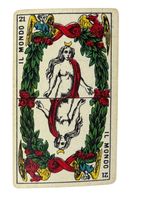
| Macro-category | Playing Cards and Tarot |
| Subcategory | Tarot |
| Provenance | Bergamo |
| Publisher / Maker | Maseghini |
| Year | 1944-45 (1949) |
cards to predict «the past, the present and the future»
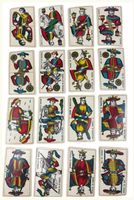
complete deck of Italian «Tarocchi Piemontesi» icps pattern sheet 4 printed in Italy during World War ii, in its original box
Tarocchi Piemontesi, Bergamo (Italy), Masenghini, 1944-45 (1949).
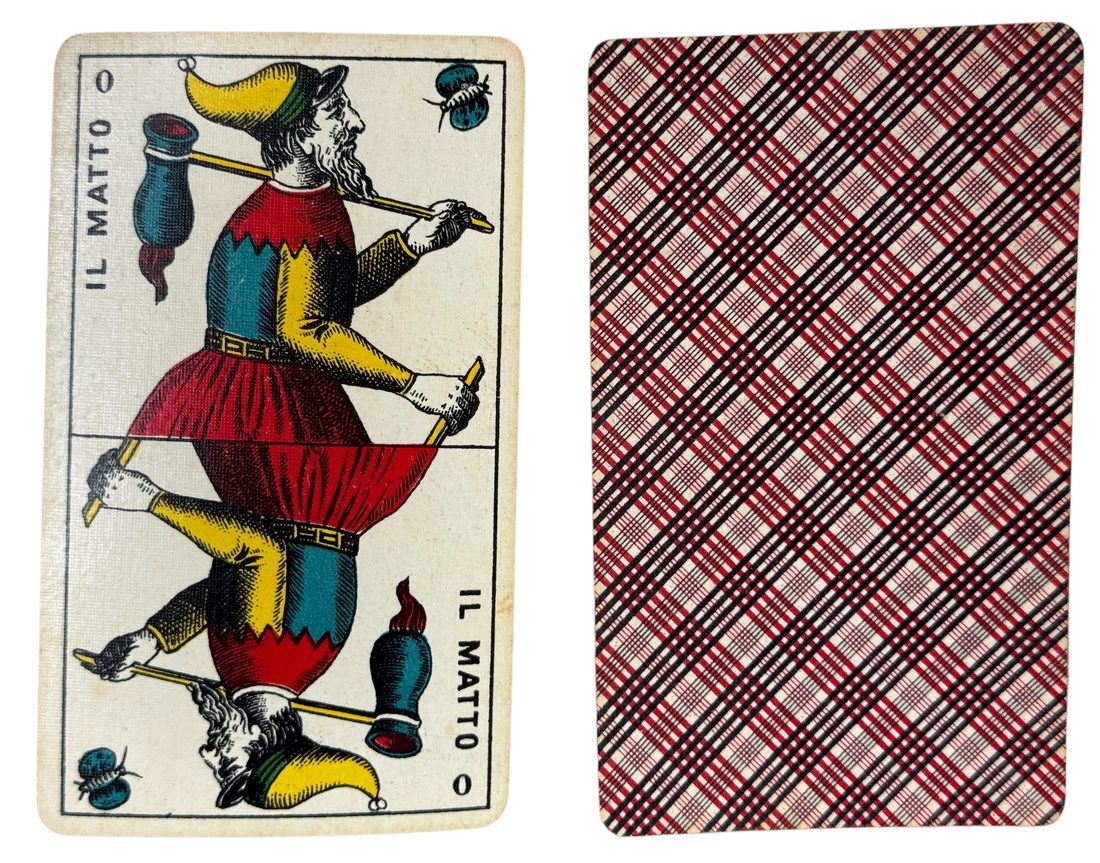
78 Tarots cards (10,5 x 6,3 cm), chromolithographic images, back of the card enriched by geometrical decoration in different tones of green, round corners.
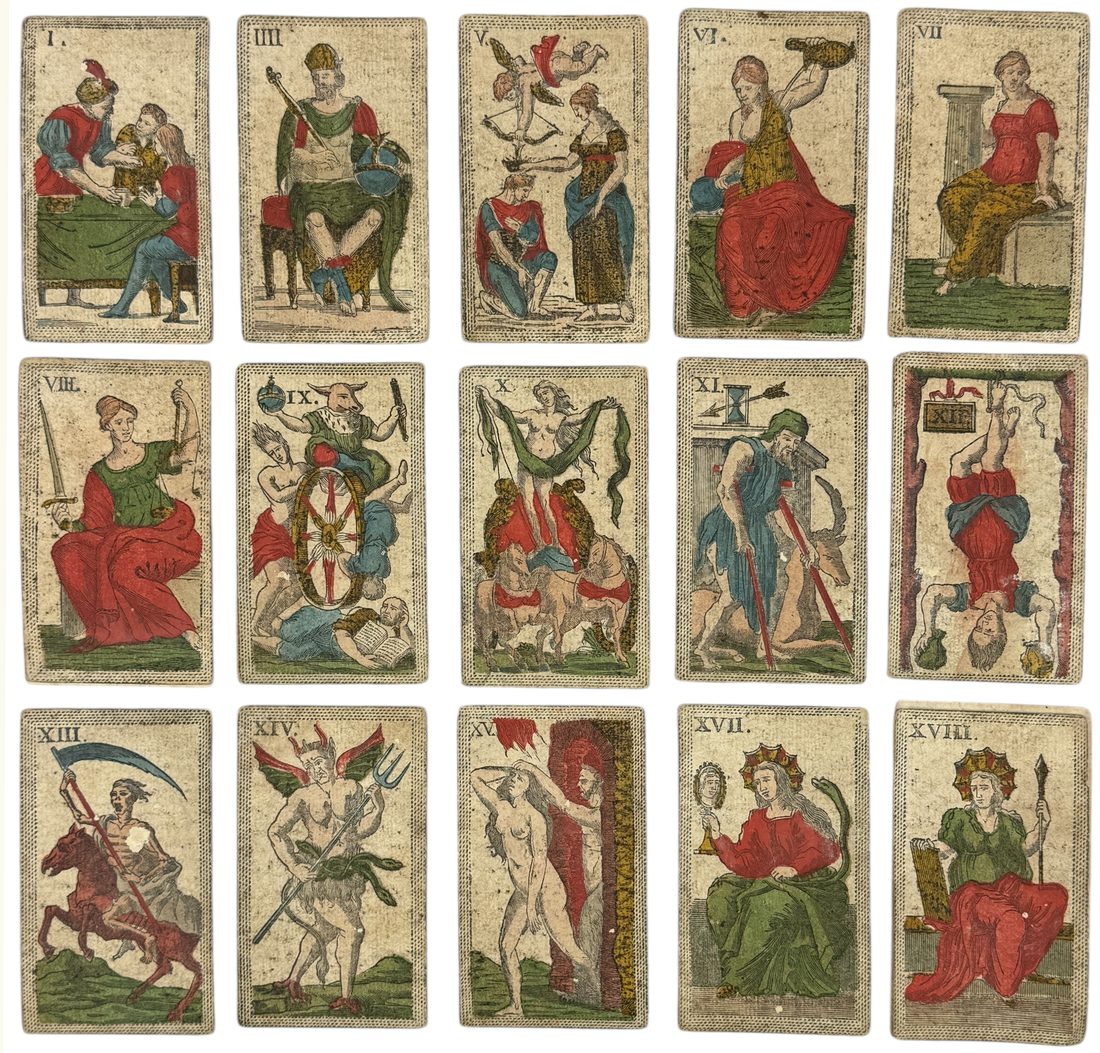
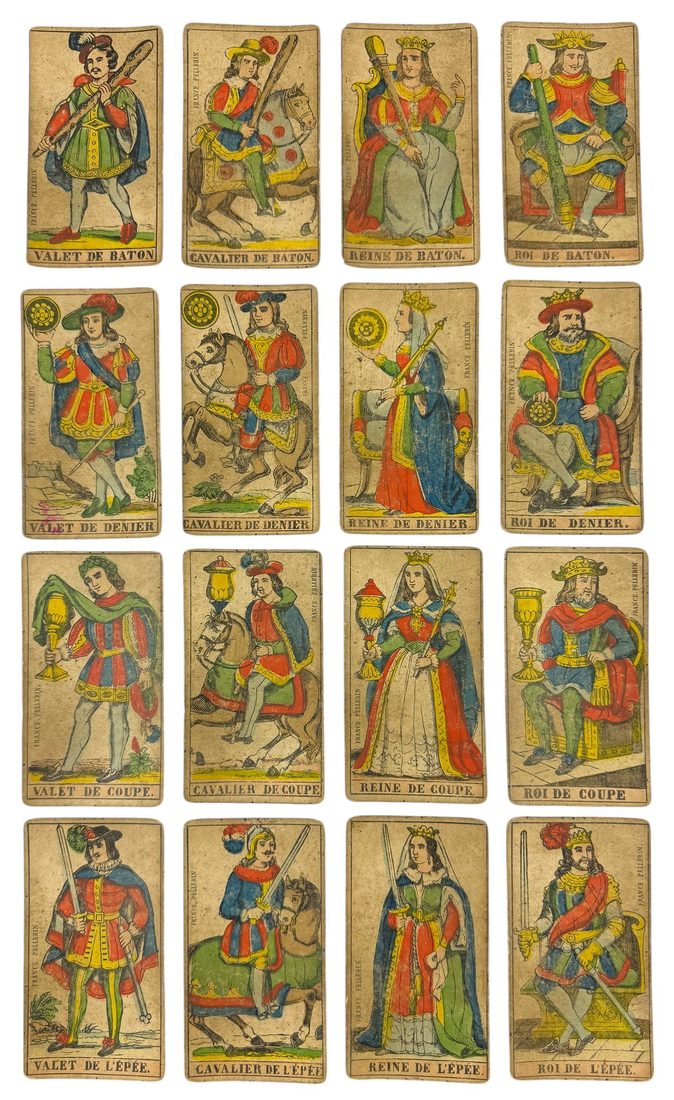
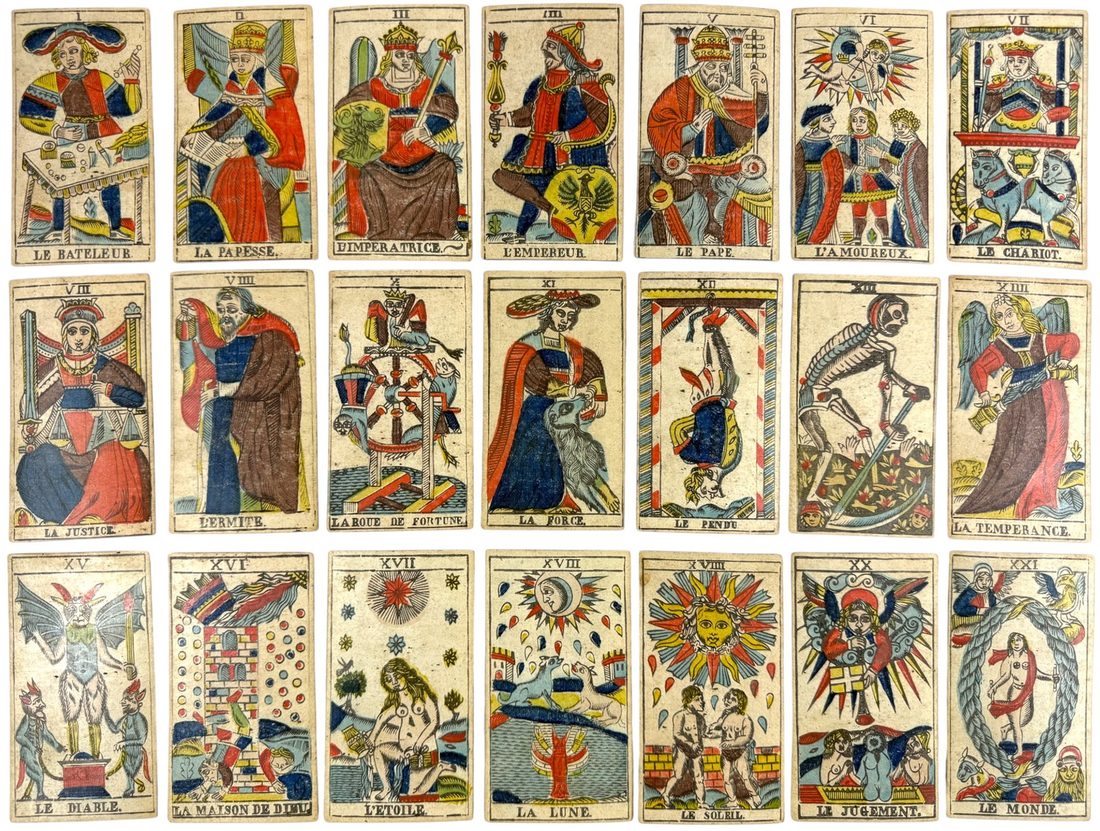
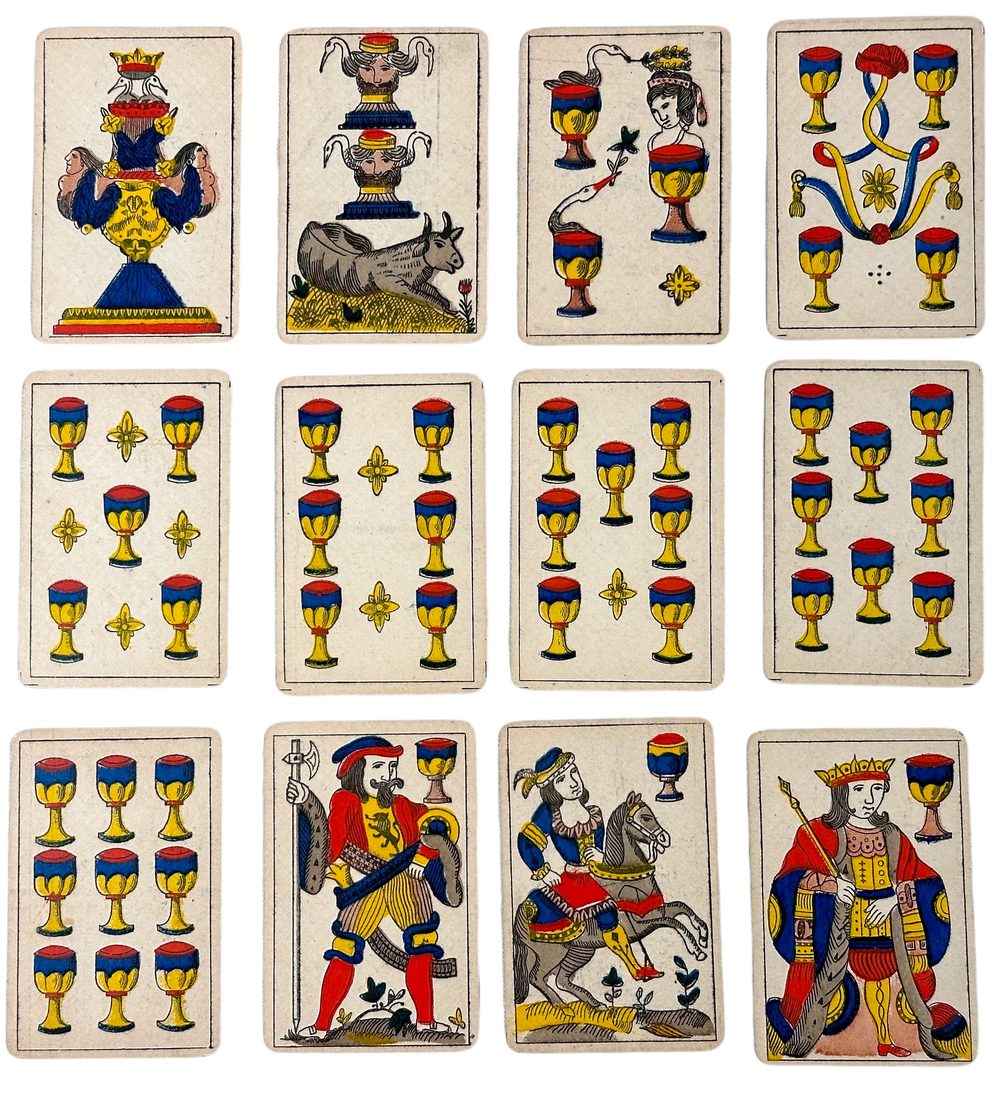
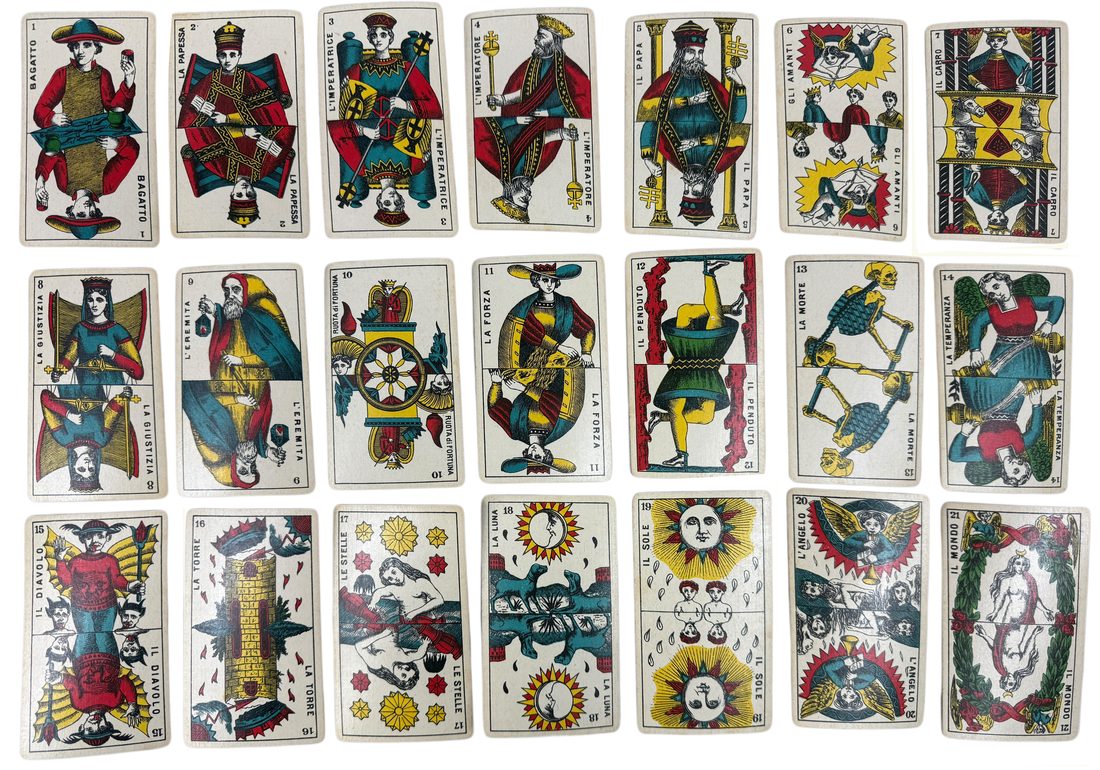
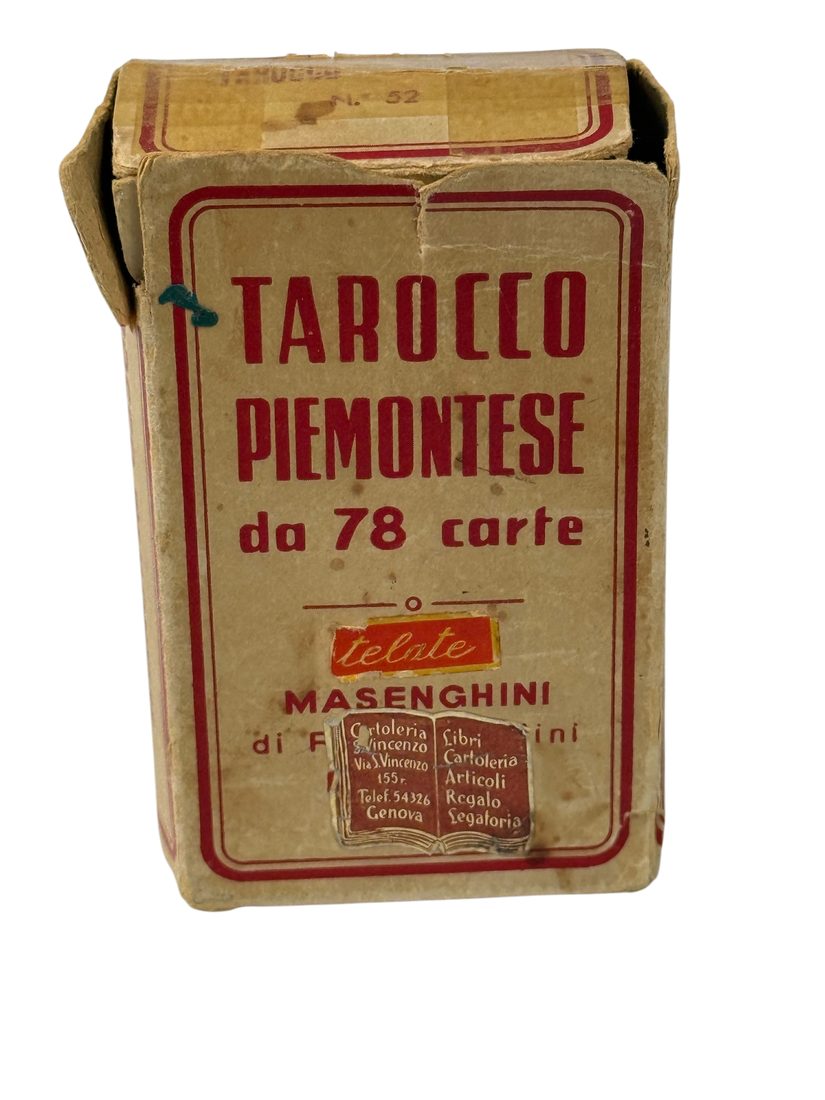
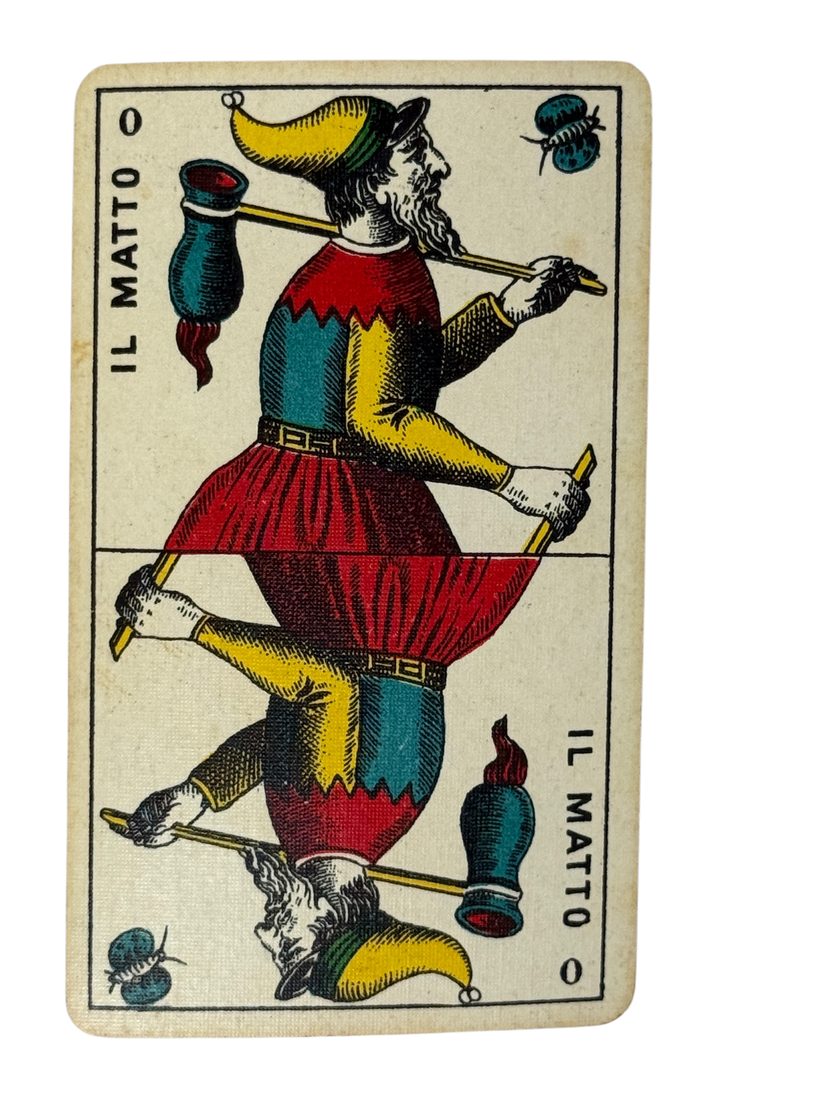
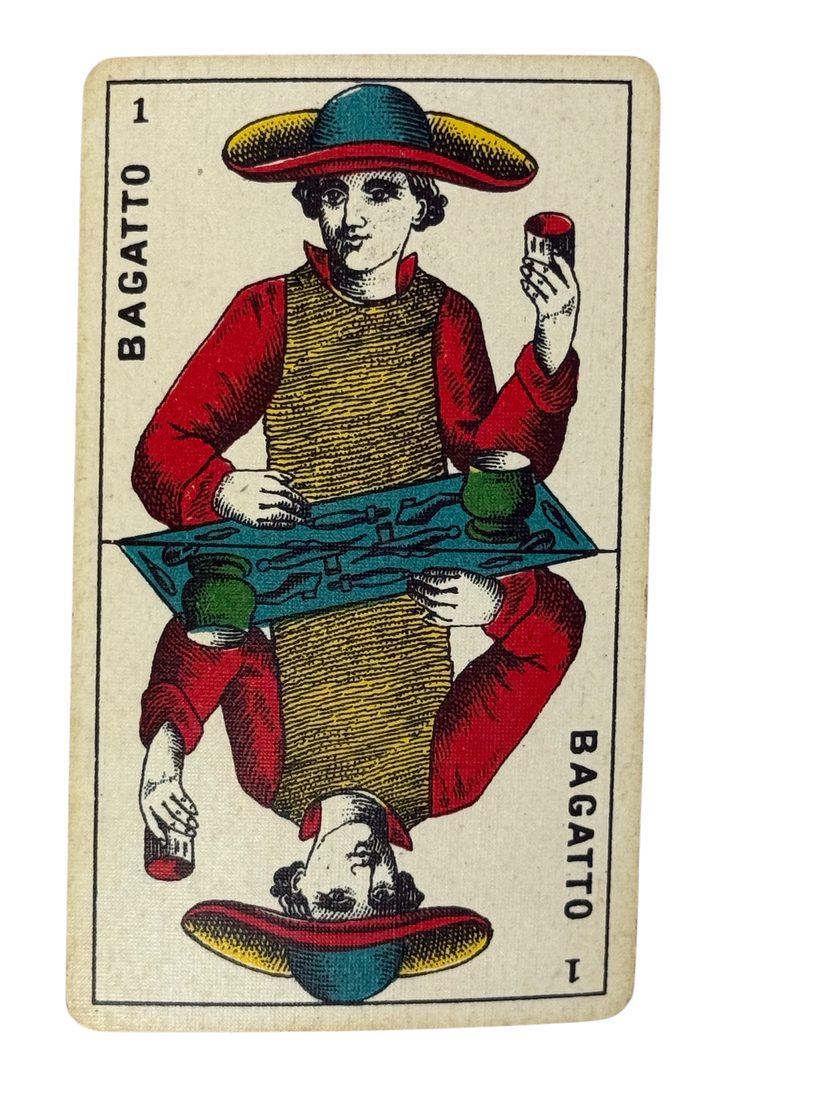
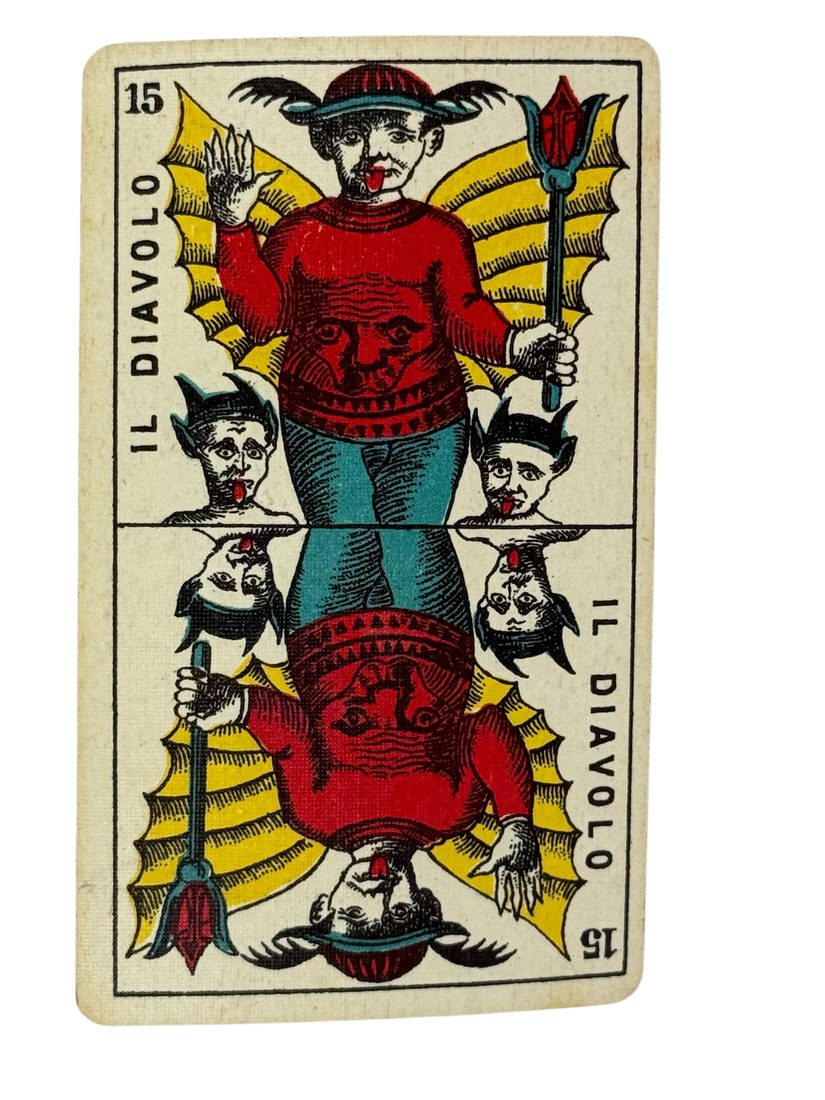
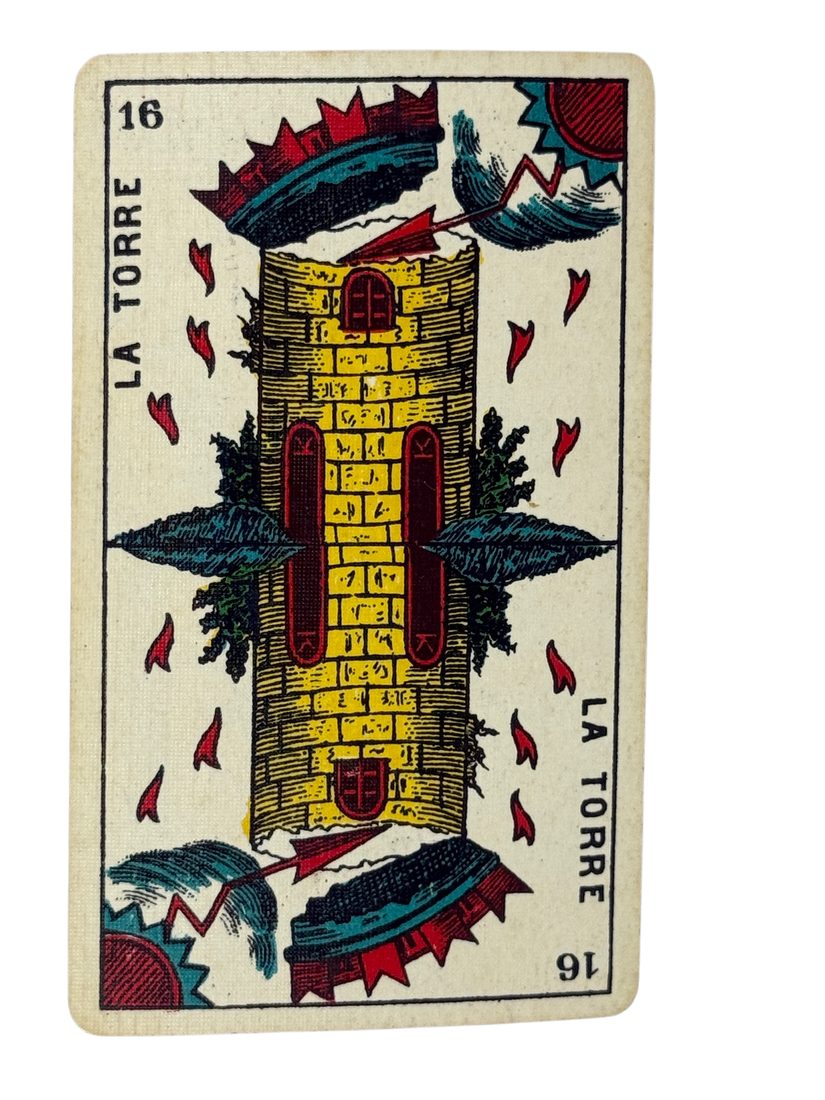
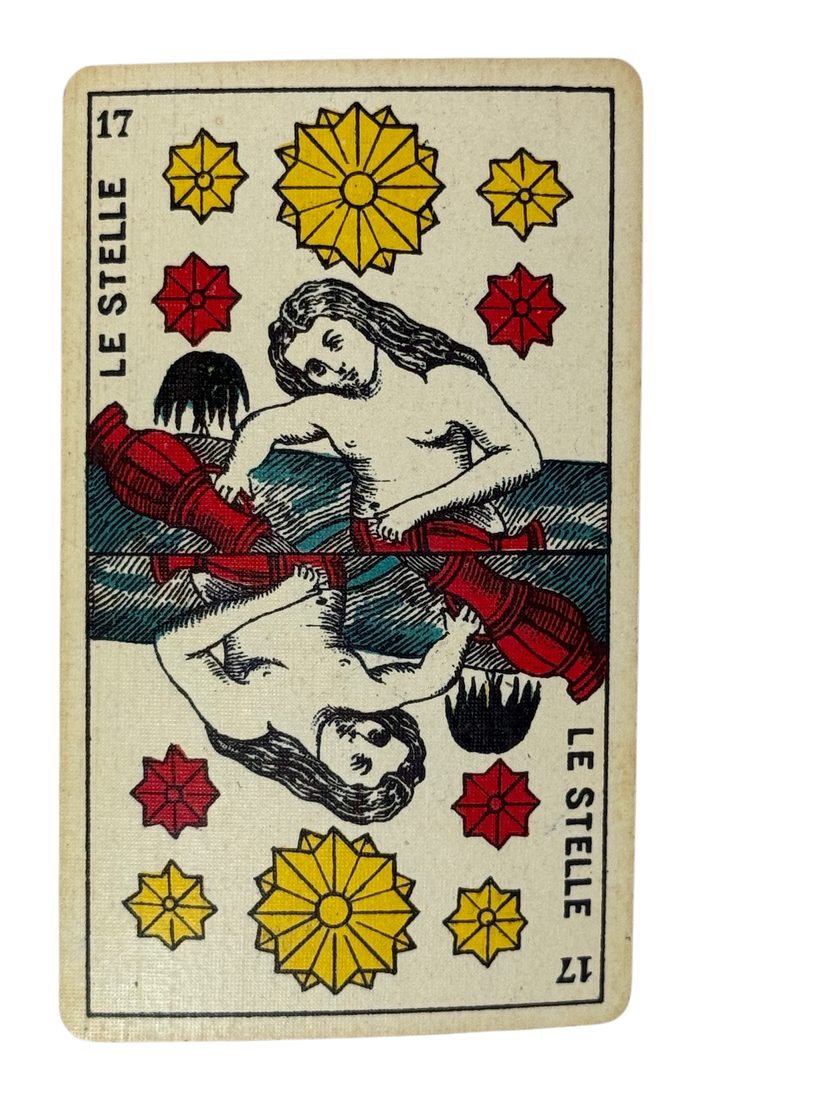
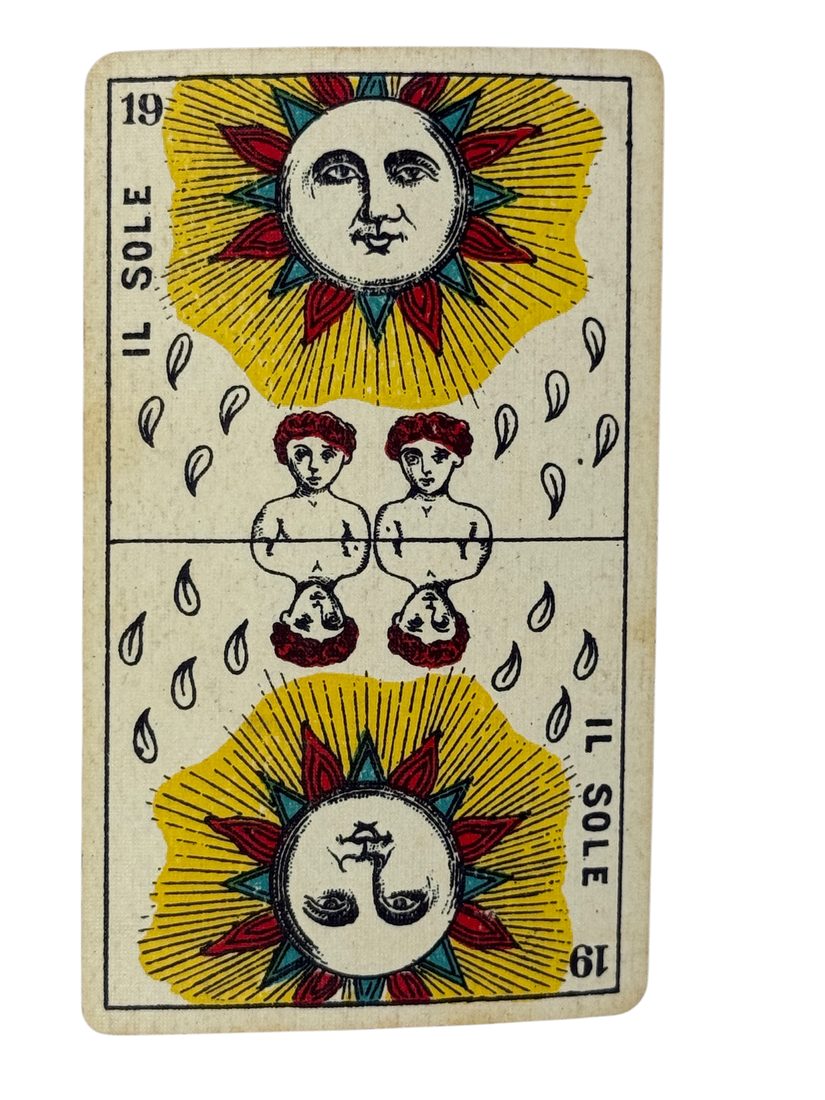
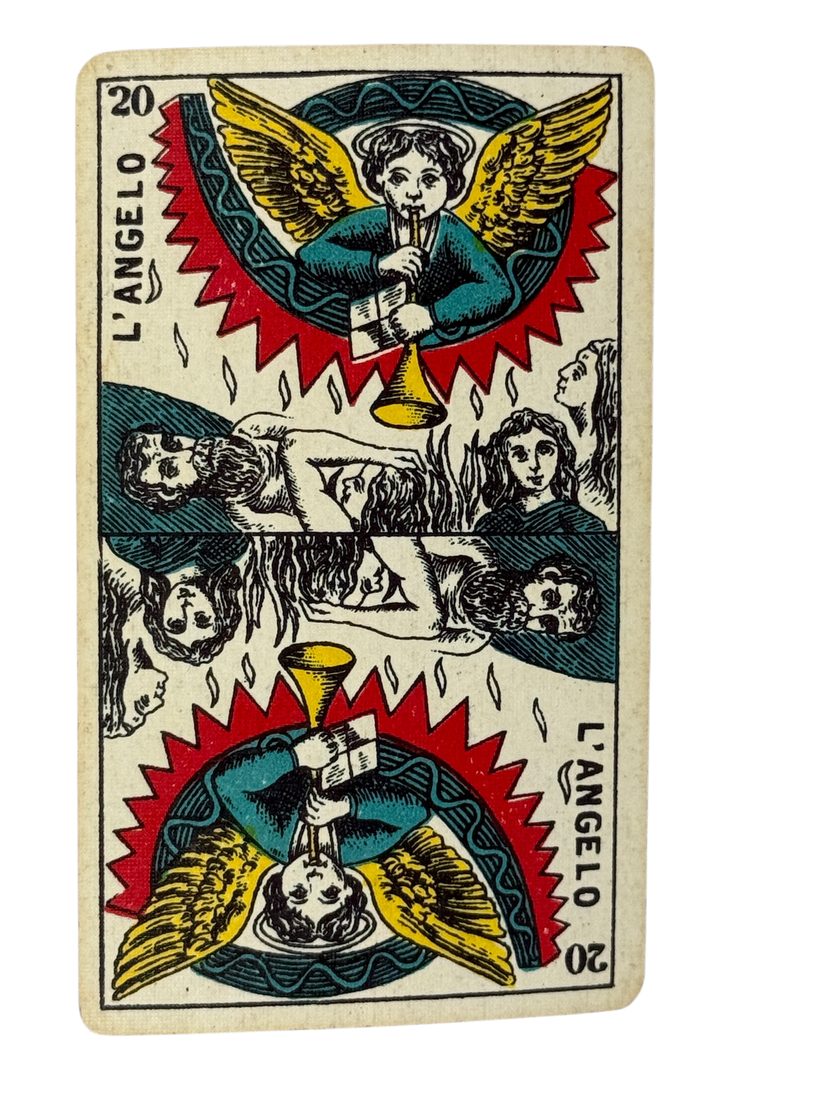
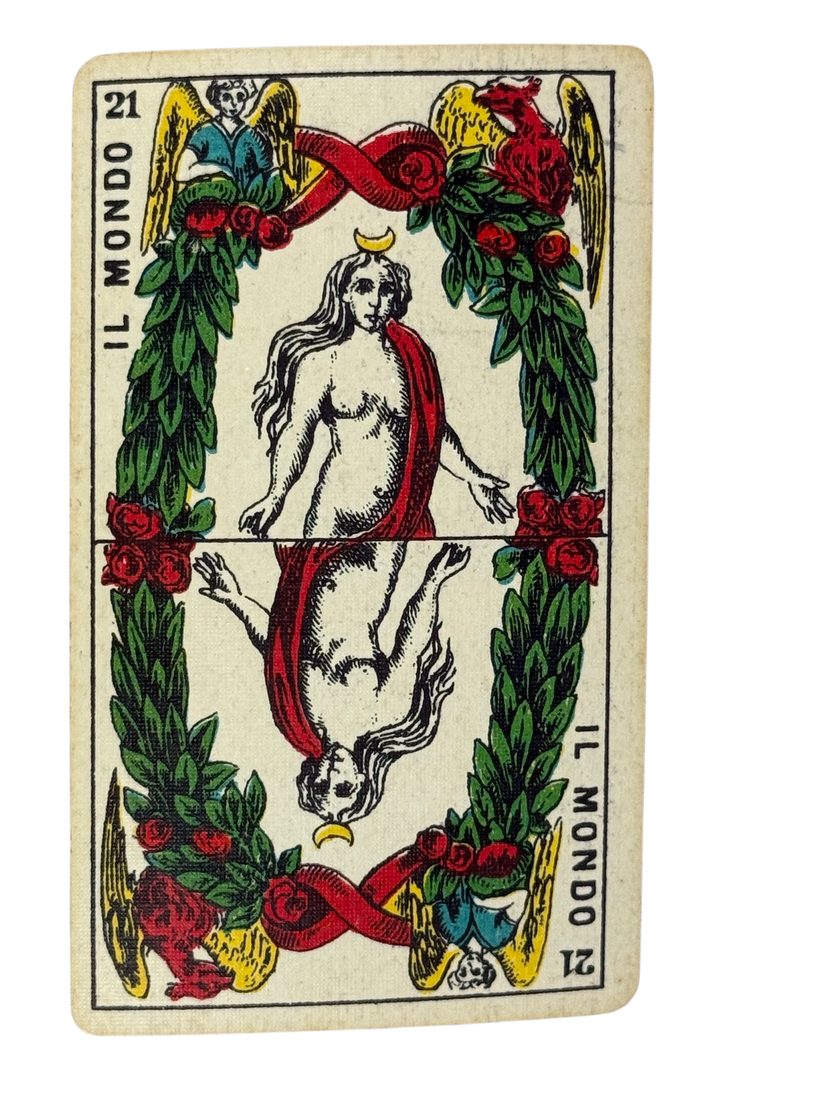
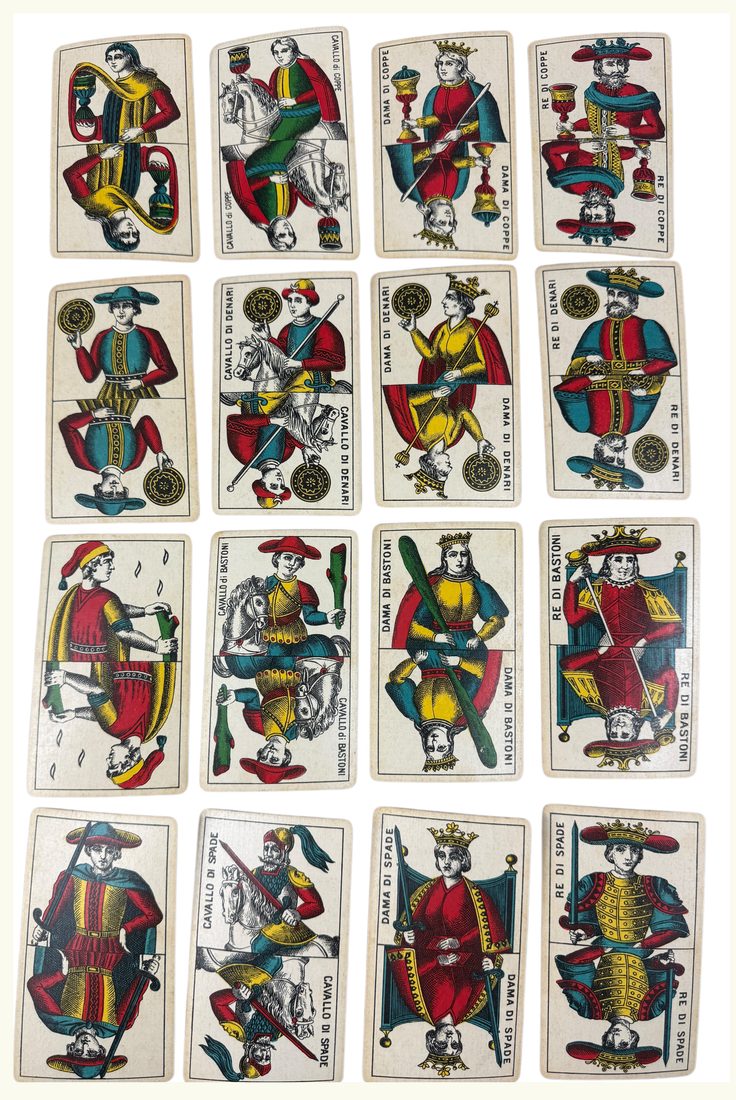
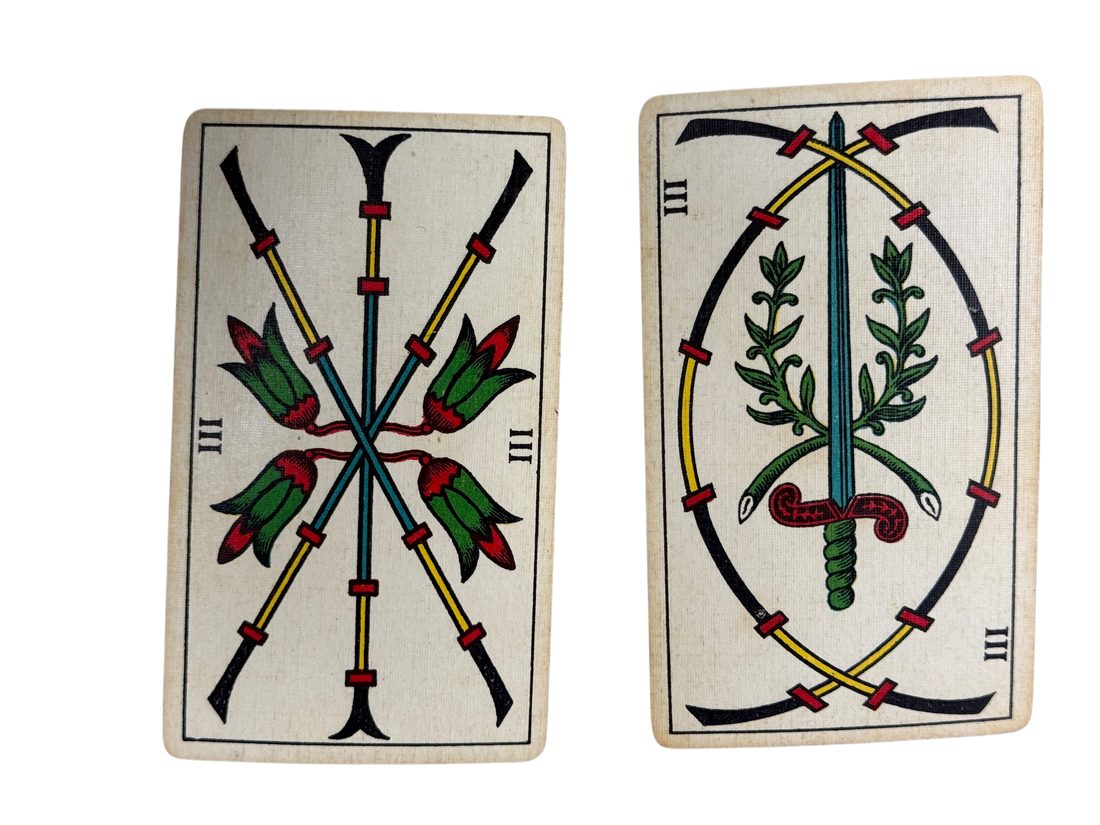
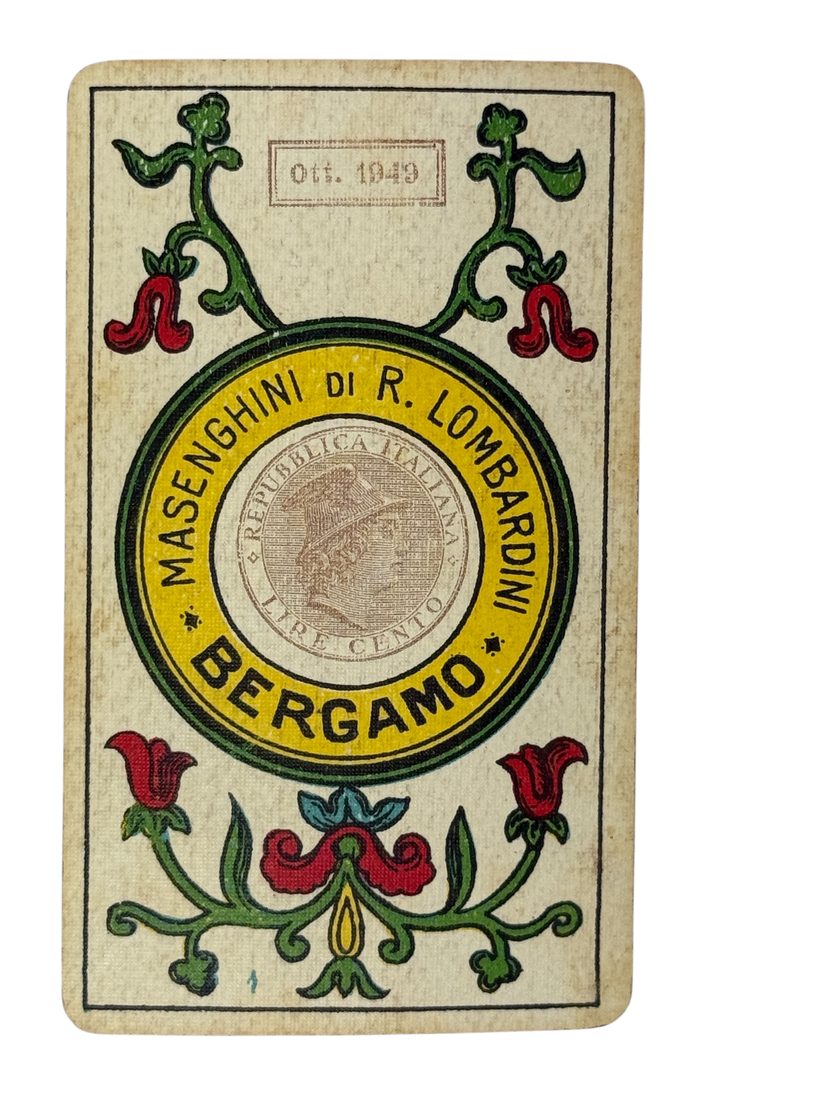
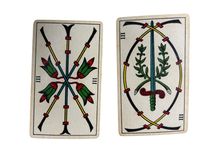
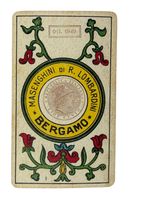
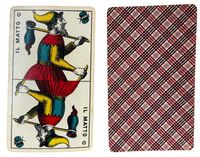
A complete deck of Tarocchi, characterized by Italian suits, Spade (Swords), Bastoni (Batons), Coppe (Cups) and Denari (Coins), with Spade and Bastoni interlaced in a manner typical of these decks, double-ended court card images, with four picture cards—King, Queen, Knight, and “Valet”—and ten numeral cards in each suit for a total of 56 cards, and 21 double-ended “atouts” (trump-cards) (atutti in Italian) numbered one to twenty-one, and an extra card called “Il matto” numbered 0. On the ace of coins is the name of the maker: Masenghini di R. Lombardini * Bergamo * Ott. 1949. Verso of the cards decorated with a geometric pattern of intersecting black lines on a pink-toned background. Original packaging in good condition, Tarocco Piemontese da 78 carte Maseghini di R. Lombardini, label from the Genoese stationery shop where the deck was sold with the label telate (linen-textured) on one side, and the image of Triumph number 16, la Torre, on the other side, all printed in red.
These tarot cards belong to the pattern identified as Tarocco Piemontese, PATTERN SHEET 4, ORIGINALLY CLASSIFIED AS IT-1.211.
“Piedmontese cardmakers gradually eliminated the French influence which had pervaded the Tarocco cards of the 18th century. This influence lingered on until the mid-19th century in the case of certain cardmakers, but the pattern under review established itself much earlier than this, probably in the first decade of the century. It began its life in single-figure form, with Italian inscriptions on the trumps and court cards, and introduced the unusual feature of numbering its trump cards with arabic numerals.
Before the Unification of Italy, these cards were made and used within the region, but as the manufacture of other types of Italian 78-card Tarocco packs faded away in the 20th century, the Piedmontese Tarocco is the sole survivor and is used in Italy wherever the 78-card pack is required. At the end of the 19th century the feature of double-ended court cards and trumps was adopted (see cards illustrated) and this is the version used up to the present time. An occasional pack is known without inscriptions on the court cards.
The composition of the deck is 78 cards. 4 suits of 4 single-figure or double-ended court and 10 pip cards, plus 21 single-figure or double-ended trumps and the Fool which, together with the court cards are captioned in Italian or not captioned at all. Trumps bear arabic numerals. Wide format with no turnover edges. Distinguishing cards: Trump II = Popess; V = Pope; XV, the Devil has a face drawn on his abdomen; XVIII, the face on the Moon is shown in profile; XX, rays and "tears" emanating from cloud; the Fool is called "Il Matto"; jack of Batons has one band on top of baton, the other lower down; the ace of Cups is shown as a goblet used as a flower vase.” (IPCS)
The Masenghini printing house was founded in Bergamo under the brand Pietro Masenghini in 1876. It operated under the brand Masenghini di R. Lombardini from 1944 to 1945 and again from 1970 to 1985, finally ceasing all activities in 2003 under the brand Masenghini s.n.c.
Conditions: Cards slightly warped from use, but in very good state of preservation.
Provenance: I. Tax Stamp “Repubblica Italiana Lire 100 ”; these are stamps used from 1949 to 1954. II. Date stamp Ott 1949 to indicate that the deck was sold four years after the production, when the printing house Masenghini was already closed.
Reference: Stuart Kaplan, The Encyclopedia of Tarot Volume I, U.S. Games Systems, 1978, p. 263; Kathleen Wowk. Playing Cards of the World, Lutterworth press, 1983, pp. 133-136; Sylvia Mann, Collecting Playing cards, Arco Publications, 1966, pp. 31-34, 52; IPCS Pattern sheet page .
Stuart Kaplan, The Encyclopedia of Tarot Volume I, p. 263
High Resolution Images of cards