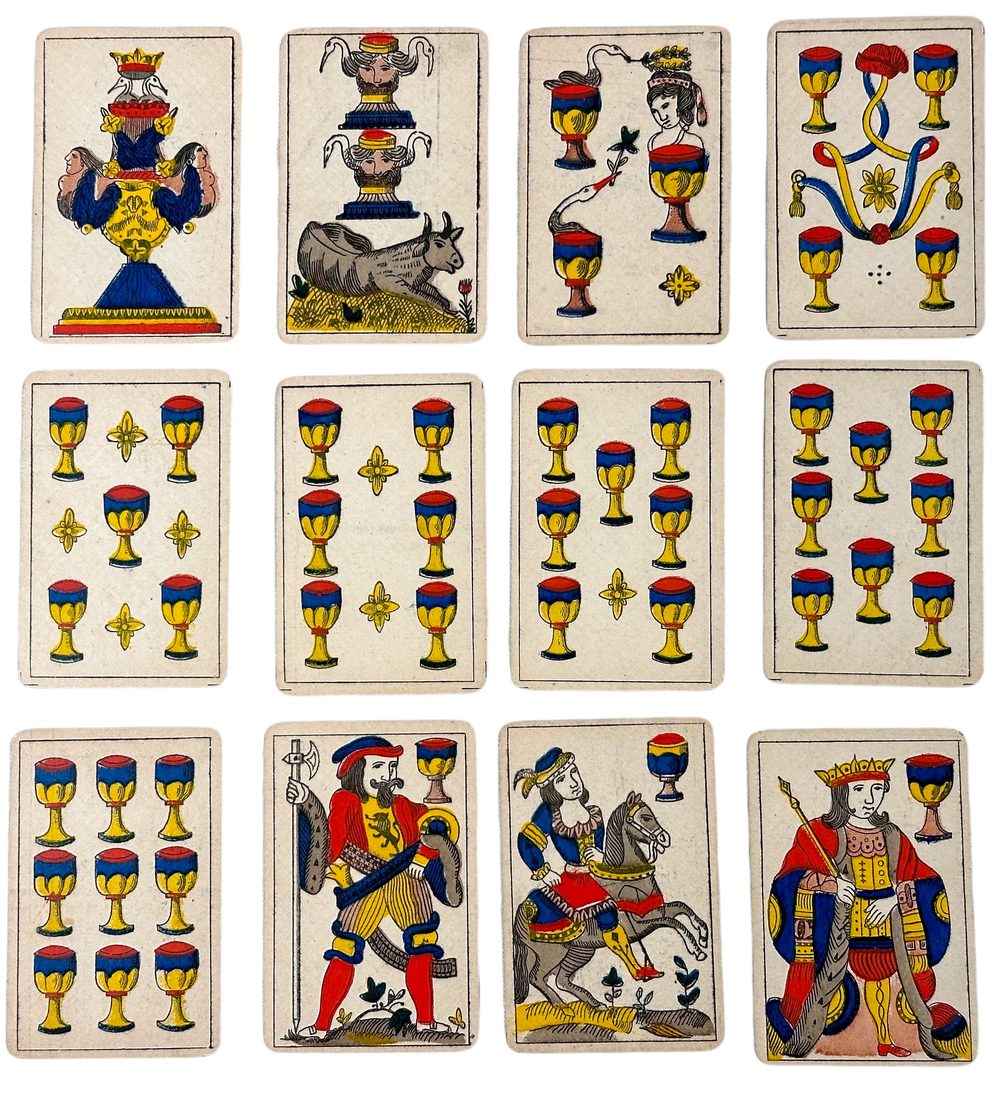
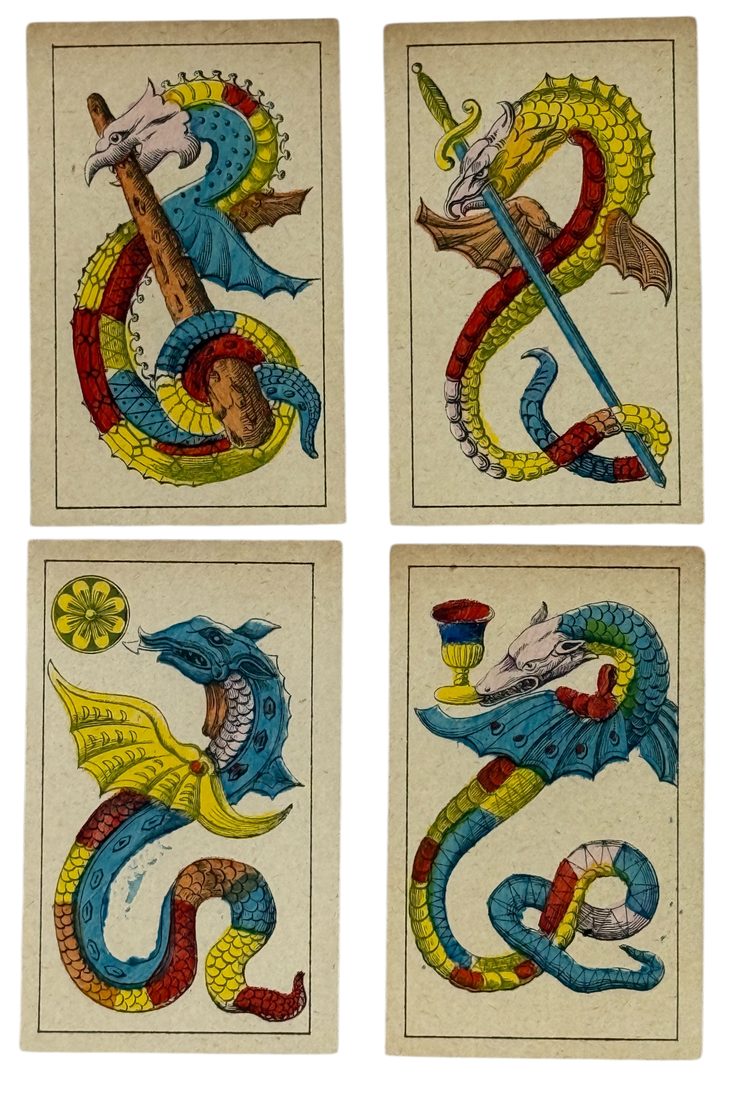
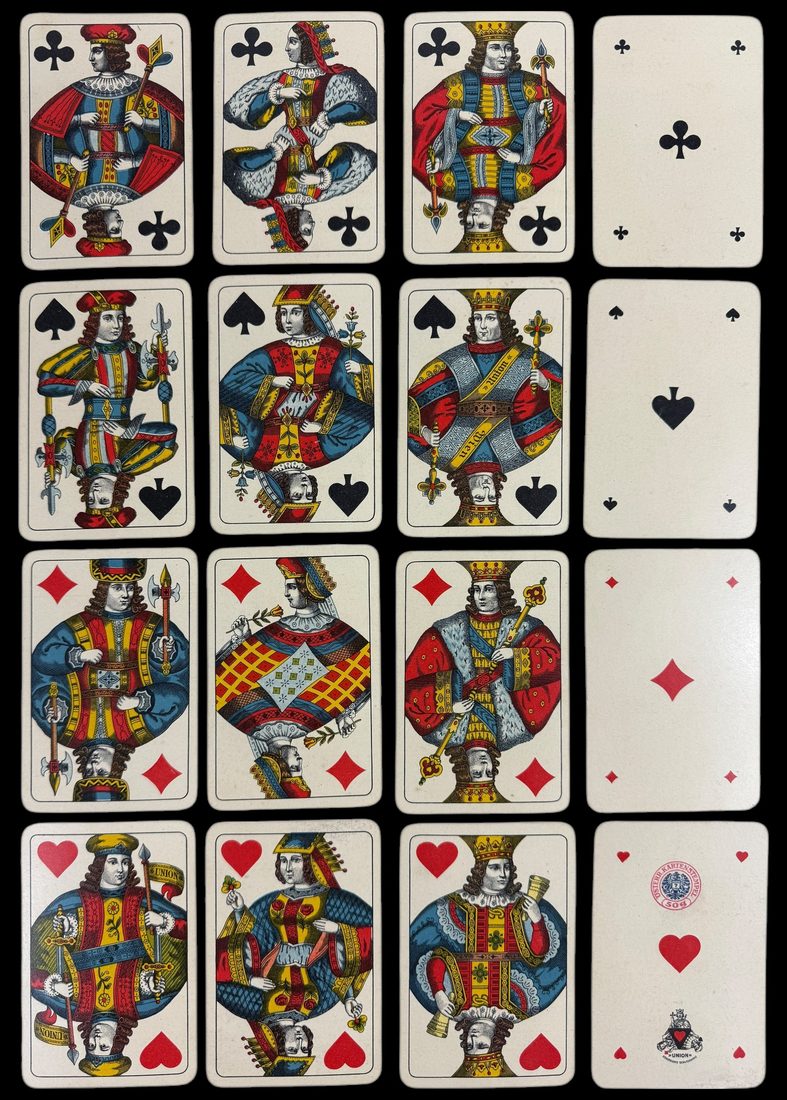
English Export Playing Cards, Ace Type A8
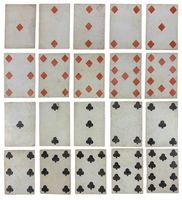
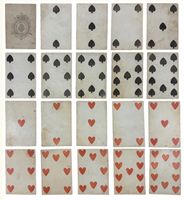
| Macro-category | Playing Cards and Tarot |
| Subcategory | Historical Playing Cards |
| Author | HART, Henry |
| Provenance | London |
| Year | 1765 |
Rare 18th complete English playing-card deck, intended for export to the American colonies
the earliest decks to circulate in America IPCS English pattern 48, tax stamp type a8
«An ace with no tax!»
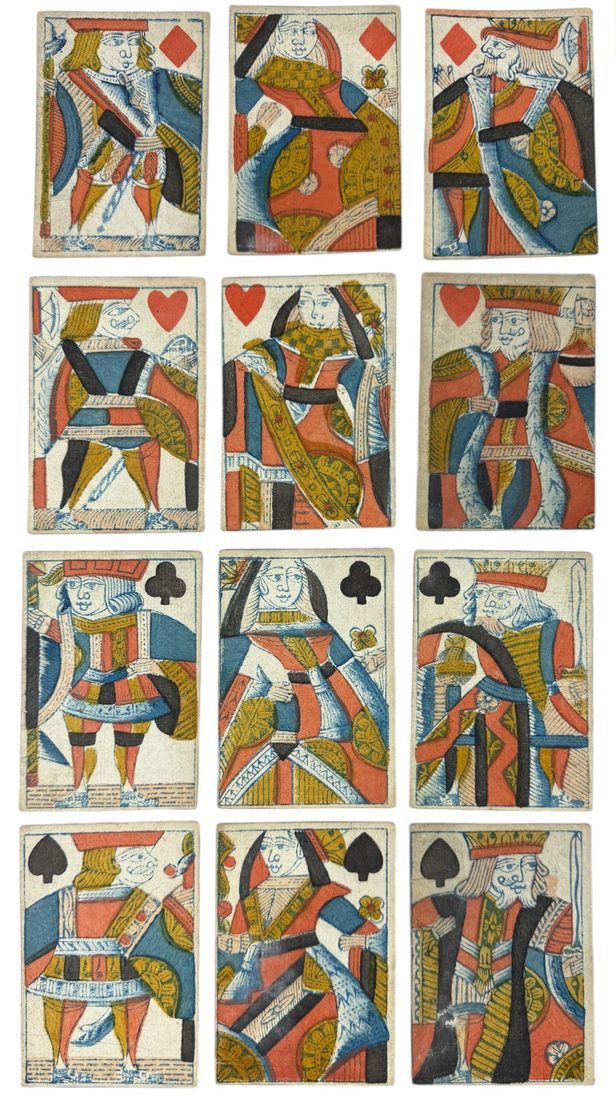
English playing card deck “Exportation Pack Type A8”. London, Henry Hart, ca. 1765.
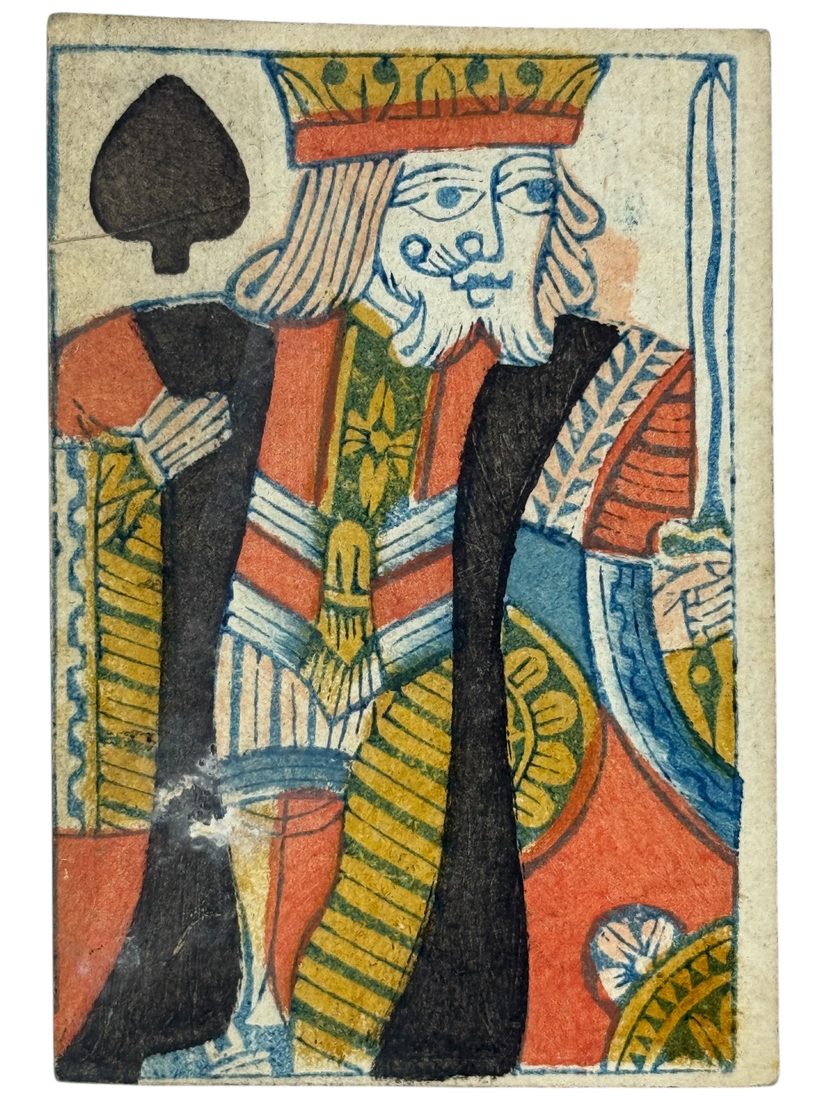
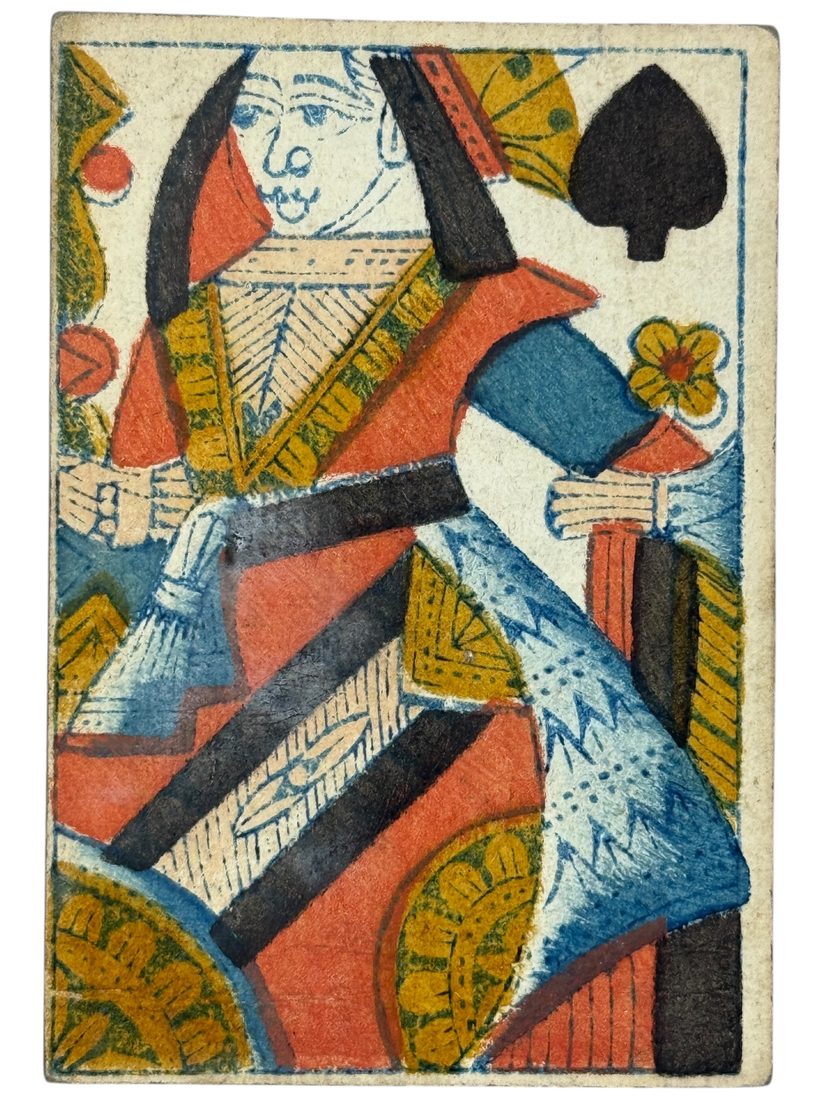
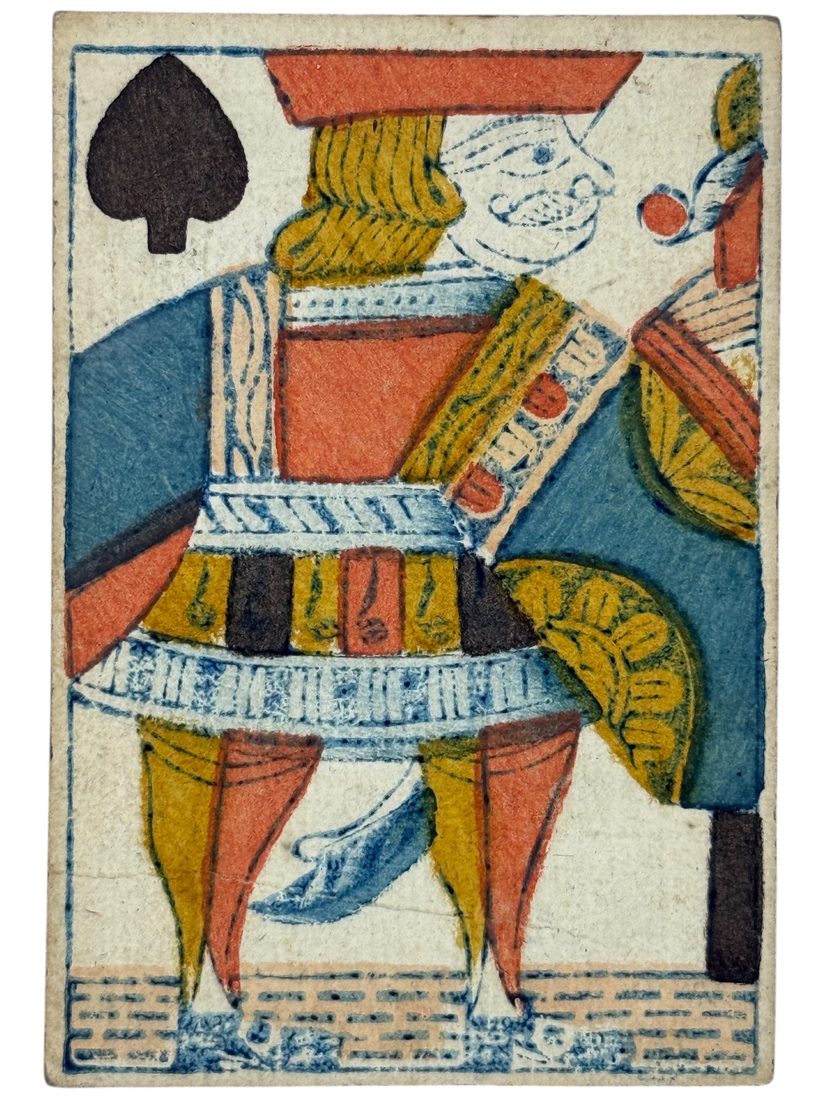
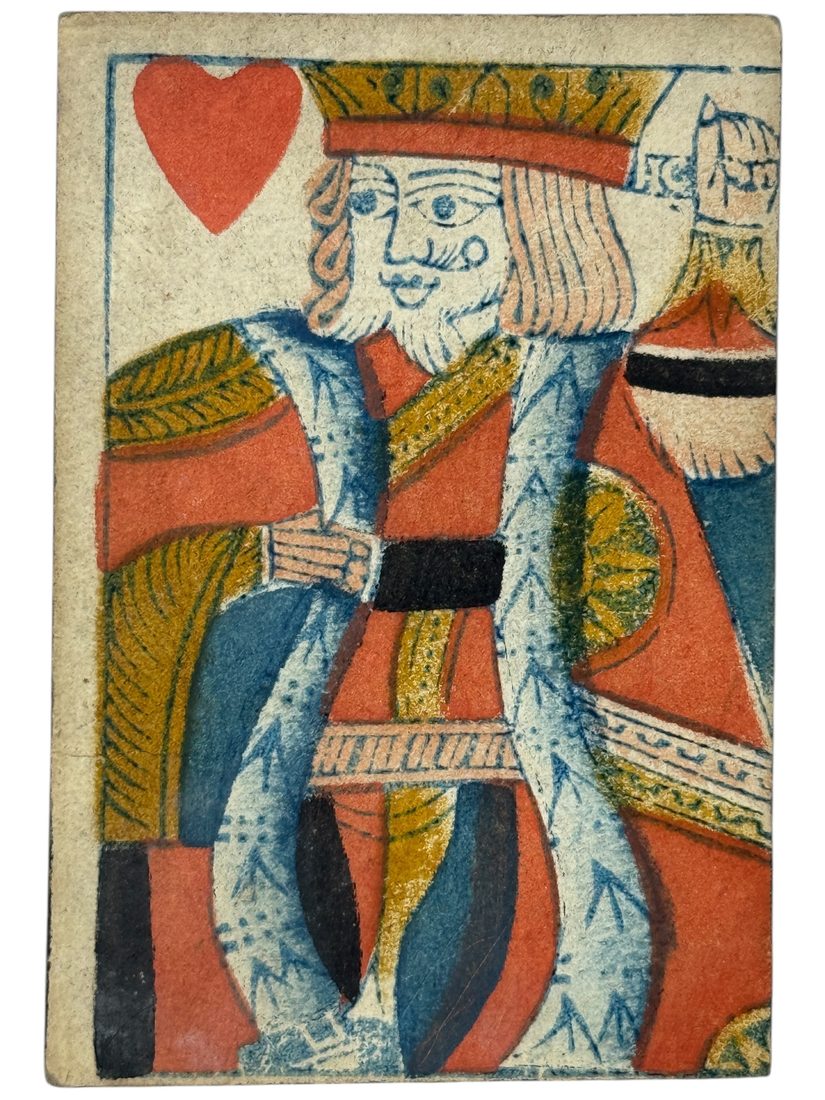
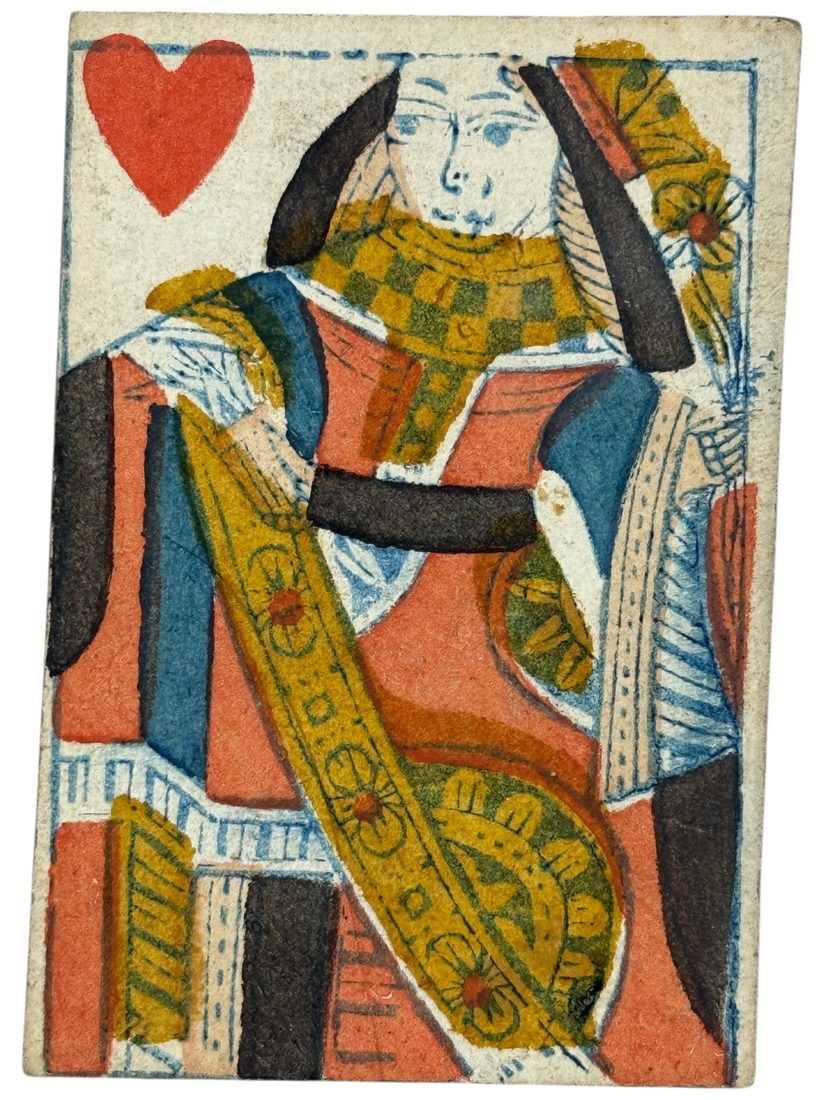
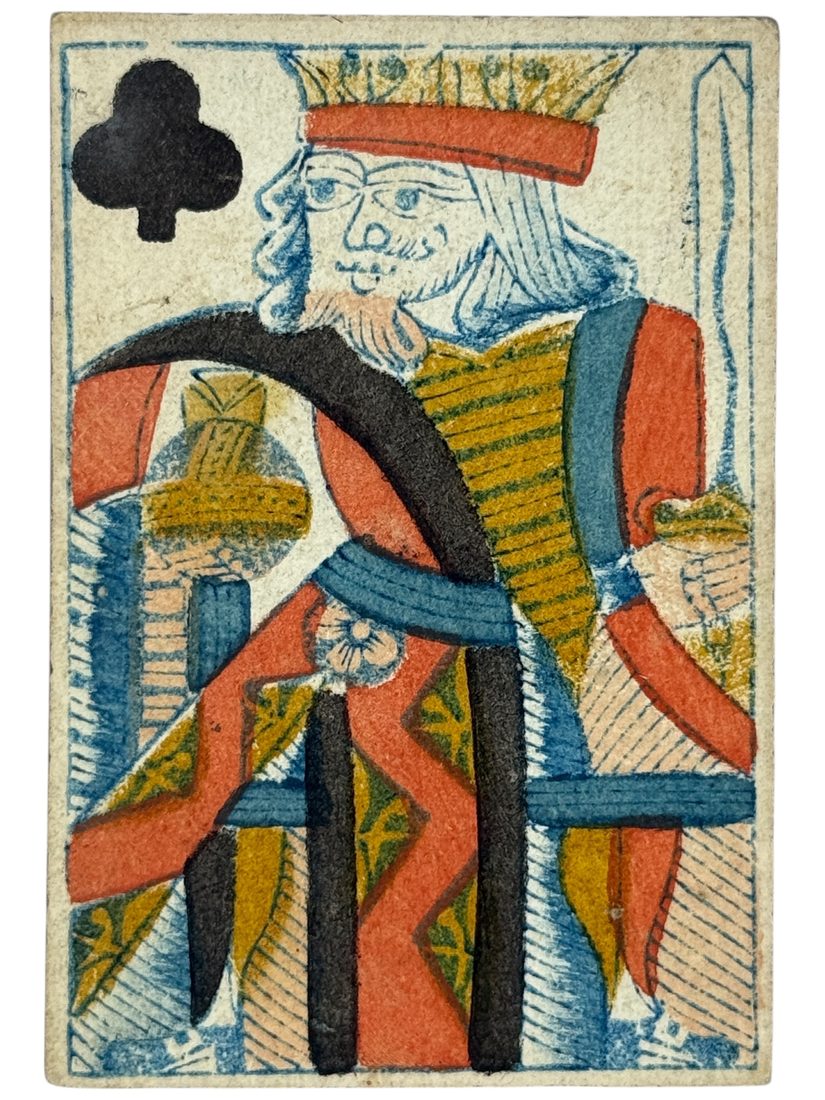
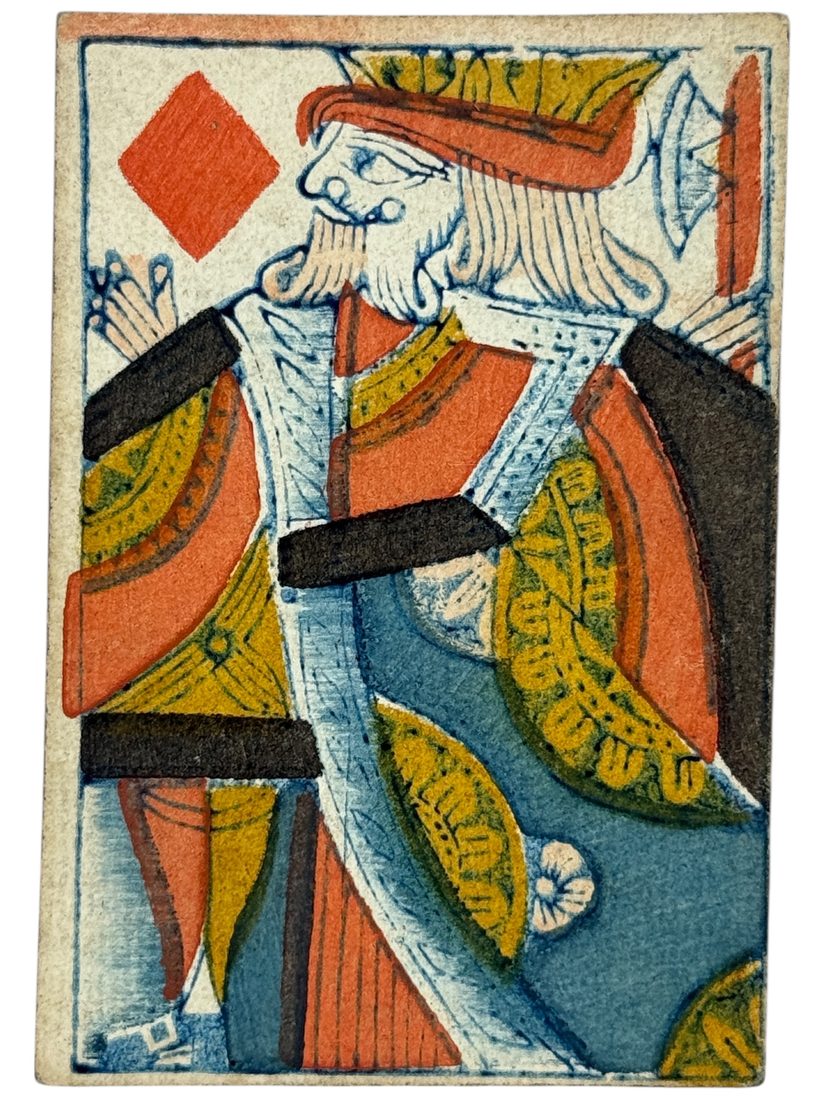
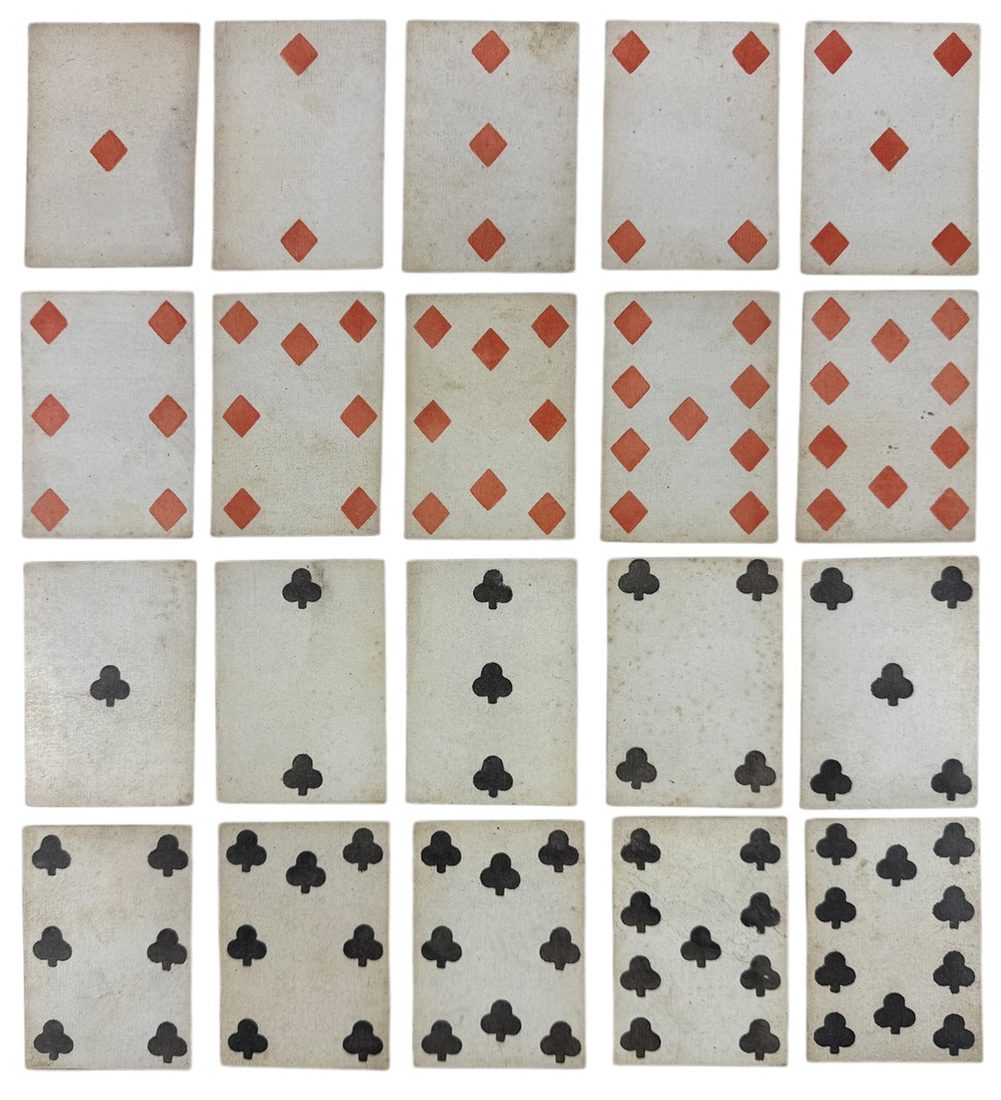
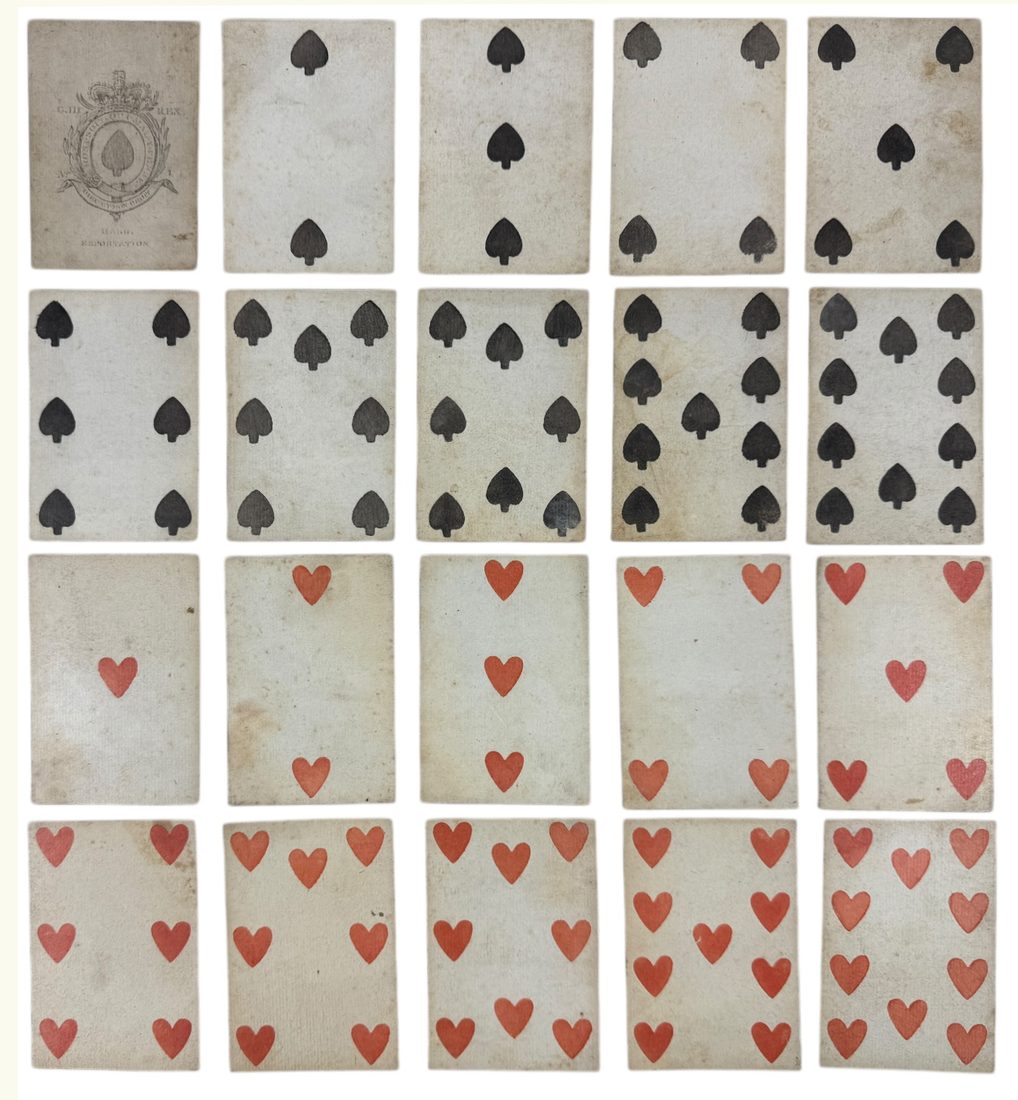
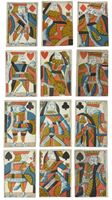
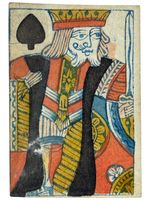
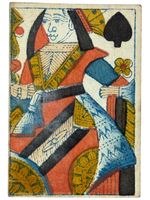
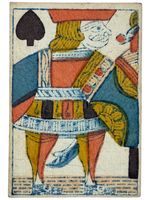
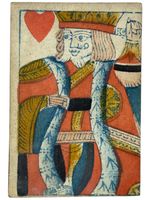
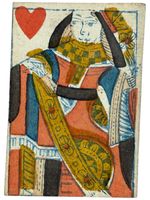
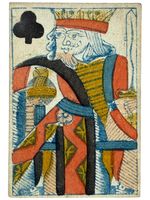
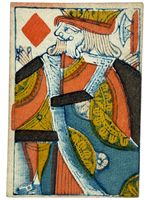
52/52 cards [93 x 65 mm], woodblock-printed, hand-coloured by stencil in vermilion red and deep black. Court figures are single half-length portraits of the pre-Jones London tradition, with value indicators in the upper corners. The iconography follows the so-called “Old Frizzle” pattern still current before the 1801 reform, while the numeral suits preserve the symmetrical layout of mirrored pips. Versos blank. The deck retains the original English fiscal stamp on the Ace of Spades, in accordance with the Stamp Duty introduced in 1711. hand-coloured, complete, in perfect conditions.
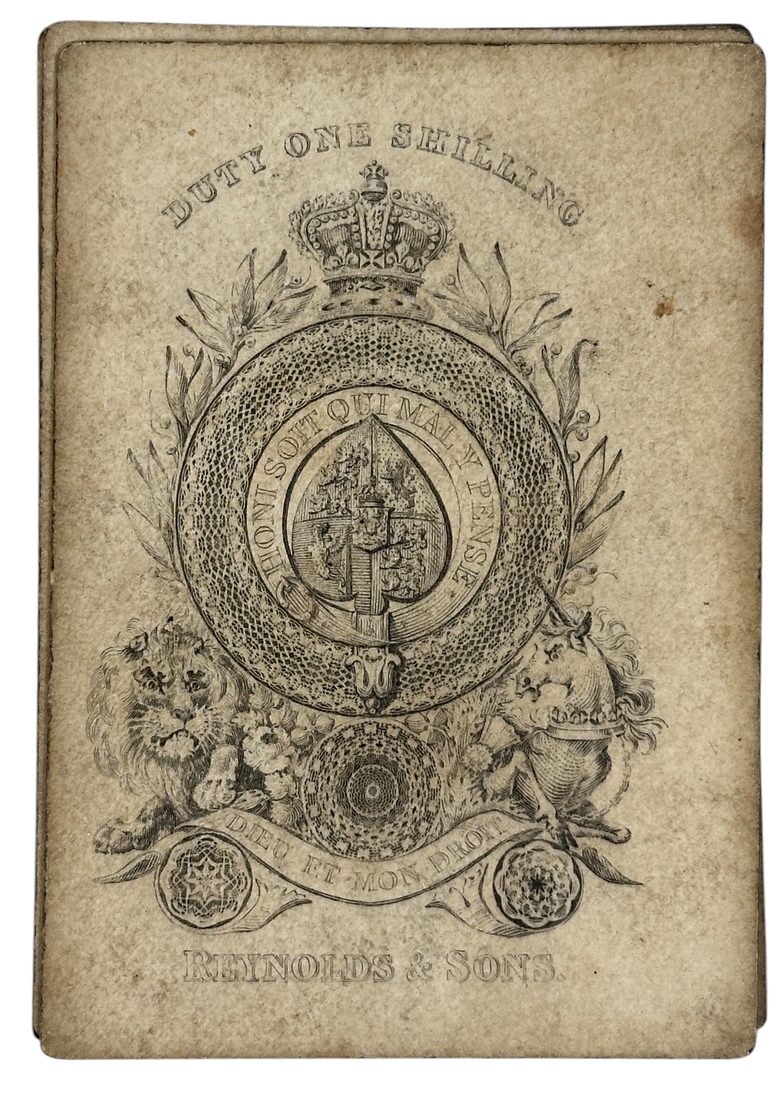
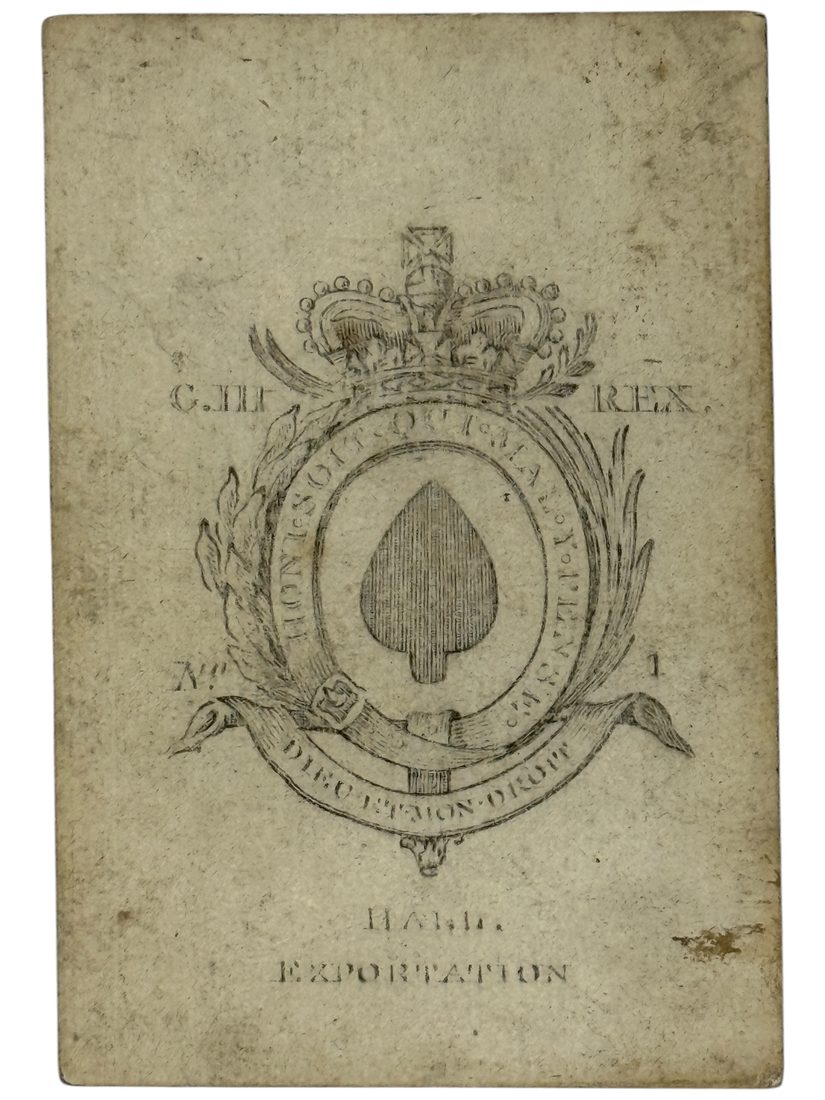
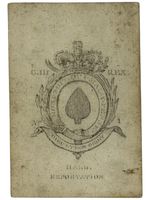
This deck belongs to the series of export packs classified as ‘A8’, introduced in 1765, the first year the Stamp Act was applied to English playing cards. The ace of spades consequently bears the special legend “EXPORTATION”, indicating packs exempt from duty, together with the name of the maker, Henry Hart, one of only five London card-makers authorised by the Stamp Office to obtain duty-free ace sheets. According to the taxonomy of Berry and Lodge, the present specimen is Type A 8 (1765 – 1828), characterised by an oval seal with the royal cypher “GR” surmounted by a crown, the motto of the Order of the Garter, Honi Soit Qui Mal Y Pense, and the legend “Export” for stock destined for the overseas colonies.
Honi Soit Qui Mal Y Pense, translating to “Shamed be he who thinks evil of it”, is an old French phrase, motto of the Order of the Garter, the most prestigious order of
chivalry in the United Kingdom, established by King Edward III in 1348. The inclusion of this motto on the Ace of Spades was customary during this period, symbolizing authenticity and the deck’s compliance with tax regulations.
The fiscal stamp and the distinctive nature of type a 8.
The ‘A8’ stamp, studied by ken lodge and john berry, represents the first category designed specifically for export: identical in design to the domestic issue, but lacking any indication of duty, since “no duty was payable on cards exported”. The established practice required the card-maker to purchase an entire sheet of aces from the revenue authorities, paying only a nominal administrative fee; during production the sheet was cut up and the relevant ace inserted in the pack in place of the original. In hart’s case the design is distinguished by an elegant rococo cartouche and by the minute signature “Hart” engraved beneath the crown, features that permit confident attribution.
The complete text impressed on the stamp reads:
G. Iiirex
Honi Soit Qui Mal Y Pense Dieu Et Mon Droit
Hall Exportation
The earliest documentary reference to henry hart († prob. 1801) appears in Mortimer’s universal directory (1763), which places him in Lamb’s Conduit street, Holborn. Two years later he is listed among the five master card-makers who registered their names with the stamp office at the introduction of the taxed ace, evidence of an enterprise already solid and well capitalised. Hart renewed his registration at the duty increases of 1776 and 1789, before being declared bankrupt in 1797; his death, recorded in a parish register of 1801, brings to a close a forty-year career that saw his production, now traceable even in the united states, range from the common “Mogul” packs to export consignments destined for the colonies and the mediterranean market.
The deck is hand coloured with the support of stencils, as it was usual for hand painting playing card deck in the past. The stencil is a thin sheet of pasteboard, parchment, or metal, in which outlines, and general forms of the figures are cut out, for the purpose of being stencilled on cardboard or paper.
By passing a brush charged with colour over the stencil, the colour enters the cut-out lines and imparts the figure to the material beneath. The pips, or common cards, require only one colour, either red or black, but the têtes, or court cards, require many colours.
Complete playing-card decks from the eighteenth century are in general exceptionally rare; in the case of export packs, the relatively small
number shipped to the few non-British markets renders such survivals practically unique
CONDITIONS: Perfectly preserved
REFERENCES: J. BERRY, Taxation on Playing-cards in England from 1711 to 1960, International Playing-Card Society, 2001; K. WOWK, Playing cards of the world, 1983,
pp. 90-96; C. P. HARGRAVE, A History of playing cards, Dover publications, 2021, pp. 169-186; The World of playing cards website. The International Playing-Card Society, Pattern Sheet 48.