Das Spiel der Fragen und Antworten (The Game of Questions and Answers)
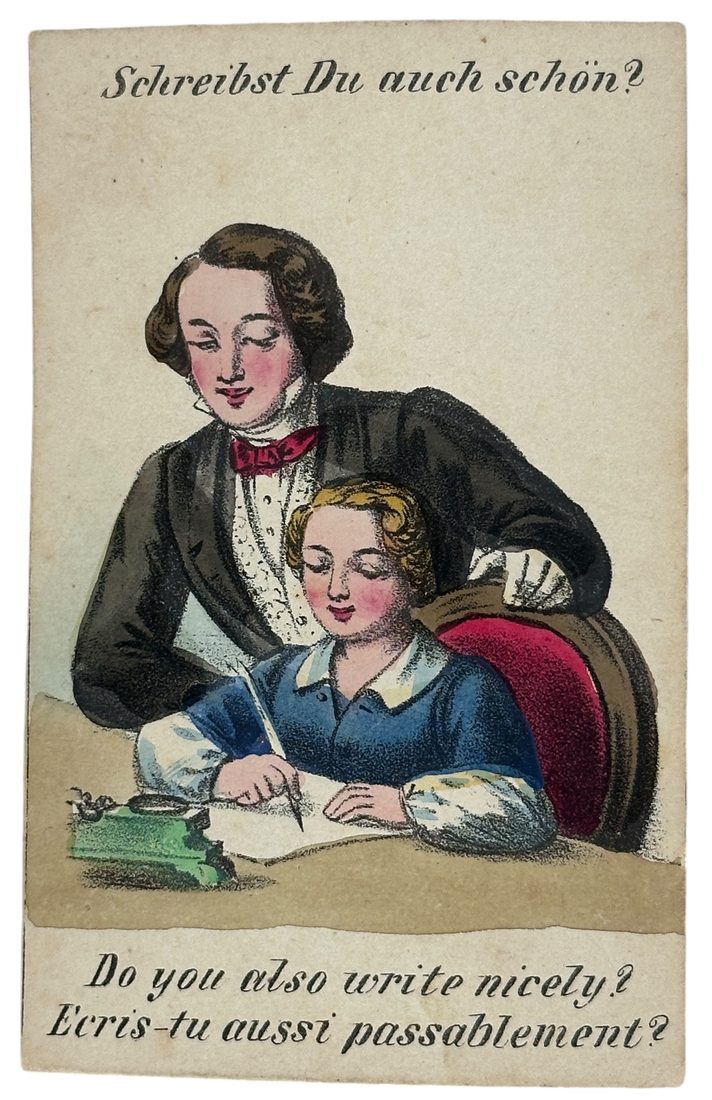
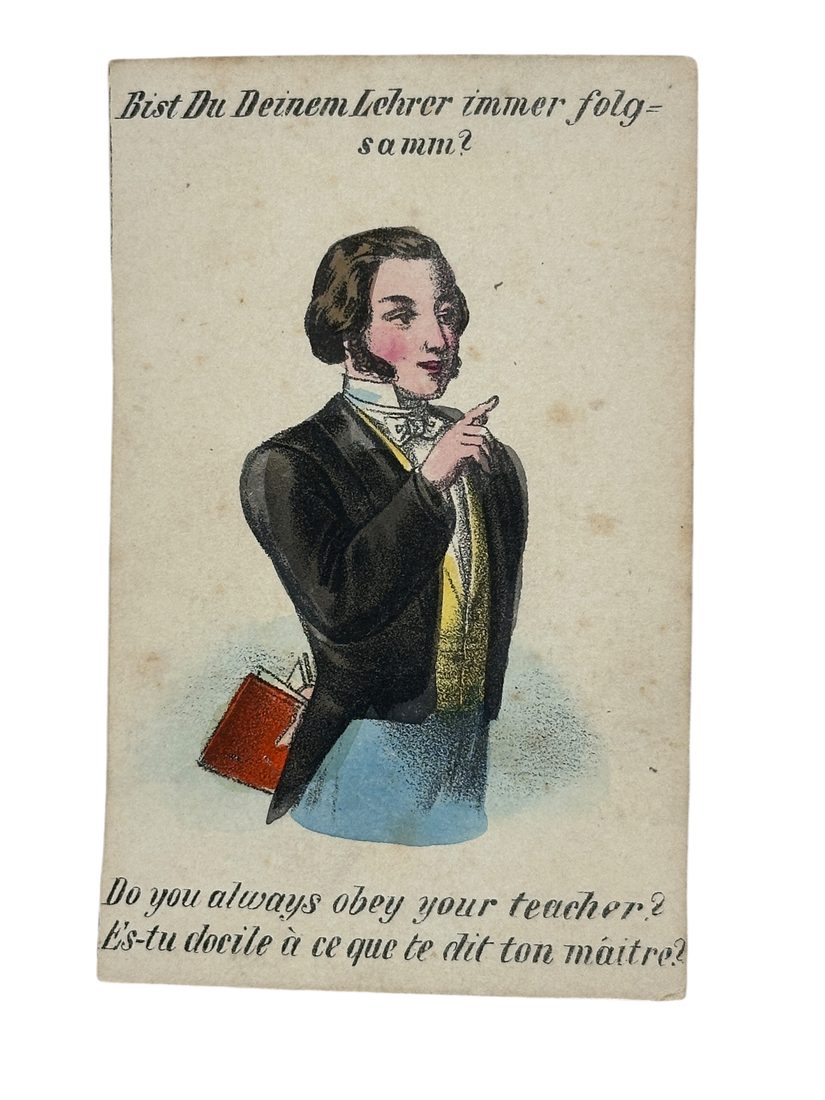
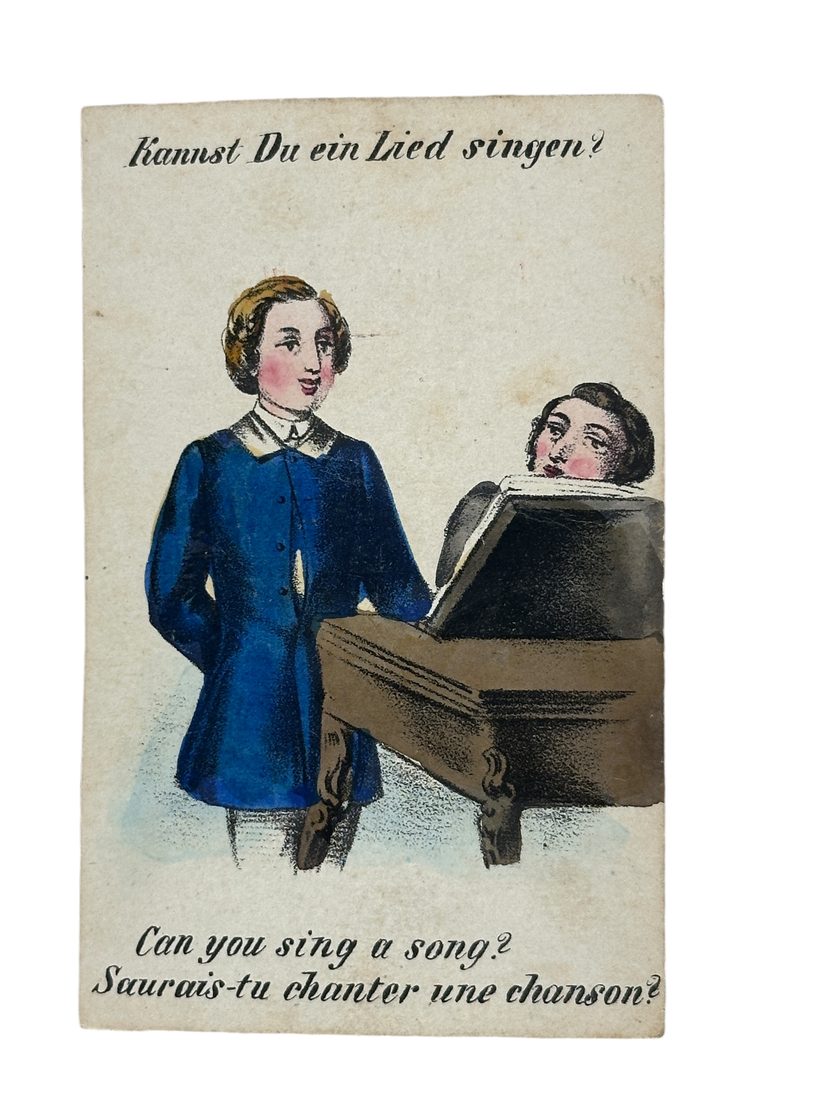
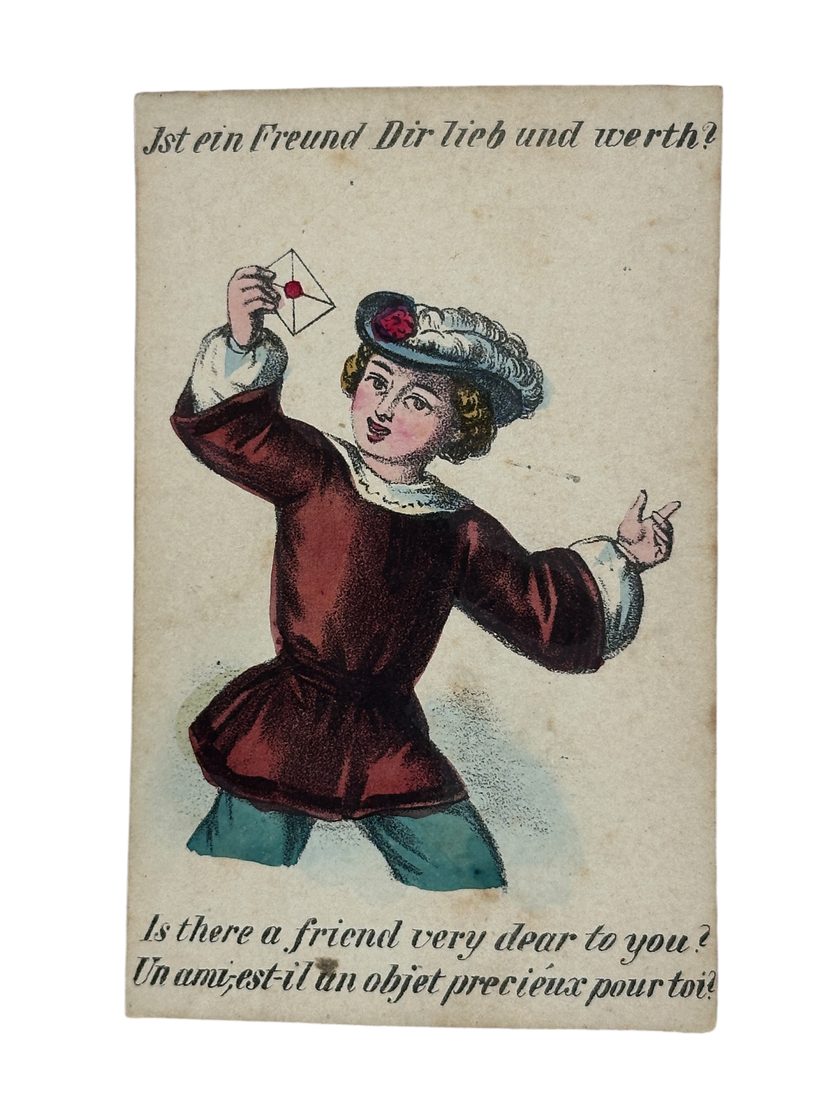



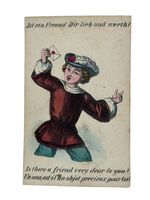
| Macro-category | Playing Cards and Tarot |
| Subcategory | Educational Games & Cards |
| Provenance | Germany |
| Year | 1860 |
complete 19th century coloured deck:
a divination pack in the form of questions & answers
to teach French and English to German children while playing
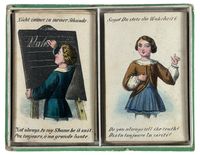
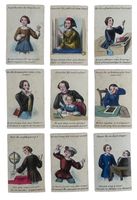
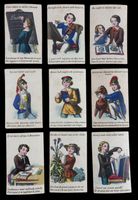
Card Deck, Das Spiel der Fragen und Antworten (The Game of Questions and Answers). Germany, c. 1860.
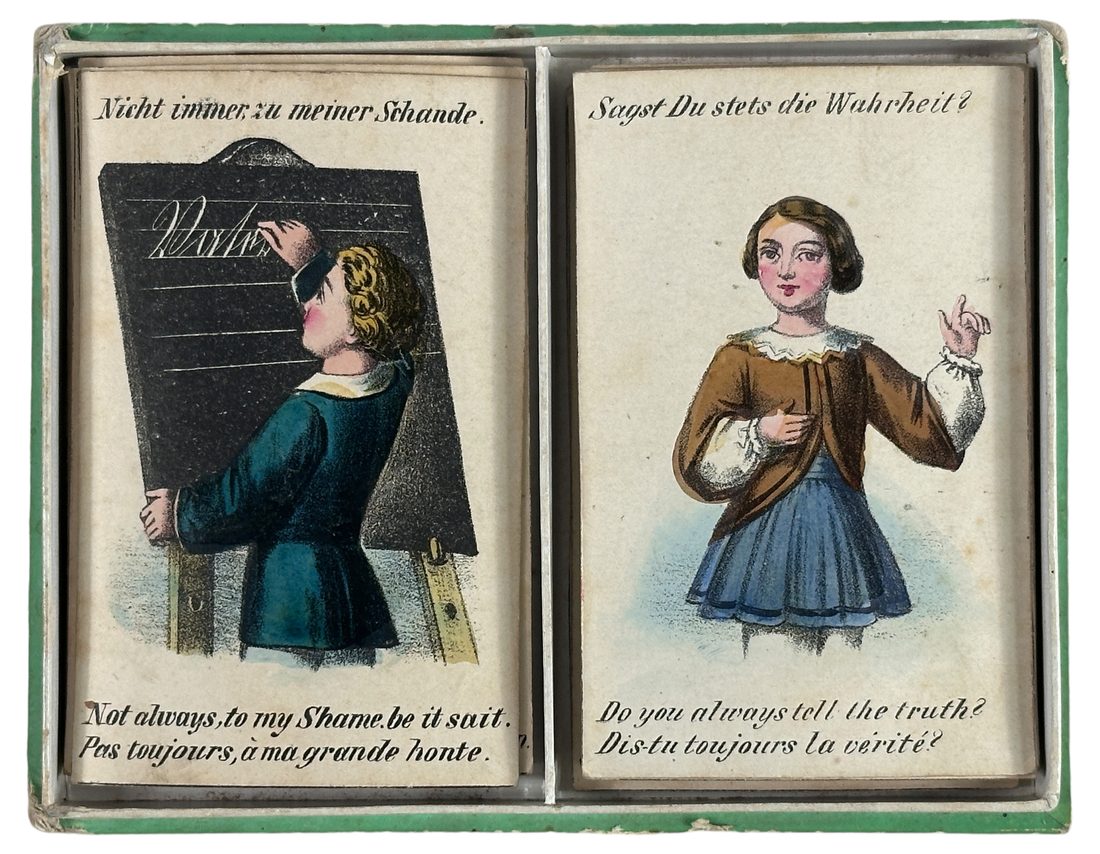
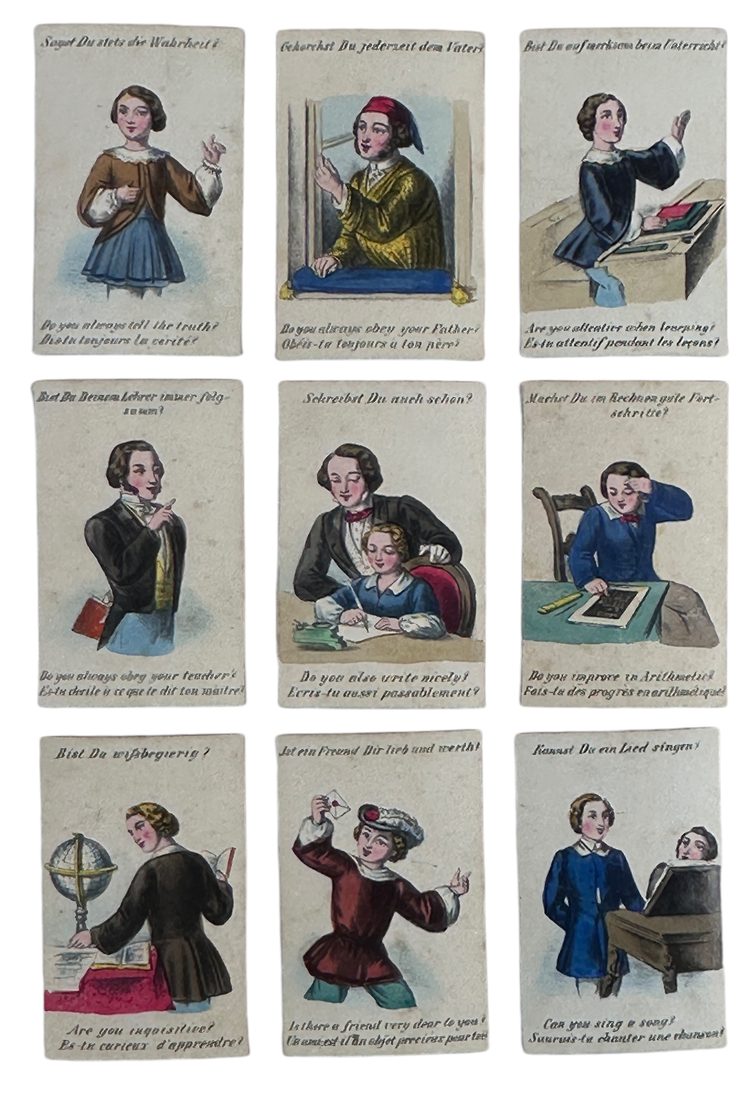
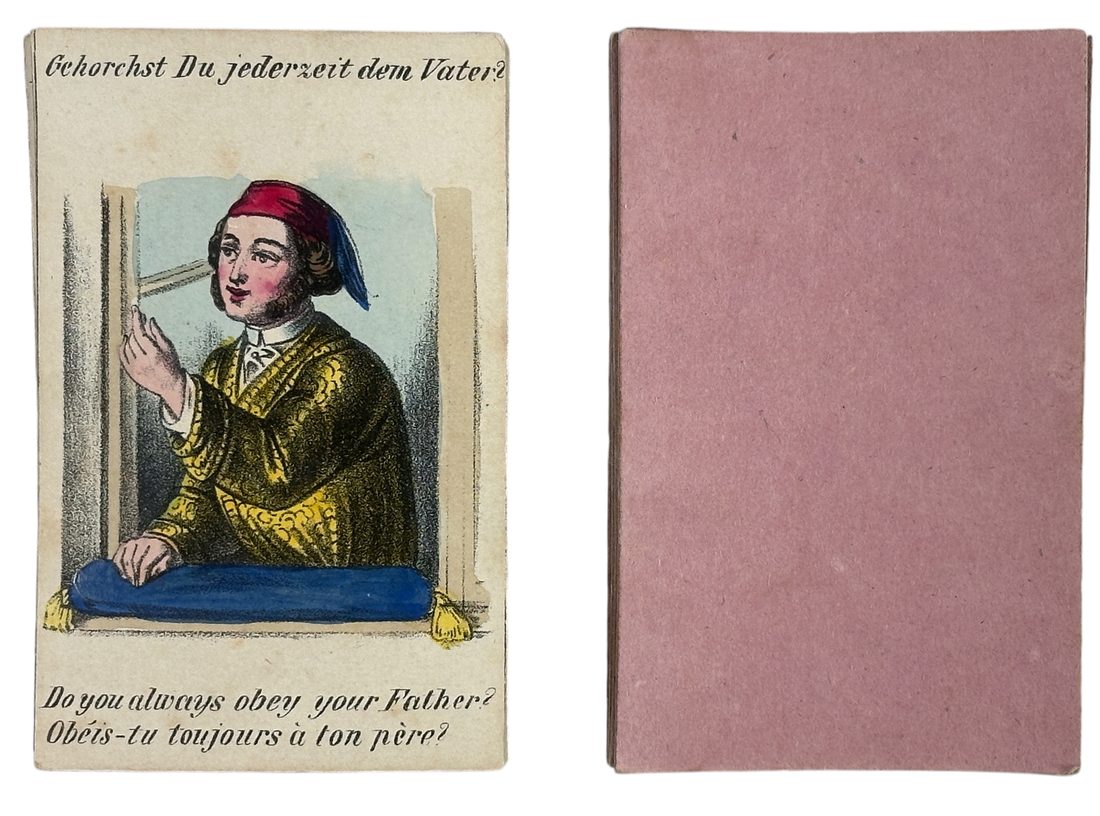
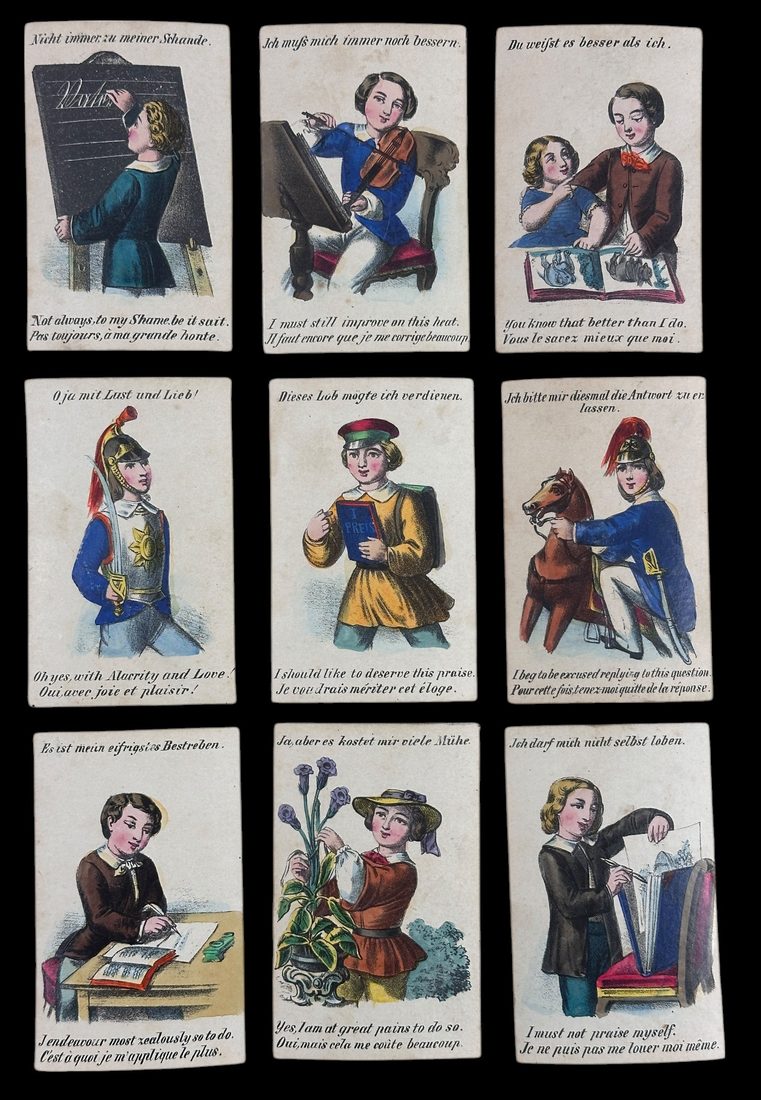
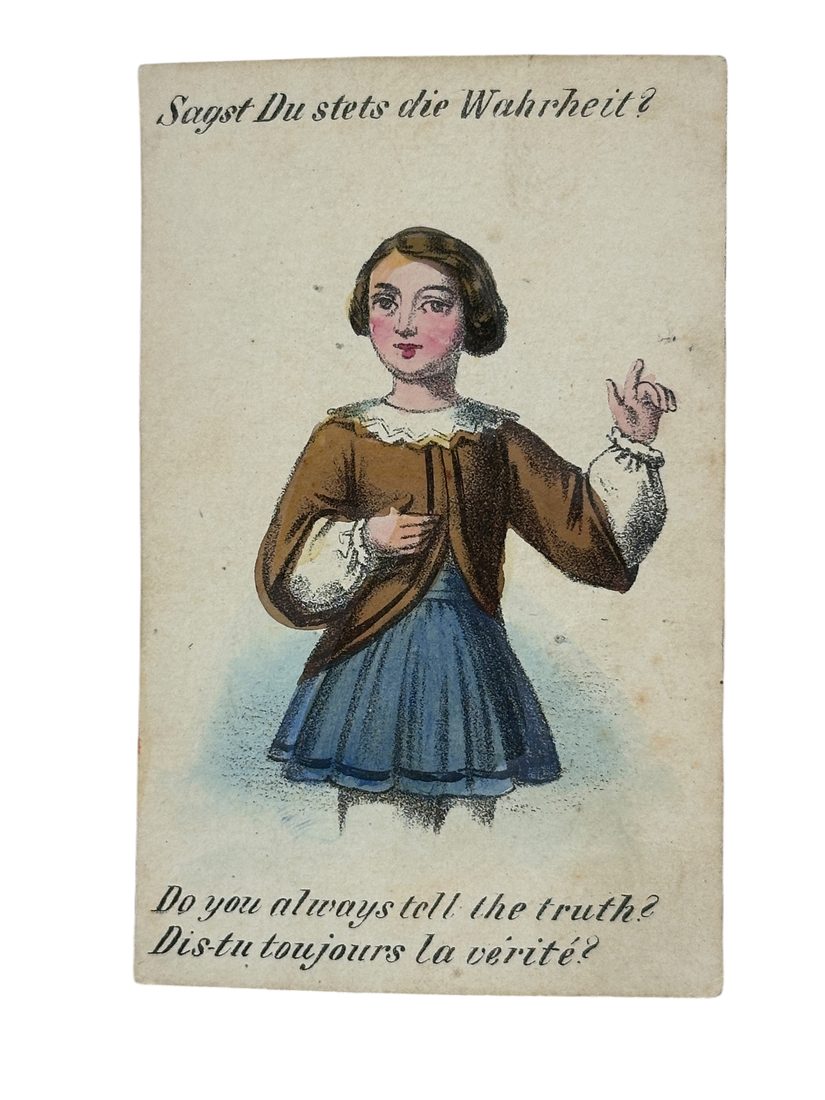
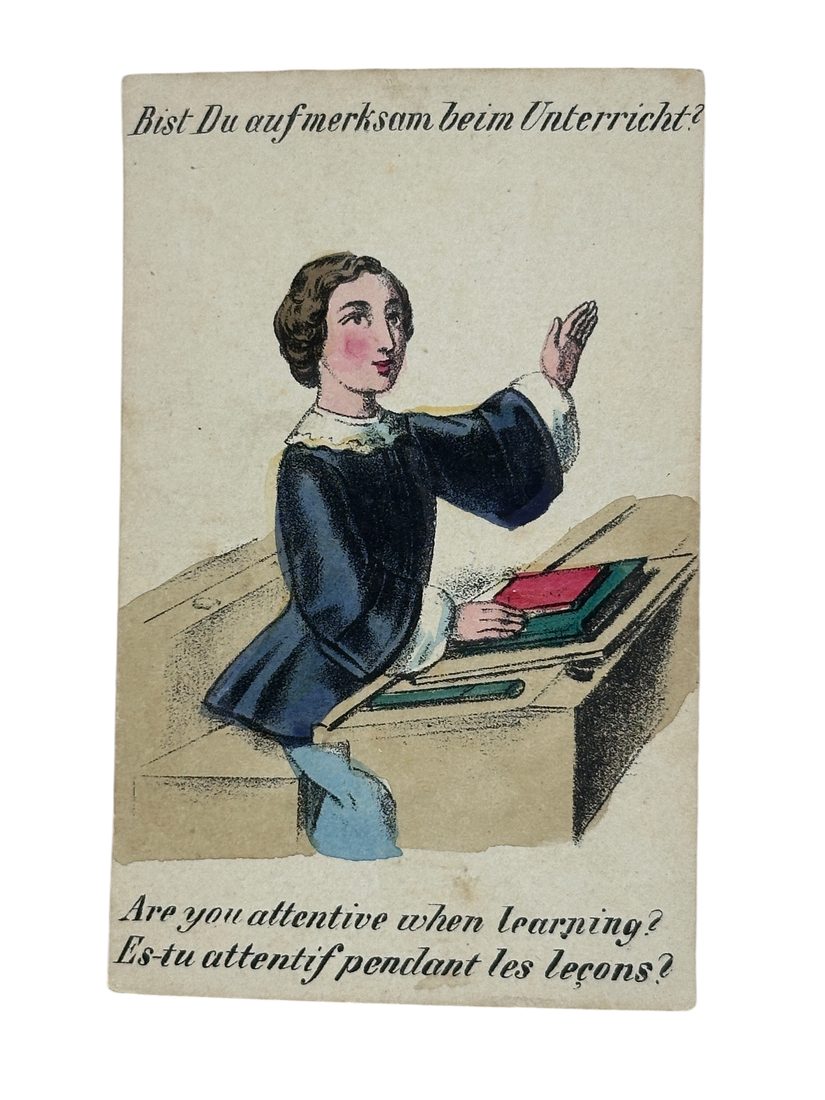
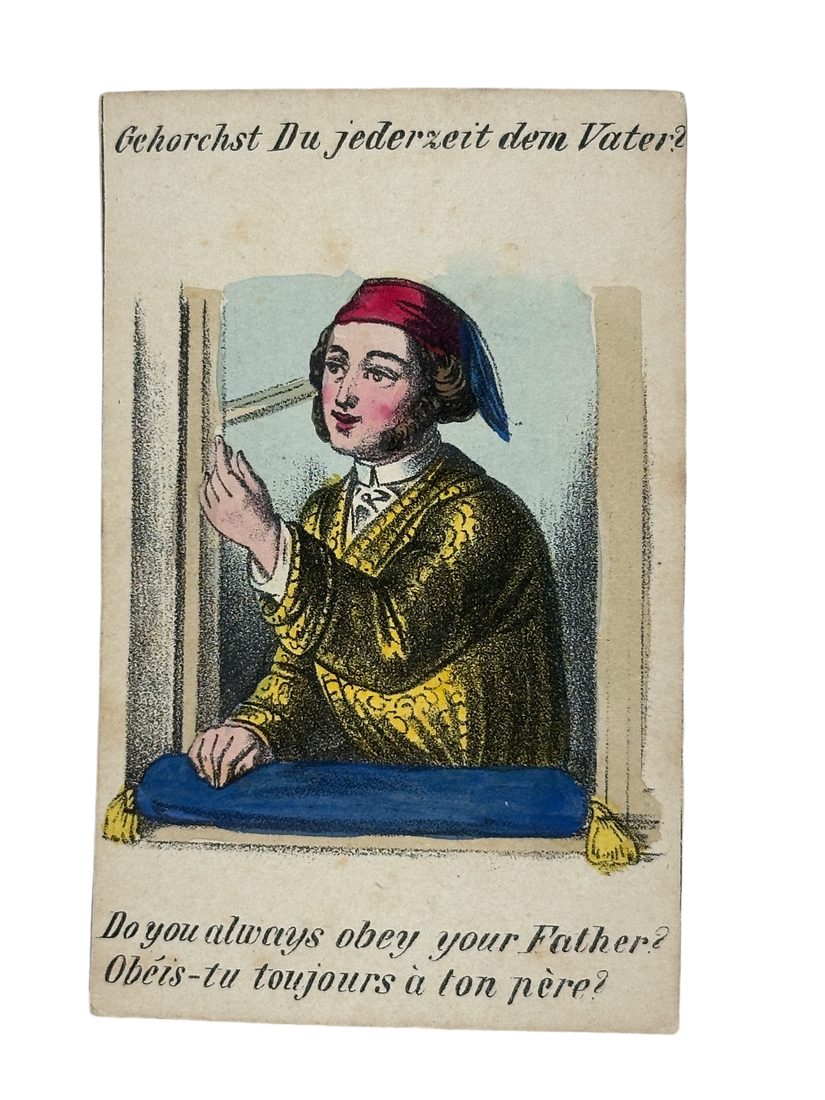
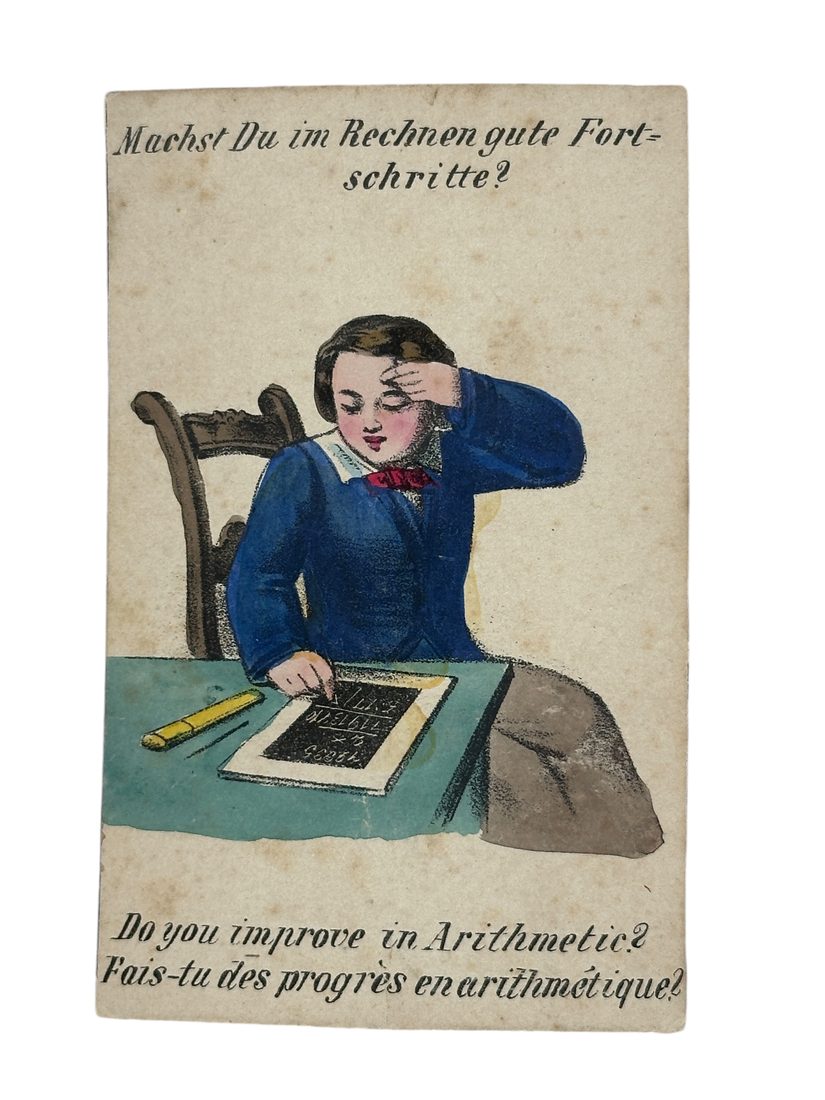
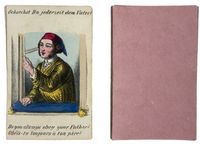
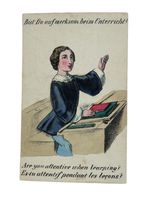
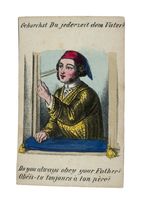
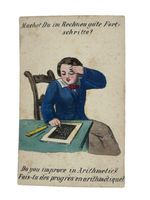
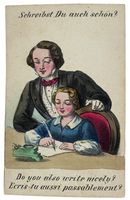
Complete deck (106 x 67 mm), 18 cards with hand-colored and glazed lithograph of children playing or studying, pink verso, cardboard box (150 x 115 mm) divided into two compartments, each containing half of the cards. Nine cards have a caption with the questions of divination in three languages, German at top, French and English at bottom; the remaining nine contain the answers, again in the same three languages.
This deck was intended to be used to play a simple divination game with educational purposes, enriched by fine images.
By drawing a question card and then an answer card in turn, a delightful divination or prophecy game unfolds. For example, a player first turns over a question card, let's say: “Do you always tell the truth?” (read in the three languages). To see the answer, the player then draws an answer card, and the prophecy appears: “Not always, to my shame, be it said!” (again, to be read in the three languages).
To make the game even more enjoyable, the cards are embellished with lovely images of children.
Examples of this type of game include “Bilder-Lese-Fabeln” (Illustrated Reading Fables), a deck of cards that combines images of fables with texts in multiple languages to enhance children's language skills through moral stories, and “Das ABC-Spiel” (The ABC Game), a game that uses illustrated cards to teach the alphabet and basic vocabulary in German, French, and English, often accompanied by images of children in educational settings.
These games reflect the 19th century pedagogical approach that combined entertainment with education, utilizing visual and textual materials to facilitate foreign language learning among young people.
The first divination game deck, Par Demandes et Par Réponses, comes from France, belongs to the revolutionary period, and is preserved in the precious collections of the Musée Carnavalet. It includes thirty-two cards, all of which offer the same layout.
Each card is numbered with both Arabic and Roman numerals, each placed in a small box. It starts with the king of hearts and continues in the same series; from there they pass into the club series, always beginning with the king and ending at the last card of the spades series. On the pip cards we find easy-to-read little riddles.
On the card face, which occupies about a quarter of its surface, is placed a caption presenting either a question or an answer. By turning these cards, a kind of divination appears.
Conditions: Perfectly preserved.
References: Henry Rene D'Allemagne, Les cartes à jouer du XIV au XX siècle, Paris : Librairie Hachette, 1906.