Sternen-Uhr. Astrologisches Instrument zur Berechnung von Horoskopen

| Macro-categoria | Giochi Antichi e Pre-cinema |
| Sottocategoria | Divinazione (carte, giochi e strumenti) |
| Autore | Fischer, Anton |
| Luogo di fabbricazione | München |
| Editore / Fabbricante | A. Fischer |
| Anno | 1900 |
celestial mechanics for the modern astrologer:
a rare analogue astrological machine
between nineteenth-century science and esoteric tradition.
A pre-1908 variant, absent from currently
recorded institutional collections
Fischer, Anton. Sternen-Uhr. Astrologisches Instrument zur Berechnung von Horoskopen (“Astrological instrument for the calculation of horoscopes”). München, A. Fischer, s.d. (but before 1908).
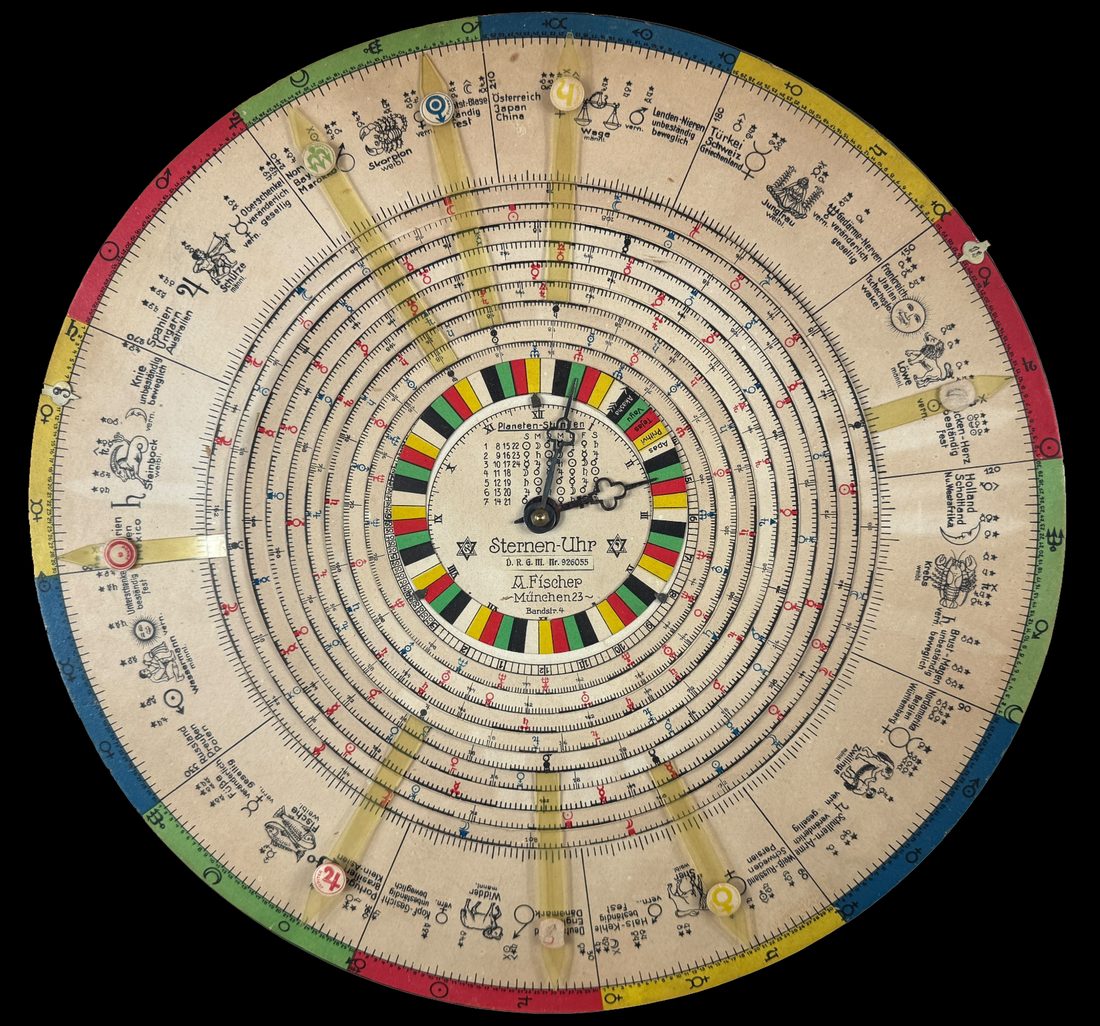
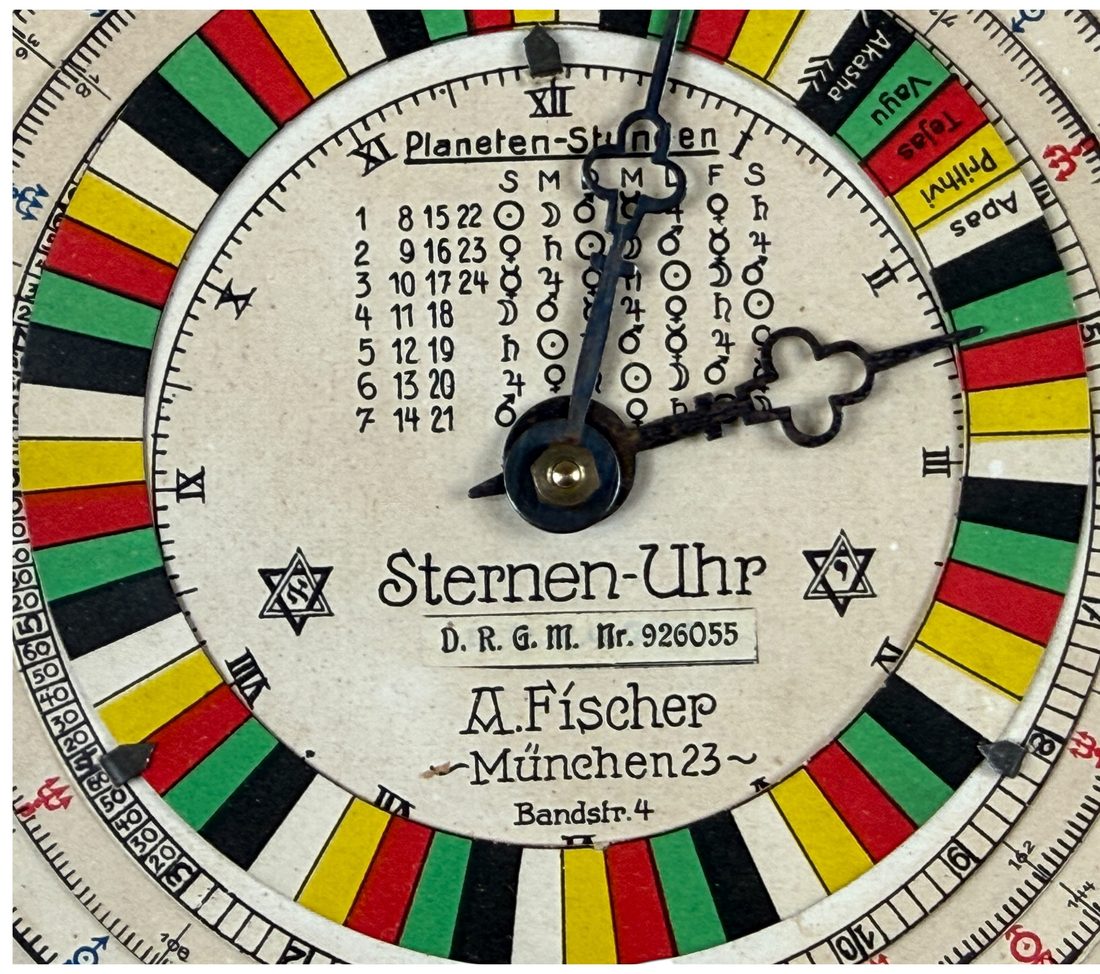
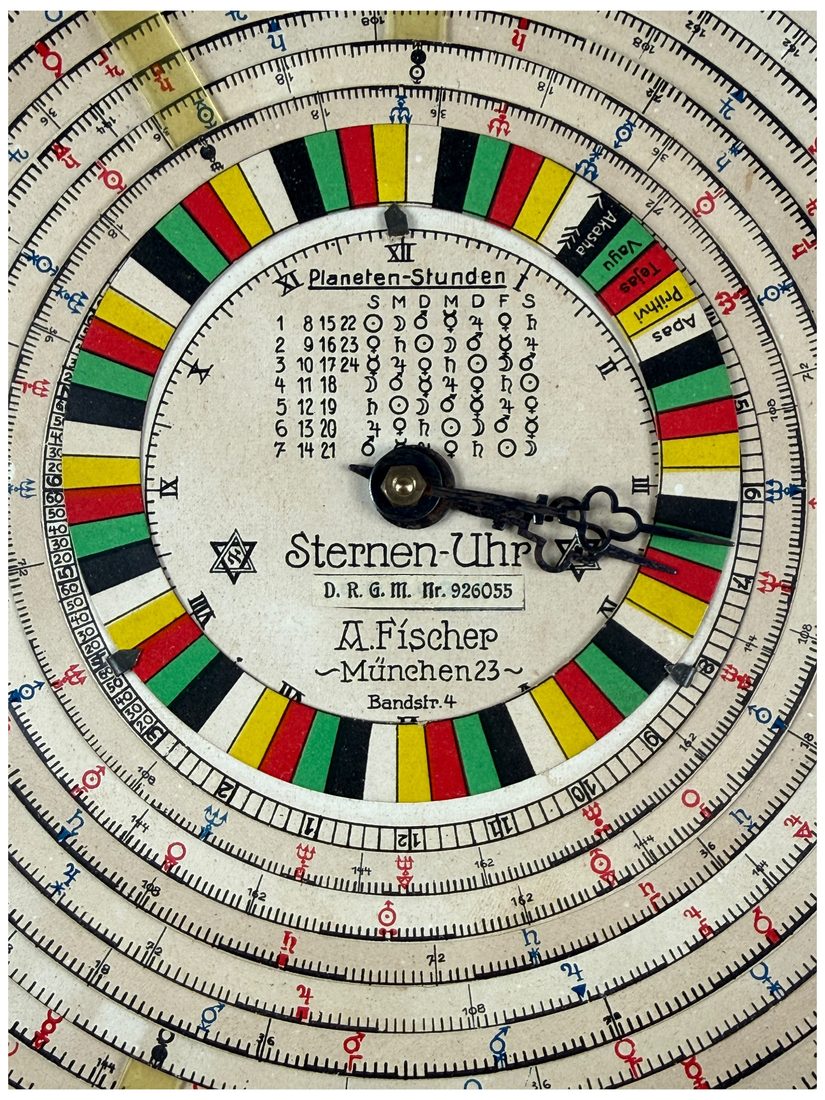
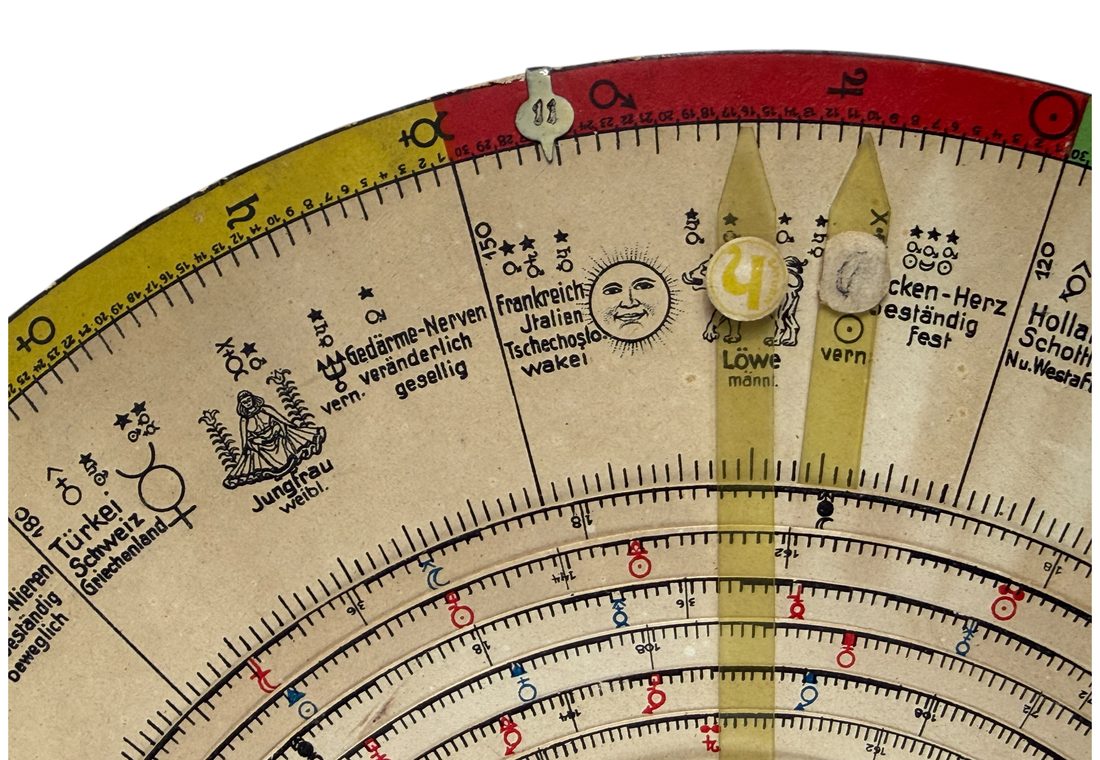
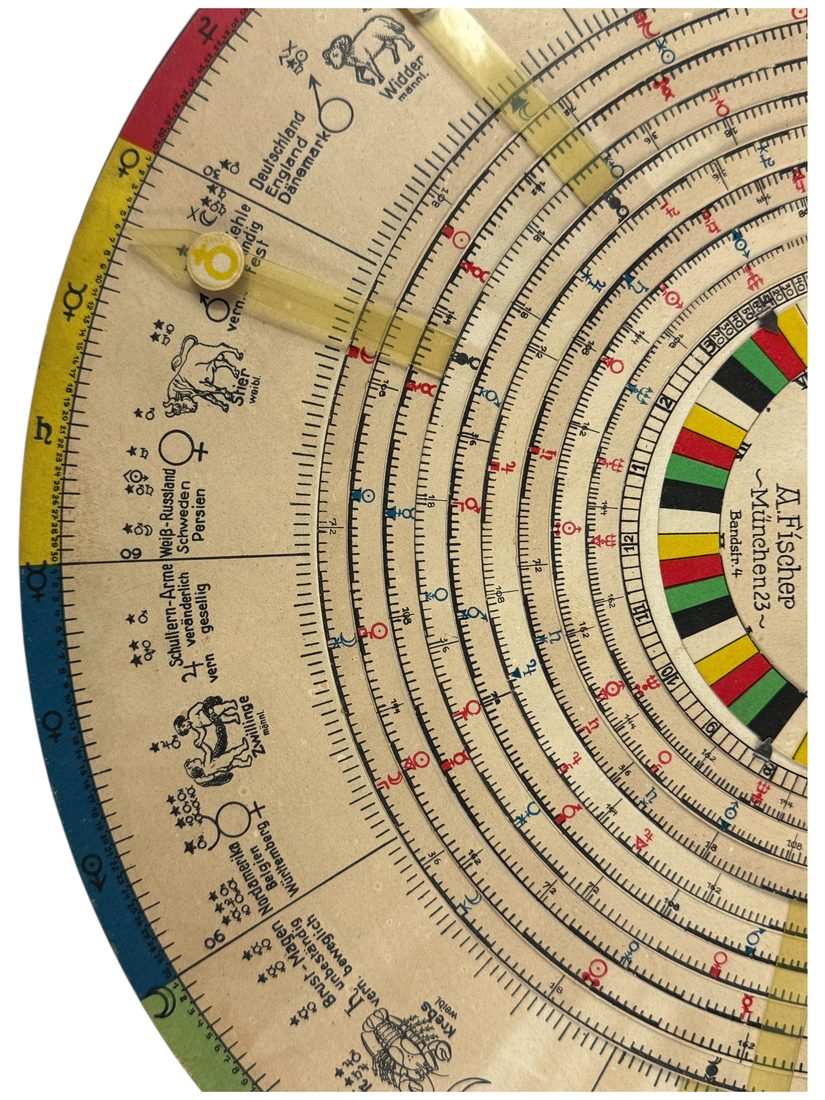
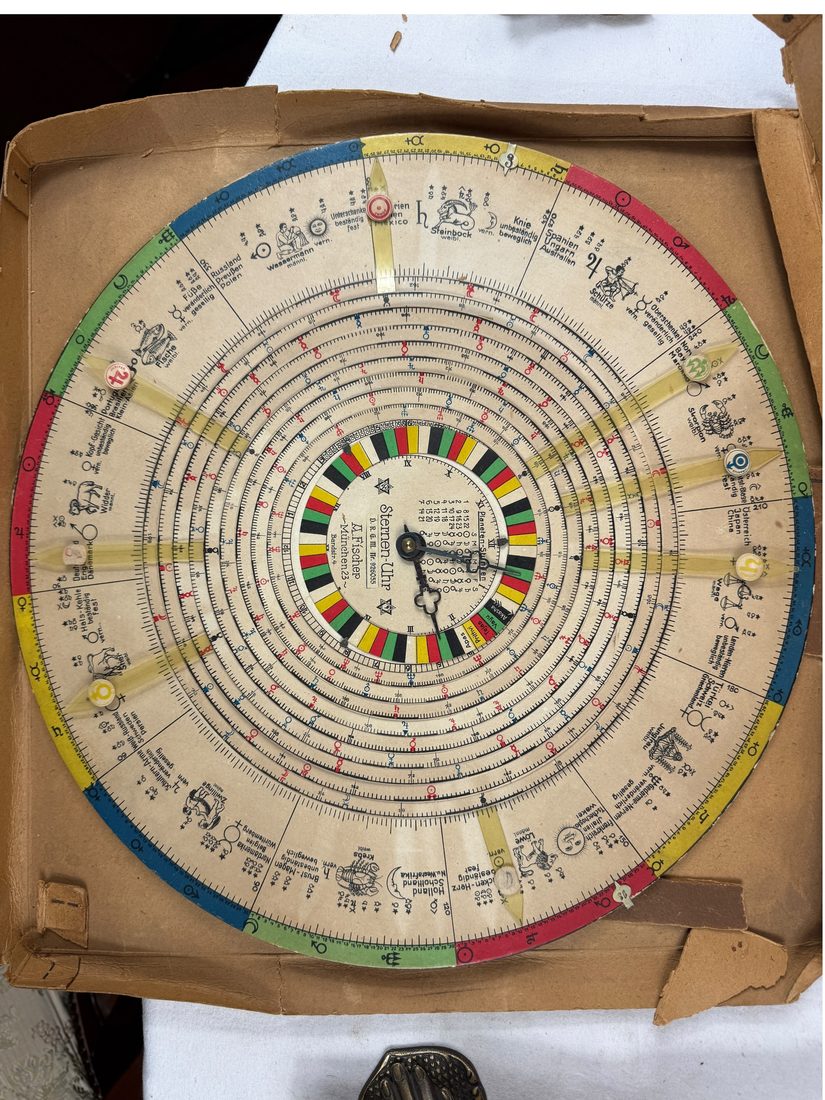
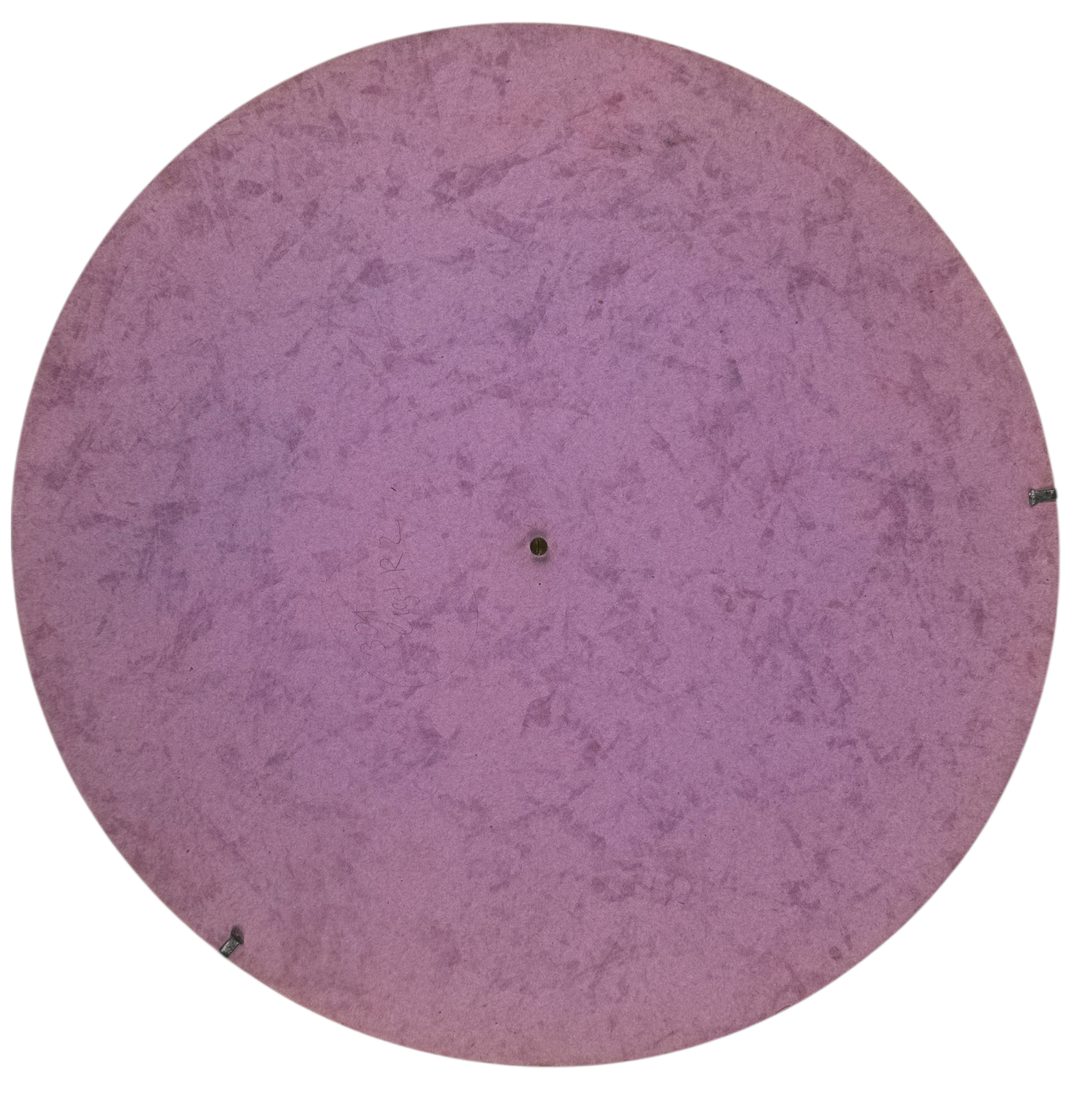
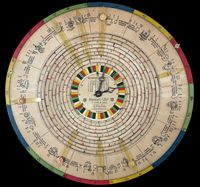
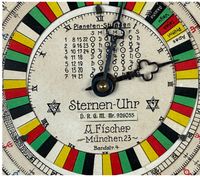
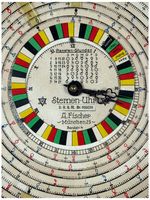
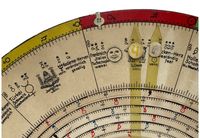
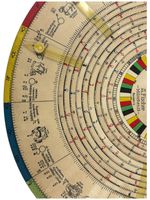
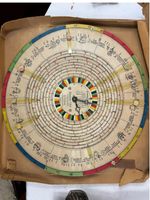
Circular analogue volvelle-type calculating device (diameter ca. 360 mm), consisting of a colour-printed cardboard base disc bearing the zodiacal circle and graduated scales, overlaid with eleven progressively smaller concentric, independently rotatable printed cardboard discs, each carrying calibrated scales, and fitted with two metal indicators and nine movable transparent celluloid indicators, all mounted on a central pivot. Preserved in the publisher’s original rigid cardboard box, printed with the address “Bandstr. 4” (München 23). The central printed label reads: Sternen-Uhr, D.R.G.M. Nr. 926055, A. Fischer, München 23, Bandstr. 4.
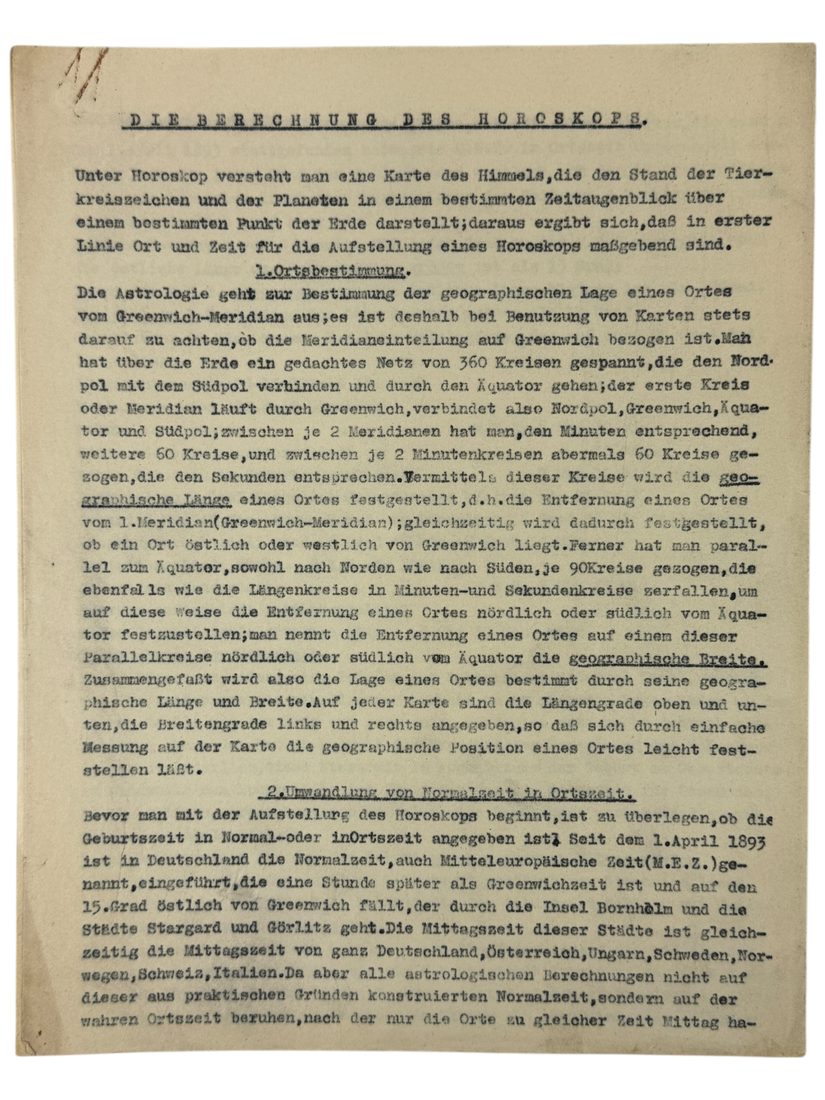
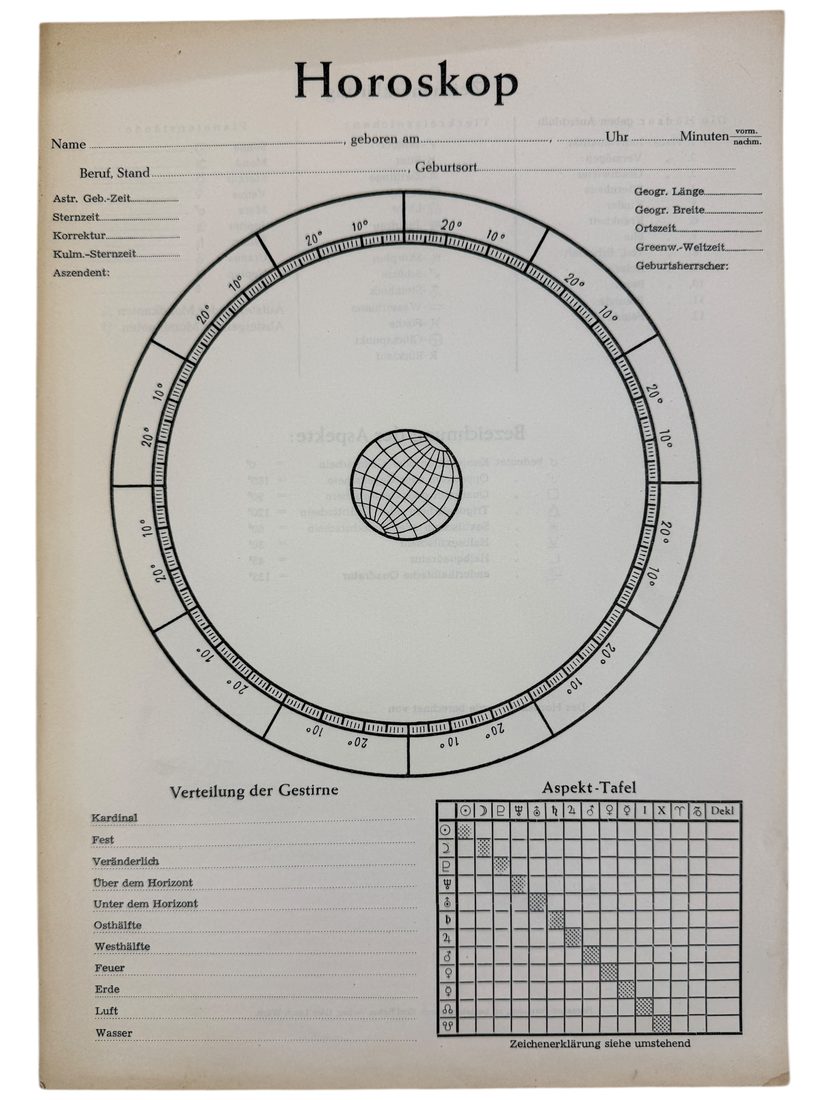
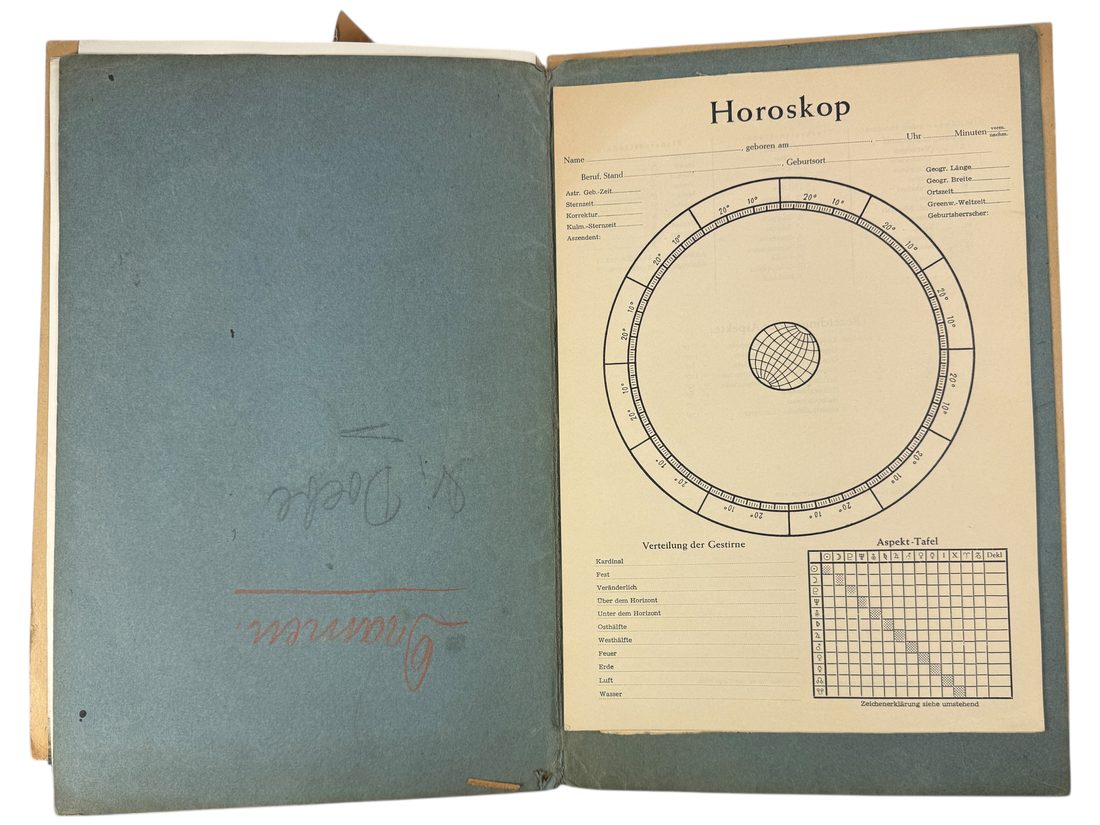
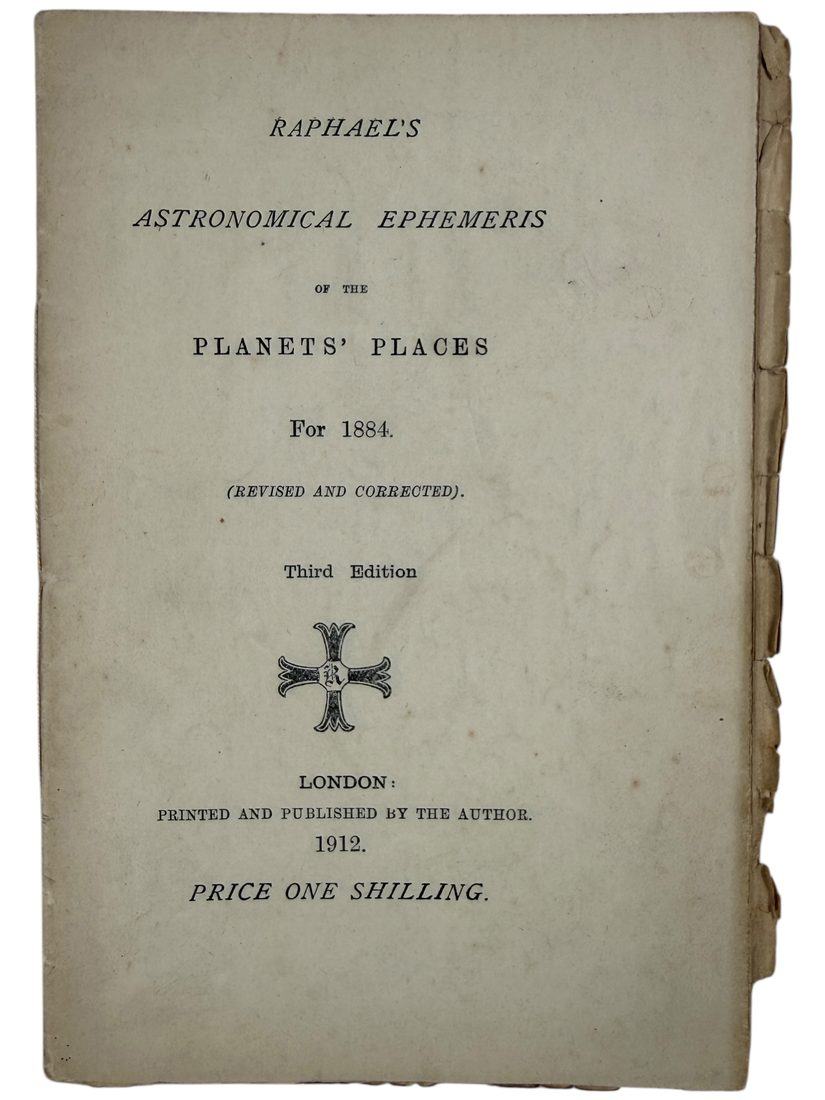
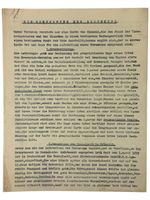
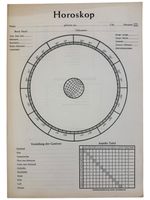
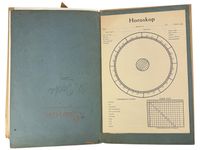
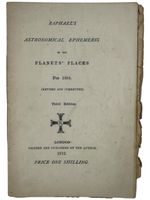
[Togheter with:] a printed explanatory instruction sheet (Gebrauchsanweisung), fragile, printed with Fischer’s earlier address and additionally bearing a handstamp of the later address “Schellingstr. 108”; two printed horoscope-form pads (Verlag Rohm, Lorch); one copy of Raphael’s Astronomical Ephemeris of the Planets’ Places for 1884, 3rd edition, London, 1912; and a group of further contemporary or slightly later astrological papers, manuscript and/or duplicator-produced.
The Sternen-Uhr is a rare early twentieth-century German astrological calculating instrument conceived to facilitate the practical construction and graphical representation of horoscopes. Through the coordinated use of multiple concentric rotating scales and movable indicators, it functions as a compact analogue computing device, assisting the user in correlating time, date, and implicitly geographical parameters, and in visualising the zodiacal circle, house cusps, and planetary positions once these have been derived from ephemerides. Its purpose is explicitly practical and instructional. The accompanying printed instructions further indicate that the publisher offered, for a fee, to perform the necessary calculations and to mark the chart for non-specialist users, clearly situating the object between didactic apparatus and professional working tool.
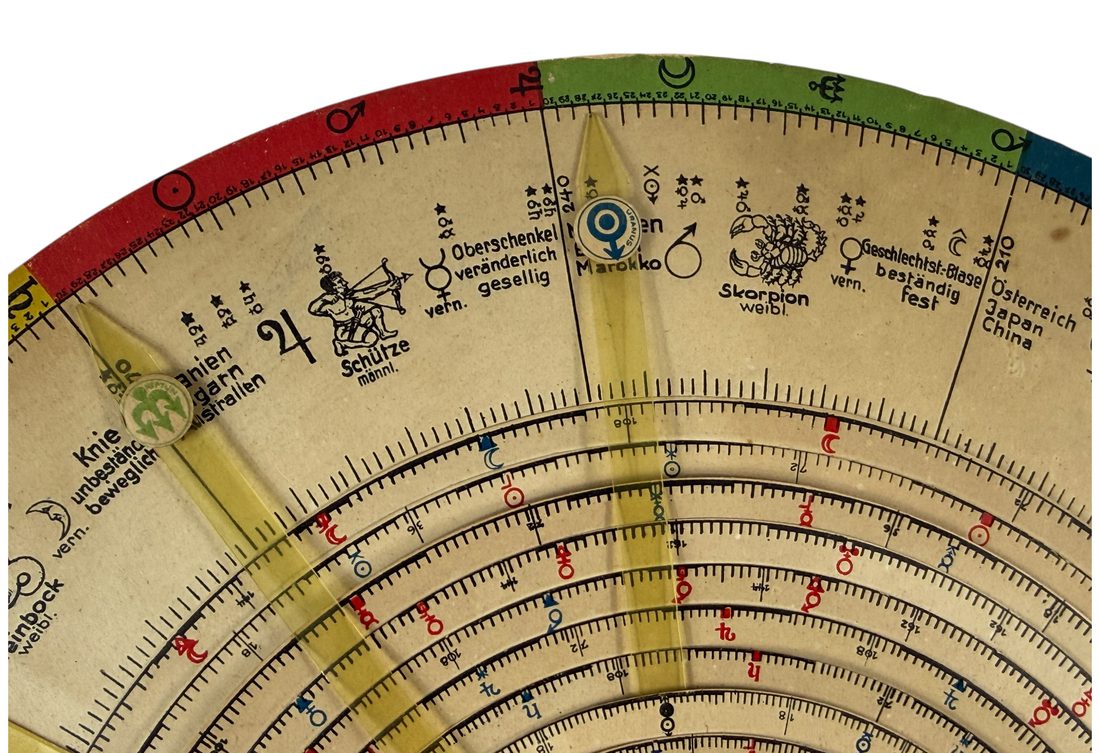
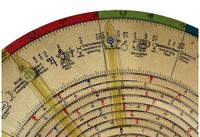
Visually, the instrument is organised around a broad zodiacal circumference divided into signs and degrees, encircled by additional graduated rings. Above this foundation, eleven nested rotatable discs provide supplementary scales intended to minimise manual arithmetic and to enable the stepwise alignment of values required for horoscope erection. The presence of nine transparent celluloid indicators strongly suggests calibration for the principal “planets” recognised in contemporary astrology, including Uranus and Neptune. The two metal indicators were likely reserved for principal angles, such as the Ascendant and Medium Coeli, or for particularly stable reference positions. The precise functional allocation of each indicator cannot, however, be established with absolute certainty in the absence of a complete concordance between the surviving instruction text and each individual scale on the present example.
The accompanying materials clarify the practical environment in which the Sternen-Uhr was intended to operate. The inclusion of Raphael’s Astronomical Ephemeris reflects standard astrological practice of the period, whereby ephemerides supplied planetary longitudes for given dates and times, while mechanical or tabular aids such as the present device assisted in translating numerical data into a coherent and legible horoscope figure. In particular, such instruments were designed to manage recurrent conversions, notably those relating to time standards and local position, which constituted some of the most error-prone stages for non-specialist practitioners.
The present example represents a documentarily significant address-state referring to the publishing addresses of Anton Fischer. Both the central label and the original box bear the address “Bandstr. 4, München 23,” while the instruction sheet, although printed with the earlier address, carries a handstamp of Fischer’s later premises, “Schellingstr. 108.” This combination is best understood as evidence of a transitional phase in Fischer’s publishing activity, during which previously printed materials continued to be distributed and were updated by stamping following the relocation. An example bearing the Schellingstraße address is catalogued by the Deutsche Nationalbibliothek and dated [1925], establishing a later address-state but not implying uniform production in that year. As Fischer is independently documented at Schellingstraße by 1908, any specimen still marked “Bandstr. 4” must predate that move. On the basis of the available evidence, a cautious and coherent dating for the present address-state is therefore circa 1900–1908, with the instruction leaf plausibly stamped at or shortly after the change of address.
The Sternen-Uhr belongs to the long tradition of paper-based calculating devices and volvelles that bridge scientific pedagogy and practical computation, here specifically adapted to the technical requirements of horoscope construction. In the decades around 1900, astrology in German-speaking Europe occupied a complex cultural position, combining popular instruction, semi-professional practice, and currents of occult revival. Instruments of this kind addressed a genuine technical need. Prior to electronic calculation, the accurate erection of a natal chart required repeated numerical conversions and disciplined manipulation of tabular data. A well-designed mechanical aid could reduce barriers to entry, standardise procedure, and transform an abstract sequence of calculations into a visually intelligible system of alignments and readings.
The object also exemplifies a characteristic early twentieth-century publishing strategy, in which the publisher did not merely disseminate texts on a given discipline but also marketed proprietary instruments that operationalised those texts in material form. In this respect, the Sternen-Uhr occupies a distinctive position at the intersection of print culture, material pedagogy, and the commercial market for esoteric or para-scientific practices, surviving today as a rare witness to the material infrastructure of astrology in its period.
Census: A single institutional example is presently identifiable with certainty in the Deutsche Nationalbibliothek (Leipzig and Frankfurt am Main), catalogued as [Astrologische] Sternen-Uhr under Anton Fischer, bearing the address-state “Schellingstr. 108” and dated [1925], described as a device of approximately 35 cm in diameter.
Conditions: The main disc exhibits light overall browning and slight warping. Of the twelve original marginal metal clips, only two survive (nos. 9, and 11). The original box shows wear consistent with use but remains intact.
References: Deutsche Nationalbibliothek. [Astrologische] Sternen-Uhr / [Anton Fischer]. Catalog record, d-nb.info/560474083; Campion, Nicholas. A History of Western Astrology. Volume II: The Medieval and Modern Worlds. Continuum, 2009.
High Resolution Images Resolution Images