Portable parlour marionette theatre


| Macro-category | Ancient Games and Pre-cinema |
| Subcategory | Objects & Curiosities |
| Author | Anonymous |
| Provenance | Venezia |
| Publisher / Maker | Anonymous |
| Year | 1880-1900 |
the popular Italian descendant of the Venetian marionette tradition,
complete with its original players, curtain, and two reversible scenes
Portable parlour marionette theatre. North Italy, ca. 1890-1910.
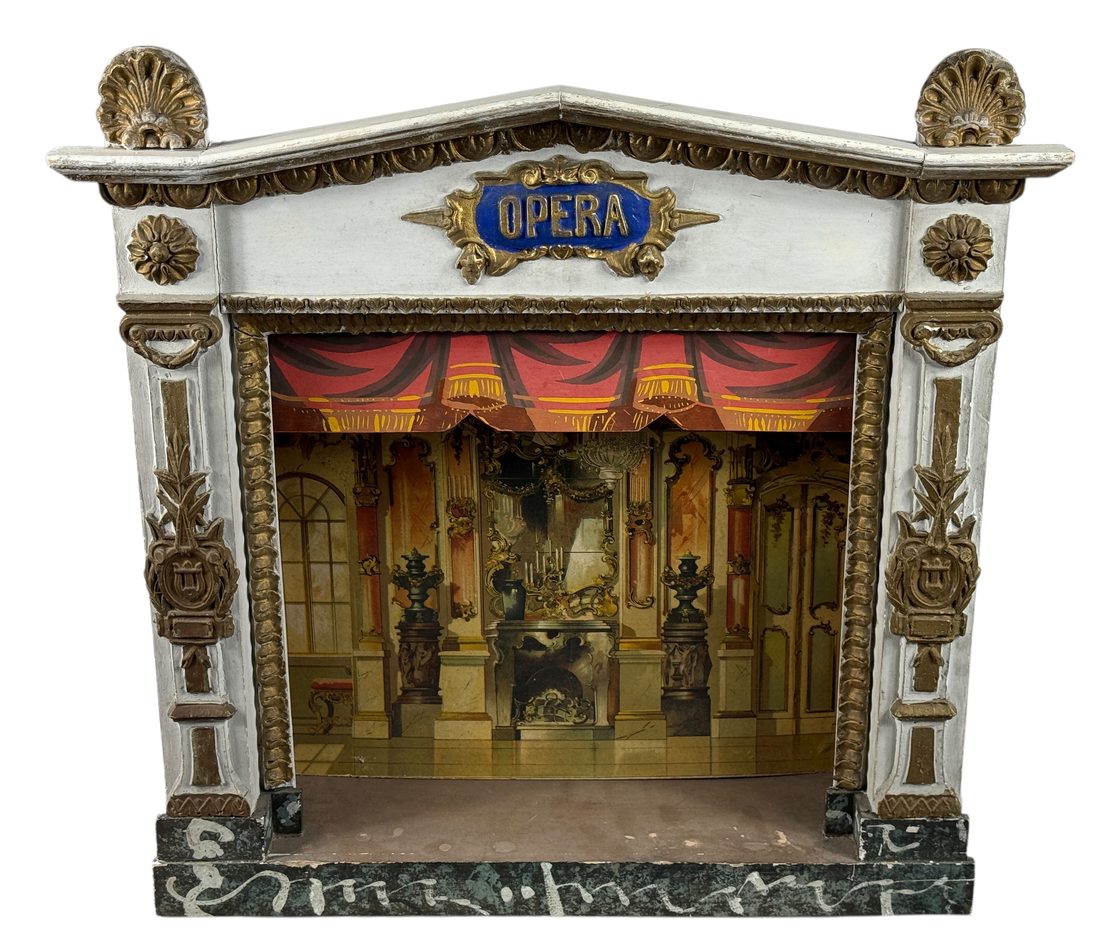
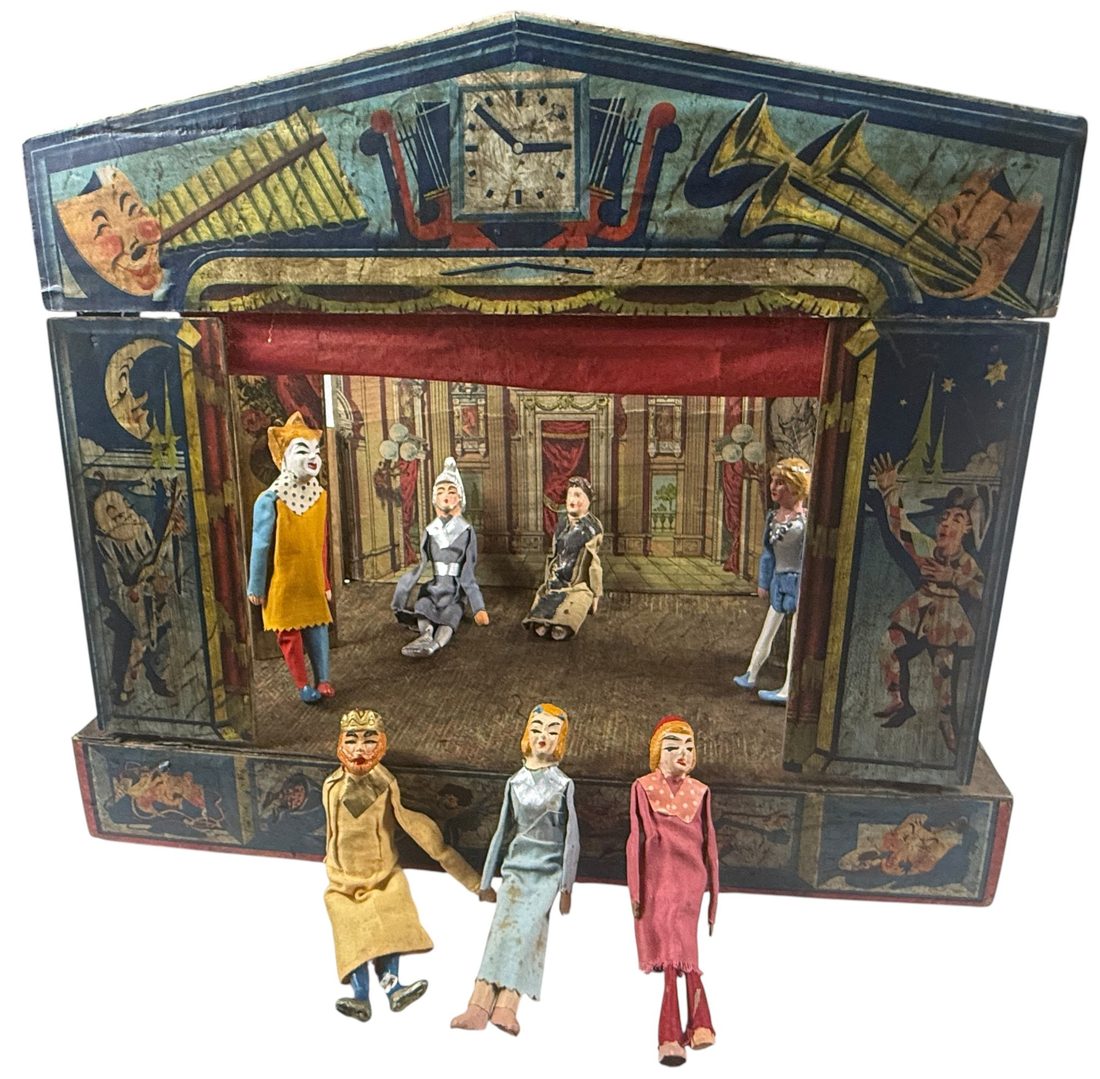
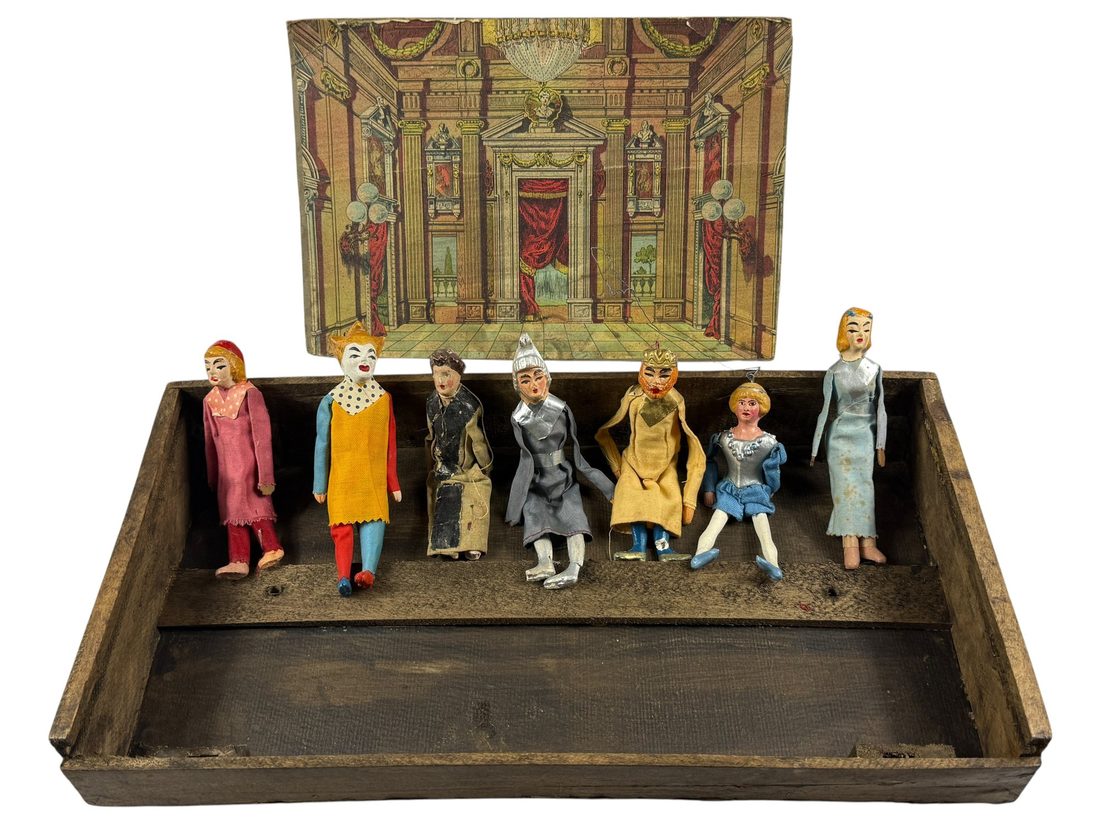
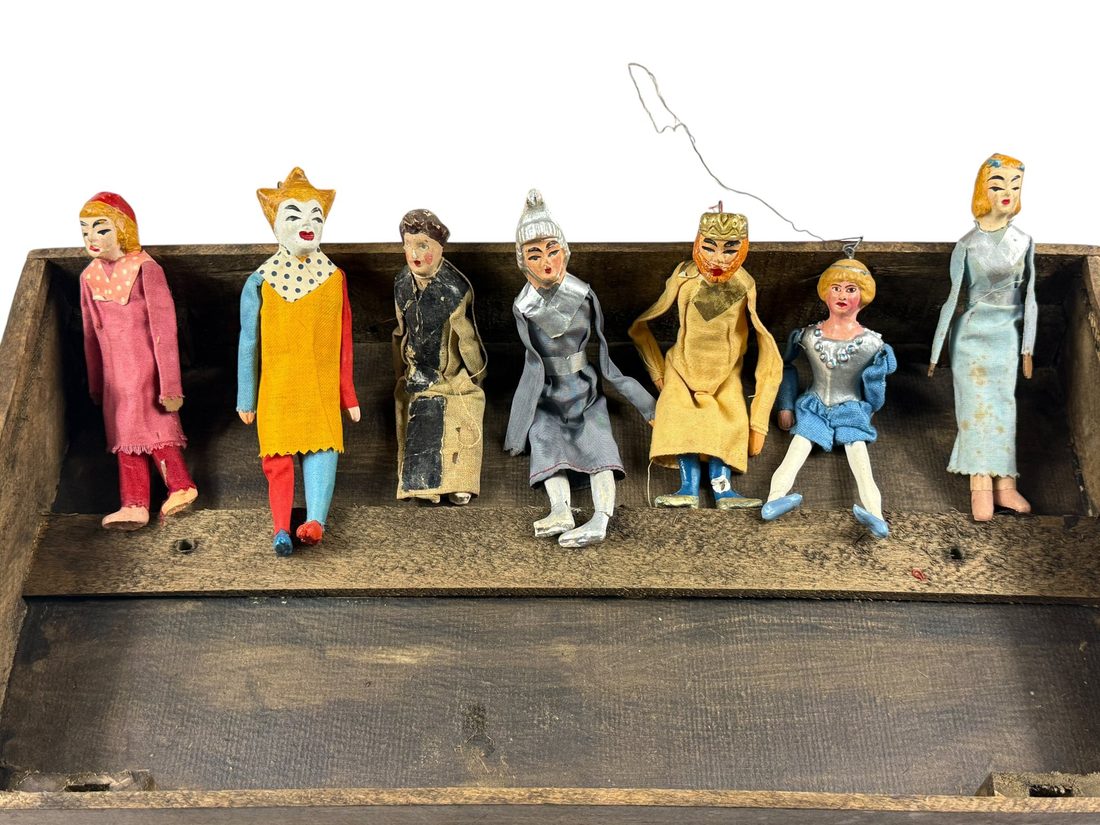
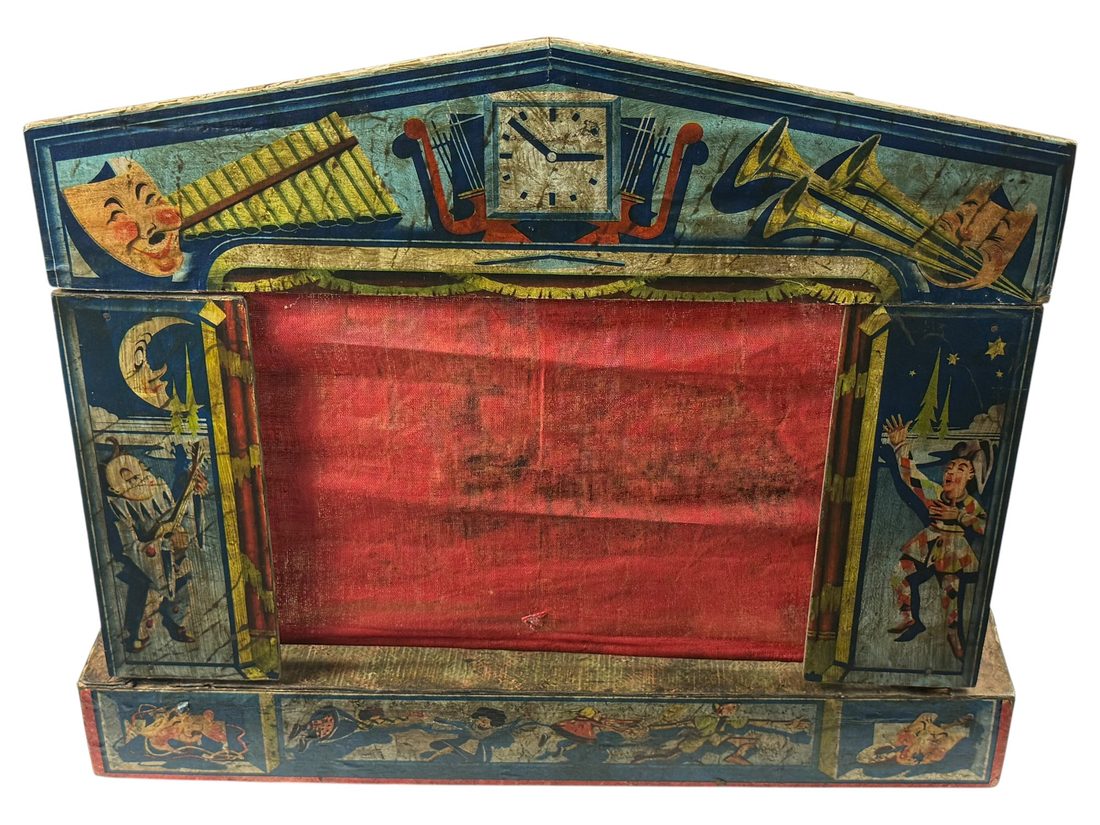
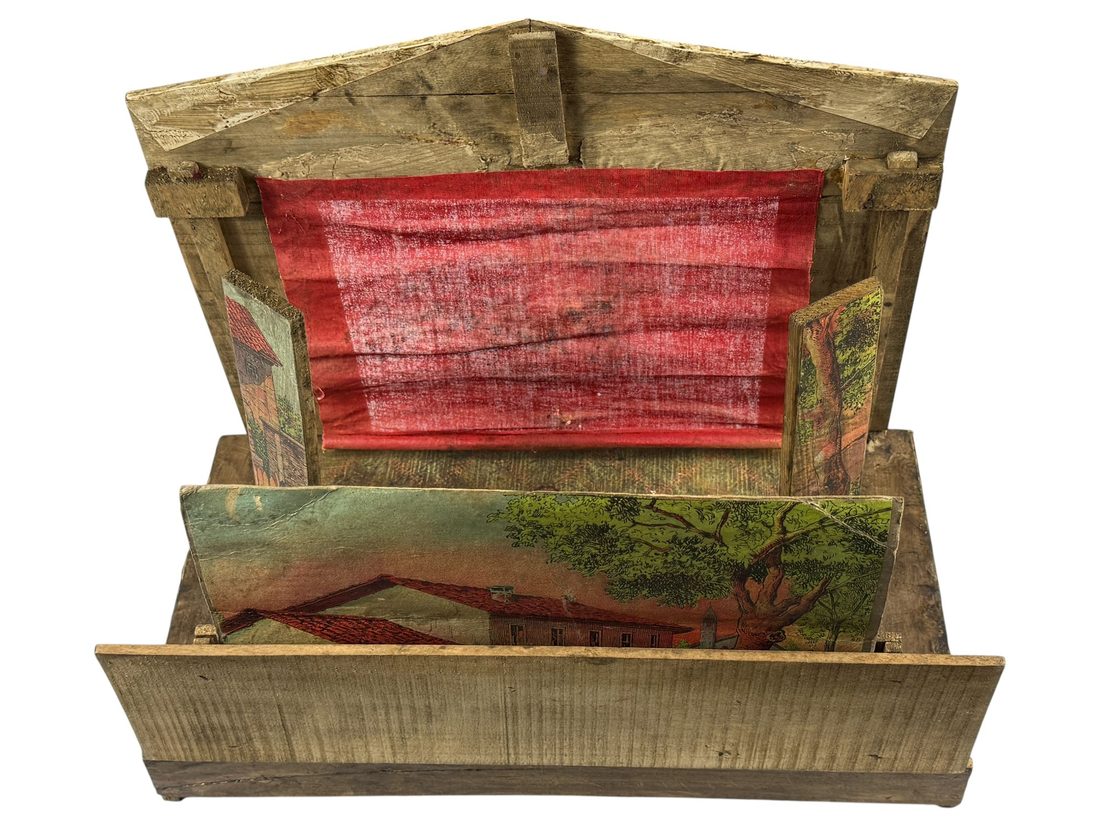
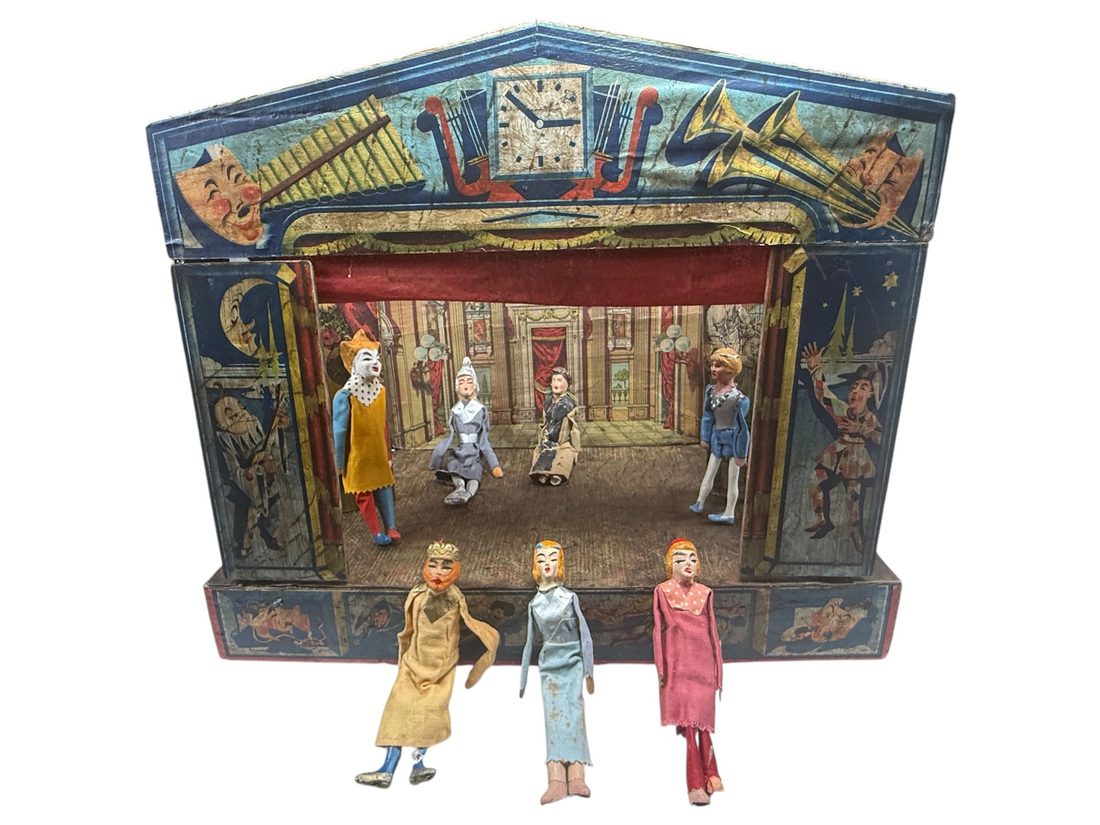
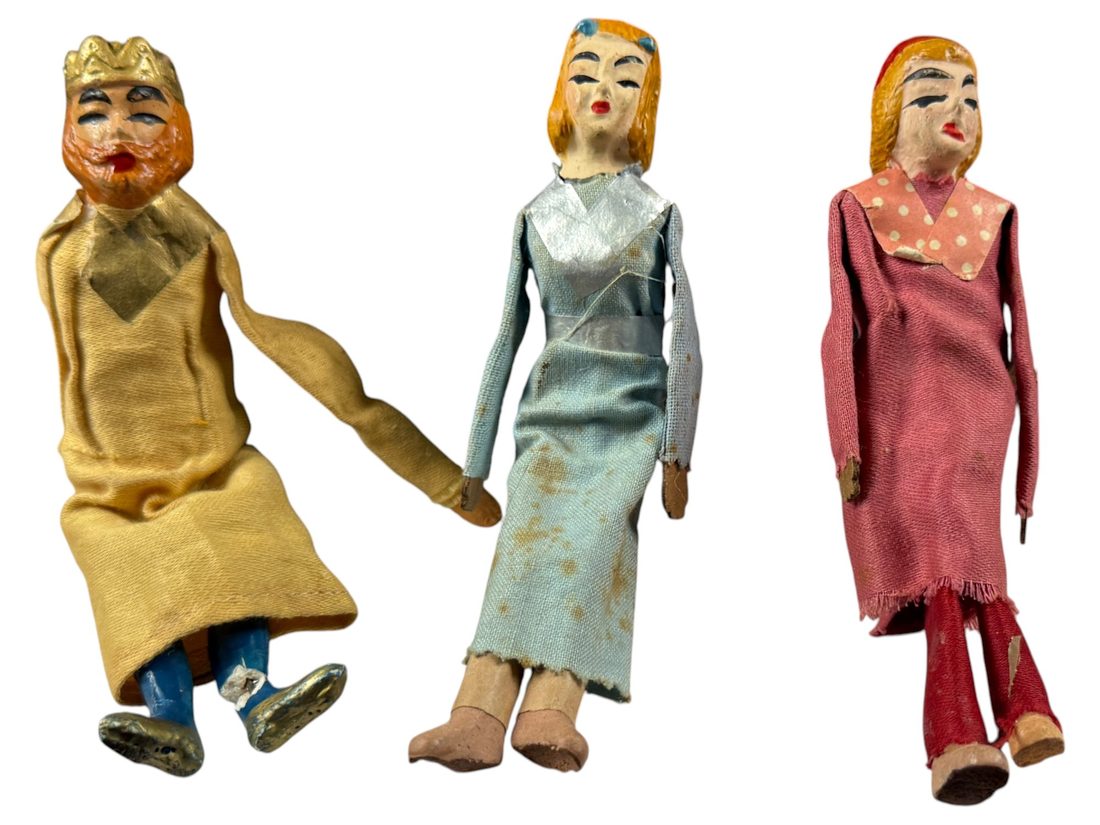
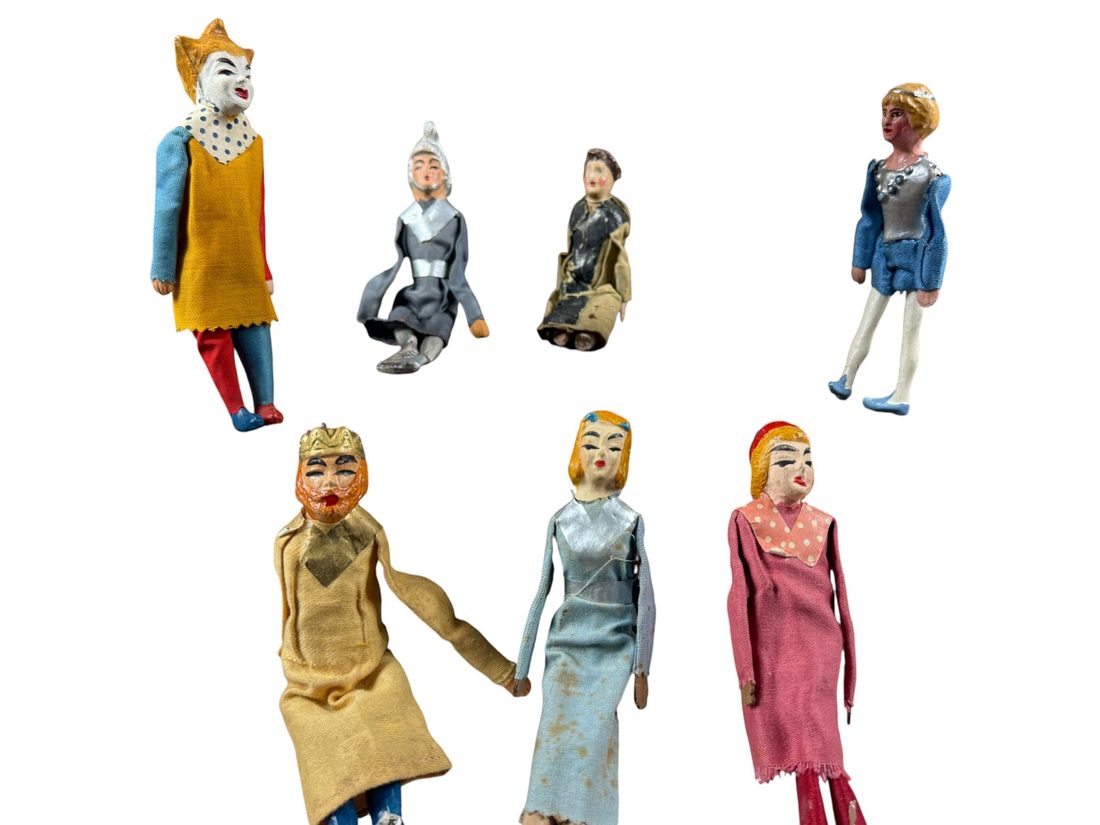
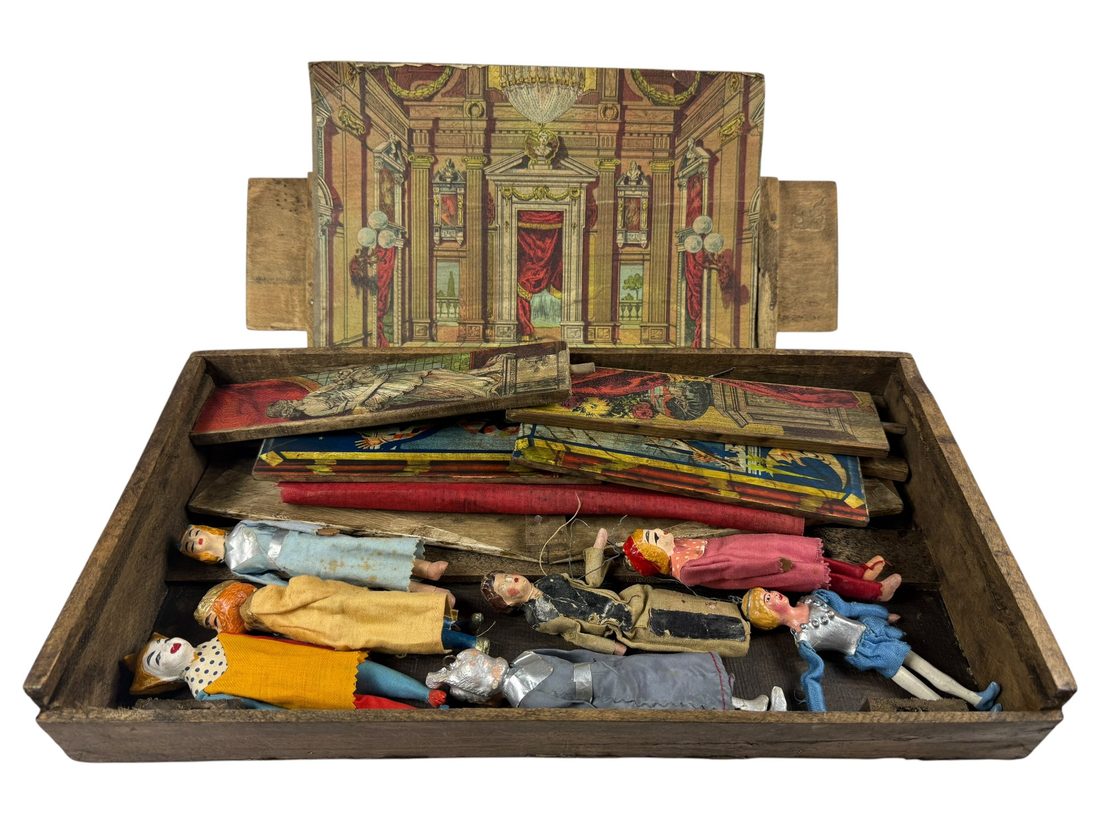
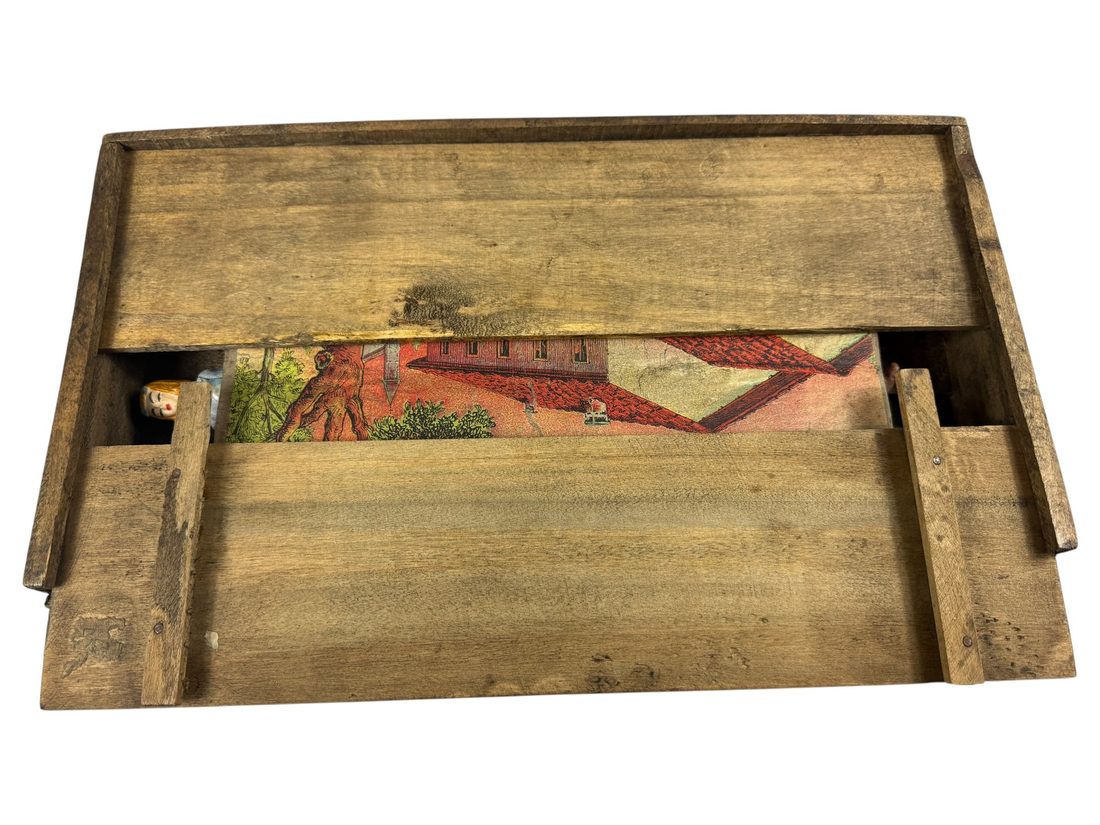
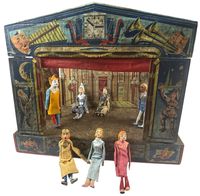
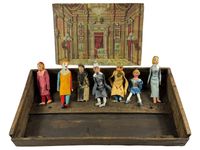
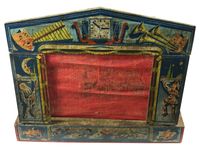
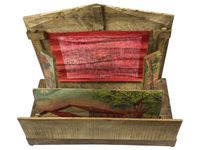
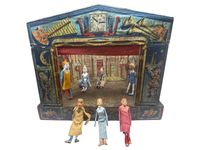
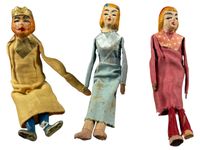
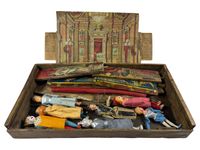
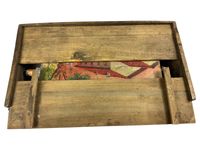
An assembled folding wooden table theatre (42 × 35 × 22 cm), comprising a hand-painted proscenium façade with triangular pediment and an original red stage curtain; the carcase of nailed and slot-jointed softwood, contrived to dismantle so that the side walls, wings, and backcloths withdraw into the compartment beneath the stage floor and the whole packs into its own base for transport. Behind the façade the stage is closed by interchangeable scenery: two chromolithographed backdrops mounted on thin wood, a Baroque palace hall and a red-roofed villa with garden, with their lateral wings, the backcloth and wings reversing to furnish either an interior or an exterior scene. Seven string-operated marionettes (each circa 12 to 16 cm high), costumed in period textiles, the heads, hands, and feet hand-modelled in painted terracotta; the figures depict a crowned king, a lady, a young prince or page, a knight, a court jester, a female clown or Pierrette, and an old man. No maker's mark.
The hand-painted proscenium is the principal decorative field of the object. Faced with paper or canvas laid over the wood and painted in tempera, in flat opaque fields of frankly popular character, it carries on the pediment comic masks, a grinning Pulcinella-type face set against a pan-pipe and a second mask blowing trumpets, together with musical attributes, a syrinx, lyres, and trumpets, and a central clock dial; the lateral uprights show, at the left, an anthropomorphic moon with a nocturnal musician and, at the right, a Harlequin in lozenge motley beneath a starry sky, while the base runs a continuous frieze of small tumbling figures. The interior backcloths, by contrast, are printed: the palace hall is composed with columns, pilasters, statue-filled niches, a chandelier, and a red-draped portal, of a type long codified in toy-theatre scenery, the villa and its garden affording the alternative exterior.
Close inspection of one of the marionettes confirms the terracotta, an opaque granular surface, the warm buff-pink body visible where the paint has flaked, and a dry powdery fracture at the chipped edges, characteristics that exclude porcelain or bisque. The figures, their bodies stuffed and wired and their costumes of faded cotton, linen, and sateen sewn and partly glued, form a fairy-tale and chivalric company rather than a Commedia dell'Arte troupe, the masks of which appear only in the painted decoration: a bearded king in a long ochre robe, a lady in pale blue, a young prince or page in a silvered doublet and blue breeches, a knight in silver-grey with a conical cap, a jester in a yellow tunic with parti-coloured hose, a female clown or Pierrette in rose, and a dark, stooping old man in black and coarse cloth.
This is a complete and unusually well-preserved North Italian portable marionette theatre of the late nineteenth or early twentieth century, surviving with its full company of seven hand-modelled terracotta figures, their original costumes, the red curtain, and two reversible chromolithographed scenes. Fragile assemblies of soft wood, paper, cloth, and painted terracotta, such domestic and itinerant puppet theatres were heavily handled and seldom survive entire; the completeness of the present ensemble, uniting a hand-painted Commedia dell'Arte proscenium with a printed Baroque hall and garden, makes it a vivid witness to popular theatrical culture and to the turn-of-the-century passage from pure handcraft to mixed production with industrial printed scenery.
In performance, the erected proscenium framed a shallow stage closed at the rear by one of the printed backcloths and flanked by perspectival wings; the operator worked from behind, lowering the figures and animating them from above by their strings, the weighted terracotta hands and feet letting them hang and swing convincingly, while the red curtain marked the opening and close of the action. The repertoire was that of the popular marionette stage for children and families, fairy tales, stories of kings and princes, chivalric and melodramatic episodes, and short farces, for which the assembled cast of sovereign, lady, prince, knight, jester, clown, and old man is precisely the personnel; the Commedia dell'Arte masks appear only in the painted decoration of the façade. The two interchangeable scenes let a single stage mount both palace and outdoor episodes, and the object's interest lies in this layering of registers, a hand-painted allegory of theatre and music in front, a printed illusion of depth within, and the modelled, costumed figures moving across both.
The object descends from one of the richest European traditions of figure theatre. Venice had been a leading centre of marionette performance since the seventeenth century, the first documented use of wooden figures in a Venetian musical spectacle dating to 1679 at the Teatro San Moisè; in the eighteenth century patrician families commissioned sumptuous private theatres, among them those of Ca' Labia, the Contarini di San Barnaba, the Loredan di San Vio, and the Grimani ai Servi, while the popular tradition flourished at Carnival and at the Fiera della Sensa. The present theatre belongs not to that aristocratic line but to its later, popular descendant, the artisanal marionette stage made for children and family entertainment around 1900, in which home-made stages and modelled figures were combined with commercially printed scenery.
It thus belongs to the broad European family of the parlour and toy theatre, which flourished across the nineteenth century under many names, Toy or Juvenile Theatre in England, Papiertheater in Germany, teatrino di carta in Italy, and théâtre enfantin in France, prized by the bourgeoisie for intimate domestic performance and valued as an instructive introduction of children to theatre and opera. Within that family the present example stands on the more ambitious, three-dimensional side, offering not flat printed cut-outs but modelled and costumed string-marionettes on a carpentered stage, closer in conception to the French parlour Opéra theatres of about 1880 than to the penny-plain paper stage.
The decades around 1880 to 1910 were a transitional moment in which such marionette productions were progressively refined toward a more sophisticated domestic art, and in which the union of a hand-painted front with industrially printed backcloths records, in miniature, the same passage from handcraft to mechanical print that transformed popular imagery across Europe. As a surviving complete ensemble, the theatre is also a primary document for the iconography of the Commedia dell'Arte and of popular performance carried into the domestic interior.
No maker's mark, label, or catalogue number appears on any part of the theatre, including the underside and the back, and no single manufacturer can be named. The object is the work of several hands and trades: the joiner who built the folding case and proscenium; the popular decorator who painted the façade and pediment; the modeller who formed and painted the terracotta heads, hands, and feet; the seamstress who made the costumes; and the lithographic firm whose printed sheets supplied the interchangeable backdrops. This distributed mode of production is characteristic of the artisanal Italian figure theatre between the late nineteenth and early twentieth centuries, in which family workshops of marionettists built their own stages while purchasing commercial printed scenery. The northern Italian centres of the tradition include Turin, whose permanent mid-nineteenth-century theatres, such as the San Martiniano, are documented by the painted backdrops now in Palazzo Madama; Milan and Lombardy, with the Colla dynasty; the Veneto; and Emilia. Attribution of this particular example to a specific workshop cannot be documented and rests on stylistic inference; the designation Venetian should accordingly be read as a description of taste, not of certified origin.
Conditions: Overall in good and stable condition for its age and use, and complete in its essential parts. The hand-painted façade shows widespread wear, abrasion, and losses of colour; the red curtain is faded and stained; the chromolithographed backdrops bear small losses and creasing. The seven terracotta figures retain their original costumes, themselves variously faded, soiled, and frayed. The declared damage is confined to the figures: one marionette lacks a hand and two feet, and a further foot is chipped, minor losses that do not compromise the completeness or legibility of the ensemble. The wooden case is sound, with the original mortises, joints, and stage-floor perforations intact. The description of “excellent condition” advanced at sale is more accurately rendered as good, used, and complete condition for the age of the object.
Provenance: By tradition the theatre was used for children's performances through both World Wars and remained in service until the 1970s, when it passed into private antiquarian keeping. This account is an unverified oral tradition, recorded here without independent weight; no earlier ownership or collection history is known.
References: G. Speaight, The History of the English Toy Theatre, London: Studio Vista, 1969; J. McCormick and B. Pratasik, Popular Puppet Theatre in Europe, 1800 to 1914, Cambridge: Cambridge University Press, 1998; H. Jurkowski, A History of European Puppetry, Lewiston: Edwin Mellen Press, 1996; A. R. Philpott, Dictionary of Puppetry, London: Macdonald, 1969; C. Cariati, The Play's the Thing: A History of Toy Theater in Three Acts, online resource.