Trattato del Moto e della Misura delle Acque Correnti e dei Getti delle Medesime
| Macro-category | Rare Books and Manuscripts |
| Subcategory | Science |
| Author | VARIGNON, PIERRE |
| Place of printing | Bologna |
| Publisher / Maker | Lelio Dalla Volpe |
| Year | 1736 |
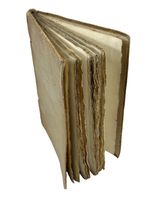
First Edition in Italian – uncut
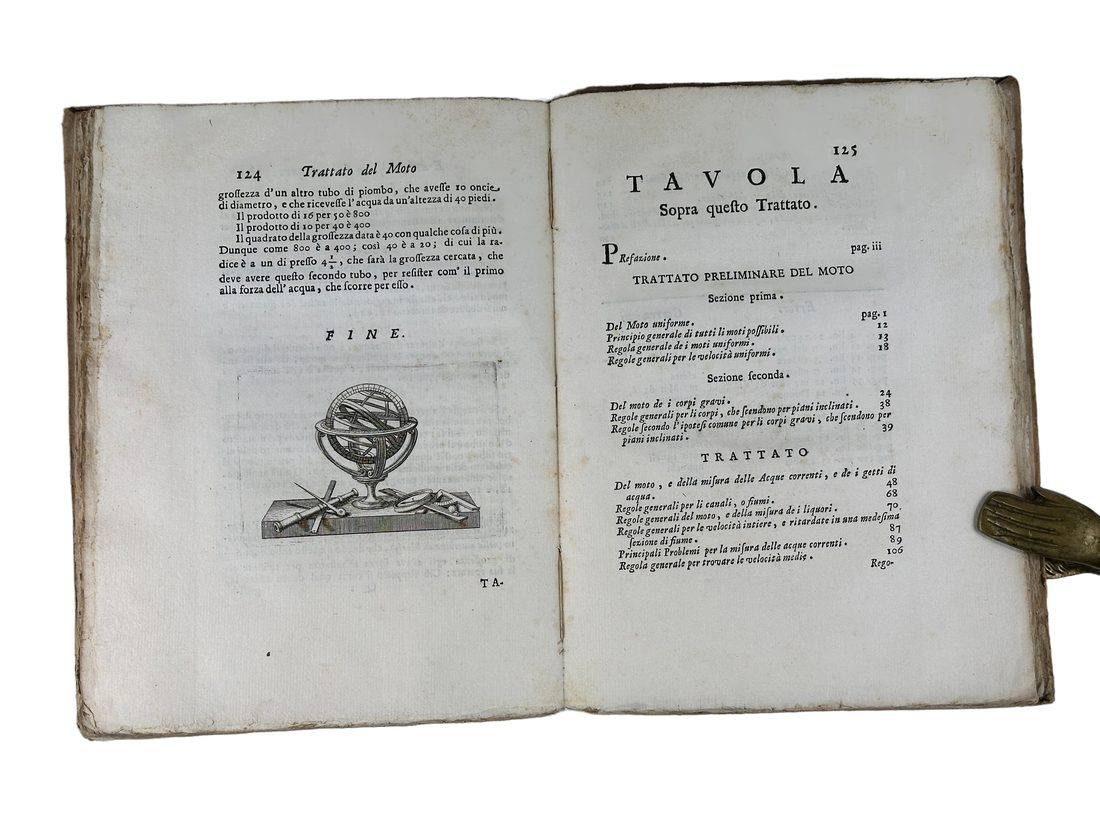
The principles of motion applied to flow of current water
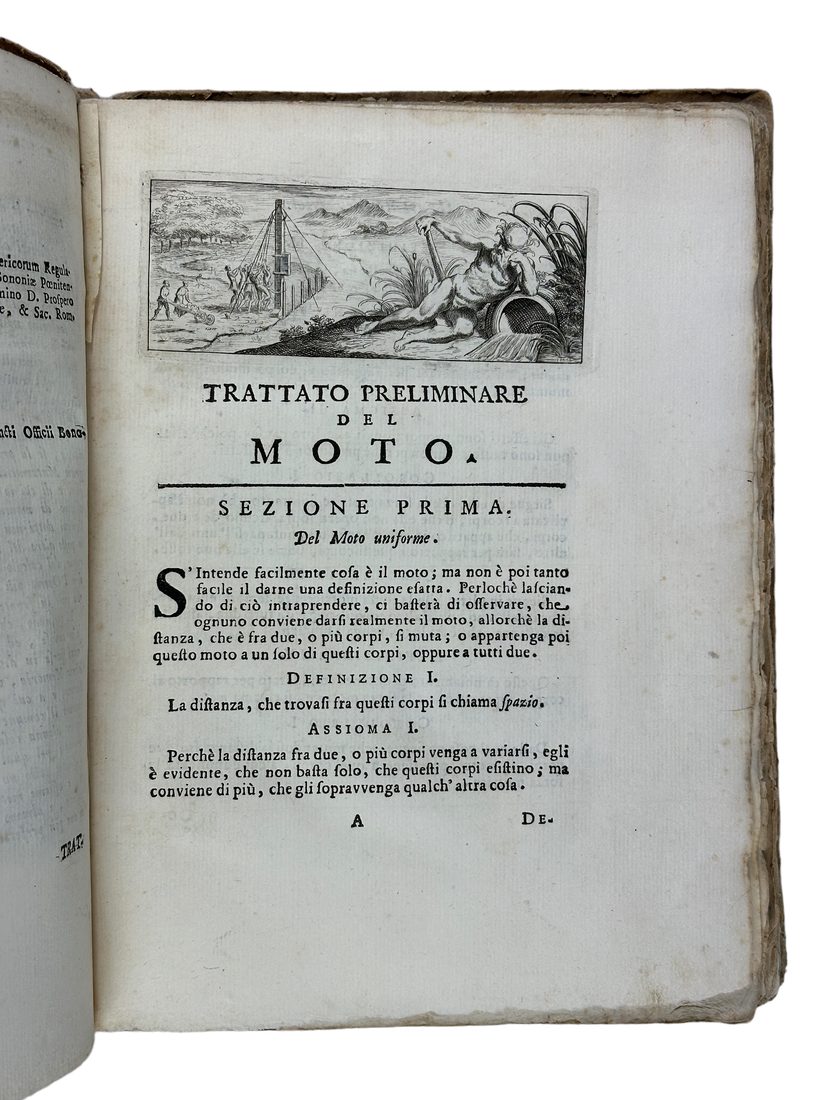
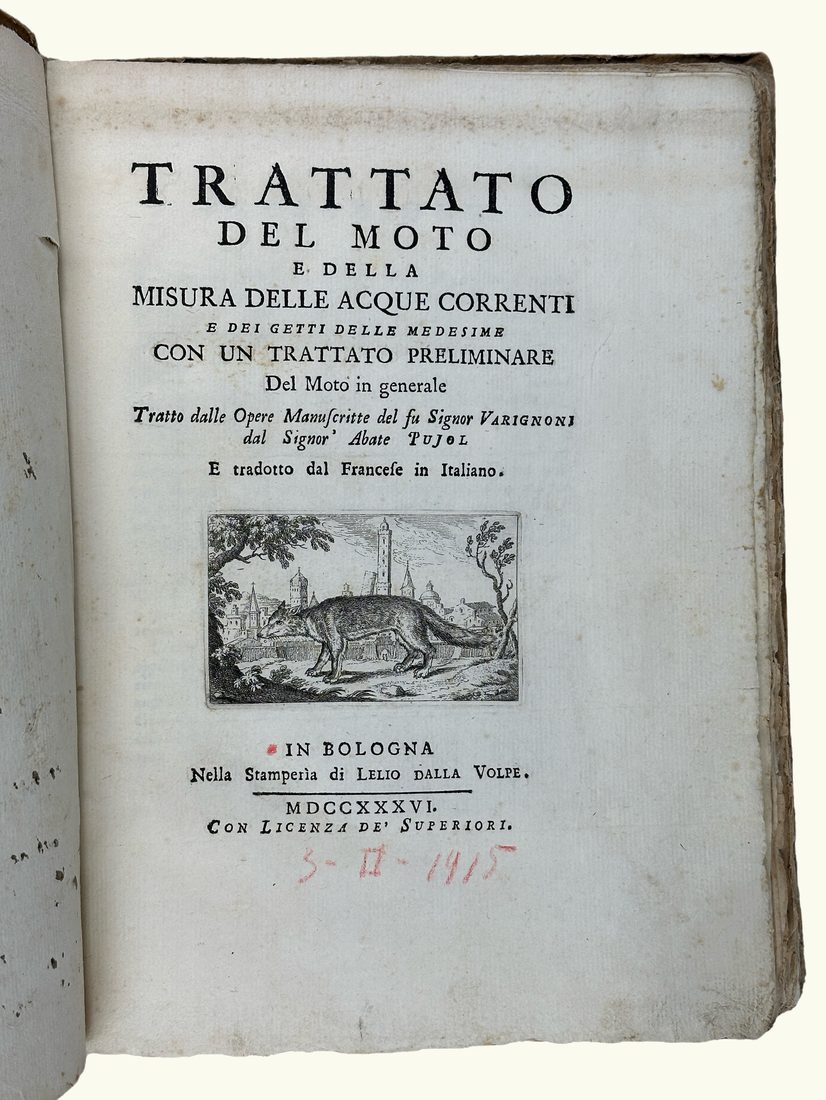
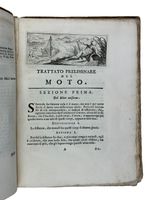
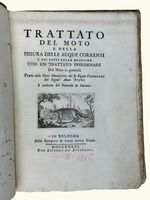
Varignon, Pierre. Trattato del moto e della misura delle acque correnti e dei getti delle medesime con un trattato preliminare del moto in generale tratto dalle opere manuscritte del fu signor Varignoni dal signor' abate Pujol e tradotto dal francese in italiano. In Bologna : nella stamperia di Lelio Dalla Volpe, 1736.
[bound with]
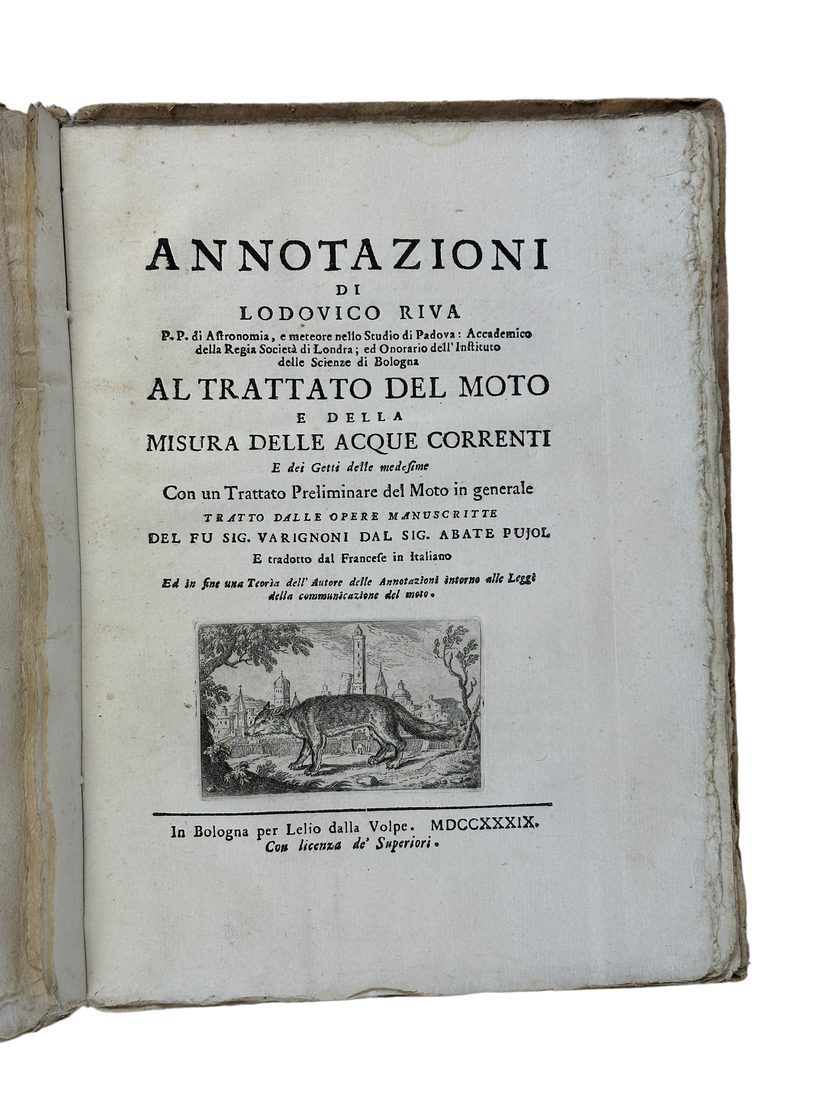
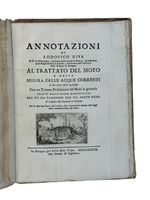
Riva, Lodovico. Annotazioni di Lodovico Riva ... al trattato del moto e della misura delle acque correnti e dei getti delle medesime. Con un trattatto preliminare del moto in generale tratto dalle opere manuscritte del fu sig. Varignoni dal sig. Abate Pujol e tradotto dal francese in italiano ed in fine una teorìa dell'Autore delle annotazioni intorno alle leggi della comunicazione del moto. In Bologna : per Lelio dalla Volpe, 1739.
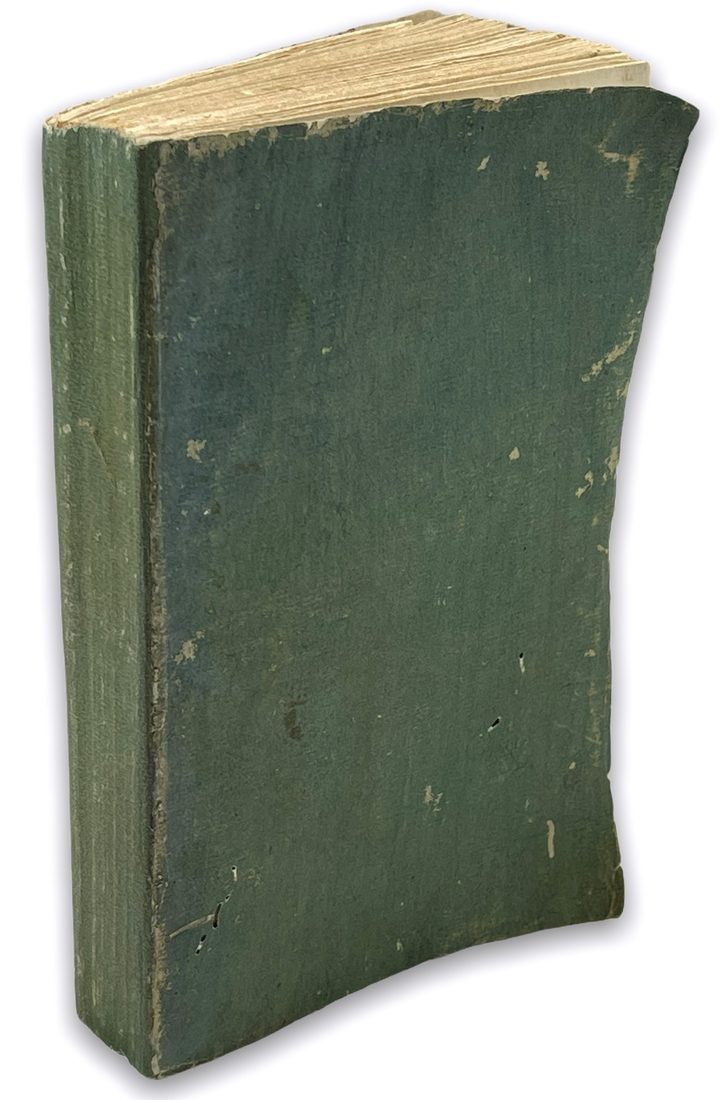
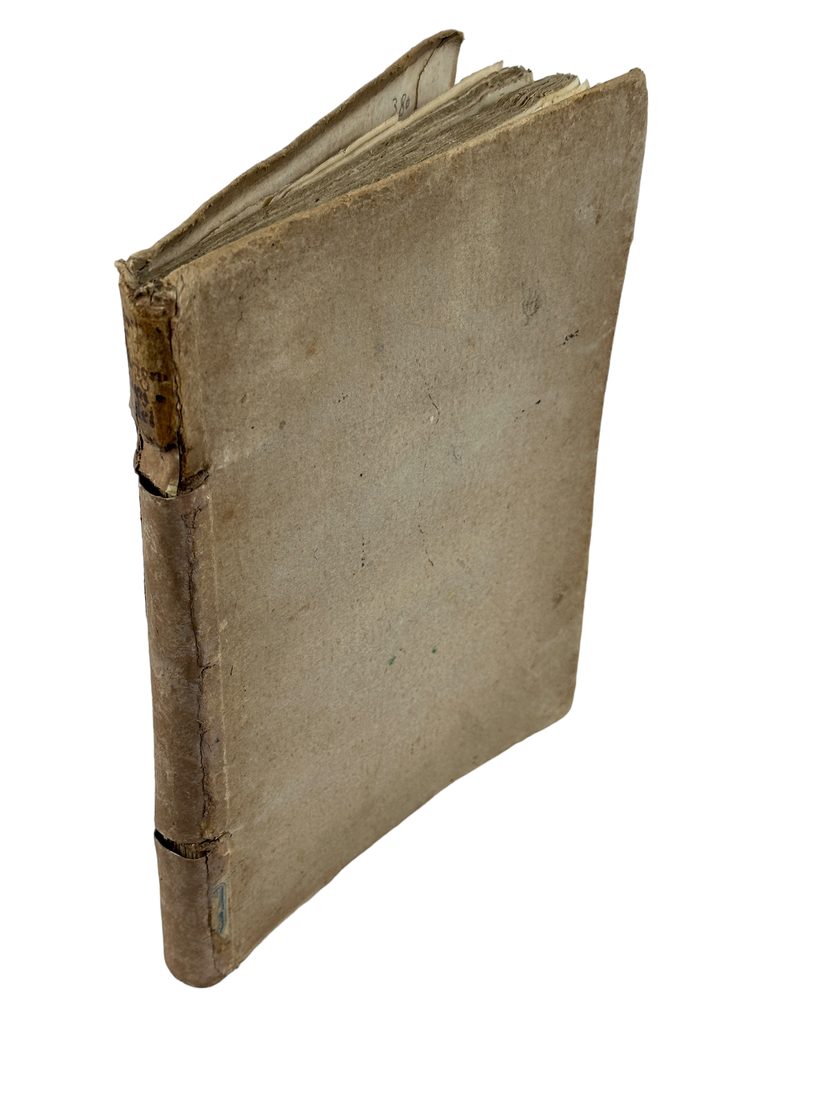
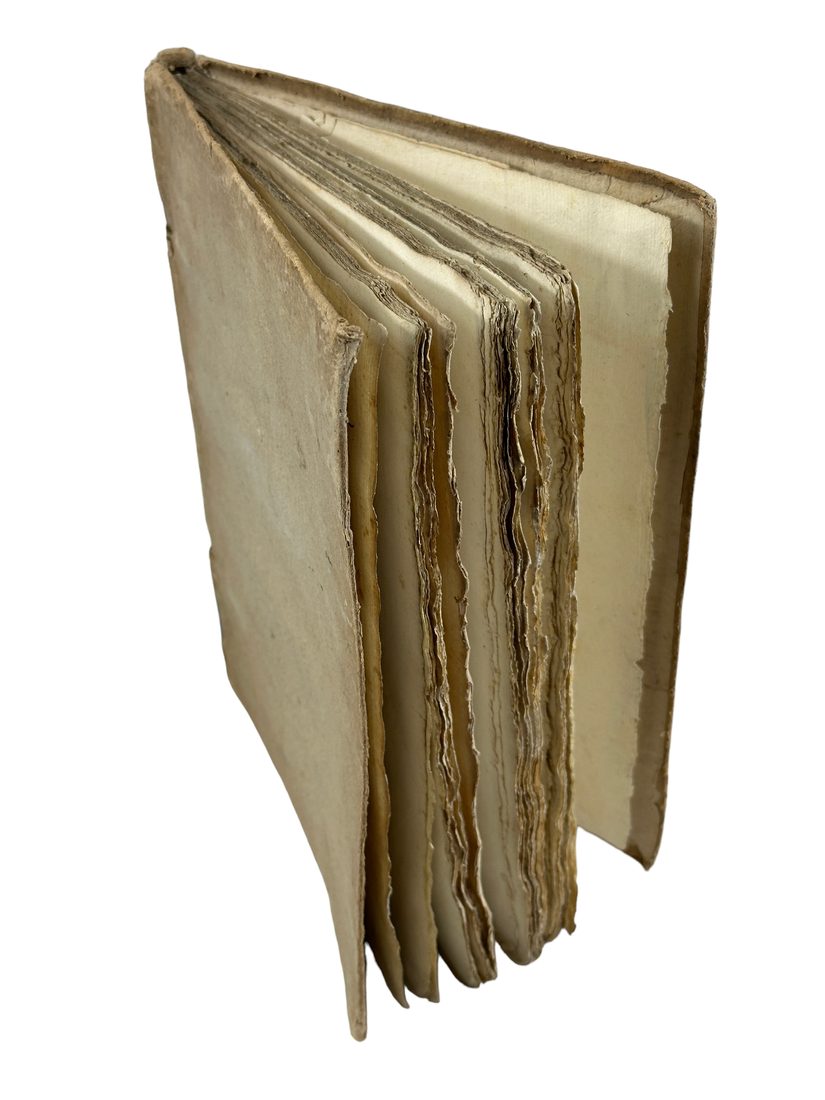
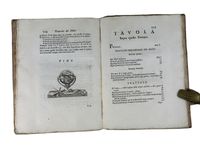
4° (26,5 x 20 cm), original printer cardboard, pp. vii, [1], 126, [2-blank], signature: a4 A-Q4 for part I, pp. [12], 35, [1], signature :a⁶, A-C⁴D⁶, for part II; unregistered printer device (a fox with a view of Bologna in the background) at the title page.
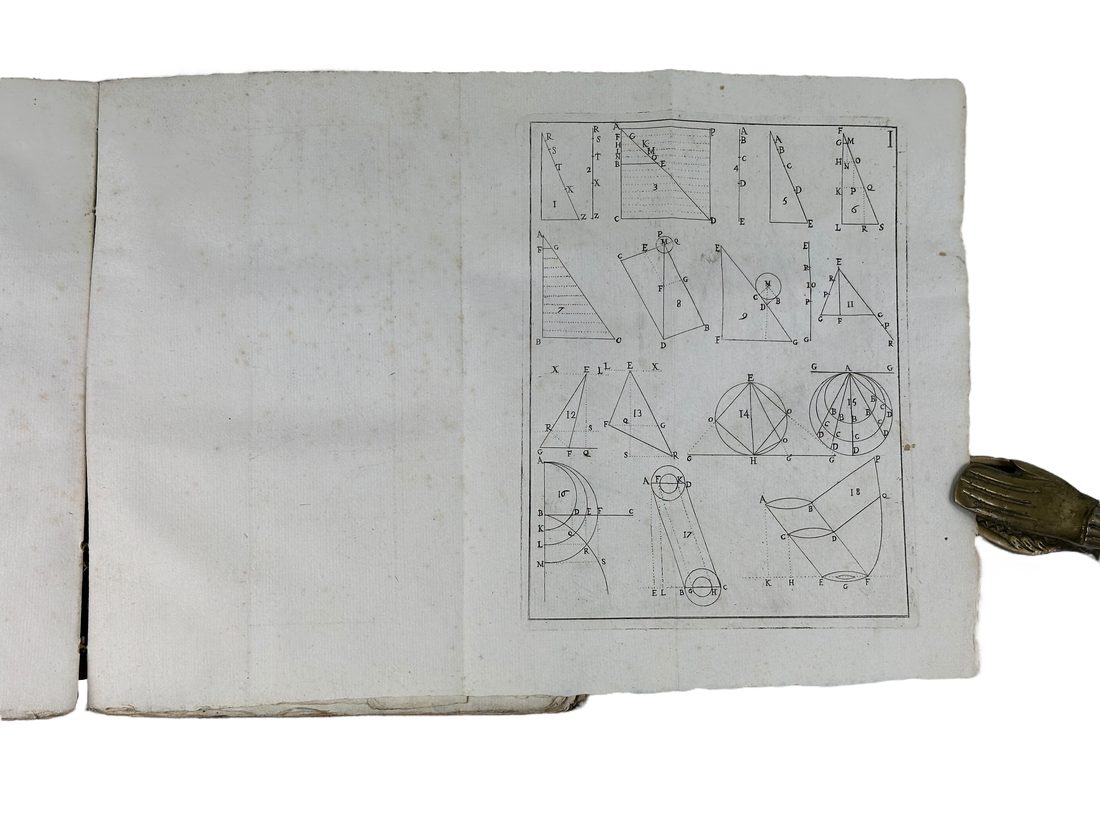
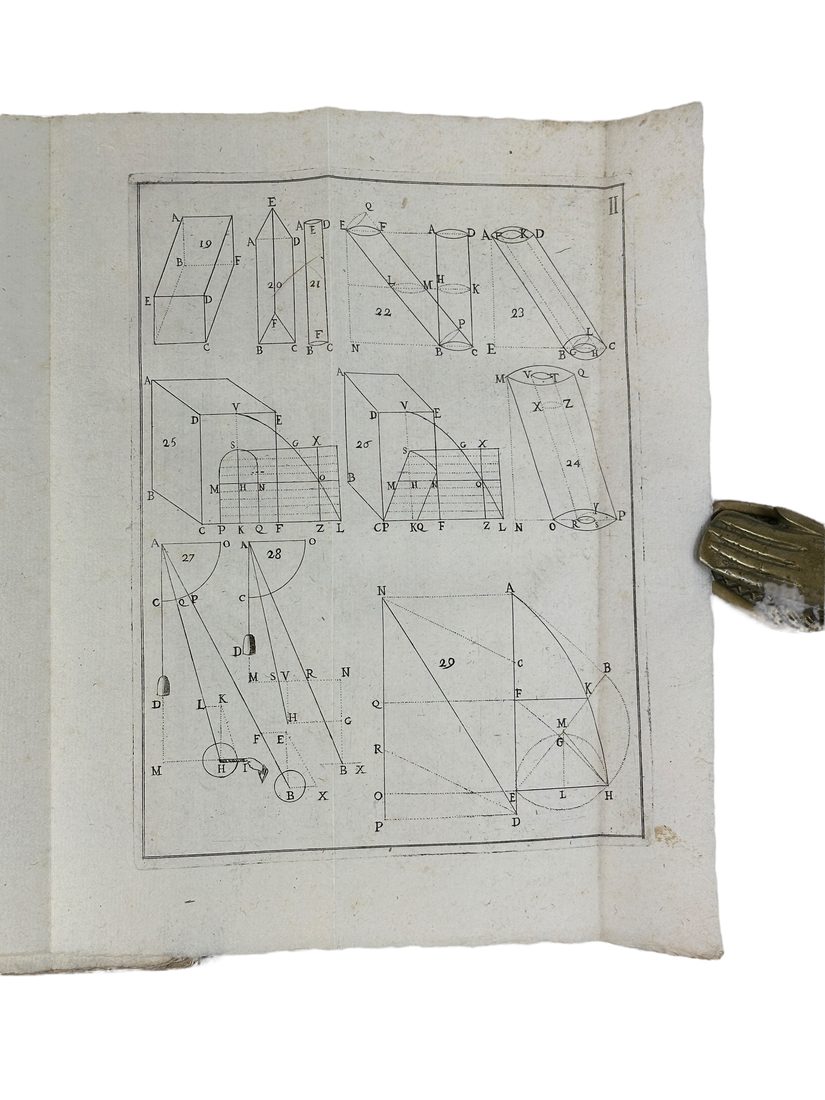
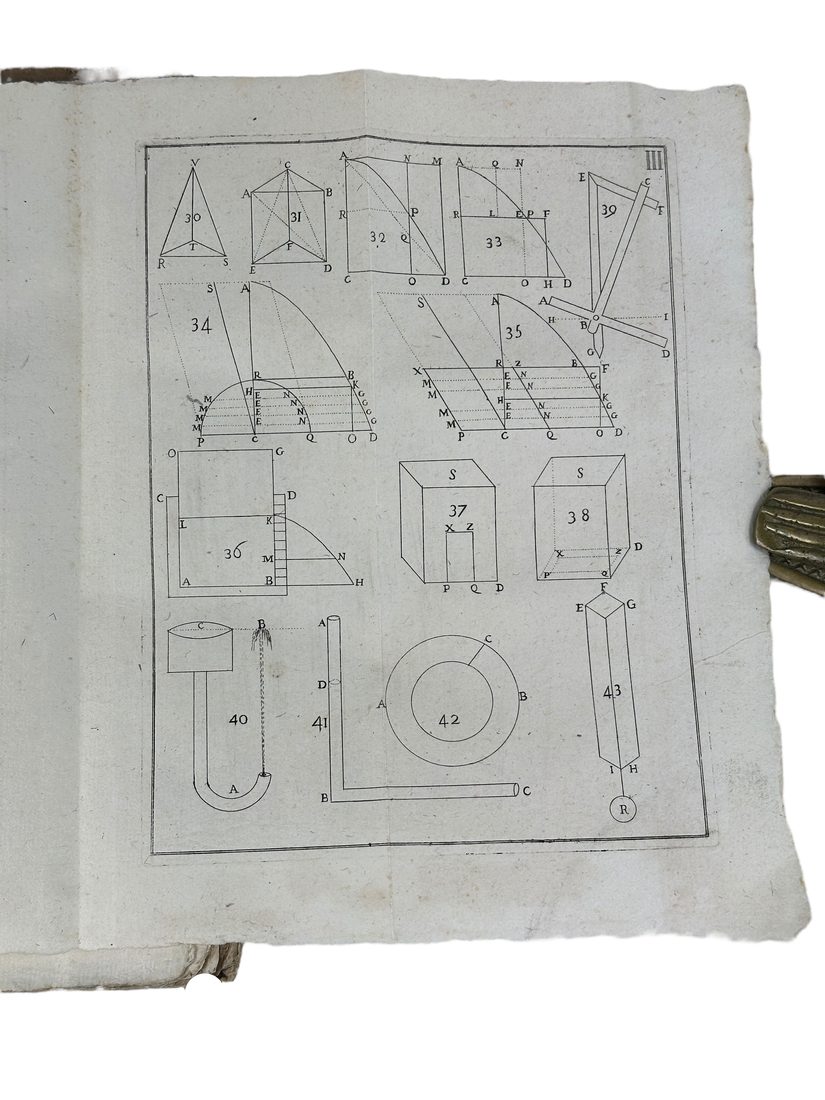
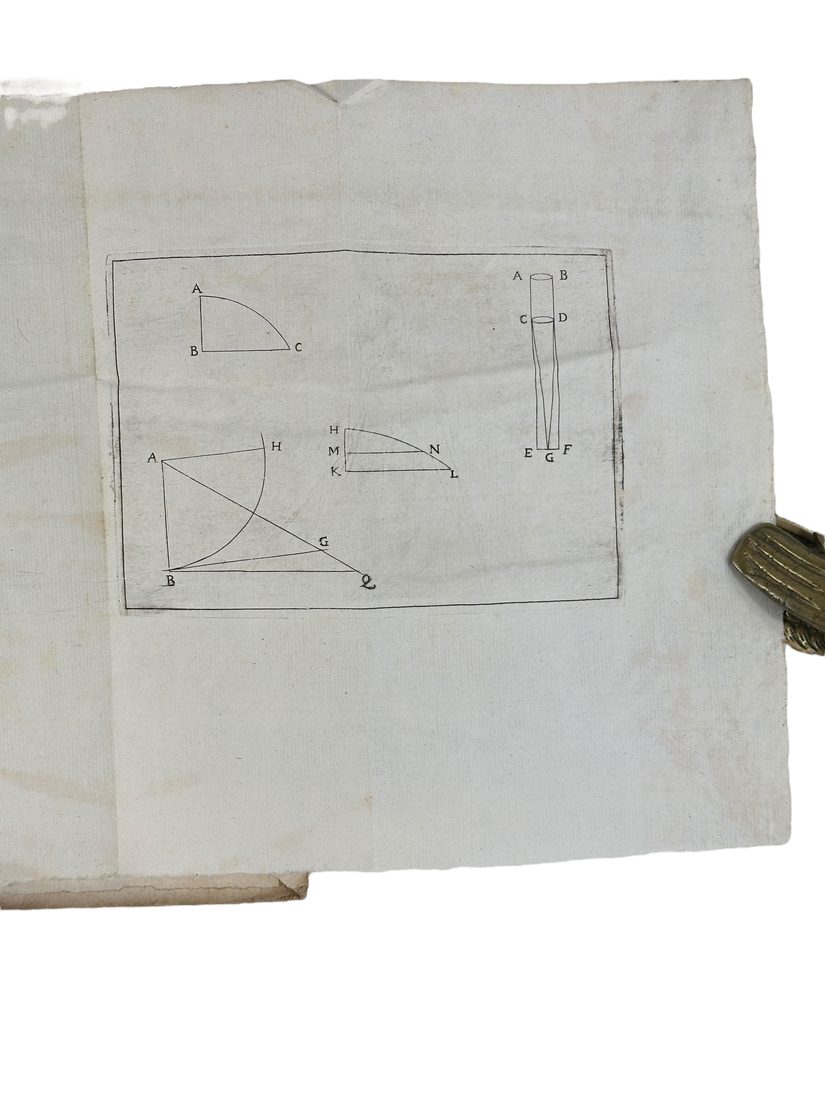
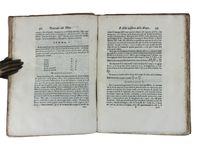
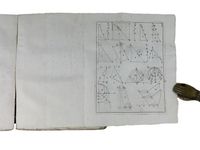
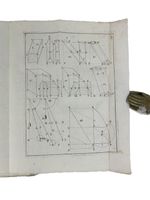
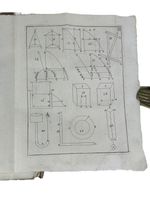
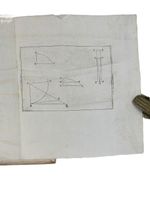
4 folding plates, 3 in vol I, 1 in vol II
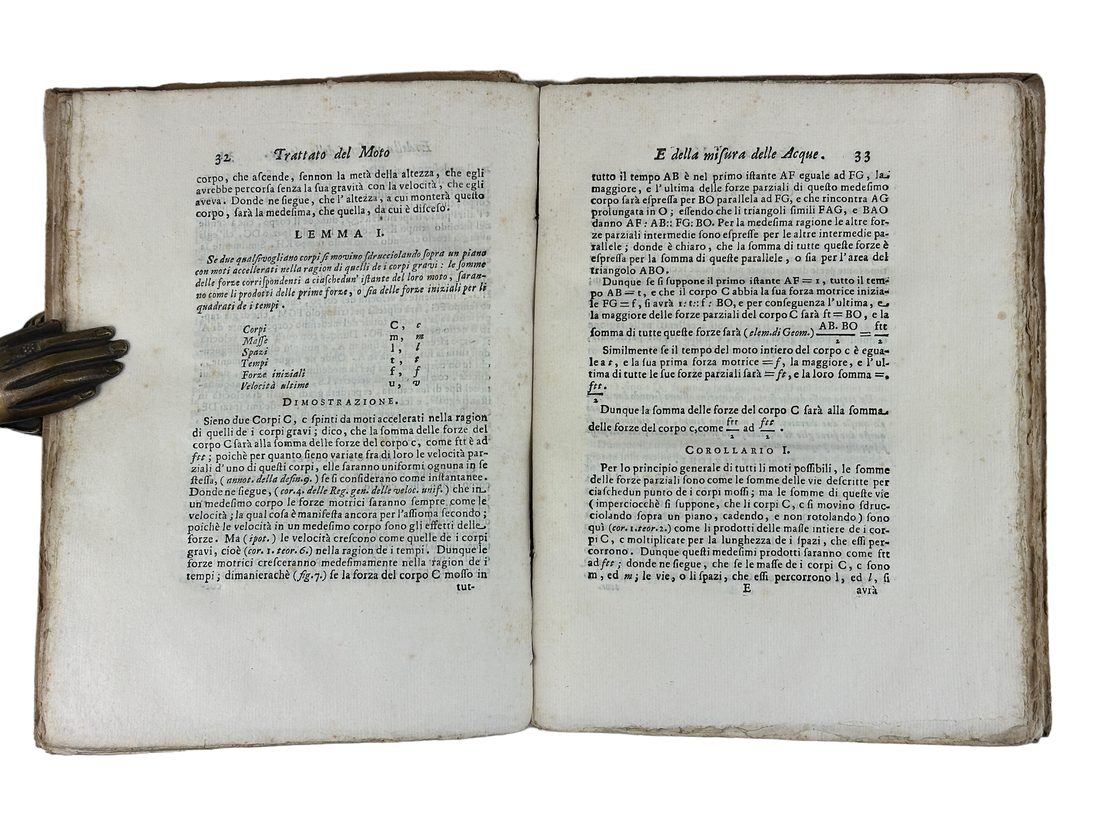
In the first part of the first treatise, Varignon explores the basic principles of motion referring to Galilean theories and starting from uniform motion. He then moves on to the motion on inclined planes and the related geometric calculations, applying, in the second part, these principles to the motion of water.
In particular, Varignon addresses:
the motion of running waters, the rules of motion in canals and rivers, the measurement of liquids, the measurement of the motion of running waters and the average speed, the way of measuring currents, the motion of water falling from great heights, and the main metrics for measuring flows in pipes.
The second work contains the annotations of the Italian scientist Lodovico Riva (1698-1746) on Varignon’s work.
Pierre Varignon (1654-1722) was a French mathematician renowned for his contributions to calculus and mechanics. Born in Caen, Normandy, he pursued theological studies before developing a deep interest in mathematics. Varignon's career flourished after moving to Paris, where he was influenced by the works of René Descartes and Blaise Pascal.
A significant advocate for the differential calculus methods developed by Gottfried Wilhelm Leibniz, Varignon was instrumental in their promotion and application within France. He was a member of the French Academy of Sciences and also corresponded with many leading scientists of his time, including Leibniz and the Bernoulli family.
Varignon made substantial contributions to the field of statics and the study of forces, particularly through his work on the parallelogram of forces, a fundamental principle in mechanics. He also explored problems in the geometry of infinitesimals and was among the first to apply calculus to physical problems, laying groundwork for future developments in mathematical physics.
Conditions: perfectly preserved, untrimmed.
Provenance: handwritten signature at front fly-leaf.
Bibliography: Riccardi, II, 381.