Scala Grimaldelli libro di aritmetica, e geometria speculatiua
| Macro-category | Rare Books and Manuscripts |
| Subcategory | Science |
| Author | FELICIANO, FRANCESCO |
| Place of printing | Venezia |
| Publisher / Maker | Giacomo Hertz |
| Year | 1669 |
Commerce, Algebra, and Geometry United: A Venetian Edition
of Feliciano’s Foundational Treatise
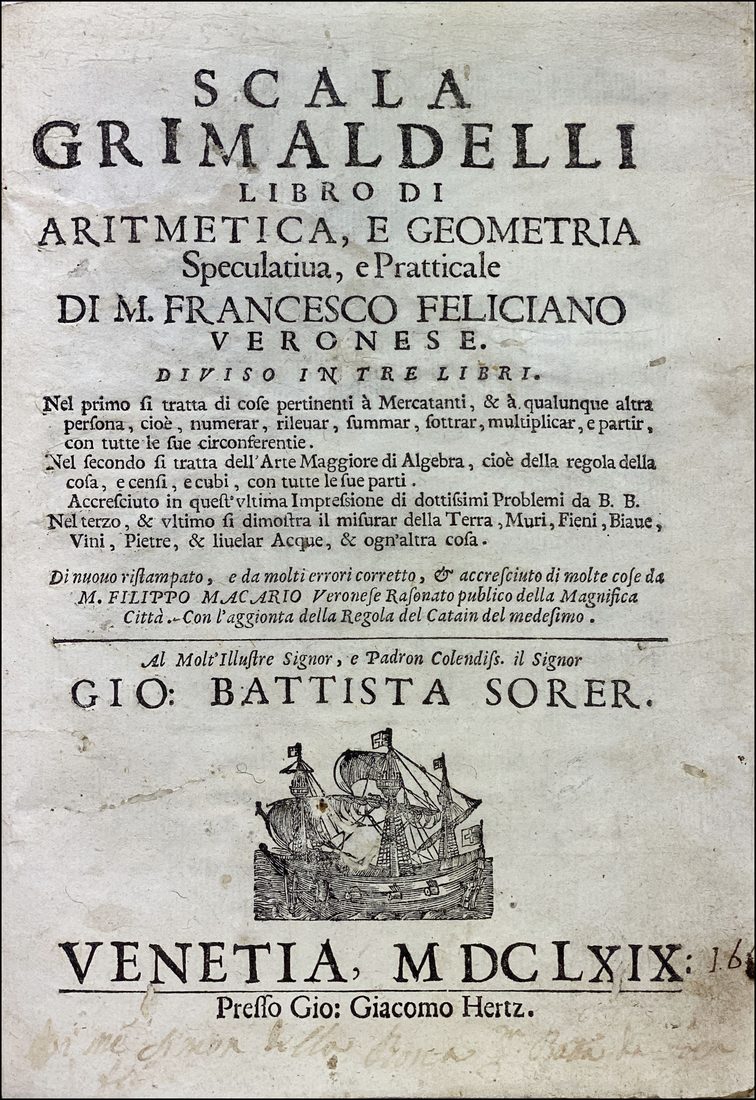
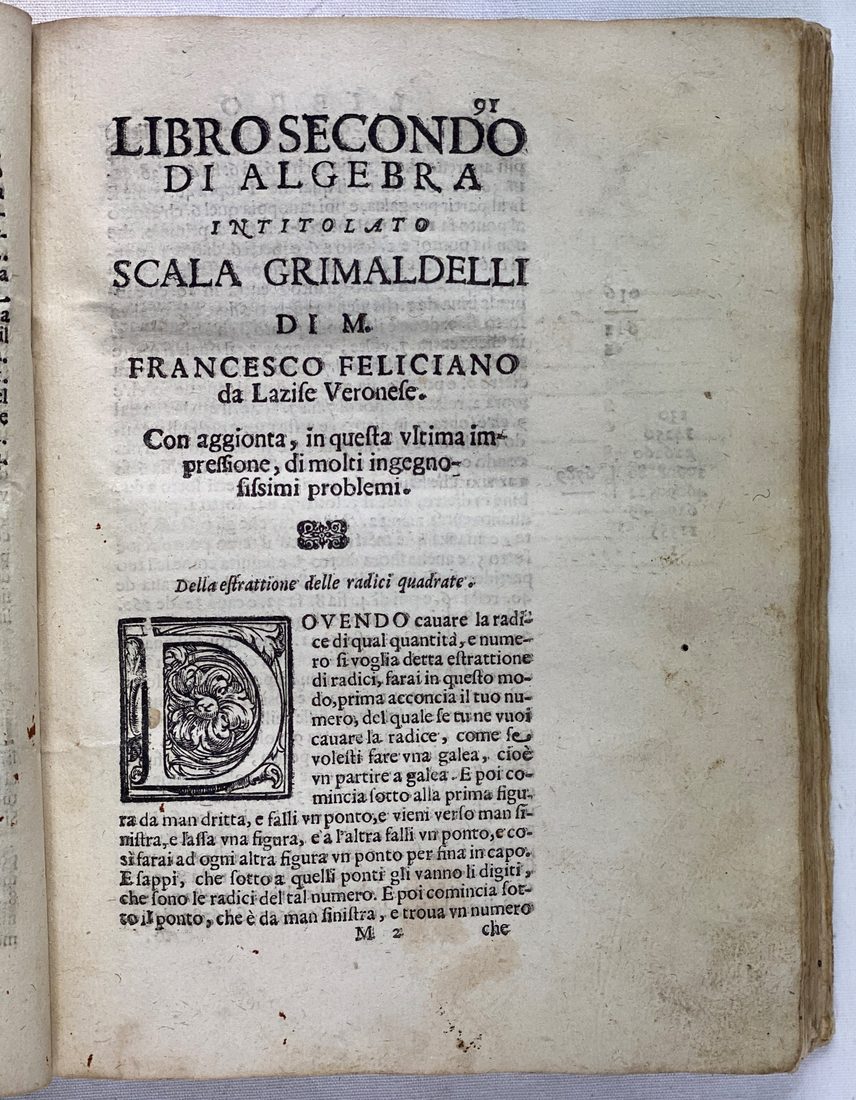
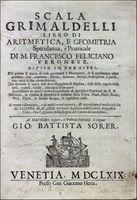
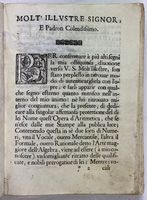
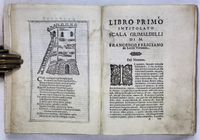
Feliciano, Francesco. Scala Grimaldelli libro di aritmetica, e geometria speculatiua, e pratticale di M. Francesco Feliciano Veronese. Diuiso in tre libri. Nel primo si tratta di cose pertinenti a Mercatanti ... Nel secondo si tratta dell'arte maggiore di algebra ...accresciuto in quest'vltima impressione di dottissimi problemi ... Nel terzo, & vltimo si dimostra il misurar della Terra ... i nuovo ristampato, e da molti errori corretto, e accresciuto di molte cose da M. Filippo Macario Veronese . Venetia : presso Gio. Giacomo Hertz, 1669.
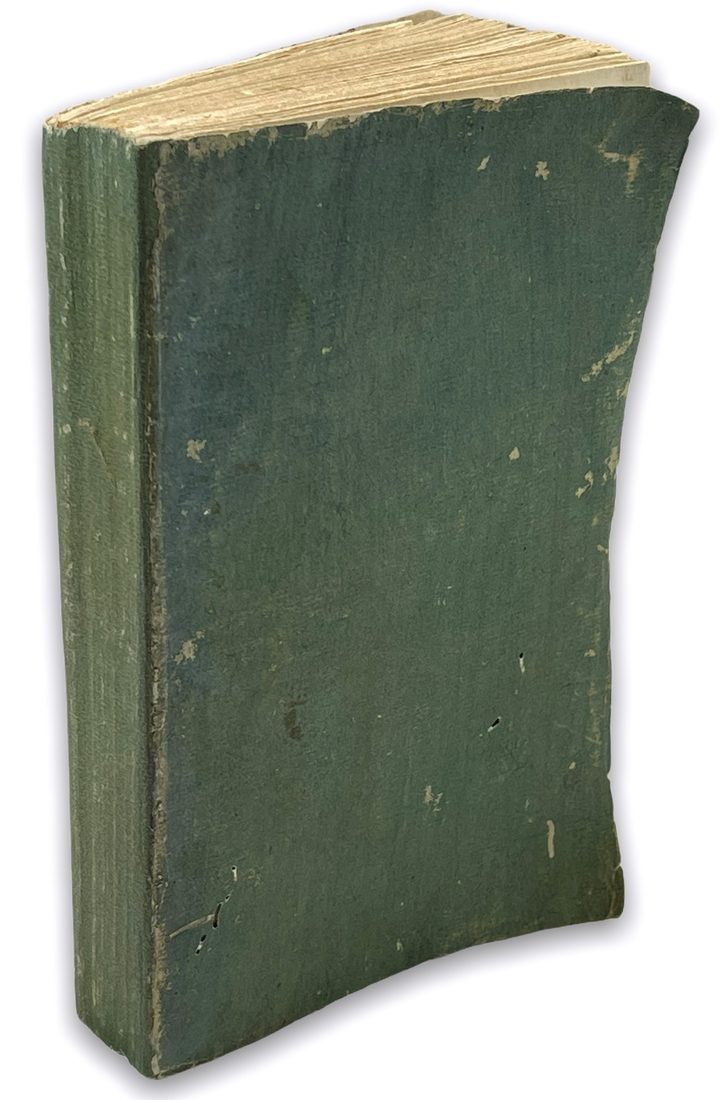
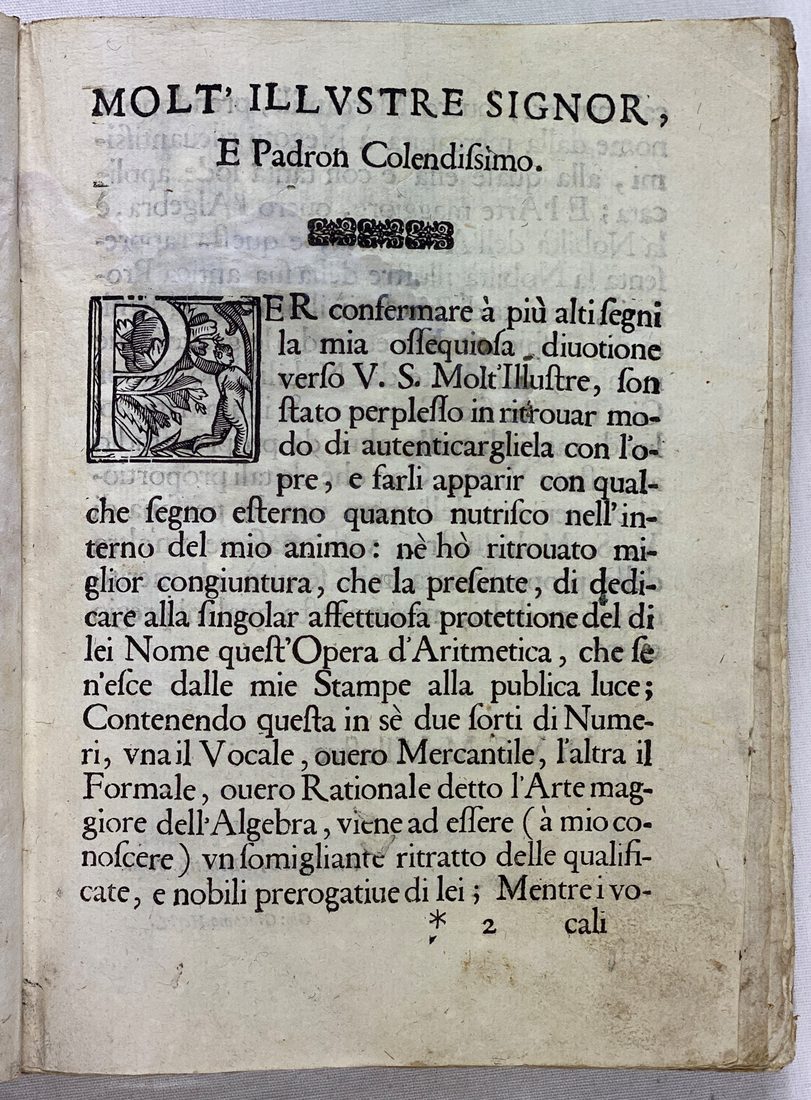
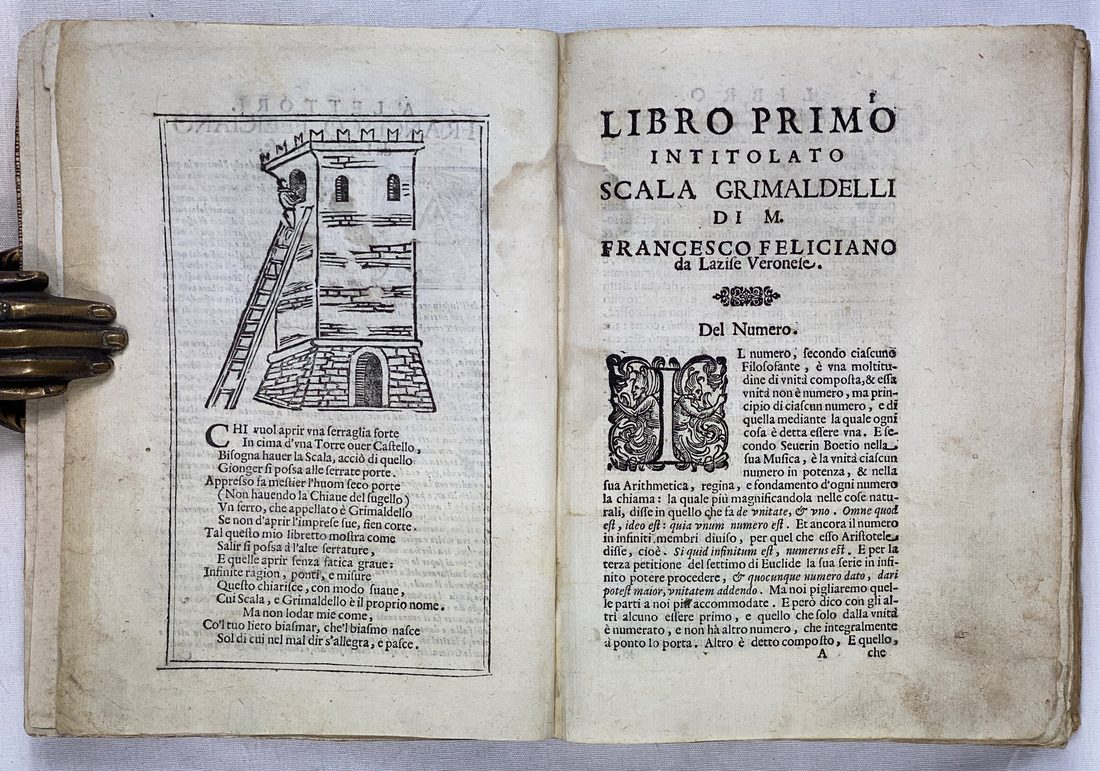
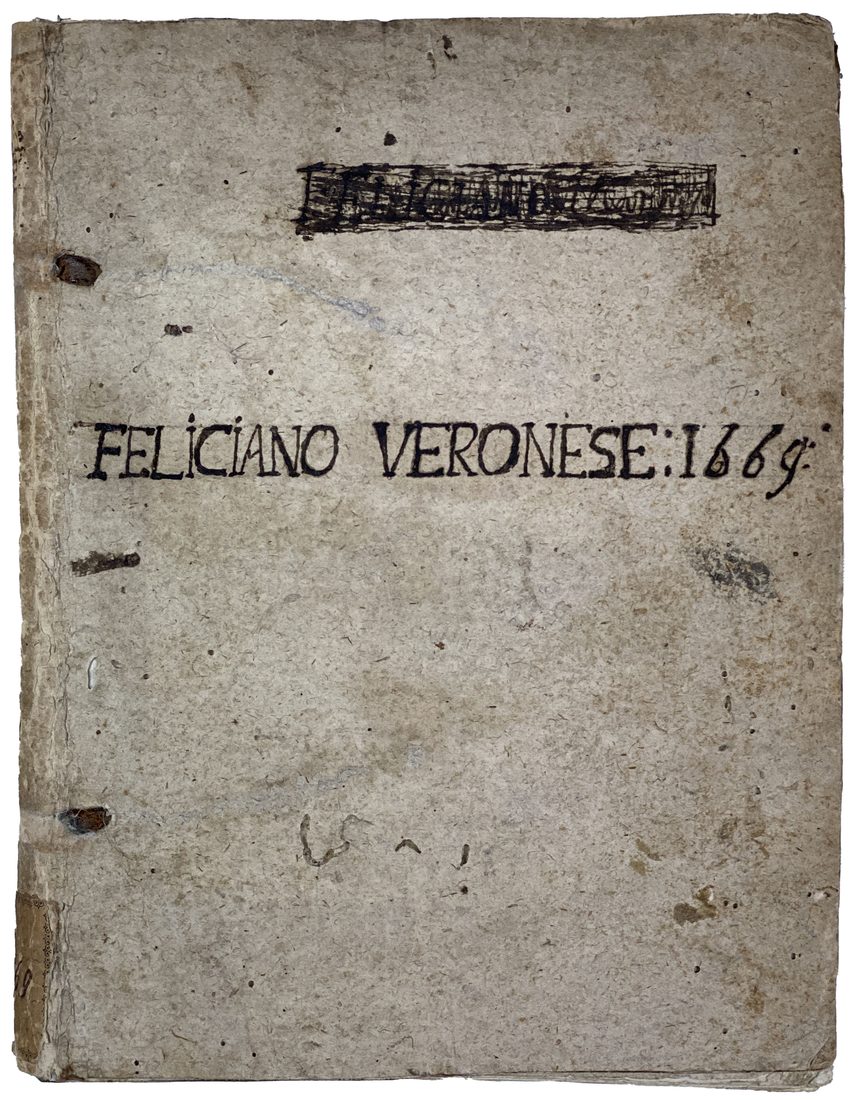
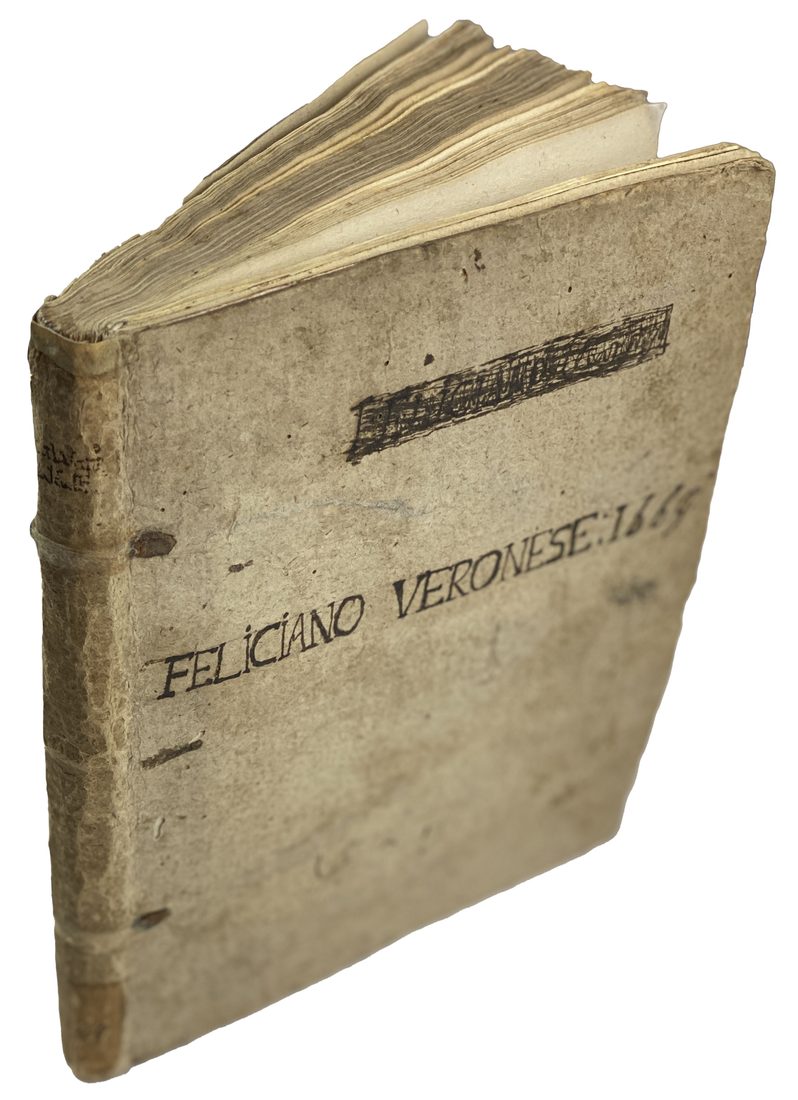
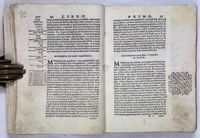
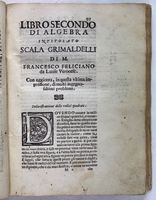
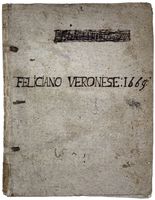
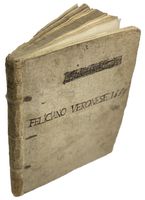
4to (188 x 120 mm), contemporary paper board, manuscript title on upper cover in sepia ink. Collation: pp. [8], 240. Title page with printer’s device depicting a galleon. Woodcut initials, headpieces, and endpieces throughout. Typography in roman and italic, with occasional use of xylographic initials.
Last printed edition of this milestone in the history of mathematic
The Scala Grimaldelli is among the most influential mathematical treatises of the Renaissance, offering a systematic introduction to arithmetic, algebra, and geometry, with particular emphasis on their commercial and practical applications. Originally published in 1526, it rapidly became a cornerstone in the teaching of elementary mathematics, shaping curricula in Italy and abroad. This final Venetian edition of 1669, revised and expanded by Filippo Macario, attests to its enduring pedagogical and scientific importance more than a century after its first appearance.
The treatise is divided into three books.
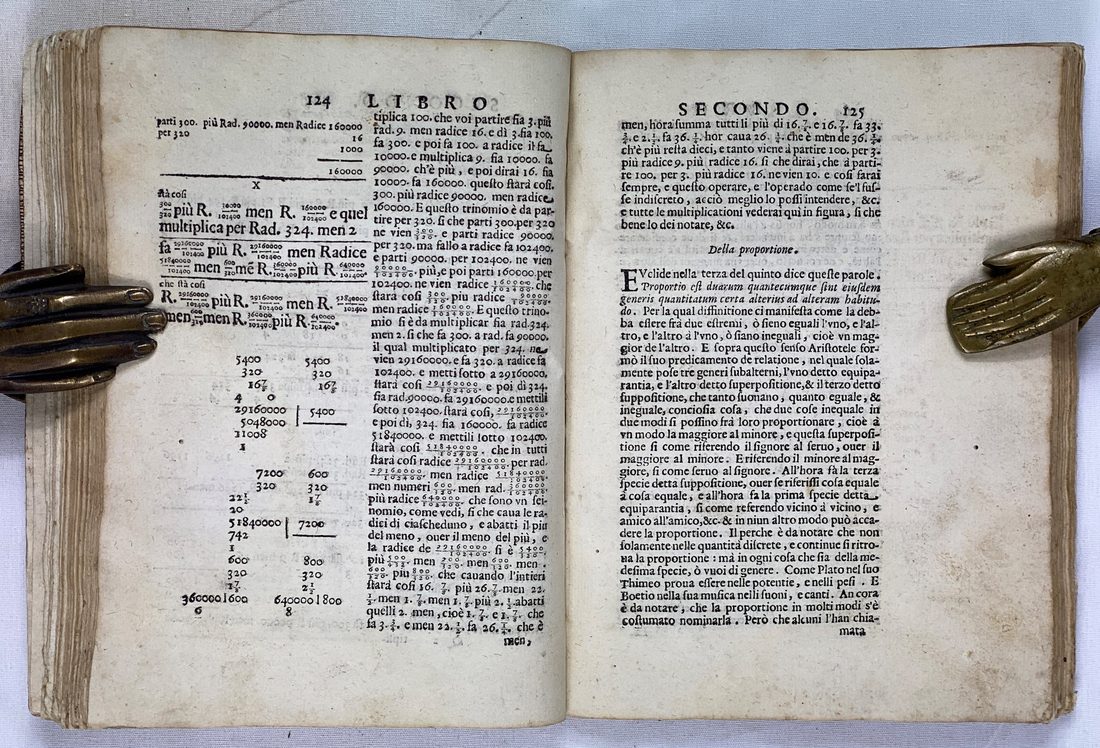
The first book addresses matters of practical arithmetic specifically aimed at merchants, presenting methods of calculation essential for commerce: operations with integers, fractions, and proportions; extraction of roots; the rule of false position; and techniques for handling exchanges and commercial accounts.
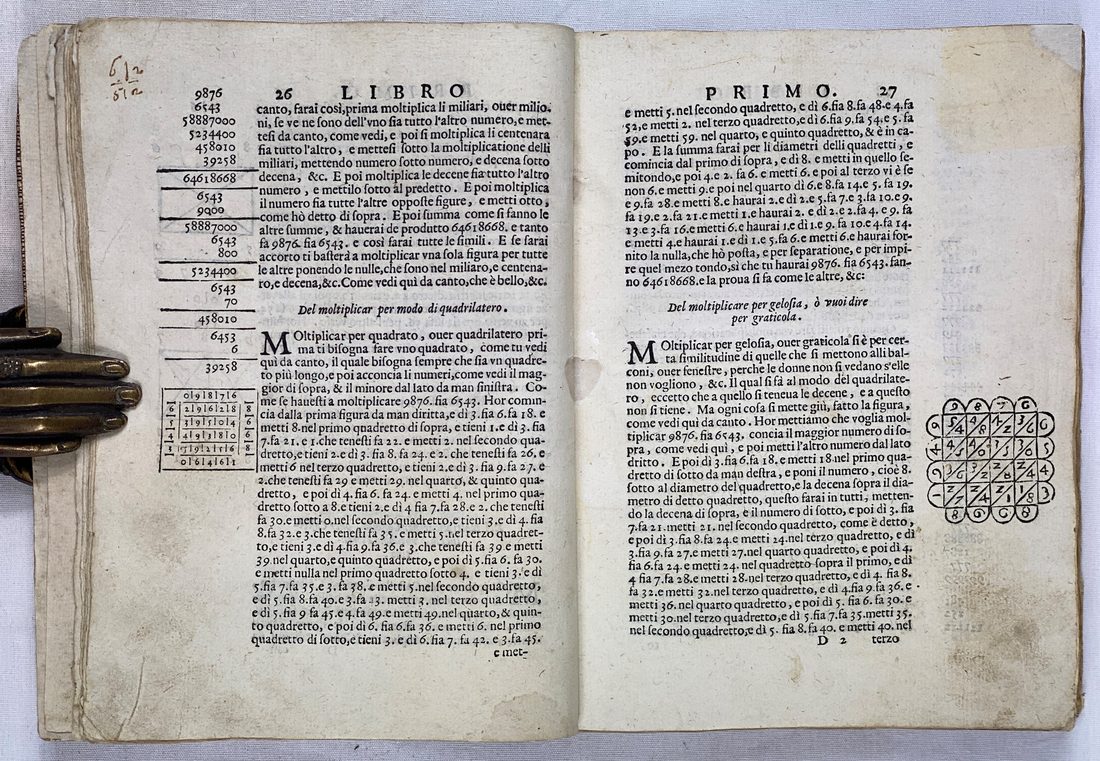
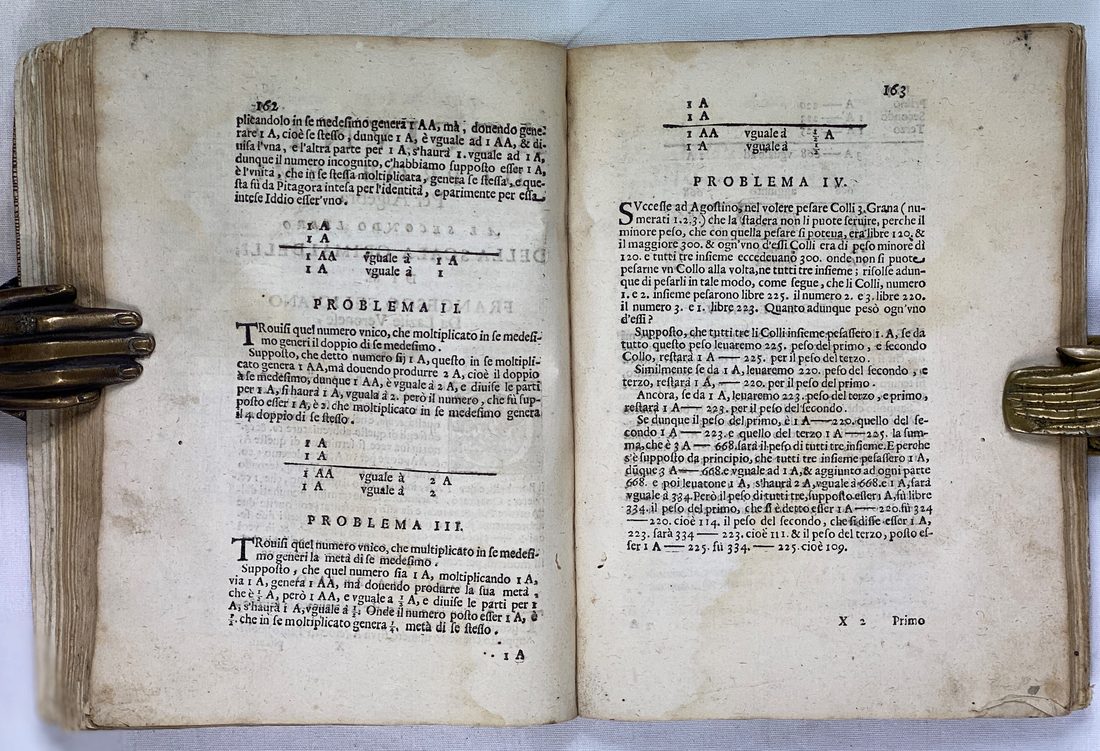
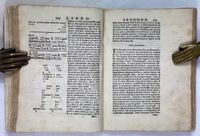
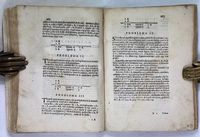
The second book is devoted to algebra, referred to as the “arte maggiore.” Here Feliciano presents problems and their solutions using Renaissance algebraic notation, enriched in this edition with numerous additional problems contributed by learned contemporaries. One of the most remarkable sections (leaf d2r) demonstrates the multiplication method “per crocetta”, a crosswise system of calculation then in circulation among Italian abacus schools.
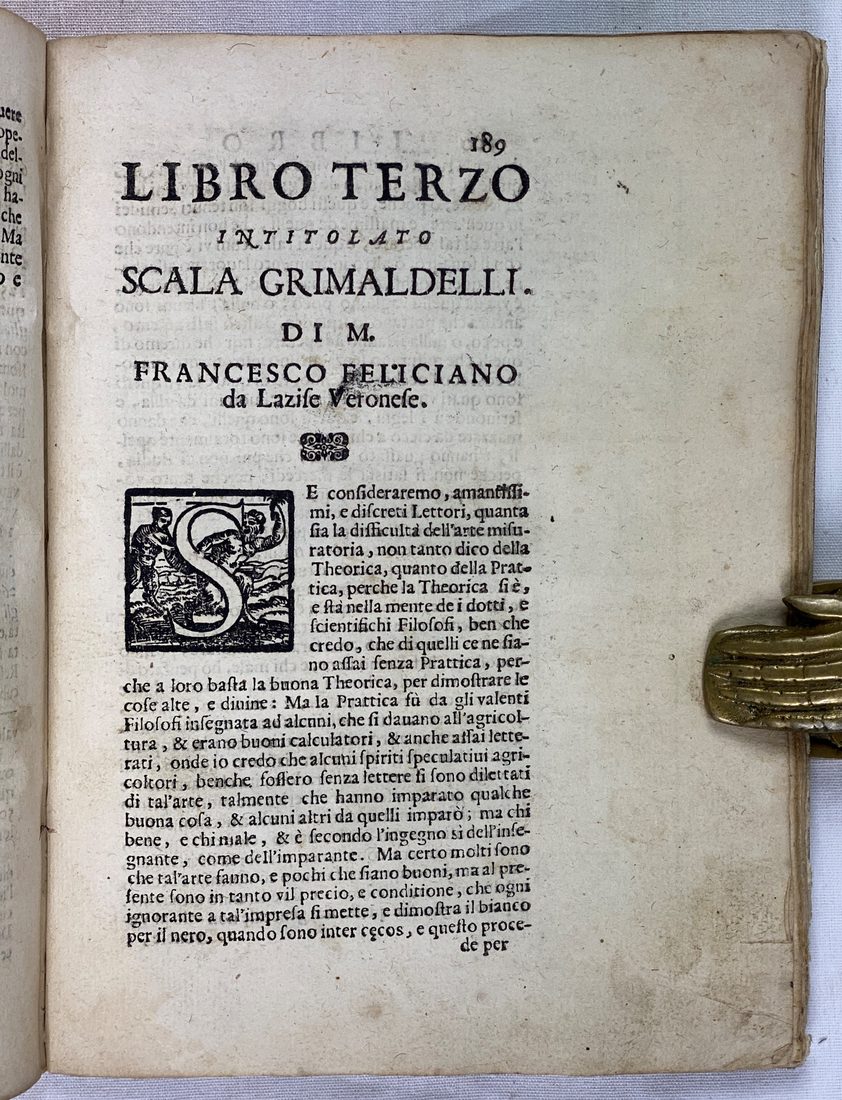
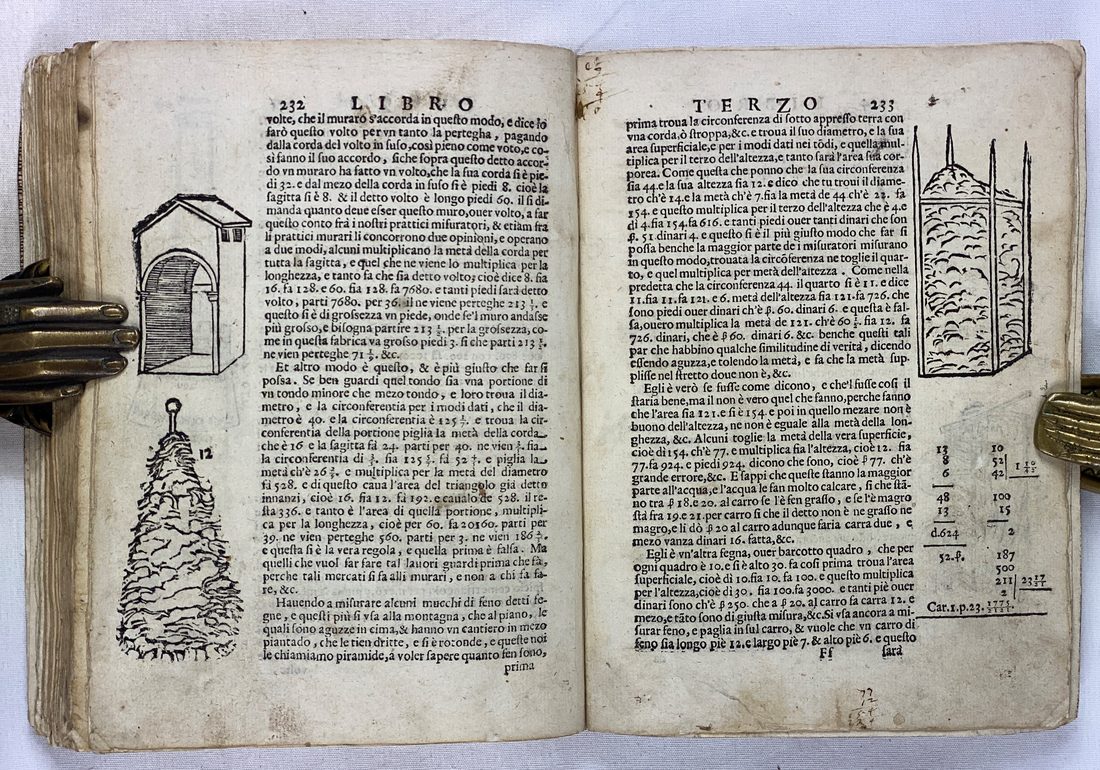
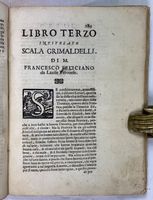
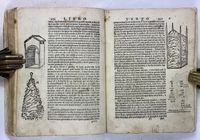
The third book focuses on practical geometry. Feliciano illustrates techniques for land measurement, surveying, and the construction of geometric figures. Of particular note is his presentation of the squadro geometrico (geometric square), a surveying instrument in use in Italy since the fifteenth century made of two bars forming a right-angled cross with sights at each end and used in setting out right angles in surveying, and the surveyors’ cross, which appears for the first time in print in this treatise. The work thus represents one of the earliest printed testimonies to the application of mathematical instruments in field surveying.
The Scala Grimaldelli embodies the intellectual climate of Renaissance Italy, where the abacus tradition, rooted in Leonardo Pisano’s Liber abaci (1202), was transformed into a structured pedagogical corpus. Feliciano’s treatise became one of the primary vehicles for disseminating these methods beyond Italy, ensuring the survival and spread of abacus mathematics well into the early modern period.
The symbolic title is itself a metaphor: just as a ladder (scala) allows the assault of a fortress and a picklock (grimaldello) opens a lock, so Feliciano’s book offers the necessary tools to penetrate the complexities of mathematics. Its wide circulation and multiple reprints testify to its impact: “few books had greater influence on the subsequent teaching of elementary mathematics” (Smith).
By integrating practical arithmetic with commercial utility, algebraic problem-solving, and geometrical surveying, Feliciano created a compendium that bridged the gap between speculative knowledge and the needs of daily life. The constant reprinting of the book until the late seventeenth century confirms its relevance in mercantile, academic, and scientific environments alike.
Francesco Feliciano (fl. 2nd half of the 15th century – early 16th century) was a mathematician and abacus master from Lazise, near Verona. He belonged to the flourishing community of maestri d’abaco, educators who systematized commercial arithmetic and disseminated it across northern Italy.
In 1517 he published the Libro di abbaco, an introduction to mercantile arithmetic, which circulated widely. His most significant contribution, however, was the Scala Grimaldelli (first edition, 1526), which remained in print for nearly 150 years. Feliciano’s works place him among the key figures in the transmission of practical mathematics during the Renaissance, ensuring continuity between medieval abacus practices and modern mathematical instruction
.
Conditions: this book was meant to be heavily used, so it’s rare find a copy in good condition as, despite few marls of use, this copy, in its original binding, can be defined.
Provenance: I. Faded handwriten ownership signature at title page, II. Contemporary handwrtten annotations and calculations on margins.
Reference: Honeyman, IV 1288; Michel-Michel, III-29; Riccardi, II-22; Rose, Paul Lawrence. The Italian Renaissance of Mathematics: Studies on Humanists and Mathematicians from Petrarch to Galileo. Geneva: Droz, 1975.