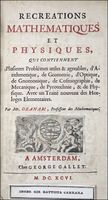
Récréations mathématiques et physiques


| Macro-category | Rare Books and Manuscripts |
| Subcategory | Science |
| Author | OZANAM, JACQUES |
| Place of printing | Amsterdam |
| Publisher / Maker | Gallet |
| Year | 1696 |
THE forerunner of mathematical recreations and its use in the art of illusionism and magic an early manual for the first “mentalists”
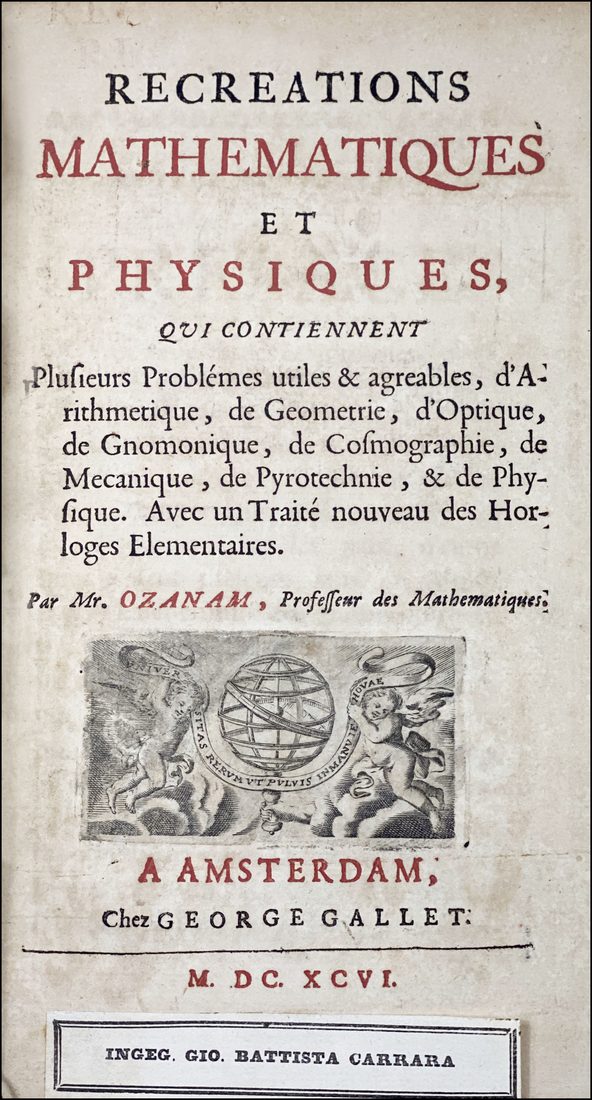
Ozanam, Jacques. Récréations mathématiques et physiques, VOL I. Amsterdam: Gallet, 1696.
[Togheter with]
Ozanam, Jacques. Récréations mathématiques et physiques, VOL II. Paris: Jombert, 1696.
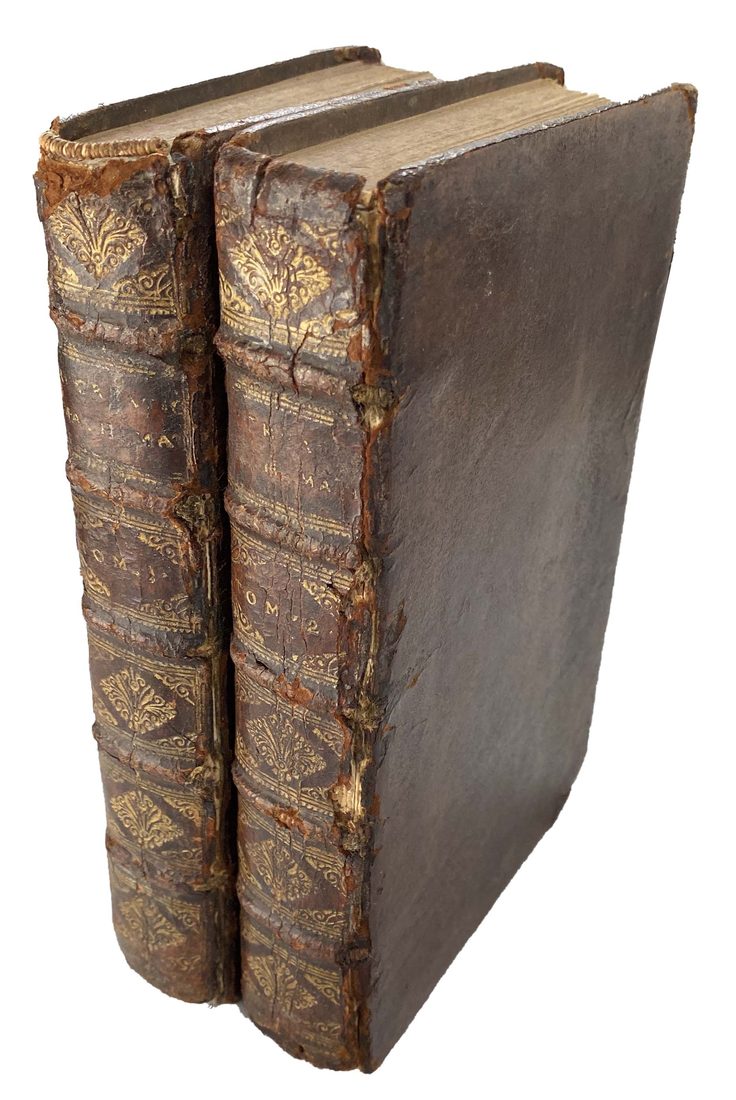
wo volumes in 8vo (188 × 120 mm), contemporary calf with gilt spine decorations, pp. [16], 265, [1]; 266–583, [25, final blank]. Engraved title-page.
Second edition of the seminal precursor to modern works on mathematical recreations, encompassing illusionism, mentalism, fire-works, conjuring, sundials, and horology
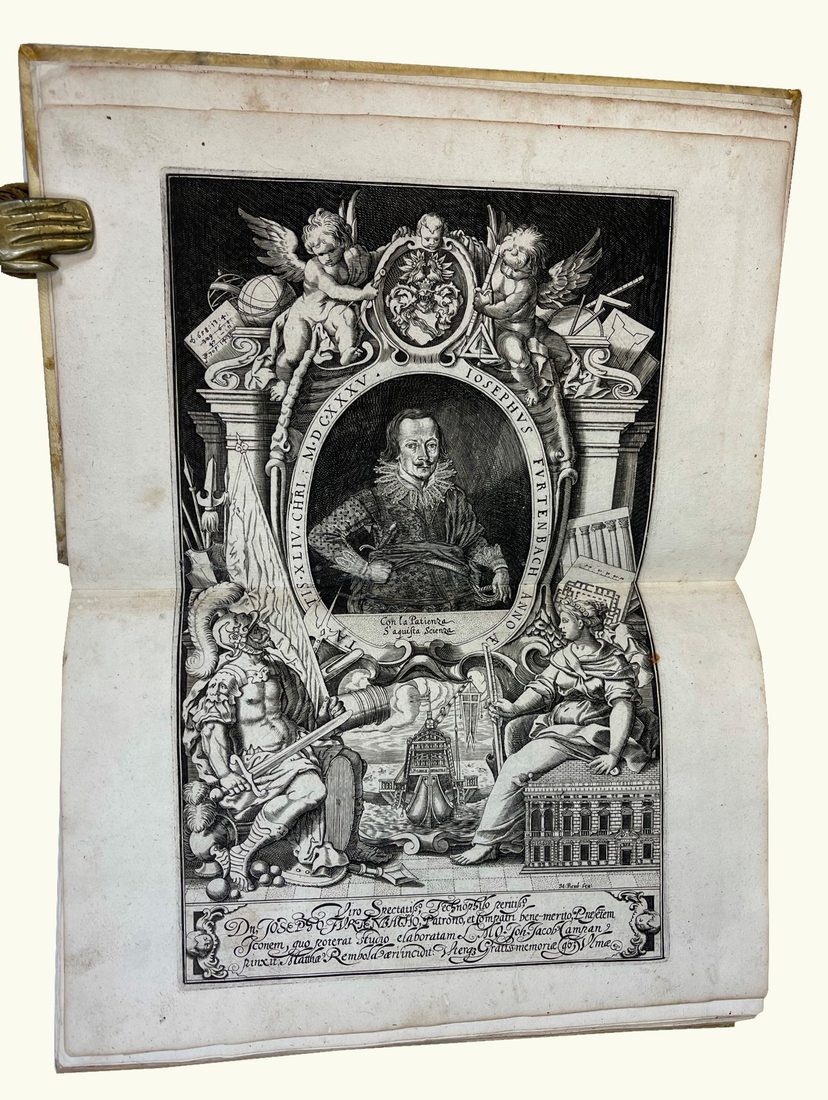
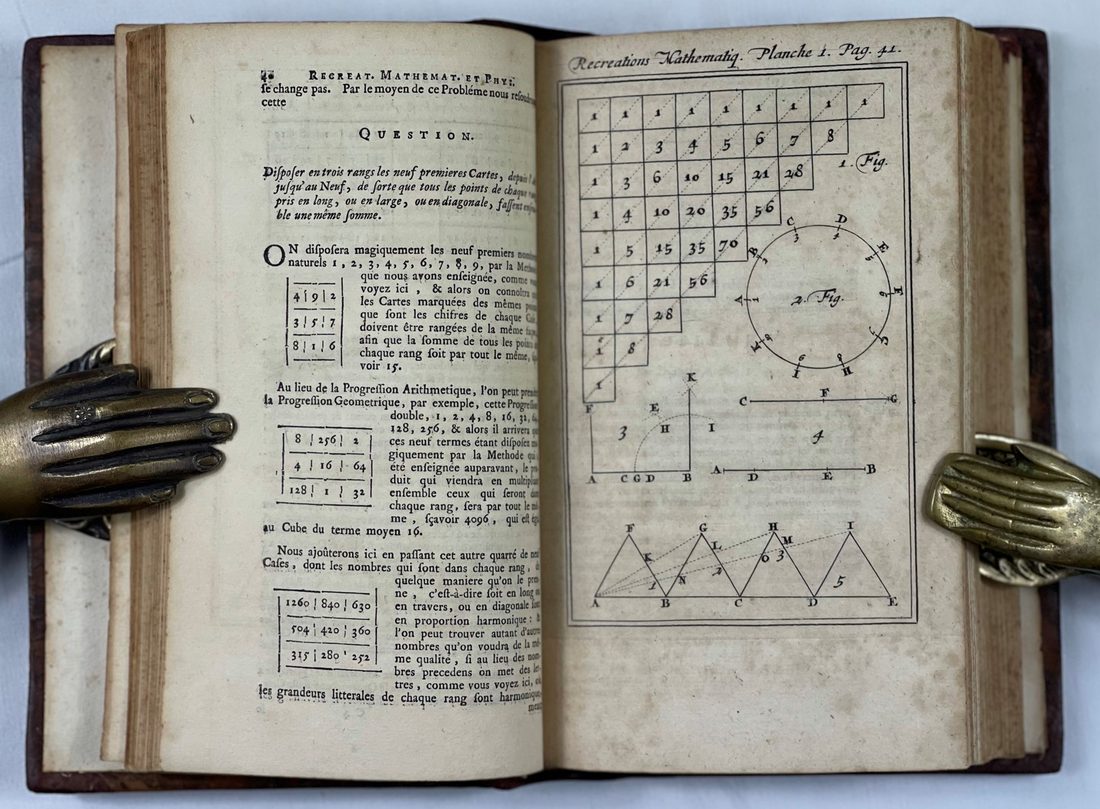
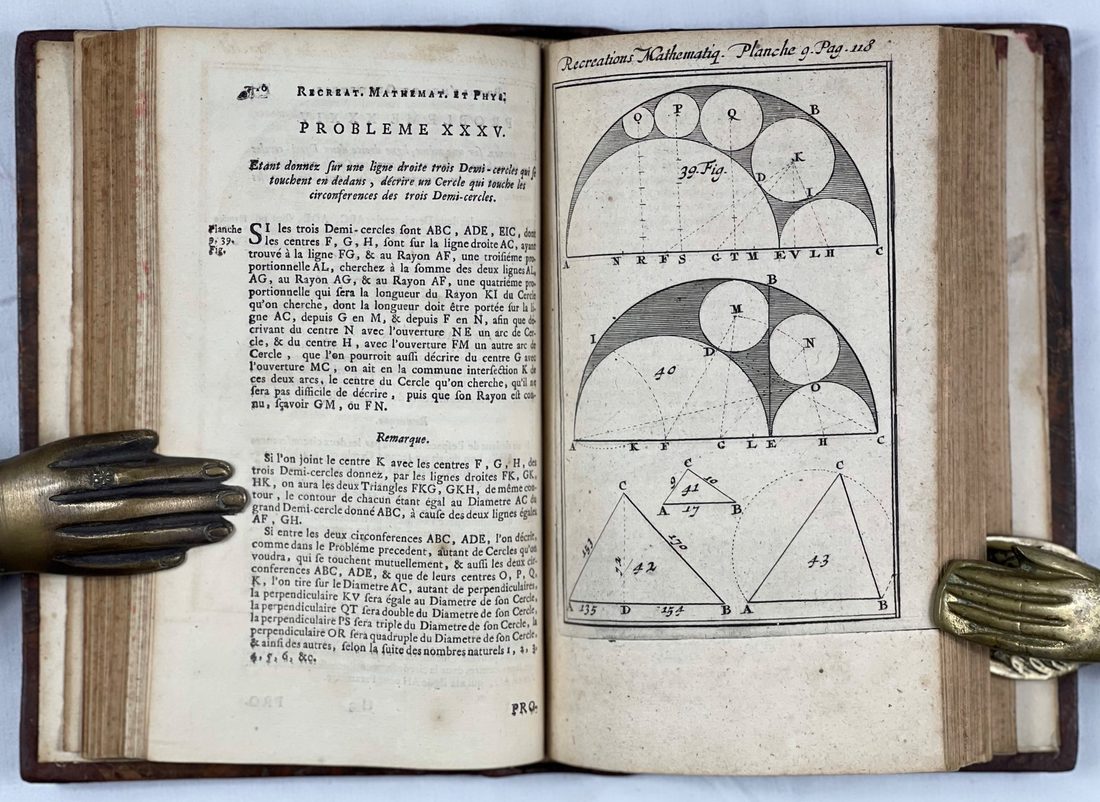
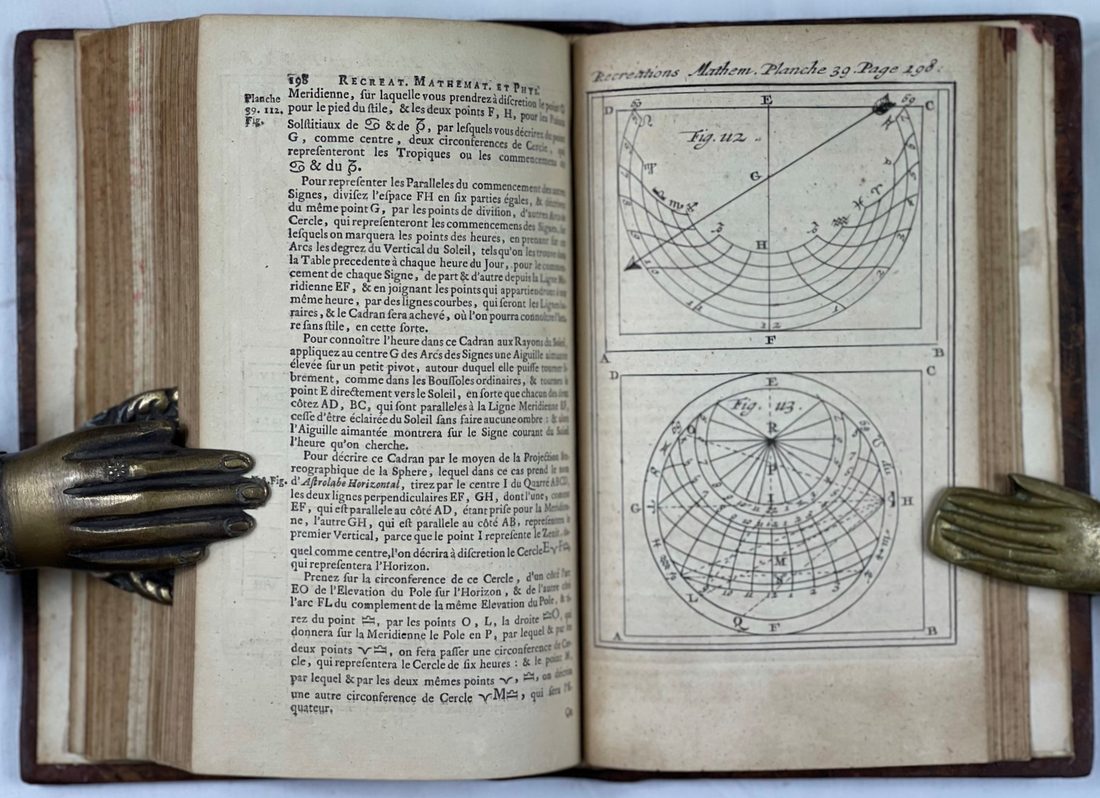
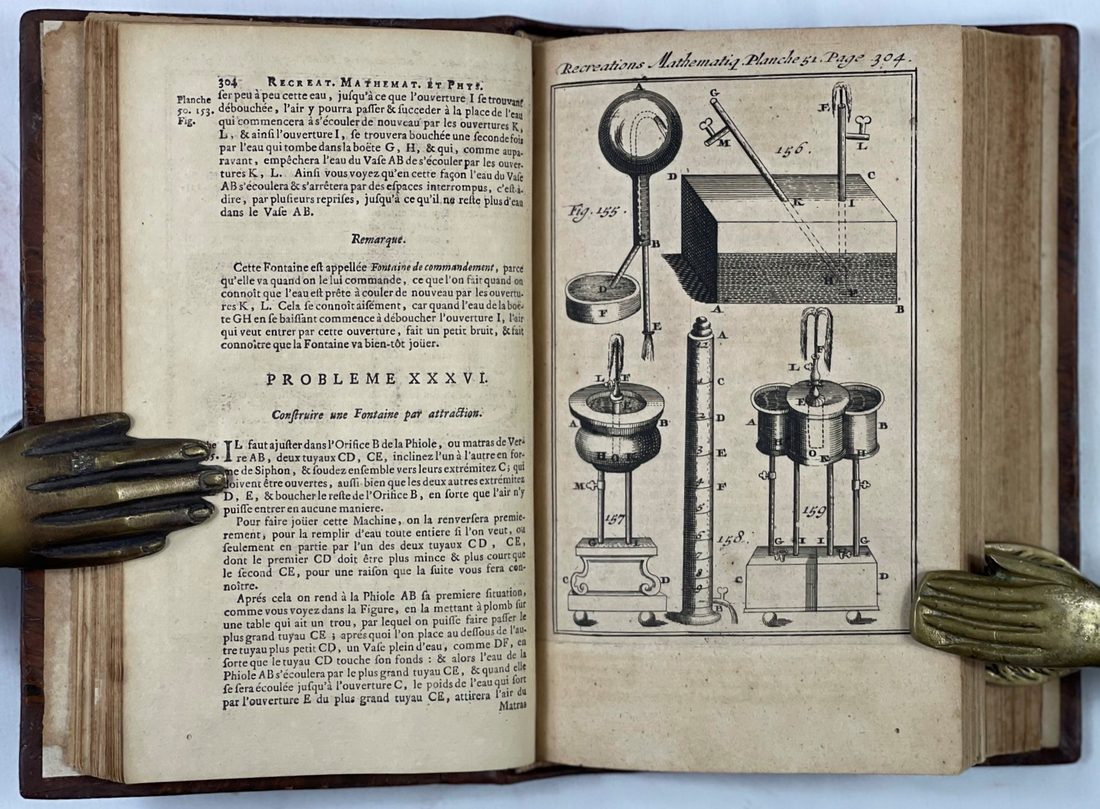
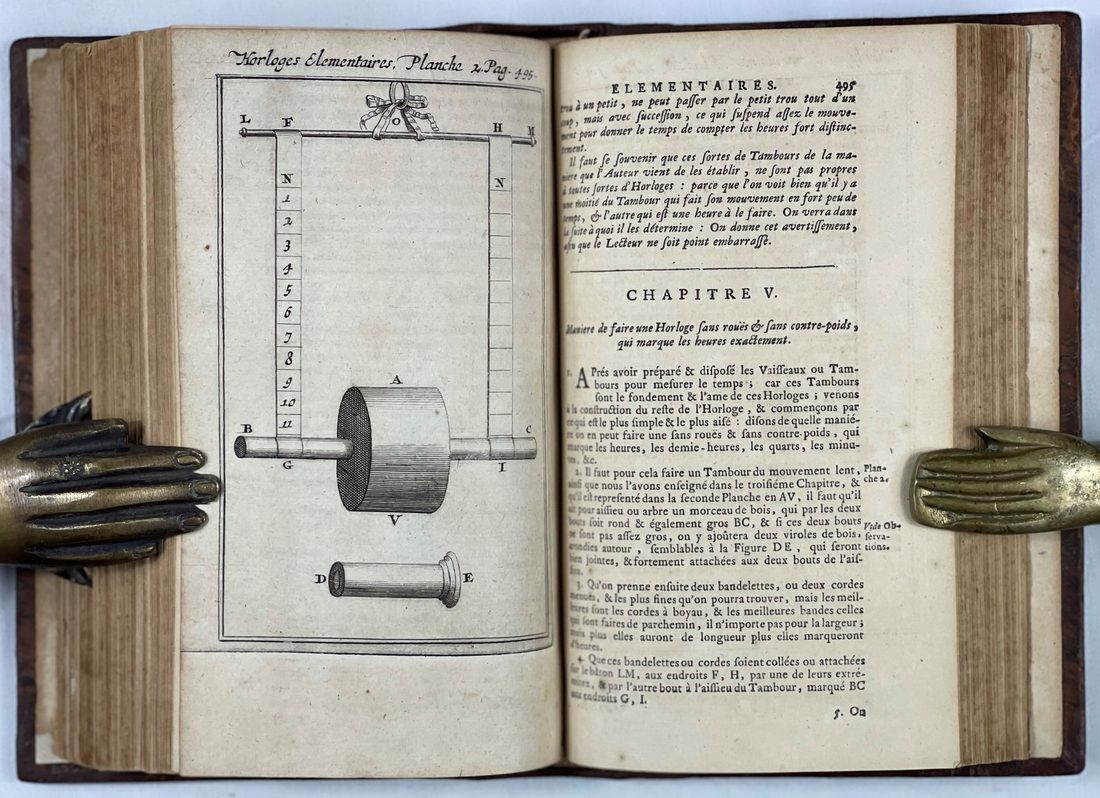
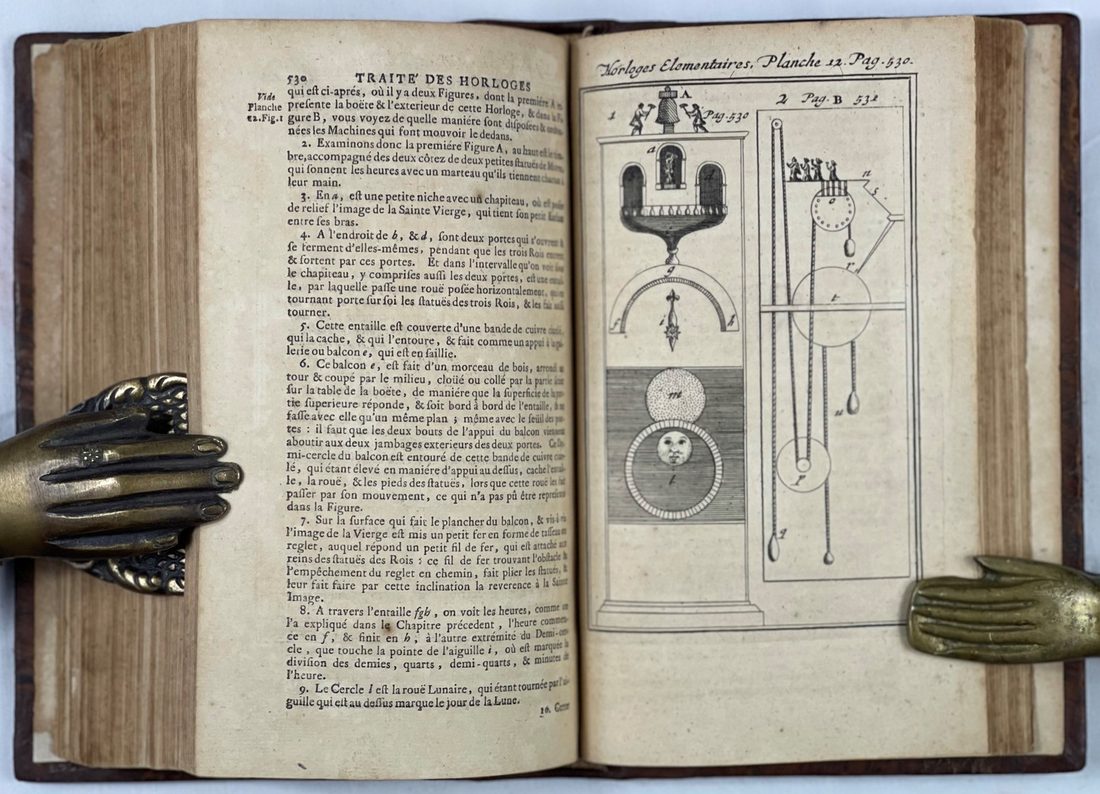
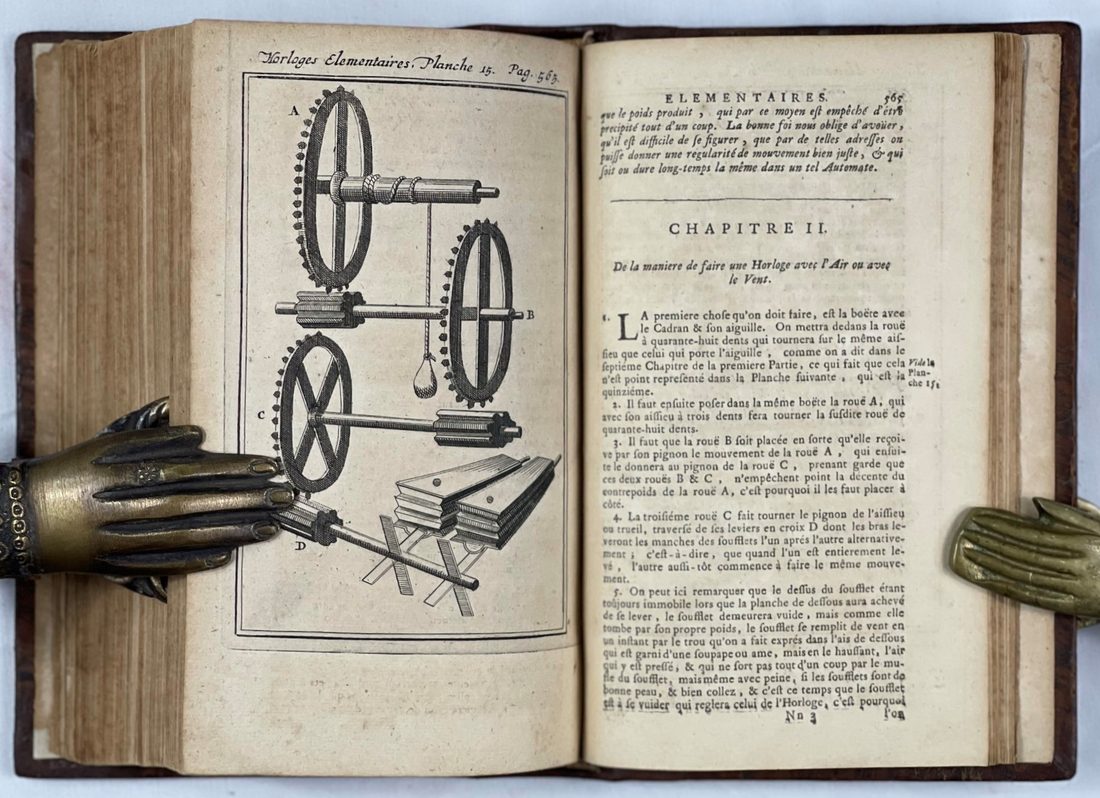
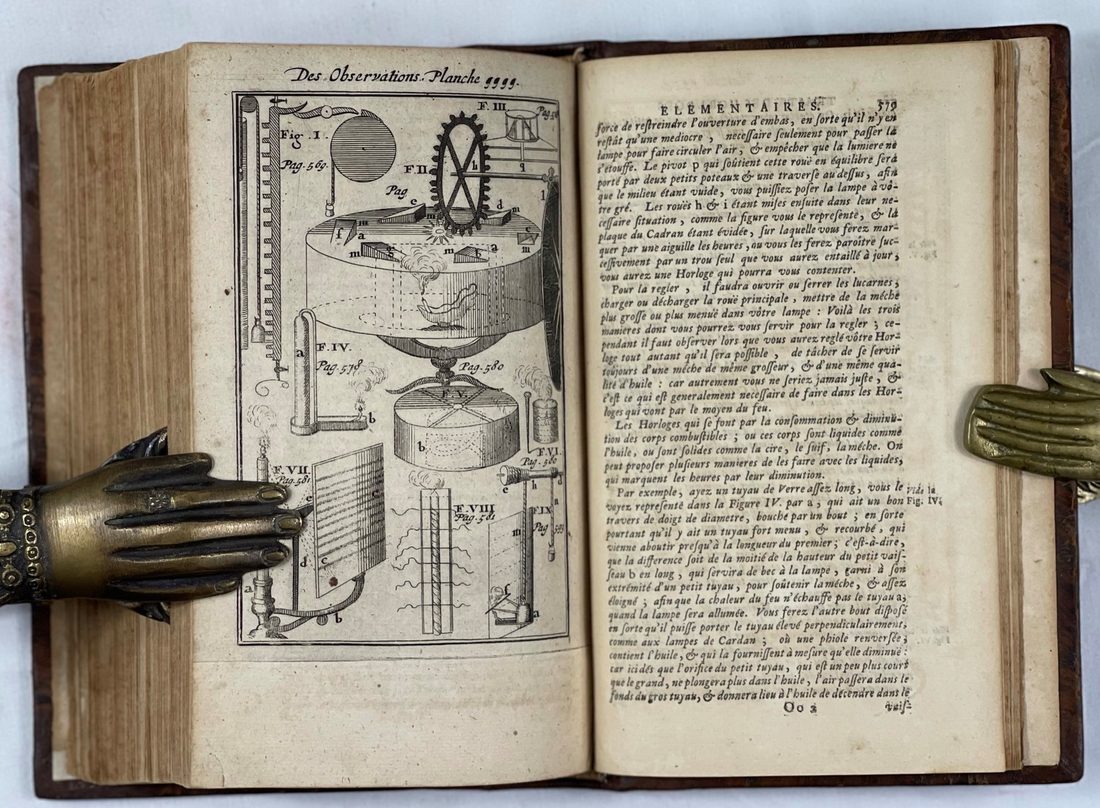
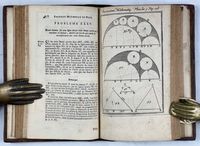
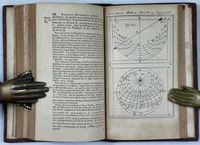
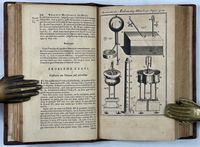
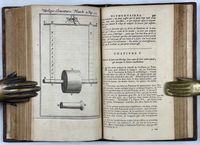
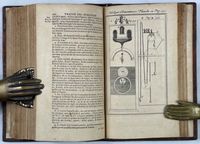
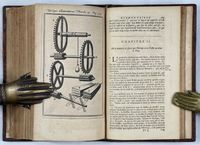
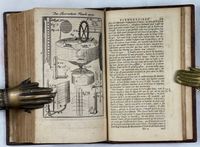
84 engraved folding plates (45 first Vol., 39 second), illustrating the resolution of mathematical, arithmetical, geometrical, optical, or cosmographic problems, as well as mechanical systems such as clocks.
A scarce second edition (first published in 1694) of the earliest comprehensive work devoted to recreational mathematics. It became one of the most influential books on the subject, addressing, among other themes, the construction of fireworks, sleight of hand, and, notably in Vol. II, including a translation of Domenico Martinelli’s treatise on timepieces, originally printed in Venice in 1663 (p. 473).
The work is organized into nine subject areas:
Vol 1: (1) Arithmetic, (2) Geometry, (3) Optics, (4) Gnomonics and (5) Cosmography.
Vol 2: (6) Mechanics, (7) Pyrotechnics, (8) Physics and (9) the translation Martinelli treatise on Watches.
Each section presents a sequence of problems accompanied by detailed explanations and, frequently, illustrative plates.
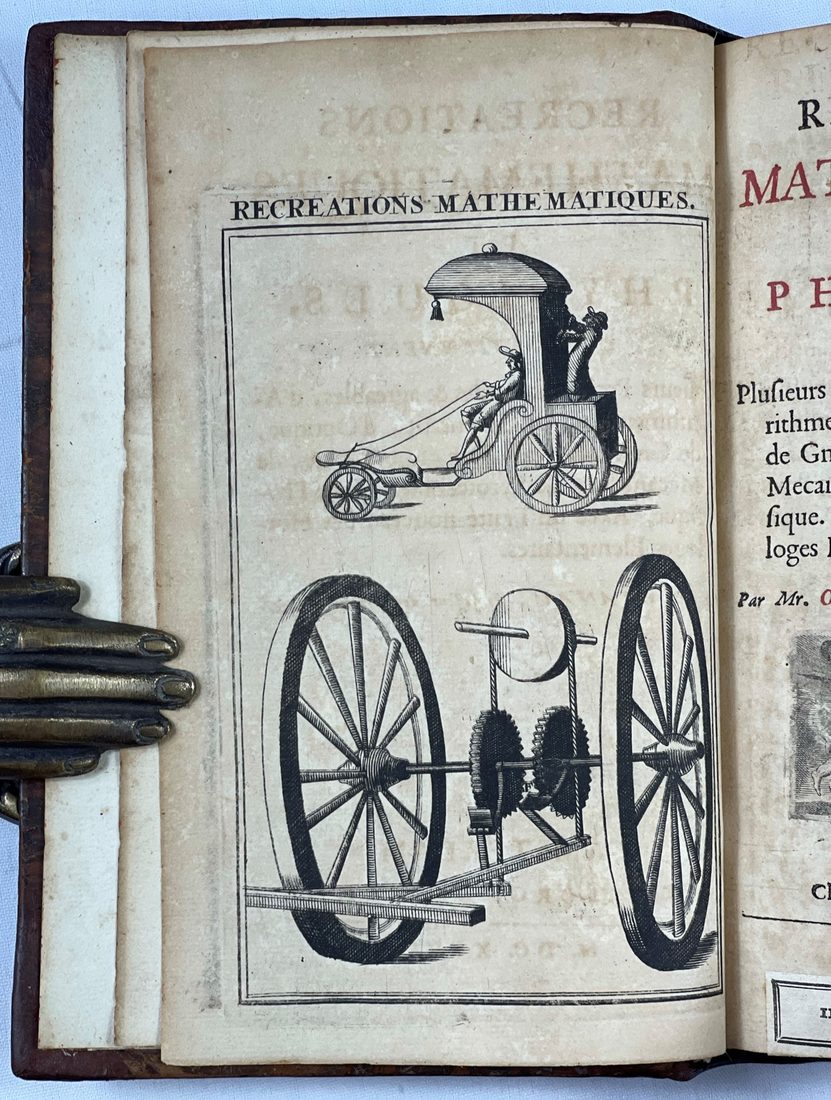
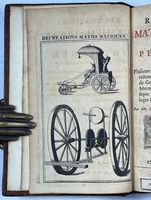
Among the mechanical inventions described is an early concept of automobile-like transportation: a carriage propelled by a valet standing behind the seated driver, who operates spring-loaded platforms with his feet, providing forward motion—an imaginative precursor to the modern engine.
.
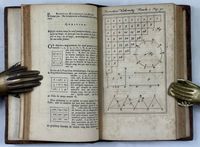
A significant portion of the arithmetical section is dedicated to the art of illusionism and mathematical games. Of particular interest is the extended treatment of magic squares (from p. 36 onward), as well as numerous feats described in the form of problem/solution pairs. These are aligned with what is now categorized as mentalism: a branch of illusionism whose practitioners, employing techniques such as cold reading or hot reading, simulate extrasensory perception or exceptional mental acuity.
Modern mentalists appear to manifest skills such as telepathy, clairvoyance, divination, precognition, psychokinesis, mediumship, mind control, hypnosis, eidetic memory, and rapid mental computation.
Among the noteworthy examples presented:
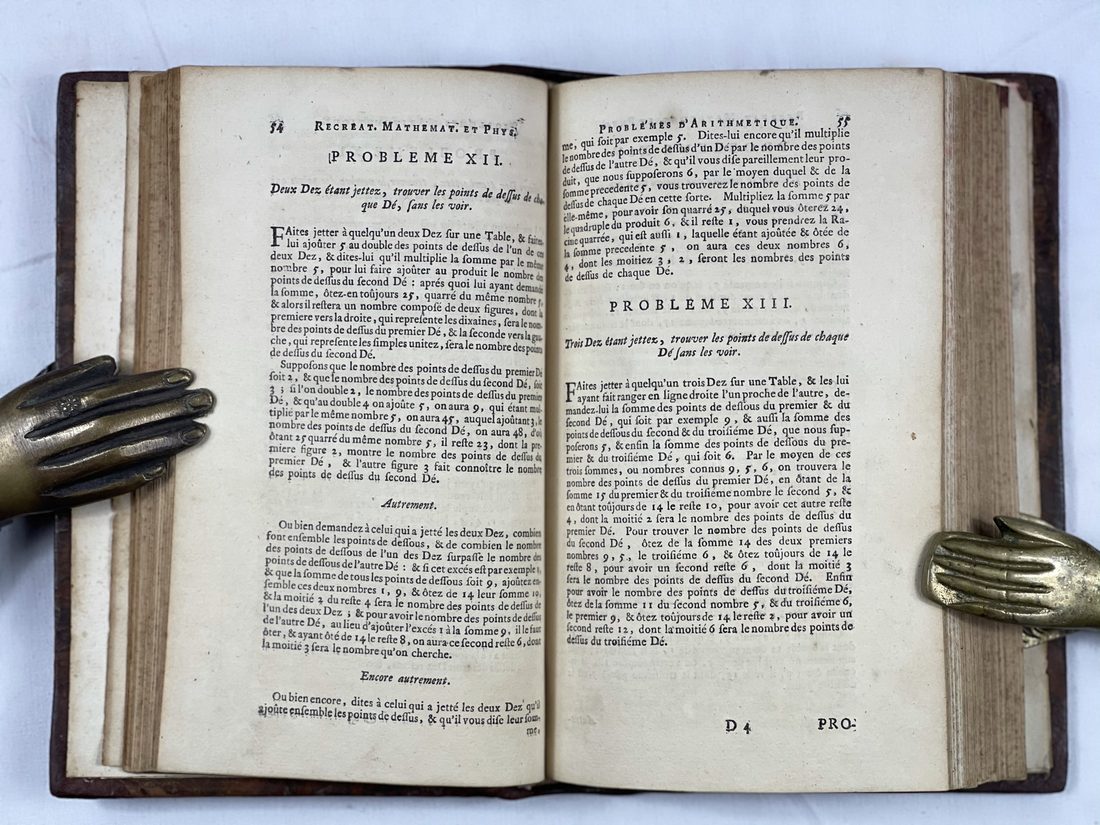
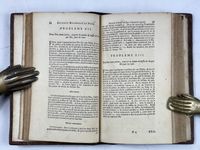
- Problem XII: How to determine the upper faces of two dice that have been thrown, without seeing them.
- Problem XIV: Guessing a number secretly chosen by a participant, by asking questions.
- Problem XVI: Guessing a number without posing any questions.
- Problem XX: Estimating the number of coins a spectator holds hidden in their hands.
- Problem XXVIII: Given three known playing cards and three spectators, deduce which card each one has selected.
- Problem XXXI: Among several cards placed in three stacks, determine which one the participant has chosen.
And many others.
Jacques Ozanam (1640 - 1718) was a French mathematician of considerable renown.
Although initially encouraged by his father to pursue an ecclesiastical vocation, Ozanam was profoundly drawn to science and mathematics, which he continued to study autodidactically. By the age of fifteen, he had composed a treatise on mathematics, though his father nonetheless compelled him to enroll in theological studies. After four years, and upon his father's death, he resumed his scientific pursuits.
In 1670, he published trigonometric and logarithmic tables more accurate than those of Ulacq, Pitiscus, and Briggs, along with numerous well-received mathematical treatises. He achieved particular acclaim for his Dictionnaire mathématique, the five-volume Cours de mathématiques, and Récréations mathématiques et physiques. His manuscript Les six livres de l'Arithmétique de Diophante augmentés et réduits à la spécieuse was praised by Leibniz himself.
The Récréations met with international success, especially in its English translation, and remains a highly regarded and collectible work.
In 1701, Ozanam was elected to the Académie Royale des Sciences (now Académie des Sciences). The death of his wife caused him great grief, and the subsequent loss of his international students due to the War of the Spanish Succession left him in financial hardship.
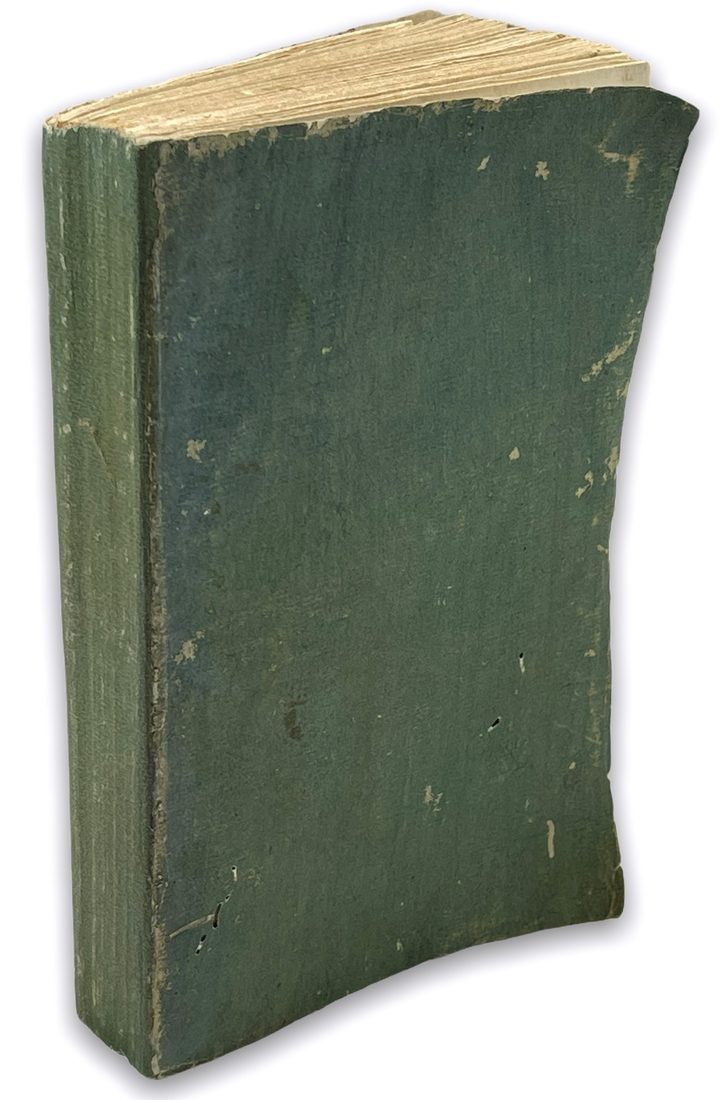
Conditions: Light marks of use at bindng, overall, a very good copy.
Provenance: Paper ex-libris pasted at title page of both volumes “Engeg. Gio Battisa Carraca.”