La Geometria del Compasso

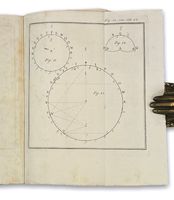
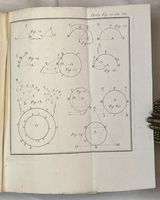
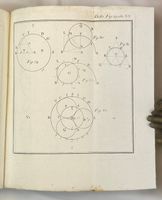
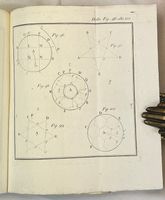
| Macro-category | Rare Books and Manuscripts |
| Subcategory | Science |
| Author | MASCHERONI, LORENZO |
| Place of printing | Pavia |
| Publisher / Maker | Pietro Galeazzi |
| Year | 1797 |
rare first edition of lorenzo mascheroni’s treatise
About the use of the compass in geometry
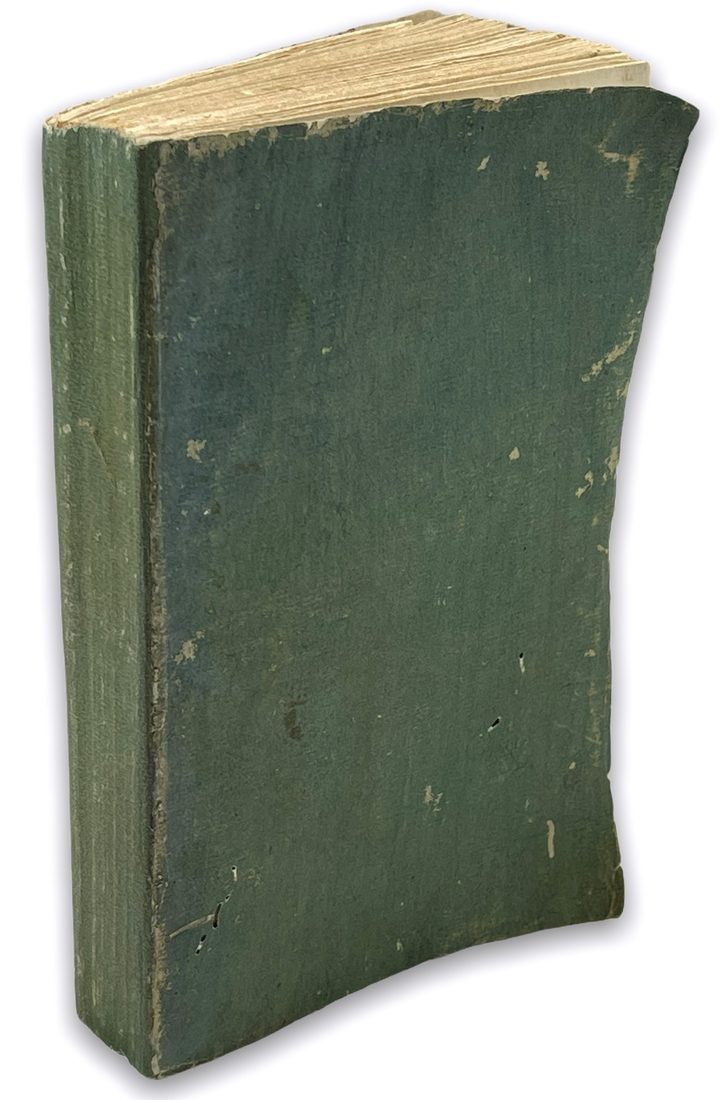
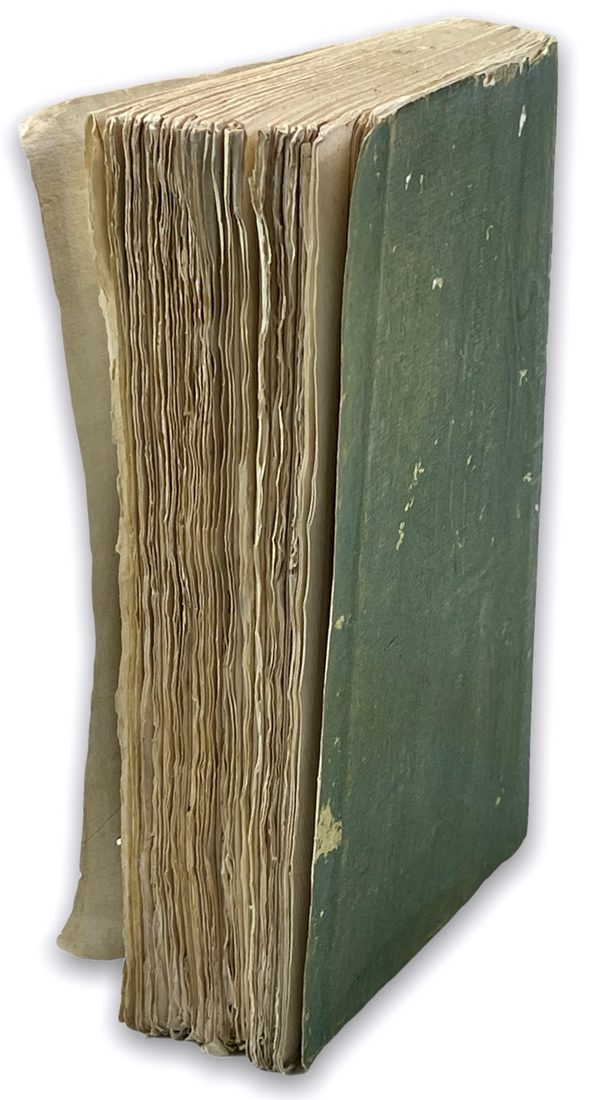
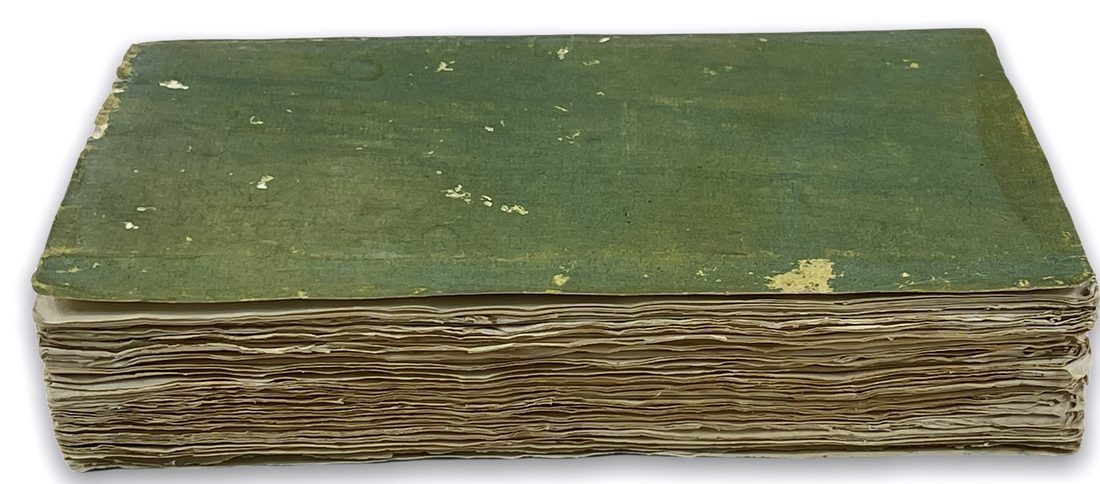
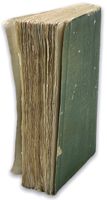
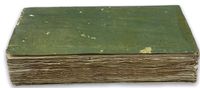
Untrimmed and uncut copy in original paper wrapper
Mascheroni, Lorenzo. La geometria del compasso di Lorenzo Mascheroni. Pavia : presso gli eredi di Pietro Galeazzi, anno V della Repubblica francese 1797.
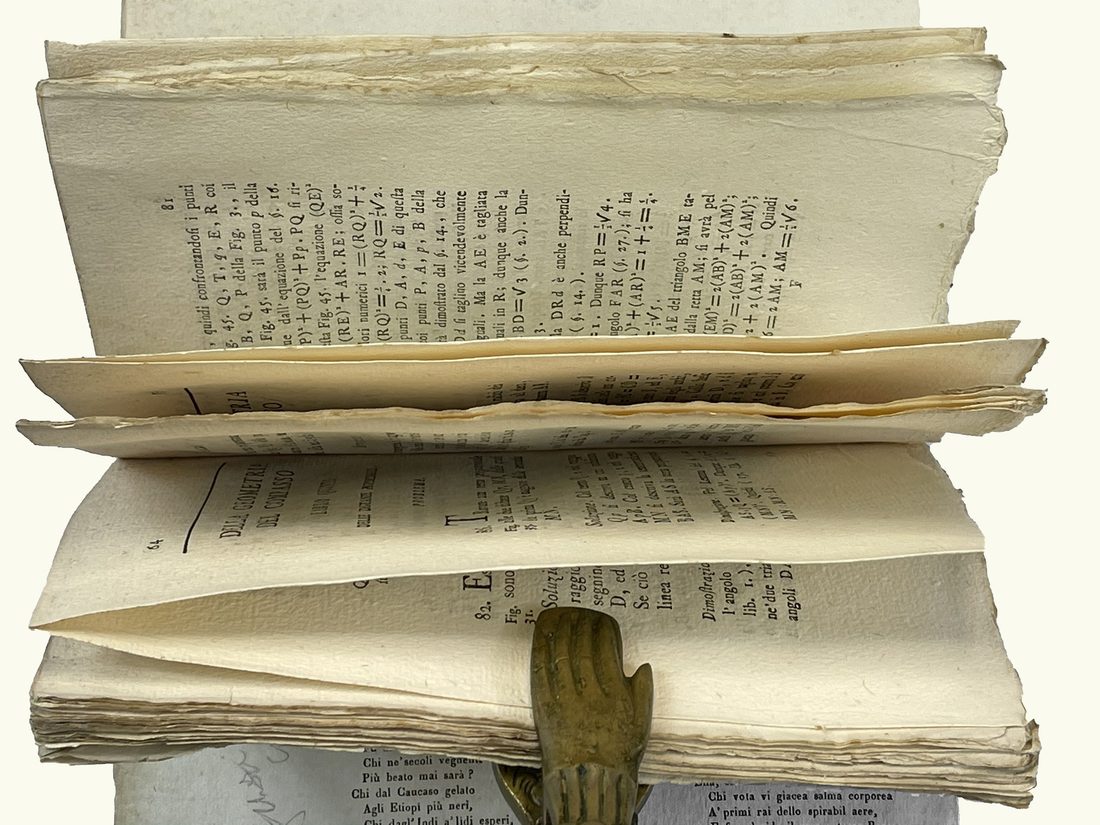
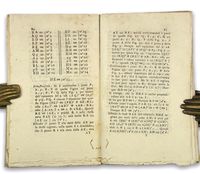
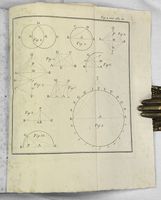
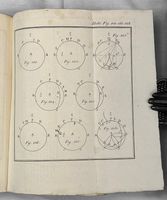
8to (223 x 130 mm), original printer's wrappers; pp. [2], XVIII, 264, [14] leaves of folding plates, woodcut decoration at title page, friezes and headletters.
The principle of economy in geometric constructions
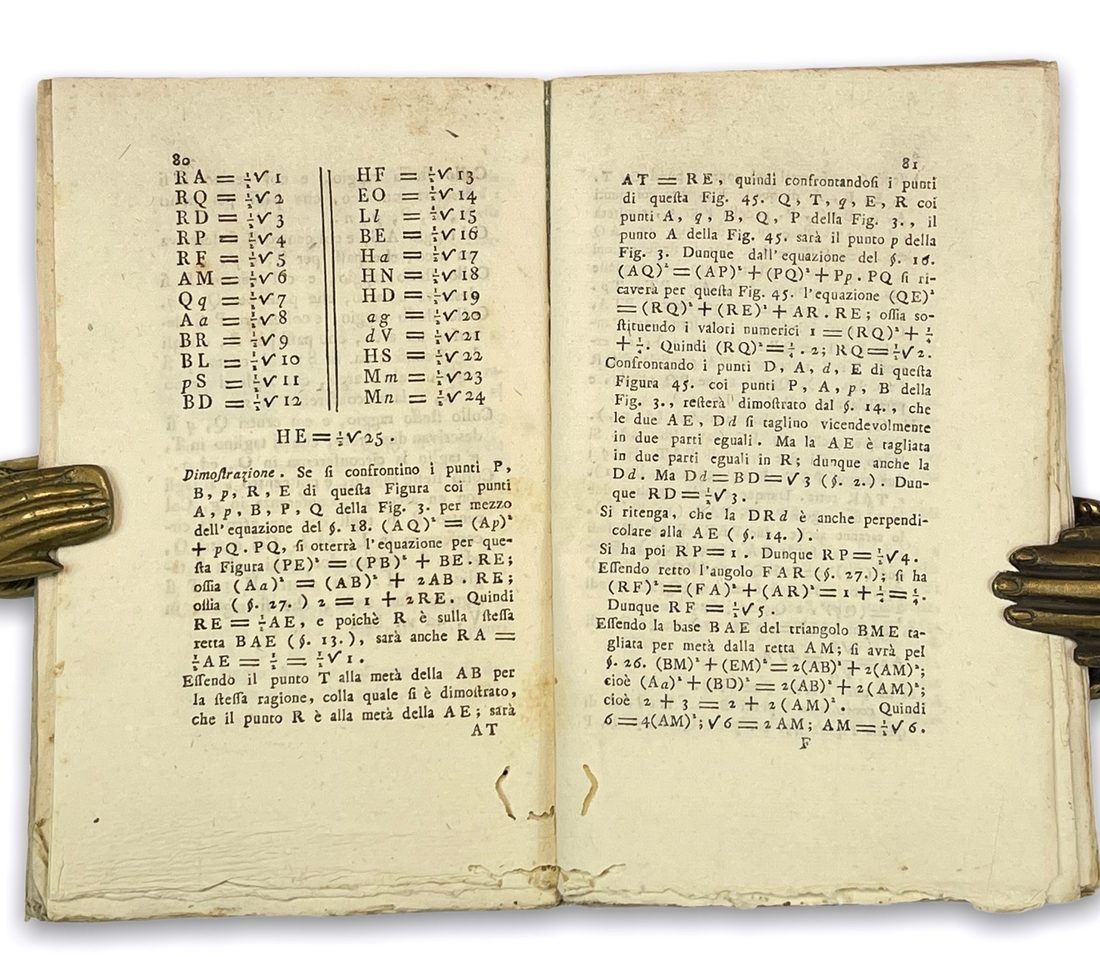
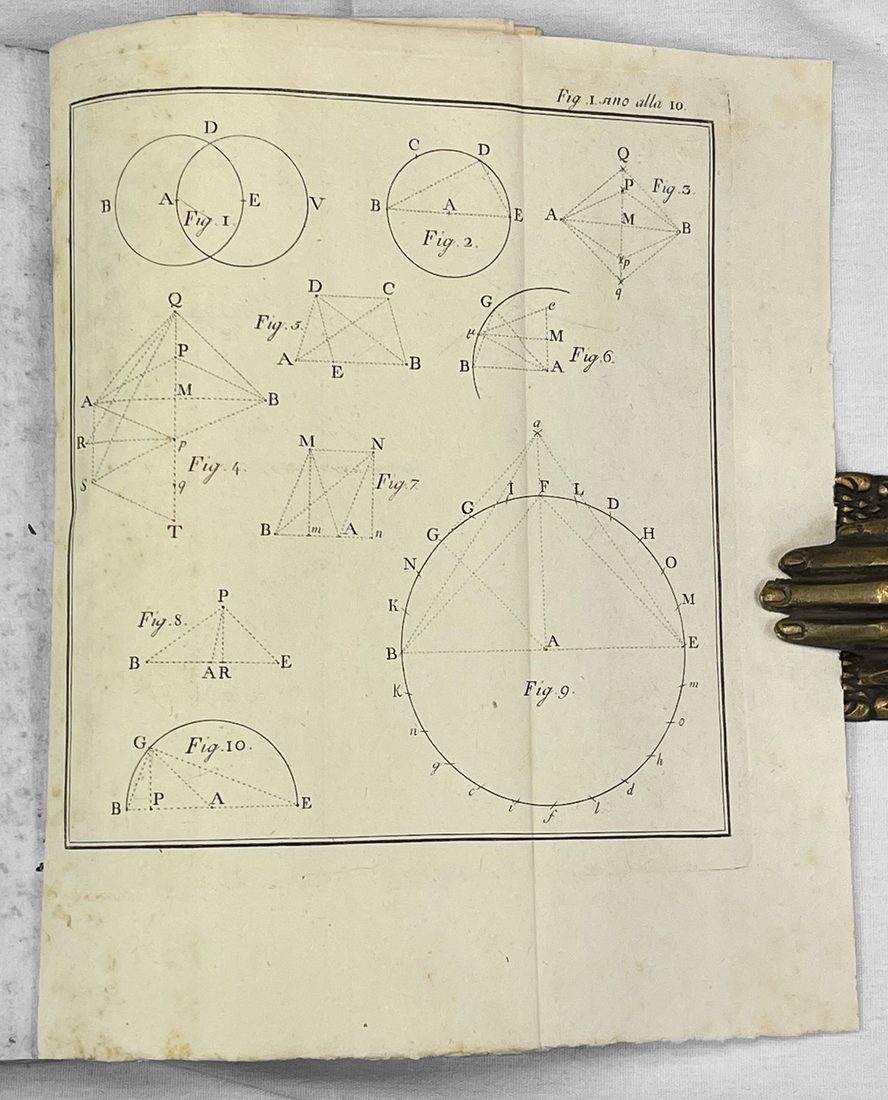
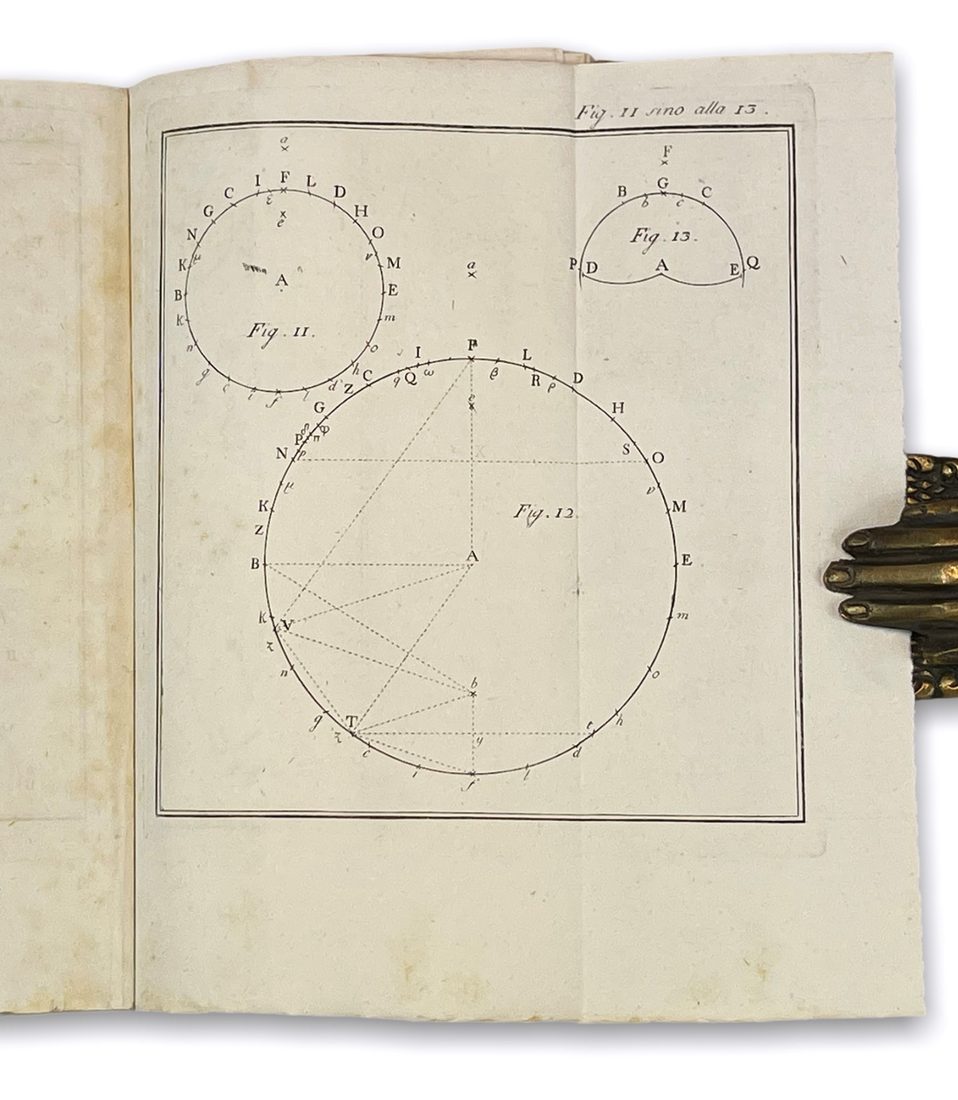
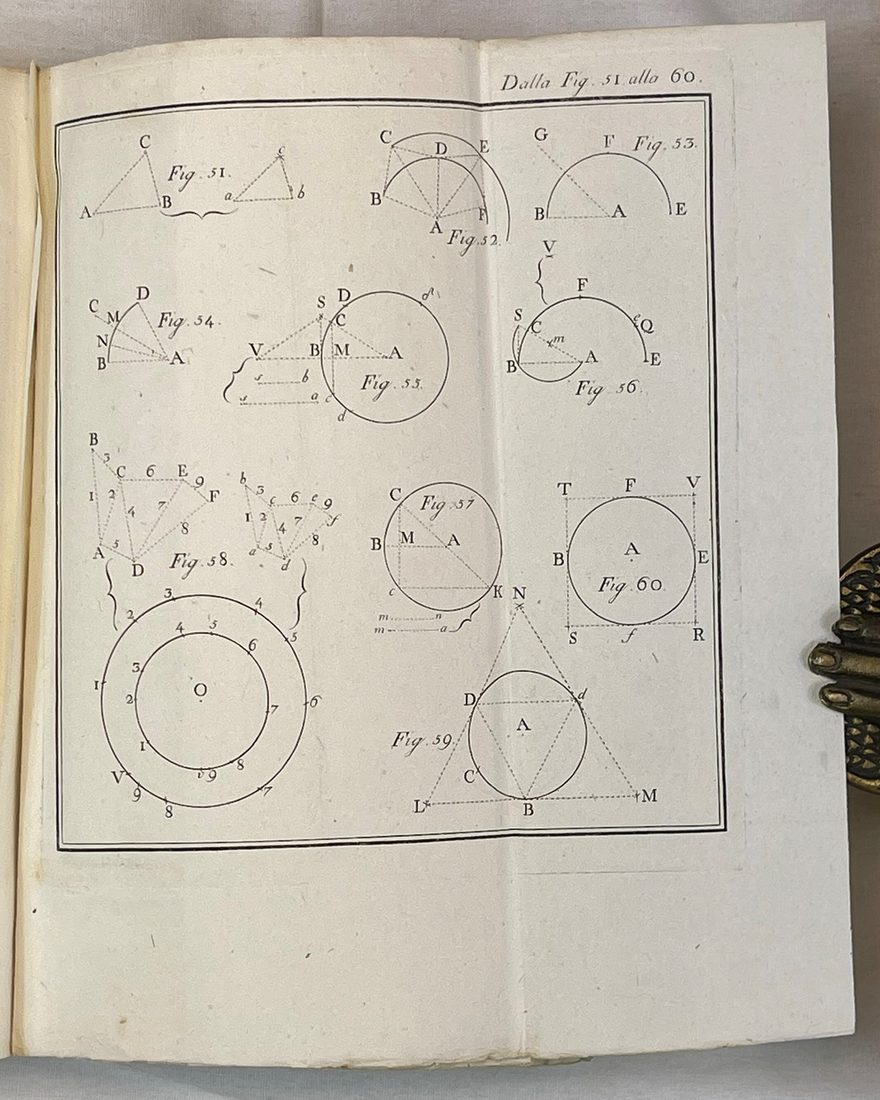
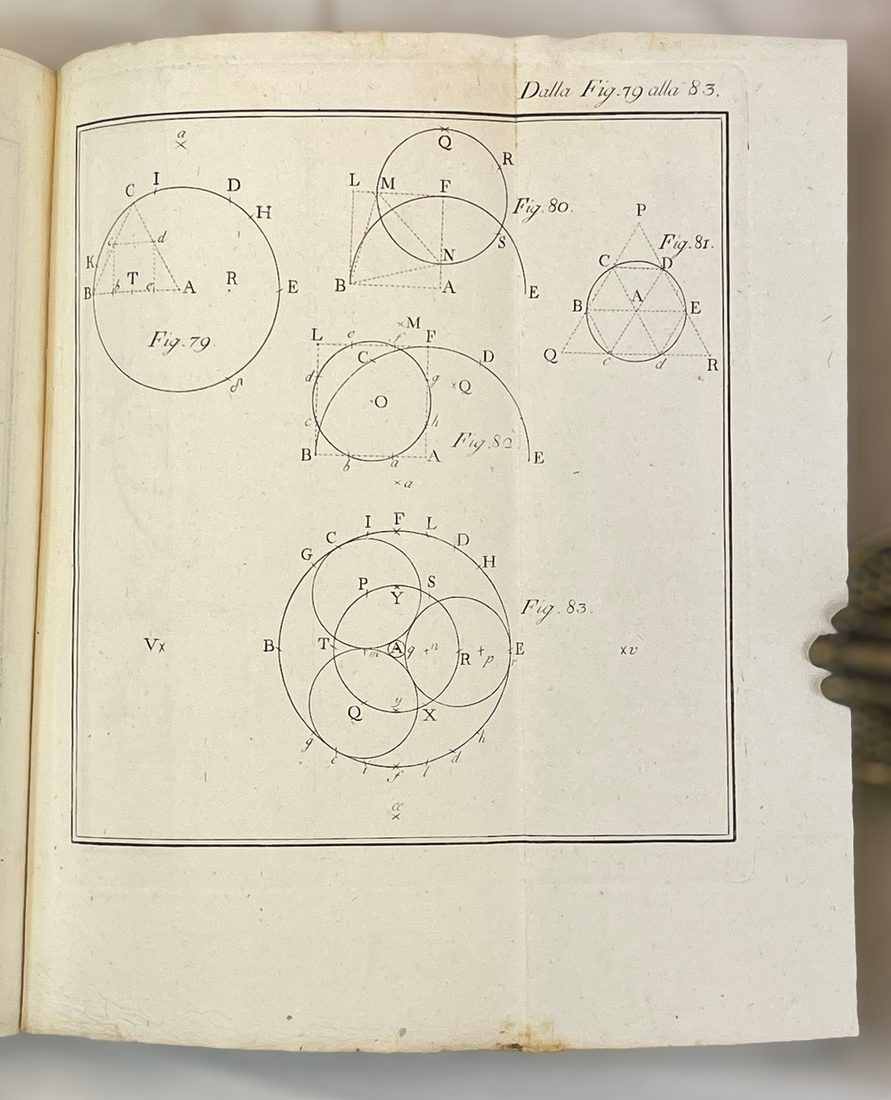
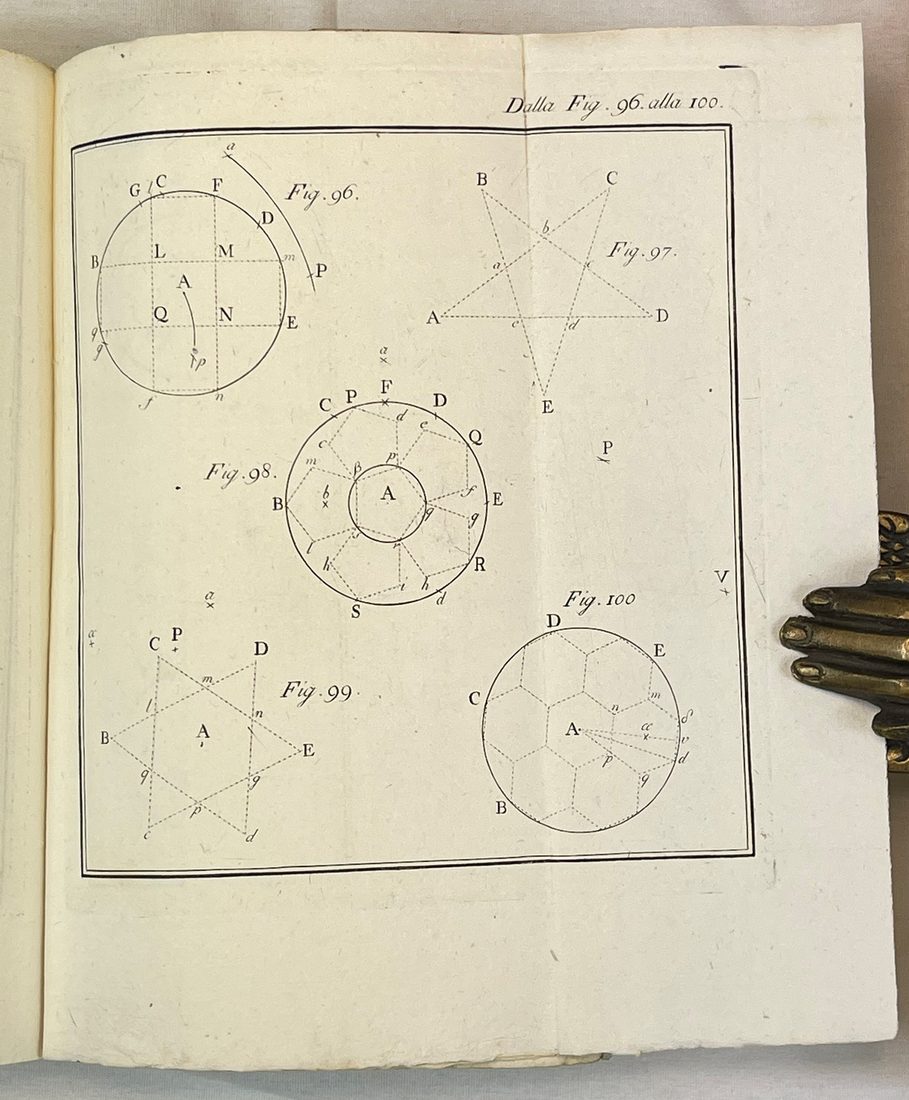
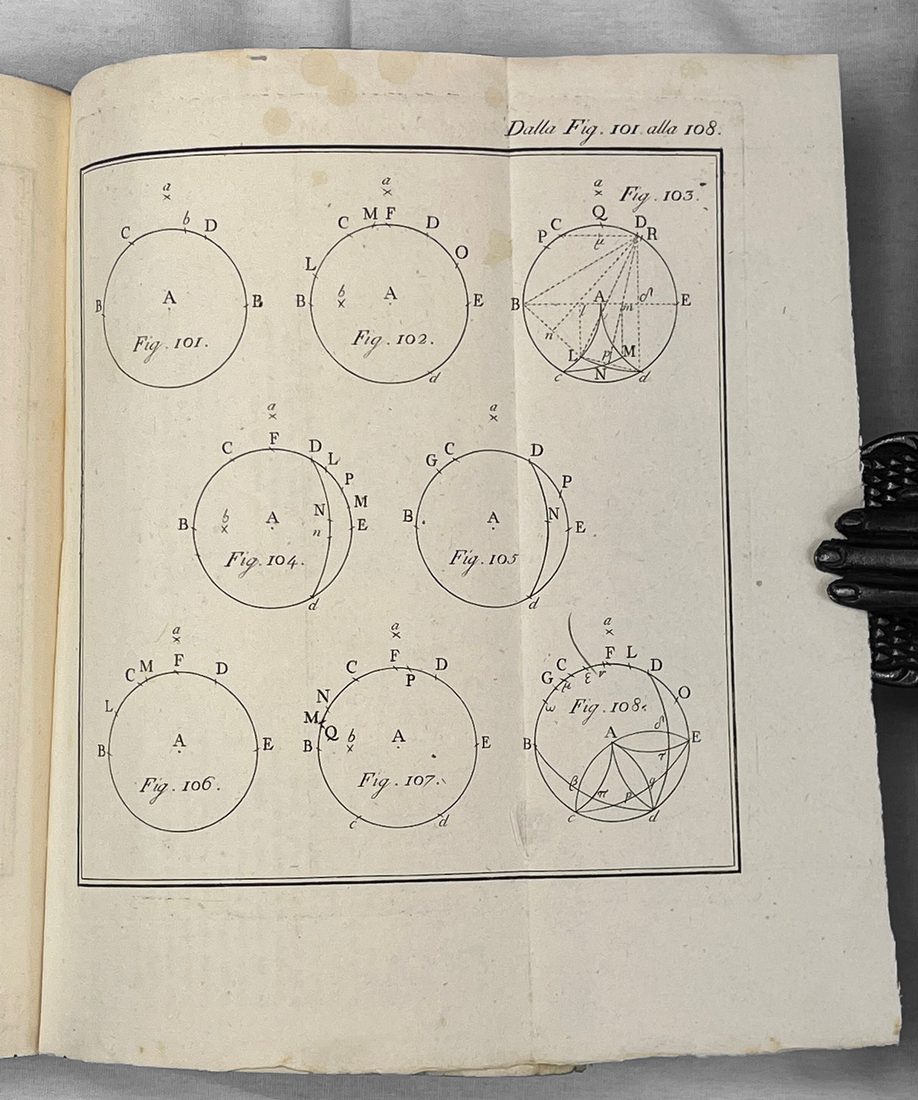
First edition of Mascheroni's most important work, with a dedication in verse to Napoleon, in which he proves that any geometrical construction of Euclidean geometry, can be carried out by means of compasses alone, admitting that a straight line is constructed once two of its points have been defined, thus demonstrating how a certain principle of economics in geometric constructions, proclaimed by all the great mathematicians of the past, from Pappus to Descartes, was regularly and violated by the use of two tools where only one was enough.
His approach was to first demonstrate how to use the compass alone to bisect a given arc of a circle, add and subtract two given segments, find the fourth proportional given three segments, find the point of intersection of two given lines, and the points of intersection between a given line and a circle.
At this point Mascheroni theoretically demonstrated how all constructions completed with ruler and compass can be considered as a composition of the elementary operations defined above, and therefore obtained using only the compass. In the spirit of the Enlightenment this work is not meant to be just theoretical but is also designed to facilitate the construction of precision instruments.
Although some authors, such as the Danish G. Mohr, had sought before Mascheroni the solution of certain geometrical problems by using the compass alone, he was able to deal with the subject of the geometry of the compass with such depth and in such a general way to make his forerunner forgotten.
Lorenzo Mascheroni (1750 - 1800) was an Italian mathematician, scholar and academic who since 1778 taught physics and mathematics at the Bergamo seminary.
His most important contributions concern mathematical analysis, with studies related to integral calculus and natural logarithms, construction science with its original studies on arc-breaking calculus and geometry, with the demonstration that solvable problems with row and compasses can also be solved with just the compass.
His name is also linked to the Euler-Mascheroni constant of which he calculated the first 32 decimal digits. The Euler – Mascheroni constant (also called Euler's constant) is a mathematical constant recurring in analysis and number theory, usually denoted by the lowercase Greek letter gamma (γ).
It is defined as the limiting difference between the harmonic series and the natural logarithm.
Napoleon, whose passion for science and mathematics is known, met Mascheroni in 1796 during the invasion northern Italy and was intrigued by his theories ion the use of the compasses, becoming, they say, a great expert. "General, we could expect from you everything but geometry lessons": with this sentence the mathematician Laplace and Lagrange welcomed Napoleon's explanations on Mascheroni's constructions, whose book, just a year after the Italian edition, in 1798 , was translated into French by Charette.
Conditions: Light marks of use along the text, small warmholes never touching the text, in general very good copy, printed on strong paper, untrimmed and uncut, in its original paper wrapper.
References: RICCARDI P., "Biblioteca Matematica Italiana, Milano 1952, vol. 1, 134, 9.1, “Pregiata e Rara”.