Transparentes: French Satirical Transparency Cards

| Macro-category | Playing Cards and Tarot |
| Subcategory | Transformation Playing Cards |
| Author | Anonymous |
| Provenance | Paris |
| Publisher / Maker | Typographie Vert aîné, rue François-Miron [IVe arr.] |
| Year | 1860 - 1890 |
the transparent jest:
satire and gallantry revealed by light
a rare French set of eighteen hand-coloured transparency cards,
with hidden scenes disclosed only in transmitted light
Transparentes. Paris: David, éditeur; Typ. Vert, 4 rue François-Miron [IVe arr.] [s.d., ca. 1860–1890].
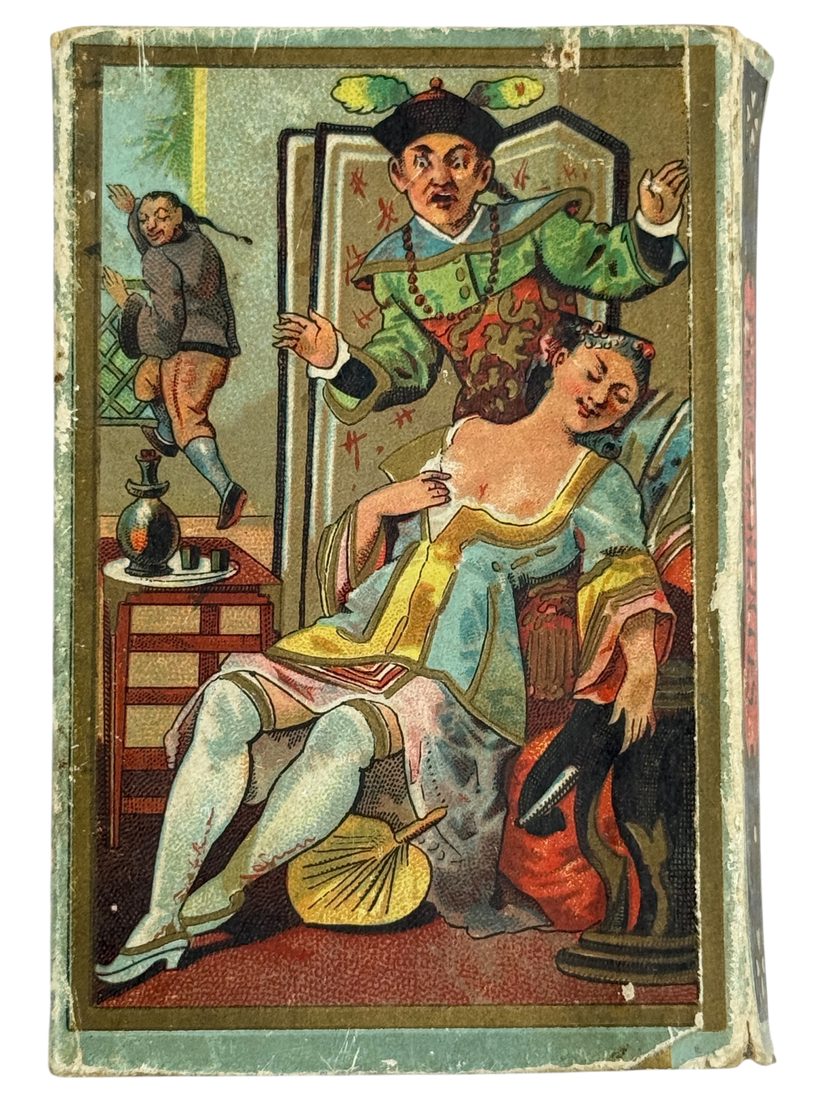
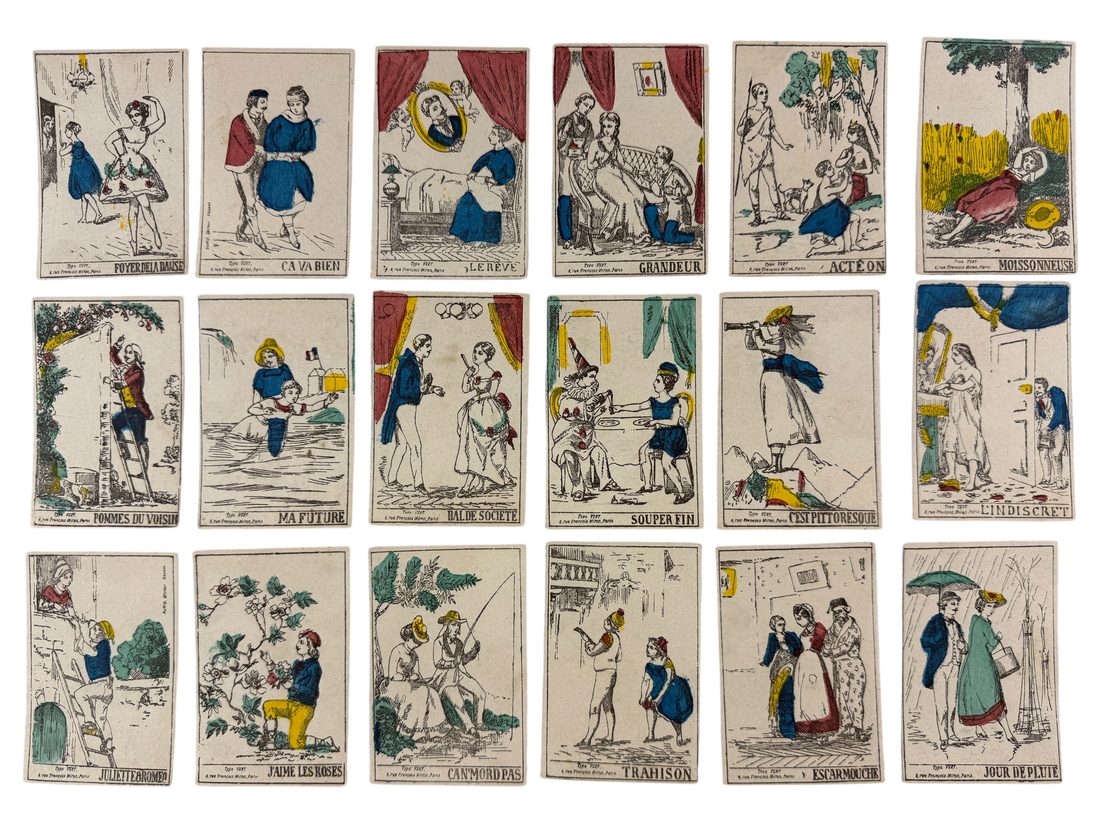
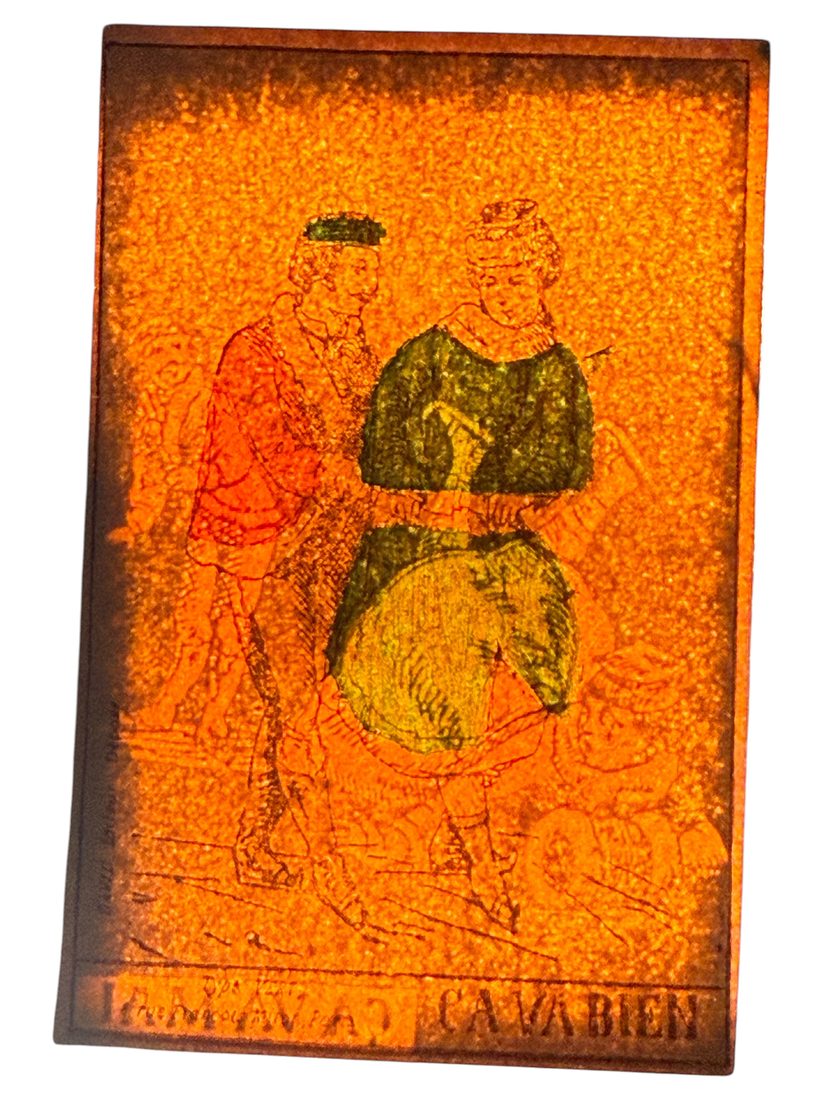
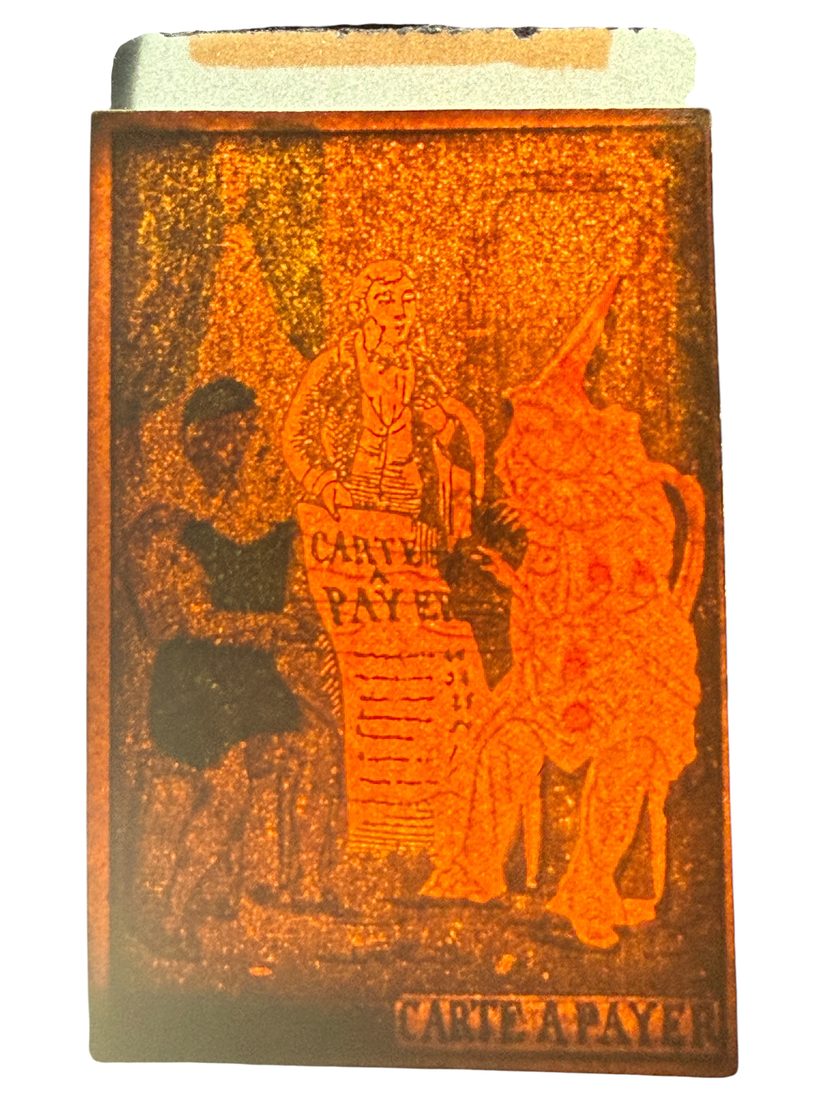
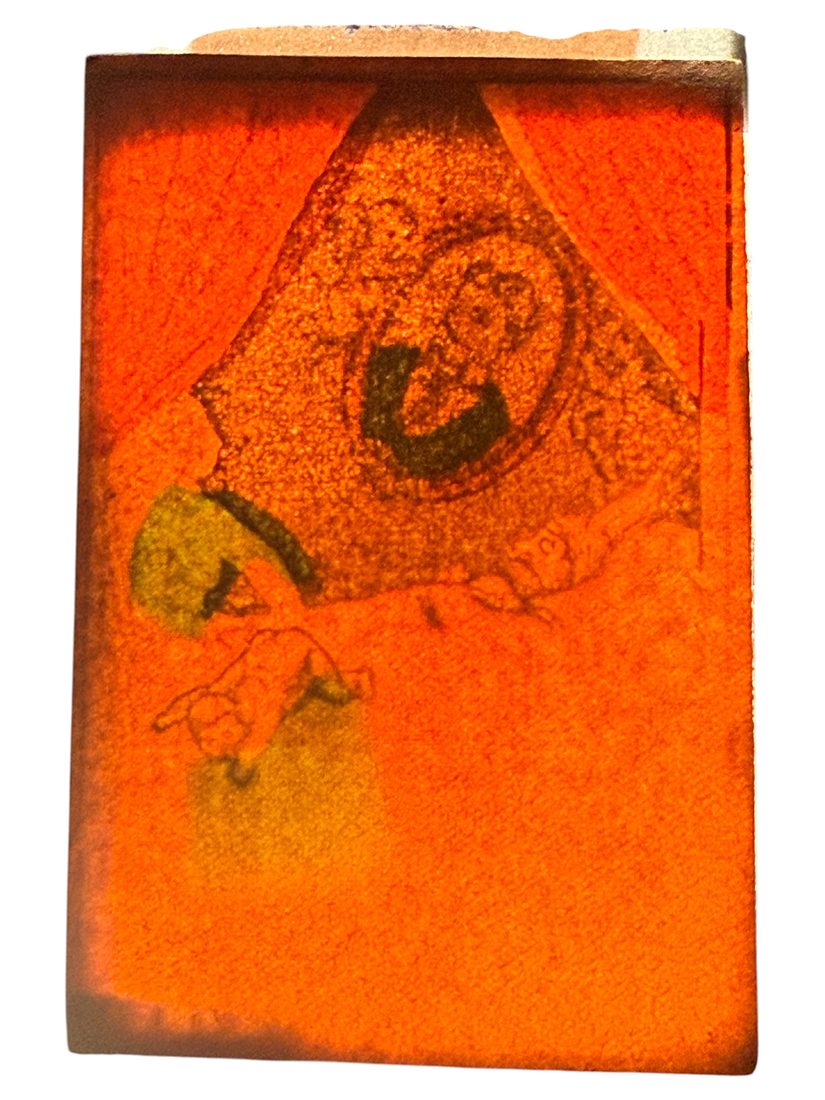
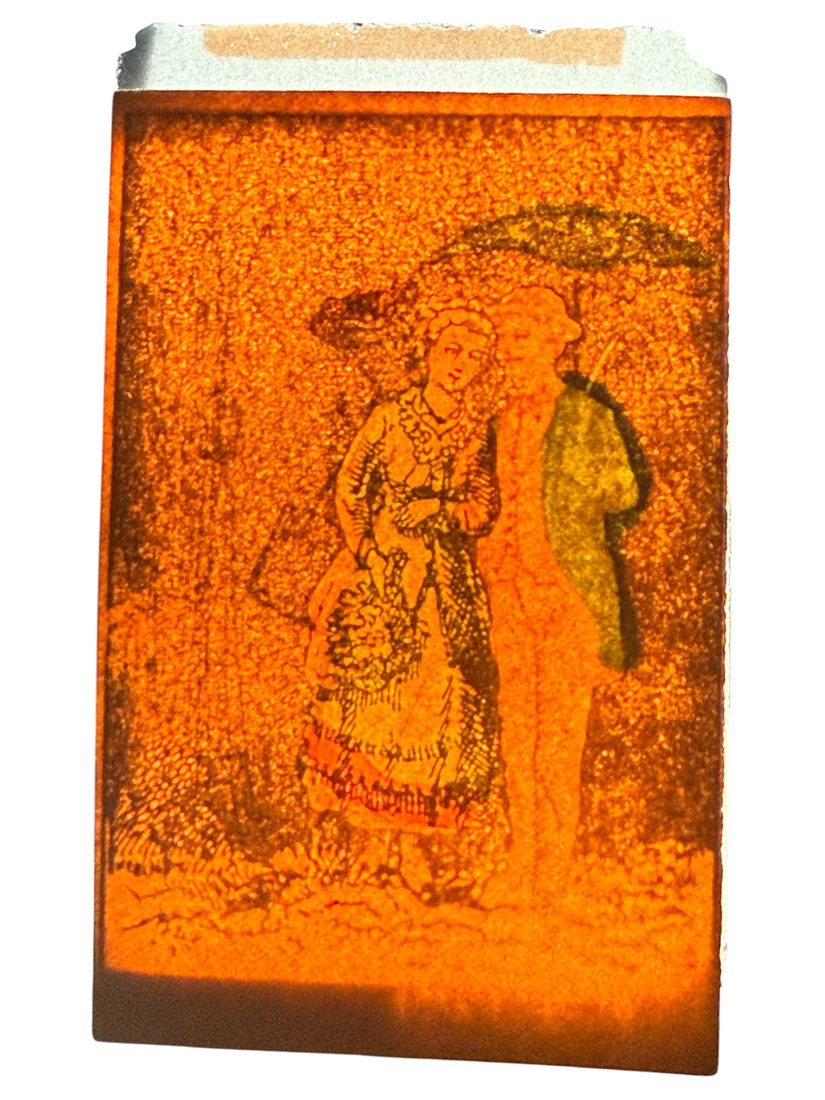
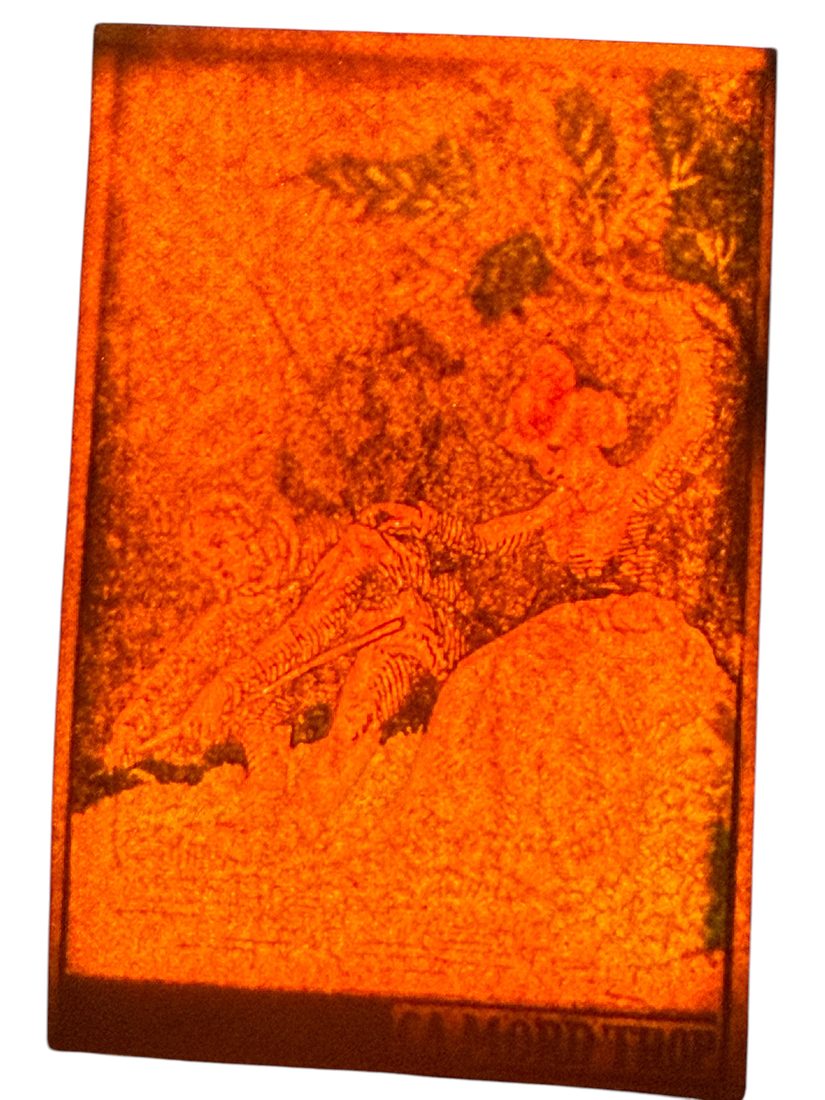
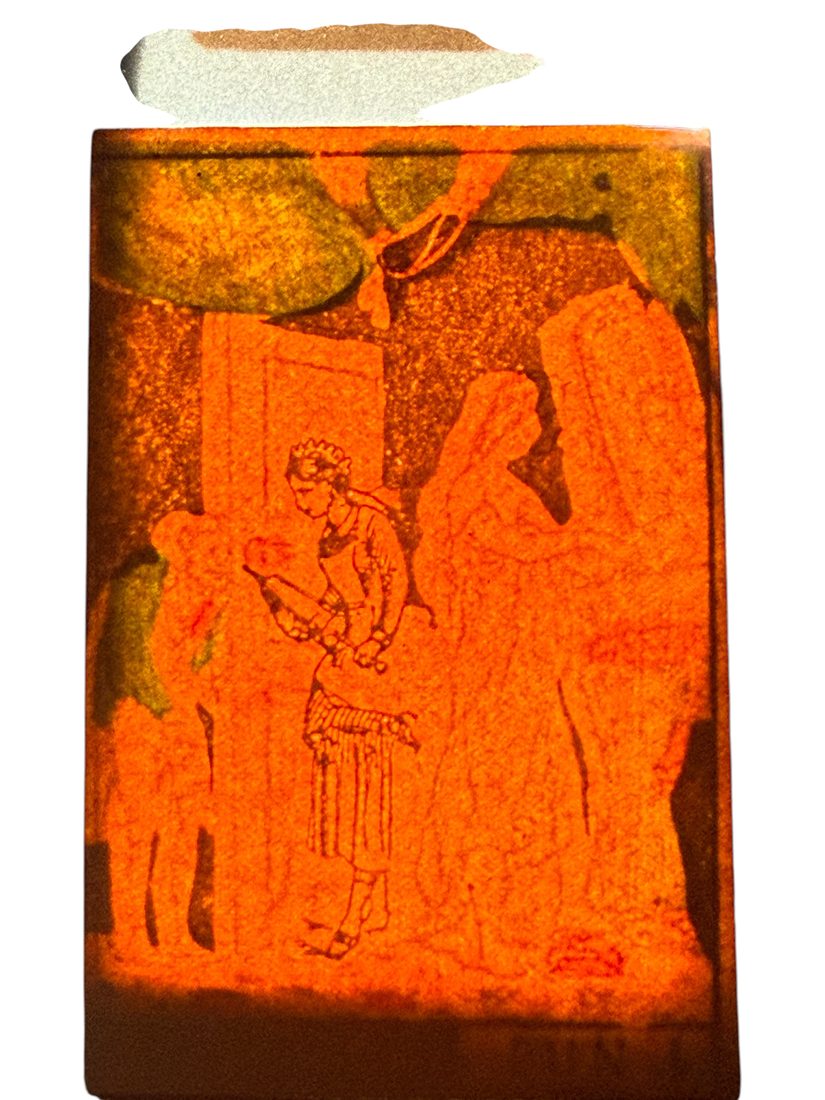
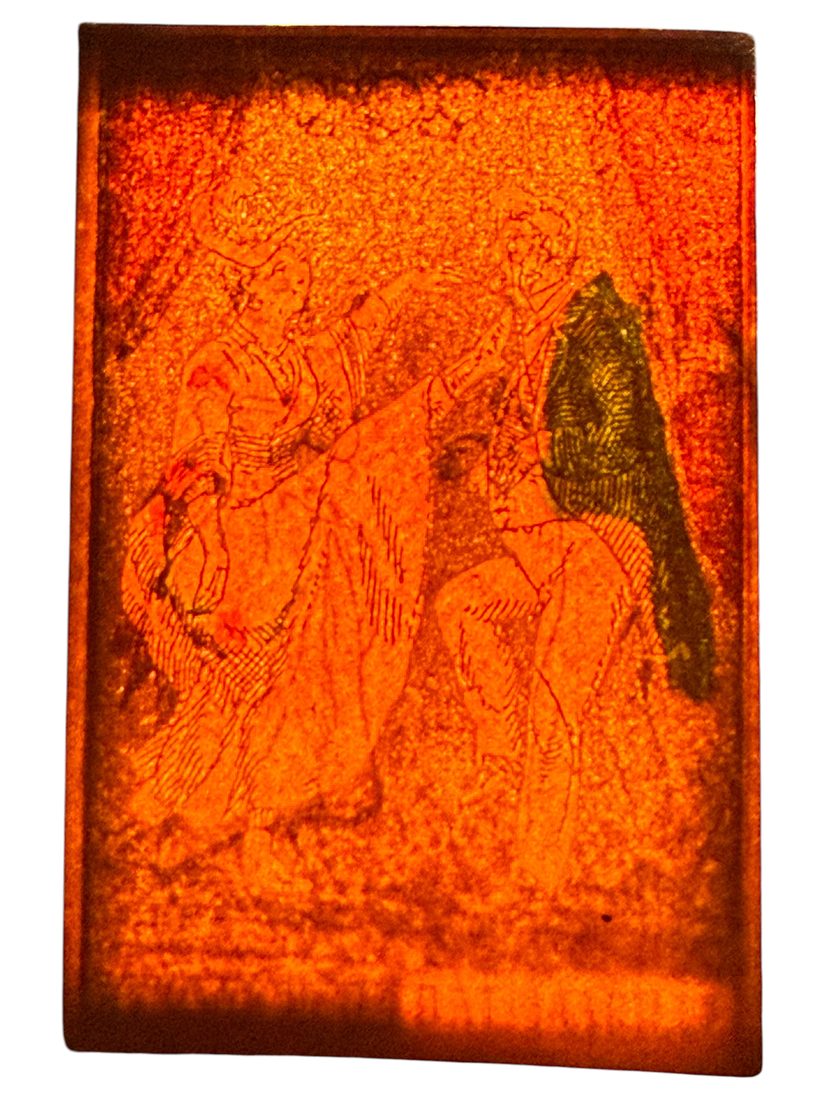
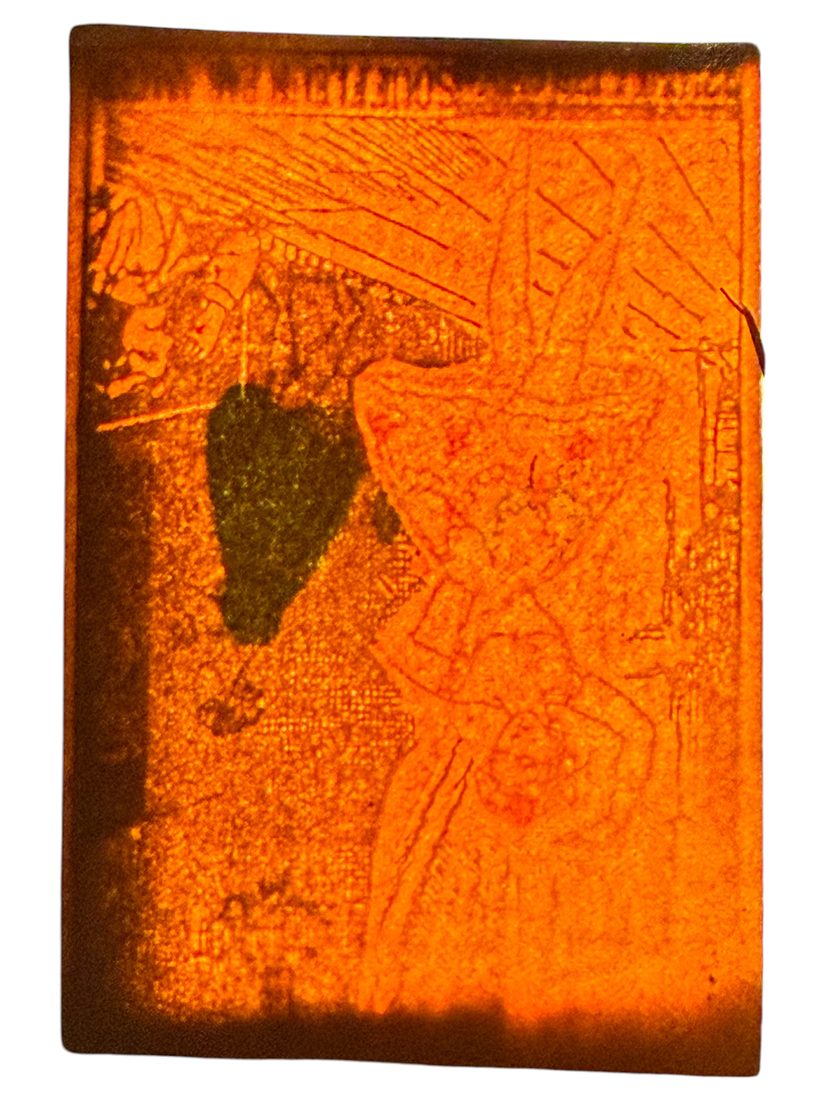
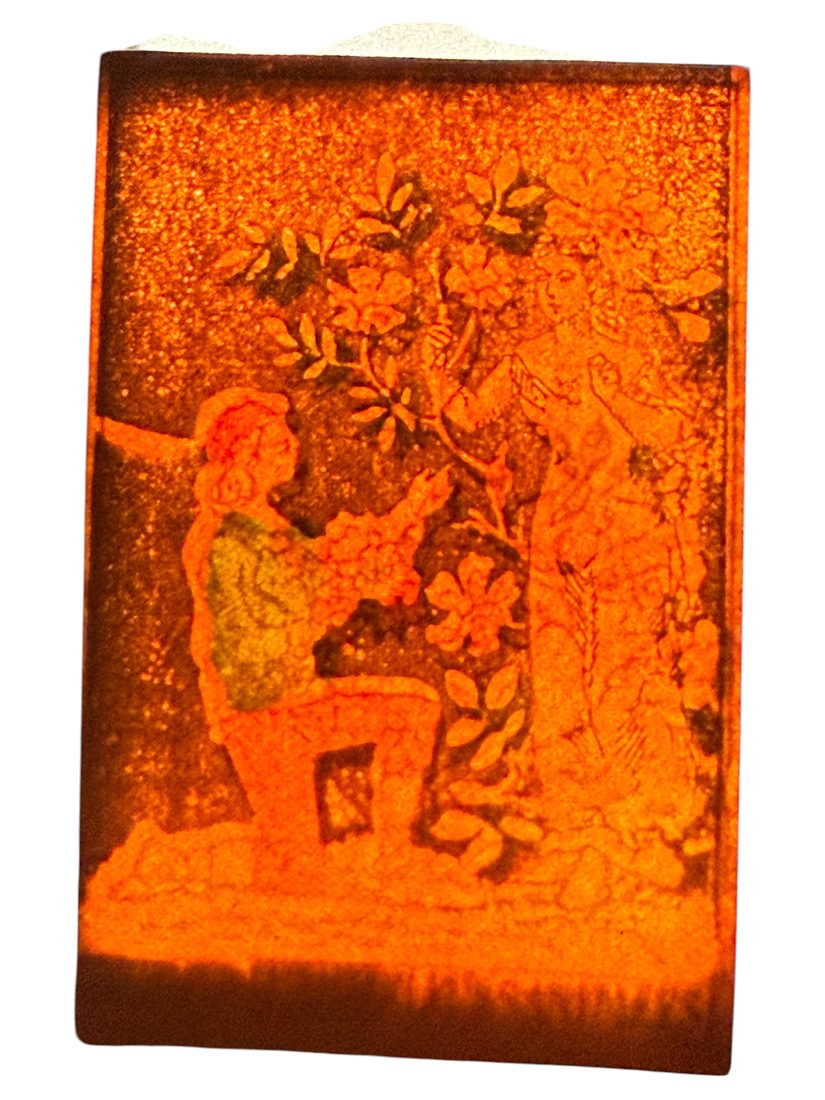
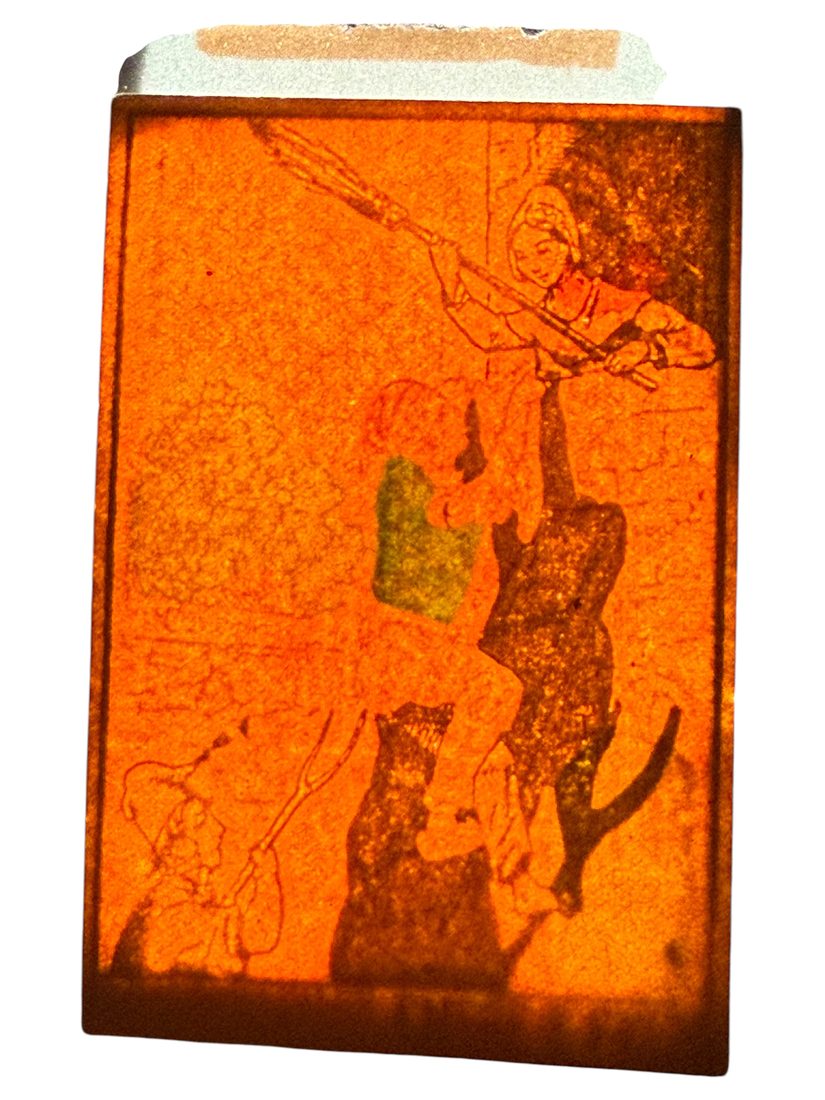
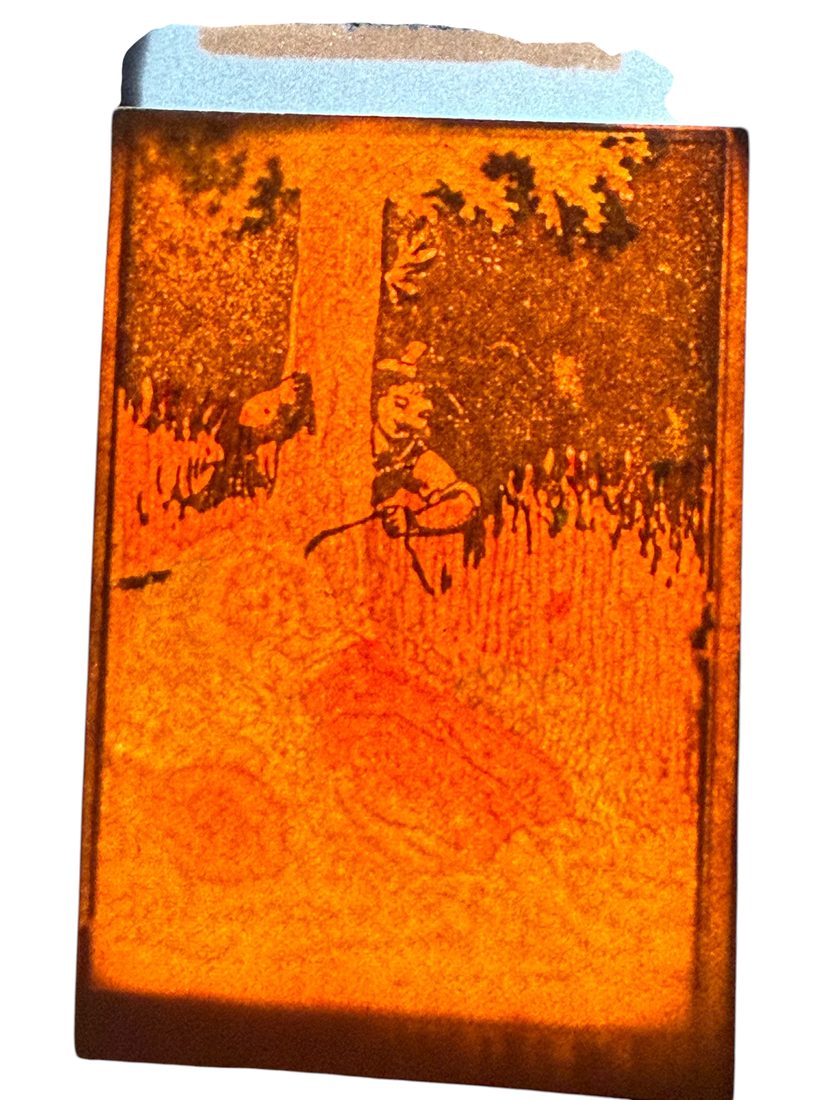
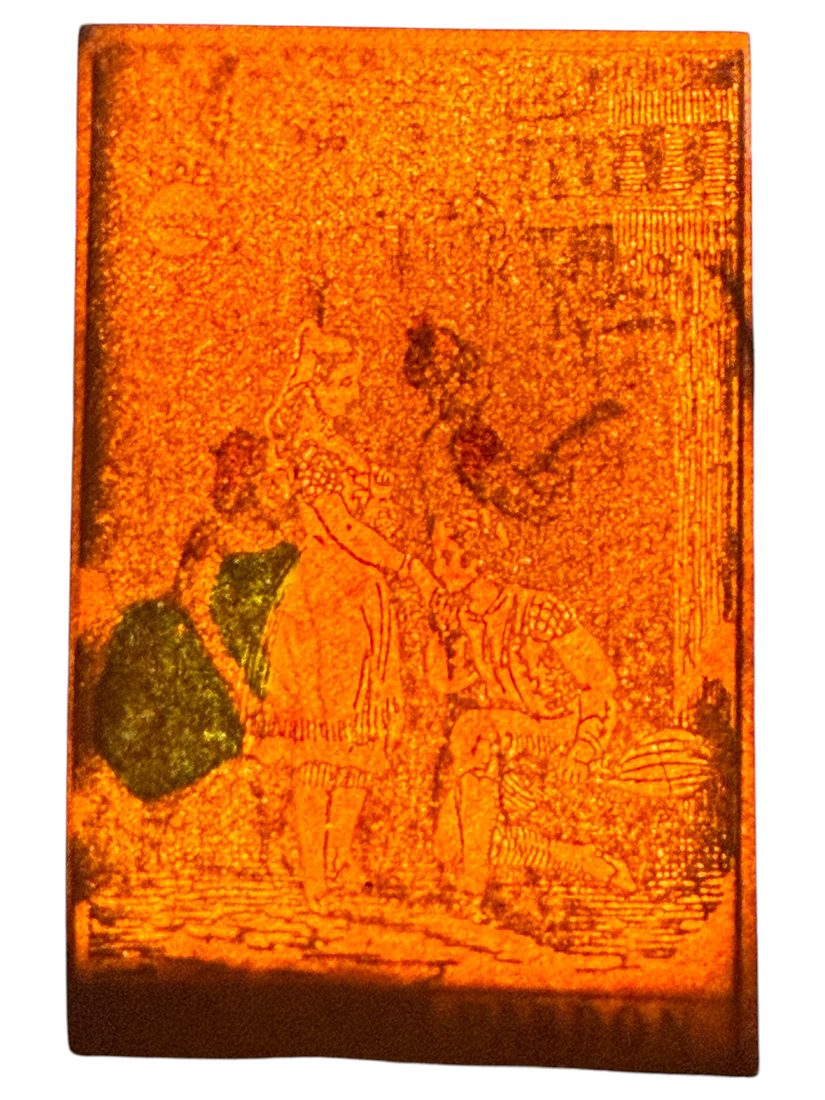
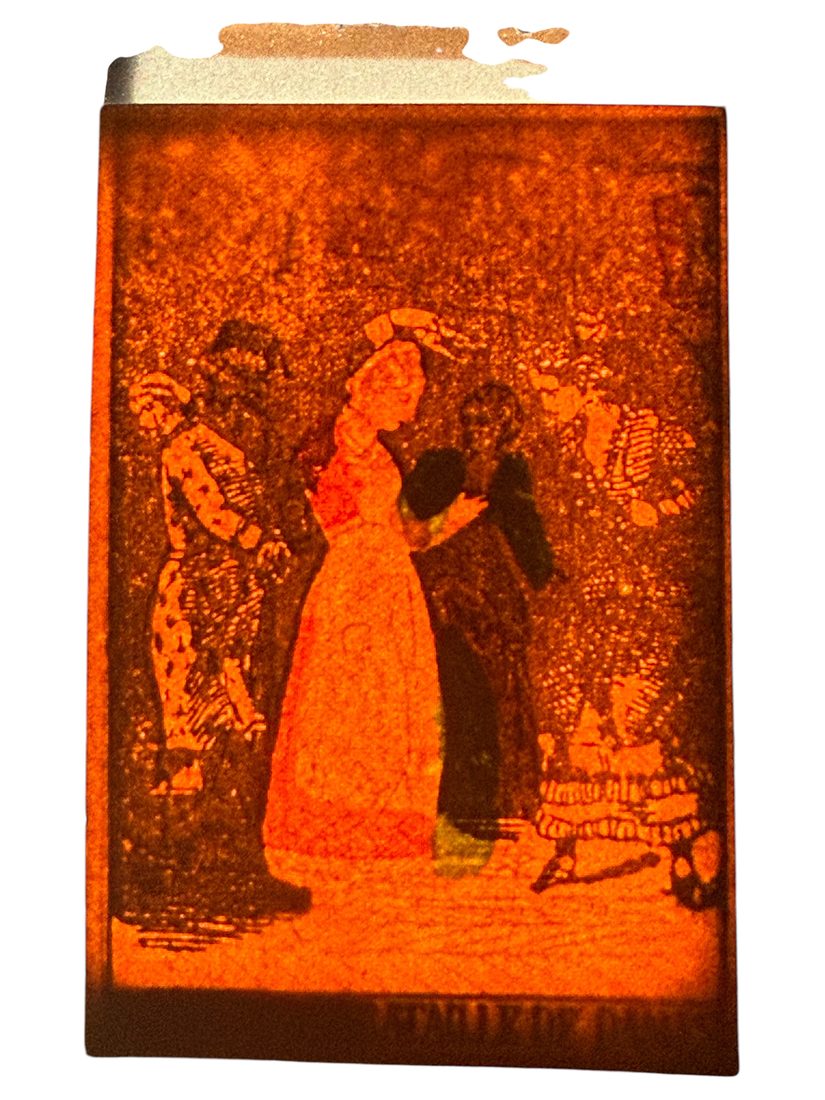
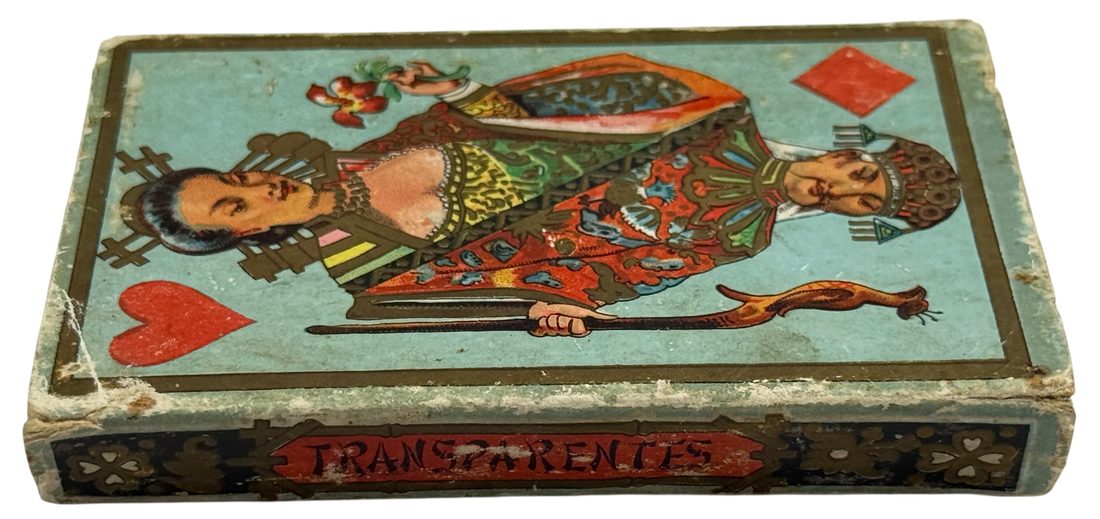
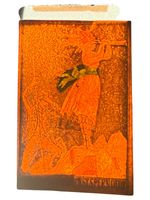
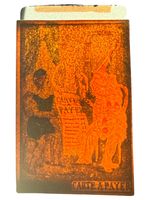
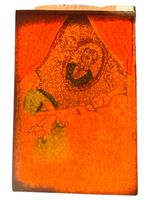
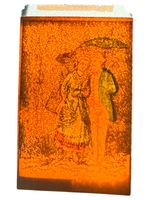
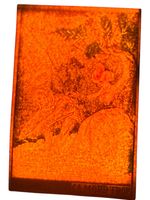
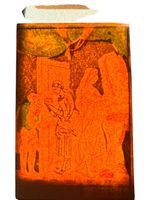
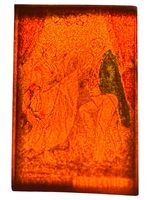
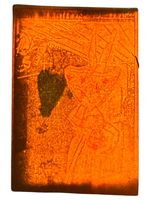
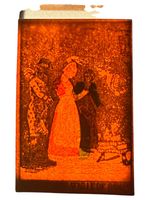
18 cards (90 × 58 mm), relief-printed line block with hand-stencil (pochoir) colouring, accompanied by a colour-printed pasteboard trade box, the spine lettered Transparentes. A thematic fantasy set rather than a suited gaming pack, each card bearing a French caption set in type beneath the image, together with the printer’s address. Its defining feature is a second image, printed on an inner layer of the composite pasteboard, invisible in ordinary light and legible only when the card is held against a strong source, where it discloses a satirical or licentious scene that answers, in ironic counterpoint, the decorous title shown on the face.
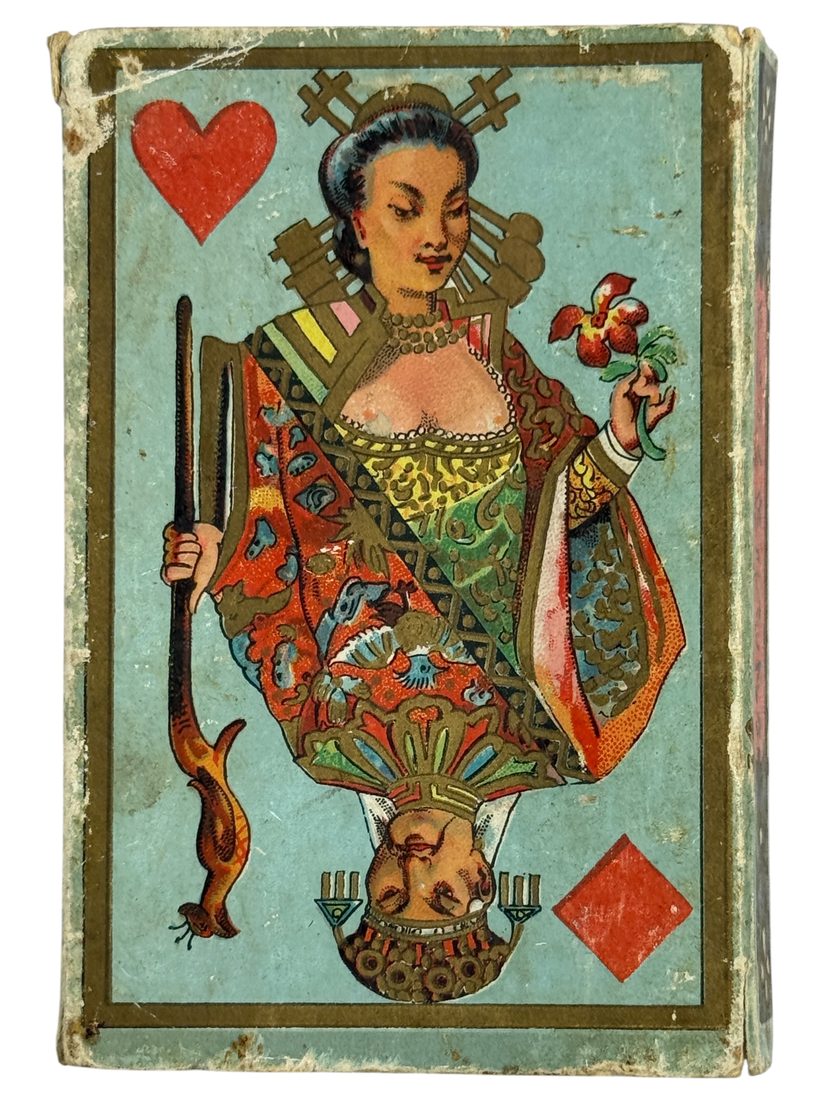
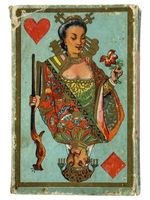
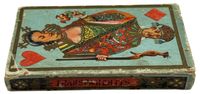
The set belongs to the small and historically distinctive corpus of French cartes transparentes, whose ingenuity rests on a controlled dual register: an innocent titled scene in reflected light, concealing a second figurative layer perceptible only by transmission. The historic commercial name of the genre survives on the spine of the box, lettered Transparentes, the trade name under which the David line was issued; the box itself, decorated with a suit-signed court card, is the generic commercial packaging of the type and does not correspond to this non-suited series. Unlike the suited transparency packs, in which the hidden imagery is grafted onto an orthodox gaming structure, this is a thematic series of captioned vignettes, closer in spirit to the cartes à rire and the transformation cards, where the wit lies in the play between the visible title and the concealed image.
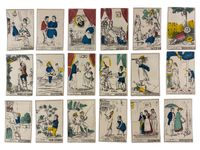
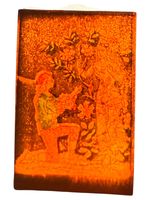
In ordinary light the set presents eighteen single-figure cards, each a small scene of bourgeois and gallant manners drawn from the repertory of nineteenth-century social satire, and each given an arch one-line title set in type beneath the image. The principal scenes are printed in black from a line block, consistent with relief or typographic printing and in agreement with the printer’s own designation “Typo”, and are free of the half-tones of lithography. The colouring is applied à pochoir, in flat washes of pale blue, carmine, yellow, and green, the colour frequently straying beyond the printed outline, a characteristic and diagnostic trait of stencil work. The visible titles range across courtship and flirtation, as in J’aime les roses, where a kneeling suitor adores a rose-bush, and the umbrella-shaded promenade of Jour de pluie; jealousy, betrayal, and prying eyes, as in Trahison and L’indiscret; and the world of theatre and society, in Bal de société, Foyer de la danse, and Souper fin, the last with its Pierrot at table. A mythological register is admitted through Actéon, the hunter who surprises Diana at her bath, a subject whose erotic charge makes it especially apt for the genre.
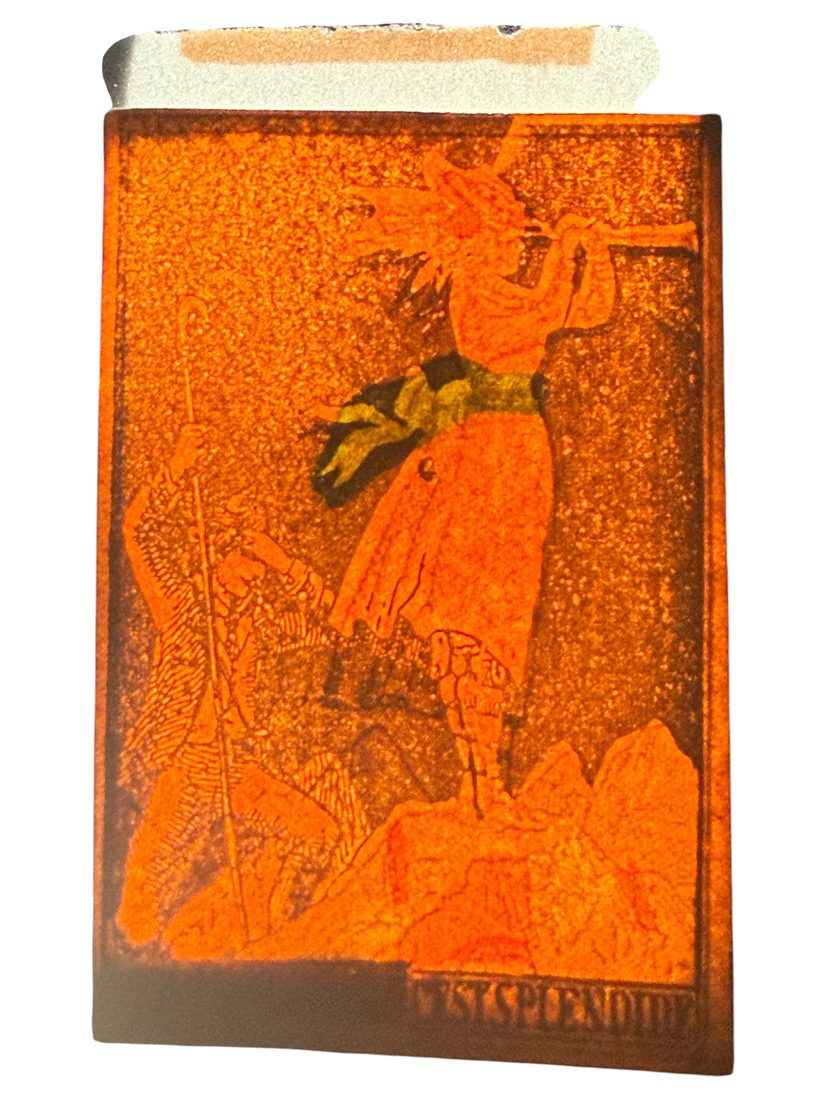
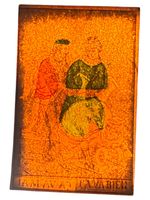
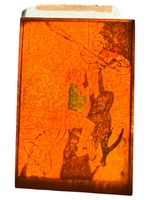
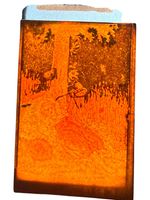
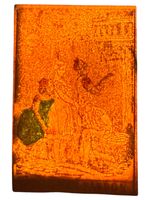
The full programme emerges only through translucency. Held to the light, each card yields a second composition with its own caption, and the relationship between the two is consistently one of ironic or moralising double entendre. The hunter of Actéon becomes Changé en cerf, transformed into a stag in punishment, completing the myth; C’est pittoresque, the woman raising a spyglass, becomes the admiring C’est splendide; Ça n’mord pas, an angling scene, turns into the suggestive Ça mord trop. Other transparencies, among them Pardon, Puni, Carte à payer, Bal masqué, and Décadence, supply the licentious or satirical pendant to the decorous face. The appeal of the object lies in this concealed reversal, in which the respectable surface is undone by the image the light discloses. The chinoiserie scene on the front of the box, an interior with a Chinese figure surprising a woman en déshabillé, belongs to the commercial decoration of the box rather than to the fantasy cards themselves, though it places the packaging within the Orientalising fashion of the later nineteenth century.
Transparency cards form a distinctive chapter in the history of French popular imagery and of the playing-card trade. They emerged in France around the middle of the nineteenth century, in the cultural climate of the Biedermeier period and the Second Empire, and remained in production into the Belle Époque. Their subjects run from the romantic and merely suggestive to the frankly pornographic, and the recorded repertory of motifs is considerable. Because of this content, many such cards circulated in part through semi-clandestine channels and were produced cheaply as ephemeral novelties, with the consequence that complete sets, and above all sets surviving in their original boxes, are scarce.
The present set is best understood not as a suited gaming pack but as a fantasy series in the spirit of the cartes à rire and the transformation cards, the nineteenth-century French tradition in which the card became a vehicle for caricature, proverb, and social comedy; unlike those transformation packs, which retain the four suits within their pictorial play, the present set dispenses with suit-and-rank structure altogether. The captioned format, the stencil colouring, and the relief-printed line all place it within the economy of the small Parisian imageries and jobbing typographers who supplied the popular market. The French card trade of the period had two distinct registers: the standard suited patterns were the province of the large industrial makers, foremost B. P. Grimaud, while fantasy, satirical, and novelty cards were issued by a more varied group of smaller publishers and jobbing printers. It is to this second milieu that the present set, printed by Vert for the publisher David, belongs.
The imprint gives two names. At the head of each card appears the publisher, lettered “David, Éditeur”, with the registration mention “déposé”; along the side runs the printer’s line, “Typ. Vert, 4 rue François-Miron”, in the fourth arrondissement of Paris. Vert was one of the small Parisian jobbing typographers, its designation Typographie lettered on the cards, who printed playing-card and novelty work for publishers such as David; it appears here as the printer of the set, not its publisher. A set carrying both a named publisher and a named printer is uncommon in a genre usually issued anonymously, and it lends these cards a rare documentary anchor. The related imprint “Vert aîné, 8 rue François-Miron”, recorded on other Parisian decks around 1900, marks a later state of the same firm.
These sets form a specialised and discreet branch of the broader nineteenth-century transformation tradition, in which graphic ingenuity invites the viewer to discover an alternative reading within an apparently conventional format. Here the transformation depends not on visual punning alone but on the optical condition of light passing through layered paper. It is reasonable to suppose that this technical premise shaped both the private mode of use and the limited survival of such sets, since holding the cards before a candle or lamp to activate the hidden scenes would have exposed them to heat and handling, traces of which are often observed in surviving examples. The disparity between their probable original diffusion and the small number of extant examples is therefore notable, and the survival of a coherent captioned series bearing both a named publisher and a named printer is correspondingly rare.
Condition: The cards are generally toned, as is normal for thin nineteenth-century pasteboard. The principal scenes are sound, the stencil colour fresh and the line impression clear. The box shows wear consistent with its age and fragility, with rubbing and soiling to the covering paper, edge wear and small losses at the corners and along the spine, and some chipping to the printed surface, while the title Transparentes and the principal decoration remain legible. Overall, well preserved.
References: T. Denning, Translucent Playing Cards, Birmingham: Denning, 1976; H. R. d’Allemagne, Les Cartes à jouer du XIVe au XXe siècle, Paris: Hachette, 1906; D. Hoffmann, The Playing Card: An Illustrated History, New York: New York Graphic Society, 1973; K. Wowk, Playing Cards of the World: A Collector’s Guide, Guildford: Lutterworth Press, 1983, pp. 66–67; S. Mann, All Cards on the Table, Leinfelden: Jonas, 1990; S. Wintle, Translucent Playing Cards, in The World of Playing Cards, https://www.wopc.co.uk/france/translucent/translucent-playing-cards.