Circus Deck
| Macro-category | Playing Cards and Tarot |
| Subcategory | Transformation Playing Cards |
| Author | Charles Pry |
| Year | 1975 |
an emblematic example of the meeting
between tradition and experimentation
the «Cirque» deck and its contribution to the renewal of design
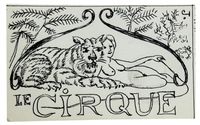
Transformation Cards. Charles Pry. Le Cirque, Brussels, 1975.
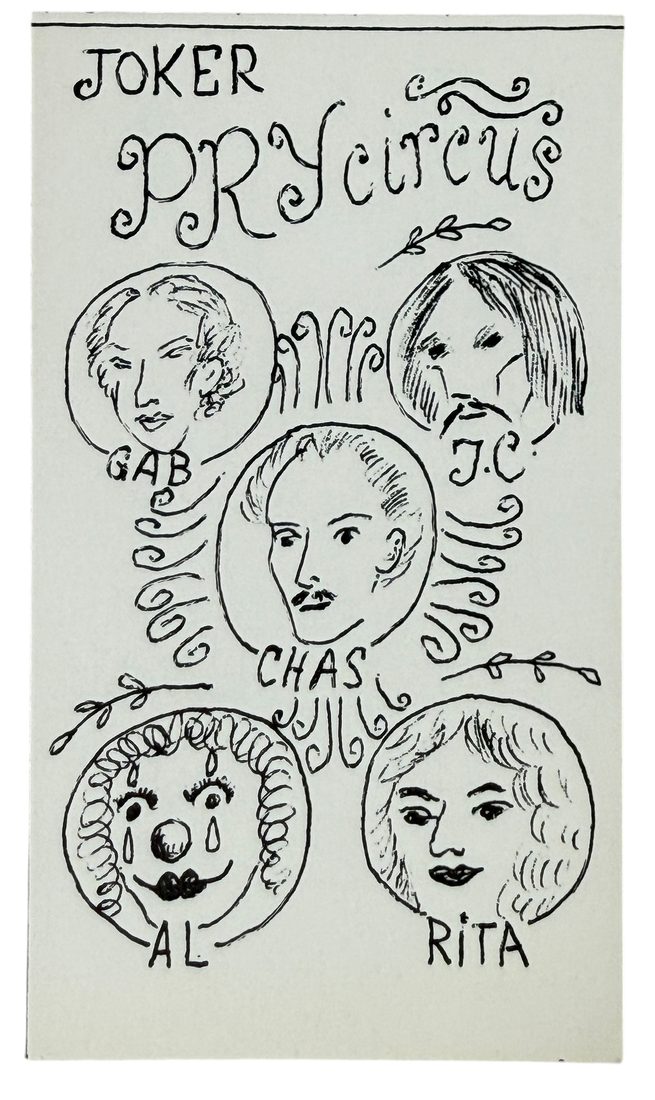
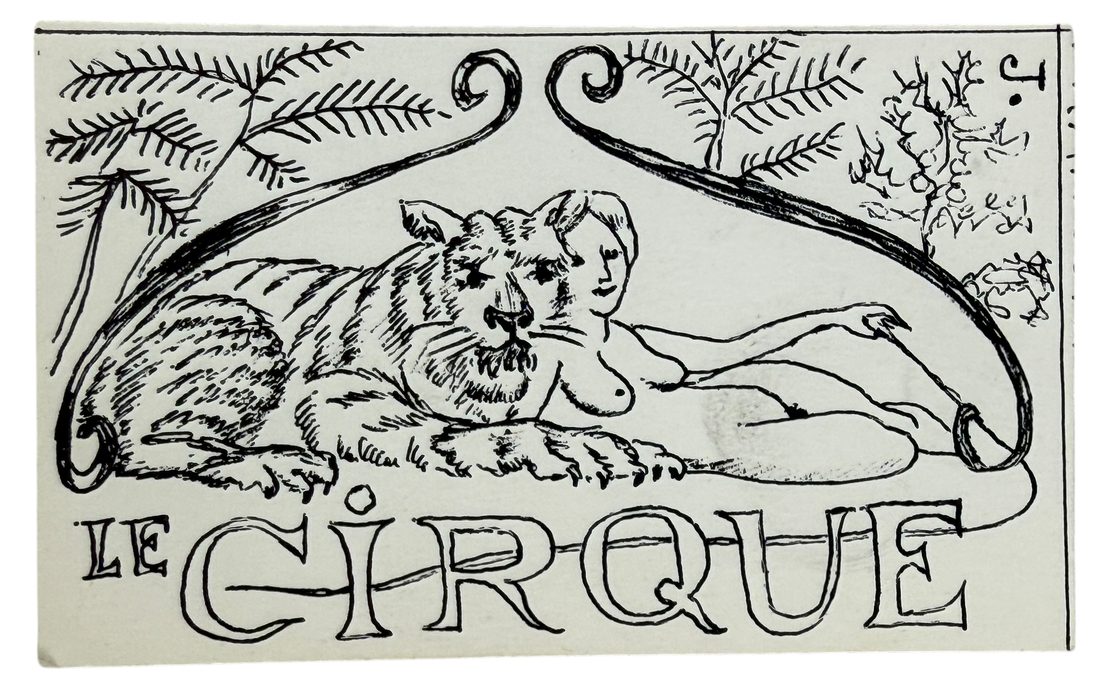
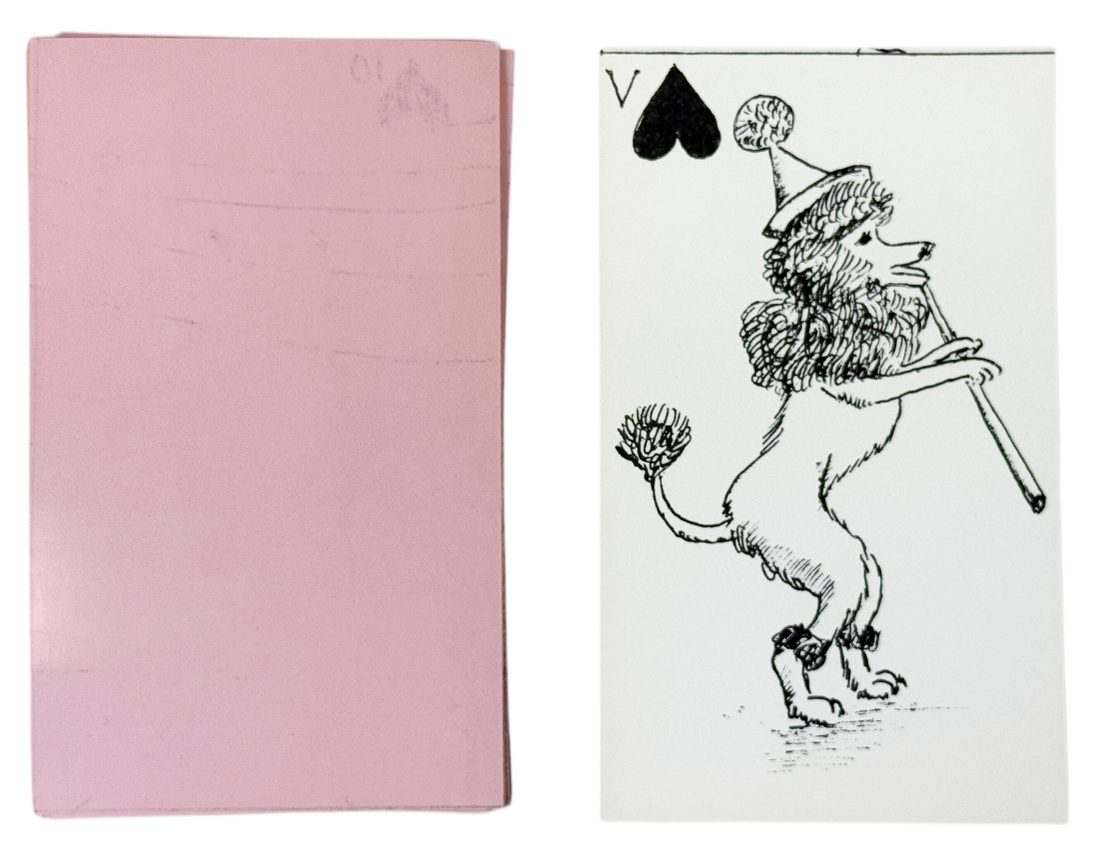
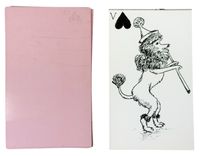
54 cards (100 x 60 mm), 52 playing cards, 1 joker, and 1 title card, lithographed on cardstock from the original linoleum design, laminated, with a solid pink back. Limited edition of 300 copies.
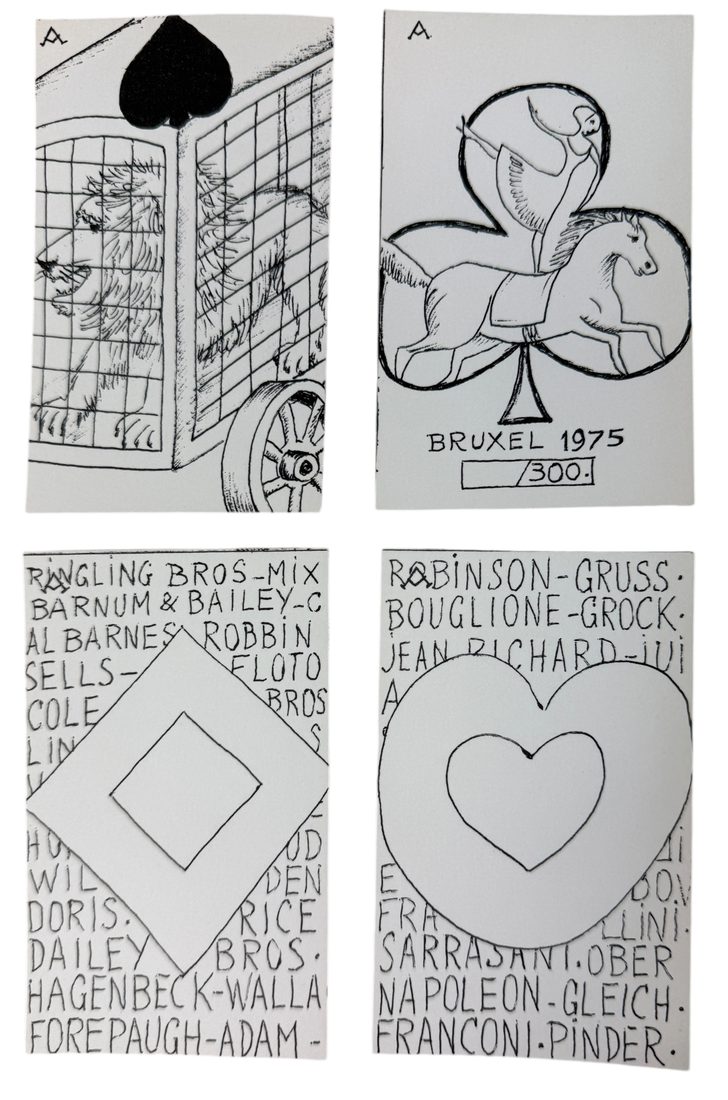
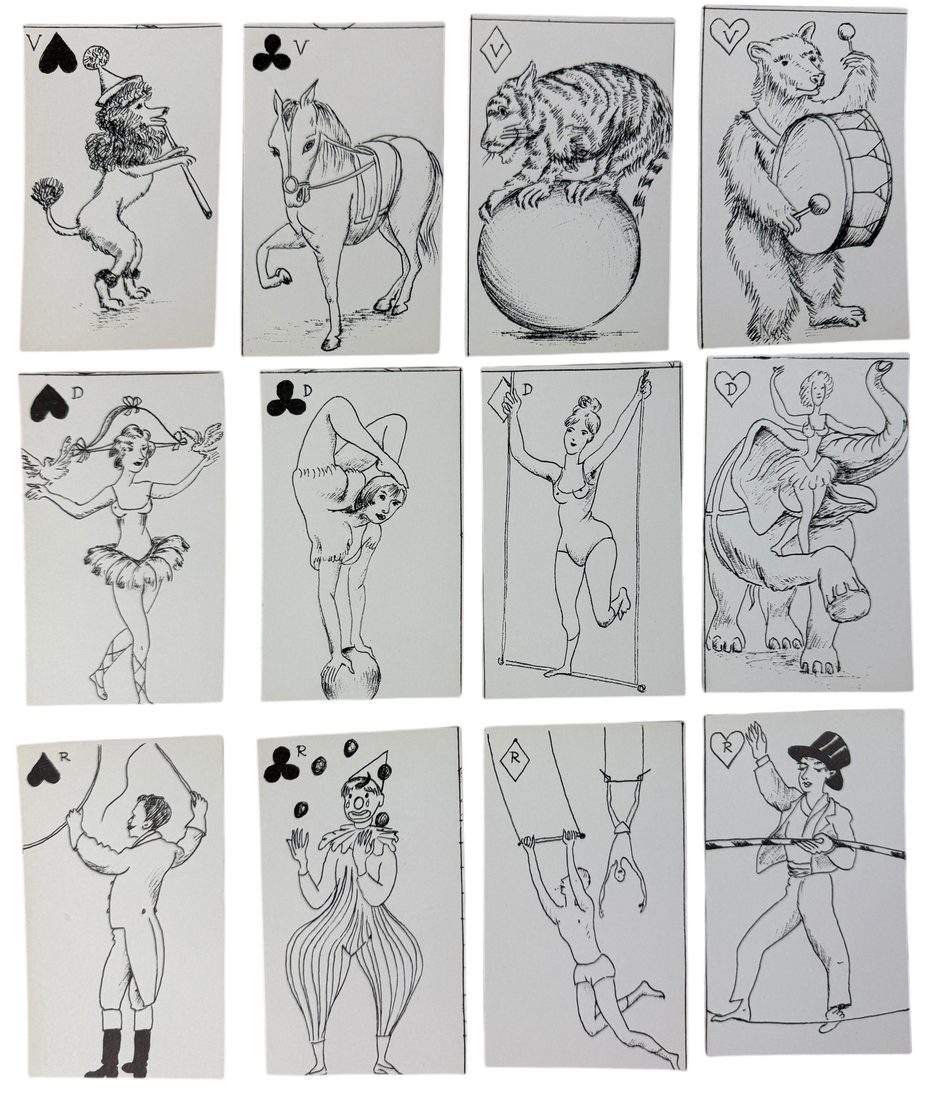
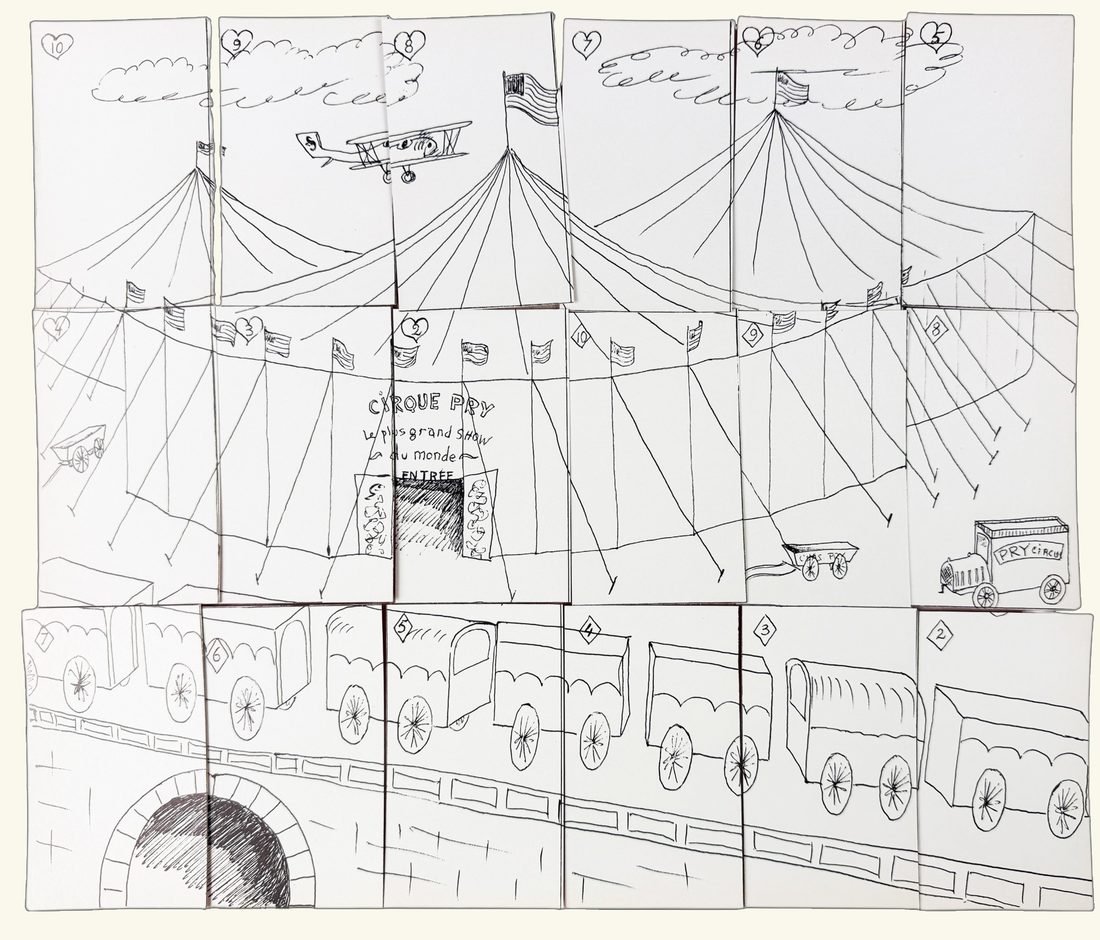
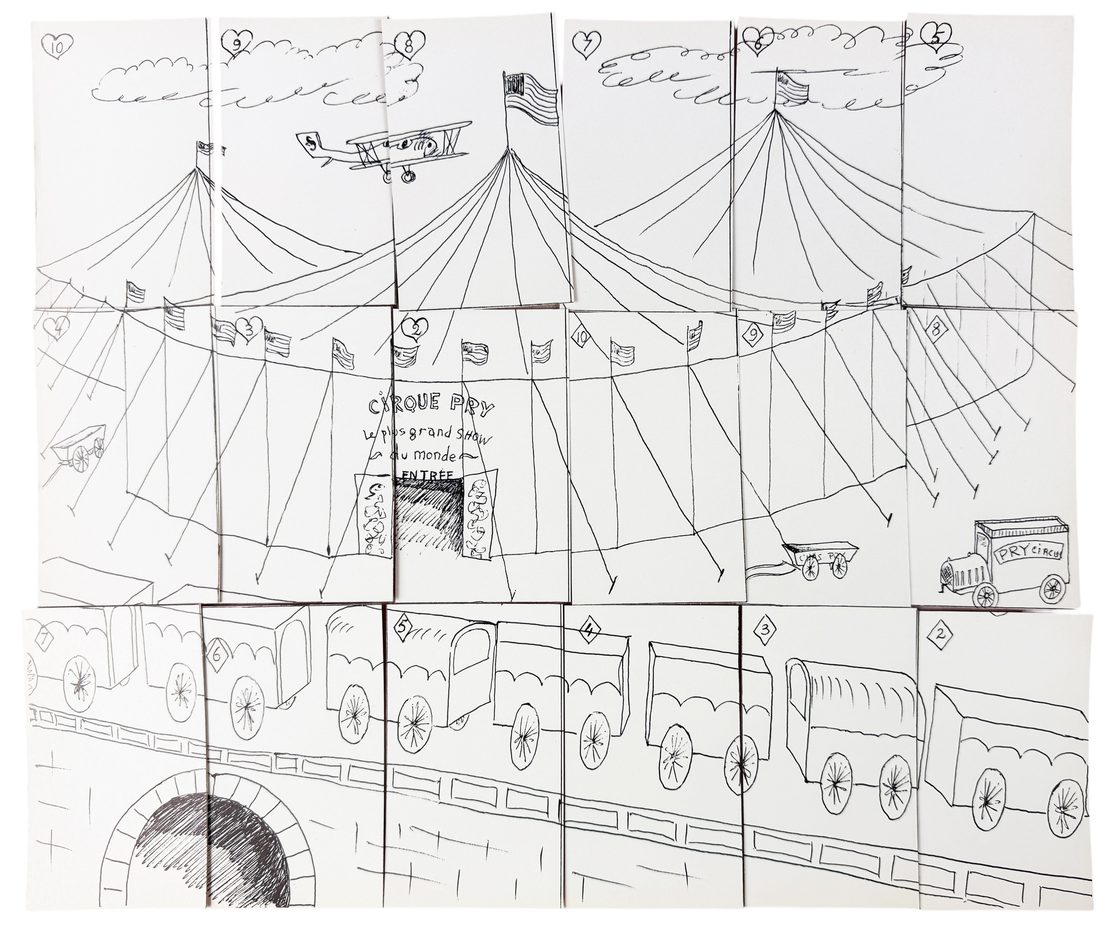
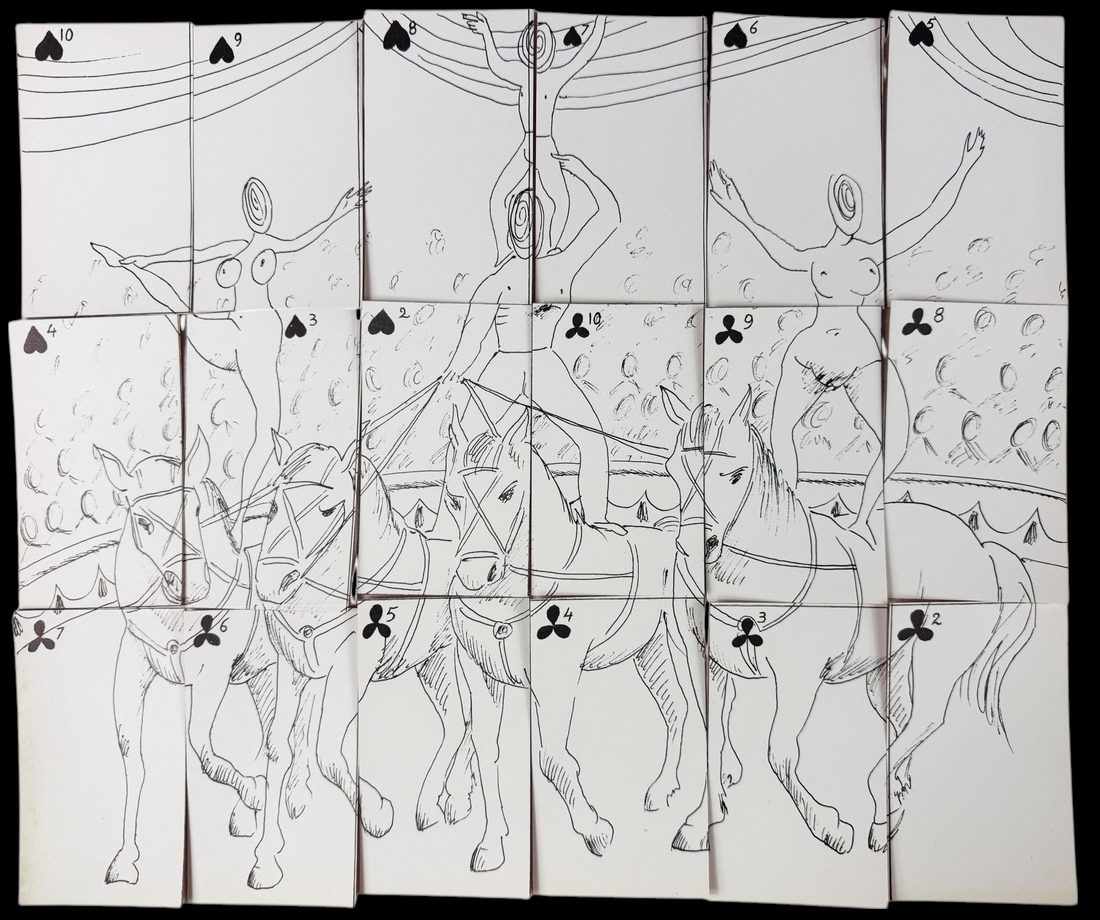
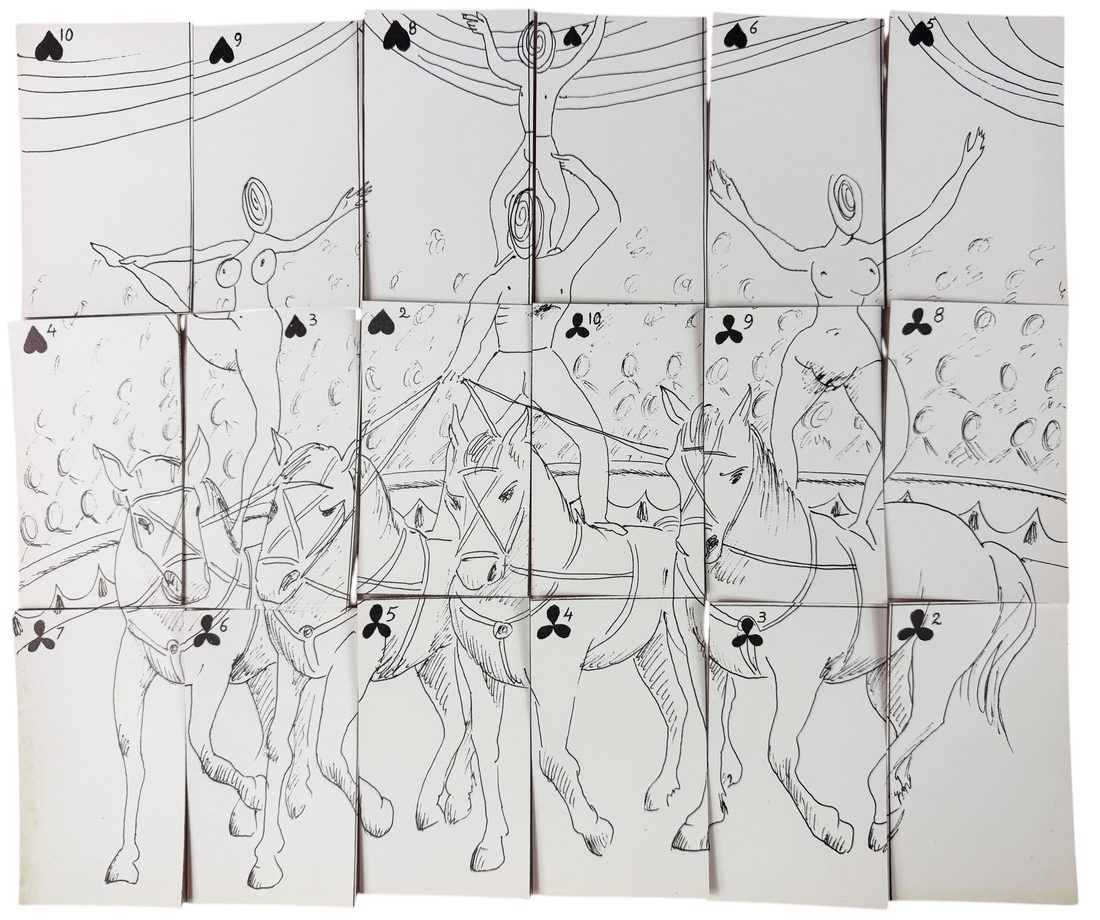
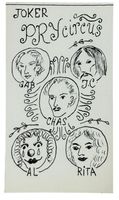
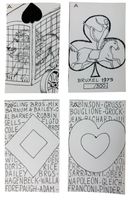
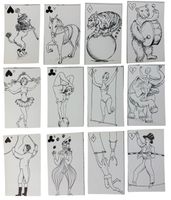
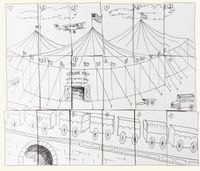
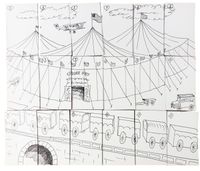
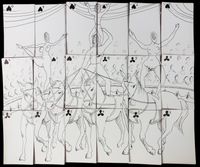
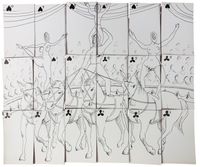
This rare deck, designed by Belgian artist Charles Pry in 1975, offers a unique artistic representation of circus life. Court cards represent typical characters of the circu, while the non-face (pip) cards are ingeniously crafted to form two distinct panoramic scenes when laid out sequentially:
• Spades and Clubs: Depict an interior view of the circus tent, capturing the dynamic energy and performances under the big top.
• Hearts and Diamonds: Illustrate the exterior ambiance of the circus, showcasing scenes outside the tent.
The card backs are plain pink, and the deck is presented without a box, as originally issued. Each card was originally meticulously hand-printed on linoleum, reflecting the artisanal dedication of the artist.
In 1975, Belgium was experiencing a vibrant cultural scene, with a renewed interest in traditional forms of entertainment, including the circus. The circus held a significant place in European culture, symbolizing a blend of artistry, performance, and communal festivity. Charles Pry’s Le Cirque deck encapsulates this cultural essence, offering a nostalgic yet artistic portrayal of circus life during this period.
Charles Pry (born in Brussels-Laeken on April 30, 1915, and deceased in the same city in 1987) was a Belgian painter and poet. In June 1938, he founded the Bulletin des Tours d’Ivoire, a small literary and artistic journal. By September of that year, in its fourth issue, he announced an exhibition titled l’Art Jeune, aiming to introduce several Belgian artists (or those active in Belgium) “chosen among the most representative and pure of the young modern school,” thereby foreshadowing, seven years in advance, the establishment of La Jeune Peinture Belge in 1945. For the Art Jeune exhibition held in October 1938, Pry gathered around him friends from the Brussels Academy—including Gaston Bertrand, Anne Bonnet, Robert Crèvecœur, and Walter Frank—later joined by Louis Van Lint, Renée Petit, and René Mels. Four of these artists, namely Bertrand, Bonnet, Van Lint, and Pry himself, would become founding members of La Jeune Peinture Belge. Pry’s works, often described as audacious, are largely stylized compositions that reflect late German Expressionism and a vibrant modernism: luminous, dynamic, and at times almost delirious in their display of the artist’s intense vitality. In a letter dated October 21, 1938, addressed to the future playwright Jean Sigrid, Pry defined his creative pursuit as a quest for the ideal and the eternal, noting that his paintings might seem cold—a quality he attributed to his preference for simplicity and bareness. This same drive for purity and fantasy is equally evident in his design of playing cards, a domain for which he had a particular passion, having assembled a notable personal collection of decks over the years. In addition to Le Cirque, Pry designed other notable decks, including the Eros Transformation Playing Cards in 1968, which was a limited edition of 100 decks.
Conditions: Unused.
References: D. Parlett, The Oxford Guide to Card Games. Oxford: Oxford University Press, 1990.