Officium Beatae Mariae Virginis

| Macro-categoria | Libri Rari e Manoscritti |
| Sottocategoria | Liturgy |
| Autore | Anonymous |
| Luogo di stampa | Venezia |
| Editore / Fabbricante | Tipografia Balleoniana |
| Anno | 1737 |
unrecorded edition of the Little Office,
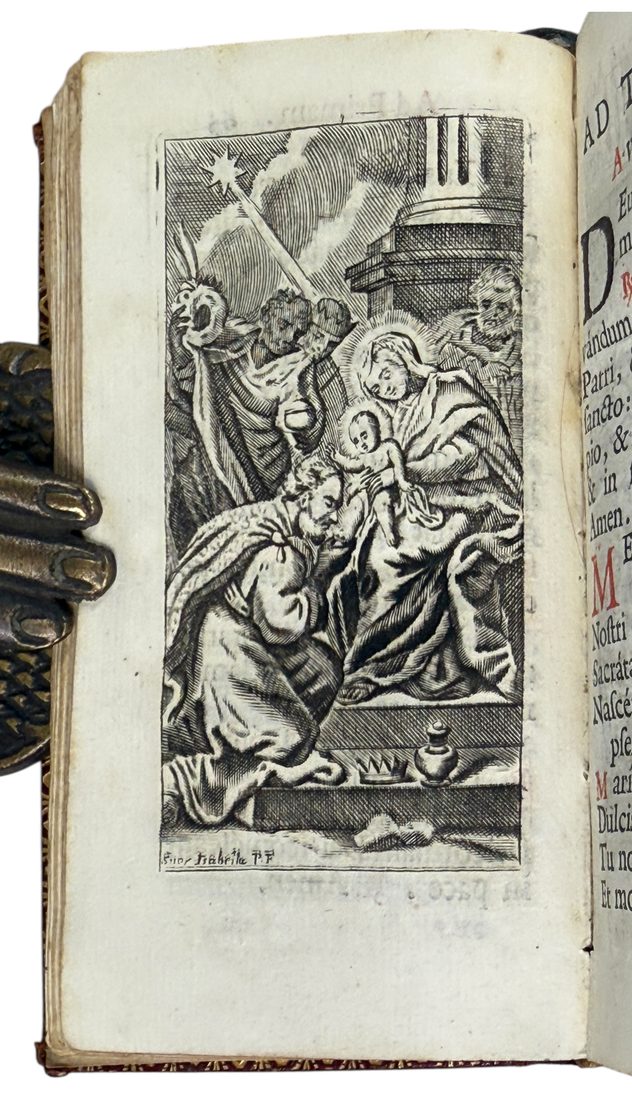
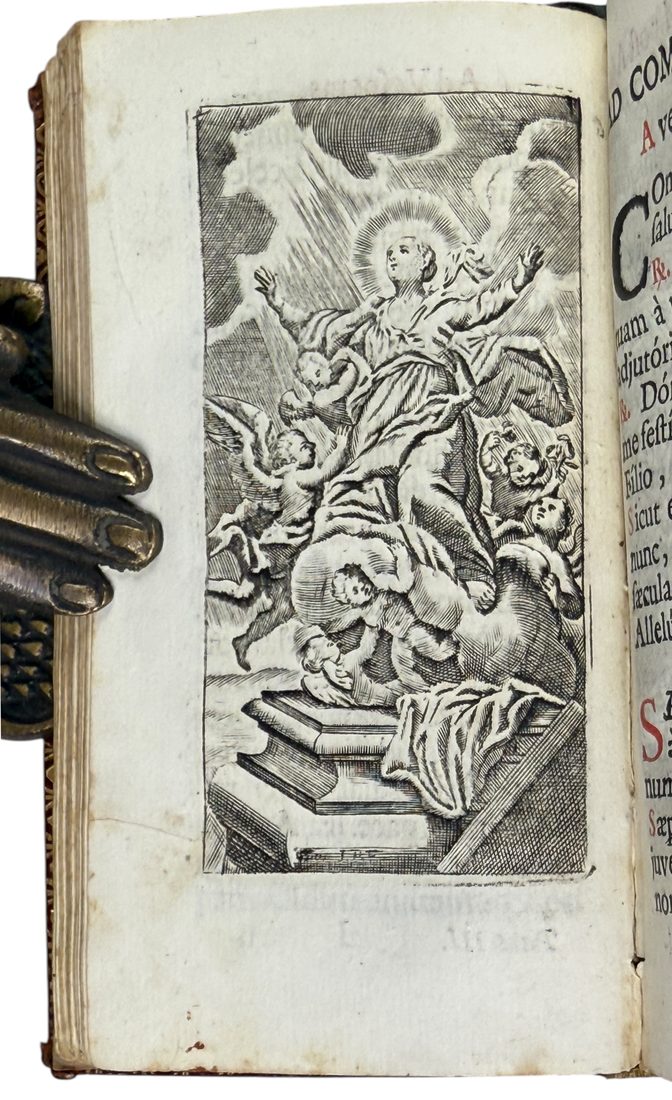
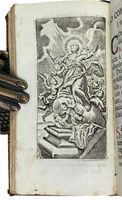
adorned with ten engravings by the Franciscan nun Isabella Piccini
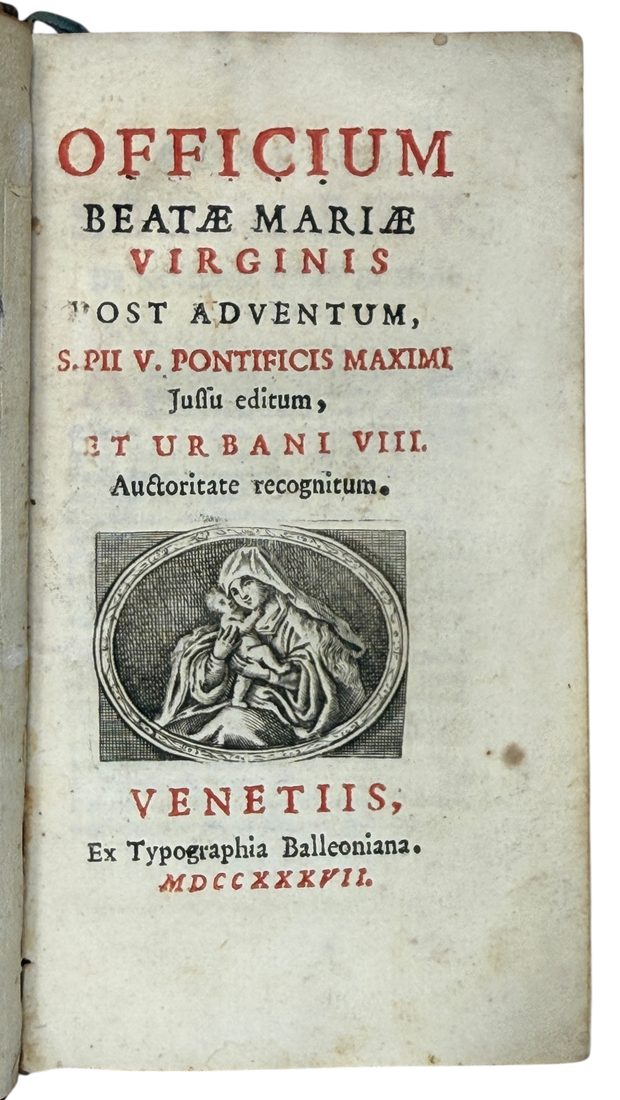
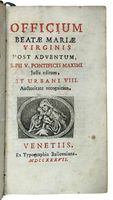
Officium Beatae Mariae Virginis. Post adventum S. Pii VII Pontificis Maximi jussu editum. Et Urbani VIII auctoritate recognitum. Venetiis: Typographia Balleoniana, 1737.
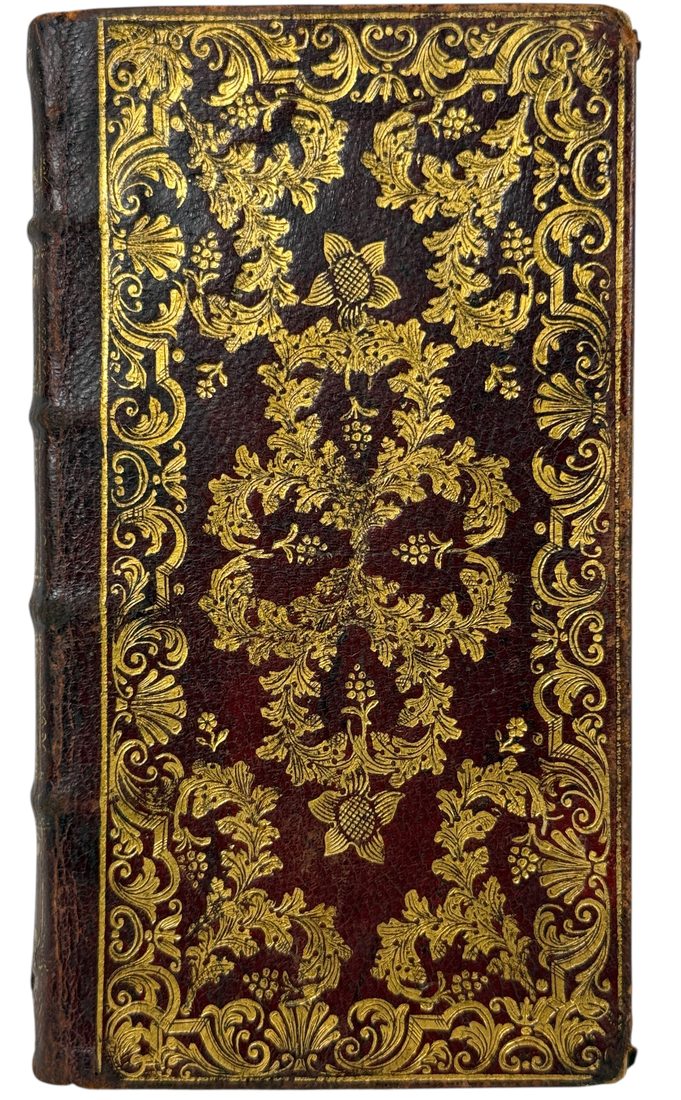
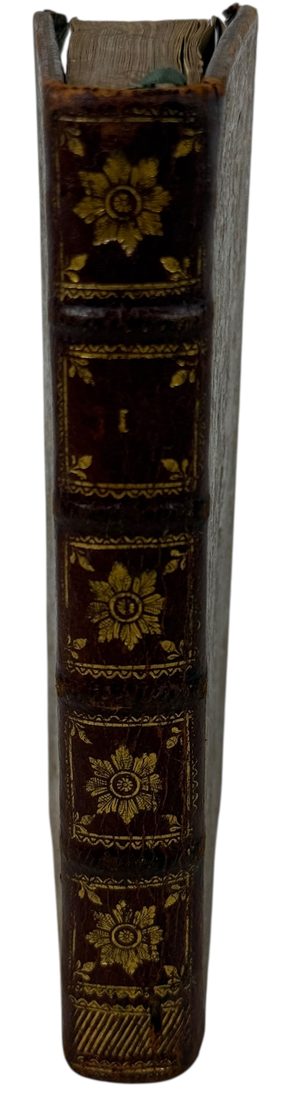
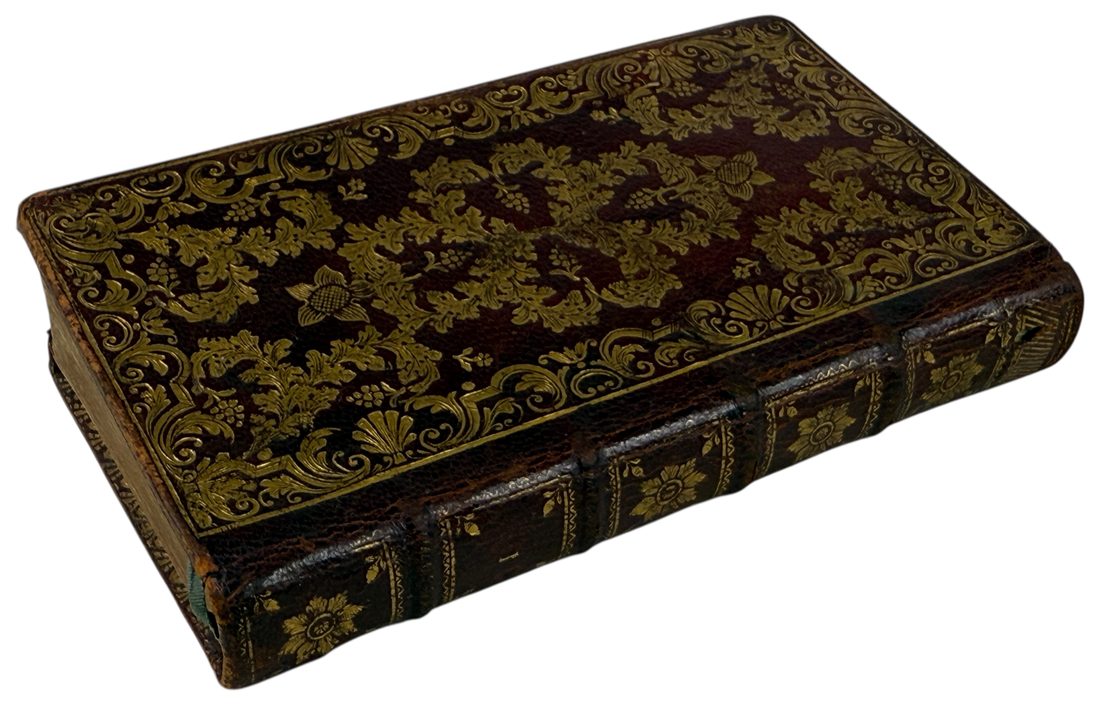
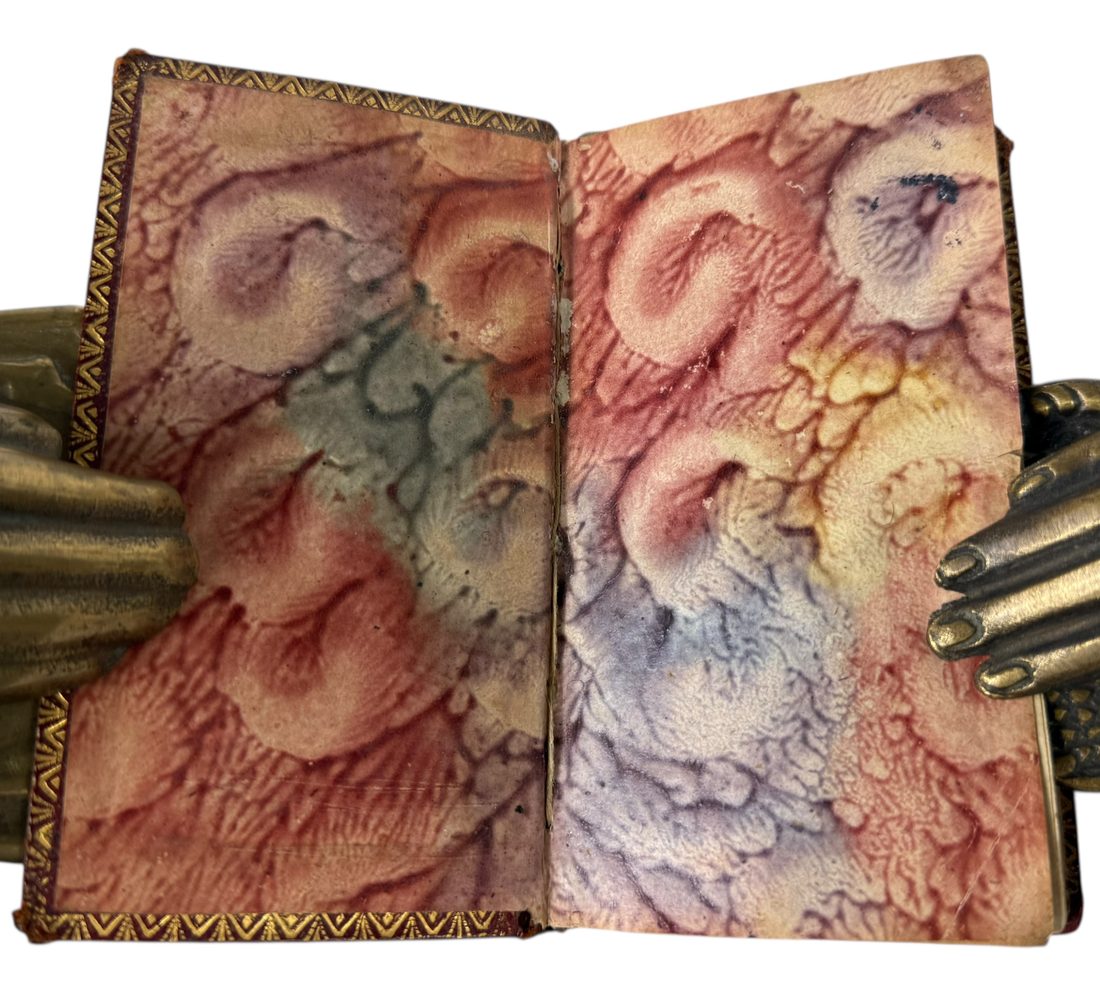
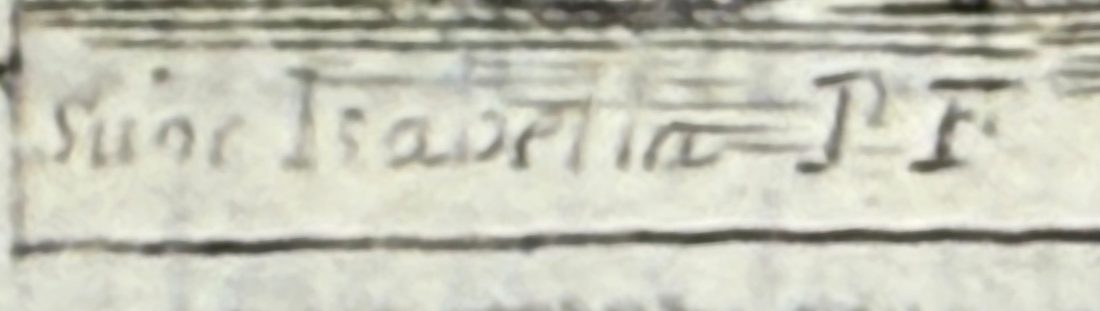
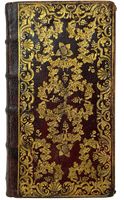
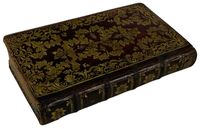
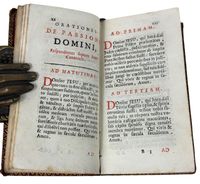
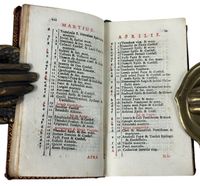
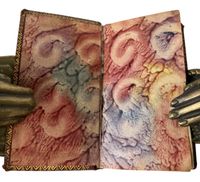
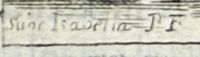
8vo (125 × 70 mm),], contemporary red morocco Venetian binding, both covers decorated with a large central baroque cartouche composed of interlacing foliated sprays, volutes, grape clusters, and floral motifs within a wide gilt border of rinceaux and shell ornaments, spine with five raised bands, compartments gilt with floral tools, gilt edges, inner gilt dentelles, pp. xxiv, 264. Text in Latin, printed in red and black. Illustrated with ten full-page copperplate engravings signed by Suor Isabella Piccini or Suor Isabella P.F.
This edition of the Officium Beatae Mariae Virginis post Adventum presents the canonical cycle of Marian prayers, supplemented with the Office of the Dead, the Penitential Psalms, litanies, additional prayers, and local devotions. Printed in Venice by the distinguished Balleoniana press, the volume combines refined typography with ten remarkable engravings by Suor Isabella Piccini, a Venetian nun and celebrated female engraver.
The 1737 edition is of exceptional rarity: no copy is recorded in major bibliographical databases, and this appears to be the only known surviving example. Its singularity, combined with its artistic embellishment, makes it not only a devotional manual but also an irreplaceable witness to the Venetian devotional press of the eighteenth century.
The book opens with twenty-four pages numbered in Roman numerals, comprising preliminary matter of liturgical and devotional use:
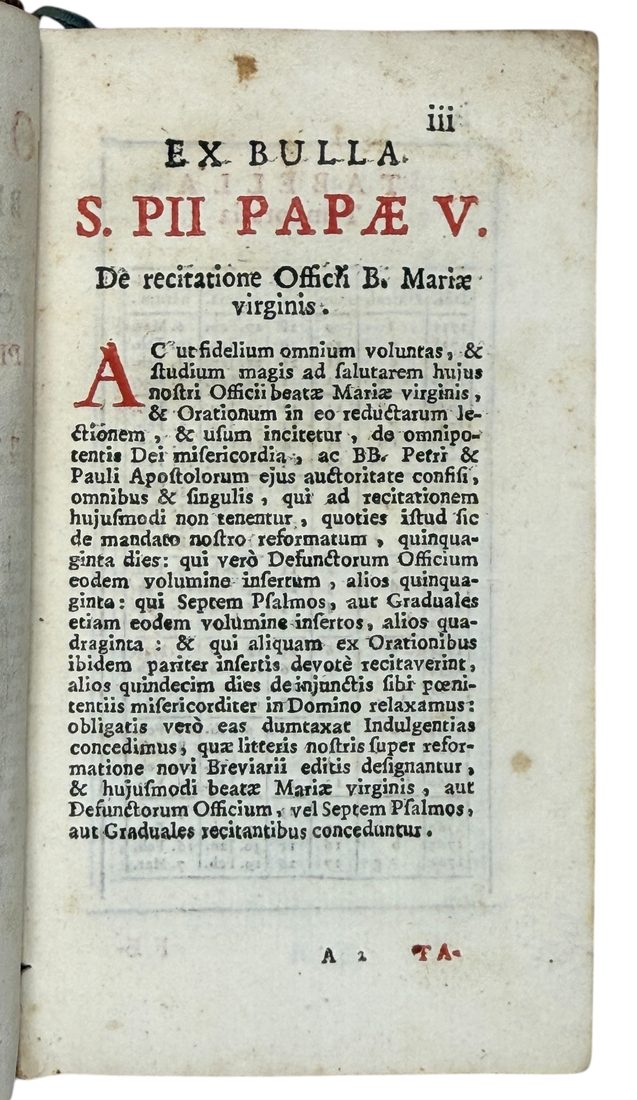
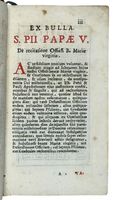
- Ex bulla S. Pii V — the decree of Pope Pius V promulgating the standardized text of the Little Office.
- Tabella temporaria — a table for the computation of the calendar.
- Festorum mobilium — a guide to movable feasts.
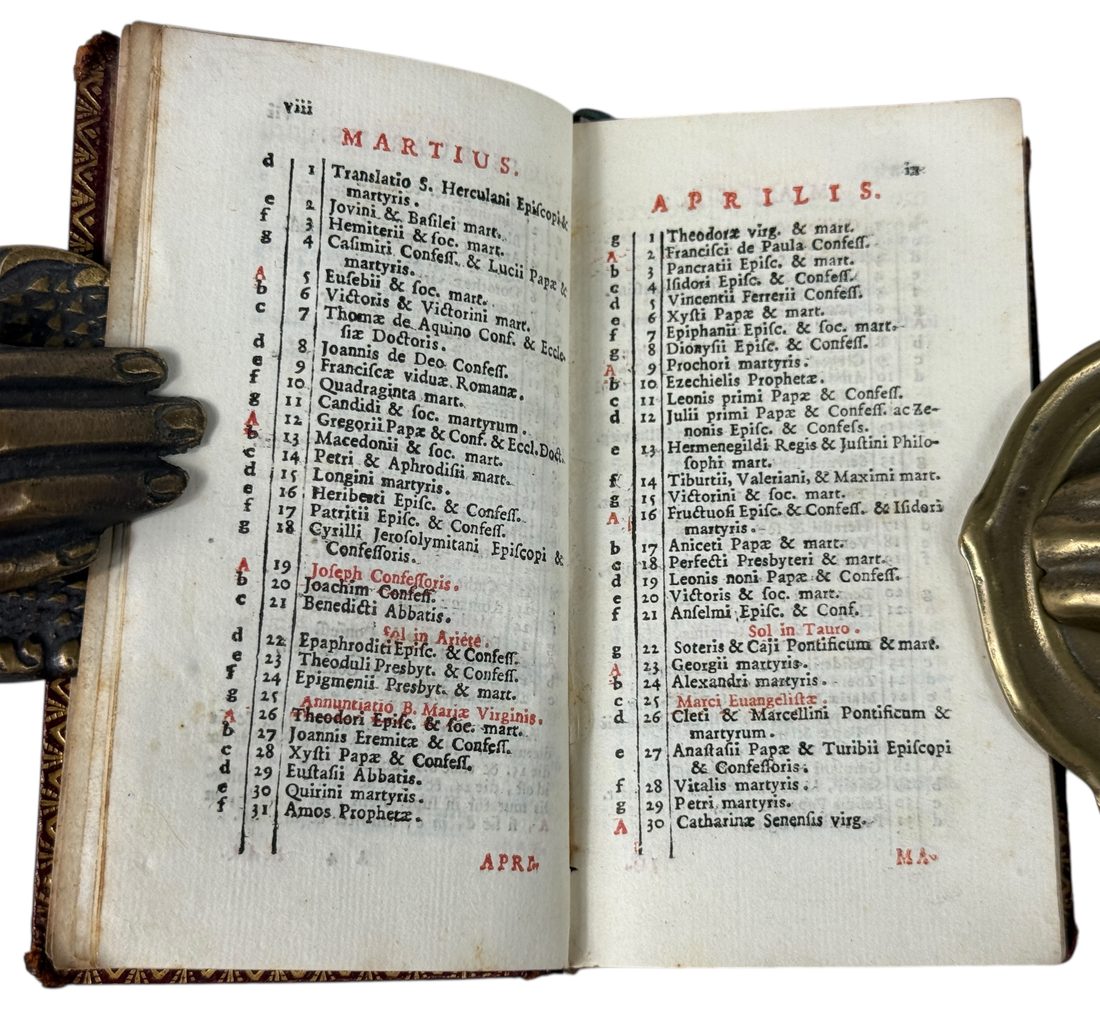
- Calendarium — a monthly calendar of saints’ feasts and liturgical commemorations.
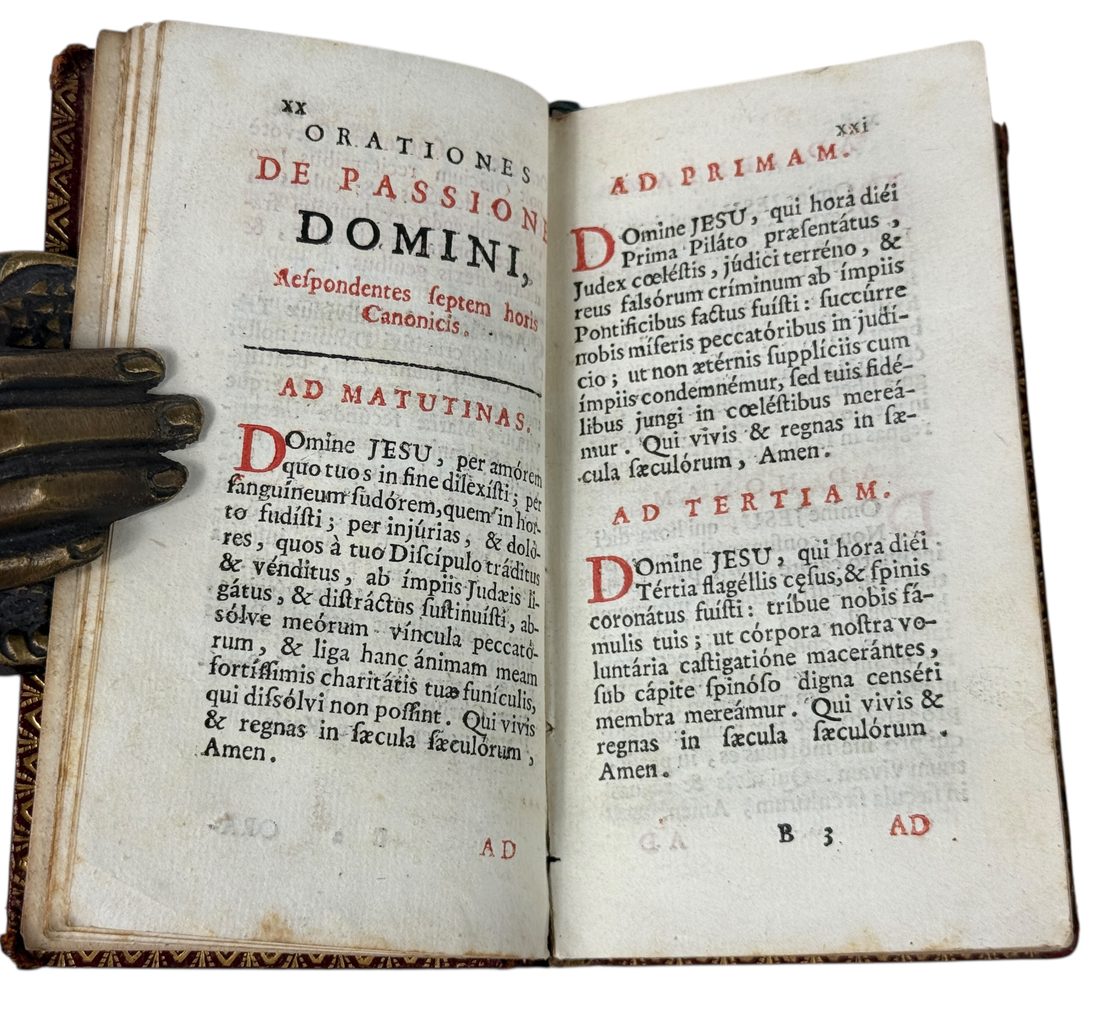
- Oratio dicenda and Oratio de Passione Domini — preparatory prayers and a meditation on Christ’s Passion.
The main text (pp. 1–264) is divided into several devotional sections:
- Officium Beatae Mariae Virginis: the Little Office, arranged according to the canonical hours.
- Officium Defunctorum: prayers for the dead.
- Septem Psalmi Poenitentiales: the penitential psalms with accompanying litanies.
- Litaniae and Preces: invocations and additional prayers.
- Litaniae B. V. Mariae: the Litany of Loreto.
- Responsorium Divi Antonii de Padua: a responsory in honor of St. Anthony, patron of Padua.
- Initium Sancti Evangelii secundum Joannem (John 1:1–14), closing the book with the customary “Last Gospel,” followed by “Finis.”
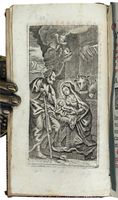
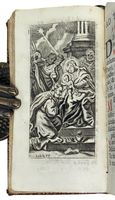
The engravings by Suor Isabella Piccini punctuate the volume, corresponding to the principal episodes of the Virgin’s lifeeach integrated to enhance meditation during the recitation of the hours.
Click for engravings details in Appendix
The Officium Beatae Mariae Virginis reflects the liturgical reforms of the post-Tridentine era, especially those mandated by Pope Pius V (1566–1572) and subsequently refined by Pope Urban VIII (1623–1644). Venetian devotional publishing in the eighteenth century flourished under the Balleoniana press, known for producing richly ornamented and carefully edited liturgical works.
The engravings by Suor Isabella Piccini (1644–1734) are of particular note. Daughter of the engraver Giacomo Piccini, Isabella entered the Franciscan convent of Santa Croce in Venice in 1666, where she became one of the very few cloistered women to sustain a professional artistic career. Over nearly seven decades she contributed engravings to some 230 works, collaborating with Venetian and Italian publishers including Remondini. Her engravings are characterized by fluid baroque composition and expressive devotional imagery. Although she had died by 1734, her plates remained in circulation, as evidenced by this 1737 edition.
This book thus encapsulates both the religious devotion of the period and the persistence of female artistic labor within a male-dominated publishing milieu. Its liturgical authority, reinforced by papal decrees, and its regional resonance, evident in the inclusion of a responsory to St. Anthony of Padua, together highlight its role as both a universal and a local devotional companion.
Suor Isabella Piccini (1644–1734), born Elisabetta Piccini, became one of Venice’s most prolific female engravers, training under her father and dedicating her career earnings to her convent.
Census: No copy of this 1737 Venetian edition is recorded in WorldCat or other major bibliographical databases.
Conditions: A few light spots and minor foxing: overall, a good copy in a nice original binding.
Engravings in the Officium Beatae Mariae Virginis (Venice, Balleoniana, 1737)
No. | Subject | Liturgical / Devotional Placement | Iconographic Note |
1 | The Annunciation | Matins / Prime (opening of the Little Office) | The Angel Gabriel greets the Virgin; the Holy Spirit descends as a dove amid clouds and angels. |
2 | The Visitation | Lauds | Mary embraces Elizabeth; behind them stands Zechariah, blessing the encounter. |
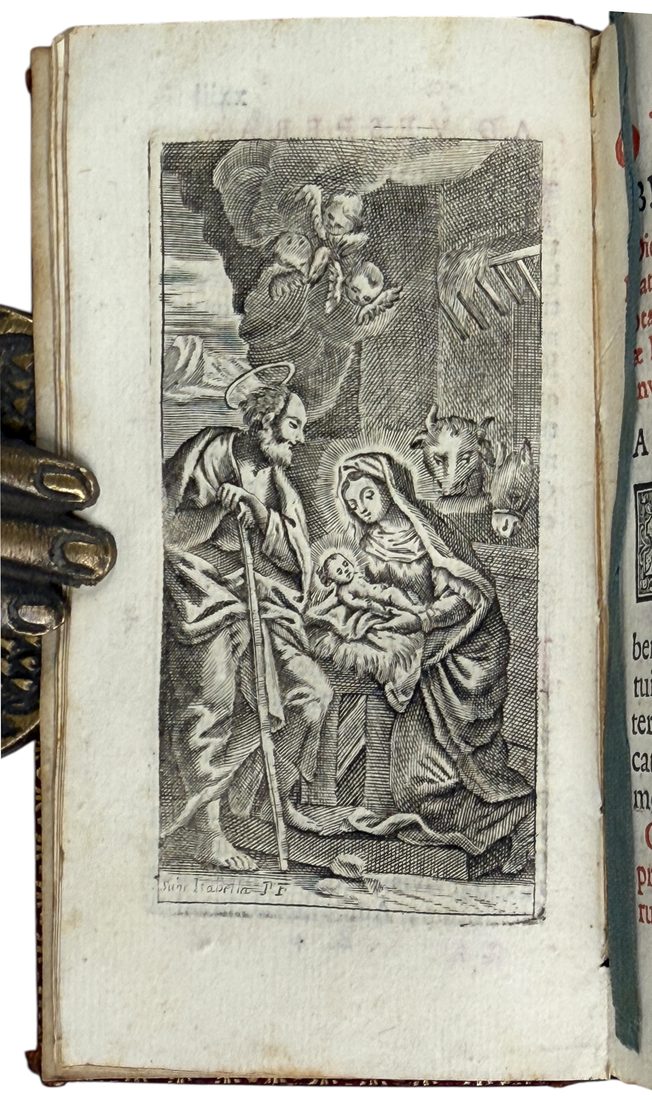
3 | The Nativity of Christ | Terce / Christmas section | Mary and Joseph contemplate the Child in the manger; ox and ass nearby; angels in glory above. |
4 | The Adoration of the Magi | Sext | The Magi kneel and offer gifts to the Christ Child held by Mary; the guiding star shines above. |
5 | The Presentation in the Temple | None | Simeon receives the Infant; the prophetess Anna and Mary in prayer; the seven-branched candelabrum in the background. |
6 | The Flight into Egypt | Vespers | Mary carries the Child while Joseph guides the way; angels hover protectively above. |
7 | The Assumption of the Virgin | Compline | Mary is lifted to Heaven in radiant light, accompanied by angels, arms raised in triumph. |
8 | St. Anthony of Padua with the Infant Christ | Devotional appendix (Responsorium of St. Anthony) | The Franciscan saint kneels in ecstasy as the Child Jesus appears to him in a vision, supported by angels. |
9 | The Vision of Ezekiel | Introduction to the Office of the Dead | The prophet witnesses the valley of dry bones reviving; angels descend with divine power. |
10 | The Last Judgment / Eschatological Vision | Conclusion of the Office of the Dead | God the Father in glory, with the scroll 'Ossa arida audite verbum Domini,' while skeletons rise from their graves. |