La clef de Nostradamus

| Macro-categoria | Libri Rari e Manoscritti |
| Sottocategoria | Occulto |
| Autore | LE ROUX, Jean |
| Luogo di stampa | Paris |
| Editore / Fabbricante | Pierre Giffart |
| Anno | 1710 |
a philological key to prophecy:
Le Roux’s attempts to discipline Nostradamus
by grammar rather than by fantasy
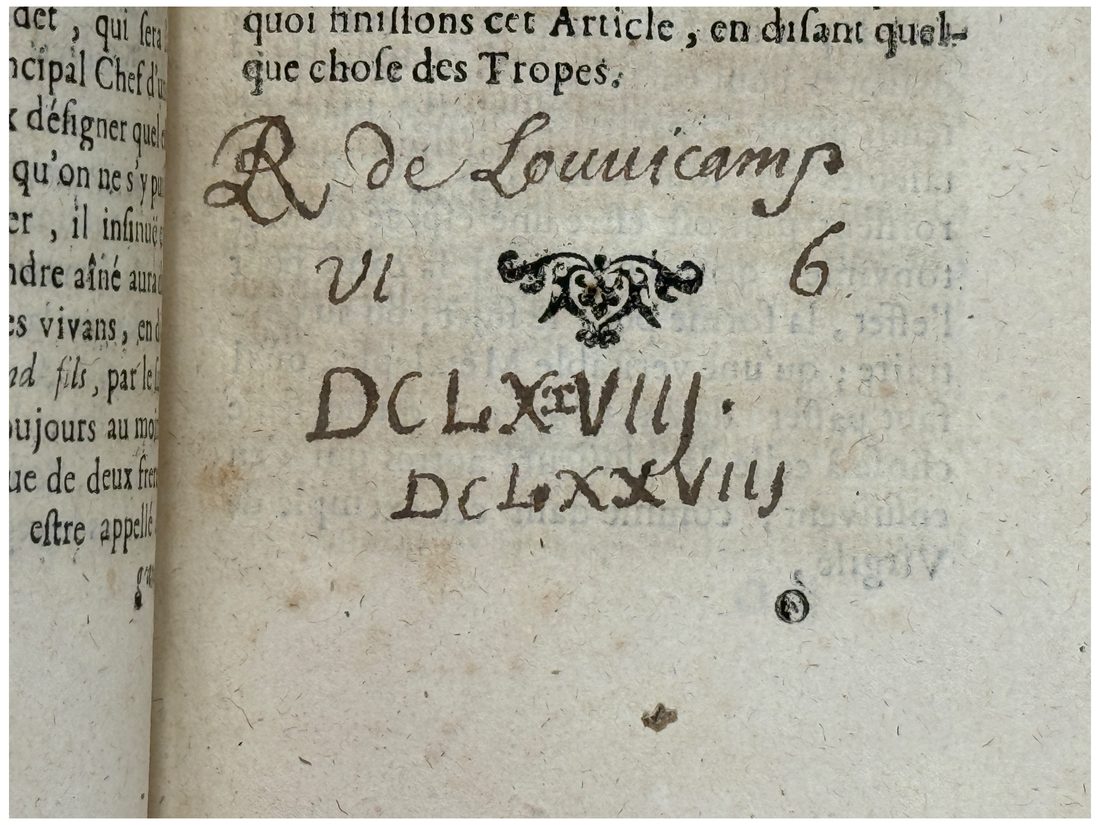
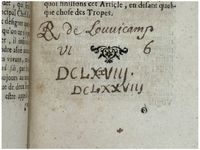
with an handwritten authentication note from the author
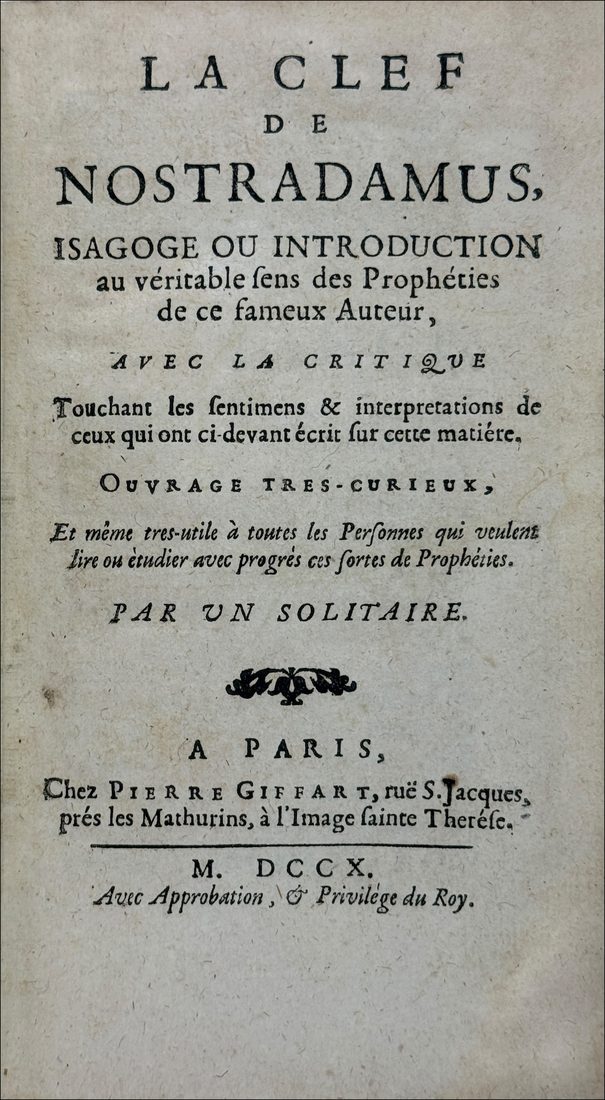
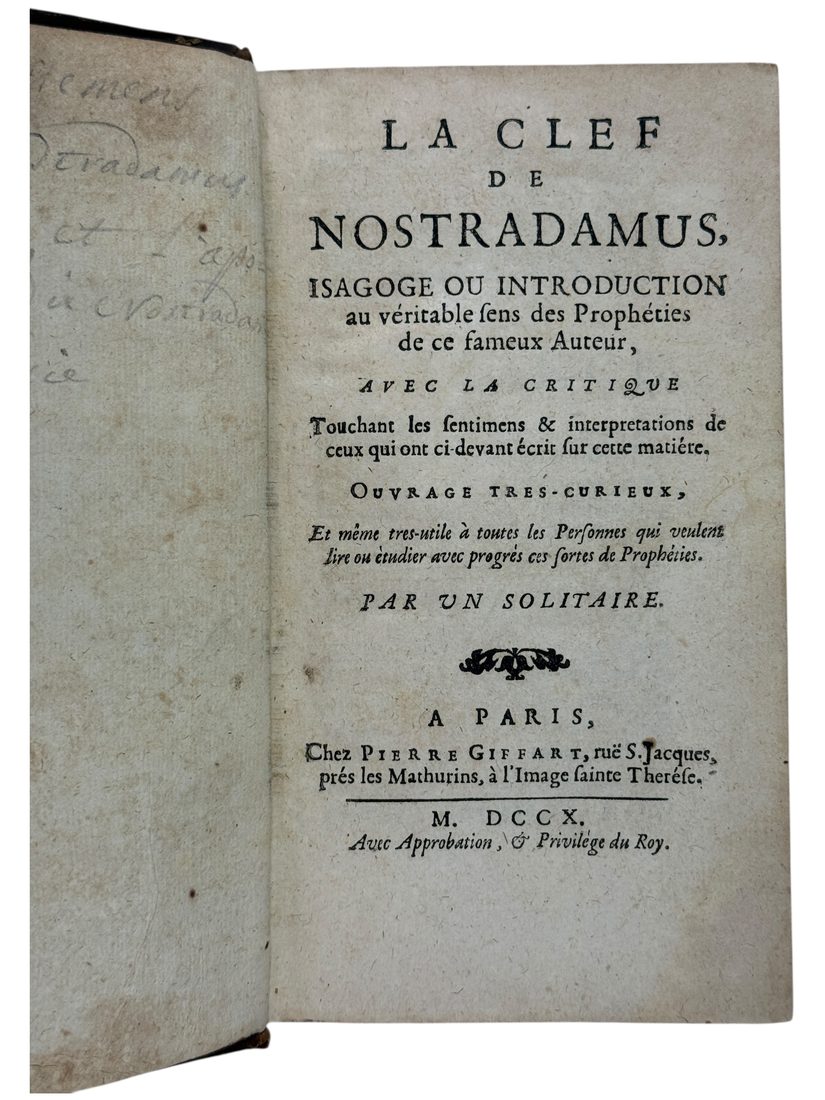
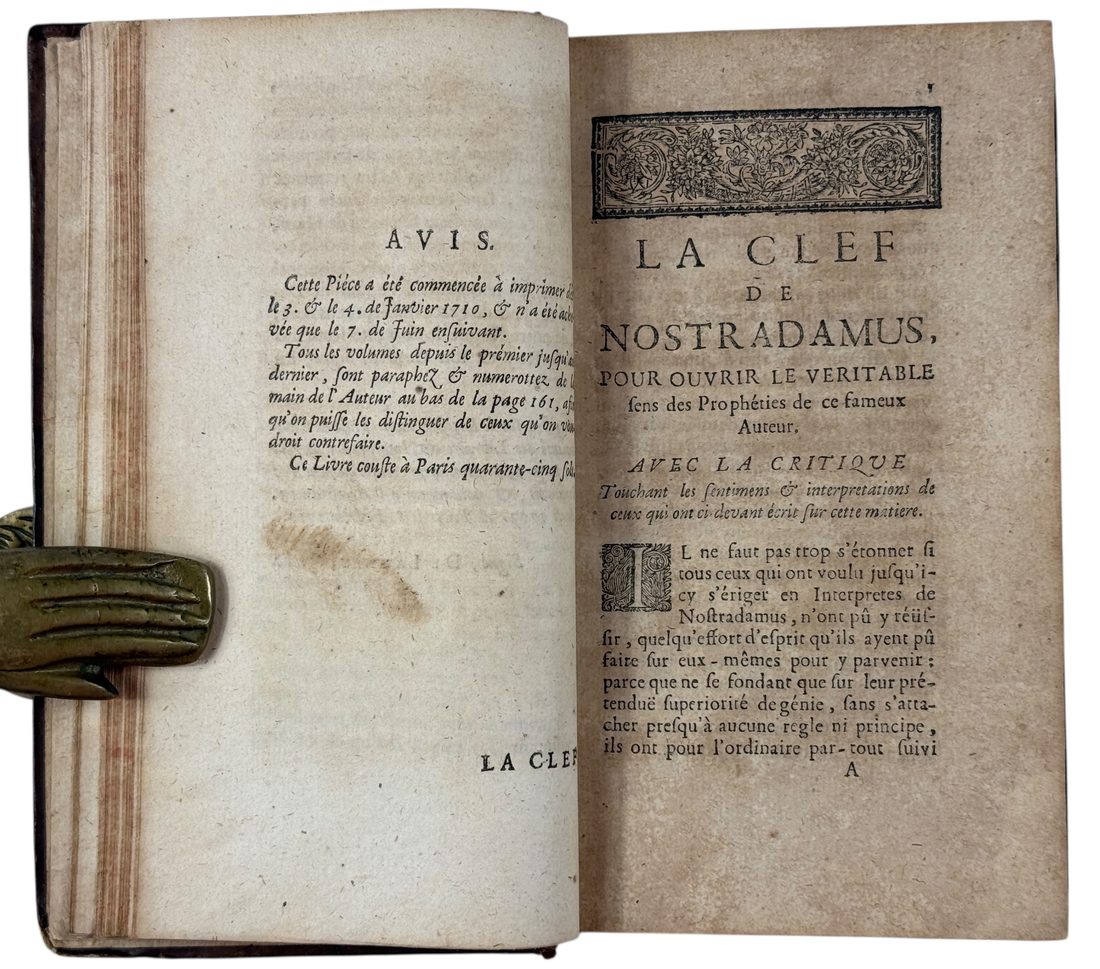
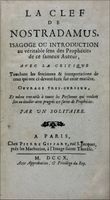
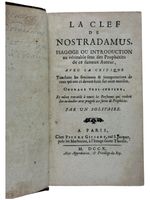
Le Roux, Jean (but published anonymously as “Par un Solitaire”). La clef de Nostradamus, isagoge ou introduction au véritable sens des prophéties de ce fameux auteur, avec la critique touchant les sentimens & interpretations de ceux qui ont ci-devant écrit sur cette matière. Ouvrage très-curieux, et même très-utile à toutes les personnes qui veulent lire ou étudier avec progrès ces sortes de prophéties.
Paris, chez Pierre Giffart, rue S. Jacques, près les Mathurins, à l’Image sainte Thérèse, Avec Approbation & Privilège du Roy, 1710.
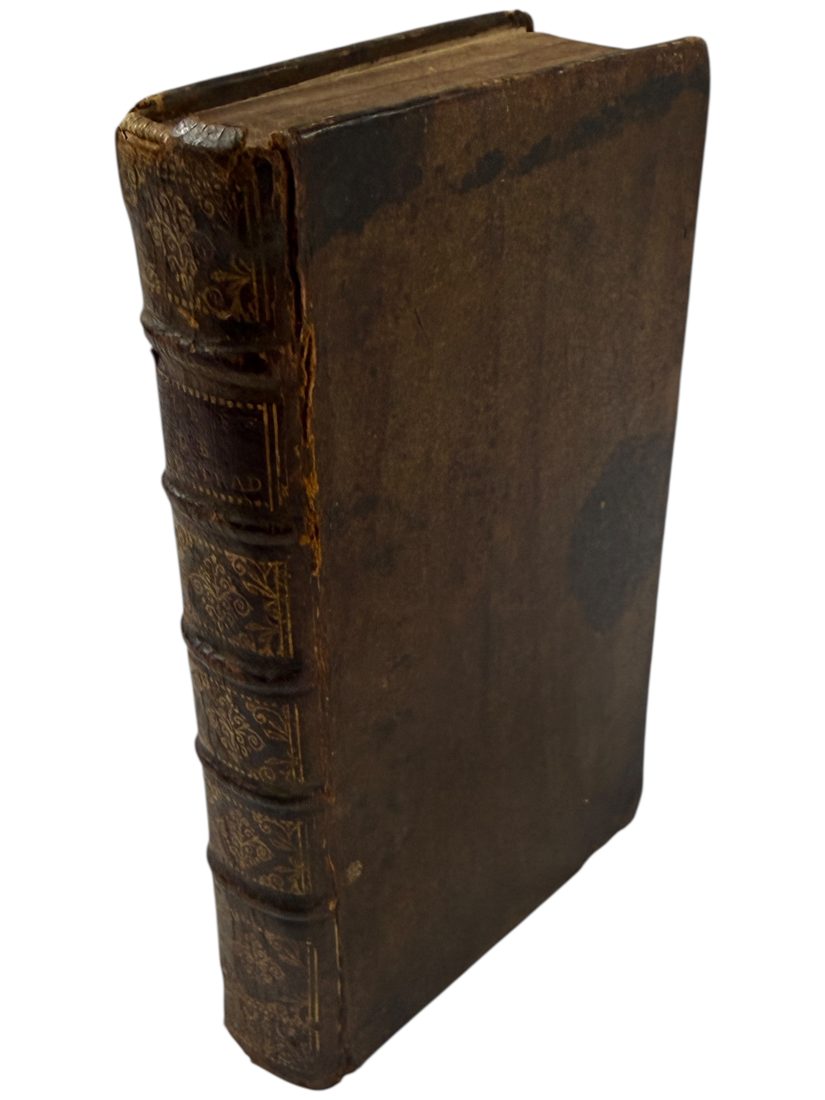
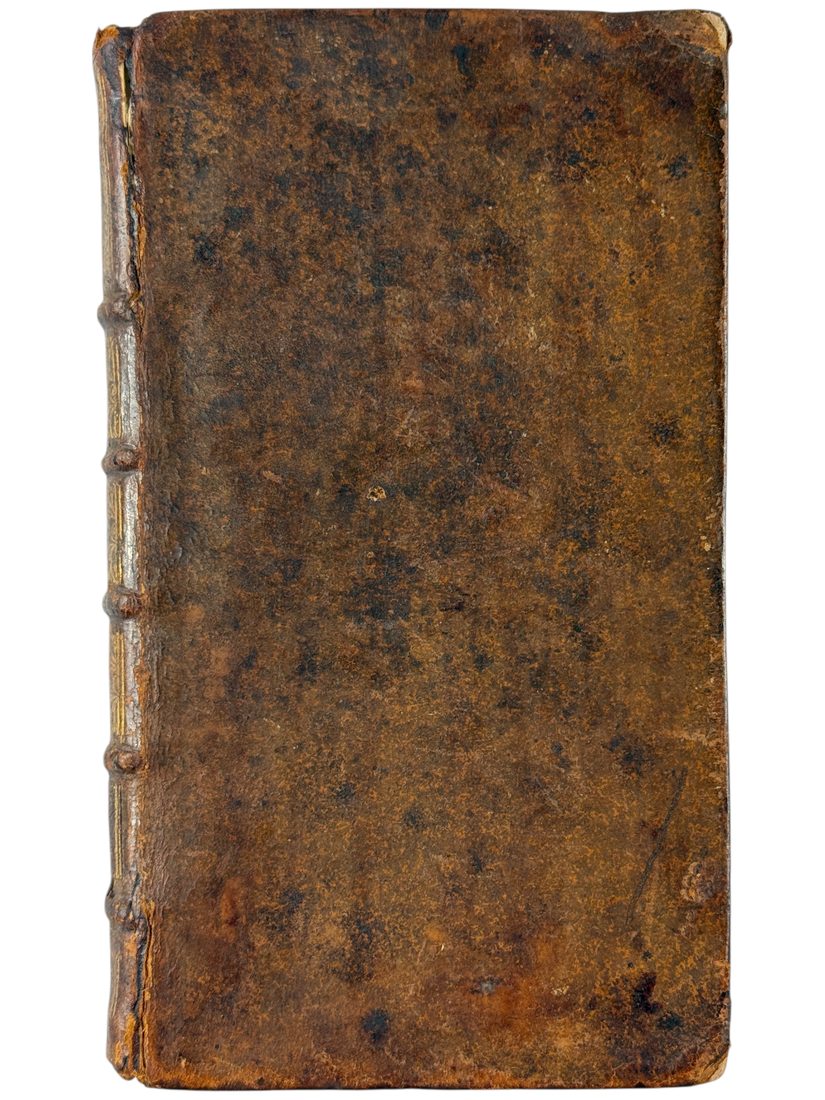
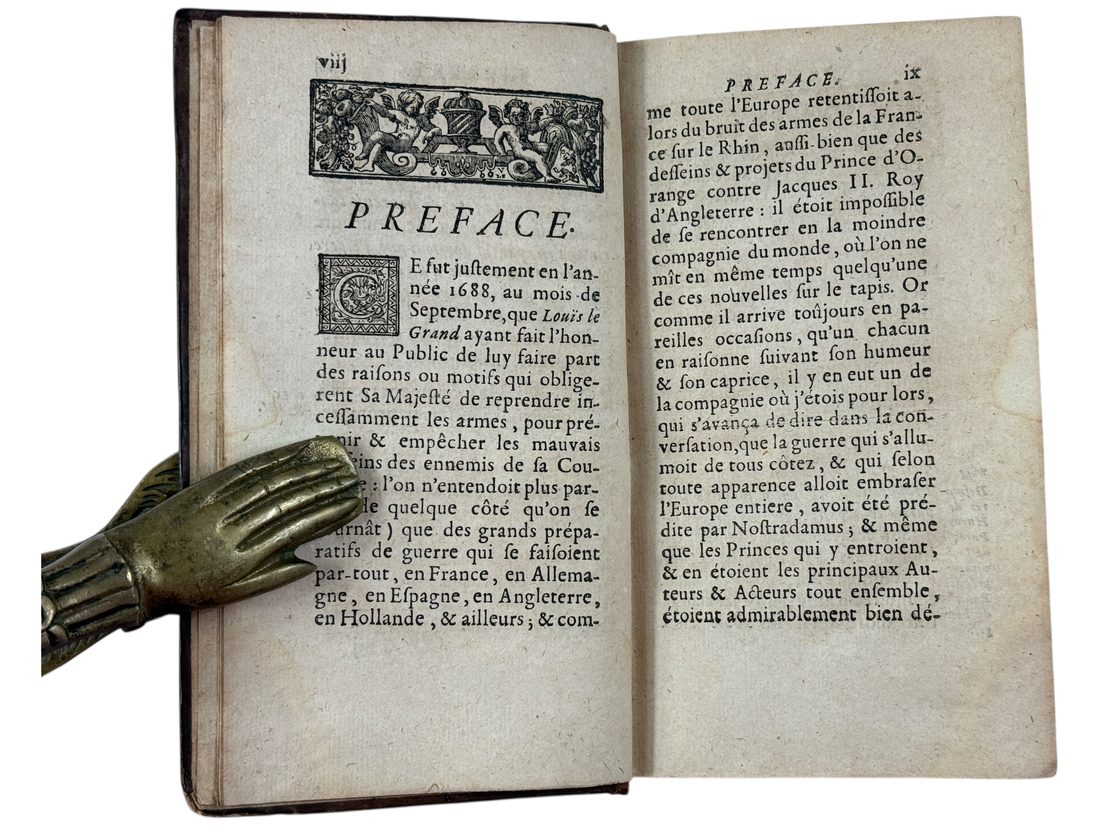
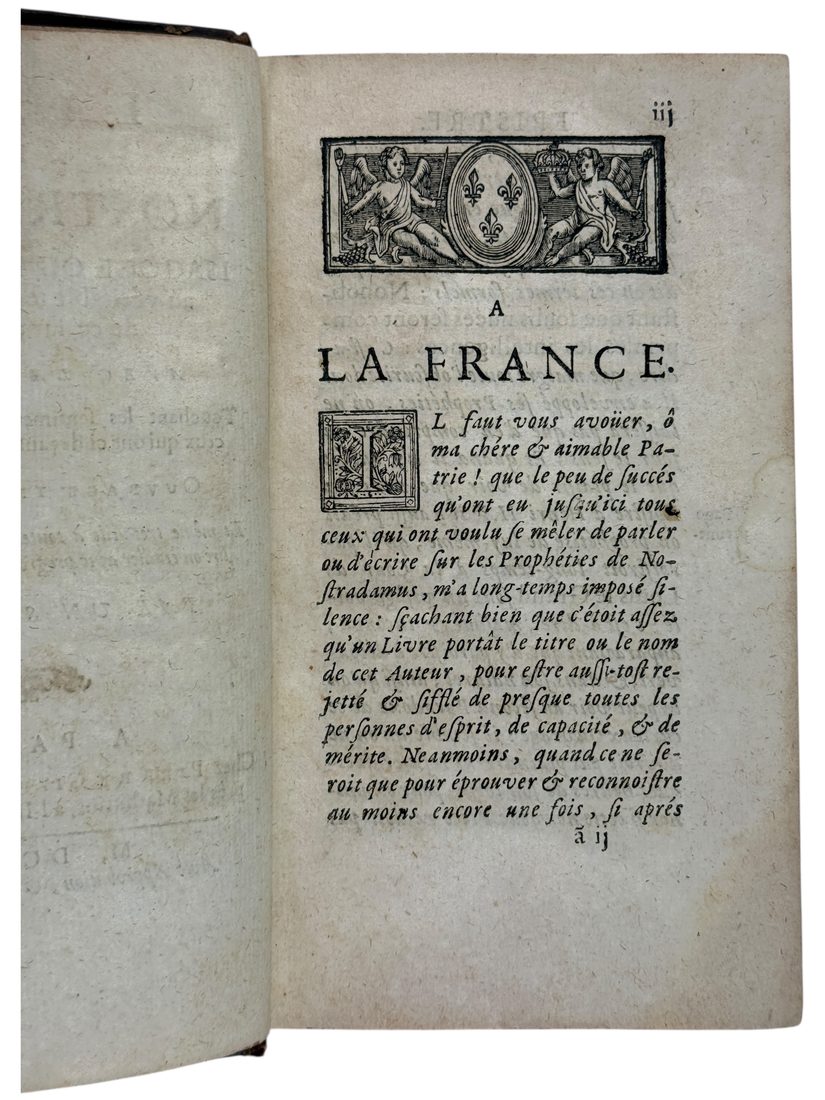
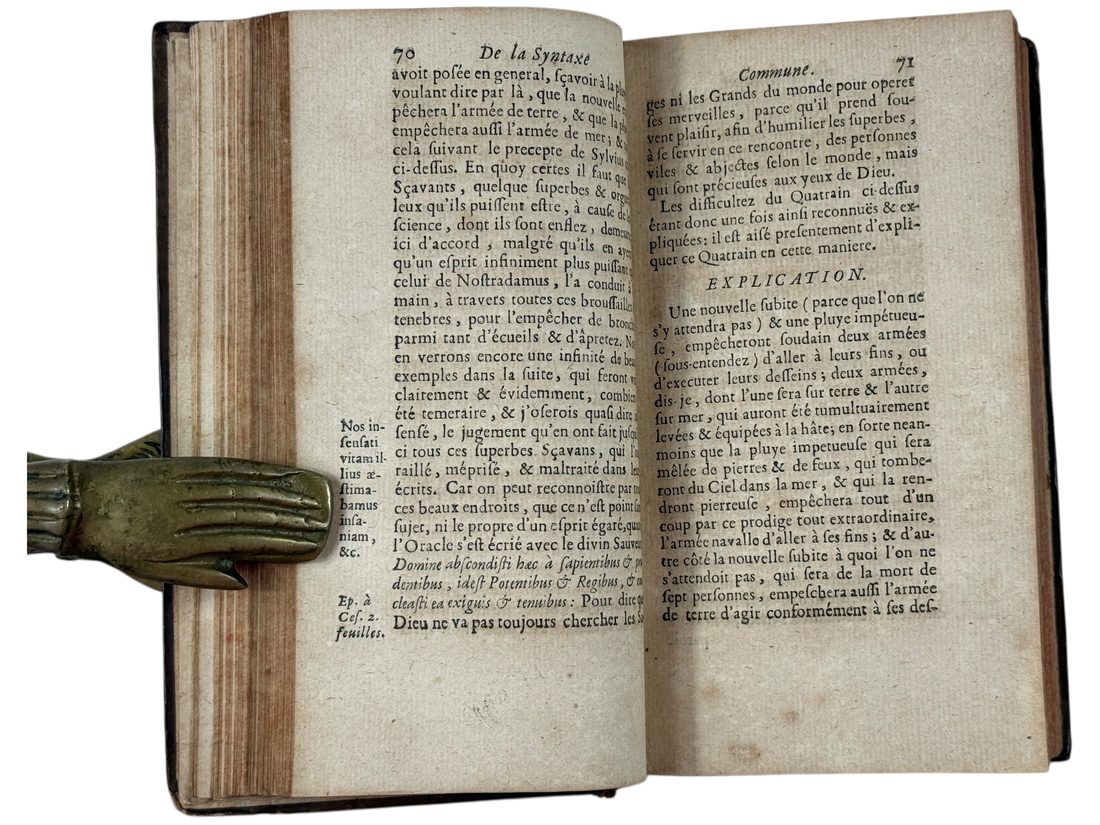
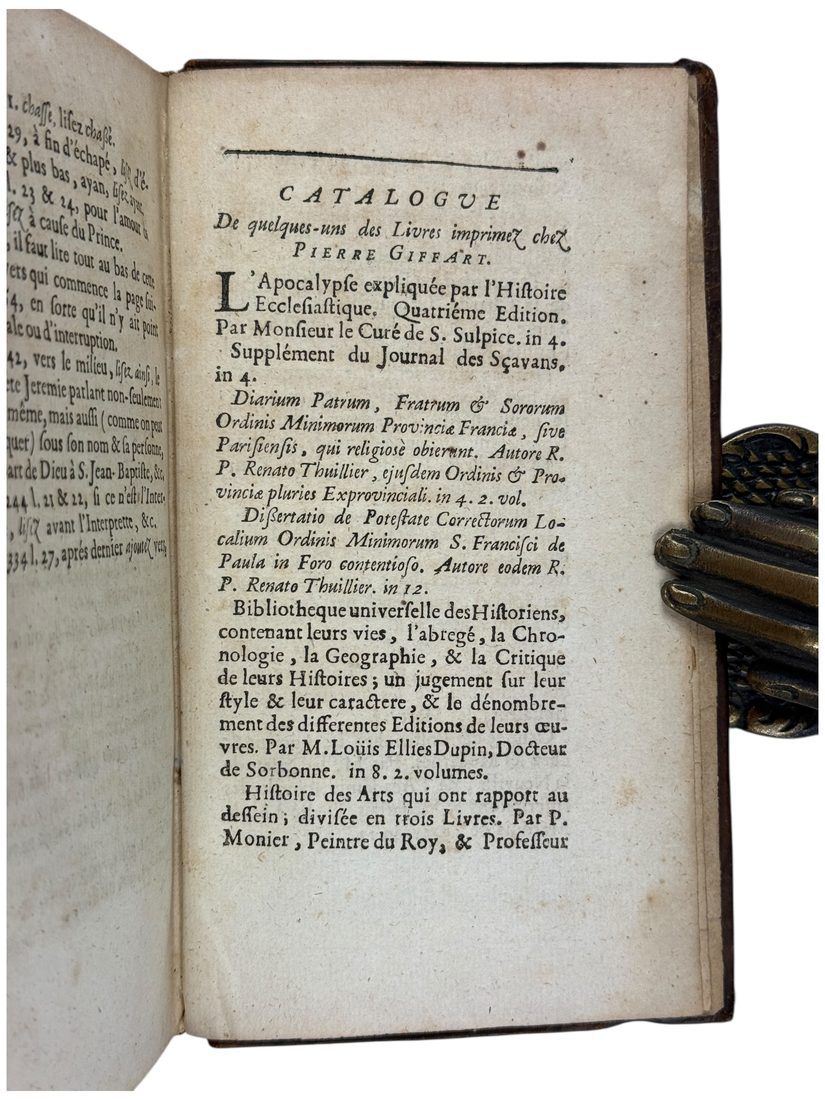
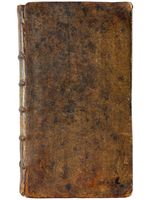
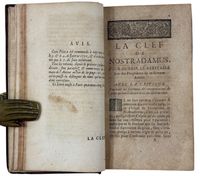
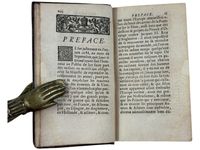
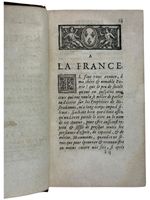
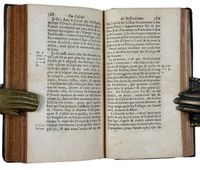
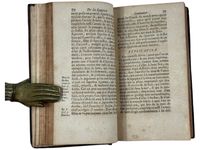
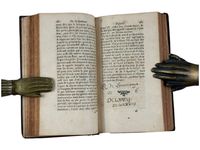
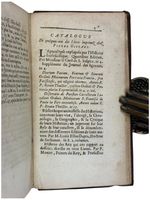
12mo (175 × 100 mm), contemporary full brown calf, spine with five raised bands decorated with small gilt tools, red speckled edges, pp. LI, [5], 469, [3]. Typographical ornaments throughout, including headpieces. Text in French with frequent Latin quotations. Final publisher’s catalogue present, titled «CATALOGUE De quelques-uns des Livres imprimez chez PIERRE GIFFART».
First end only edition of Jean Le Roux’s systematic attempt to restore a coherent and methodical reading of the Centuries of Nostradamus. Rejecting speculative, event-driven interpretations, the author proposes a linguistic and grammatical “key” grounded in syntax, orthography, and rhetorical structure. The work embodies a rationalising approach to prophetic literature characteristic of the early Enlightenment, seeking to render the text intelligible prior to any historical or prophetic application.
Conceived explicitly as an isagoge, an introductory treatise whose purpose is to prepare the reader for the correct understanding of a more complex or authoritative text, the volume presents itself not as a competing prophecy or a new cycle of conjectural identifications, but as a methodological gateway intended to discipline the act of reading Nostradamus. From the outset, Le Roux frames his intervention as a corrective to what he identifies as the fundamental error of earlier commentators, namely the tendency to treat the obscurity of the quatrains as an invitation to imaginative speculation rather than as a linguistic problem requiring resolution.
The opening sections offer a critical survey of preceding commentaries, which the author accuses of substituting historical ingenuity for textual fidelity. Le Roux argues that the prophetic corpus has been burdened with forced applications to contemporary events precisely because its grammatical and syntactical structure has been neglected. This critique is not merely polemical, but programmatic, serving to justify the necessity of a “key” operating at the level of language rather than prediction.
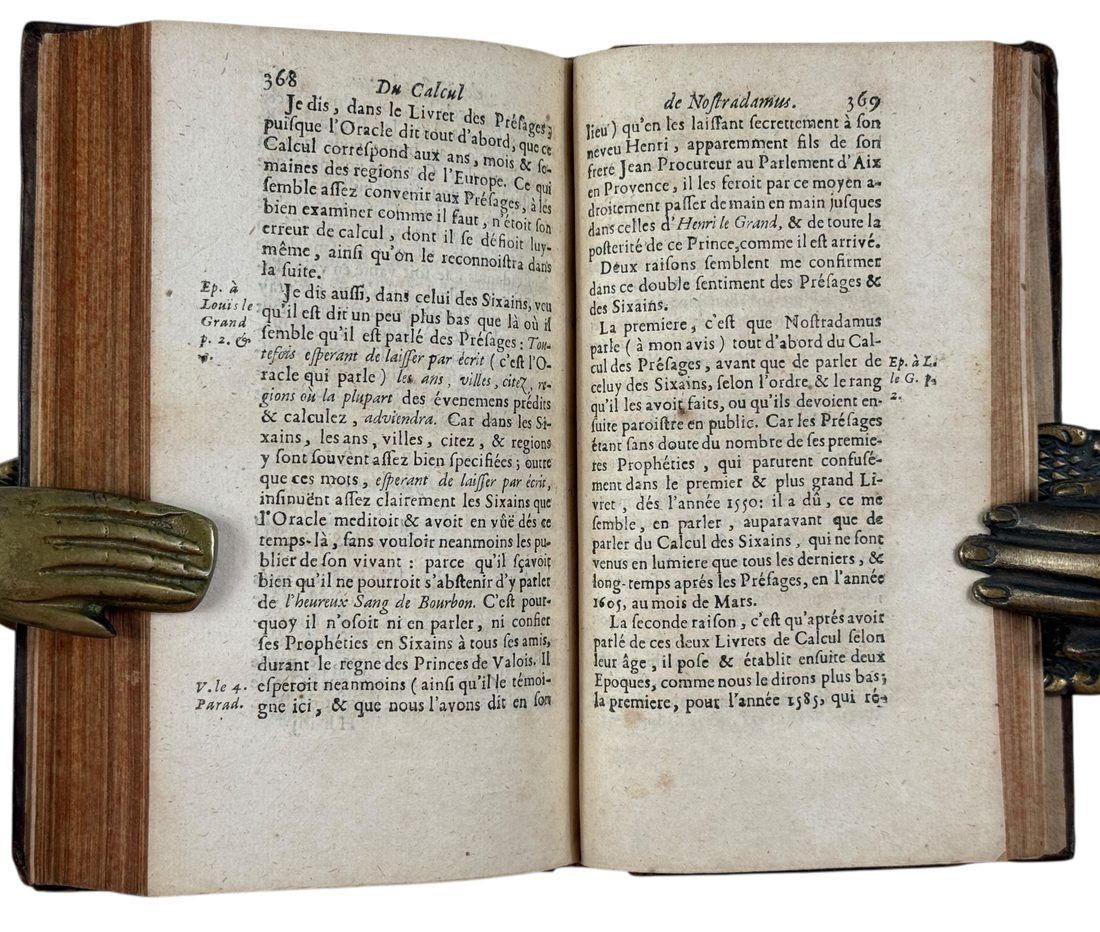
The central portion of the work is devoted to the construction of this key. Le Roux undertakes a detailed examination of Nostradamus’s linguistic practices, analysing orthographic variants, archaisms, syntactical compression, and the persistent influence of Latin grammatical structures beneath the French surface. Particular attention is paid to ellipsis, inversion, and the deliberate ambiguity generated by hybrid constructions, which Le Roux interprets as conscious stylistic strategies rather than signs of incompetence or mystical obscuration. His approach is rigorously pedagogical, rooted in the traditions of grammatical instruction and clerical exegesis.
In the applied sections, selected quatrains are subjected to close reading. Le Roux systematically reconstructs their grammatical logic, supplying omitted elements, clarifying relationships between clauses, and restoring syntactical coherence. Only once the text has been stabilised does he permit interpretative conclusions, thereby reversing the prevailing hermeneutic order of prophetic commentary. These demonstrations form the practical core of the book and exemplify its ambition to replace conjecture with method.
The volume concludes with ancillary matter of bibliographical interest, notably the publisher’s catalogue of Pierre Giffart, which confirms the commercial context of the work and its intended circulation among a learned readership.
Printed in Paris in 1710 under royal privilege, La clef de Nostradamus emerges from a cultural landscape in which prophetic literature occupied an ambiguous position between popular fascination and scholarly unease. By the early eighteenth century, Nostradamus had become a canonical yet unstable figure, endlessly republished, appropriated, and reinterpreted across political, religious, and social contexts. His quatrains circulated simultaneously as objects of devotion, instruments of political allegory, and targets of sceptical critique.
Le Roux’s work belongs to a broader movement within early Enlightenment culture that sought not to abolish inherited textual authorities, but to subject them to rational control. Rather than dismissing prophecy as superstition, the Clef attempts to domesticate it through grammatical discipline. This strategy reflects the persistence of clerical erudition as a mediating force between tradition and critical reason. Le Roux writes neither as a court astrologer nor as a radical sceptic, but as a parish priest trained in Latin pedagogy and accustomed to the governance of meaning through rule.
Within the long history of Nostradamian reception, La clef de Nostradamus occupies a distinctive position as an early effort to transform prophecy into a textual problem rather than a prophetic one. Its cultural significance lies not in proposing new predictions, but in redefining the conditions under which prophecy may be read, interpreted, and discussed in an age increasingly oriented toward rational explanation.
Jean Le Roux, curé de Louvicamp in Normandy, wrote under the veil of anonymity customary in controversial prophetic literature. Trained in Latin grammar and clerical pedagogy, he approached Nostradamus not as an oracle but as a text requiring philological control. La clef de Nostradamus remains his principal known work and stands as a distinctive clerical contribution to early eighteenth-century critical interpretation.
Conditions: Partial cracking to the joints, rubbing to corners, and a small tear at the extremity of the caps; internally a very good copy. Complete with the final publisher’s catalogue.
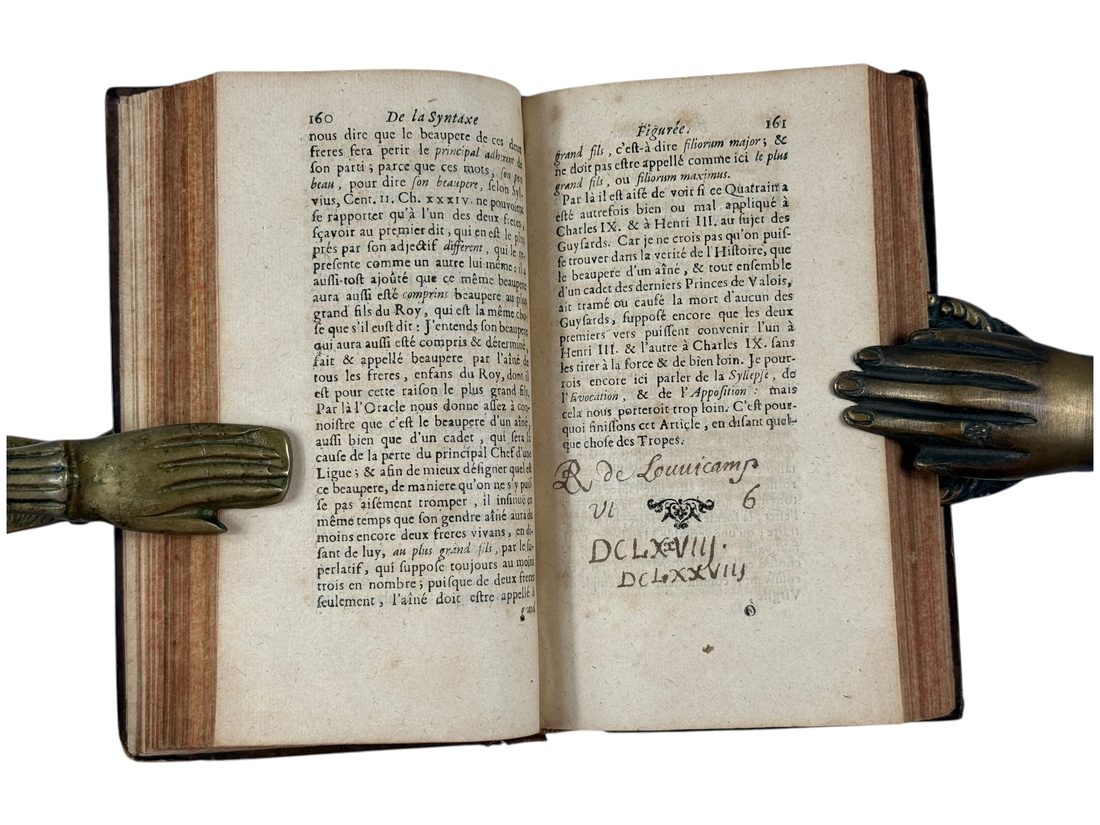
Provenance: Manuscript inscription on p. 161, R. de Louvicamp, VI, 6, DCLXxVIII, DCLXXVIII. This inscription corresponds to the known practice of authorial authentication associated with Jean Le Roux, intended to distinguish genuine copies of the work.
References: A. Caillet, Manuel bibliographique des sciences psychiques ou occultes, Paris: L. Dorbon, no. 6579; H. Chomarat, Bibliographie Nostradamus. XVIe, XVIIe, XVIIIe siècles, Baden-Baden: Koerner, 1989, p. 428; A. Dorbon, Bibliothèque ésotérique. Catalogue, Paris : IX°, no. 2661; R. Benzara, Répertoire chronologique nostradamique (1545–1989), Paris: Ed. de la Grande conjoncture, 1990, pp. 284–290.