Tarocchi (78 carte), Milano
| Macro-categoria | Carte & Tarocchi |
| Sottocategoria | Tarocchi |
| Autore | DOTTI, Teodoro |
| Luogo di fabbricazione | Milano |
| Editore / Fabbricante | Teodoro Dotti |
| Anno | ca. 1845 |
A Milanese tarot of about 1845:
Teodoro Dotti’s woodcut pack for the game of tarocchi,
the earliest dated Teodoro Dotti woodcut tarot traced
78/78 cards, with the Lombard duty stamp of 1845
[Tarocchi, Lombard pattern]. Milan: Teodoro Dotti, [c. 1845].
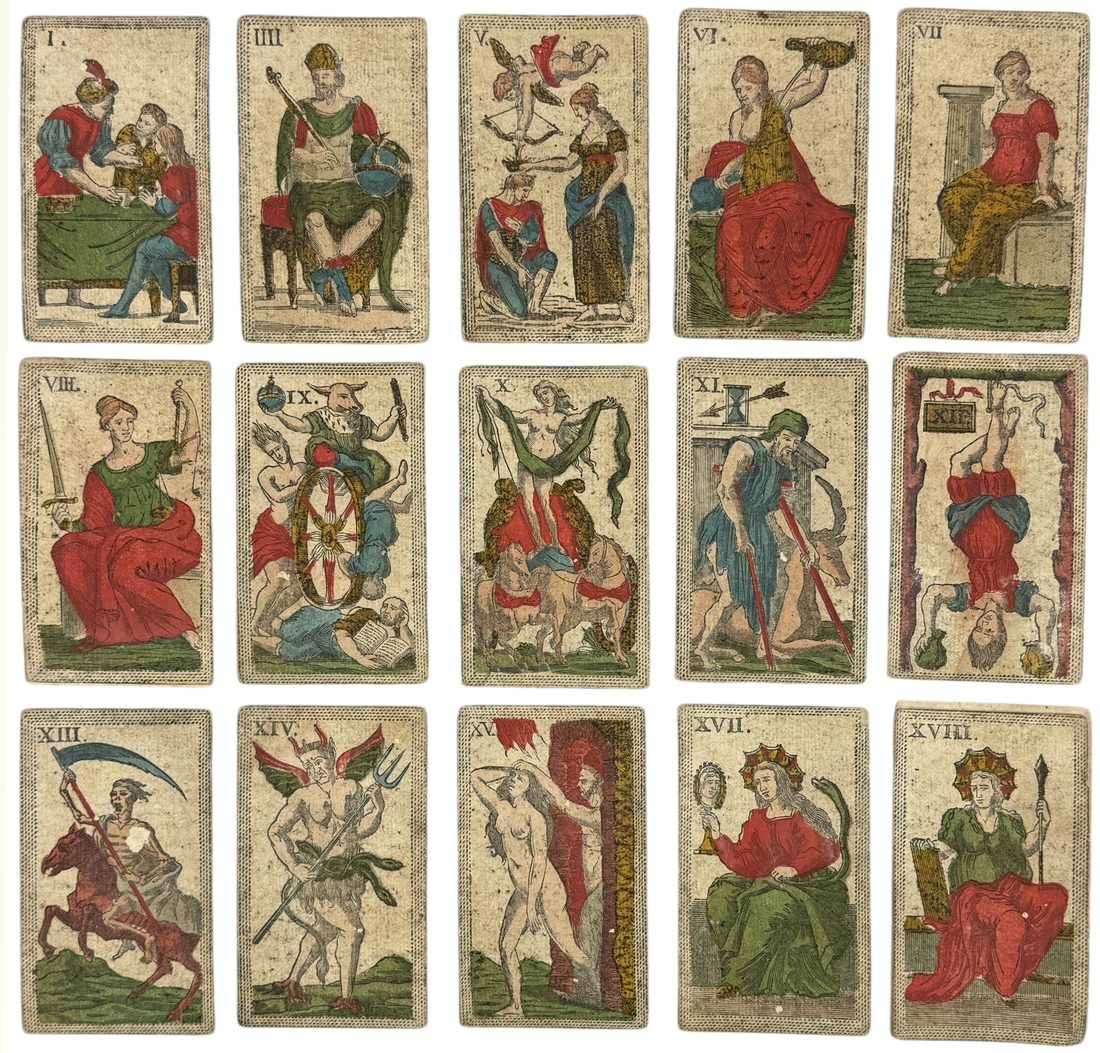
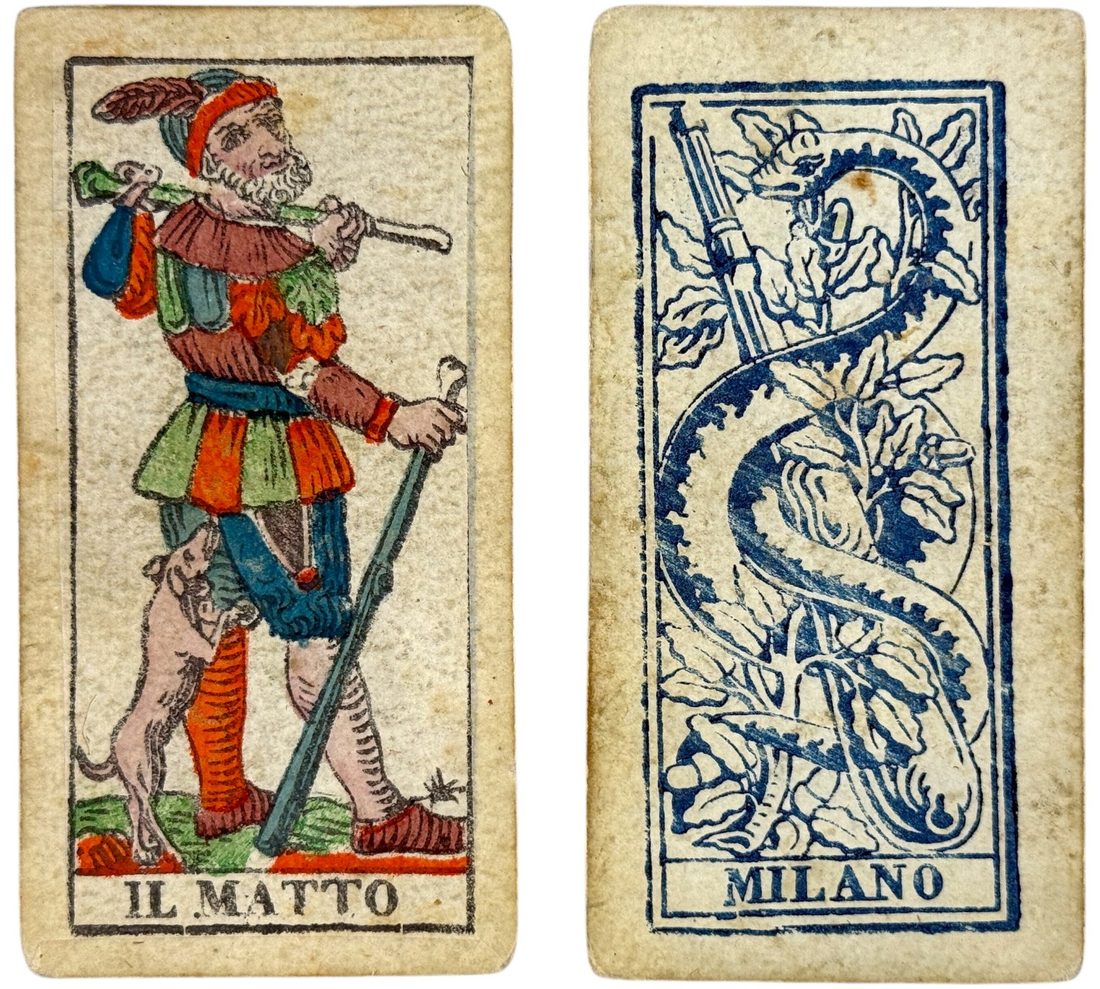
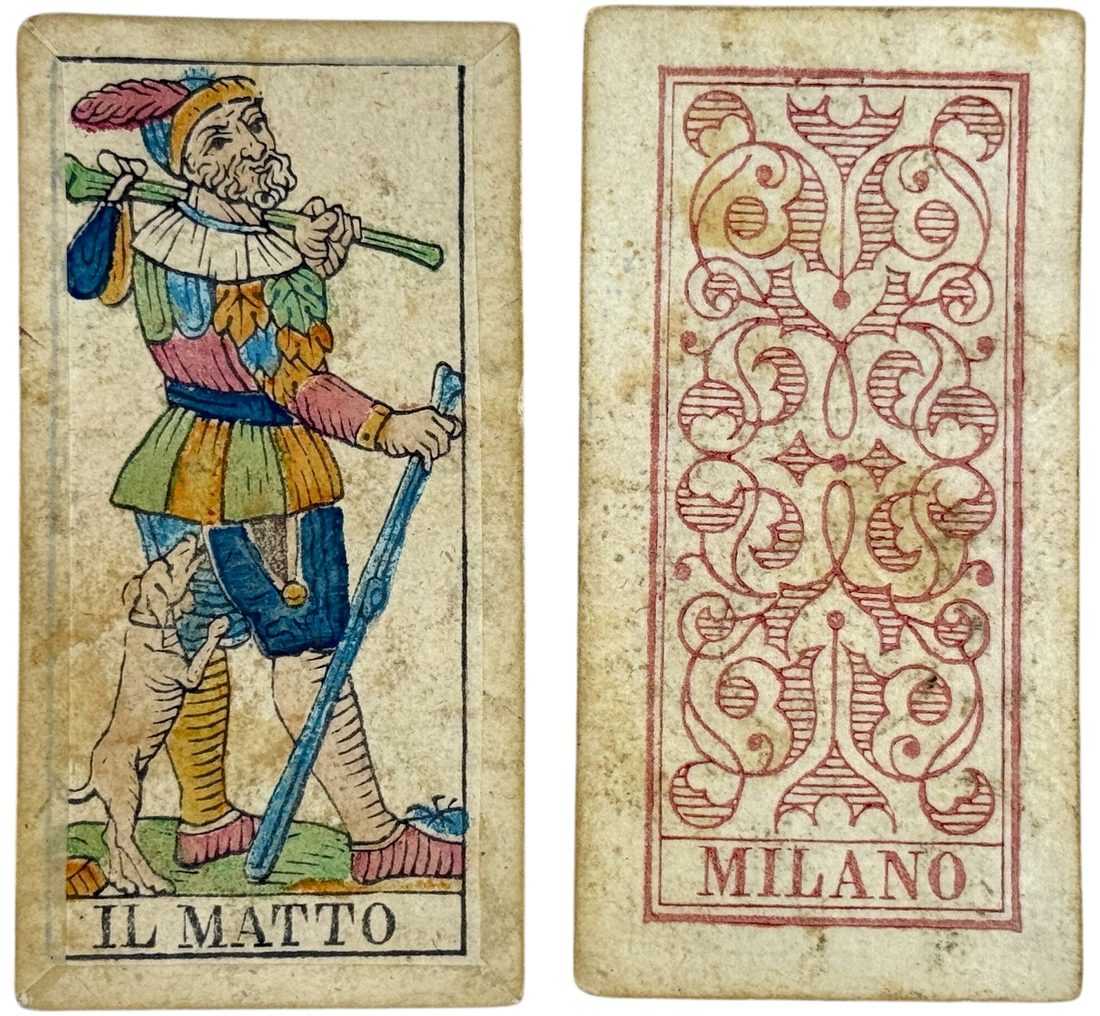
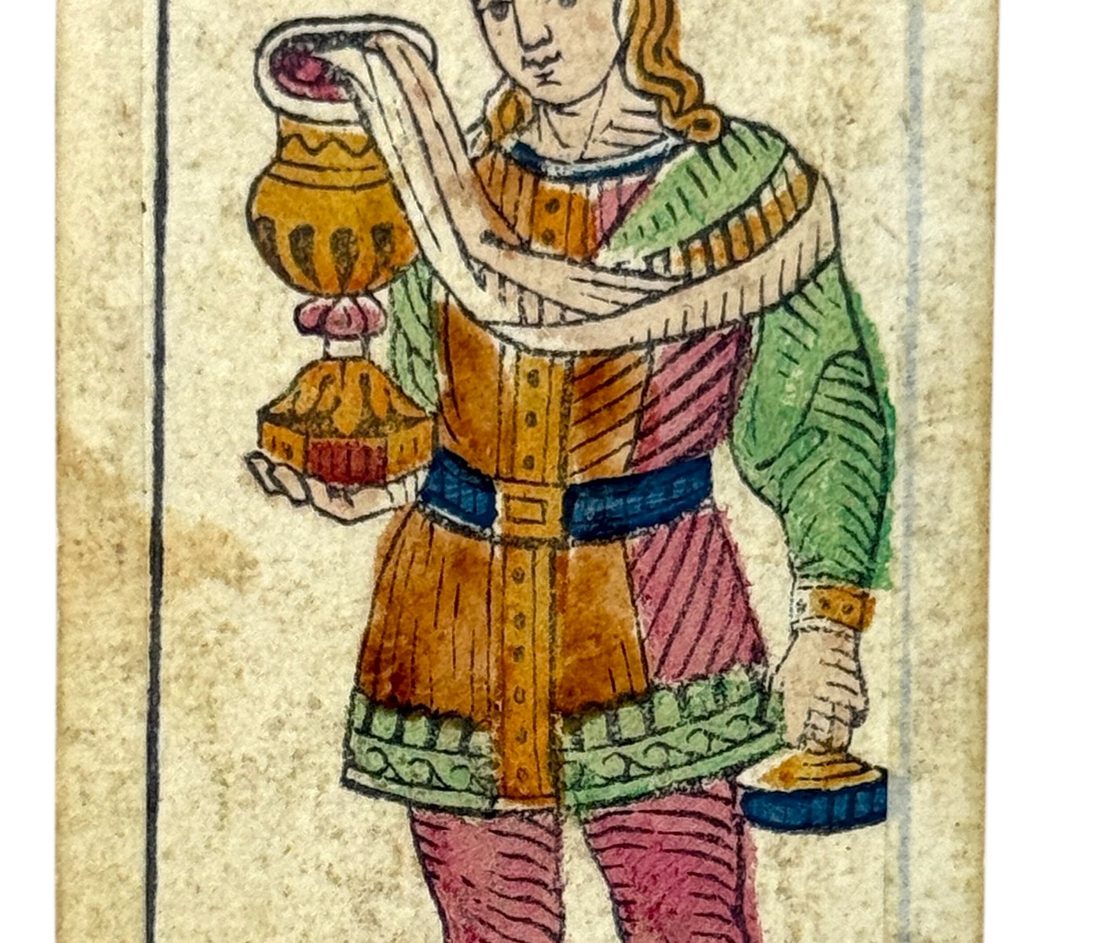
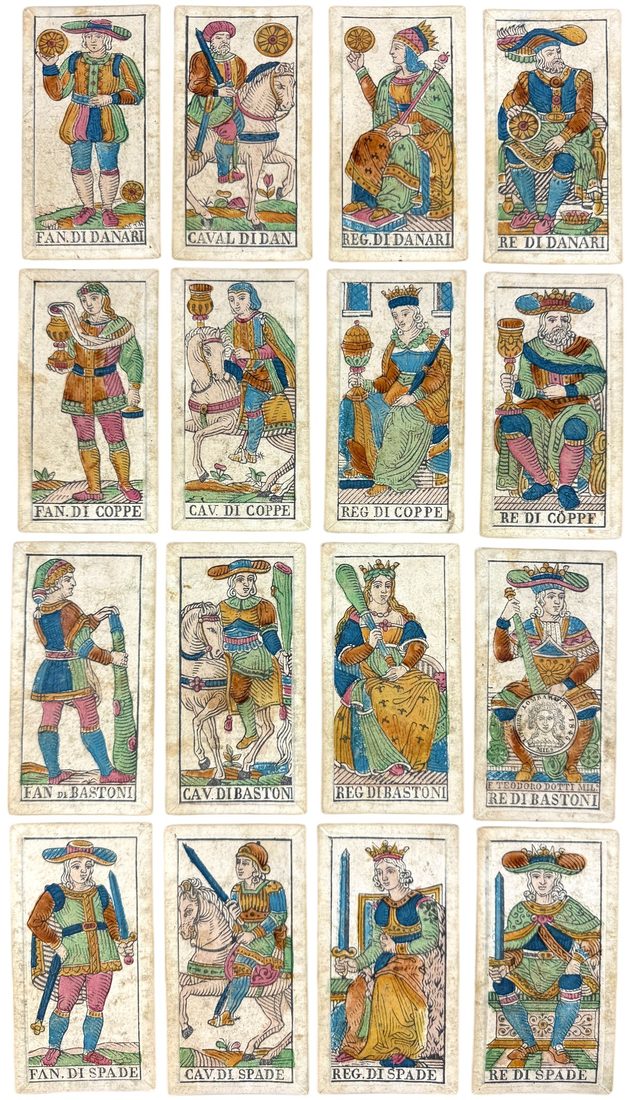
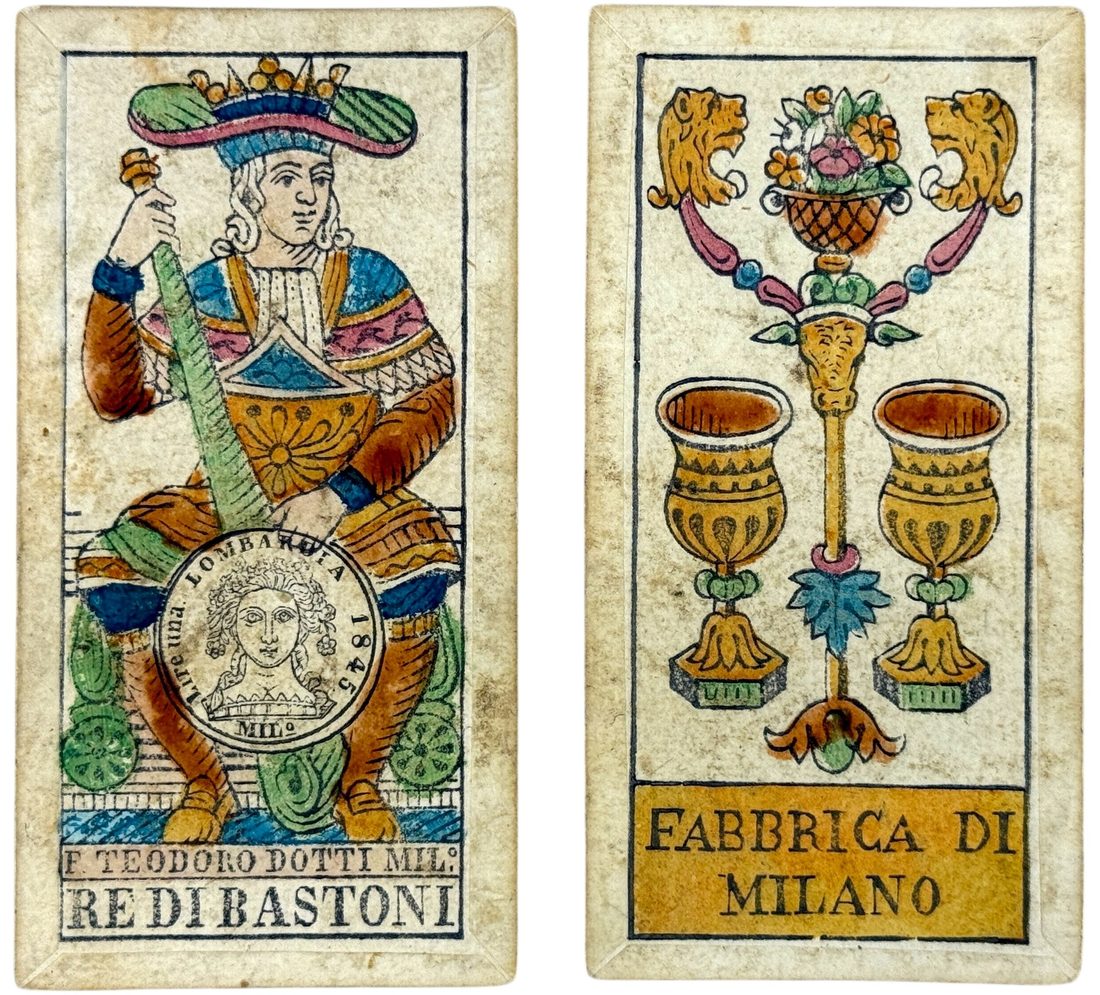
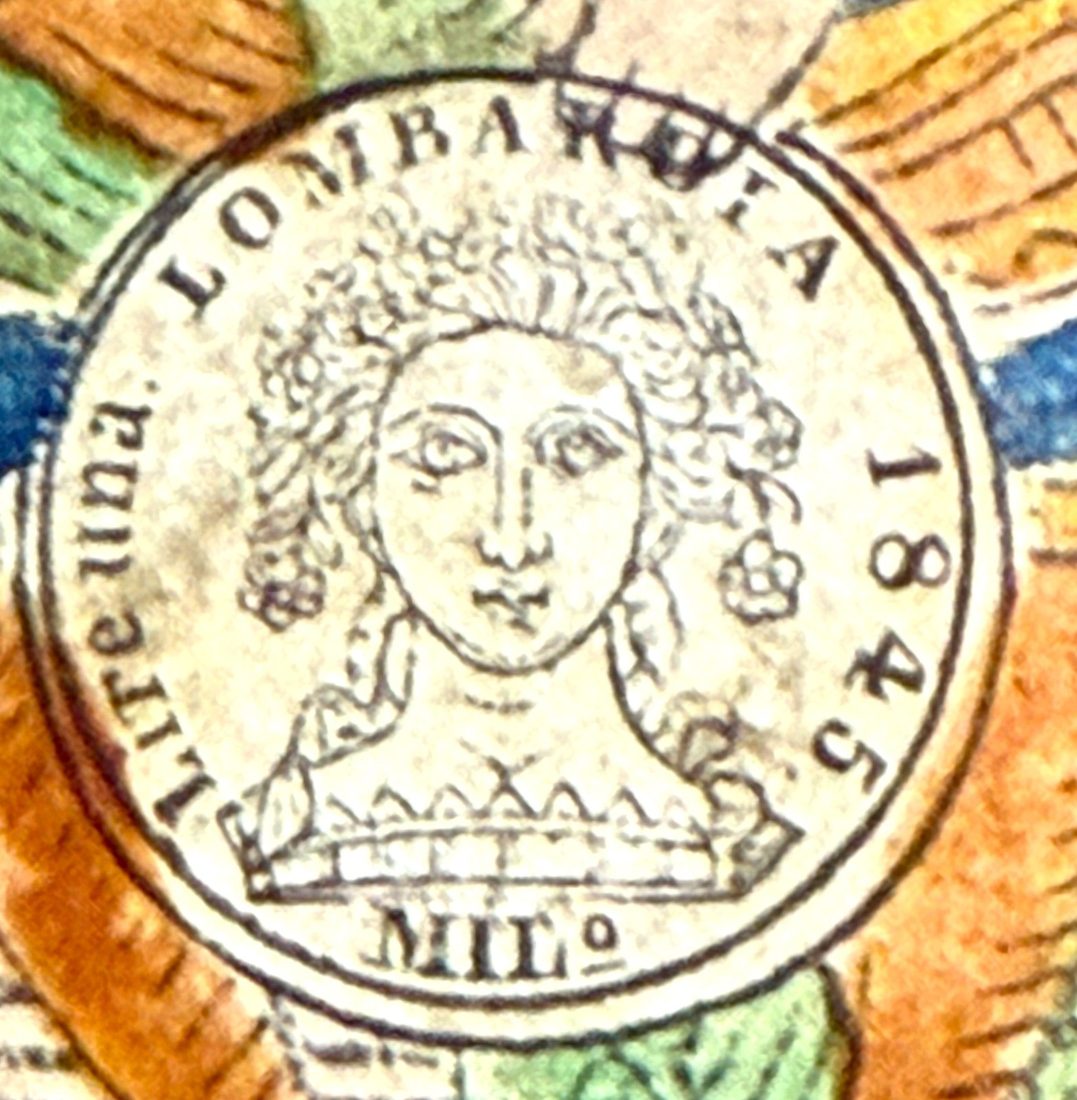
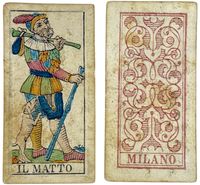
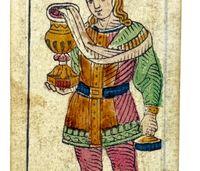
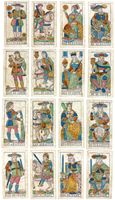
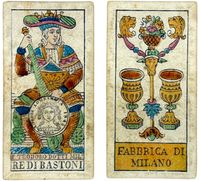
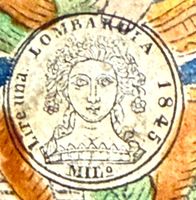
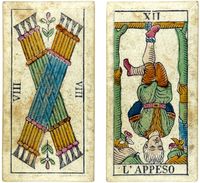
78 cards (106 × 55 mm), woodcuts coloured by stencil in ochre, orange, green, light and dark blue and pink; single-ended figures; the back paper folded over the edges of the face in the Italian manner and mitred at the square corners. Backs printed in red with an arabesque in a ruled frame and «MILANO» in a cartouche at the foot. King of Batons lettered «F. TEODORO DOTTI MILº» beneath the round Lombard duty stamp «Lire una. LOMBARDIA 1845 / MILº»; Two of Cups lettered «FABBRICA DI MILANO».
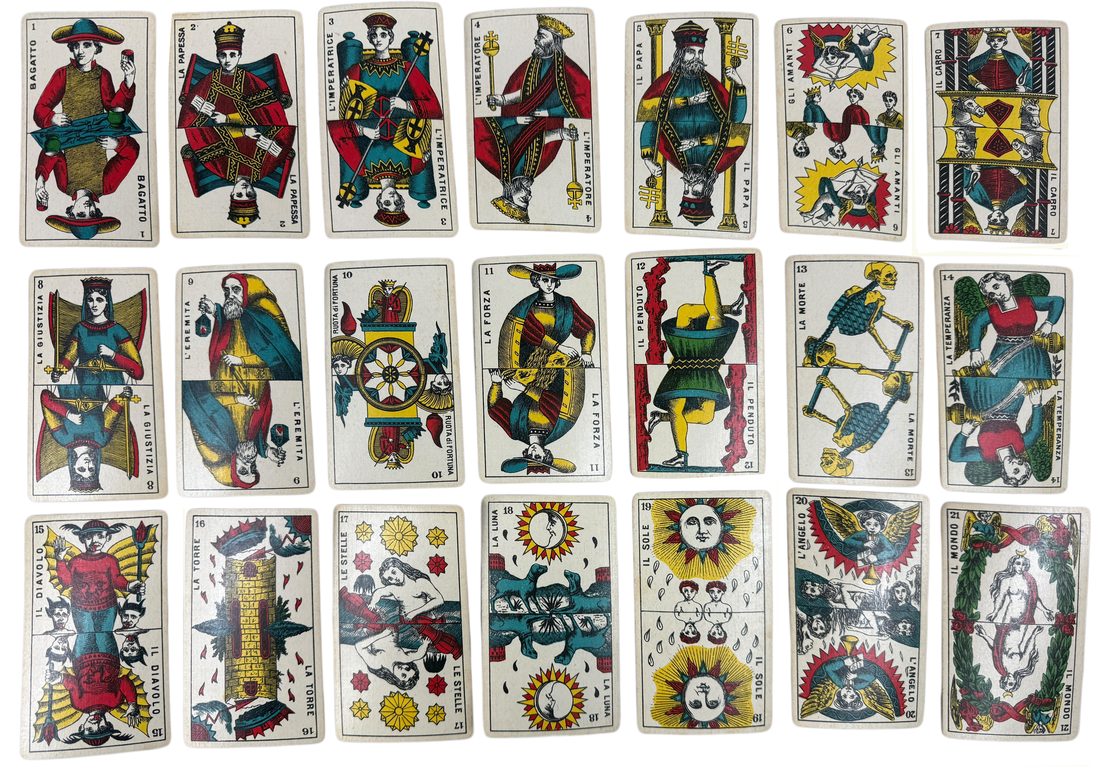
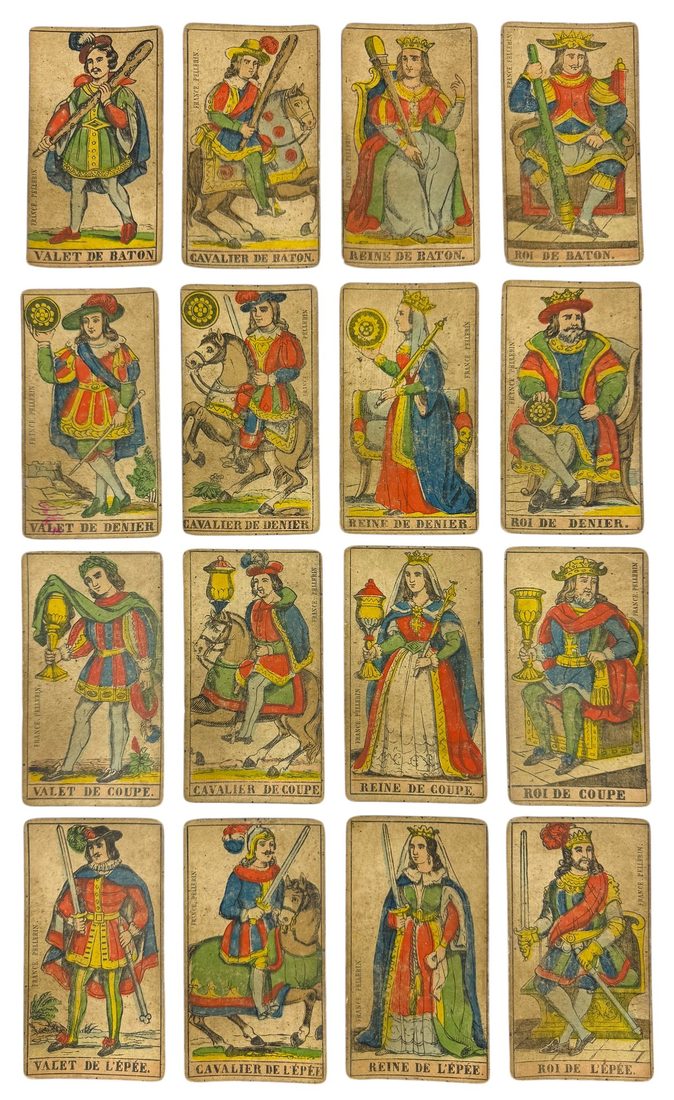
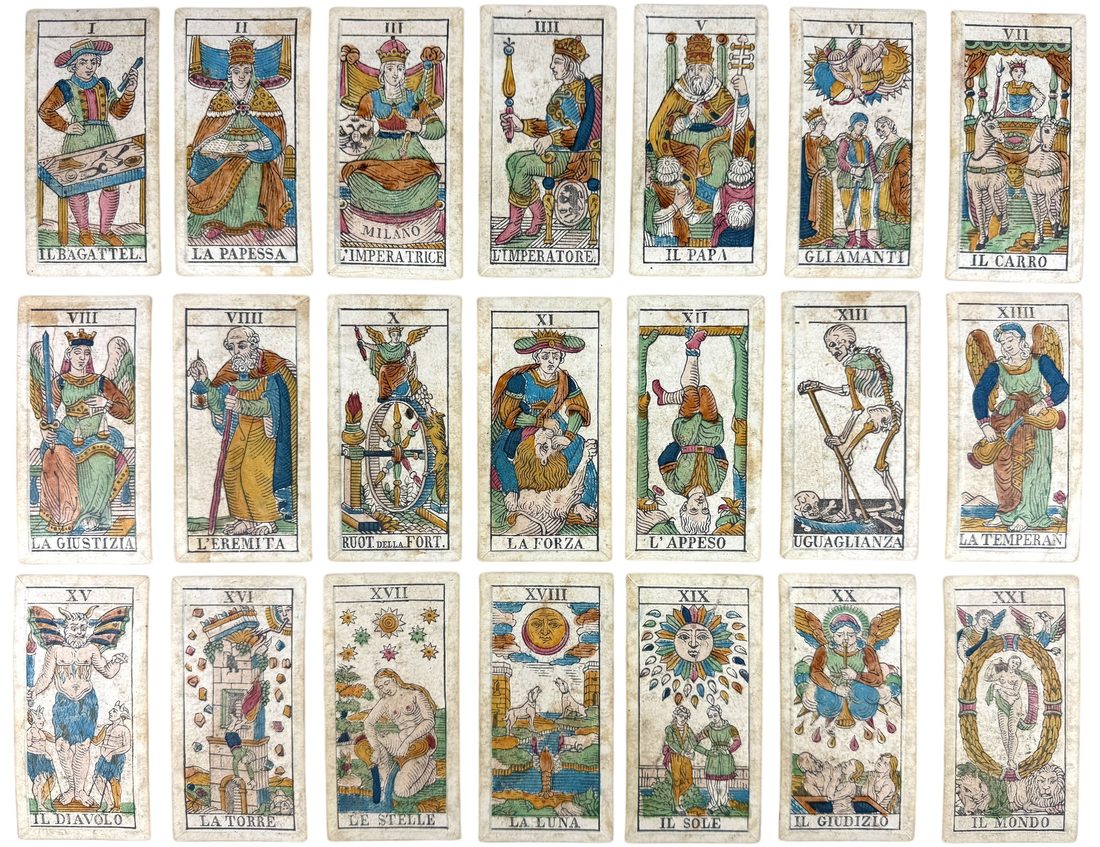
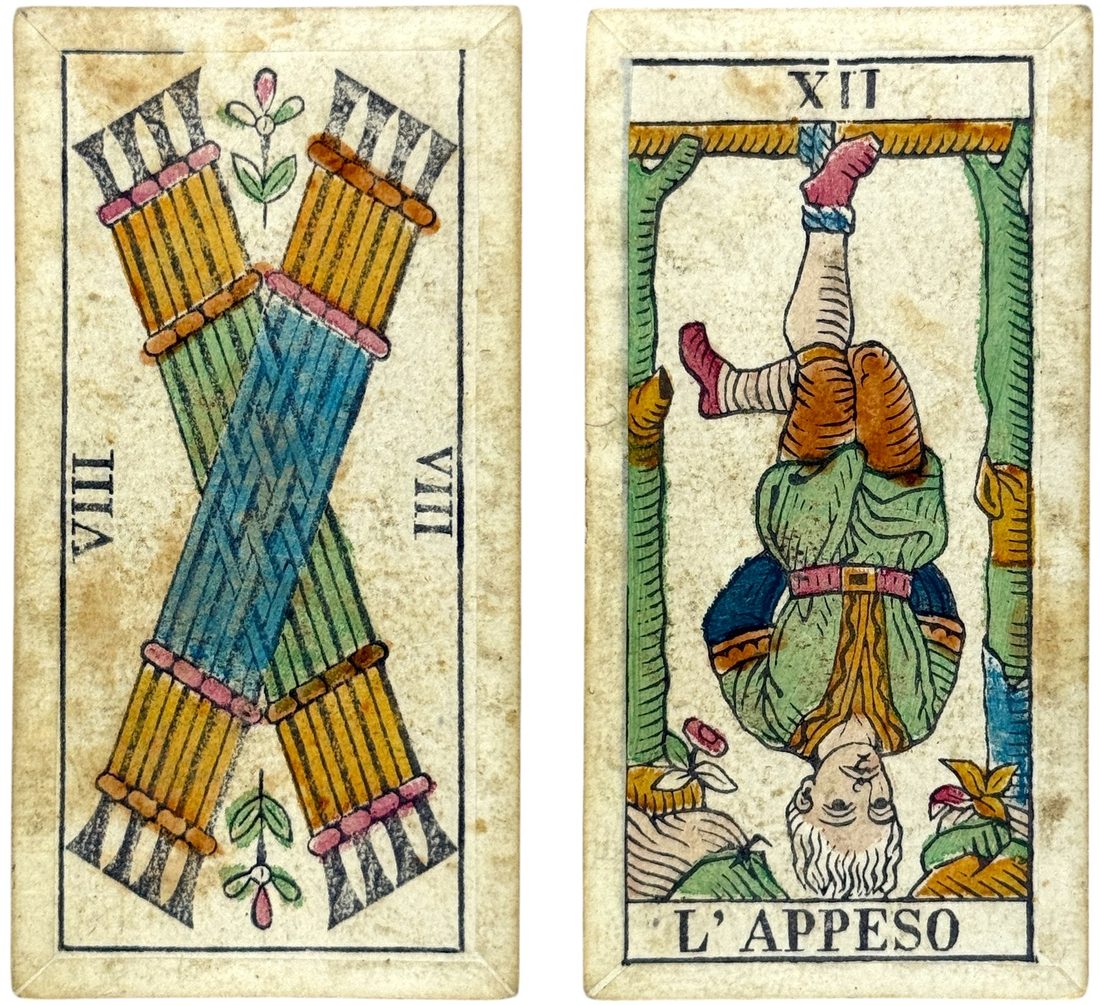
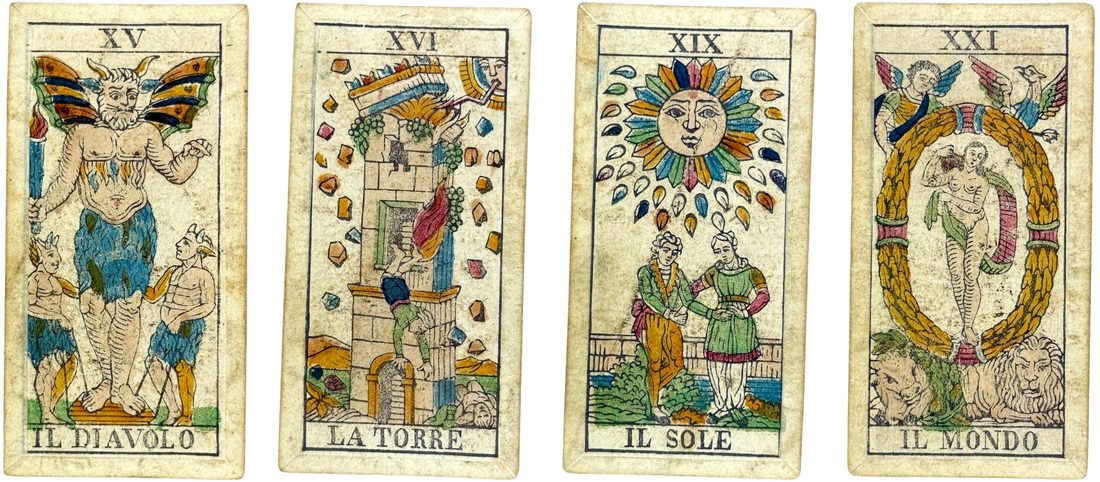
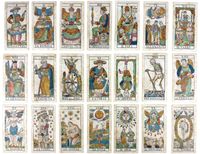
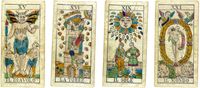
The pack is complete: fifty-six cards in the Italian suits of Coins, Cups, Swords and Batons, each of ten numerals and four full-length courts, Fante, Cavallo, Regina and Re, with swords and batons interlaced on the numerals; twenty-one trumps numbered in Roman figures and titled in Italian, from I Il Bagattel to XXI Il Mondo; and the unnumbered Il Matto.
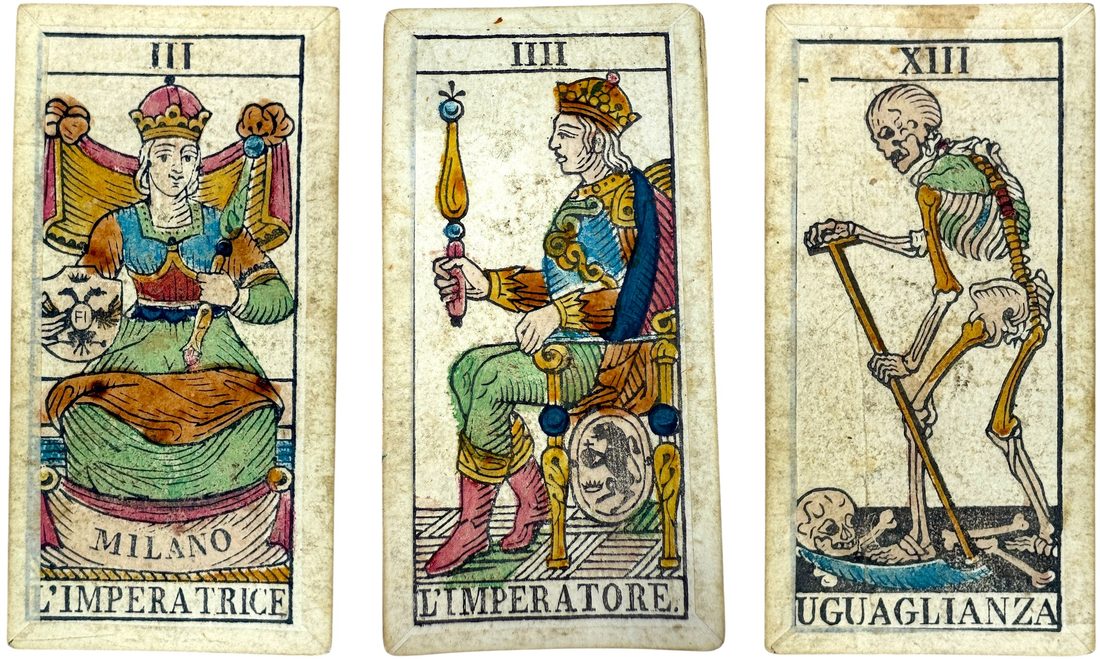
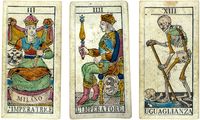
The maker signs the King of Batons, «F. TEODORO DOTTI MILº», under the duty stamp, as Milanese makers normally did under Austrian rule; the Two of Cups reads «FABBRICA DI MILANO», made in Milan, and «MILANO» is lettered again on the drape at the Empress’s feet and on the backs.
The pack can be dated by its duty stamp. From 1840 tarot packs in Lombardy paid one lira, and the duty stamp was redesigned every year, the dated dies giving the year, the rate and the city. The stamp on the King of Batons, a female head with flowers in her hair rising above a crown, inscribed «Lire una. LOMBARDIA 1845» and «MILº», is the Milan tarot stamp of 1845, a die we have not found illustrated in the published lists; the pack was taxed for sale about 1845.
The heraldry is that of the Austrian years: the Empress’s shield bears the Habsburg double-headed eagle with the cipher «FI», and an oval medallion hung on the Emperor’s throne shows a rampant lion holding an orb, with a crown at its feet. Later Milanese packs dropped the Habsburg eagle: Lamperti and Edoardo Dotti put the white cross of Savoy in its place, while the Teodoro Dotti blocks, printed again in the late 1850s and the 1860s, leave the Empress’s shield blank and keep the lion medallion. Trump XIII is titled Uguaglianza, as on the two packs signed by Teodoro Dotti that Kaplan describes and on some of Edoardo’s packs of the early 1860s; others by Edoardo read La Morte.
The design is the Lombard pattern, as Michael Dummett named it, a narrow-format Italian derivative of the Tarot de Marseille, classified by the International Playing-Card Society as Pattern Sheet 3 (formerly IT-1.1).
French captions on the earliest Italian packs of this kind point to French influence behind the eighteenth-century revival of tarocchi, which took hold at about the same time in Piedmont and in Lombardy. The Lombard cards were made in the narrow Italian format, almost invariably with the back paper folded over the edges, and followed the Tarot de Marseille closely, with a few features of their own; French-captioned examples of the eighteenth century are recorded from Bologna, Modena, Padua, Gorizia, Trieste and Wels, and from Serravalle in Piedmont. In Milan, where the game was played from about 1740, the cards were later printed with Italian captions until the last years of the nineteenth century.
Two Gumppenberg tarots of the Napoleonic years read «Regia Fabbrica di Milano», the state card factory he was called to run in 1809. The words «Fabbrica di Milano», made in Milan, recur on the Two of Cups of woodcut tarots by Gumppenberg, by his son-in-law Lattanzio Lamperti, by Teodoro and Edoardo Dotti, by their contemporary Giuseppe Sironi and later by Bordoni.
This was a pack for play. In Lombardy the seventy-eight-card tarot served the four-handed partnership game of tarocchi, as well as Reseghino and the Tarocc’Ombre bidding games; in these Lombard games, unlike those of Piedmont, the World ranks above the Angel.
Teodoro Dotti (born 1805, a date confirmed by Alberto Milano from the Milan population registers) is listed in the Milan directories as a card maker in 1839, at Ferdinando Gumppenberg’s address in piazza San Paolo, in 1841 at his own address nearby, and from 1842 to 1846 as «Dotti Teodoro e Comp.», with a workshop in contrada della Passarella: this pack was stamped in those years. His name remained on the woodblocks into the 1860s: Kaplan records two packs signed «F. Teodoro Dotti» with duty stamps of 1857–59 and of the Kingdom of Italy, which he places after Teodoro’s death, given as 1855. The firm later traded under his son Edoardo, who also issued, from engraved plates, a version of the Soprafino tarot that Carlo Della Rocca had engraved for Gumppenberg.
Census: no other Teodoro Dotti woodcut tarot with a duty stamp earlier than 1857 has been traced in the public collections and sale records we have been able to search. The complete pack in the British Museum carries a stamp of 1857–59, as does one of the two packs under his name that Kaplan describes (the other bears the Italian stamp); the complete pack in the Bibliothèque nationale de France has only an unlettered ornament in the stamp roundel of its King of Batons.
Conditions: complete, 78/78, in good condition. Light scattered foxing on a few cards, the folded edges lightly toned.
References: S. R. Kaplan, The Encyclopedia of Tarot, vol. II, New York: U.S. Games Systems, 1986, pp. 194, 220–221, 245–246, 367, 369; M. Dummett, The Game of Tarot, London: Duckworth, 1980, pp. 196–198; M. Dummett and J. McLeod, A History of Games Played with the Tarot Pack: The Game of Triumphs, Lewiston, N.Y.: Edwin Mellen Press, 2004, vol. I, pp. 111–124; T. Depaulis, Tarot, jeu et magie, Paris: Bibliothèque nationale, 1984, no. 53; International Playing-Card Society, Pattern Sheet 3, «Unnamed (IT-1.1)», https://i-p-c-s.org/pattern/ps-3.html.