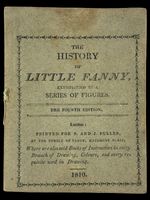
The History of Little Fanny, Exemplified in a Series of Figures

| Macro-category | Rare Books and Manuscripts |
| Subcategory | Movable & Pop-up Books |
| Author | Anonymous |
| Place of printing | London |
| Publisher / Maker | S. and J. Fuller |
| Year | 1810 |
«Little Fanny», the founding work of the paper-doll book,
here complete in every part and preserving, almost uniquely,
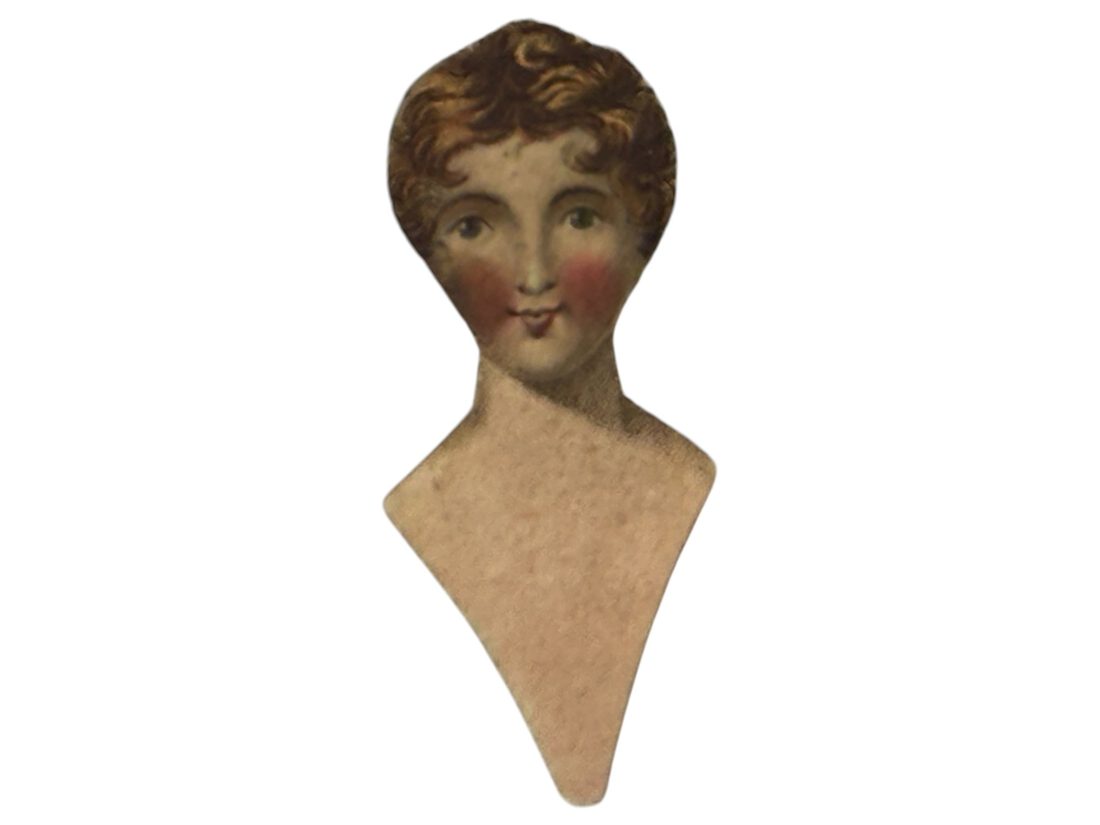
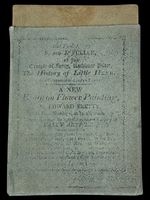
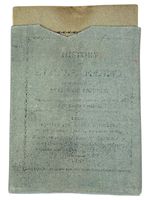
every figure, the head and the four hats, the printed slipcase
and, almost never seen, its original silk tie
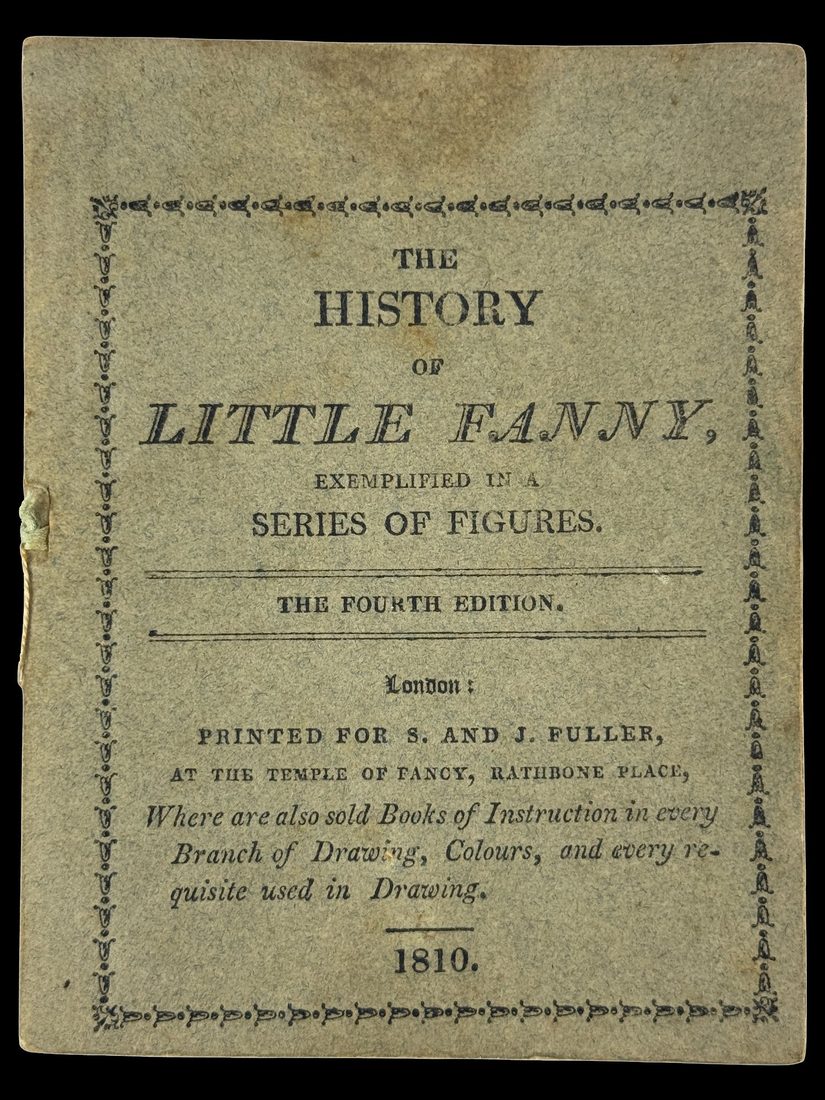
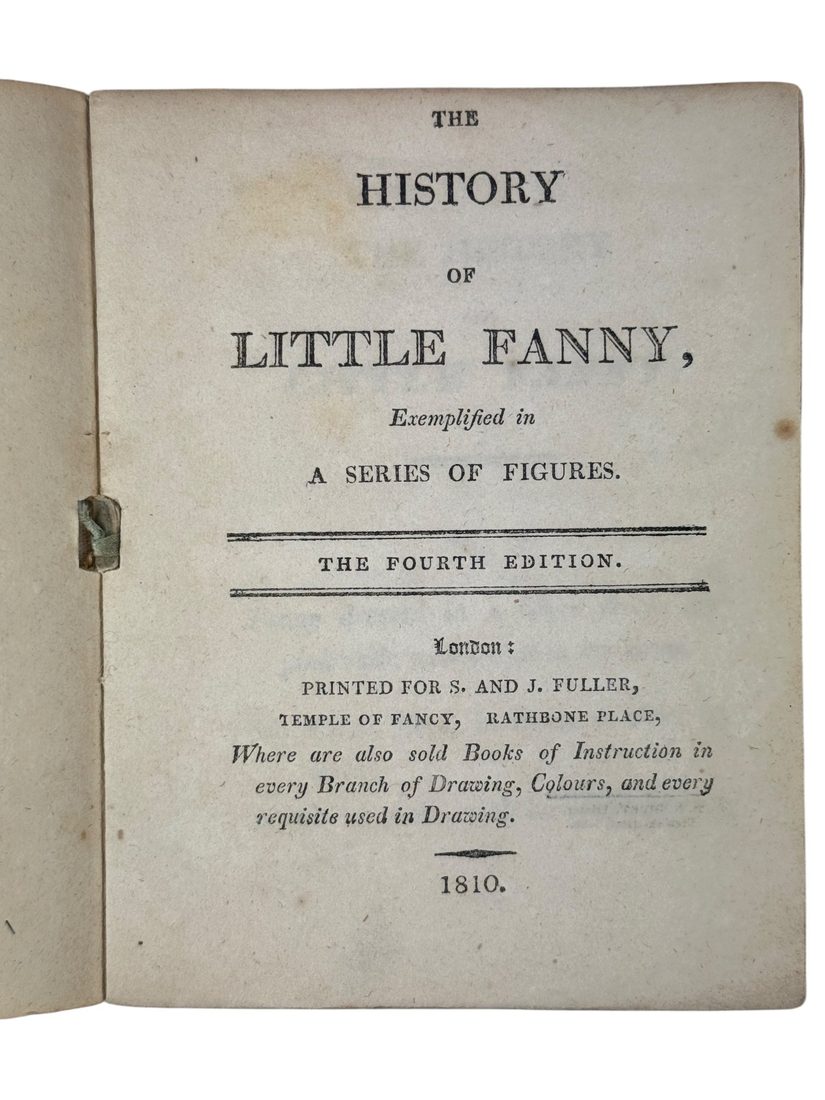
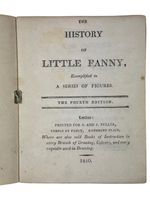
[Anonymous]. The History of Little Fanny, exemplified in a series of figures. The Fourth Edition. London: Printed for S. and J. Fuller, at the Temple of Fancy, Rathbone Place [printed by D. N. Shury, Berwick Street, Soho], 1810.
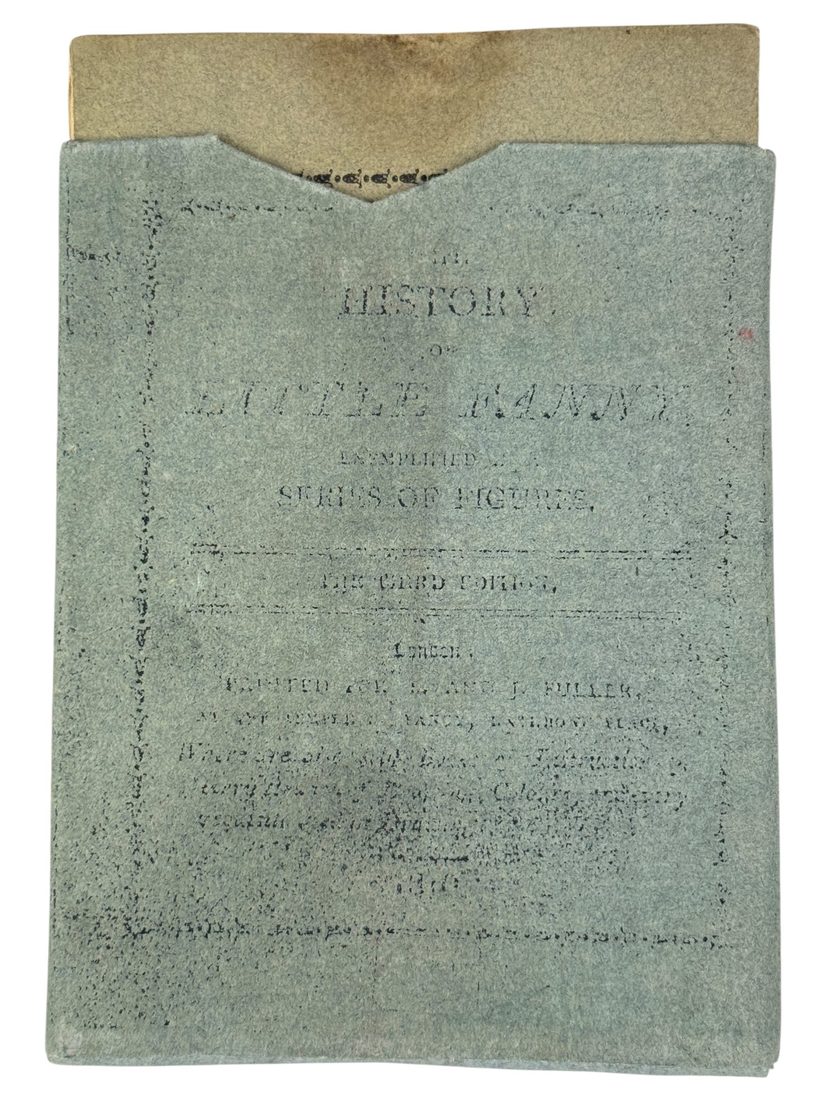
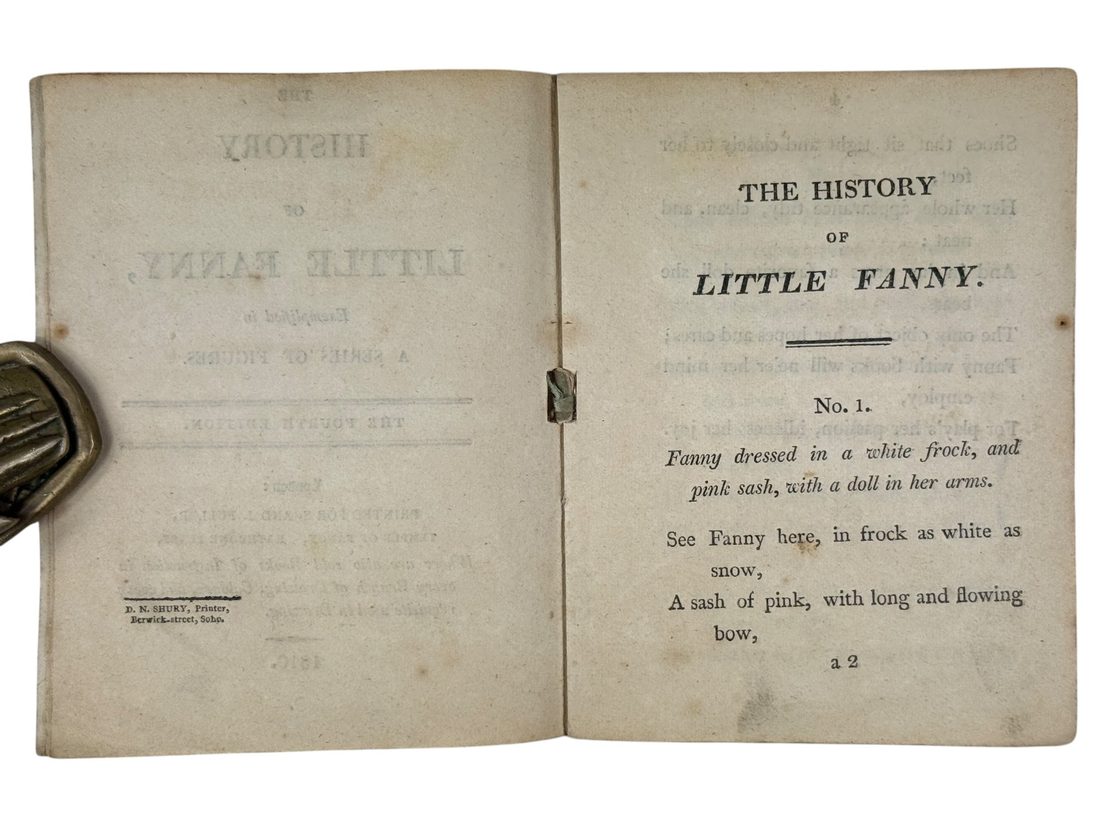
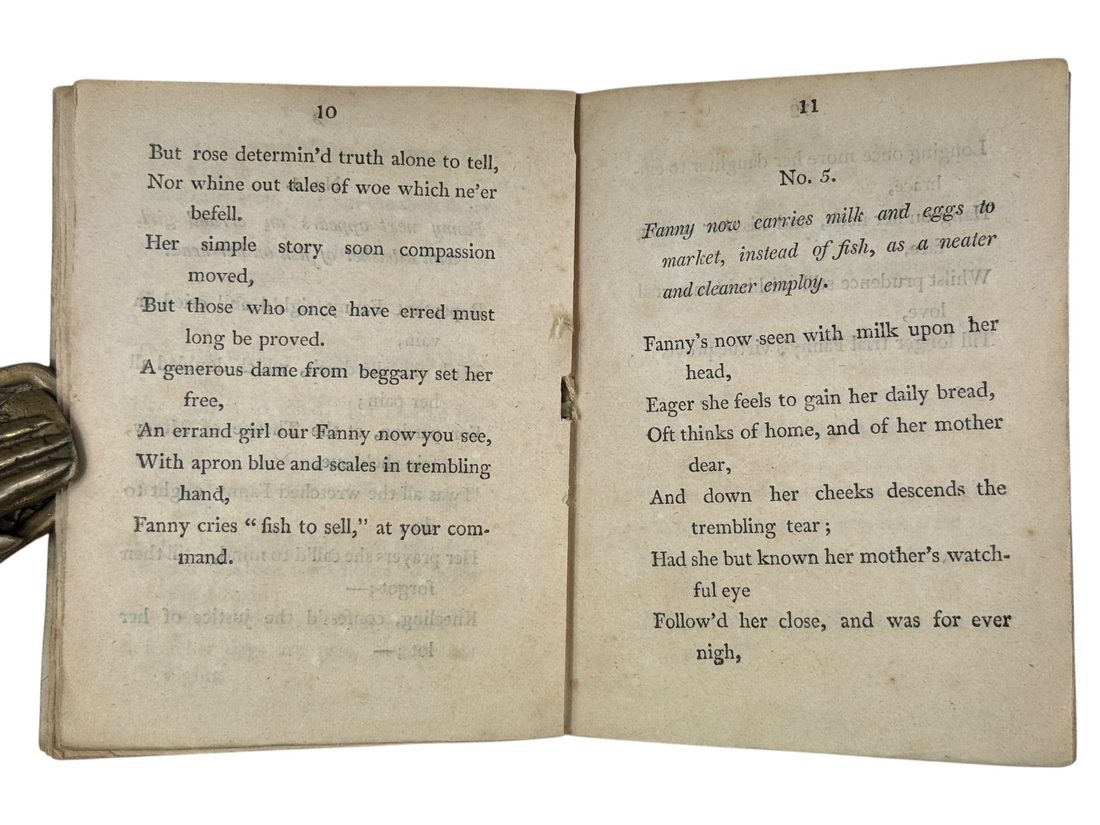
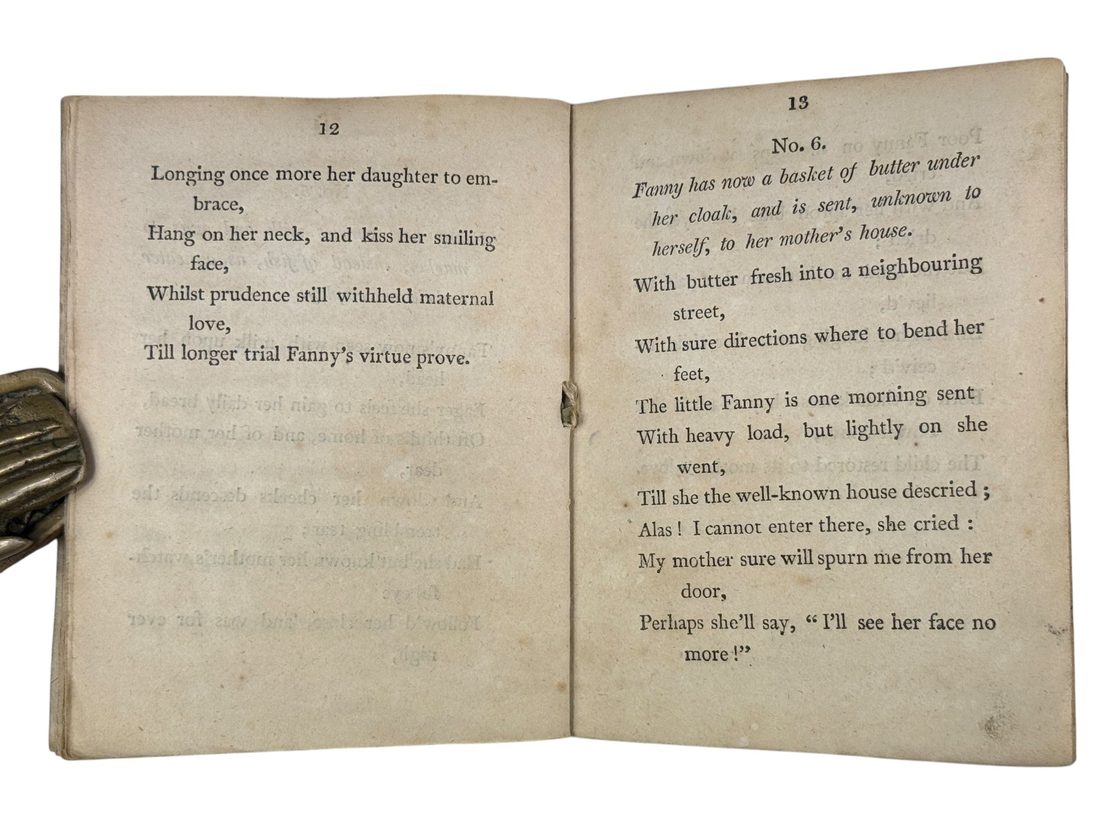
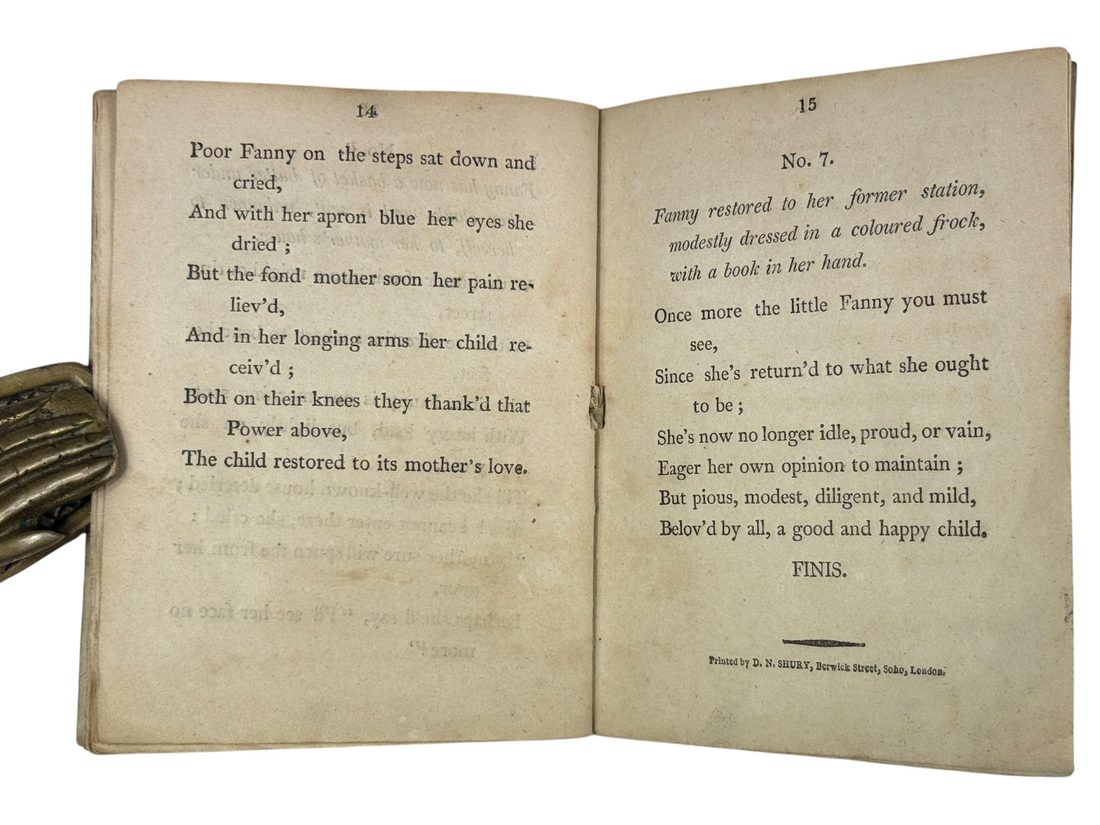
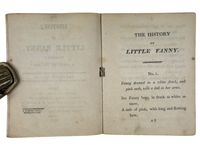
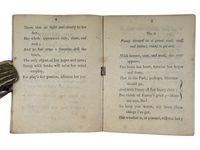
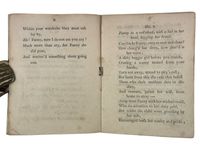
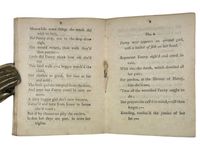
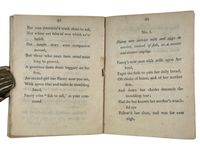
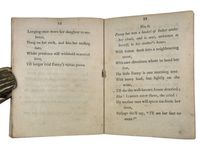
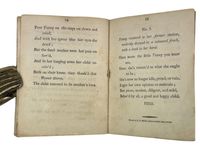
Small format (130 × 105 mm), here surviving complete and as issued, comprising a letterpress booklet, a single movable head, seven full-length costume figures, four separate hats, and the original printed paper slipcase, pp. [1] 2–15 [16], original front and rear free endpapers; the whole is stab-sewn through the inner margin and preserved in the original grey-green printed wrappers, set within a decorative typographic border of rules and ornaments. The title is repeated on the upper wrapper and on the title-page (leaf 1 recto), printer’s imprint, “D. N. Shury, Berwick-street, Soho,” appears on the verso of the title and in the colophon at the foot of p. 15 (“FINIS”). The text is set in small roman type, the seven episodes headed “No. 1” to “No. 7.”
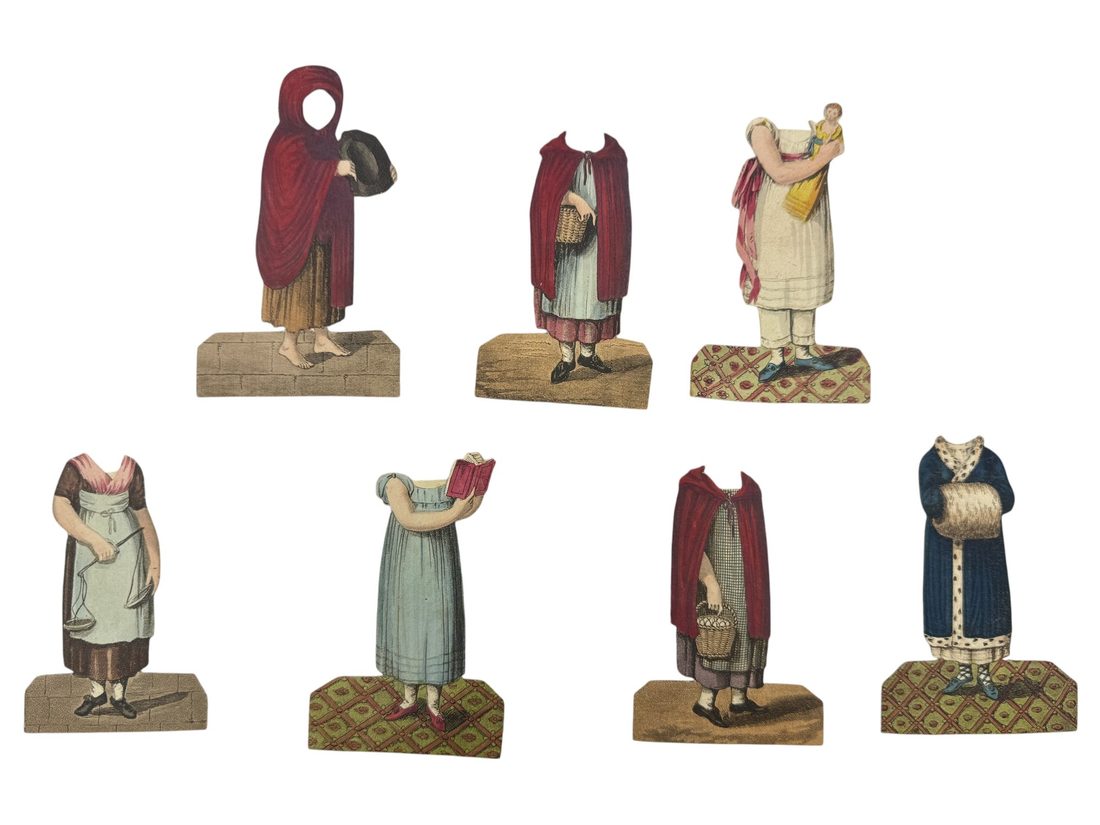
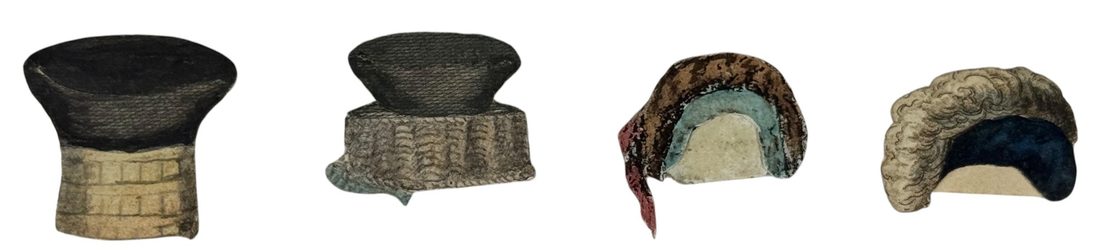
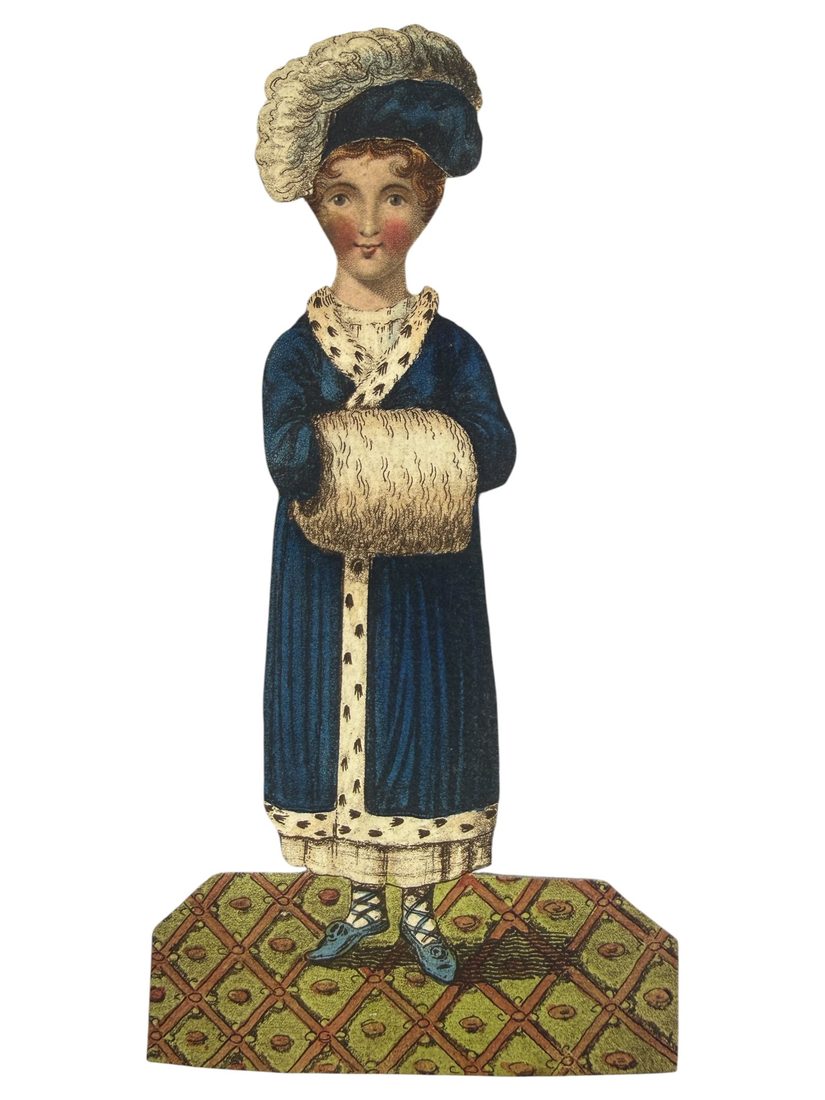
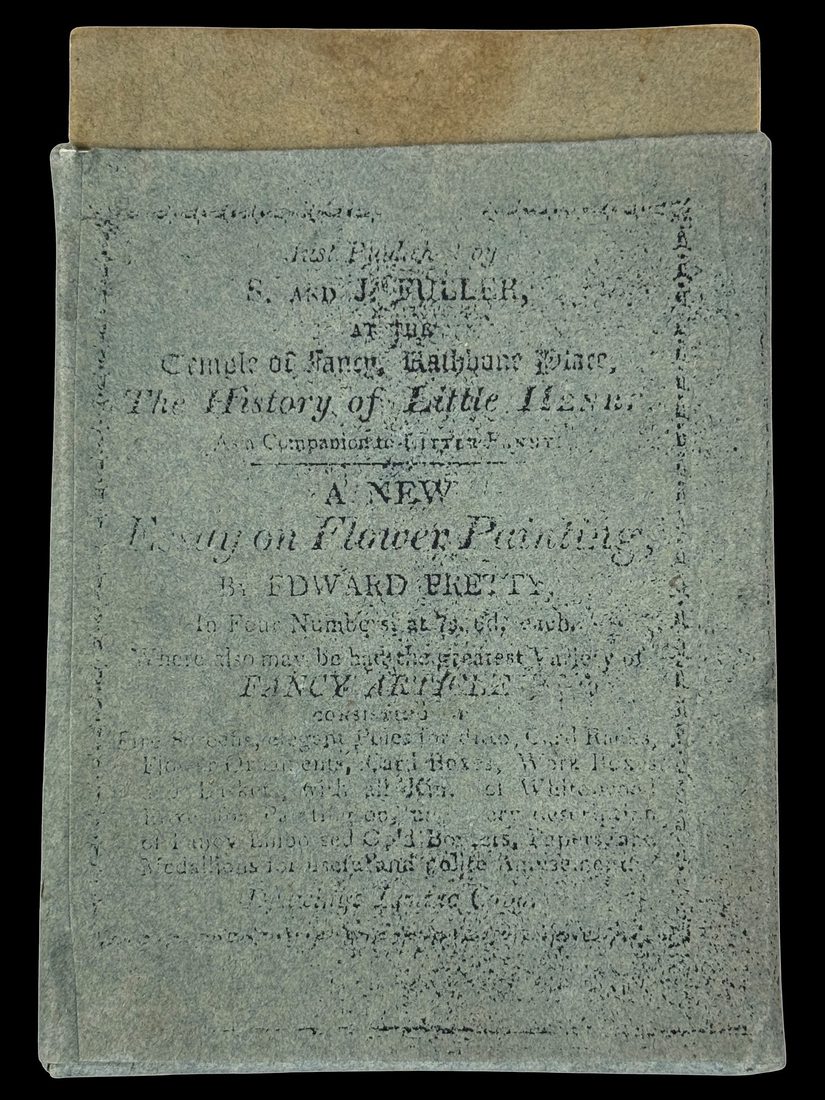
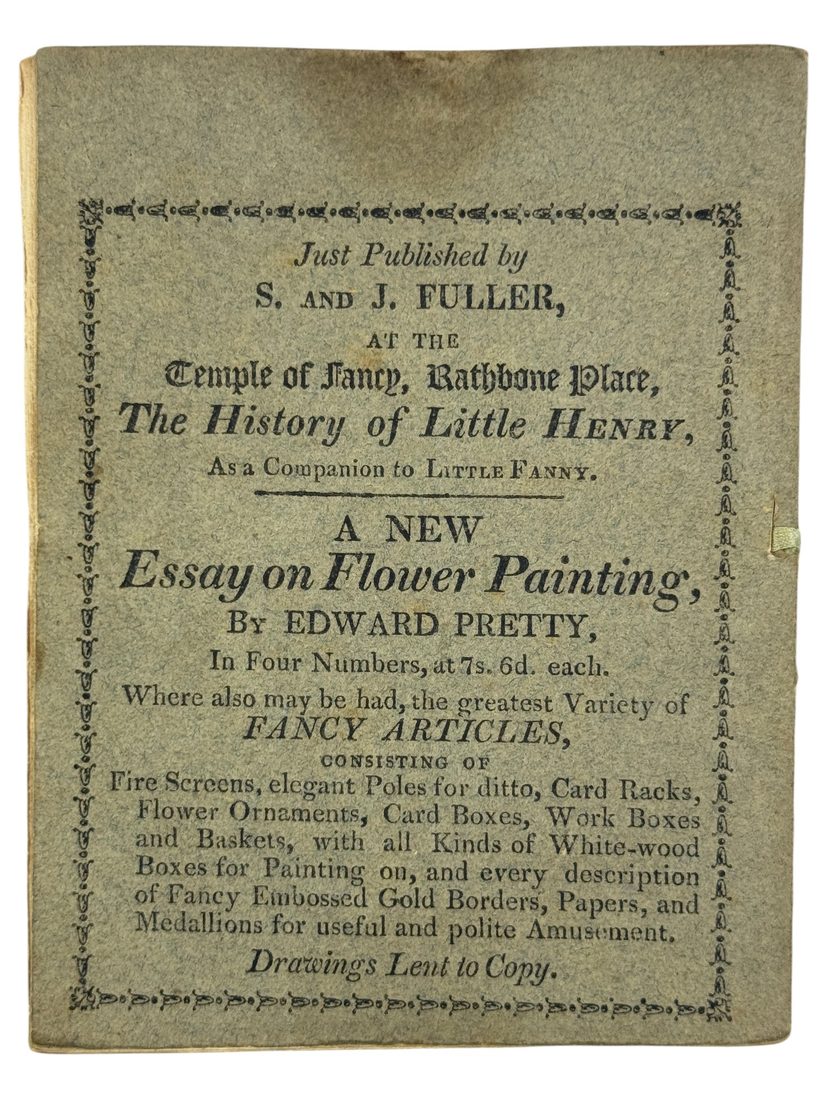
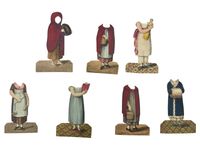
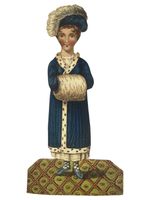
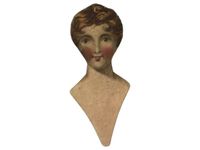
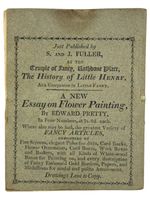
The movable apparatus is executed in aquatint, finished by hand in watercolour and gouache. It comprises a single head and bust of the heroine, fitted beneath the neck with a wedge-shaped tab; seven full-length costume figures, each mounted upon an illustrated plinth (tiled floors, low walls, parquet) and provided on the verso with a paper pocket to receive the head; and four separate hats. As the narrative proceeds the interchangeable head is passed from one figure to the next, so that a single doll may be successively re-costumed. The lower wrapper, and both faces of the slipcase, carry letterpress advertisements for the Fullers’ companion volume, The History and Adventures of Little Henry, for Edward Pretty’s Essay on Flower Painting (“in Four Numbers, at 7s. 6d. each”), and for the “fancy articles” sold at the Temple of Fancy.
Most exceptionally, the original silk ribbon tie survives, threaded and knotted through the spine slot of the wrapper, an element almost never preserved in extant copies and one that materially distinguishes the present example.
Fourth edition, dated 1810, of S. and J. Fuller’s The History of Little Fanny, the first commercially produced paper doll and the founding work of the movable “paper-doll book.” A moral tale in verse, it is designed to be performed as much as read: an interchangeable cut-out head is dressed in seven successive hand-coloured costumes that trace the heroine’s fall from vanity into beggary and her redemption through industry. Complete examples, retaining all the figures, the head, the four hats, the printed slipcase and, exceptionally, the original silk tie, are of the greatest rarity.
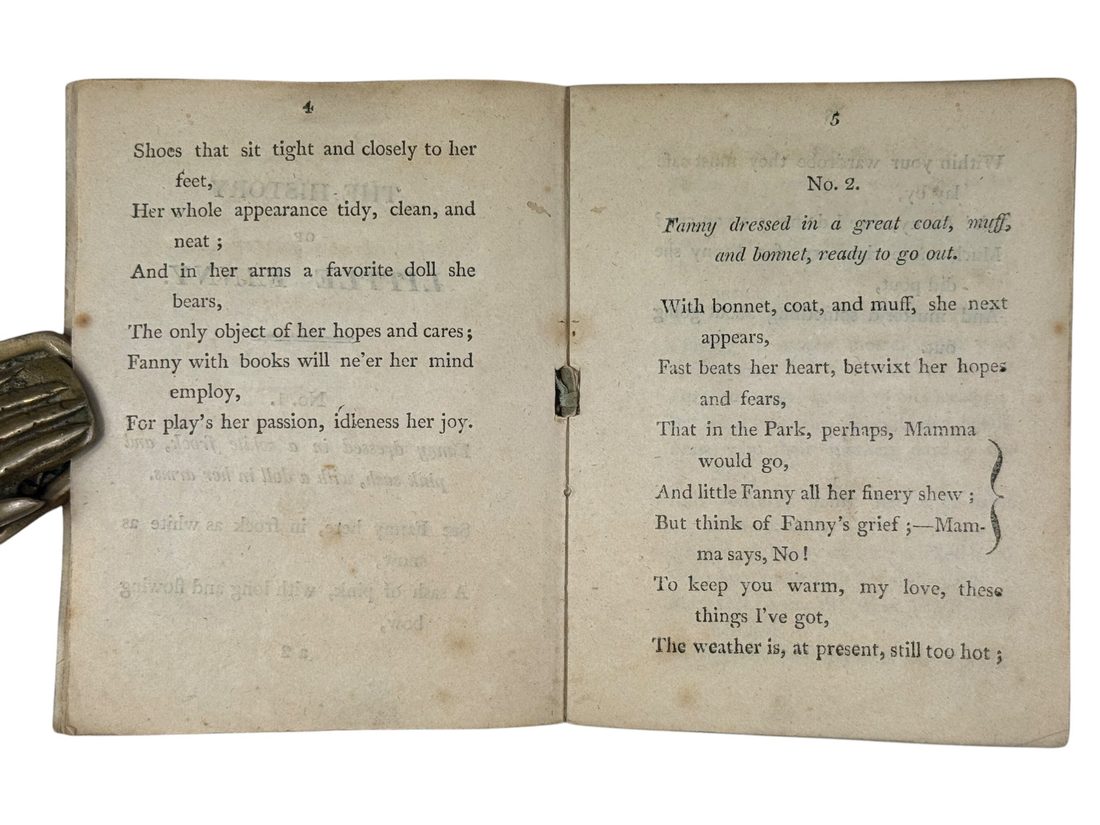
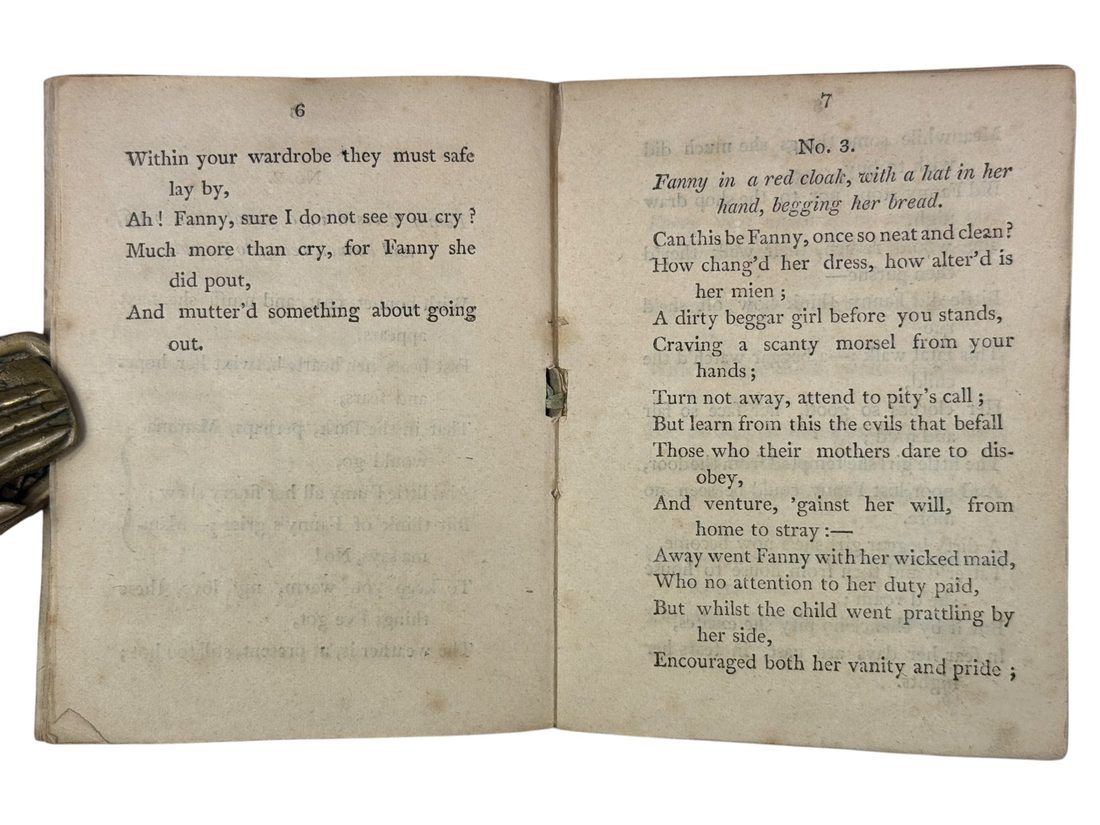
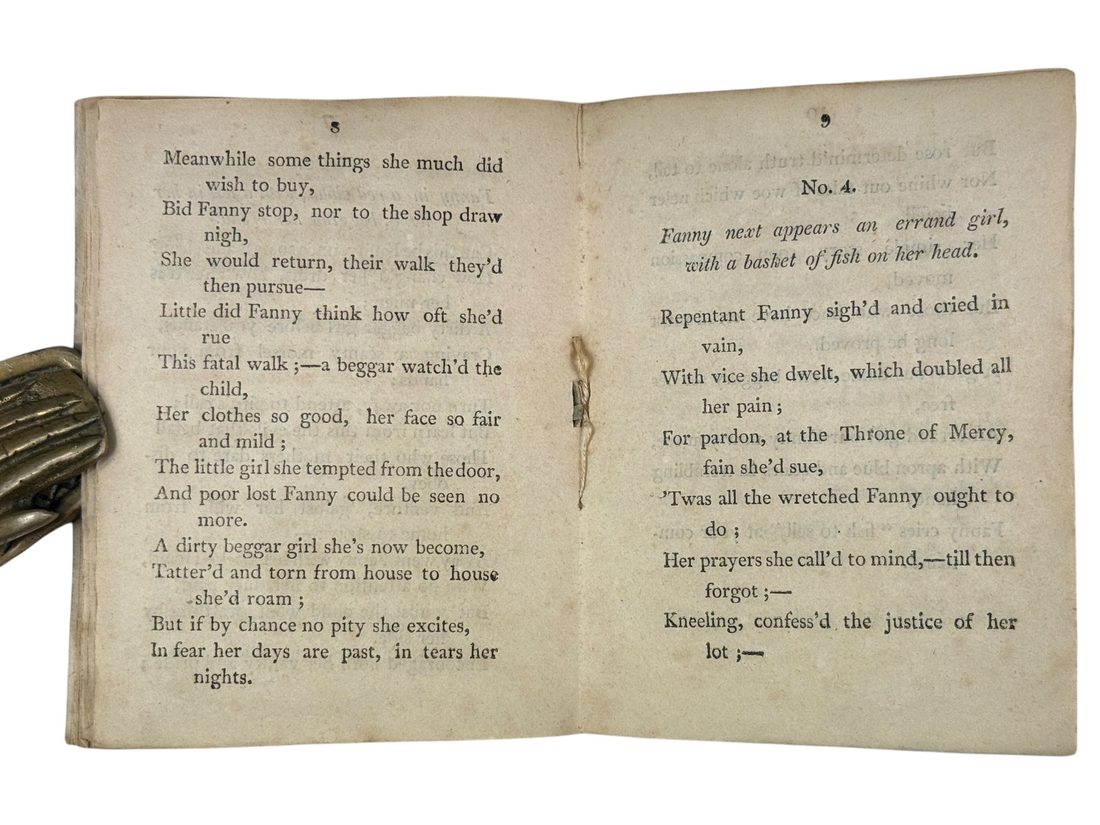
The work is conceived as an integrated kit rather than a conventional book, its narrative unfolding across seven numbered episodes of verse, each keyed to one of the seven costume figures, so that reading and dressing advance together. In No. 1 Fanny appears in a white frock and pink sash, a doll in her arms, the very image of pampered vanity; in No. 2, in greatcoat, muff and bonnet, she disobeys and is lost; in No. 3, in a red cloak with hat in hand, she is reduced to beggary. Her gradual redemption is then figured through honest labour, as an errand-girl bearing a basket of fish upon her head (No. 4), as a vendor of milk and eggs (No. 5), and as a butter-carrier unwittingly sent to her mother’s own door (No. 6), until in No. 7 she is restored to her former station, “modestly dressed... with a book in her hand” (FINIS).
The didactic content is wholly conventional, vanity punished and obedience rewarded, and the originality of the production lies not in its morality but in its medium: the fusion of text, hand-coloured image and tactile play within a single portable object, sold ready-assembled in its printed slipcase.
Issued in 1810, Little Fanny inaugurated an entirely new category of children’s publication. S. and J. Fuller are universally credited with the first commercial paper doll, and with it the paper-doll book, of which Little Fanny was the very first title; its companion for boys, The History and Adventures of Little Henry, followed in the same year. The only meaningful formal antecedent lies in the movable harlequinades, or “turn-up” books, of Robert Sayer (c. 1765–70), yet the device of an interchangeable head slotted into pocketed costumes was Fuller’s own invention.
The production belongs squarely to the Regency culture of the “fancy” trade: the Temple of Fancy in Rathbone Place supplied drawing materials, instructional manuals, hand-coloured prints and genteel amusements to a prosperous and improving middle class. At 5s. 6d. coloured, Little Fanny was an expensive plaything, addressed to the same polite domestic market as the optical novelties, toy theatres and paper peepshows of the period. The Fuller series ran to some ten titles, among them Phoebe, the Cottage Maid and Ellen, or the Naughty Girl Reclaimed (both 1811), and later Frederick, or the Effects of Disobedience (1816), but does not appear to have extended much beyond 1812, an indication of a limited and costly market. The form was nonetheless swiftly imitated and translated across Europe and in the United States, and the modern paper doll descends directly from this prototype of 1810.
The verse is anonymous and its author has never been securely identified; Samuel and Joseph Fuller were London printsellers and publishers who kept the Temple of Fancy in Rathbone Place, a celebrated emporium of “fancy articles,” artists’ colours, drawing manuals and hand-coloured prints. With Little Fanny and Little Henry they effectively invented the paper-doll book and dominated the genre throughout its brief vogue, issuing a connected series of morally instructive movable tales for children between 1810 and 1812.
The booklet was printed by Daniel Nathan Shury, of Berwick Street, Soho, a London trade printer active in the first decades of the nineteenth century. His name carries a particular resonance for the historian of medicine, for he was among the printers of Edward Jenner’s writings on vaccination (1801). The hand-coloured aquatint figures were produced separately from the letterpress and assembled with it, in the customary manner of luxury illustrated publishing for children, before being issued together within the printed slipcase.
Conditions: The present copy is complete in all its elements: the letterpress booklet, the single interchangeable head, the seven costume figures, the four hats, and the original printed slipcase. Its most significant feature of condition is the survival of the original silk ribbon tie, now faded to a greenish-grey, still threaded and knotted through the spine slot of the wrapper; almost never present, it is of real consequence to the standing of the example.
The letterpress shows only light age-toning and scattered marks of handling, while the hand-coloured figures remain fresh, with bright original colour. The original front and rear free endpapers are preserved, the rear endpaper bearing faint pencil notations in an early hand, apparently the stock and price codes of the book trade rather than marks of personal ownership. The printed wrappers and the slipcase display the rubbing, light soiling and edge-wear to be expected of so fragile a survival, but the set is sound and well-preserved and, being complete with its slipcase and original tie, of a quality rarely encountered.
References: Gumuchian, Les Livres de l’Enfance du XVe au XIXe siècle, Paris: [1930], no. 2010 (recording a defective copy); The Osborne Collection of Early Children’s Books 1566–1910: A Catalogue, Toronto: 1975 (the printed Fuller edition not represented, a manuscript version only).