Giuoco d'arme dei sovrani





| Macro-category | Rare Books and Manuscripts |
| Subcategory | Educational Games & Cards |
| Author | Giustiniani |
| Year | 1691 |
playing Europe: a complete heraldic card deck
in a rare Neapolitan book
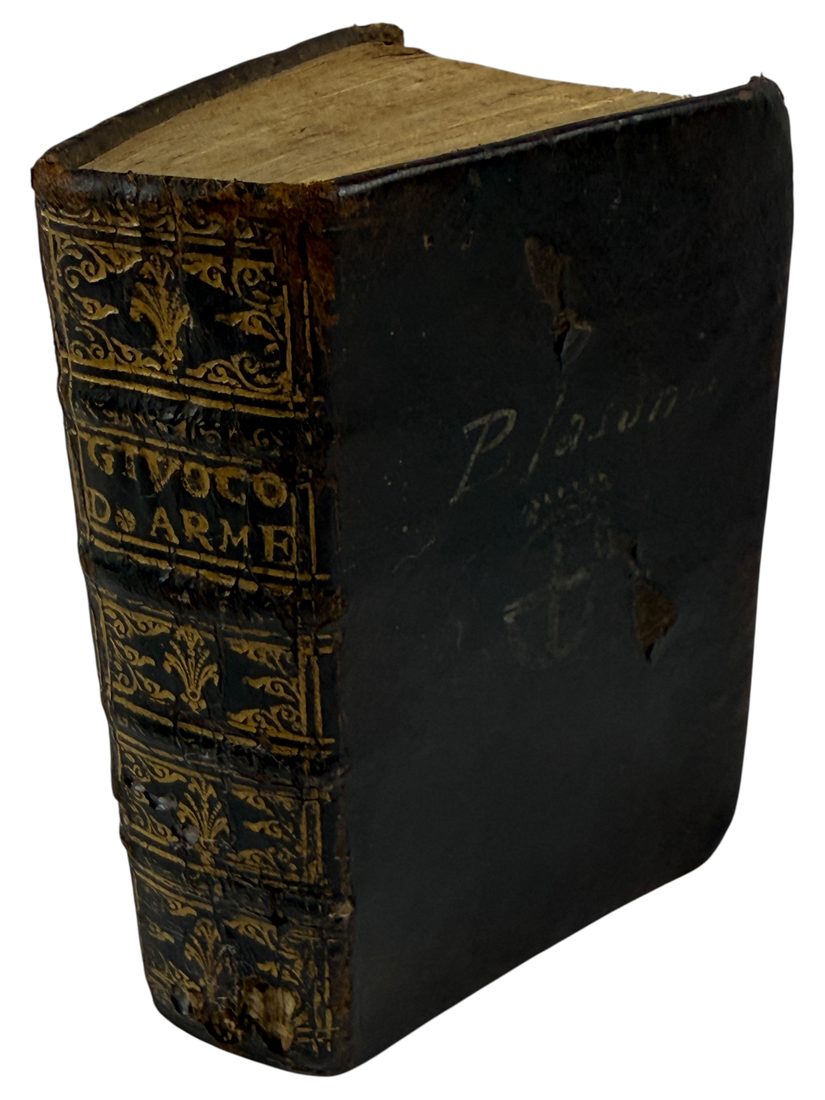
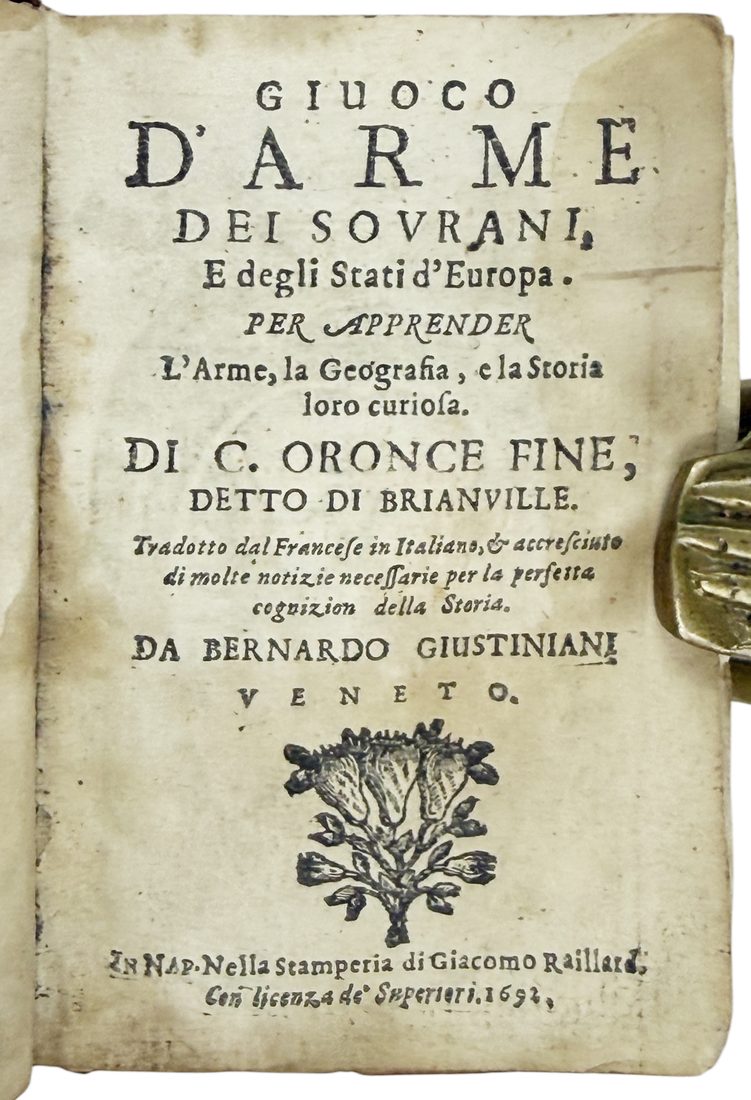
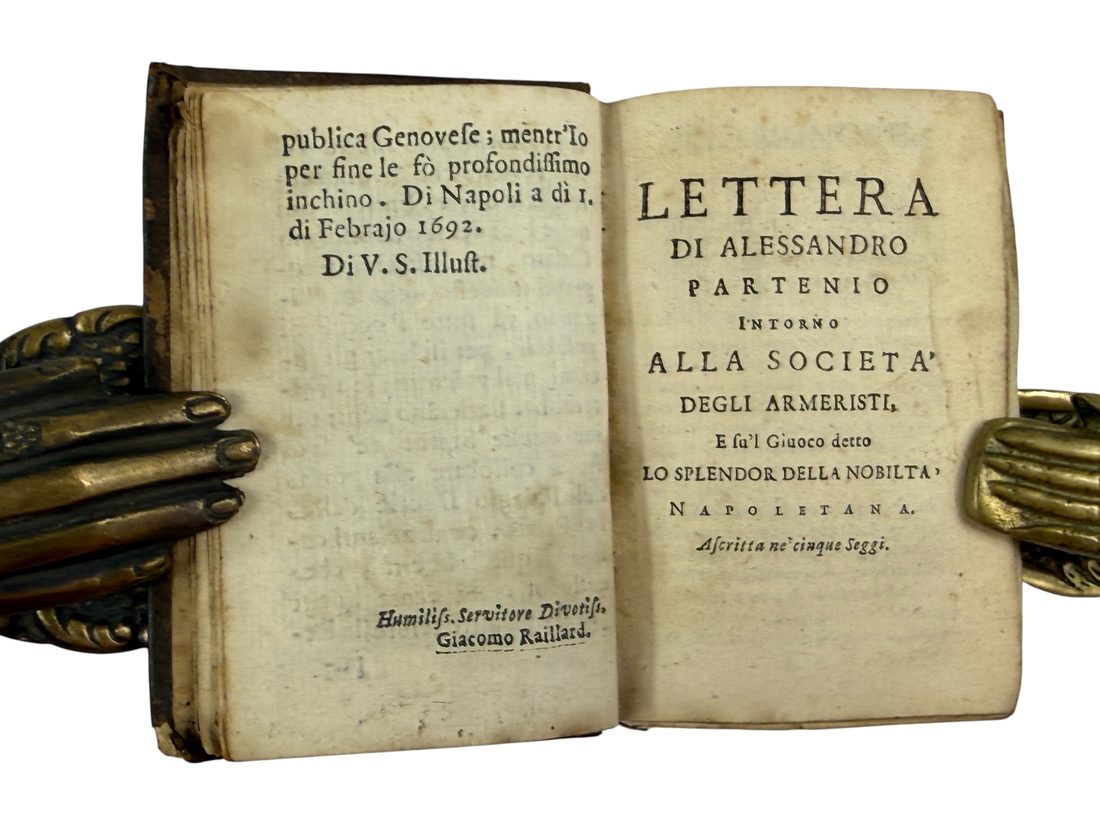
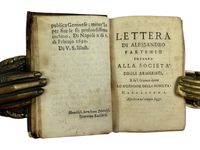
Finè de Brianville, Claude Oronce. Giuoco d'arme dei sovrani, e degli stati d'Europa. Per apprender l'arme, la geografia, e la storia loro curiosa. Di C. Oronce Fine, detto di Brianville. Tradotto dal francese ... da Bernardo Giustiniani veneto. In Nap. [Neaples]: nella stamperia di Giacomo Raillard, 1692.
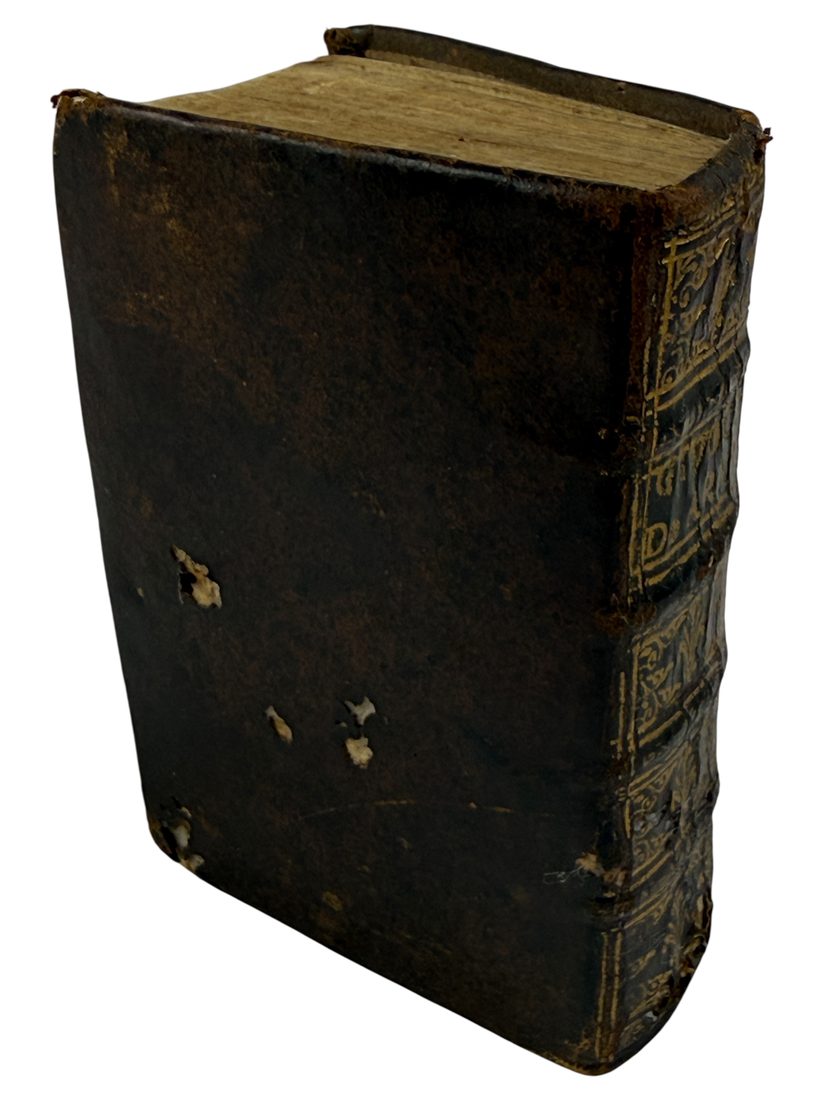
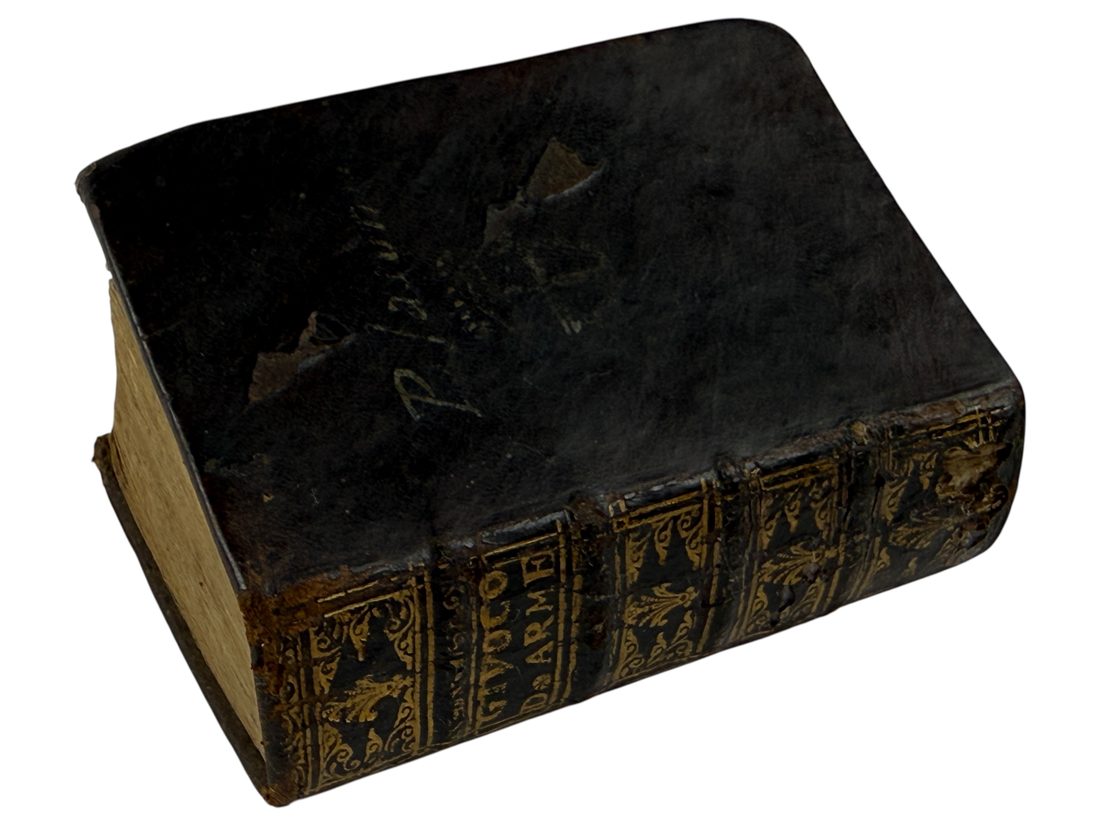
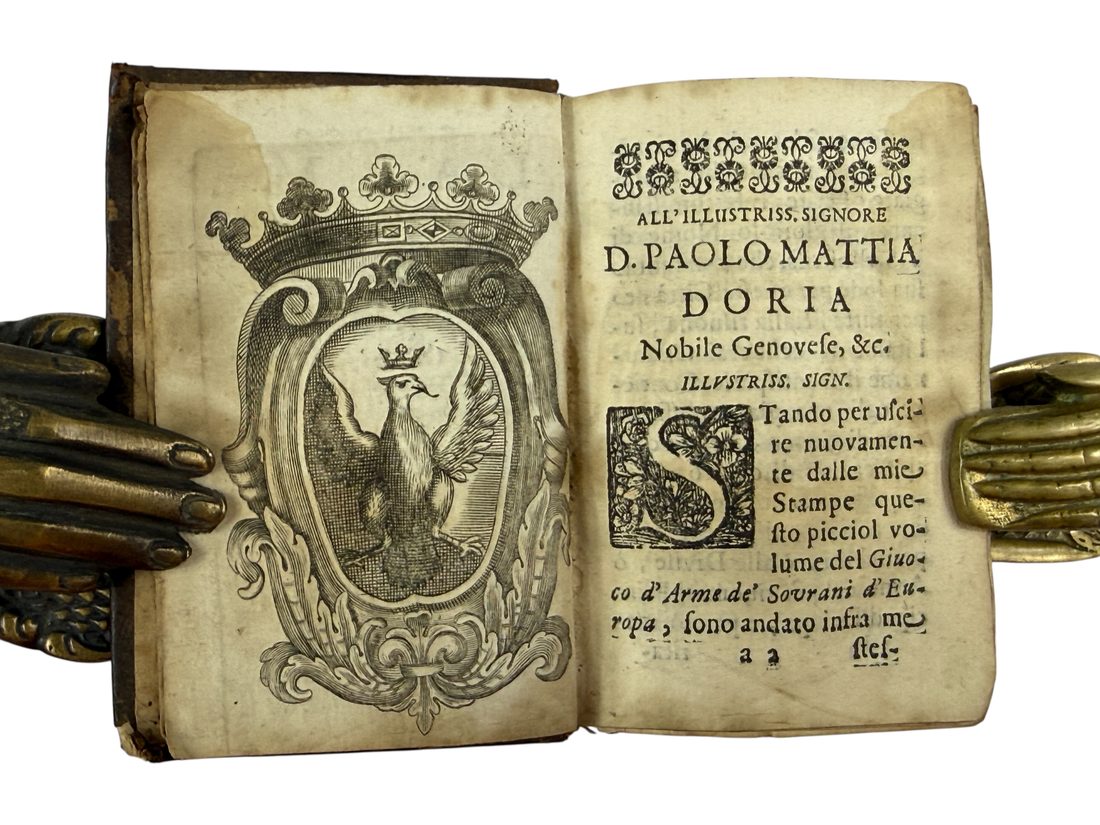
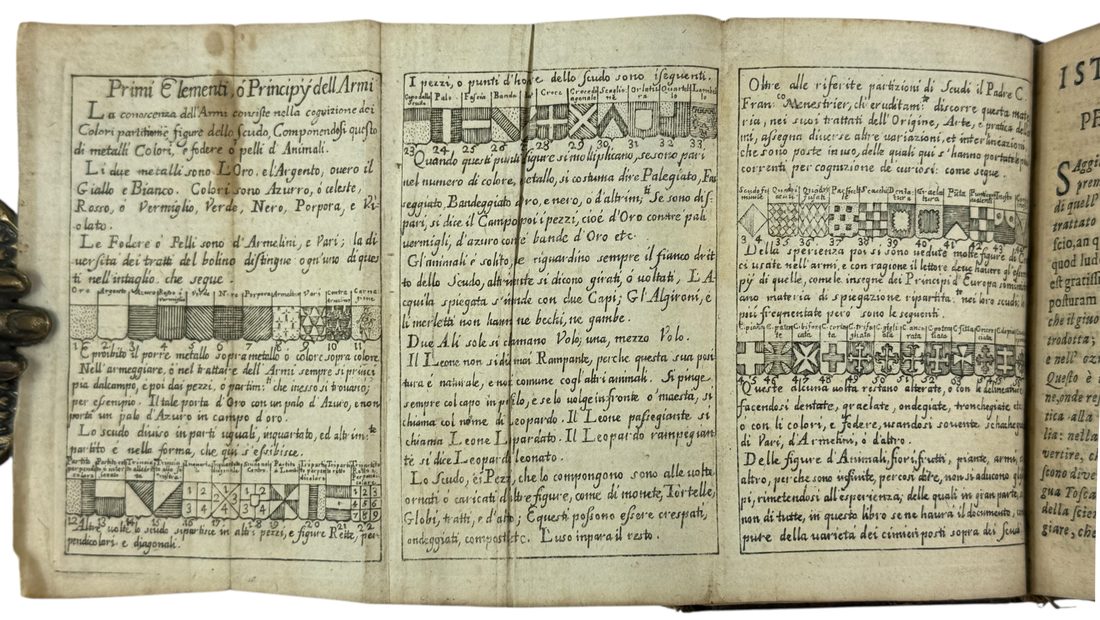
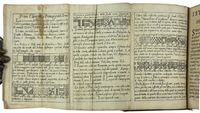
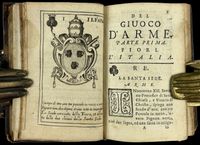
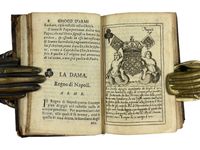
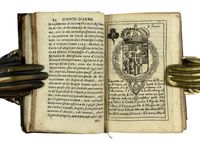
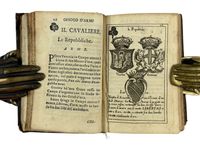
16mo (108 × 70 mm), contemporary full leather binding in plain calf, spine gilt with title and decorative tooling, pp. [24], 285, [1 blank]. Printed in Roman and Italic types, with woodcut initials and typographical ornaments. Signatures a⁴ b⁸ A–R⁸ S⁸, S8 blank. Complete with an engraved coat of arms on the verso of the title page, 52 engraved plates of coats of arms forming a full deck of heraldic playing cards, and one engraved folding plate illustrating the «primi elementi, o’ principii dell’arme». Copper-engraved plates inserted throughout the text in their intended positions, each bearing a pagination reference indicating its placement.
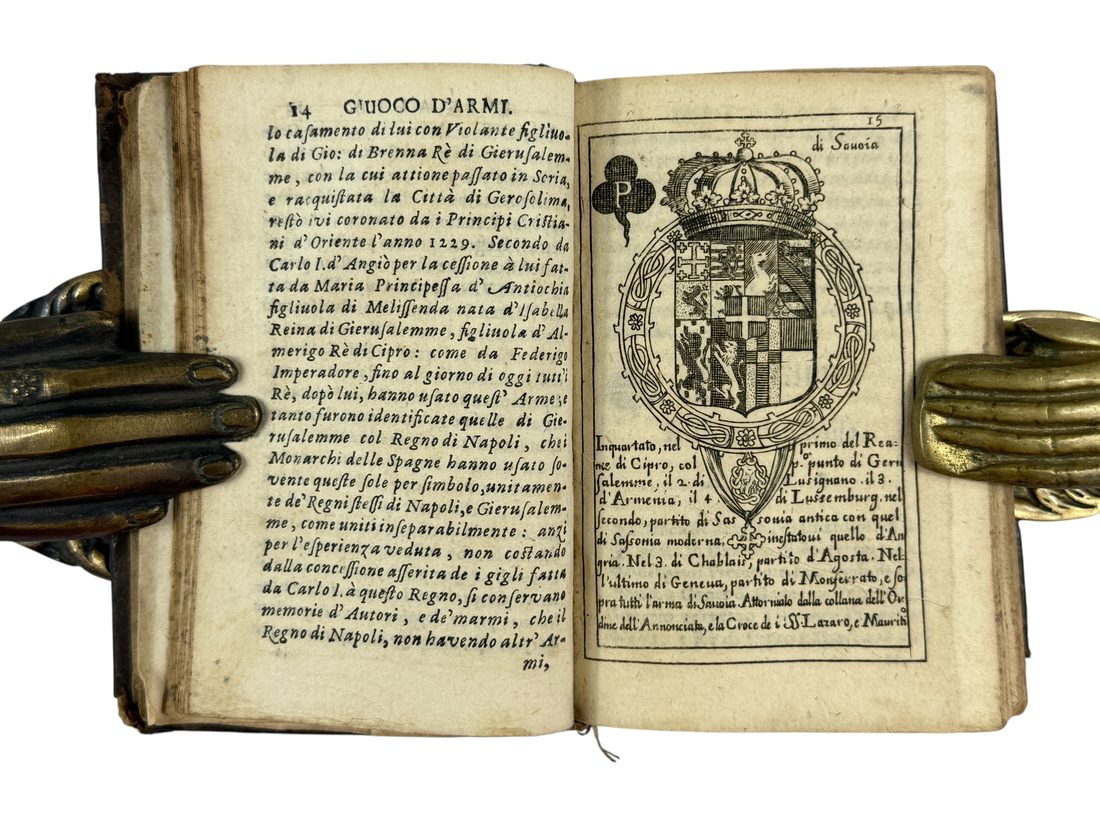
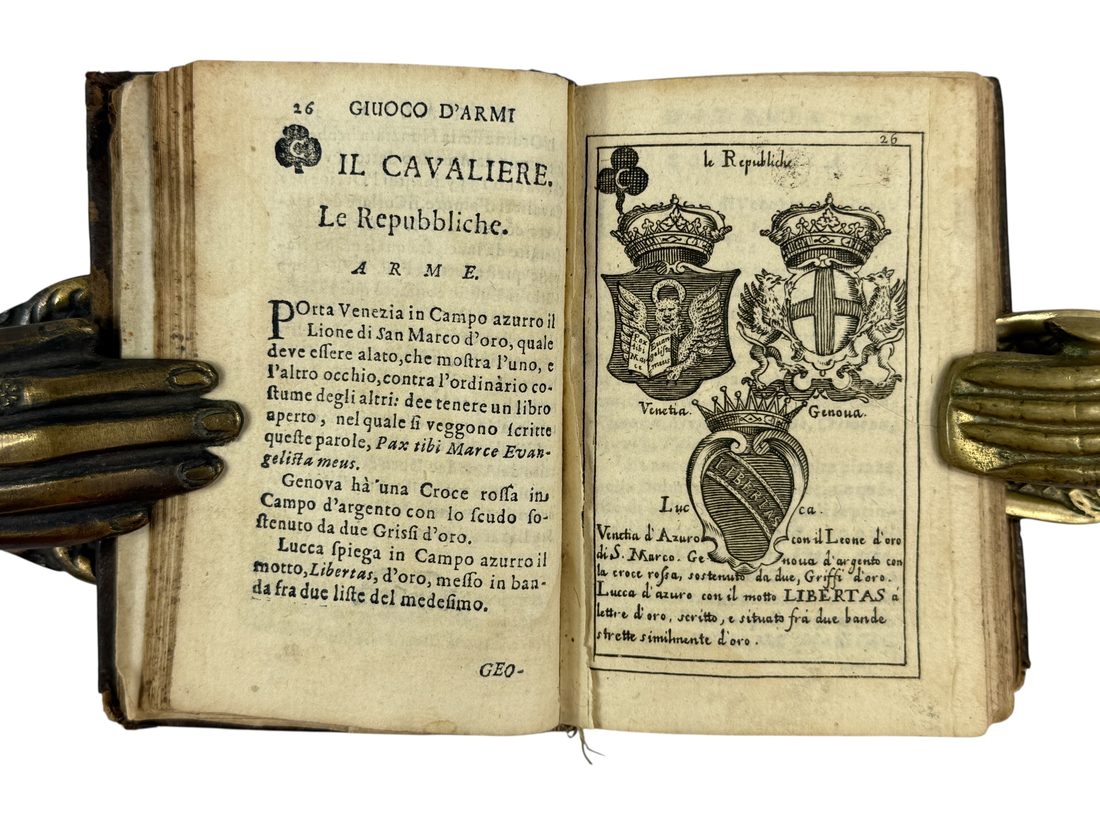
This rare Neapolitan Edition Of The «Giuoco D’Arme» presents a sophisticated didactic work that unites heraldry, political geography, and European history within the playful structure of a card game. Conceived by Claude Oronce Finé de Brianville in mid-seventeenth-century France, and translated and expanded for an Italian readership by Bernardo Giustiniani, the work transforms a complete deck of 52 playing cards into a systematic educational instrument. Each engraved “card” represents a sovereign or state of Europe and is accompanied by concise textual explanations of armorial bearings, territorial geography, and historical context.
The 1692 Neapolitan edition printed by Giacomo Raillard is particularly rare and noteworthy. It appears to be a reissue of the first Italian edition of 1681, yet produced independently of the original publisher, and can plausibly be understood, in modern bibliographical terms, as an unlicensed or pirated edition, albeit one that obtained formal ecclesiastical approval. Its importance lies not only in its scarcity, but also in its material integrity: the work preserves the full engraved apparatus of the game, functioning simultaneously as a handbook of heraldry, a compendium of European political knowledge, and a tangible, playable deck of cards.
The book is organized according to the logic of a standard 52-card deck, divided into four suits, each corresponding to a major geopolitical region of Europe. The Italian suit (Fiori) opens the work, followed by the other European regions, including the Germanic states, France, Spain, and Northern Europe. Within each suit, the hierarchy of cards reflects political rank, from the highest sovereigns to lesser princes and states.
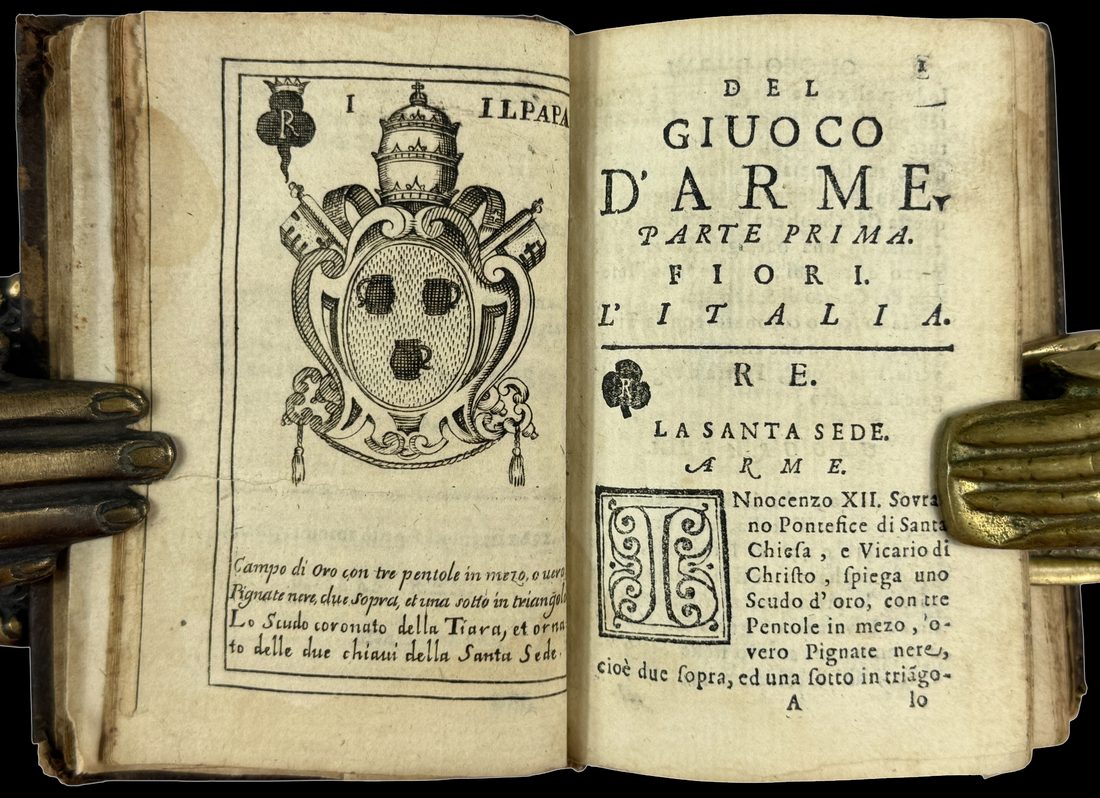
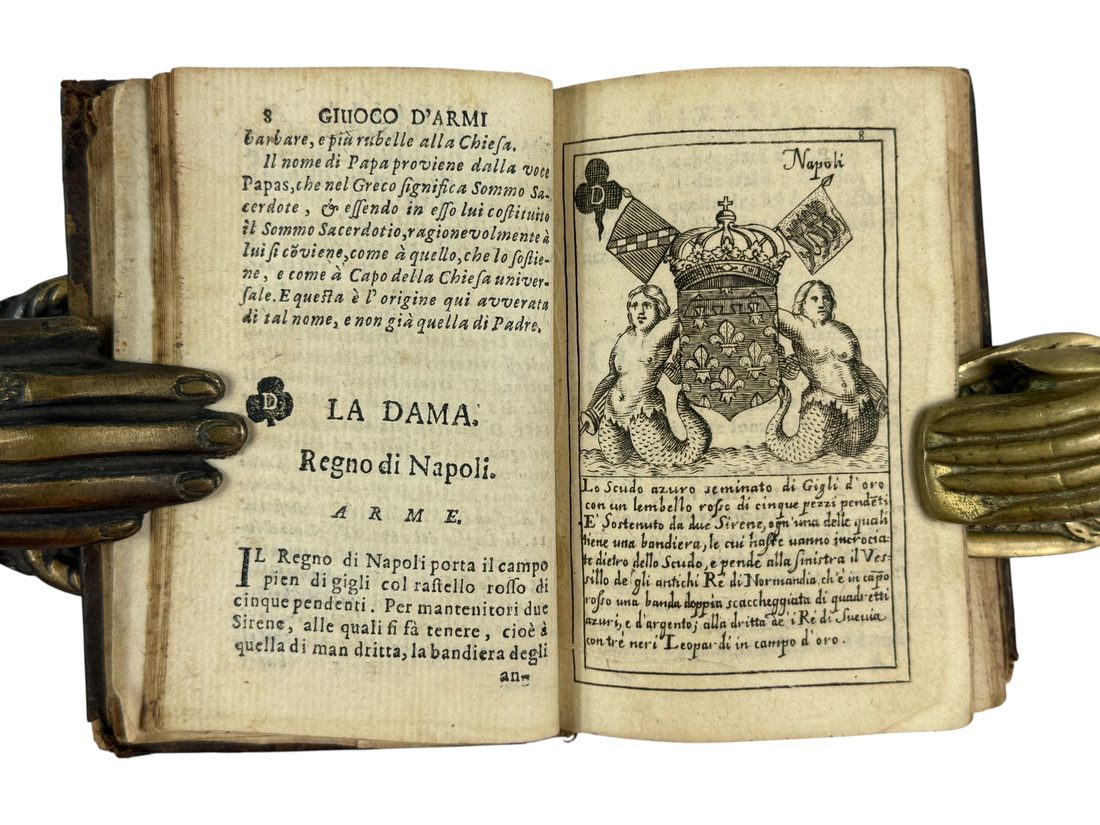
Each engraved plate depicts a carefully rendered coat of arms, often accompanied by regalia and heraldic ornaments. Beneath or adjacent to the engraving, the text provides a formal blazon, followed by concise notes on the geography of the territory, its principal cities, and salient historical facts. The pedagogical intent is explicit: the reader or player is invited to learn armorial science, geography, and history through repeated exposure during play.
A distinctive feature of this edition is the integration of the plates within the text itself. Each engraved card bears a pagination reference indicating its intended placement, a characteristic that distinguishes this edition from others in which the plates are gathered at the end. This internal organization reinforces the unity of text and image, underscoring the book’s function as both a reading and a playing object.
The volume also includes a substantial engraved folding plate entitled Primi Elementi, o’ Principii dell’Arme, which serves as a visual primer of heraldic fundamentals. This plate illustrates ordinaries, tinctures, partitions, and compositional principles through a dense array of miniature shields. Its presence confirms the book’s role as an introductory manual of heraldry, suitable for systematic instruction.
The Giuoco d’Arme originated in France with the Jeu d’Armoiries des Souverains et États d’Europe, first published in Lyon in 1659. The French work enjoyed multiple editions throughout the late seventeenth century. The Italian translation by Bernardo Giustiniani was first issued in Naples by Antonio Bulifon, with ecclesiastical approval dated 1677 and publication conventionally assigned to 1681. This Italian edition significantly expanded the historical content and adapted the geopolitical framework for an Italian readership.
The present 1692 Raillard edition constitutes the second Italian edition. It closely reproduces Giustiniani’s text, with minimal substantive alterations, the most notable being the updating of the papal arms to reflect the accession of Innocent XII in 1691. The omission of Bulifon’s original publishing privilege and the inclusion of Raillard’s own petition to reprint strongly suggest that this edition was produced independently, and likely without the authorization of the original publisher.
A third and final Italian edition appeared in Naples in 1725, printed by Gennaro Muzio and issued by Paolo Petrini, augmented with a new geographical discourse. No further early modern editions are known.
The Giuoco d’Arme belongs to the broader tradition of Baroque didactic literature that sought to unite instruction and recreation. In seventeenth-century Europe, heraldry functioned as a language of power and identity, closely intertwined with geography and political history. Brianville’s innovation lay in translating this complex body of knowledge into the familiar and engaging format of a card game.
The work reflects Jesuit pedagogical principles, particularly the idea of ludendo docere, teaching through play. It also resonates with the culture of aristocratic academies, such as the Neapolitan Società degli Armeristi, founded in 1677, whose members employed the game as an educational exercise in heraldry and noble history. In the intellectual climate of late seventeenth-century Naples, characterized by a flourishing of scholarly and antiquarian interests, the Giuoco d’Arme exemplifies the fusion of erudition, visual culture, and social pastime.
Claude Oronce Finé de Brianville was a French clergyman, historian, and heraldist active in the mid-seventeenth century. Abbot of Saint-Benoît de Quinçay near Poitiers, he moved within learned circles concerned with genealogy, emblematic knowledge, and pedagogy. His intellectual milieu included prominent antiquarians and heraldists, notably Claude-François Menestrier.
Brianville’s principal works include Jeu d’Armoiries des Souverains et États d’Europe, an innovative didactic card game combining heraldry, geography, and history; Histoire sacrée en tableaux, a richly illustrated biblical history designed for visual learning; and Abrégé méthodique de l’histoire de France, a structured compendium of French royal history. Across these works, Brianville consistently pursued the goal of educating through images and structured play, anticipating later developments in visual pedagogy.
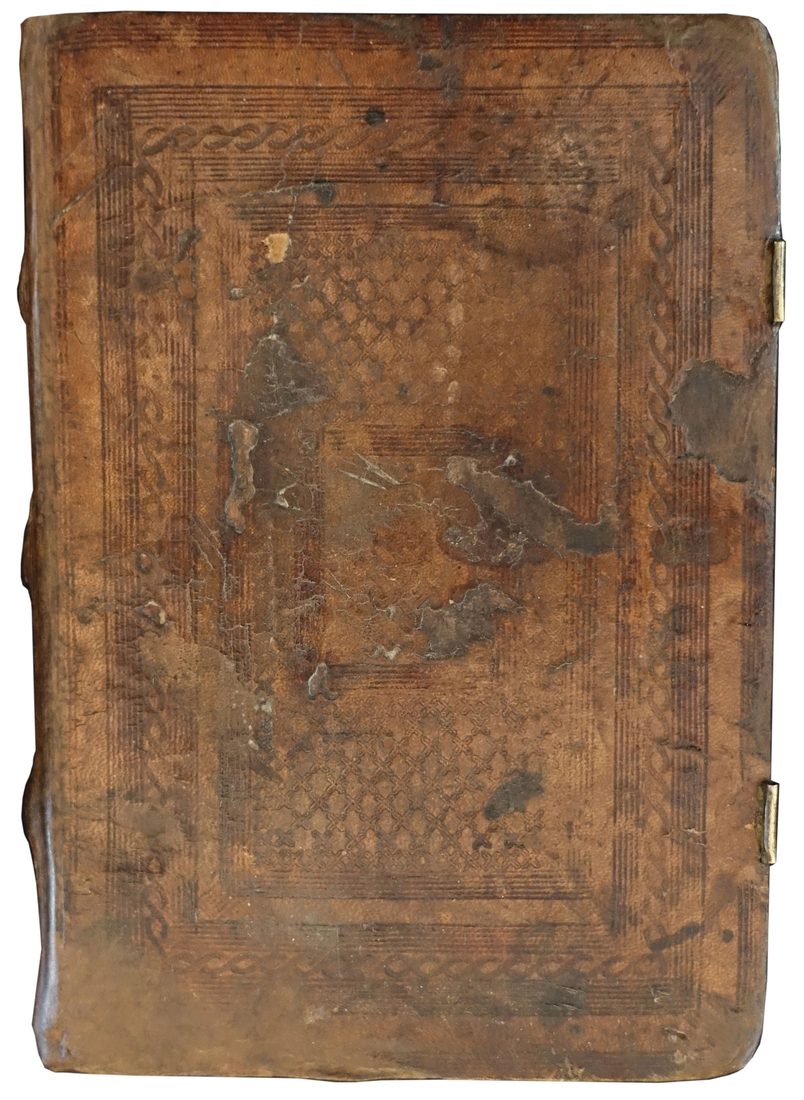
Conditions: Contemporary full leather binding with abrasions and general wear. Spine gilt title rubbed. Internally well preserved, paper clean and sound, complete with all engraved plates and the folding heraldic table.
References: T. Willishaw, A Descriptive Catalogue of Playing and Other Cards in the British Museum, London: British Museum, 1876, pp. 88-92; C. Perry Hargrave, A History of playing cards, Dover publications, 2021, pp. 237-239; F. A. Fournier, Los Naipes, Museo Fournier, 1982, Italy, no. 15 (1681 Edition); S. Mann, Collecting playing Cards, Arco, 1966, p. 122.