Élémens d'astronomie
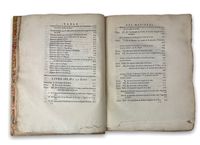
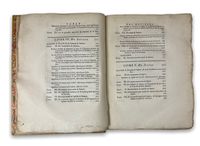
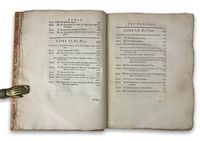
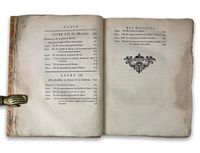
| Macro-category | Rare Books and Manuscripts |
| Subcategory | Astronomy |
| Author | CASSINI, JACQUES |
| Place of printing | Paris |
| Publisher / Maker | Imprimerie royale |
| Year | 1740 |
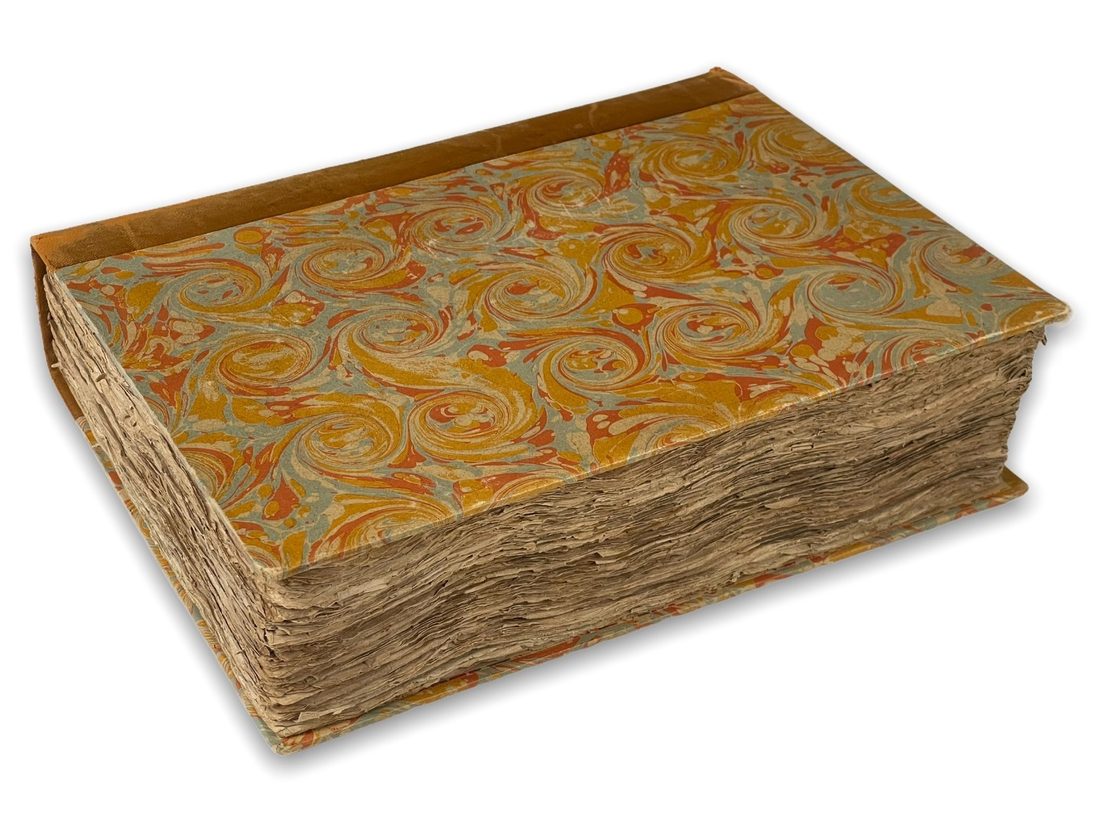
uncut copy
First Edition of Jacques Cassini
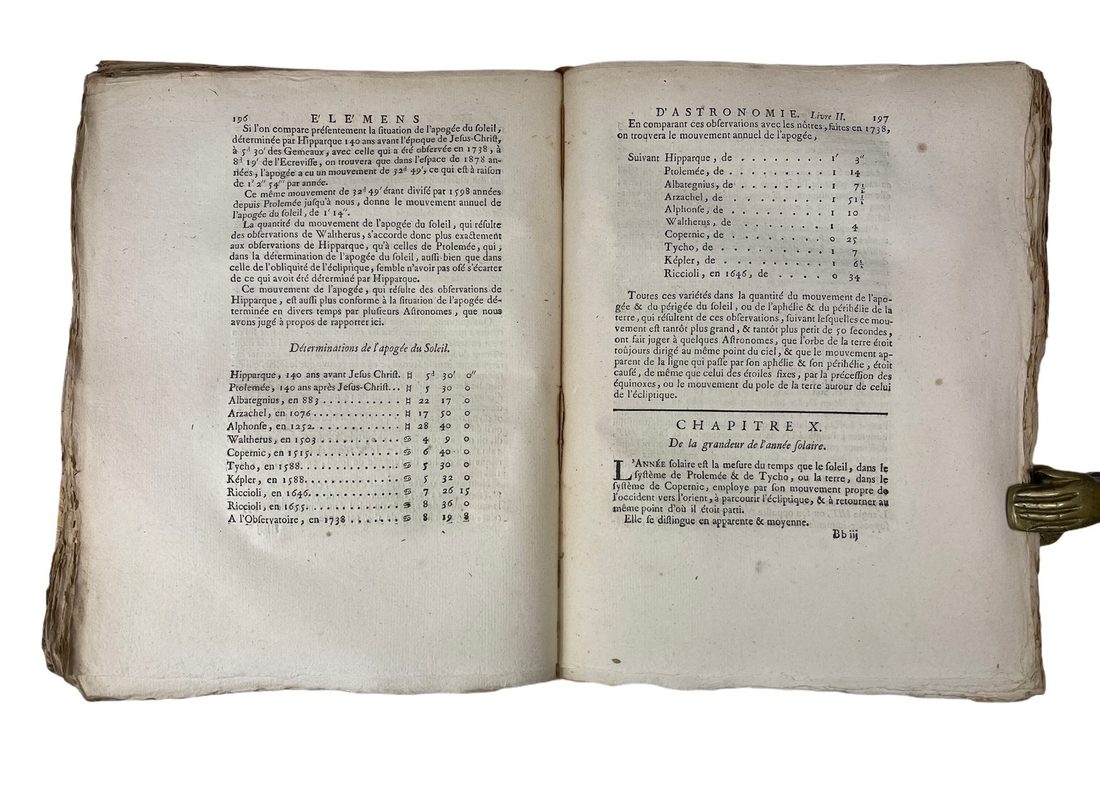
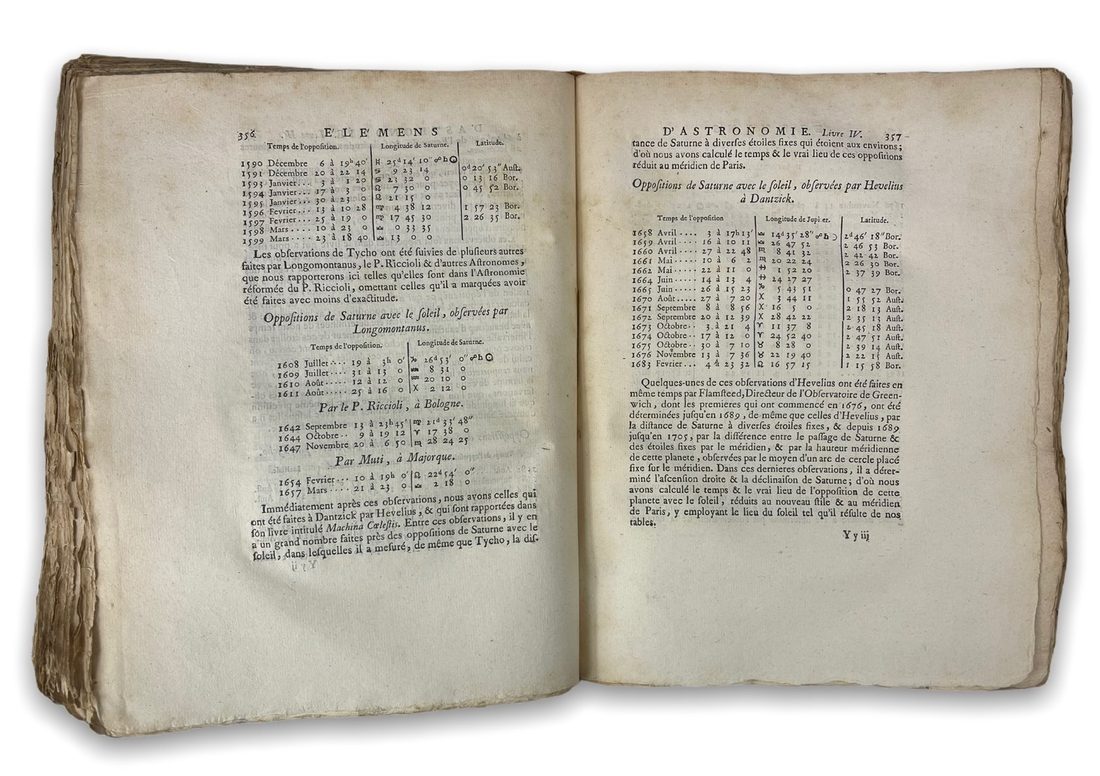
Astronomic observation results
the first treatise on elements of astronomy written in French
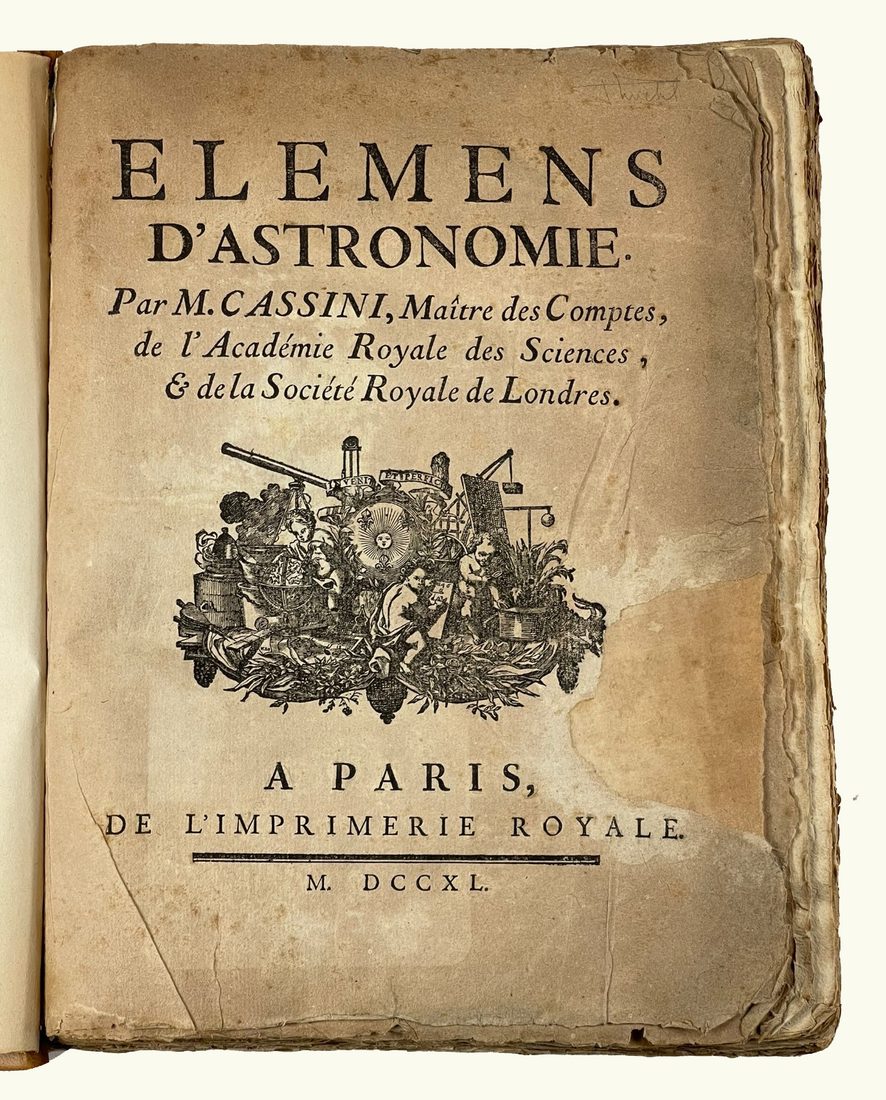
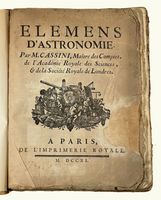
Cassini, Jacques. Elemens d'astronomie. Par M. Cassini, maitre des comptes, de l'Academie Royale des Sciences, & de la Societe Royale de Londres. A Paris : de l'Imprimerie Royale, 1740.
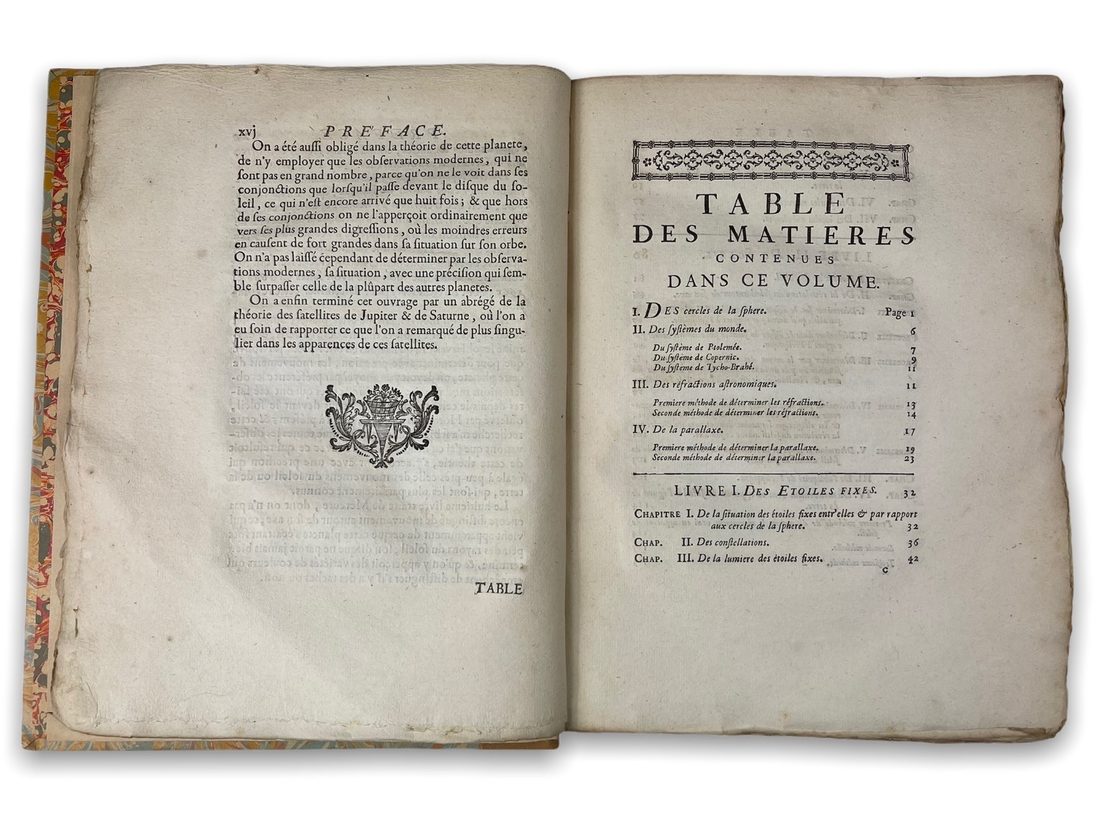
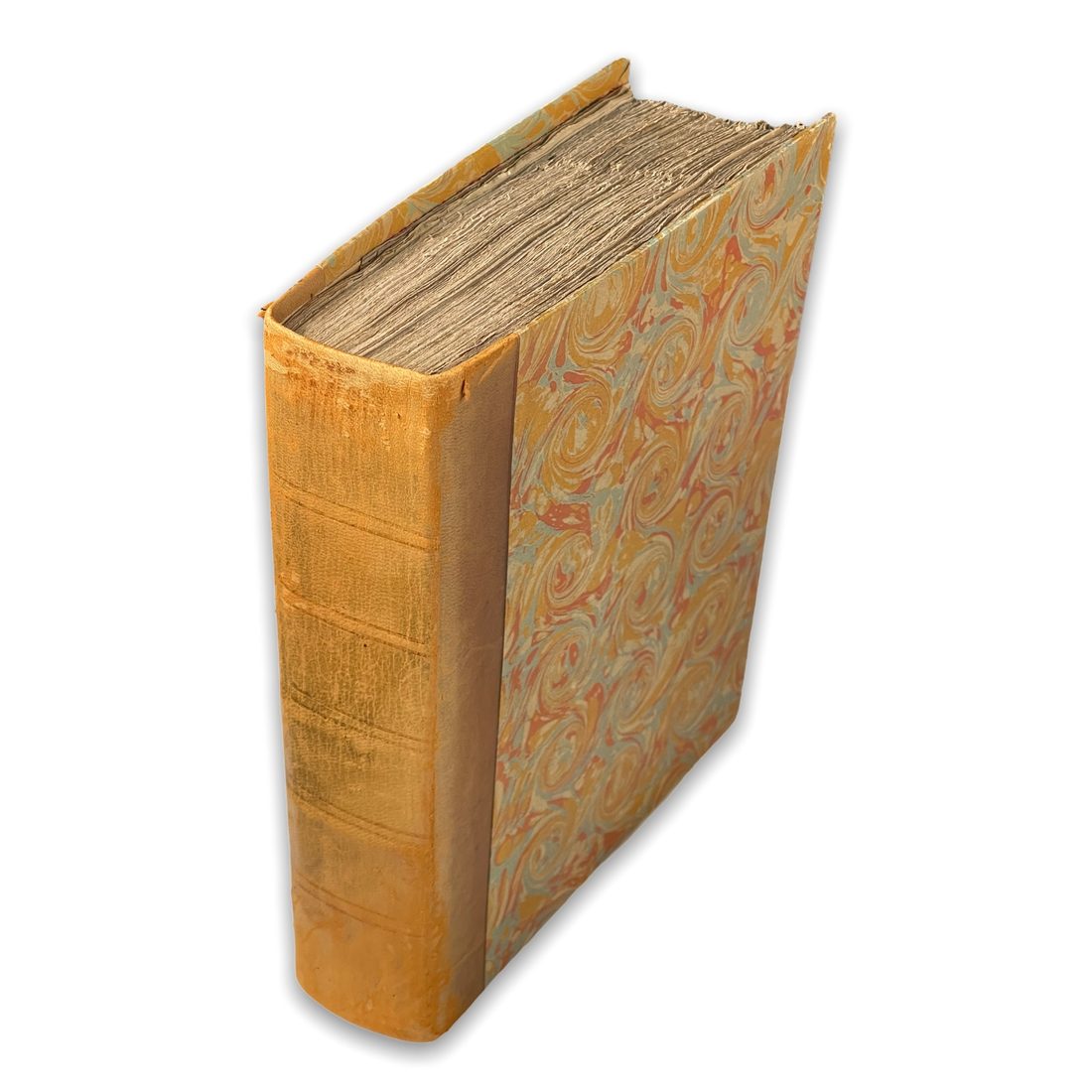
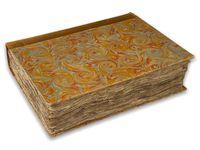
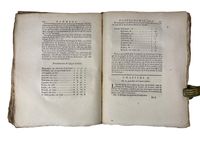
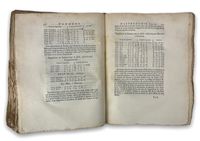
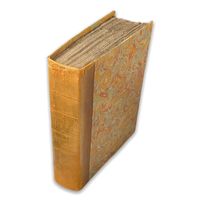
4to (27,5 x 21 cm), modern half calf on marbled paper, pp. xvi, [12], 643, [1-blank], printer device at title page, signature a-c4 d2 A-4L4 4M2
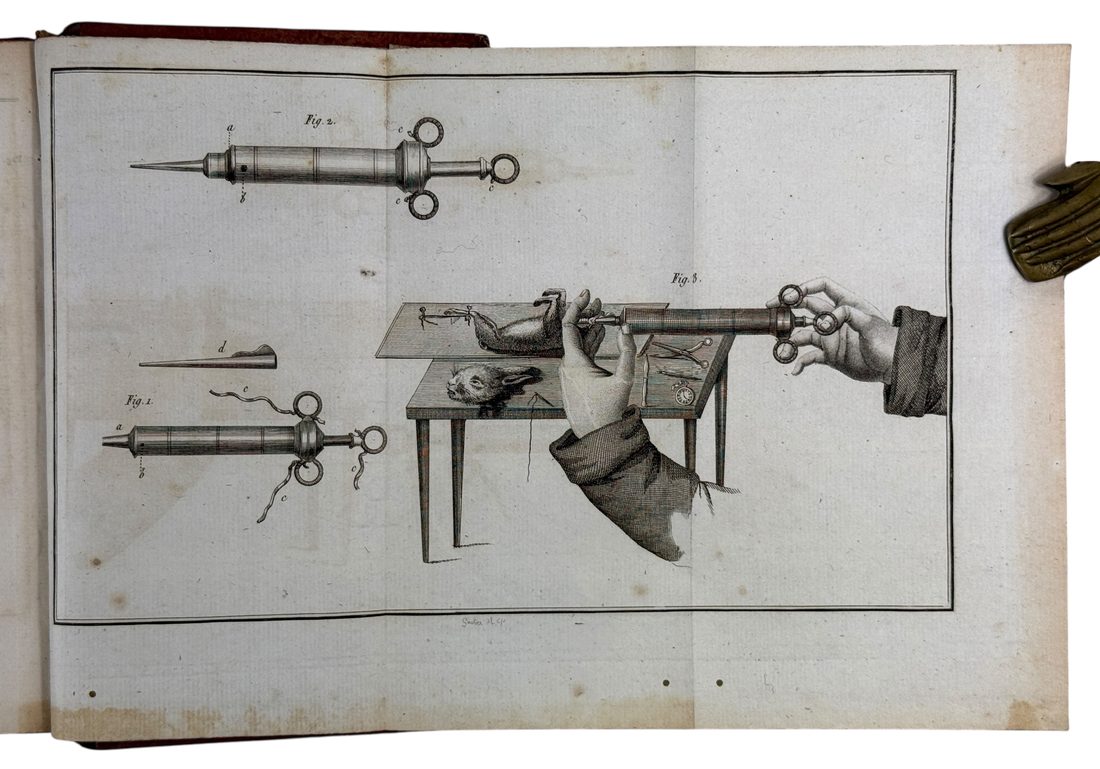
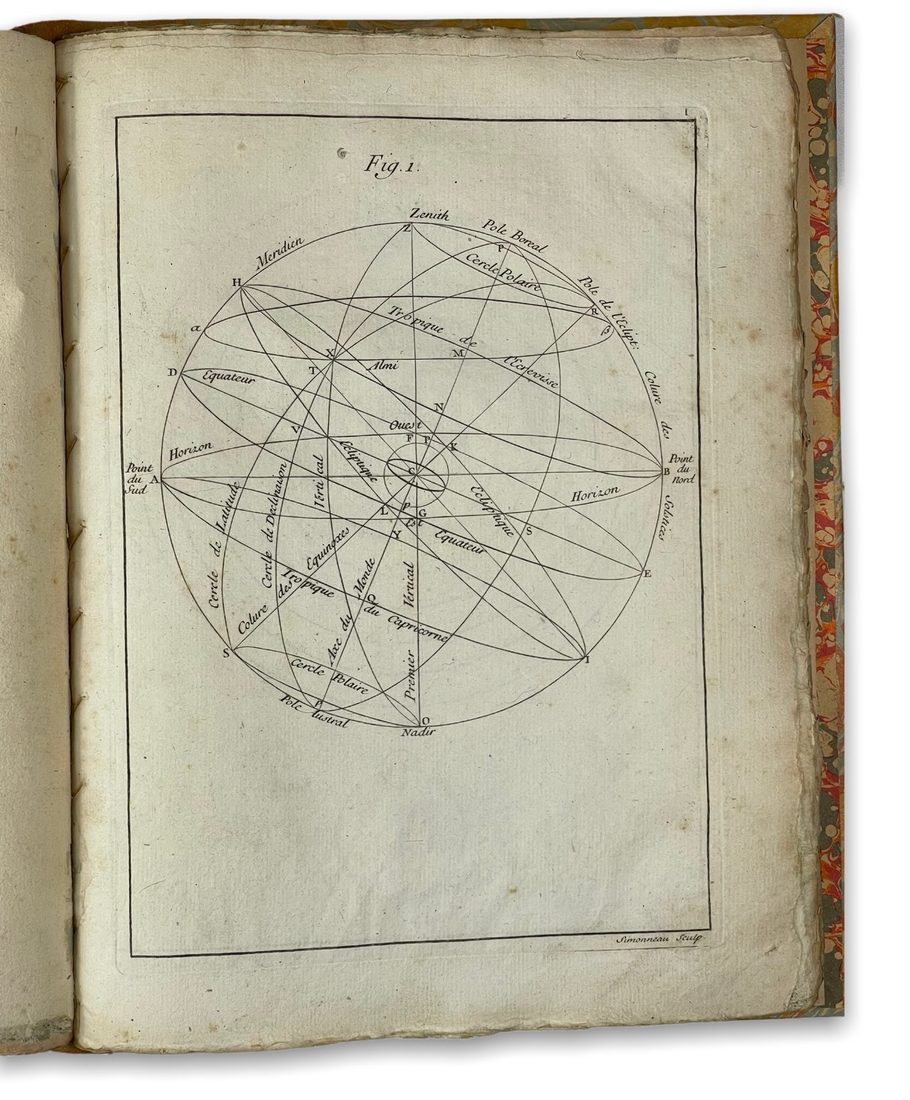
21 folded plates (number 13 is repeated with different content)
The 5 folding plates from the First Edition of Cassini’s
“Tables astronomiques du soleil, de la lune”
are bound at the end of the volume
Cassini’s Elements d’Astronomie was the result of his excellent abilities as an observer. His principal areas of interest were the study of the planets and their satellites. He also studied the comets and their influence on tidal behaviour. In 1738, he discovered the proper motions of the stars. He showed, by direct measurement and for the first time, that the ancient belief in the unchanging sphere of the stars was incorrect and he compiled the first tables of the orbital motions of Saturn’s satellites.
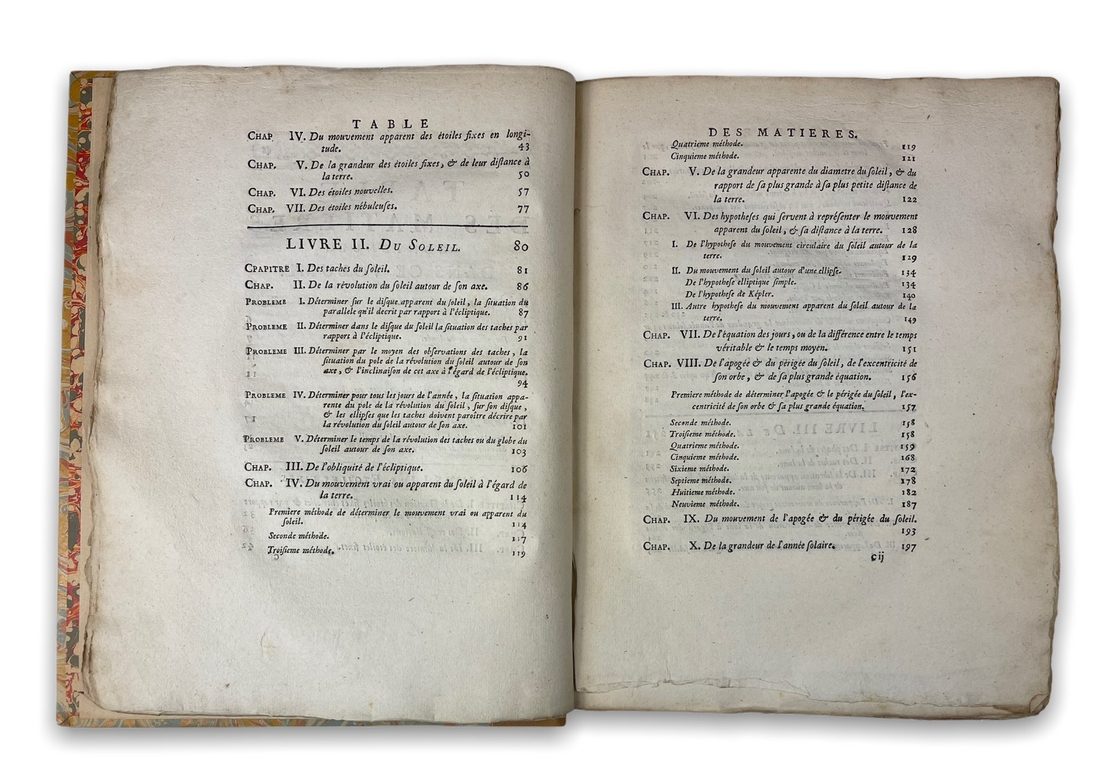
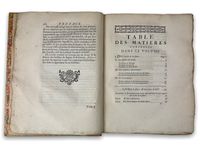
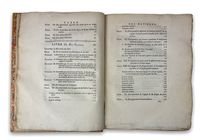
Book structure
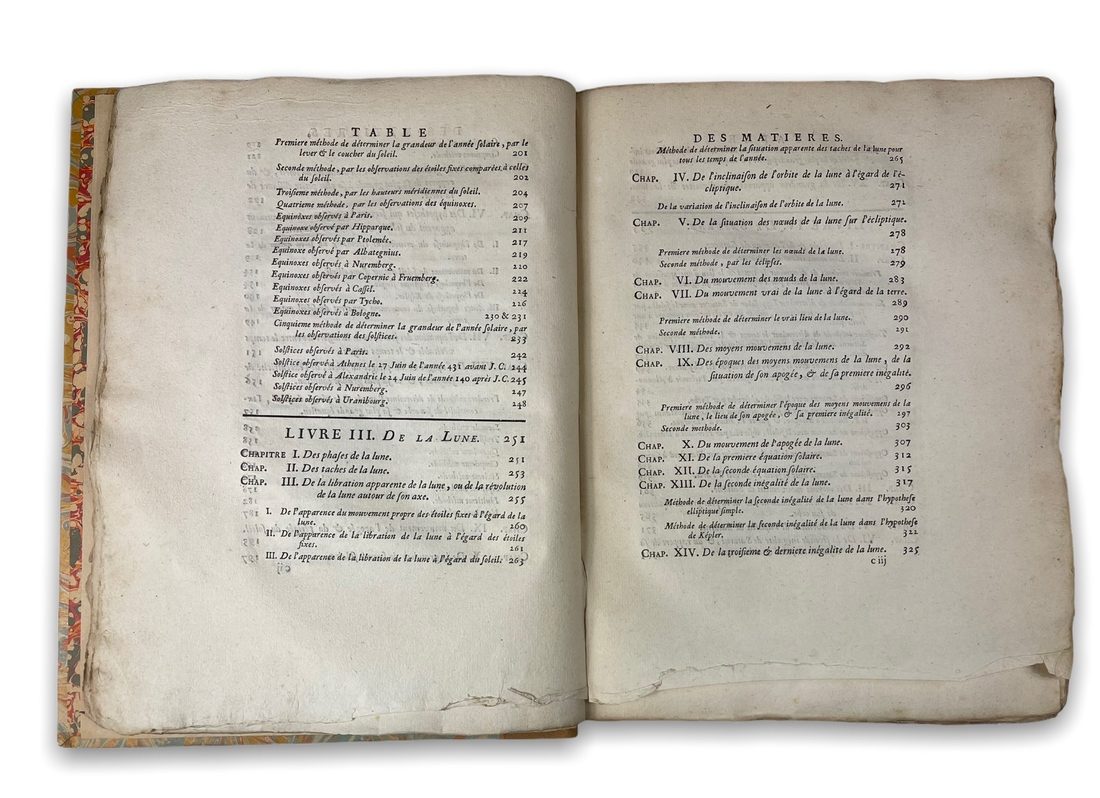
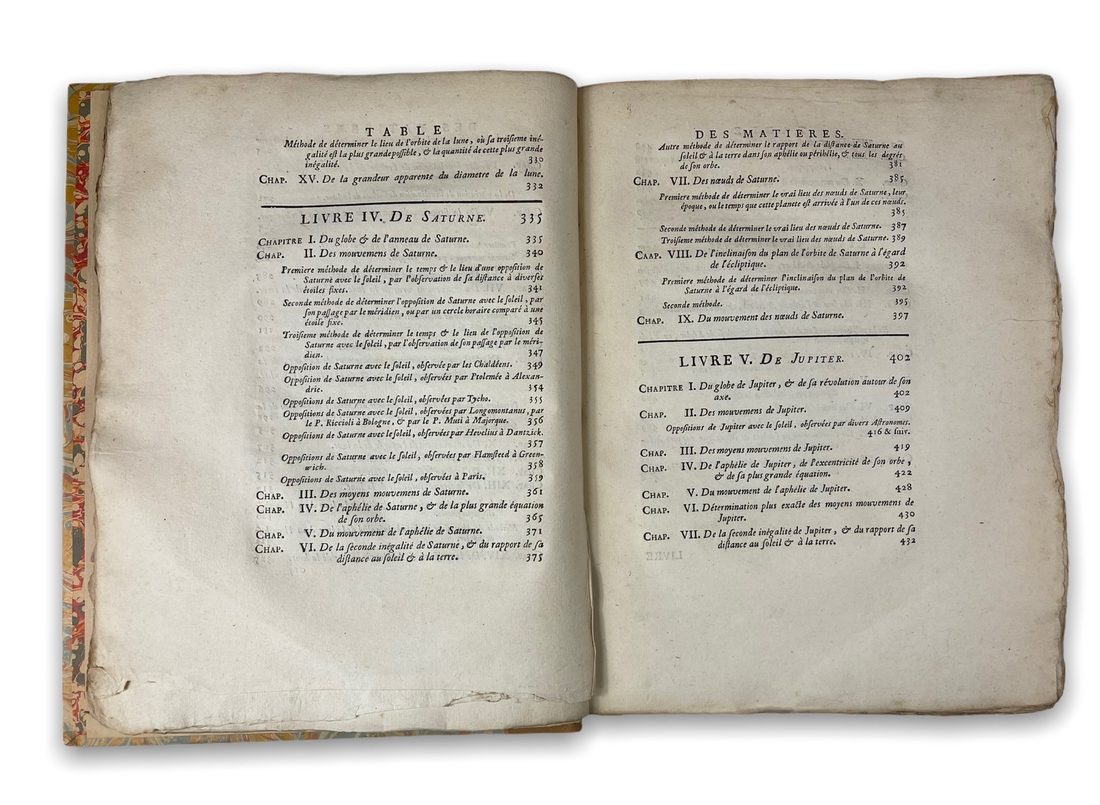
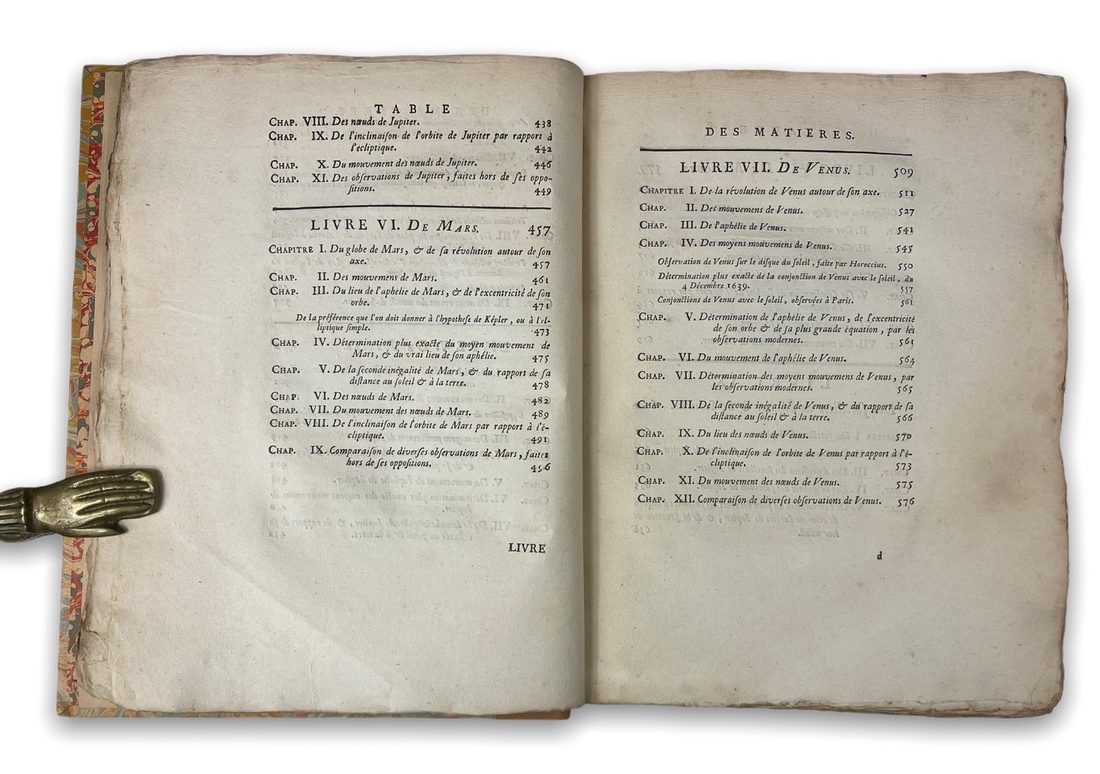
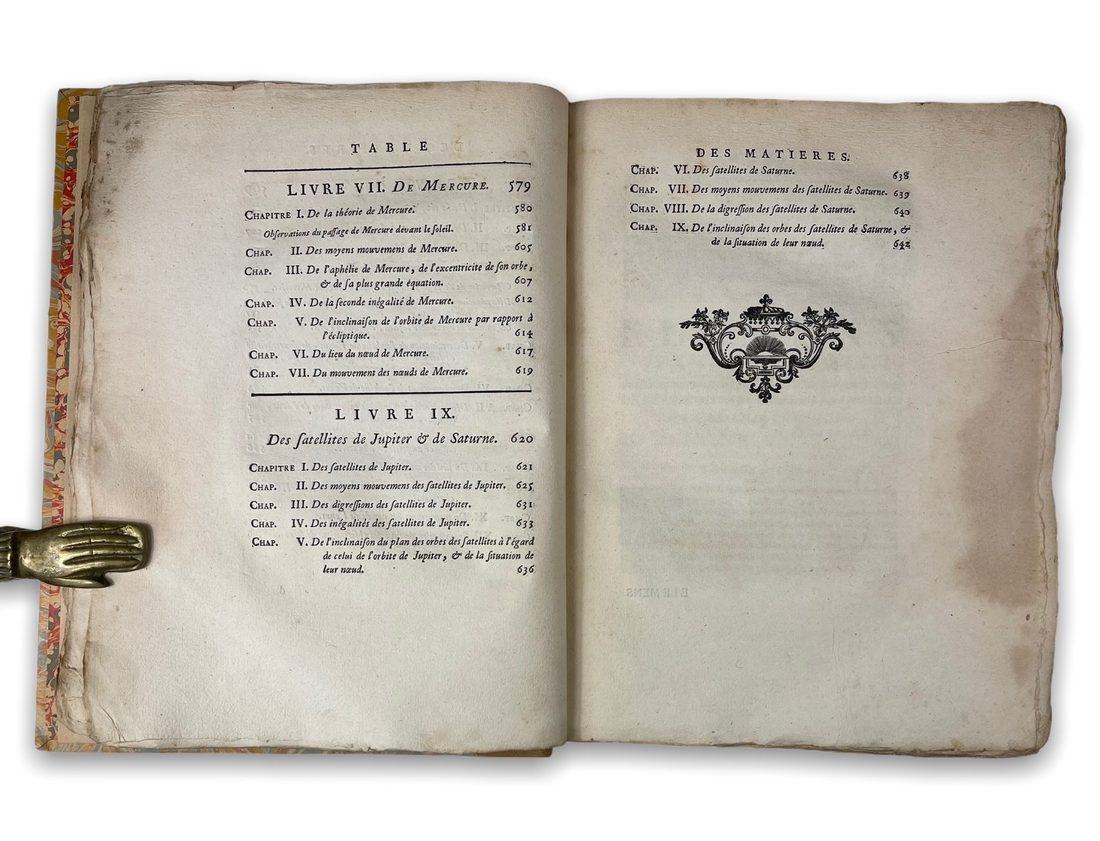
- Introduction to astronomical systems (Ptolemaeus, Copernicus, Tycho-Brahe) and to basic astronomical theories.
- Chapter 1: About Fixed stars
- Chapter 2: About the Sun
- Chapter 3: About the Moon
- Chapter 4: About Saturn
- Chapter 5: About Jupiter
- Chapter 6: About Mars
- Chapter 7: About Venus
- Chapter 8: About Mercury
- Chapter 9: About Jupiter and Saturn Satellites
- Tables
Jacques Cassini, known as Cassini II, Lord of Thury, (Paris, 1677 – Thury, 1756) was a French astronomer son of Giovanni Domenico Cassini, an astronomer himself. Raised by his father, he studied at the Paris Observatory (where, they say, he was born) even before entering the Mazarin College. He became a student astronomer at the Academy of Sciences in 1694, then he succeeded his father as a resident of the Academy in 1712.
Admitted to the Royal Society in 1696 and to the Berlin Academy, he befriended Newton and Halley. In 1699, accompanied by Father Feuillée, he was responsible for determining the geographical position of several ports in the Levant. Cartesian militant, he took a stand against the theory of the earth's flattening.
Jacques Cassini is also entrusted with important administrative responsibilities: ordinary master of the Paris Chamber of Accounts, then magistrate at the Chamber of Justice and Councilor of State.
He described a perpendicular to the meridian of France and provided several Memoirs to the Academy, among others a great work on the inclination of the satellites, the proper motion and of the ring of Saturn. He is the author of several other works, including Elemens d'astronomie (1740) and De la grandeur et figure de la terre (1720).
In 1740, he gradually abandoned his scientific activity and let his son César-François take up the family torch. He entrusted him with the responsibility of the Observatory and the establishment of the map of France. His other son, the Marquis Dominique-Joseph de Cassini, followed the career of arms.
The asteroid (24102) Jacquescassini was named in his honour as well as the lunar crater Cassini which he shares in memory with his father.
Cassini made impressive contributions to the field of astronomy with his study of the moons of Jupiter and Saturn and his study of Saturn’s rings, and he compiled the first tables of the orbital motions of Saturn’s satellites.
The Imprimerie Royale du Louvre was established in 1640 under Louis XIII and Cardinal Richelieu. Before this there had been “King’s Printers” who were entrusted with the typographical equipment belonging to the Crown, most importantly the “royal” types cut by Jean Jannon. In 1692, Louis XIV ordered that a new series of types be cut for the exclusive use of the Imprimerie Royale. A commission was appointed by the Academie des Sciences to design the new letters, and Philippe Grandjean became the royal typecutter. The result was the roman du roi, which took from 1693 to 1745 to complete, comprised of eighty-two complete fonts. The most obvious mark of the royal fonts is the small spur on the left side of the lower-case “l” mid-way up the stem. In this project, Grandjean was succeeded by his pupil, Jean Alexandre, who was in turn succeeded by Alexandre’s son-in-law, Louis Luce, all royal type-cutters.
Conditions: Antique restoration at title page, marks of use along the text, in general a good fascinating copy, uncut,
References: Wellcome 2, 31000; University of Utah, J. Willard Marriott Library, Library Blog 12/2020 ;