Cantus ecclesiasticus Officij Maioris Hebdomadae

| Macro-category | Rare Books and Manuscripts |
| Subcategory | Music |
| Author | Guidetti, Giovanni Domenico |
| Place of printing | Roma |
| Publisher / Maker | Alexander Gardanus & Franciscus Coattinus |
| Year | 1587 |
Extremely rare First Edition, preliminary issue
of Giovanni Guidetti Liturgy for The Holy Week:
the introduction of polyphony in typical monodic liturgies
no copies on the market, no copies at auctions in the last 60 years
Guidetti, Giovanni Domenico. Cantus ecclesiasticus Officij Maioris Hebdomadae iuxta ritum Capellae Sanctissimi Domini nostri Papae ac Basilicae Vaticanae collectus, & emendatus, a Ioanne Guidetto Bononiensi ... nunc primum in lucem editus. Romae: ex typographia Iacobi Tornerij, 1587 [at title page]; Romae: excudebant Alexander Gardanus, & Franciscus Coattinus socij, 1587 [at colophon].
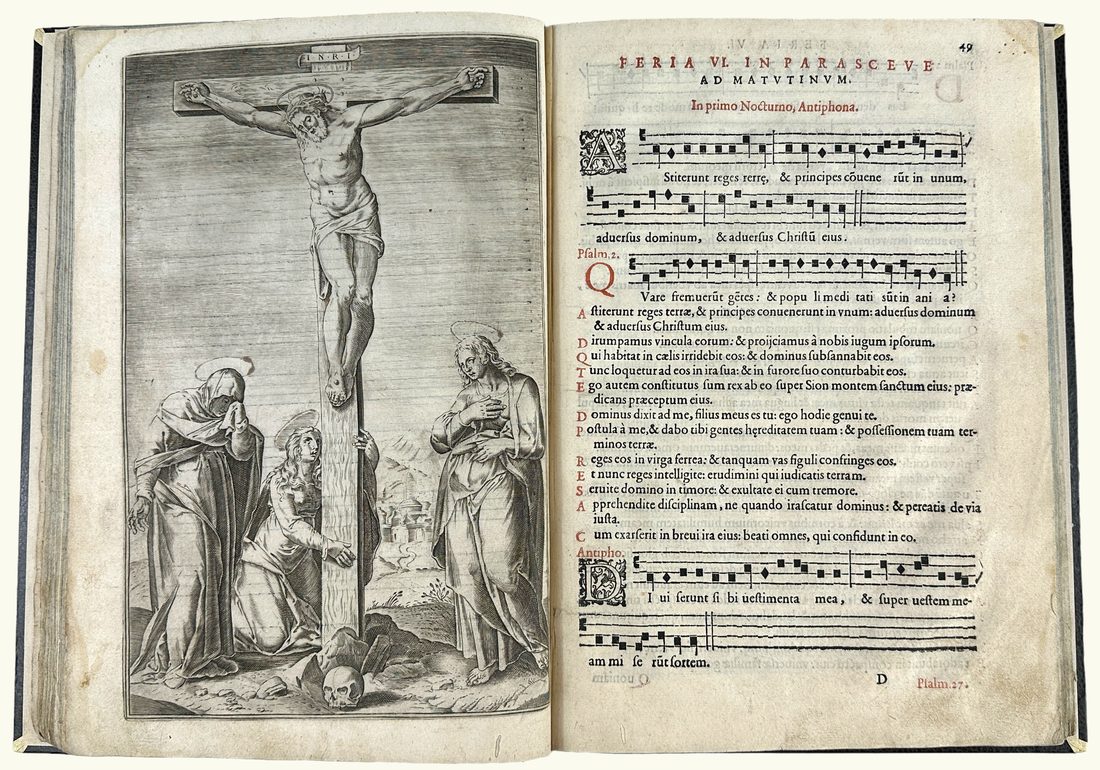
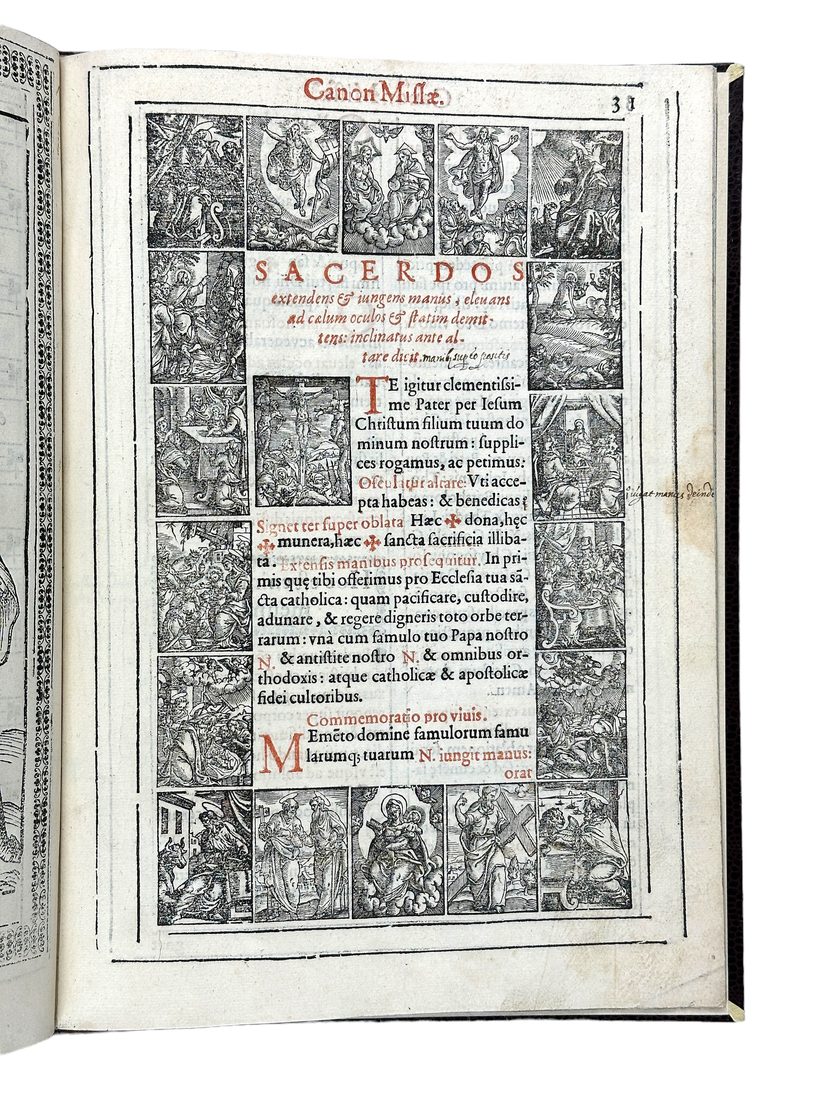
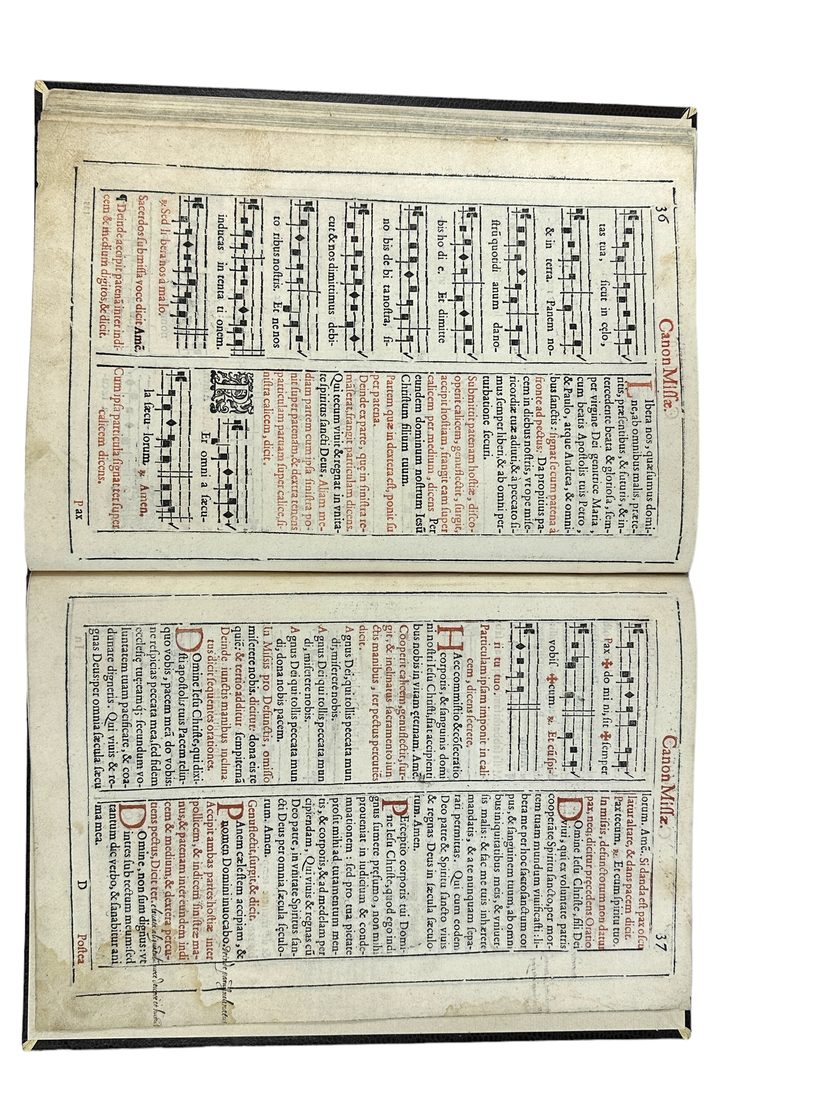
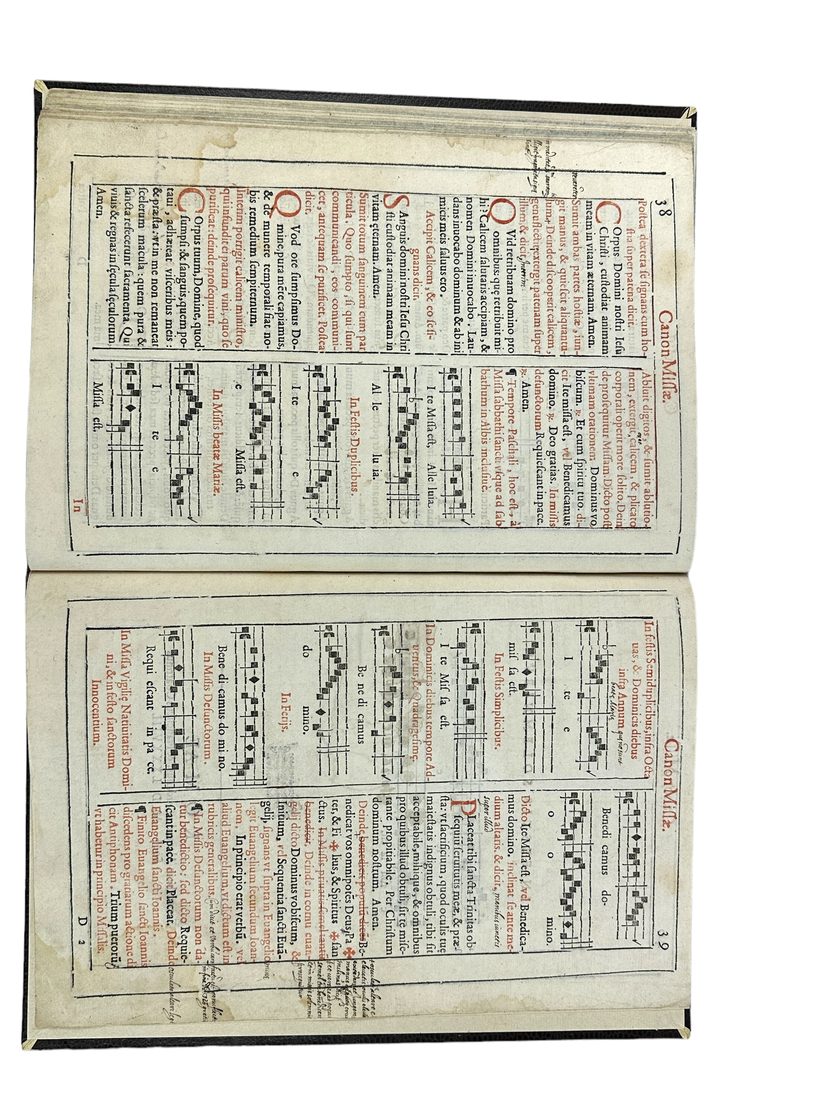
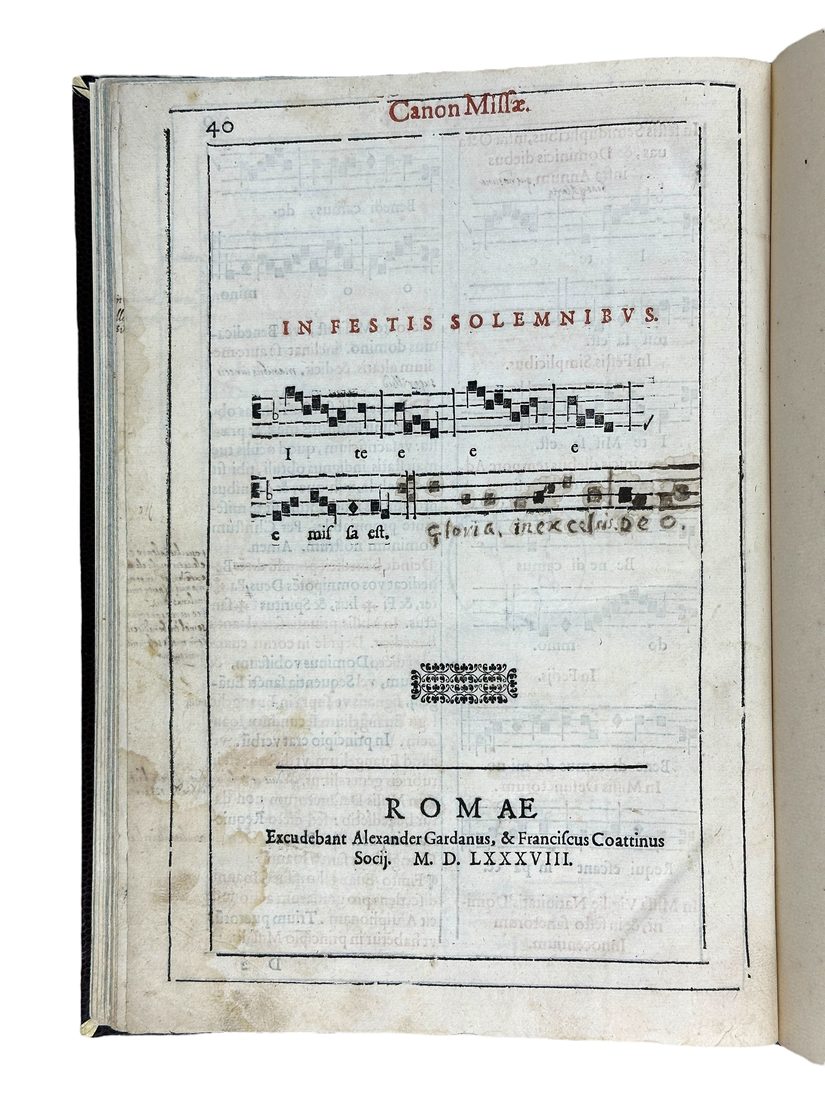
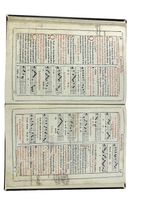
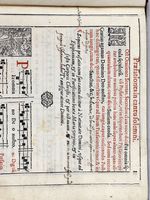
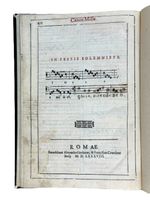
Folio, (32 x 22 cm), XIX century half calf on handcoloured brown paper, pp. [8], 147, [1], music in Gregorian notation printed in red and black along the text, Tornieri’s coat of arms at title page and at colophon, title page in a woodcut frame with images taken from the gospels, printed in red and black, signature: a⁴ A-M⁶ N².
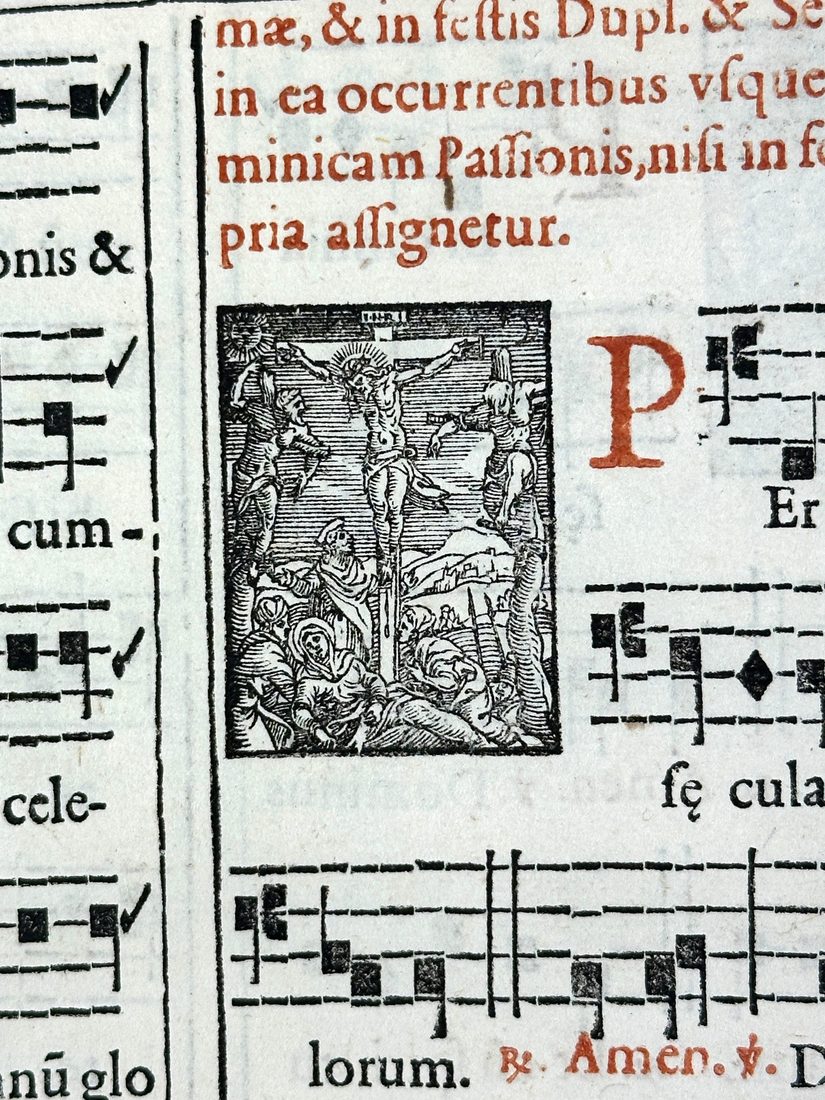
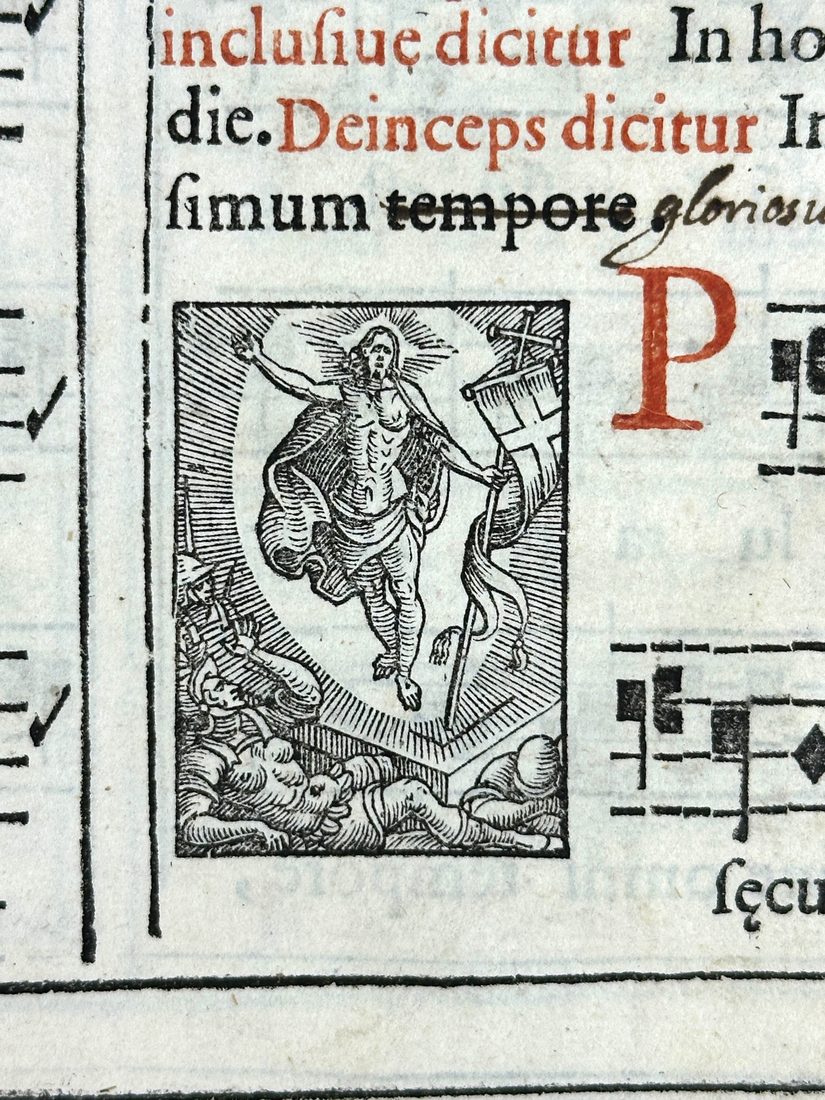
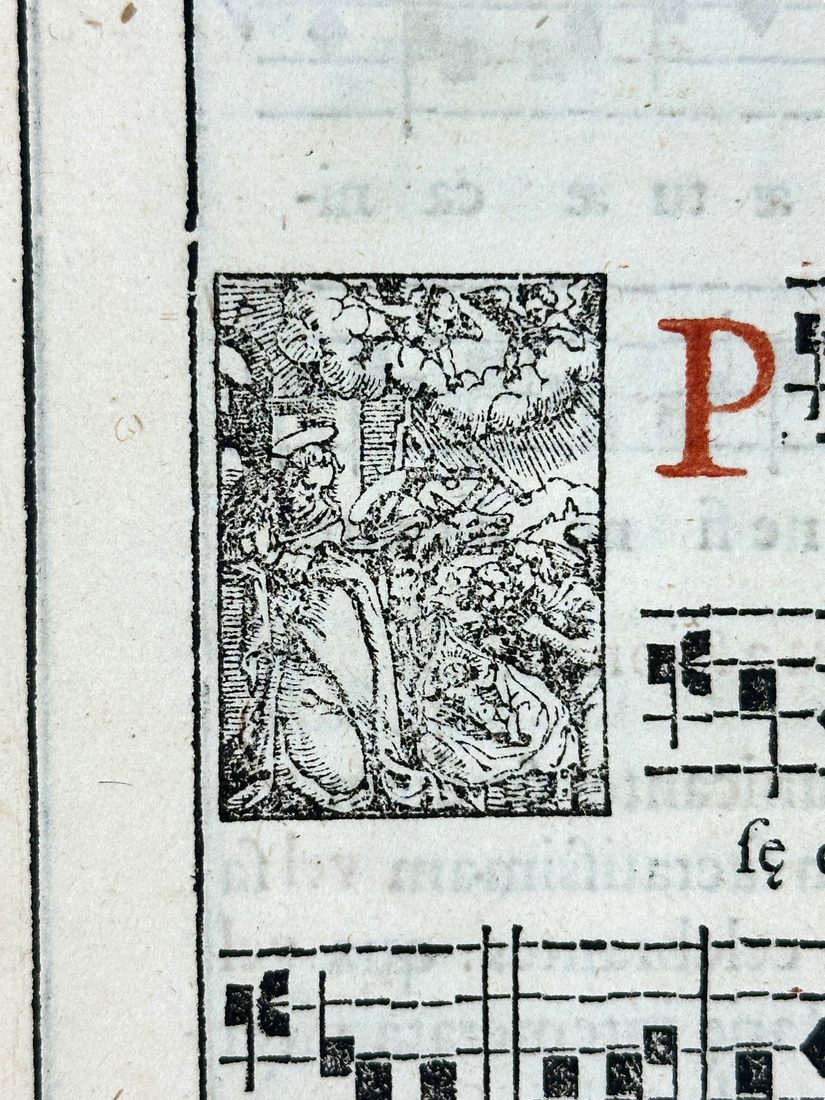
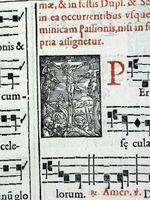
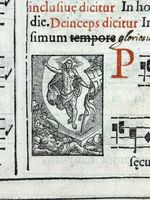
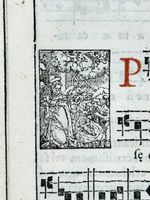
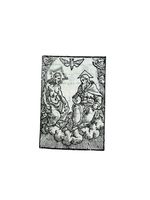
3 full-page engravings, the Last Supper, Crucifixion, and Resurrection by the Dutch engraver and draughtsman Cornelius Cort; coat of Arms Of Pope Sisto V at recto and portrait of Guidetti at verso of title page.
Guidetti's third work, dedicated to Pope Sixtus V, the Liturgy for The Holy Week fits into the sixteenth-century musical trend that theorized the introduction of polyphony in typical monodic liturgies, that developed in a single melodic line sung by a single voice or played by a single instrument.
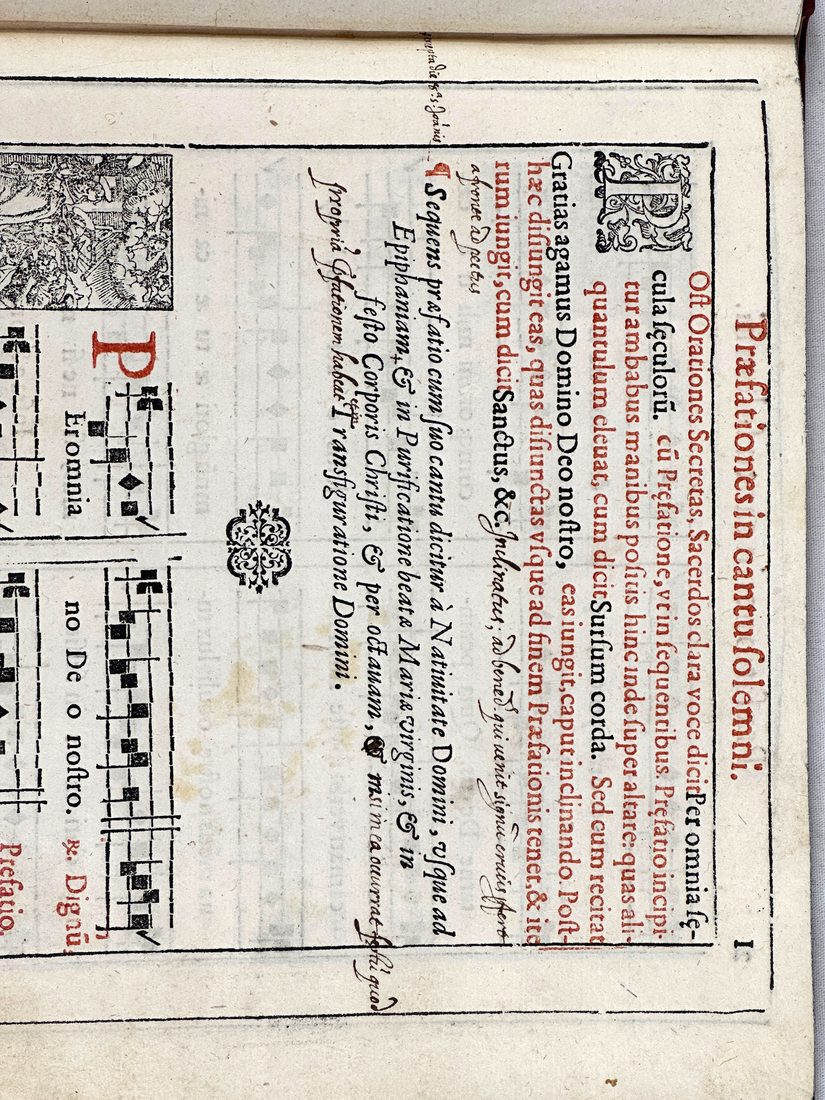
The work is characterized by the presence of four Benedictus in Falsobordone, a musical structure made up of two sections, each containing a recitation on one chord, followed by a cadence, with four to six voices and double choir, at least one of which is recognized as written by Giovanni Pierluigi da Palestrina.
The present copy, probably a preliminary issue, present the empty cartouche below the image of the Last Supper, while the regular copy has the text: Ecce Panis angelorum/Factus cibus viatorum/Vere panis filiorum/Non mittendus canibus.
Some copies of the book present a similar title page but without the papal Coat of Arms
Giovanni Guidetti was born in Bologna on January 1st. 1531. After his priestly consecration he moved to Rome, where he became a pupil of Giovanni Pierluigi da Palestrina. In 1575 he was appointed chaplain of the papal chapel; on 27 November of that year Gregory XIII appointed him beneficiatus perpetuus of St. Peter.
Between 1575 and 1581 he collaborated with Palestrina and Zoilo to revise the Roman gradual and antiphonary to bring the ancient codes back to the original integrity, eliminating the melodic superstructures arbitrarily introduced by the singers over the years.
In 1582 he published in Rome, by R. Granjon, the Directorium chori ad usum sacrosanctae basilicae Vaticanae, et aliarum cathedralium, on the direction of the choir and on how the various chants were to be conducted according to the use of the Papal Chapel.
Directorium, can be considered the most authoritative manual of this kind following the Council of Trent and returns to the traditions used in the past. The rhythmic simplification and the streamlining of the songs made it an indispensable work of consultation for the singers, thus justifying the privilege obtained, in 1582, by Guidetti to print the choral books in small format.
For several years Guidetti worked on a complete edition of the liturgy of the Passion, taken from the four evangelists. The work, Cantus ecclesiasticus Passionis Domini Nostri Iesu Christisecundum Mattheum, Marcum, Lucam et Ioannem, dedicated to William of Wittelsbach, Duke of Bavaria, was published in Rome in 1586. Guidetti's third work, here presented, dedicated to Sixtus V, is the Cantus ecclesiasticus Officij Maioris Hebdomadae, published in Rome by A. Gardano in 1587. Finally, he completed the arrangement of the canto of the prefaces, published with the title Praefationes in cantu firmo, iuxta ritum S. Romanae Ecclesiae, Rome, G. Tornieri, 1588).
Guidetti must be considered a true innovator for trying to provide a rhythmically differentiated notation, able to represent the different durations of the notes, of which he defined the exact execution, without having to use to an excessive quantity of figures.
Conditions: light marks of use along the text, small worm holes in the lower white margin from quire H to the end never affecting the text; in general, a good copy.
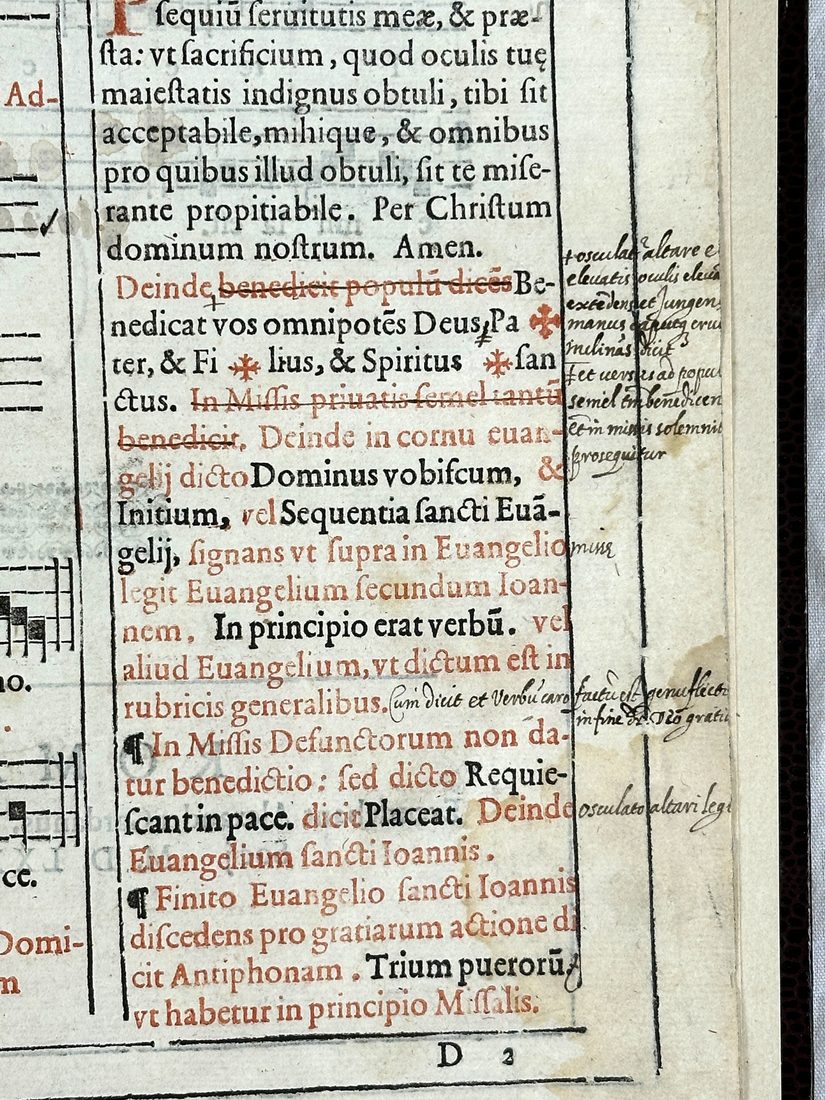
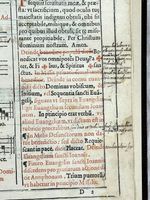
Provenance: contemporary handwritten annotations of integration and correction of text and musical notations.
References: C. Lozzi, Giovanni Guidetti e le sue opere musicali, La Bibliofilía, Vol. 10, No. 2/3 (Maggio-Giugno 1908), pp. 87-97 (11 pages)
.