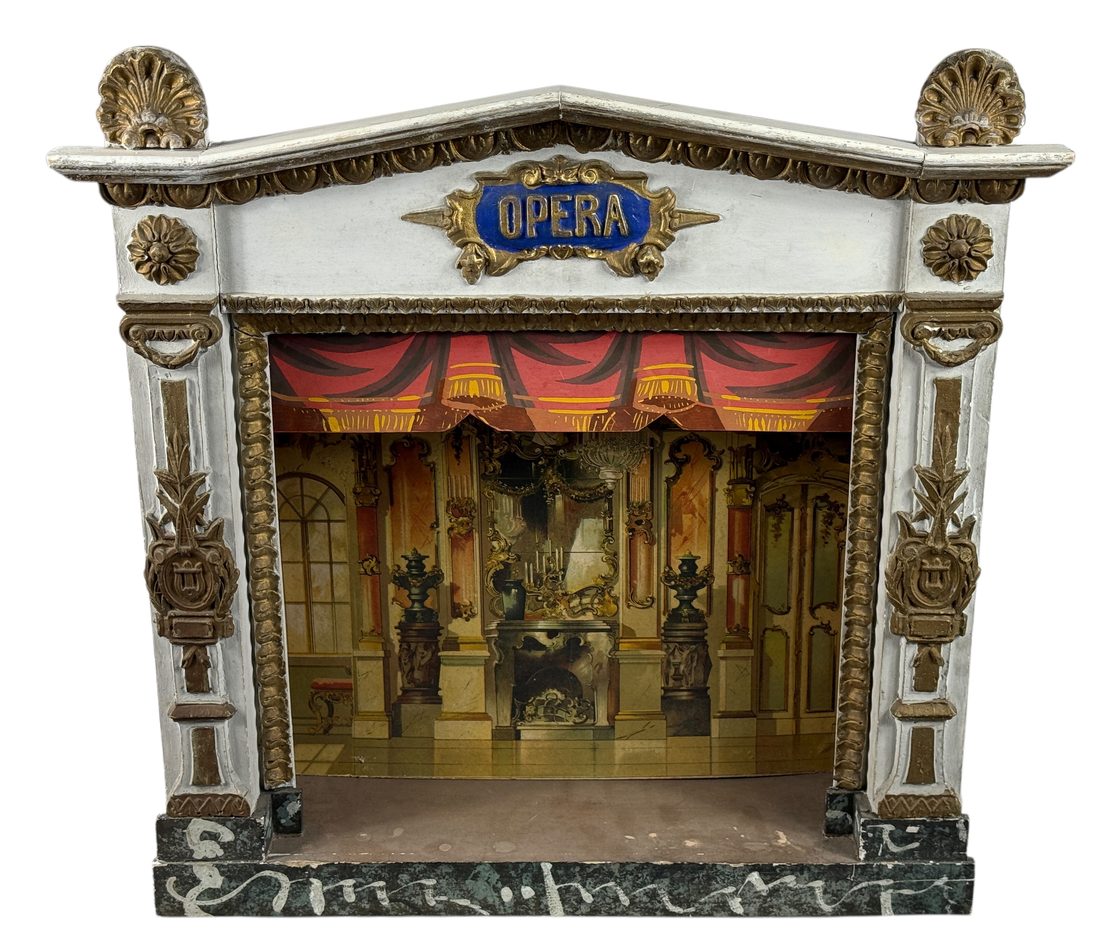
Parlour marionette theatre, «Opéra»

| Macro-category | Ancient Games and Pre-cinema |
| Subcategory | Objects & Curiosities |
| Place of manufacture | Probably France |
| Year | c. 1890–1900 |
the opera at home
a French parlour marionette theatre
with its scenery from the print houses of Épinal and Nancy
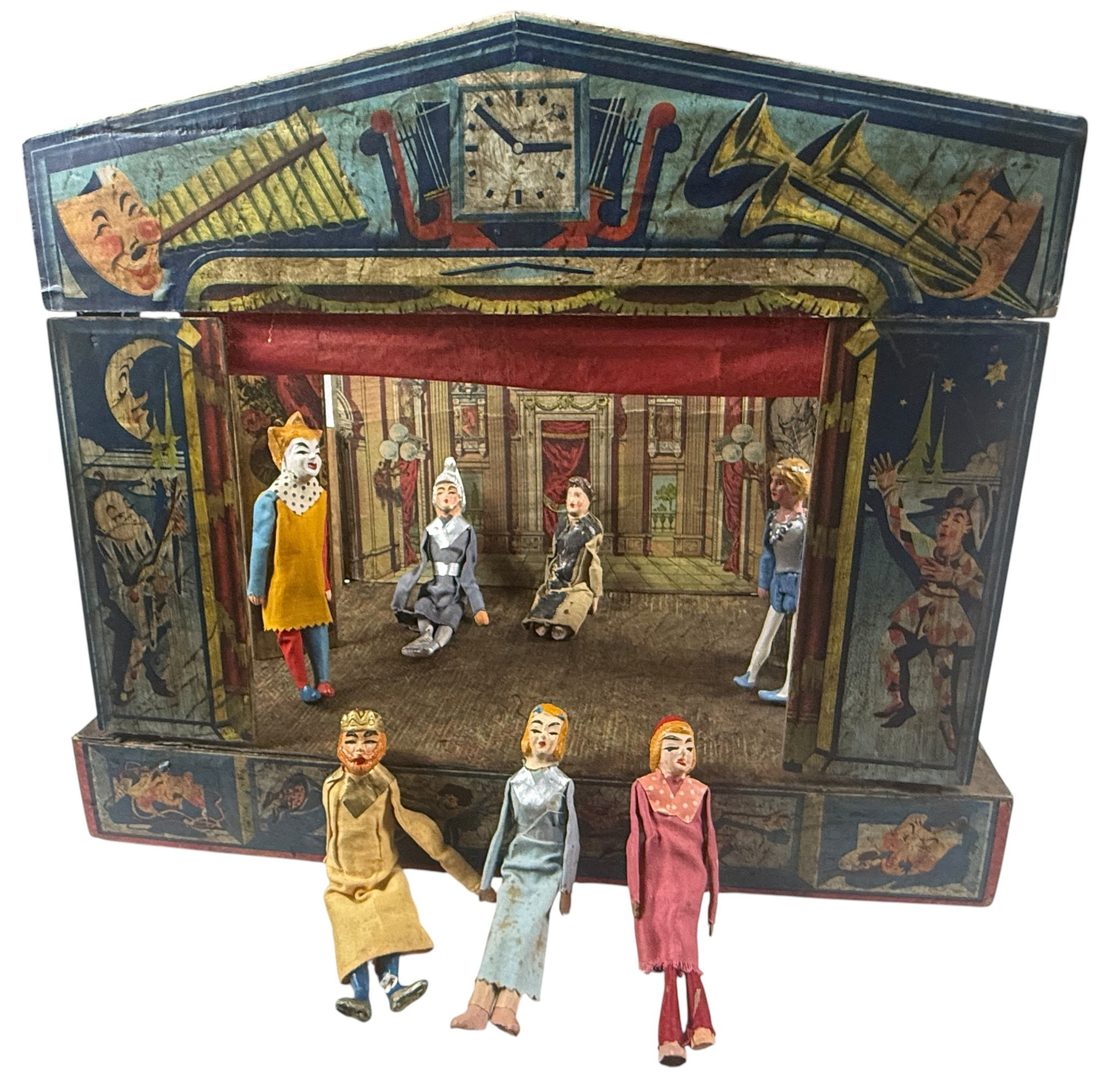
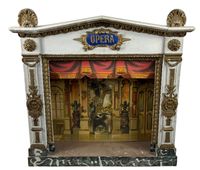
[Parlour marionette theatre, «Opéra».] Probably France, c. 1890–1900.
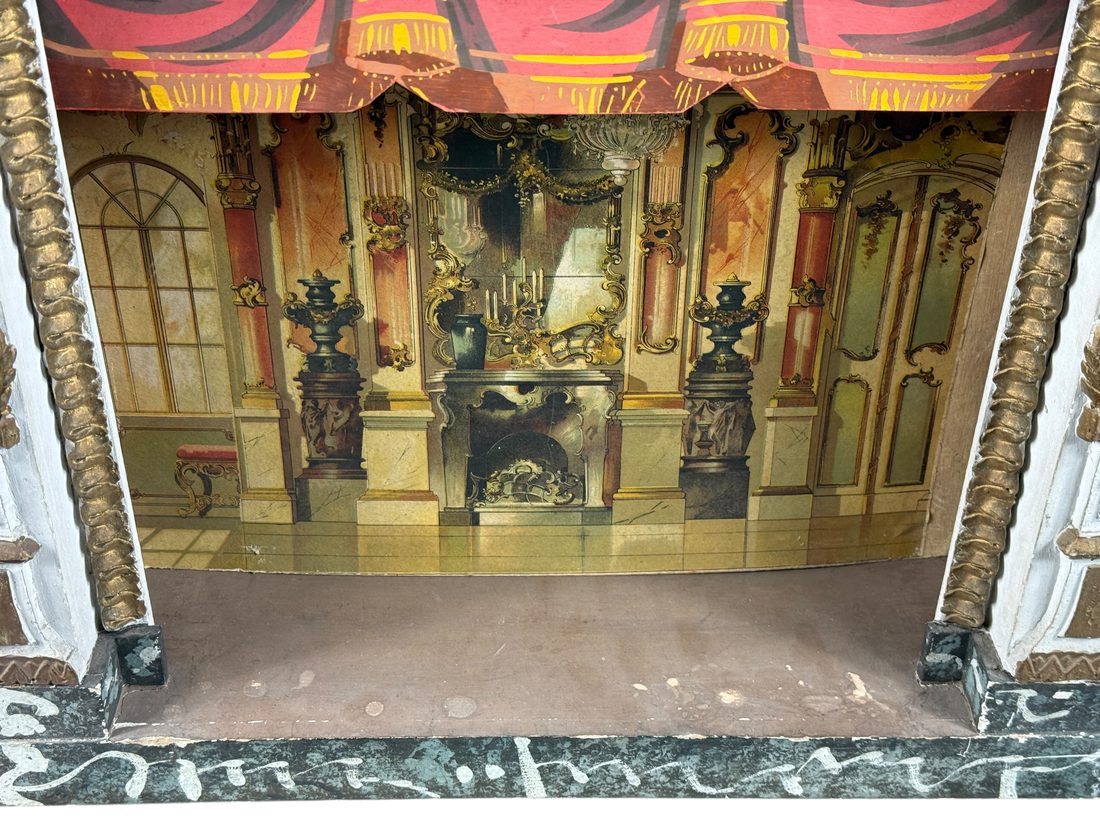
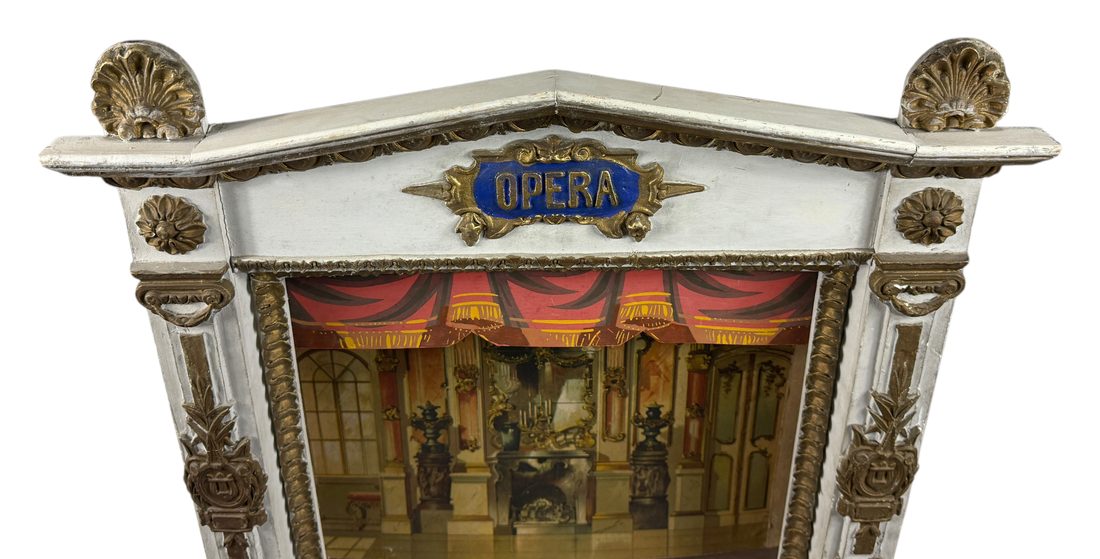
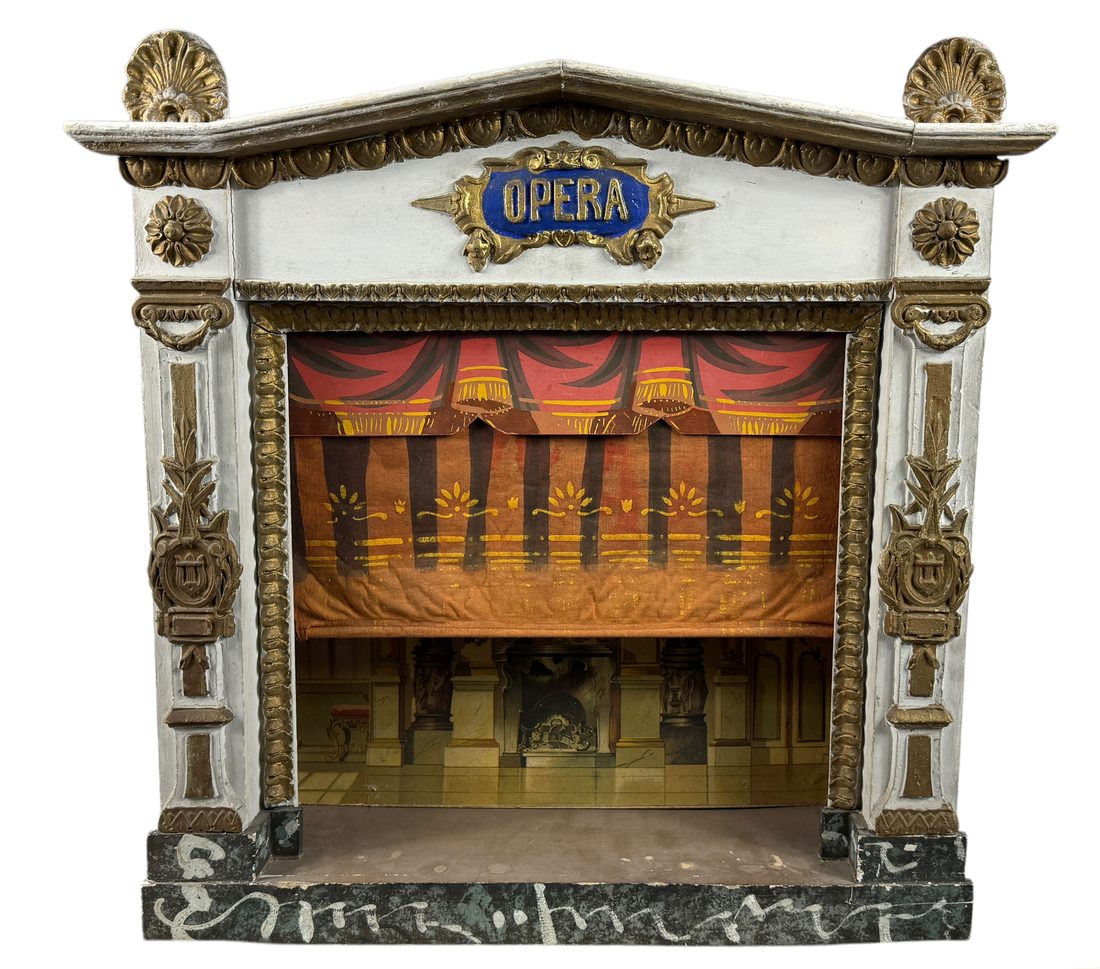
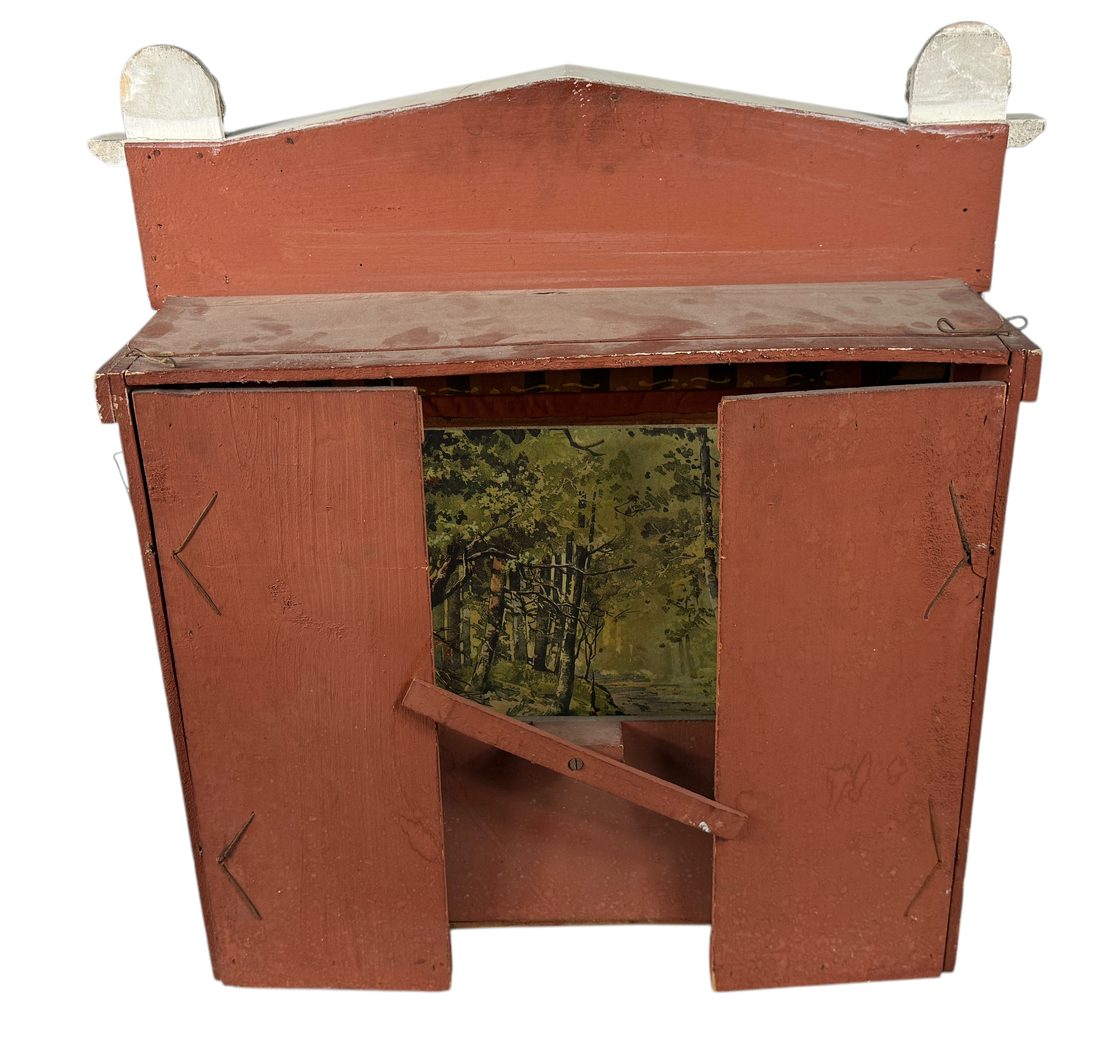
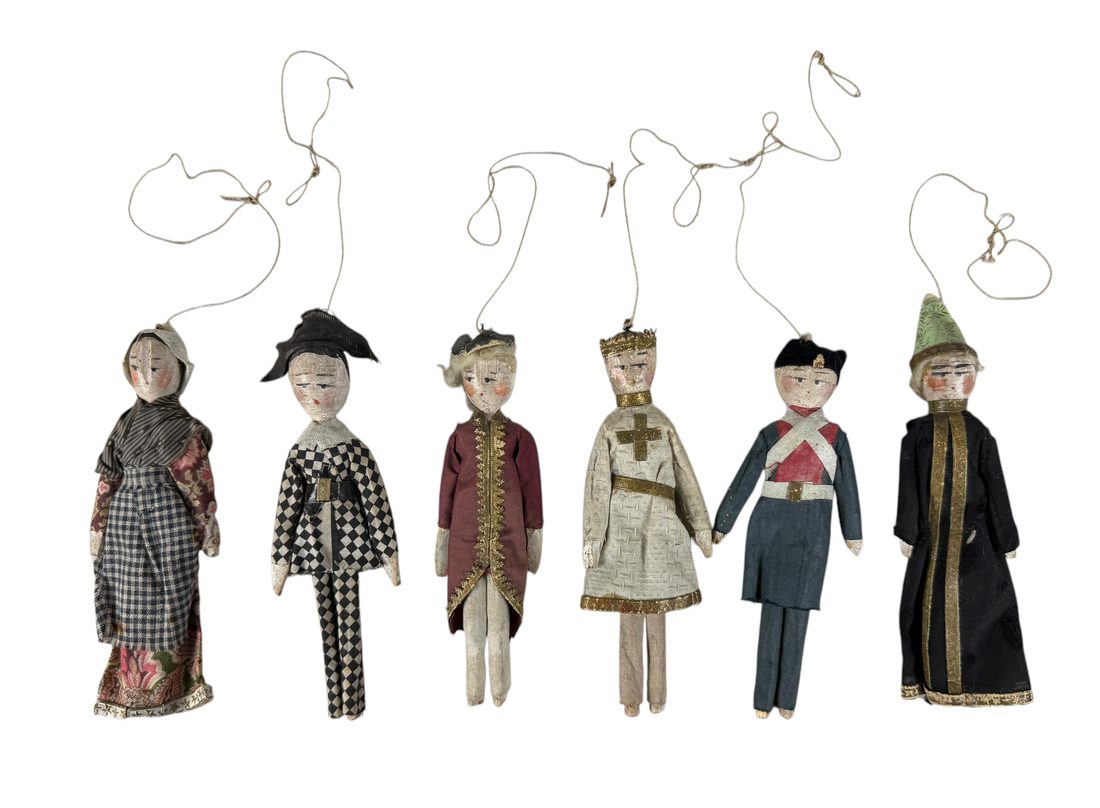
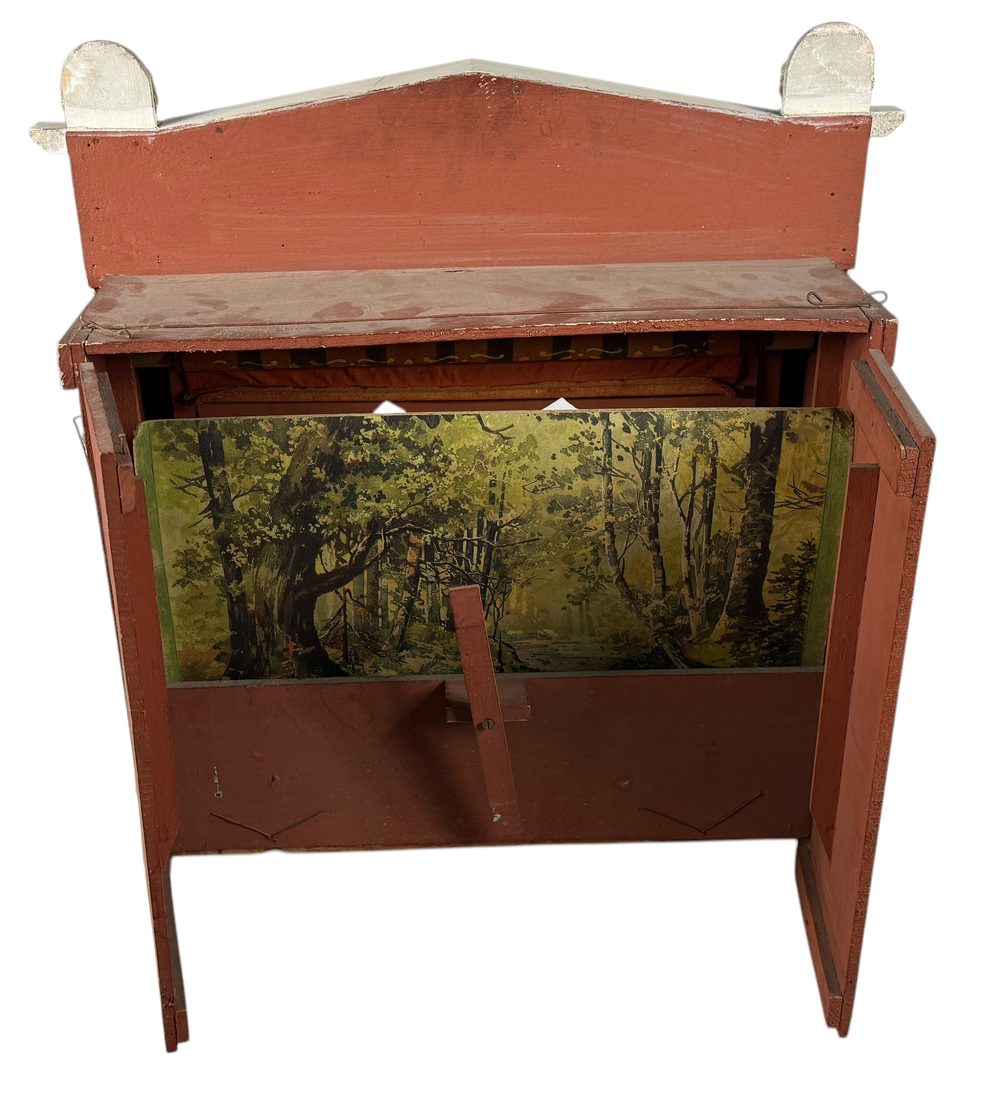
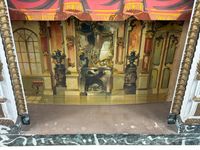
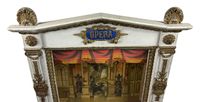
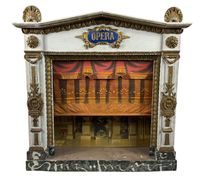
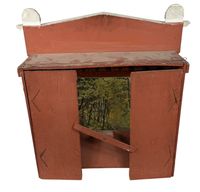
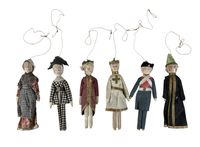
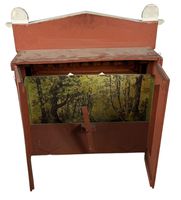
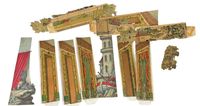
Wooden theatre painted white and gold: shell acroteria and a blue cartouche lettered «OPERA» on the pediment, applied trophies and rosettes on the pilasters, a marbled plinth, a painted curtain and a red draped valance (51 × 47 × 16 cm). Behind the façade the stage is in two parts, one fixed and one with folding side panels, with a backdrop frame on two wooden rods, a removable double-sided panel and twelve intermediate ornamental elements. Six string marionettes with painted heads and cloth costumes: a peasant woman in a striped shawl and check apron, Harlequin, a gentleman in eighteenth-century dress, a crowned king with a gold cross, a soldier and a magician.
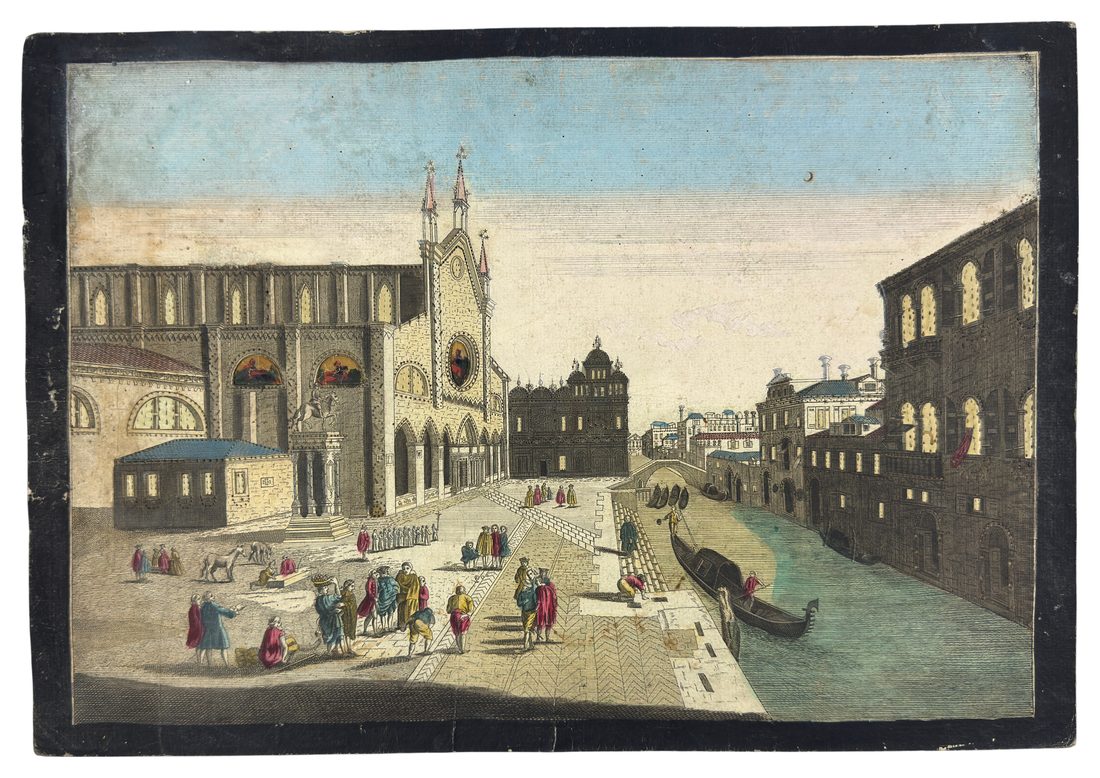
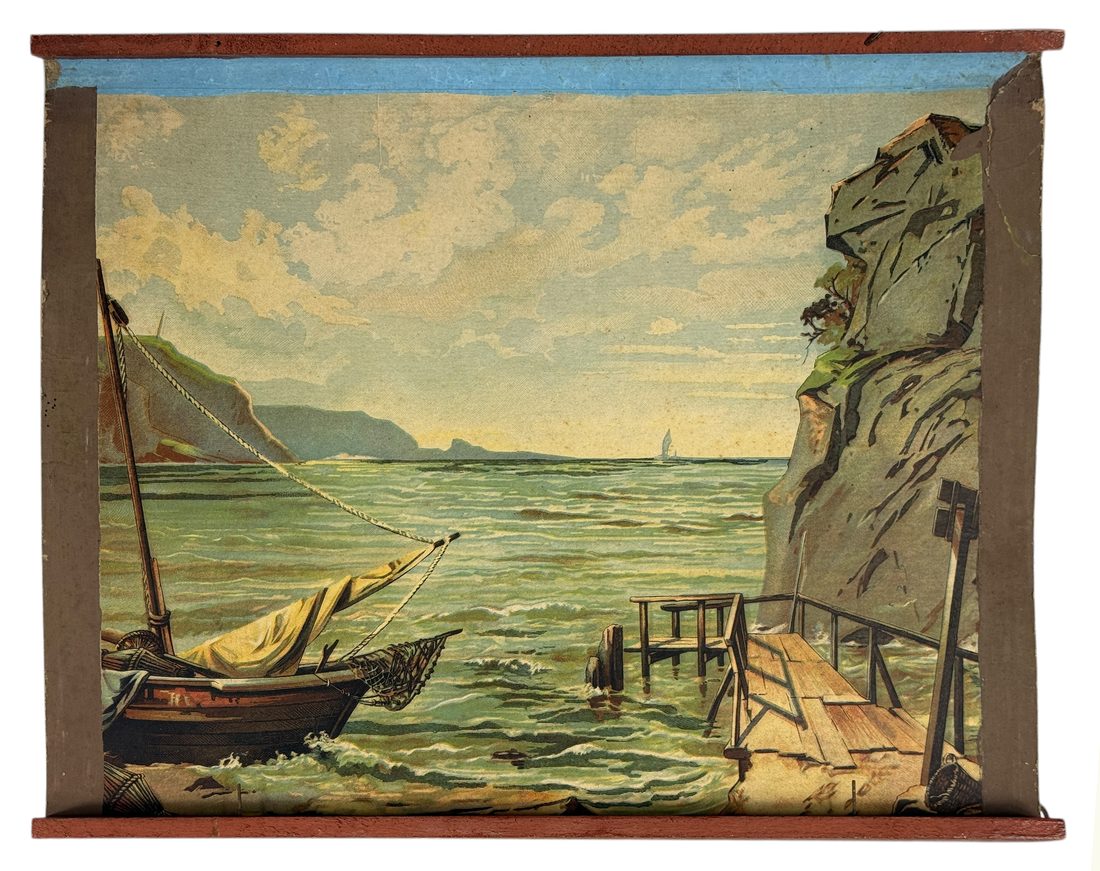
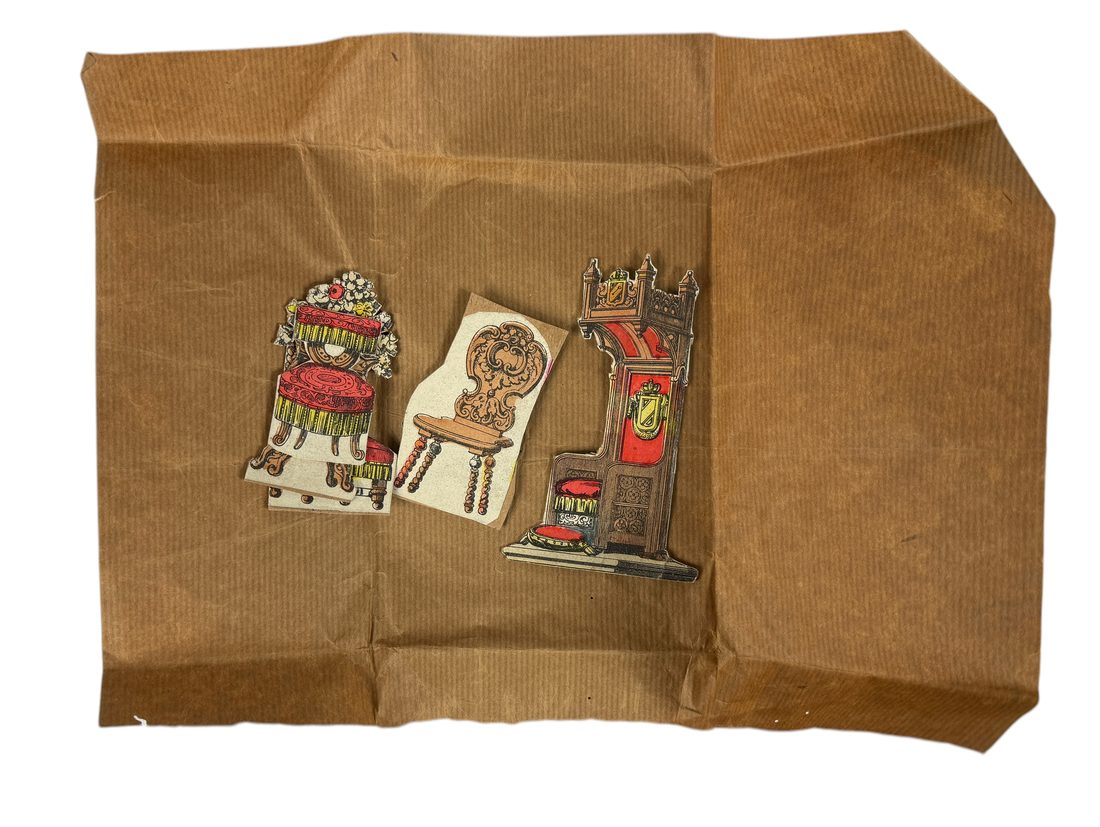
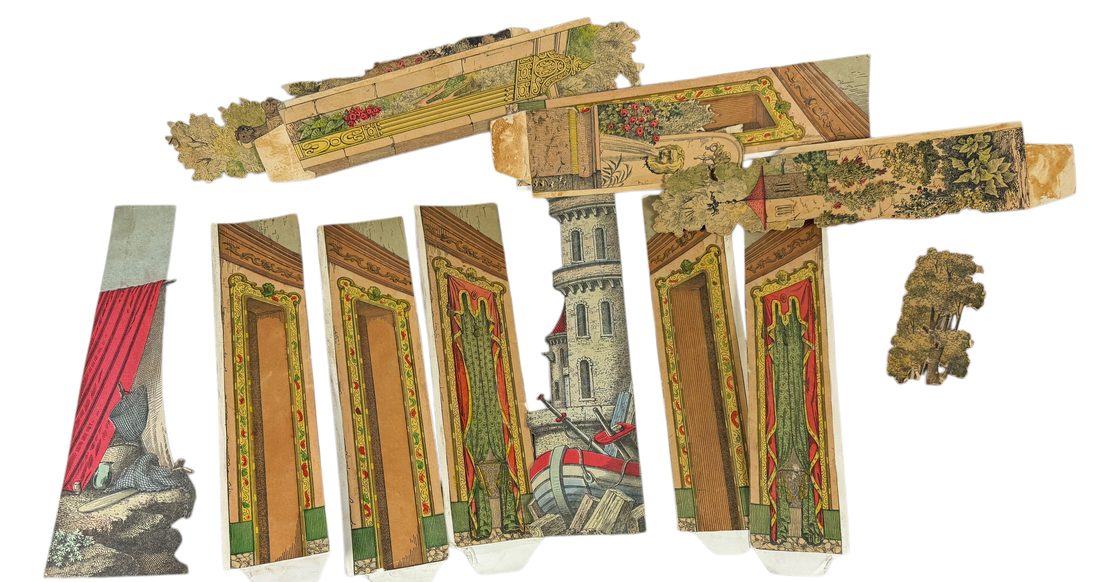
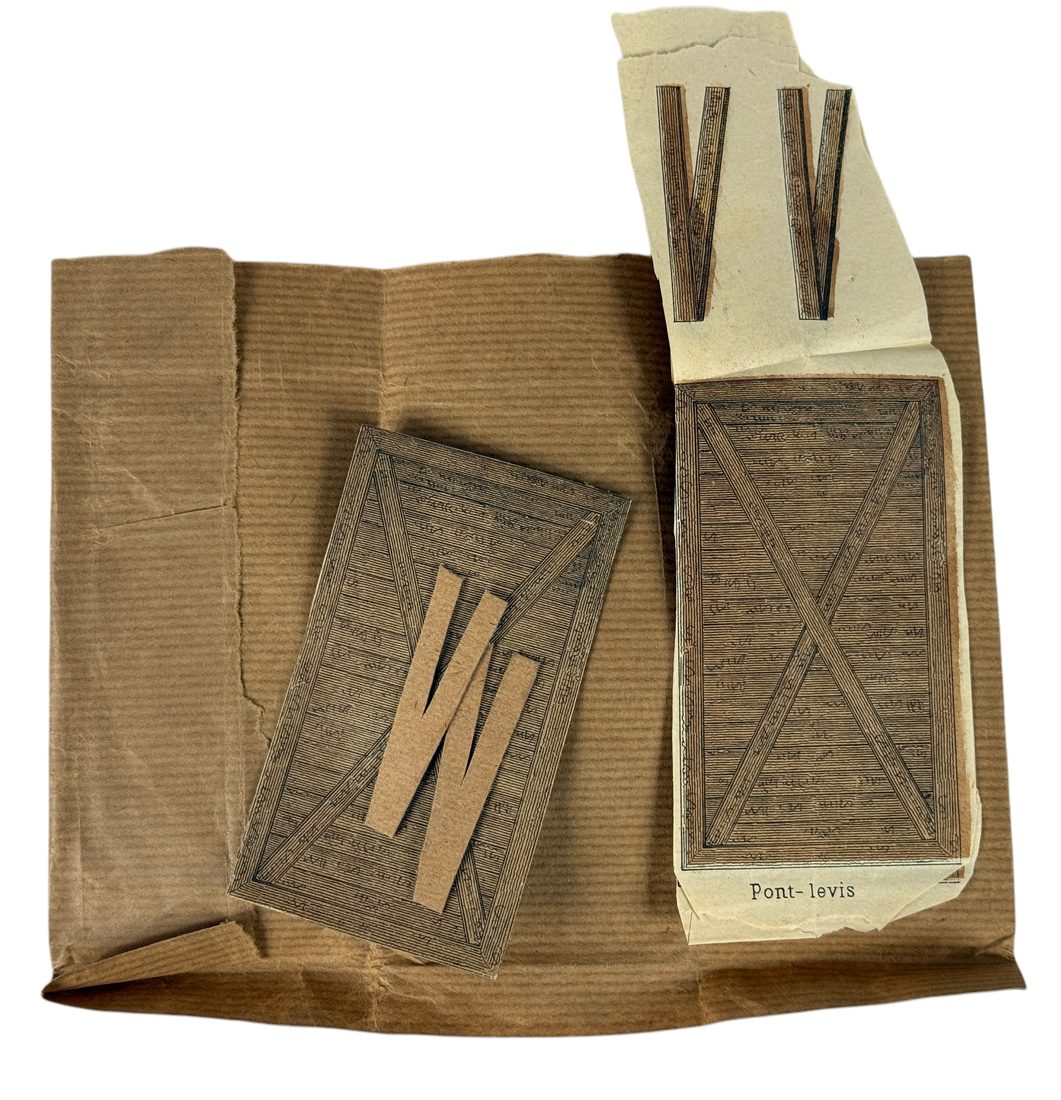
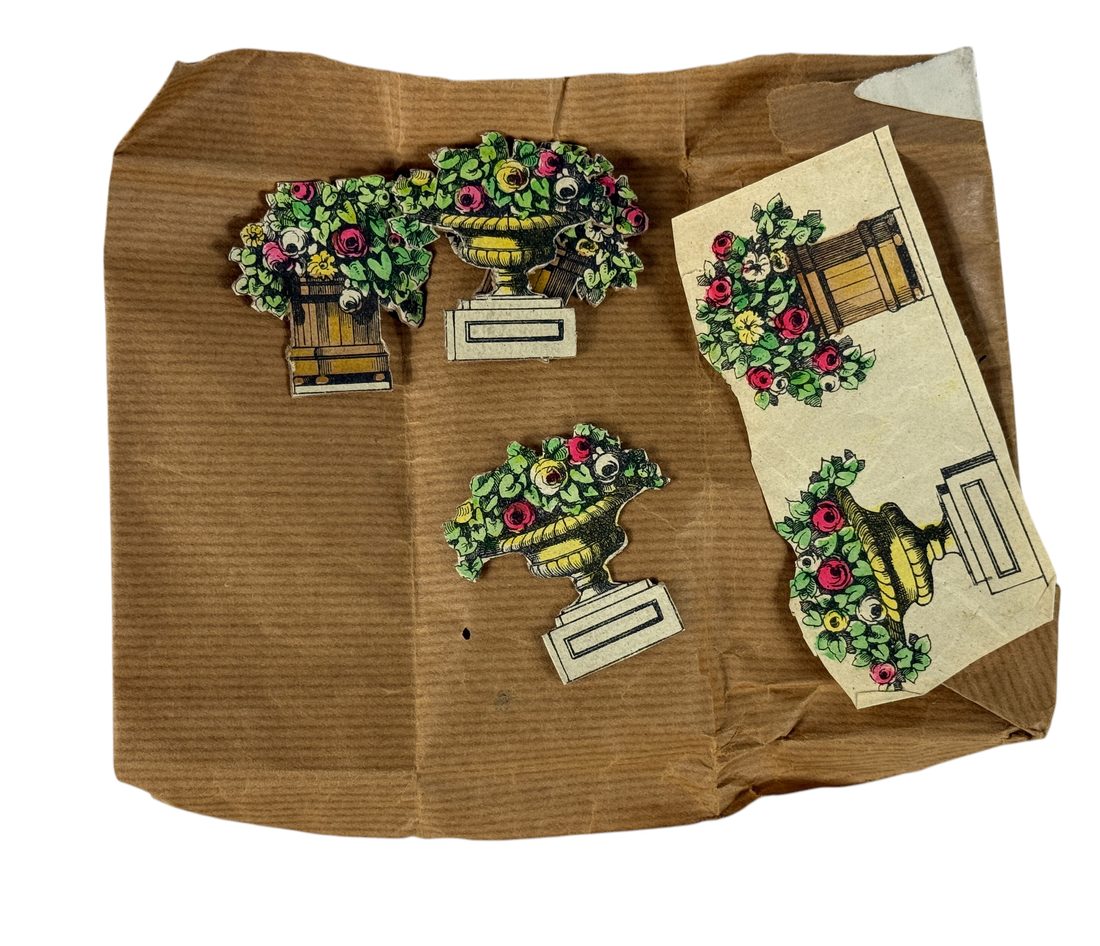
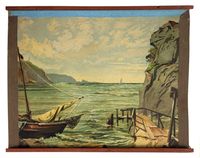
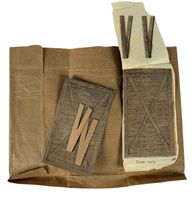
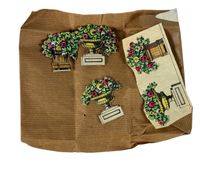
The scenery, about fourteen backcloths with wings and many cut-out pieces of furniture, comes from several print houses: the «Nouveau théâtre portatif à rainures» of the Imagerie d’Épinal, Pellerin & Cie (the rustic room, the mill and the port, sheets numbered 1560–1598, printed from 1889); the «Théâtre des Folies-Bergère» of the Imagerie Delhalt at Nancy (c. 1892–1901), probably the village, public square, prison, sea and fort, numbered on pasted labels; and an earlier sheet of the Venetian scene by Pinot of Épinal («Décor vénitien N. 18, Déposé»). A few chromolithographed backcloths (a salon, a forest, Venice) and a mountain landscape are of the early twentieth century; the fort with its drawbridge is partly still uncut.
In France the paper theatre was sold above all as stock scenery and stock characters, from which families improvised their own plays; the popular print houses of the east, at Épinal, Metz, Nancy and Wissembourg, issued the sheets in series, to be cut out and slid into the grooves of a small stage. Pellerin’s «Nouveau théâtre portatif à rainures», first published by Pinot & Sagaire at Épinal in 1866, is one of these series: backcloths, wings and furniture for a village, a mill or a palace.
Toy makers in France sold wooden theatres complete with marionettes from the middle of the nineteenth century. Other French examples share its white and gold proscenium and «Opéra» cartouche. Its owners furnished it over the years with sheets from at least three print houses, and a later hand numbered and labelled the backcloths.
Conditions: Light wear and small losses to the gilding; stains and paint spots on the stage floor; white marks on the marbled plinth; some sheets creased, the fort with its drawbridge partly uncut; the scenery rewrapped in the twentieth century in brown paper, one sheet with a Paris radio dealer’s delivery label.
References: G. Speaight, The History of the English Toy Theatre, London: Studio Vista, 1969; P. Baldwin, Toy Theatres of the World, London: Zwemmer, 1992; A. Lecucq, «Théâtre de papier», in M. Corvin (ed.), Dictionnaire encyclopédique du théâtre à travers le monde, Paris: Bordas, 2008; Épinal, Musée de l’Image, «Théâtre des Folies-Bergère», Imagerie Delhalt, Nancy (Joconde M0537061653).
You might also like