Magic Book / Zauberbuch (blow book)


| Macro-category | Rare Books and Manuscripts |
| Subcategory | Magic & Conjuring |
| Author | Anonymous |
| Year | 1890 |
the «Blow Book»: a rare remarkable tool for magicians and conjurers
do not fool with the magician …
or the images in your book will vanish by magic!!
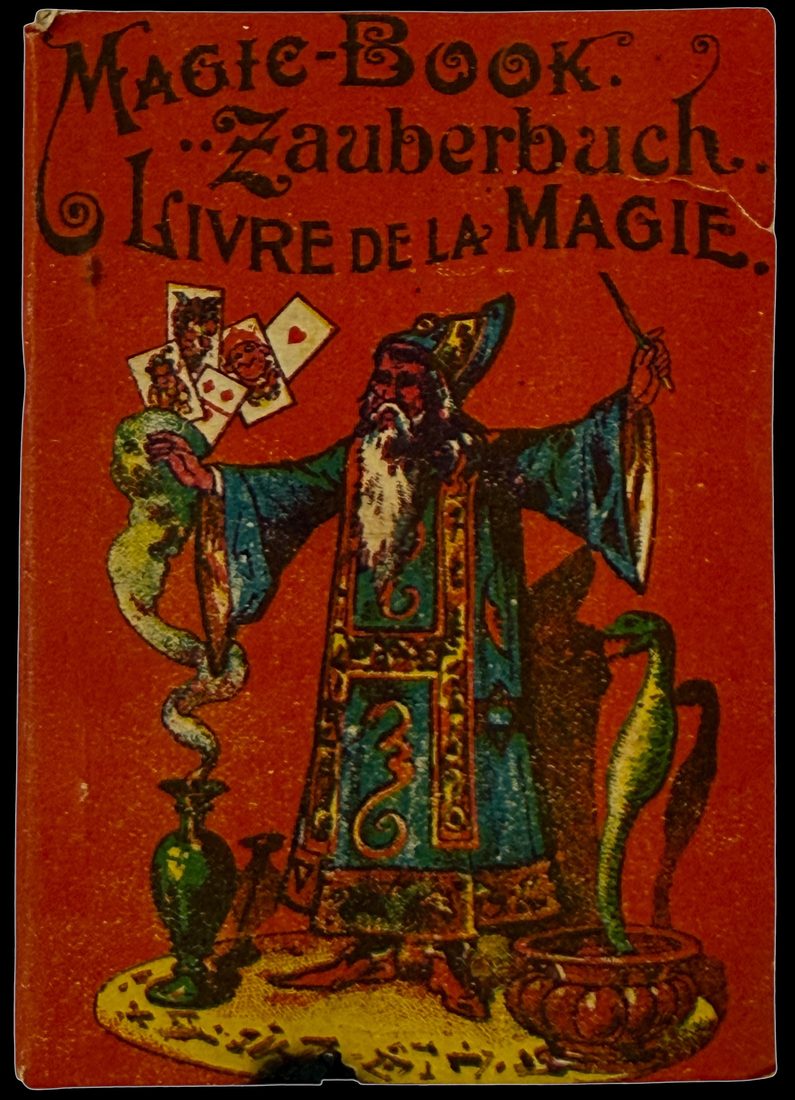
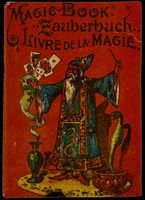
[Anonymous]. Magic-Book — Zauberbuch – Livre de la magie. S.l. [but Germany or Austro-German area], s.n., sd. [ca. 1890–1910].
Small 8vo (110 × 75 mm), original chromolithographed printed wrappers, stitched, ff [24], mechanically cut at the fore edge with five thumb-notches forming five distinct flipping divisions. Printed throughout in colour lithography, without hand-colouring.
Click on image for a video demonstration of the “magic!”
This refined miniature example of the traditional blow book belongs to the late European phase of the gauckel-tasche tradition, when such magical volumes were produced in compact, portable formats for itinerant conjurers and popular entertainment.
The trilingual title, English, German and French, clearly indicates an international market. The chromolithographed wrapper depicts an oriental magician surrounded by symbolic attributes of conjuring, including playing cards, a serpent and ritual vessels. The imagery situates the object within the long-established European iconography of illusion, theatrical exoticism and sleight-of-hand performance.
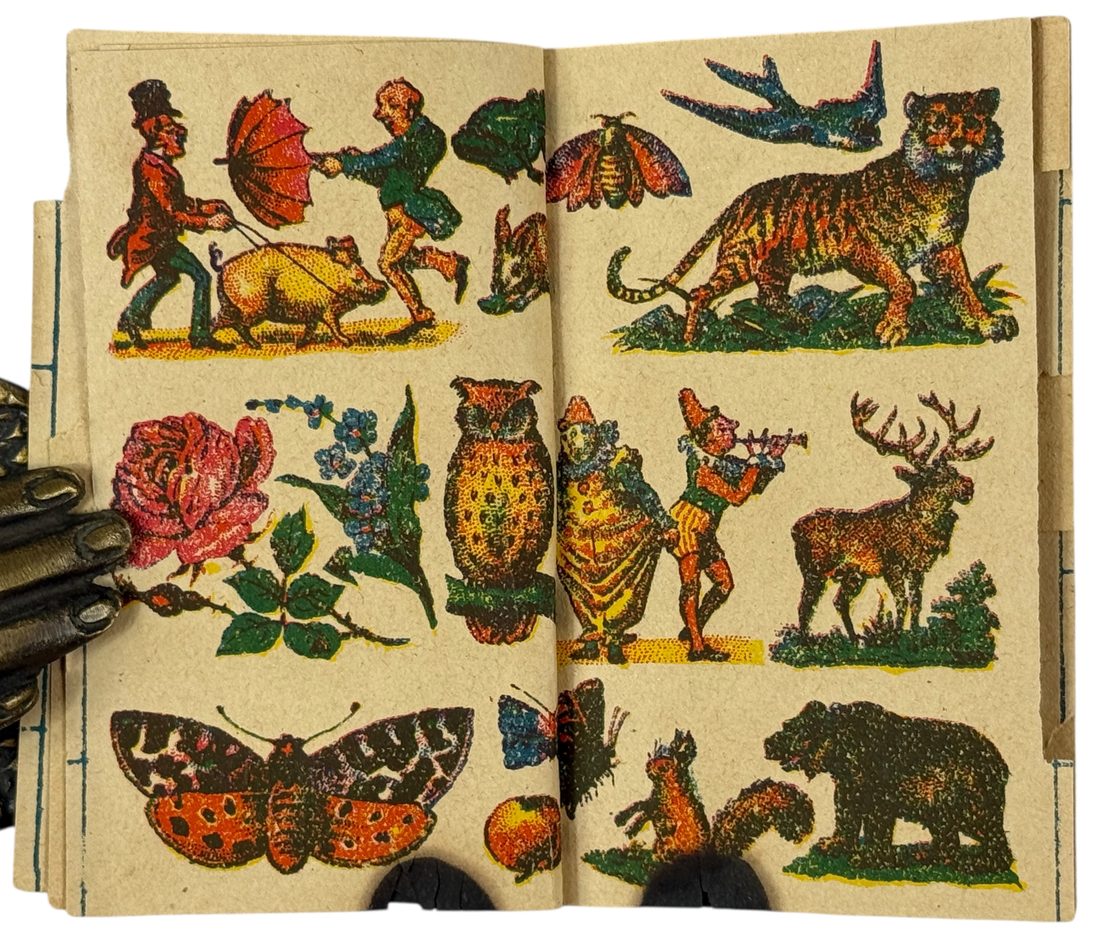
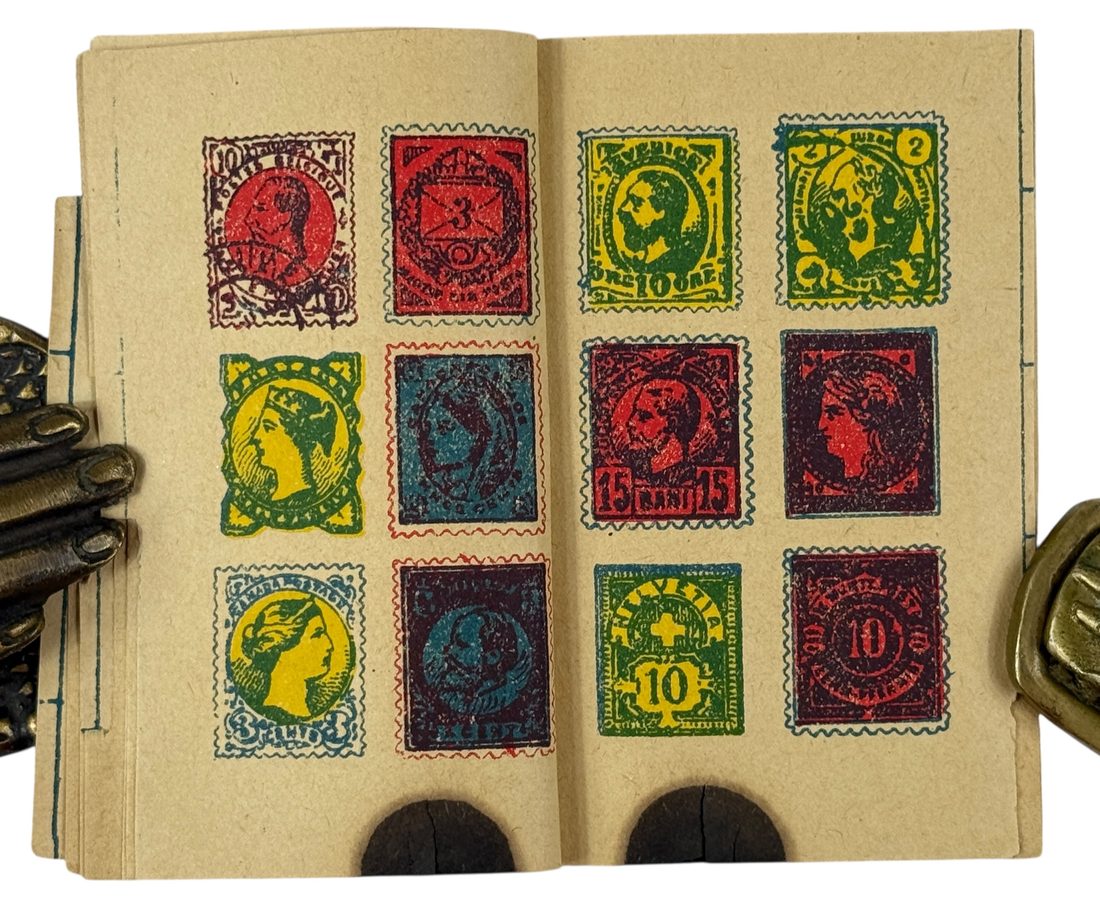
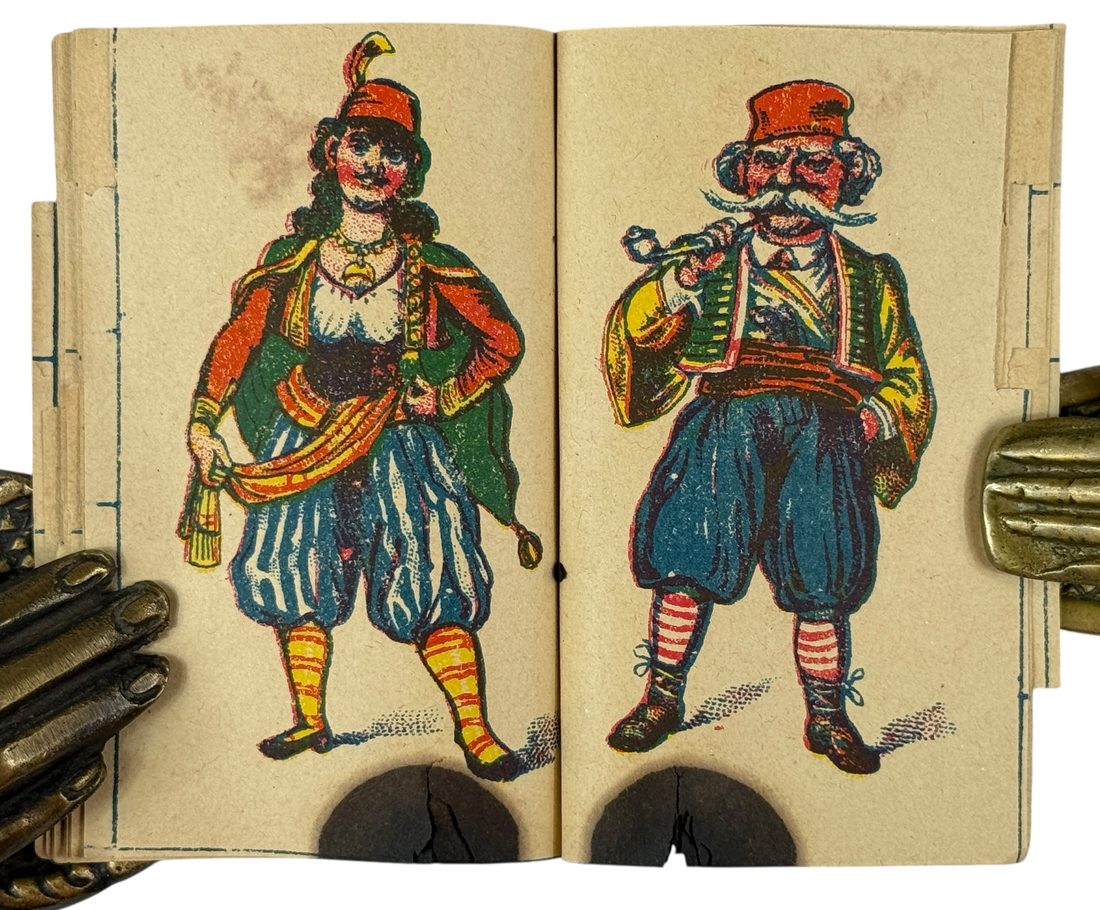
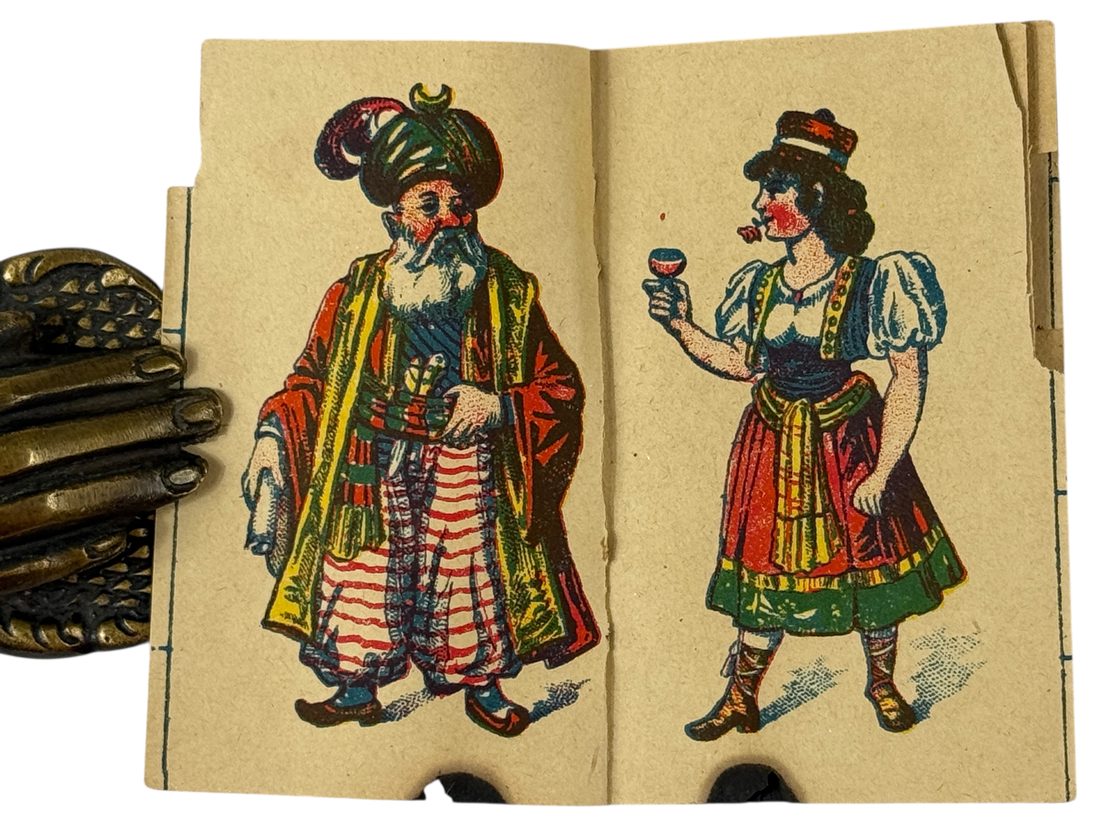
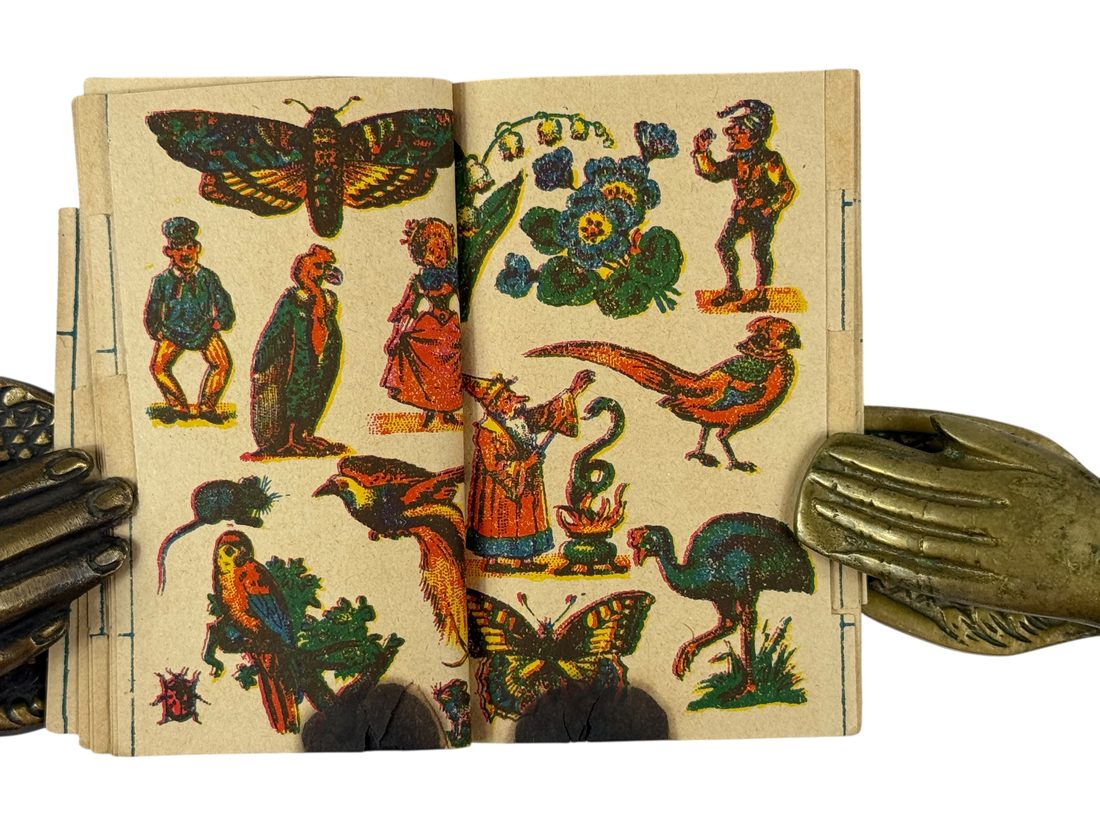
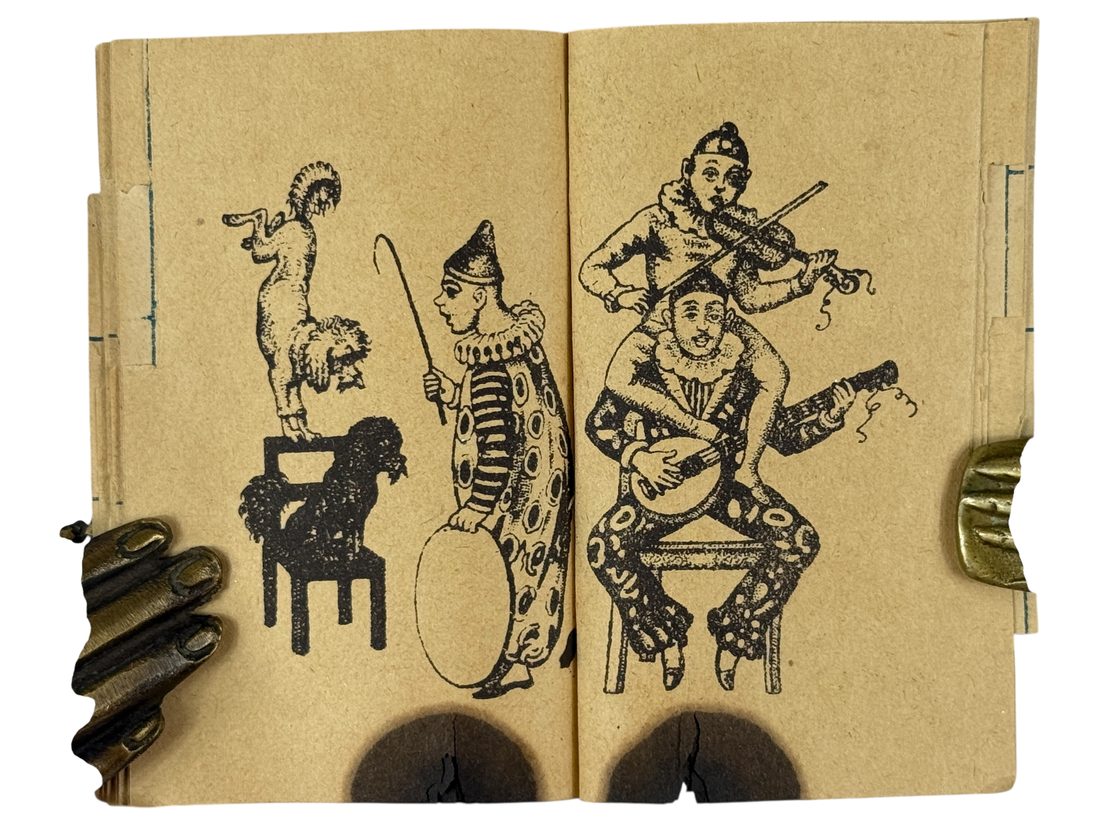
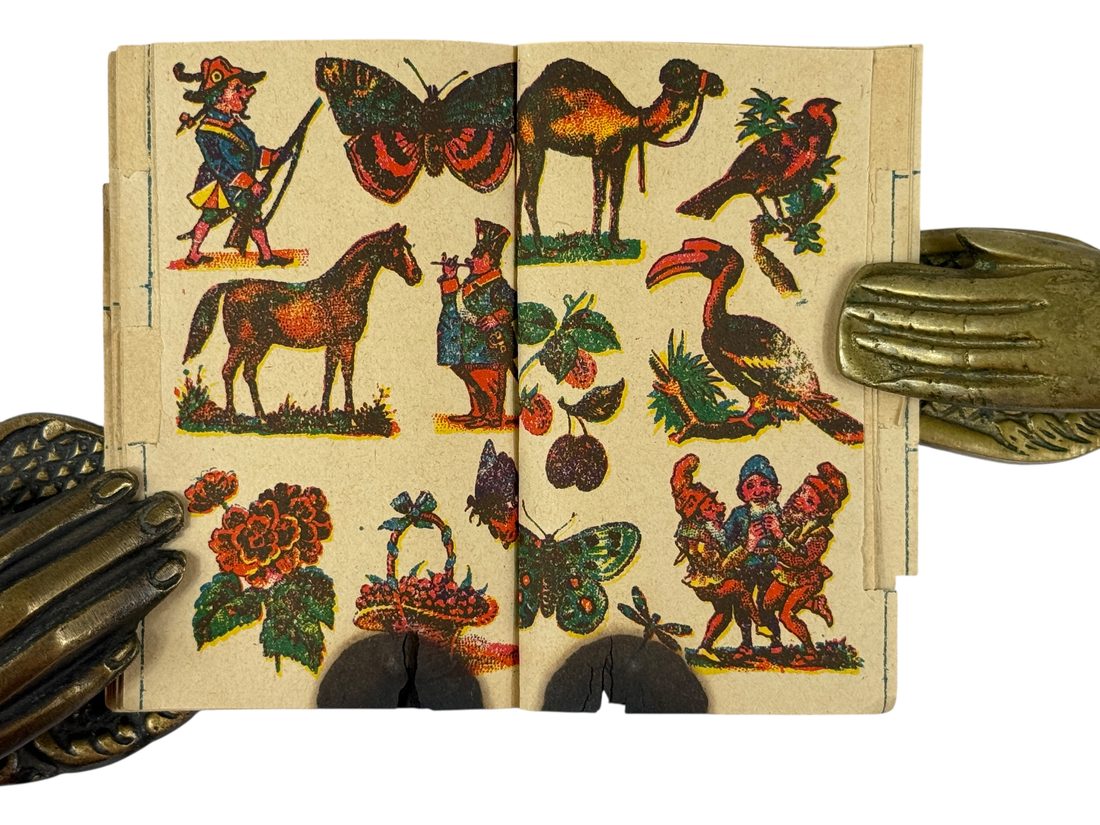
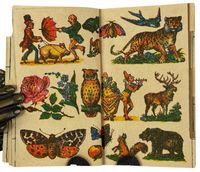
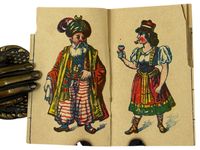
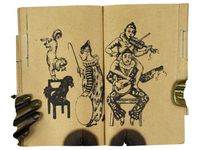
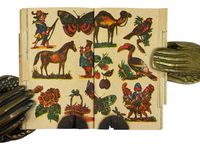
“You simply leaf through the album, changing the position of your thumb on the edge of the book, where small notches indicate the correct place. Depending on where the thumb is placed, different sequences of colored images appear: a man in a top hat, a devil, shadow puppets, a soldier, a landscape […]” (Dussert & Walbecq).
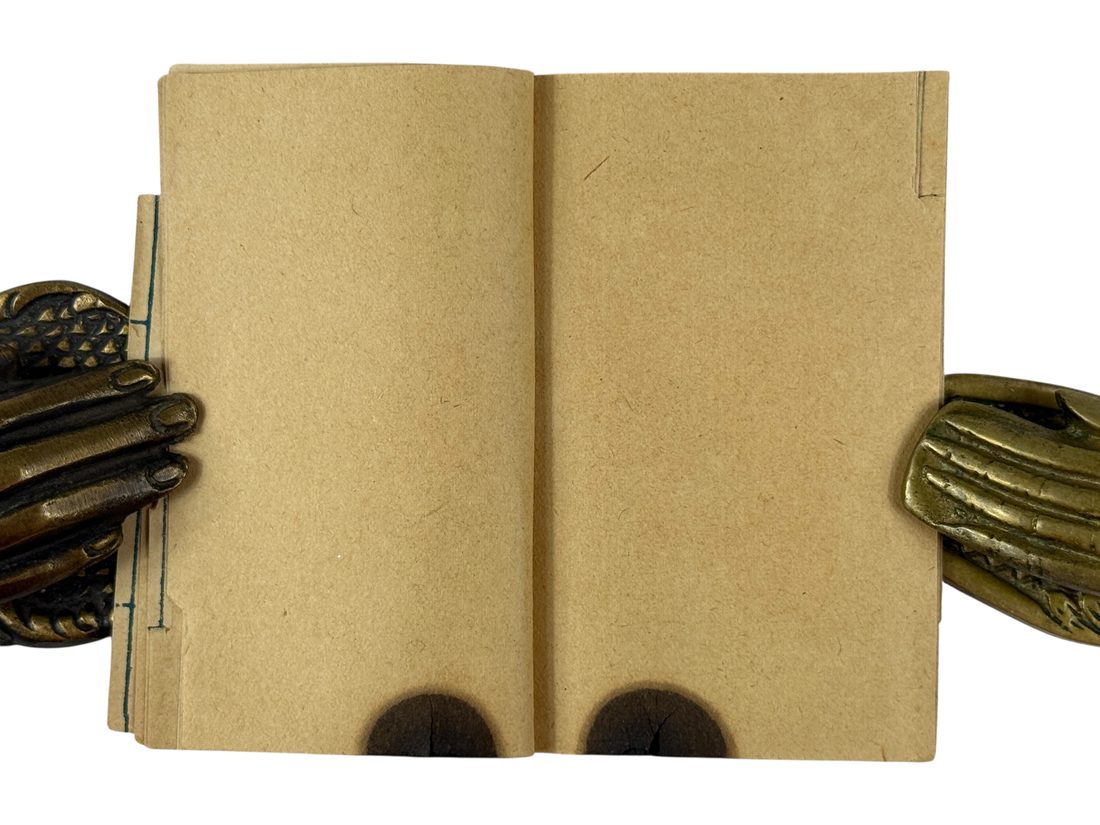
The volume fore edge has been precisely cut into five alternating thumb-notched groups. These discreet indentations divide the text block into mechanically independent sections, enabling the performer to determine which leaves are released during flipping.
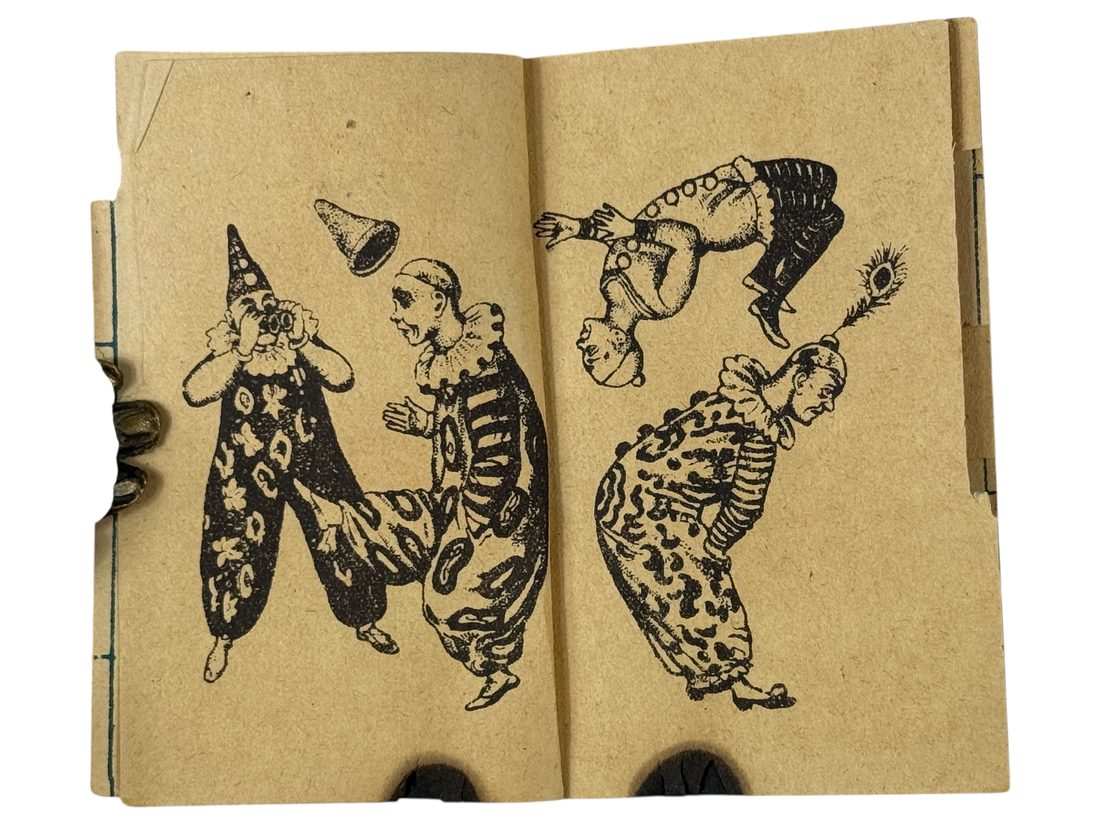
When the book is flipped from front to back, each of the five divisions produces a distinct sequence of pages. Reversing the direction of flipping generates five further sequences. In both directions, one division is intentionally composed entirely of blank leaves. The structure therefore yields ten possible outcomes, eight illustrated sequences and two blank sequences.
The blank sequences are essential to the illusion. They allow the volume to be presented as entirely empty before undergoing its apparent transformation into animated pictorial cycles.
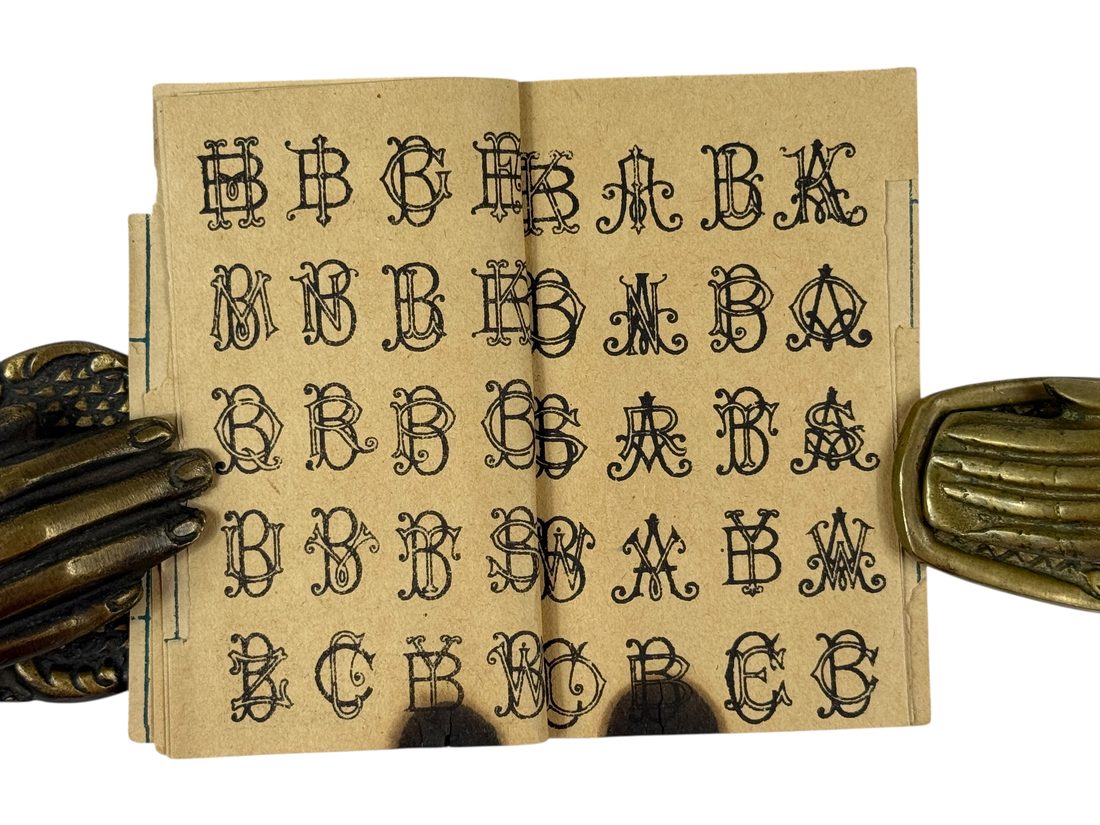
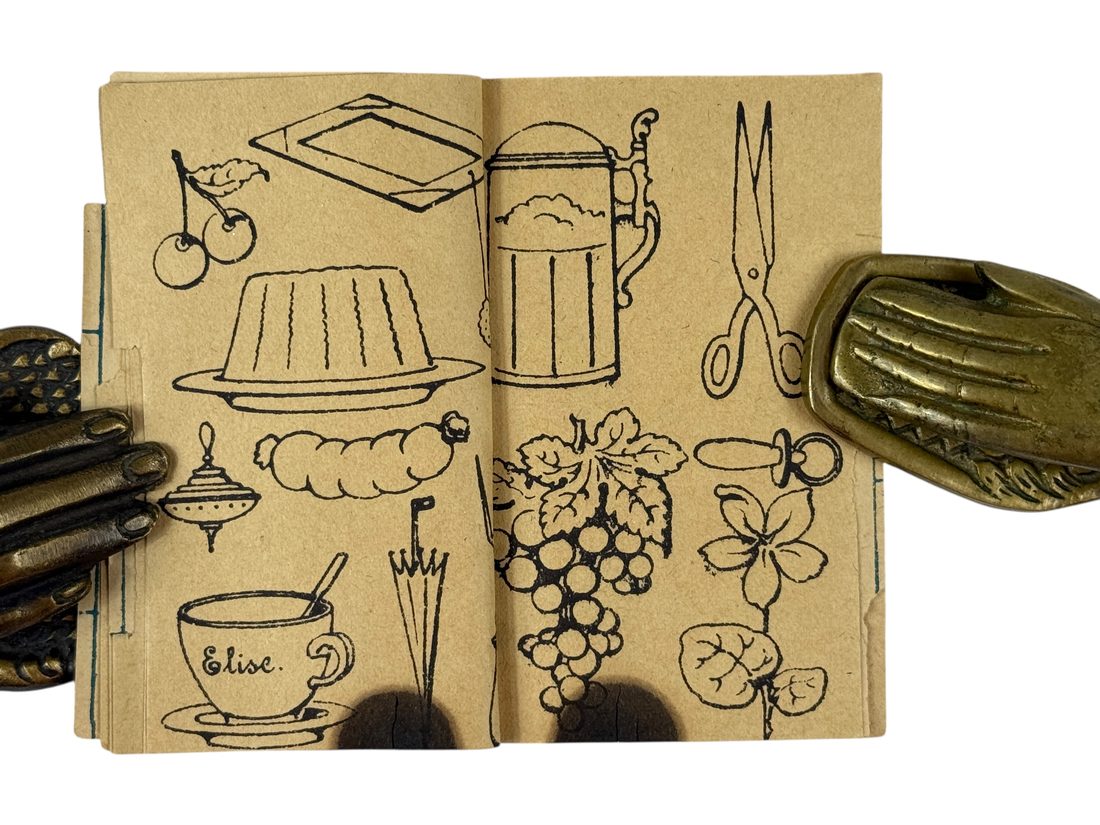
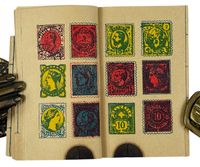
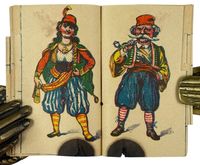
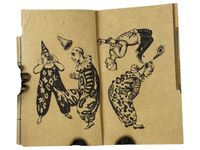
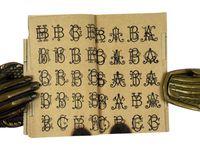
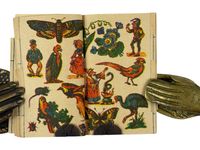
The internal illustrations, printed in consistent industrial colour lithography, depict costumed figures, animals, floral motifs, theatrical scenes and whimsical subjects. Their arrangement corresponds exactly to the alternating structure of the leaves, so that each thumb position reveals one coherent visual series.
The mechanical principle rests upon variations in page width. After trimming, the outer margin becomes subtly irregular, though this remains imperceptible at performance distance. When the performer places the thumb at a chosen notch and releases the leaves, only one predetermined group disengages, while the remaining groups remain concealed behind it, falling together in compact blocks. By altering either thumb position or flipping direction, the performer selects the visual sequence to be displayed.
The system contains no hidden apparatus. Its effectiveness lies entirely in precision cutting and disciplined manual control.
The mechanical construction of the blow book was inseparable from its theatrical use.
In performance, the conjurer would first select the division corresponding to the blank leaves and display the book to the audience as entirely empty. The volume thus appeared devoid of images. A spectator would then be invited to “blow” upon the book. After this symbolic gesture, the magician would flip the leaves again, subtly shifting the thumb to a different notch. A sequence of images would now appear.
Each time a different spectator was invited to blow, the performer altered imperceptibly the thumb position or reversed the direction of flipping. Different pictorial cycles would consequently emerge, giving the impression that each breath animated the book in a new way. When the magician himself handled the volume again and deliberately returned to the blank division, the images vanished and the book reverted to its apparently empty state.
The breath functioned as theatrical rhetoric rather than mechanical cause. The animation of the book was not produced by air but by controlled manipulation of alternating page groups. The illusion resided in the contrast between the performer’s explanation and the book’s structural logic.
This interplay between paper engineering and narrative framing explains the enduring name “blow book.” The object did not respond to breath, but to touch. The breath served as performative fiction, masking a refined and deliberate mechanical design.
The gauckel-tasche, later known as the blow book, is regarded as the earliest documented example of an interactive magical book. Gerolamo Cardano, writing around 1550, already described a volume capable of revealing different images from the same book. The device is therefore a direct ancestor of later pop-up books and optical novelties.
Its mechanism, based on alternating page widths, was disclosed in France and England in 1584 and in Germany in 1636, rapidly entering the repertory of European conjurers. From Jean Prévost in Lyon to Reginald Scot in London and Daniel Schwenter in Nuremberg, the technique evolved into a refined paper engineering practice. By 1584 William Brome was already offering ready-made examples. In 1670 a small blow book was included with the first edition of the German chivalric novel Der seltzame Springinsfeld by Hans-Jacob-Christoffel von Grimmelshausen, transforming literary narrative into mechanical curiosity.
Throughout the eighteenth and nineteenth centuries blow books remained a staple of itinerant magicians. Industrial printing eventually replaced artisanal production, yet the object retained its dual identity as both printed matter and performative instrument.
This miniature late-nineteenth-century example represents the industrial culmination of a device whose conceptual origins lie in Renaissance natural philosophy and early modern conjuring culture.
Conditions: Original printed wrappers slightly worn, with a small loss at the lower margin of the front wrapper and minor weakness along the fold. A persistent stain is visible along the lower margins of the leaves. In several instances, minor losses occur at the extreme lower edge, apparently resulting from ink acidity that has caused small areas of paper fragmentation. Overall, in good general condition, retaining complete operational performance.
References: R. Jay, The Magic Magic Book: An Inquiry into the Venerable History & Operation of the Oldest Trick Conjuring Volumes, Designated “Blow Books”, 2 vols., New York: Library Fellows of the Whitney Museum of American Art, 1994; Stafford, B. M. & F. Terpak, Devices of Wonder: From the World in a Box to Images on a Screen, Getty Publications, 2001; Dussert, T. and M. Walbecq, Les 1001 vies des livres, Paris: Vuibert, 2014; M. Tomatis, La Magia dei Libri, Editrice Bibliografica, 2015.