La Bibbia, cioe i libri del Vecchio e del Nuovo Testamento
| Macro-category | Rare Books and Manuscripts |
| Subcategory | Religion |
| Author | DIODATI, Giovanni |
| Place of printing | Geneve |
| Publisher / Maker | Jean de Tournes |
| Year | 1607 |
first edition of the first Italian bible from original sources
a cornerstone of reformed culture among Italian speaking communities: the official Bible of Italian Protestants
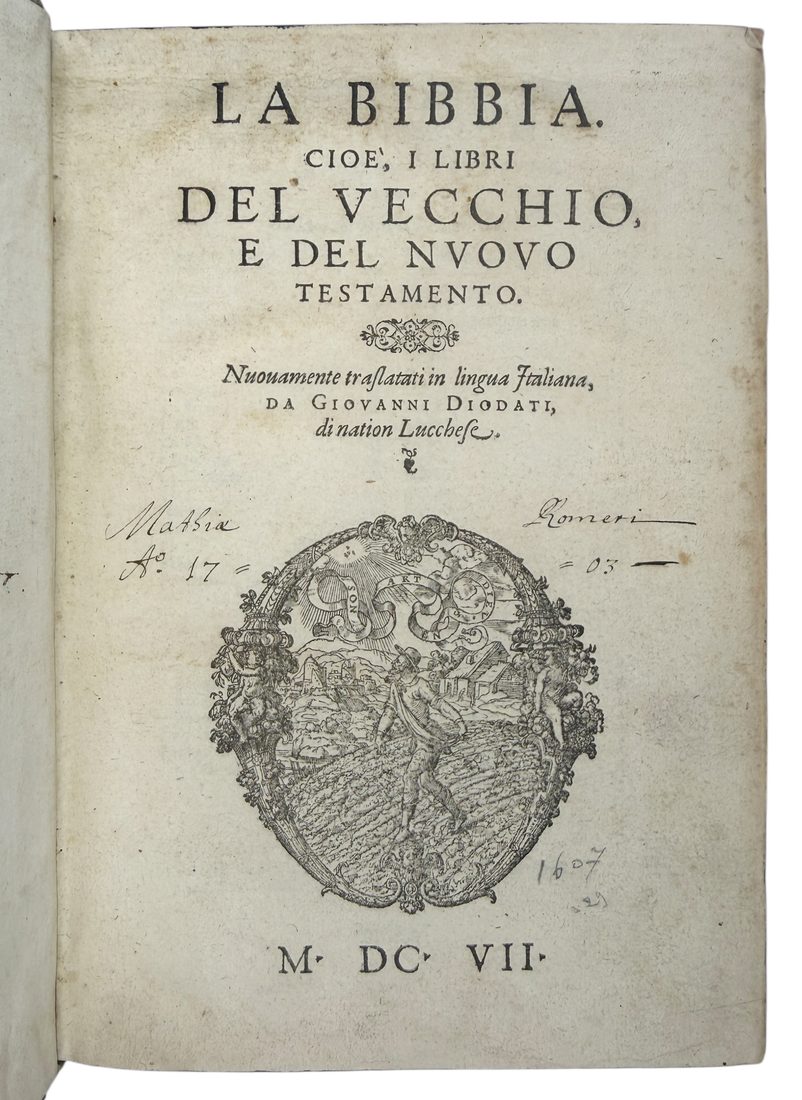
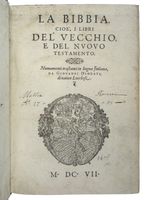
Diodati, Giovanni. La Bibbia. Cioe, i libri del vecchio, e del nuovo Testamento. Nuovamente translati in lingua Italiana da Giovanni Diodati, di nation Lucchese.
[Geneva, Jean de Tournes, under the name Johann Toresius], 1607.
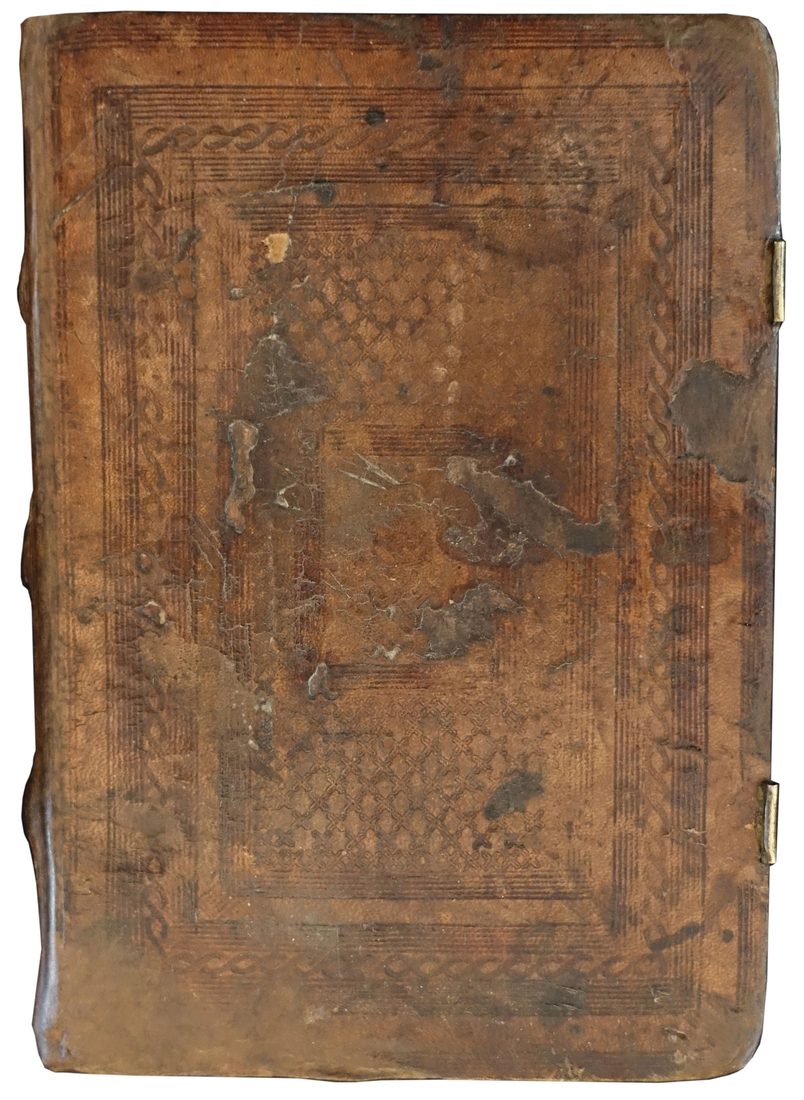
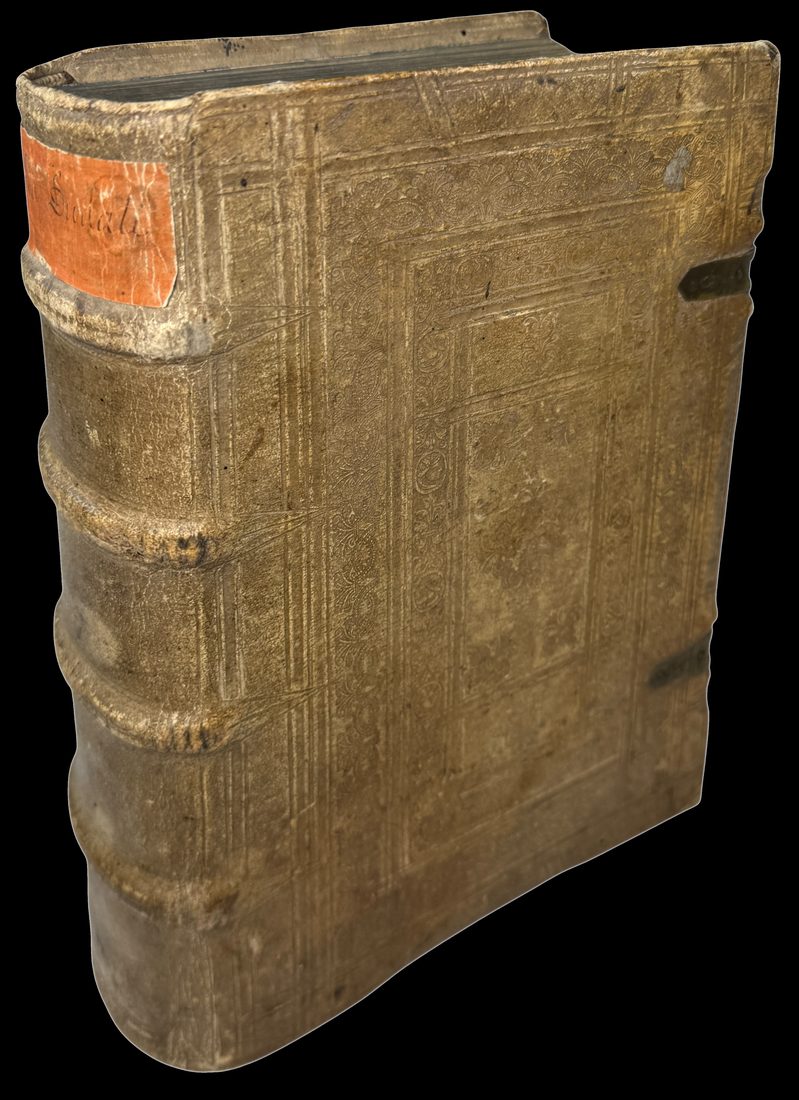
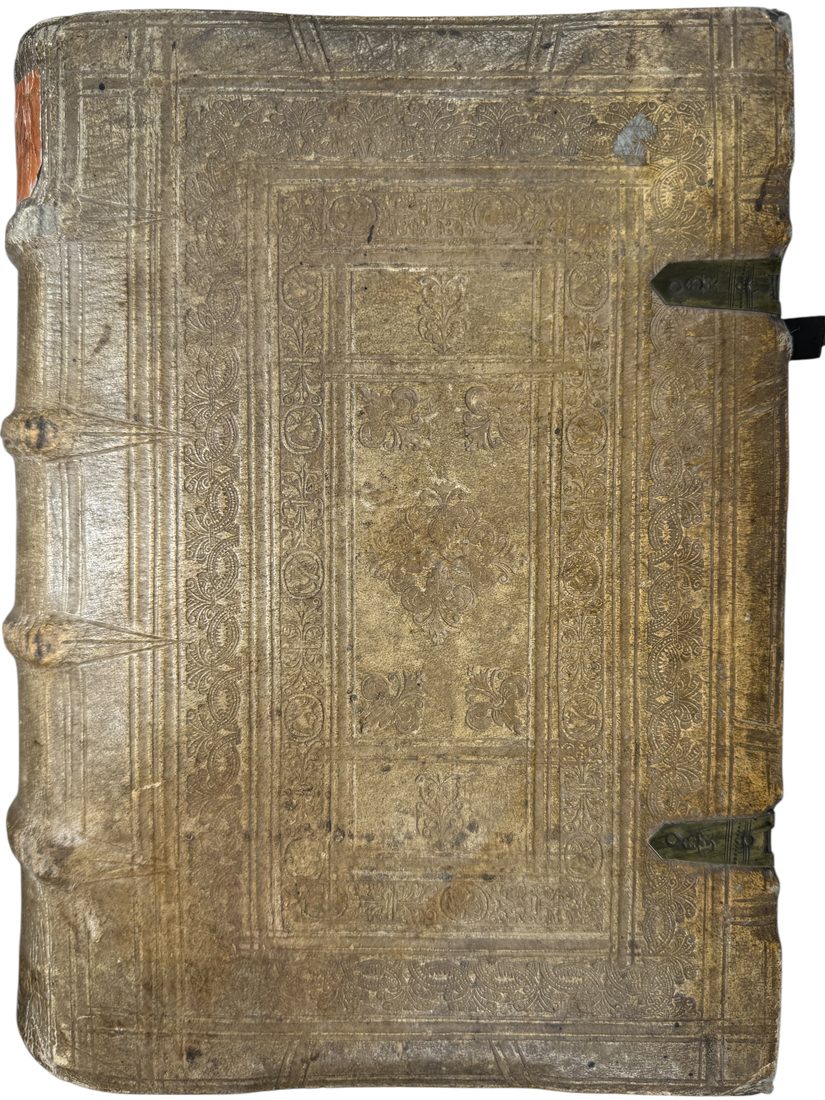
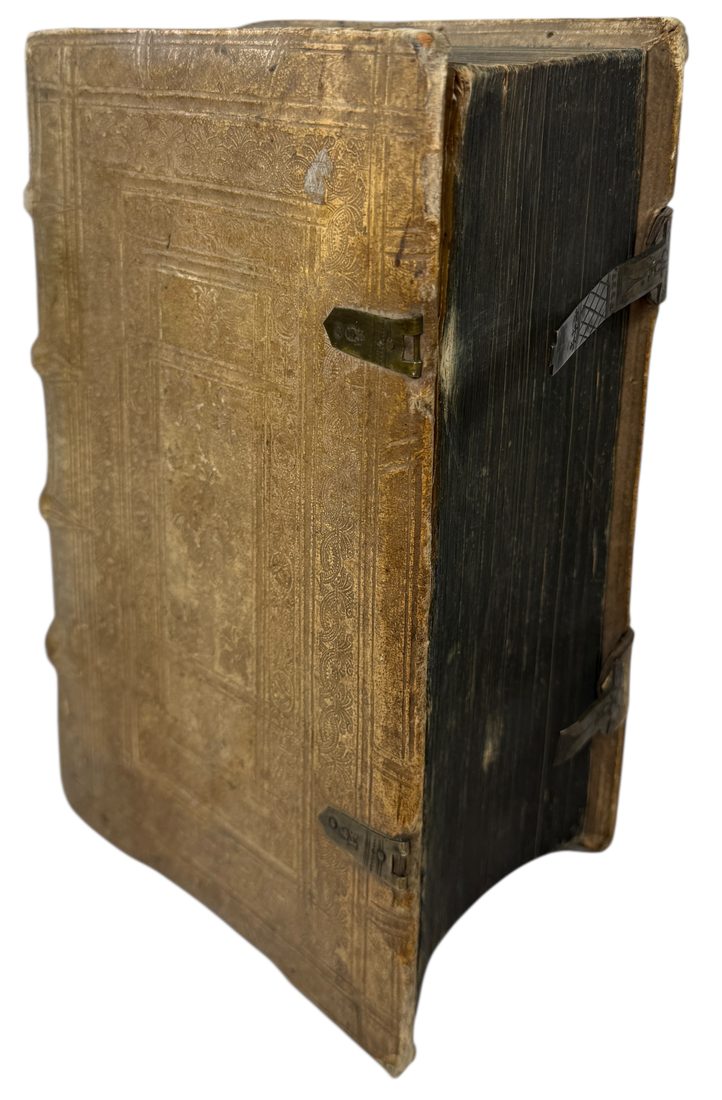
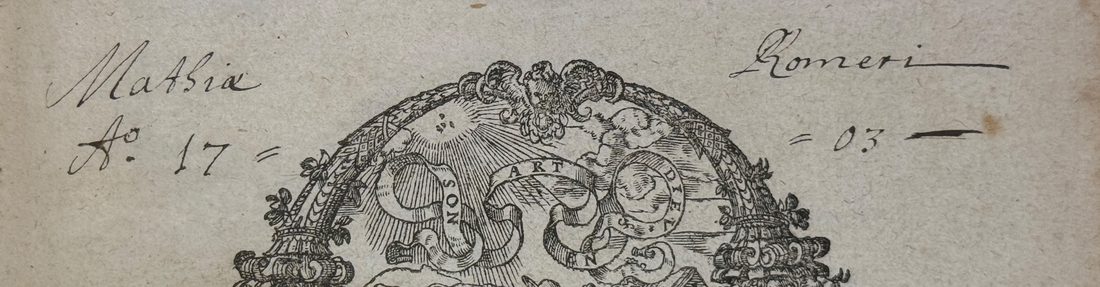
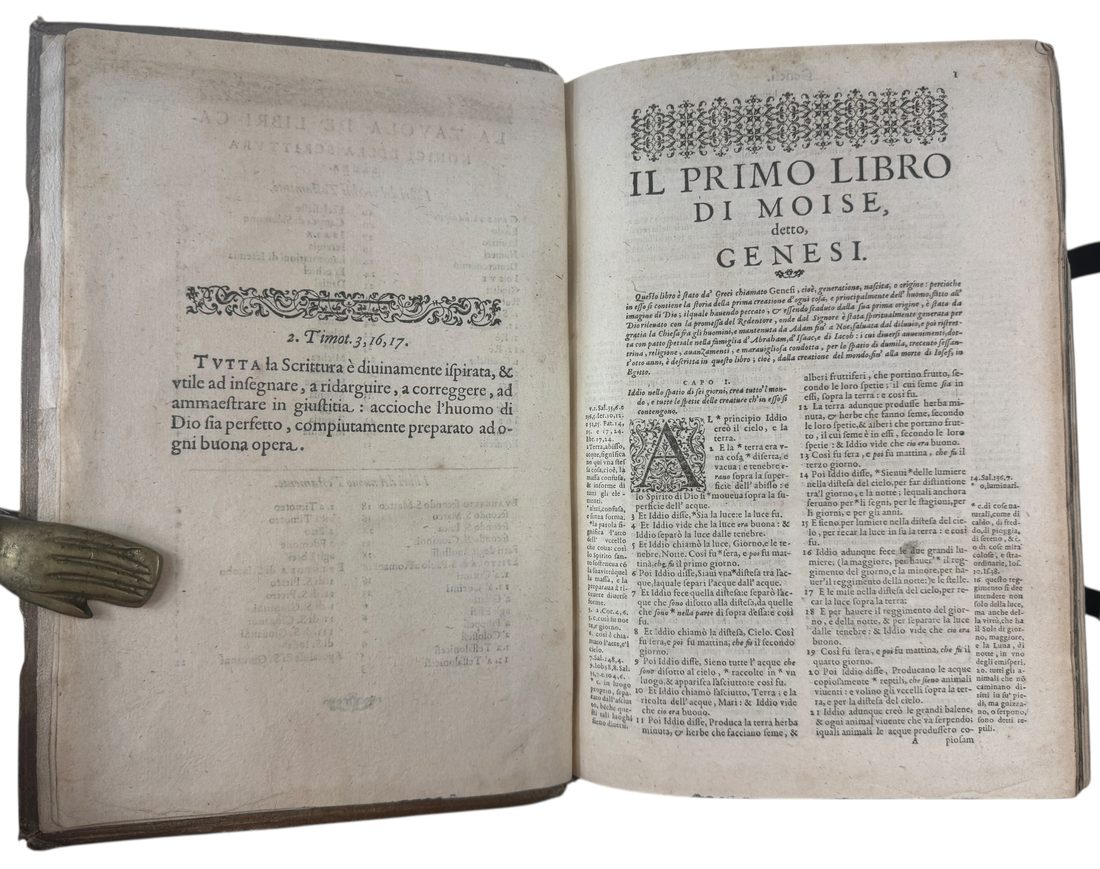
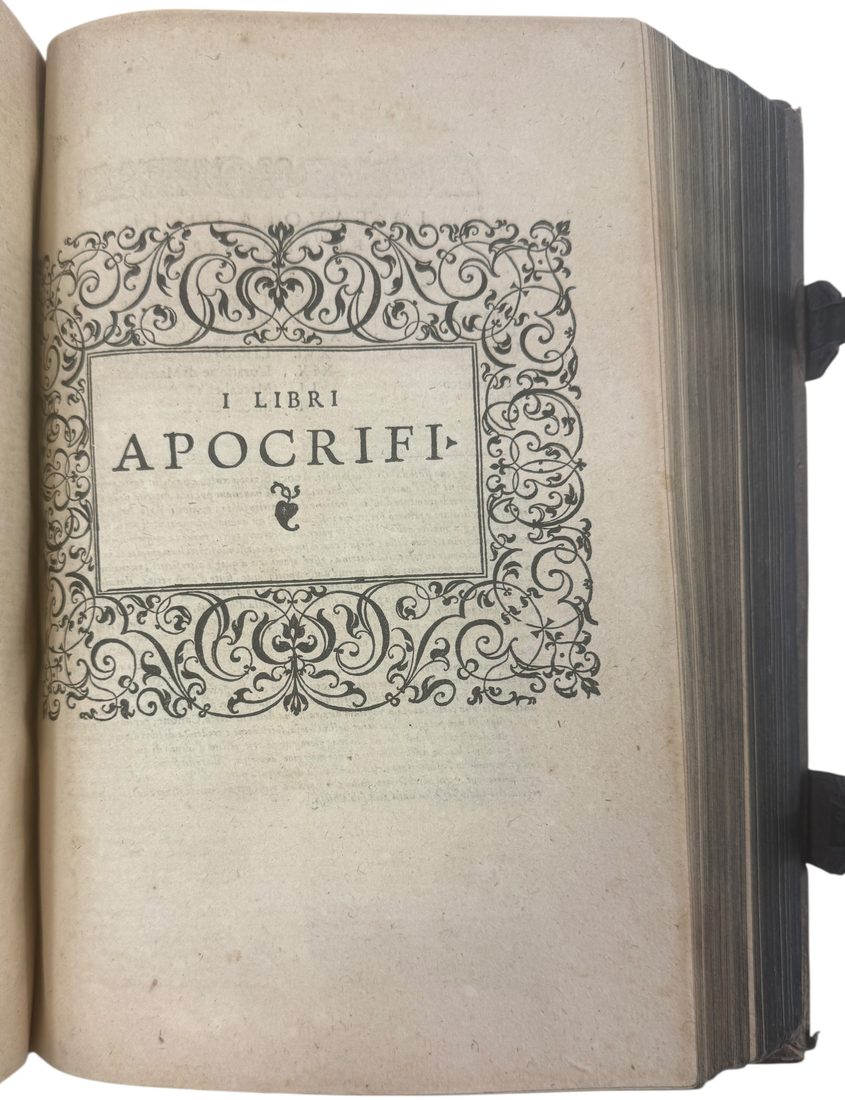
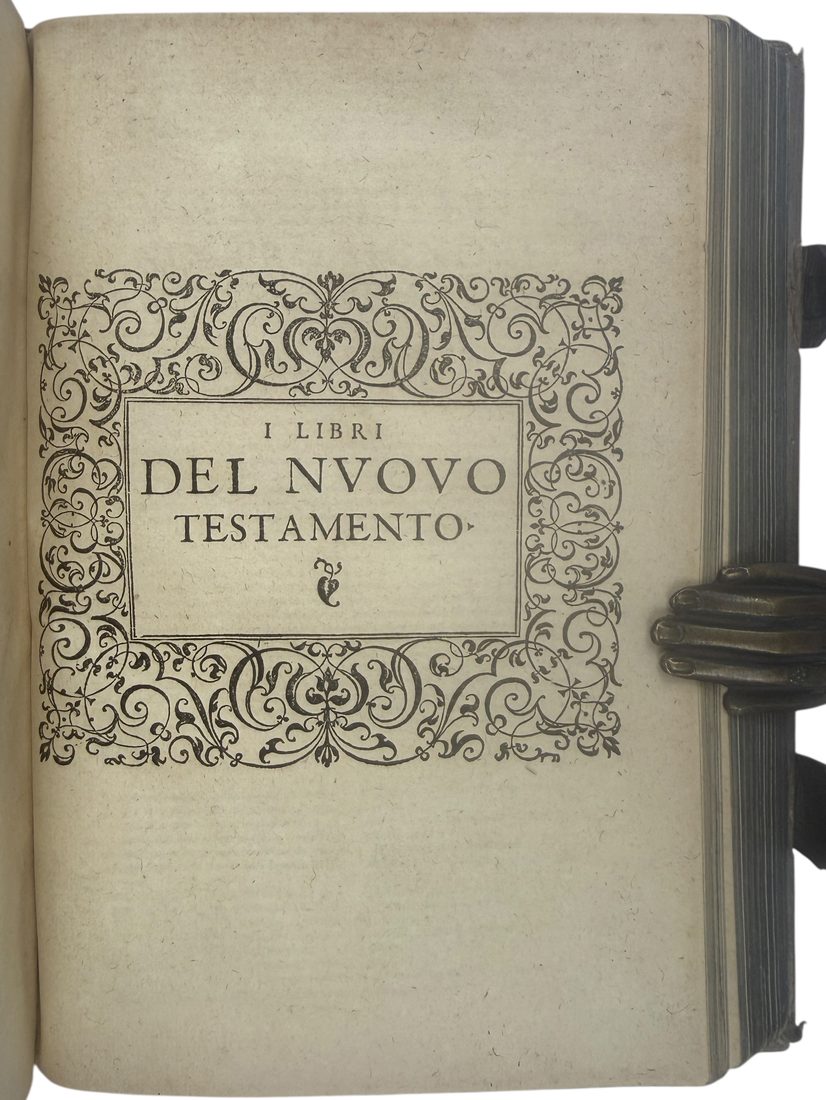
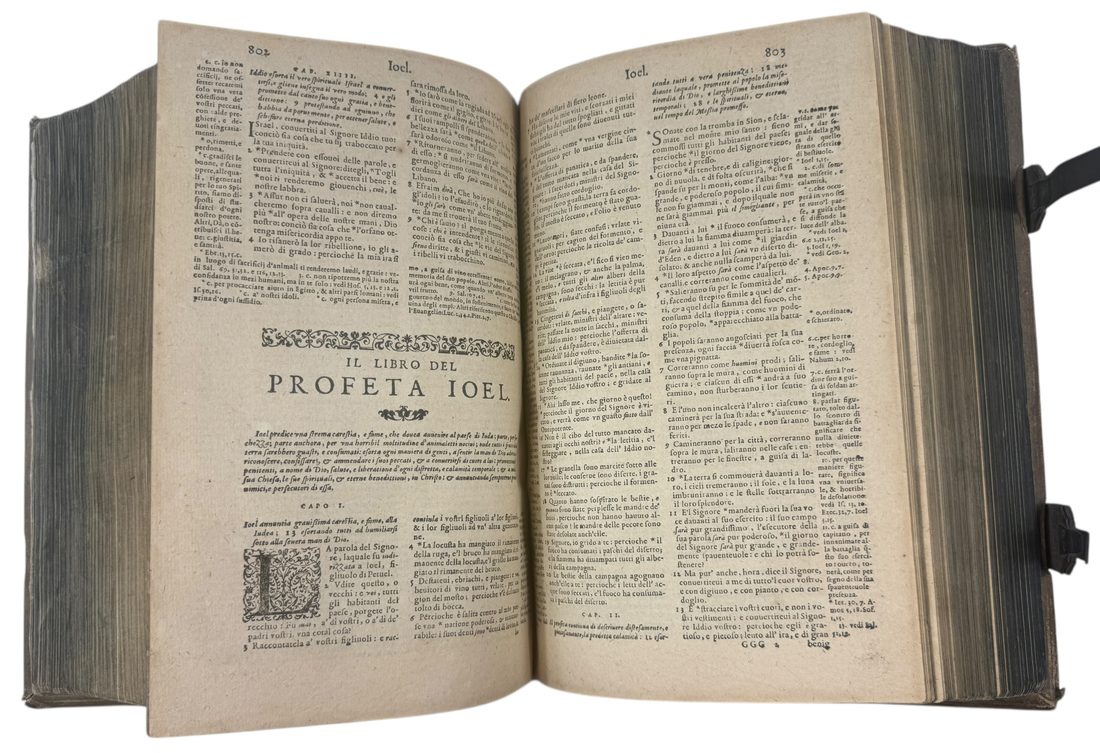
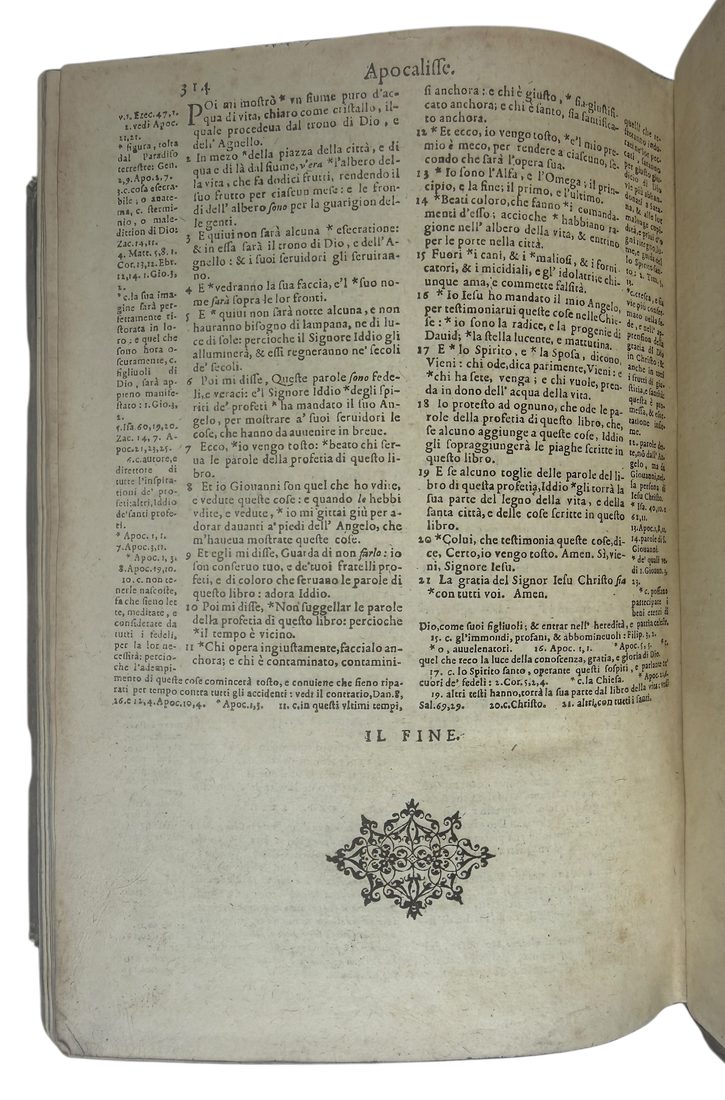
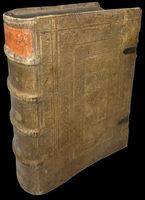
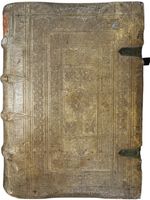
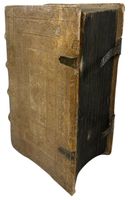
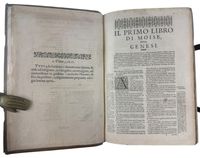
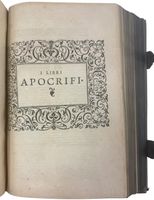
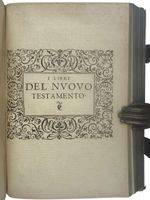
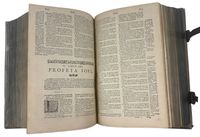
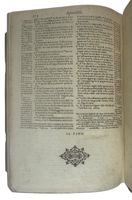
4to (254 × 172 mm), contemporary blind-stamped pigskin binding over beveled wooden boards, edges stained dark blue, later paper label with title on the spine, original clasps with terminal elements lacking, pp. [4], 847, [1], 178, [2], 314, [2]. Printed in Roman and italic types, text set throughout in two columns, with extensive printed marginal notes; Hebrew and Greek characters used sporadically within the apparatus. Title page with large xylographic printer’s device depicting the “Sower,” accompanied by the motto Son Art en Dieu (“His art is in God”), anagram of the printer’s name Jean de Tournes, (Mellot–Queval, no. 3668). Separate divisional title pages for the Apocrypha (f. ²2A1) and the New Testament (f. ³3A1r), each within ornamental woodcut borders. Decorative woodcut initials, xylographic headpieces and tailpieces throughout. Signatures: π² A–B⁸ C–Z⁴ a–2z⁴ 2A–3M⁴ ²2A–²2Y⁴ ²2Z² ²3A–²3Z⁴ ³3A–³3Q⁴ ³3R²; ff. c. 3M4v, 2Z(zZ), and 3R(rRr)2 are blank.
This copy belongs to the so-called Variant B, in which neither the place of printing nor the publisher’s name appears on the title page. Variant A bears the imprint “In Gineua: appresso Gio. di Tornes, 1607,” while Variant C includes the place of printing “In Geneva” printed before the date.
The 1607 Geneva Bible translated by Giovanni Diodati represents a decisive milestone in the history of Italian biblical literature being the first complete Bible in Italian translated directly from the original Hebrew and Greek sources, rather than mediated through the Latin Vulgate, and the first conceived explicitly within a Protestant, Calvinist theological framework. Earlier Protestant translations into Italian had been produced by Antonio Brucioli in 1530 and by Massimo Teofilo in 1552; however, these relied in significant measure on secondary textual traditions. Diodati, by contrast, approached the biblical text with a rigorous philological method grounded in his academic formation, aiming at doctrinal precision, linguistic clarity, and exegetical reliability.
From its first publication, Diodati’s Bible became the reference version for Italian Protestantism, particularly within Reformed communities. Its authority was reaffirmed through successive revisions published in 1641, 1712, 1744, 1819, and 1821, attesting to its enduring normative role. In the twentieth century, this tradition was consciously continued through the Nuova Diodati, issued in 1991 as a modernized linguistic revision explicitly aligned with the original 1607 translation.
The cultural and religious importance of such a vernacular Bible must be understood in relation to a fundamental tenet of Protestant theology, shared by both Lutheran and Calvinist traditions: the conviction that Holy Scripture constitutes the supreme authority in matters of faith and must therefore be accessible to all believers. Reformation theology consistently affirmed that the reading and interpretation of the Bible should not be mediated exclusively by ecclesiastical authority but entrusted to the individual conscience instructed by the Word. Translations into the vernacular, produced from the original Hebrew and Greek texts, were thus regarded as essential instruments for authentic doctrinal understanding, personal devotion, and communal religious life.
Within this framework, the availability of a complete Bible in a language intelligible to the faithful played a decisive role in shaping Protestant culture. It fostered literacy, encouraged private reading and study, and supported the development of preaching, catechesis, and education grounded directly in Scripture. For Italian-speaking Protestants, particularly those living in exile in Swiss territories, Diodati’s Bible provided not only a reliable textual foundation for worship and teaching, but also a powerful means of cultural cohesion and religious self-definition, anchoring confessional identity in a shared and authoritative vernacular text.
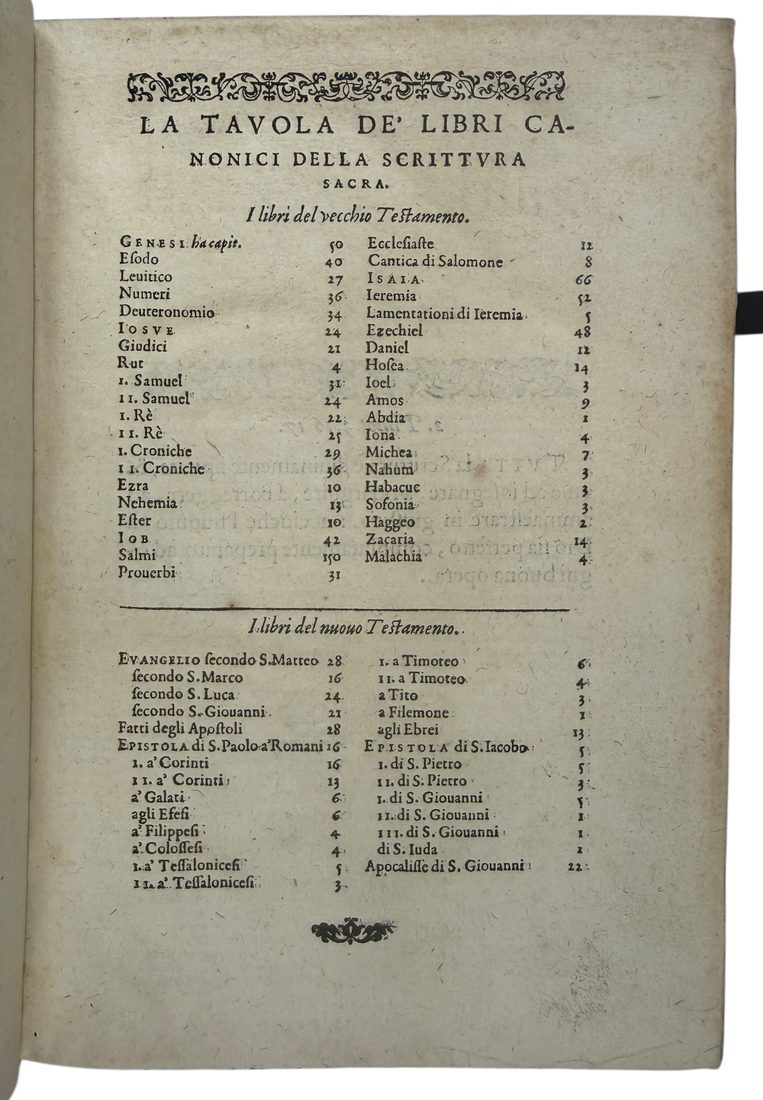
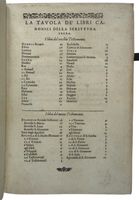
The volume follows the canonical order of the Scriptures as received in the Reformed tradition, opening with the Old Testament, continuing with the books commonly designated as Apocrypha, and concluding with the New Testament. Each of these major textual corpora is introduced by a distinct divisional title page, while the internal typographical organization remains uniform throughout the volume, with a consistent two-column layout designed to facilitate continuous reading, comparison, and reference.
A defining feature of this first edition is the systematic presence of marginal notes accompanying the biblical text, serving primarily an exegetical and doctrinal function, offering clarifications of meaning, cross-references to parallel passages, and interpretative indications aligned with Reformed theology. Their function is pedagogical rather than polemical, reflecting the intended use of the volume for study, catechesis, preaching preparation, and private devotion within Italian-speaking Reformed communities.
The Apocryphal books are physically integrated into the volume as a distinct and clearly delimited section, introduced by their own ornamental title page. Their inclusion corresponds to established Protestant editorial practice of the late sixteenth and early seventeenth centuries, which preserved these texts for historical and moral reading while explicitly distinguishing them from the Hebrew canon and from doctrinally normative Scripture.
The publication of Diodati’s Italian Bible in Geneva in 1607 must be situated within the wider history of Italian Protestant exile and confessional consolidation. For Italian-speaking Protestants, many of whom had sought refuge in Switzerland to escape religious persecution, the availability of a complete Bible in their own language, translated from the original sources and aligned with Reformed theology, was of fundamental importance. This Bible functioned as a central socio-cultural instrument for Italian Protestant communities, particularly in Geneva, Zurich, Basel, and other Swiss centers. It provided a shared textual foundation for worship, education, and private devotion, while simultaneously reinforcing linguistic continuity and collective identity among displaced believers.
Closely connected to this socio-cultural role is the significance of Geneva itself as a center of theological authority and print production. As a principal hub of Calvinist scholarship and one of the most active printing centers of early modern Europe, Geneva enabled the production, control, and dissemination of texts that could not be safely printed or circulated in Catholic territories. Within this framework, Diodati’s Bible stands as a material expression of exile culture, scholarly theology, and disciplined Reformed print practice.
From an artistic and material perspective, the volume reflects Reformed aesthetic principles. The clarity of layout, restrained ornamentation, and emphasis on legibility and navigability privilege study and comprehension over visual display, aligning the book’s physical form with its theological purpose.
Giovanni Diodati was born in Geneva in 1576 to a family of Lucchese origin that had fled Italy for religious reasons. He was educated at the Genevan Academy, where he distinguished himself through exceptional linguistic abilities, particularly in Hebrew and Greek. At the age of twenty-one, he was appointed professor of Hebrew, later becoming professor of theology and serving as pastor.
Diodati participated in the major theological debates of his time and was present at the Synod of Dort, aligning himself firmly with Reformed orthodoxy. His intellectual profile combines academic philology, confessional rigor, and pastoral intent, a synthesis that explains the enduring influence of his biblical translations.
The Italian Bible of 1607 represents the cornerstone of his scholarly legacy. It was followed by a thoroughly revised Italian edition in 1641 and by a French translation of the Bible published in 1644, confirming Diodati’s stature as a European figure in early modern biblical scholarship.
Conditions: Clasps broken; internally perfectly preserved.
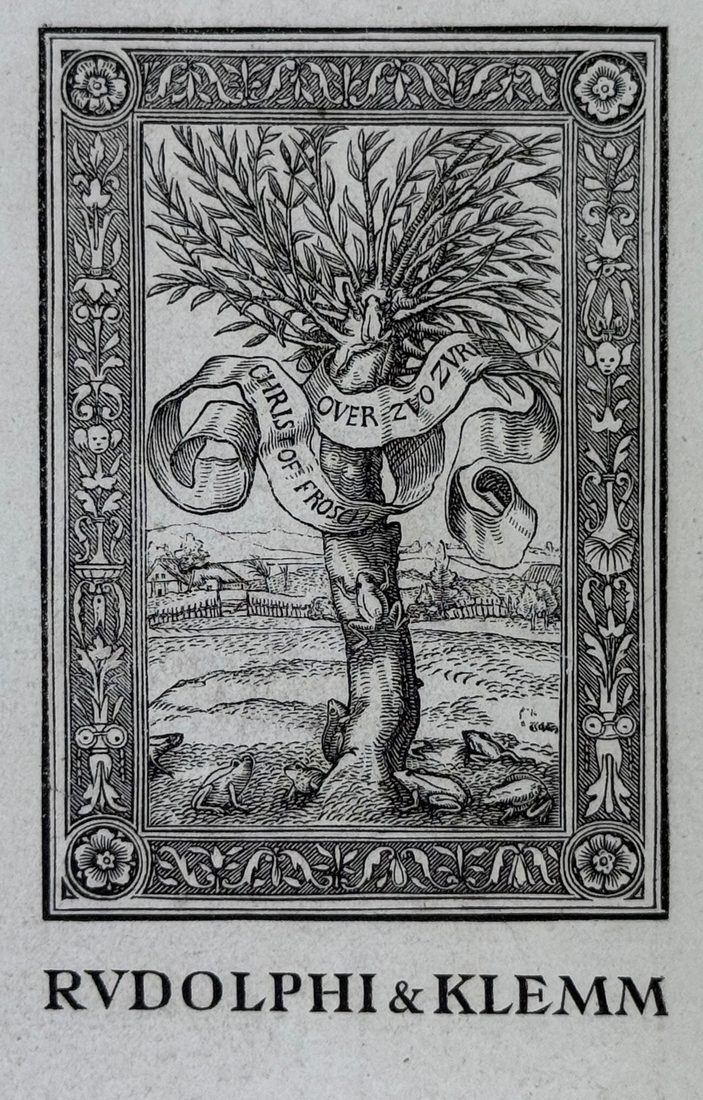
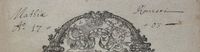
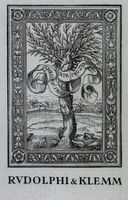
Provenances: 1. Engraved pictorial bookplate of Rudolphi & Klemm, at inside front board. 2. Handwritten ownership signature Mattiae Romeri A. 1703 at title page. 3. From the collection of Dr Charles Caldwell Ryrie (1925–2016), American biblical scholar, former dean of doctoral studies at Dallas Theological Seminary, and distinguished collector of rare Bibles.
References: T. H. Darlow, H. F. Moule, Historical Catalogue of the Printed Editions of Holy Scripture in the Library of the British and Foreign Bible Society, London:British and Foreign Bible Society, 1903: no. 5598; K. J. Lüthi, Bibel in der Schweiz und in der Welt, Bern: Schweizerische Landesbibliothek, 1931: pp. 58–59; V. R. Hotchkiss, C. C. Ryrie, Formatting the Word of God: The Charles Caldwell Ryrie Collection, Dallas: Bridwell Library, 1998: no. 6.8; J. F. Cartier, Bibliographie des éditions des de Tournes, Genève:Droz, 1937: no. 731; J. D. Mellot, E Queval, Répertoire d’imprimeurs/libraires XVI-XVIII siècle, Paris: Bibliothèque nationale de France, 1997.