Del vino di Cipro
| Macro-category | Rare Books and Manuscripts |
| Subcategory | Gastronomy |
| Author | MARITI, GIOVANNI |
| Place of printing | Firenze |
| Publisher / Maker | G. Cambiagi |
| Year | 1772 |
Extraordinary rare first edition
of the famous treatise on Cyprus wine by Giovanni Mariti
A complete analysis on wines, grapes, vines and production techniques
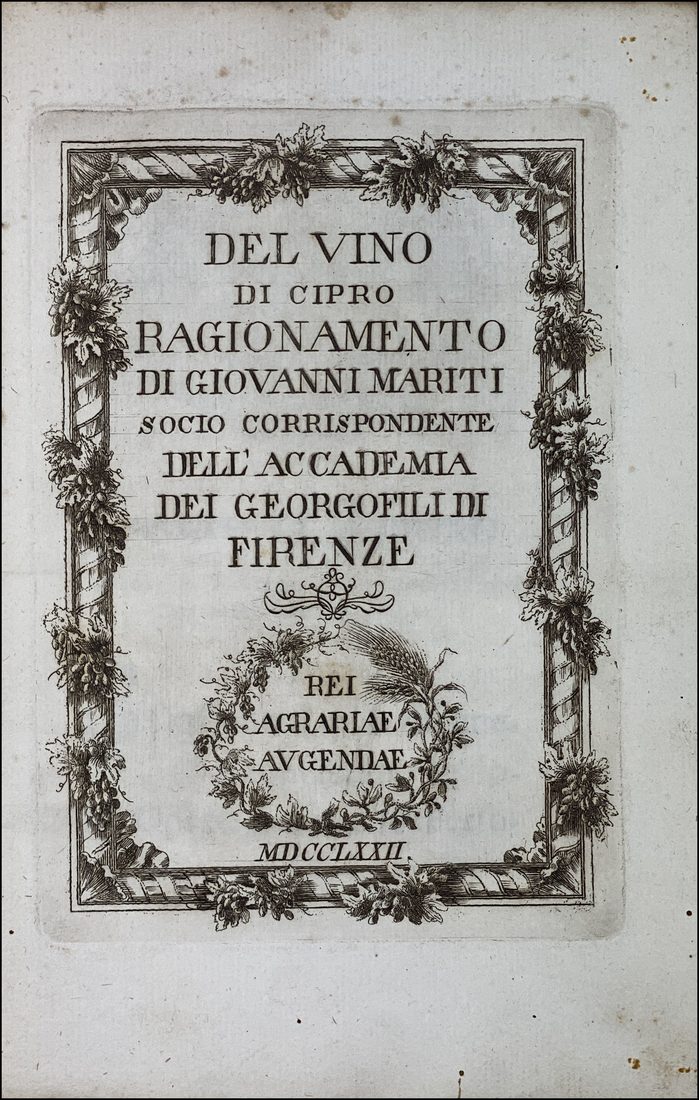
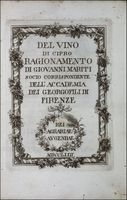
Mariti, Giovanni. Del vino di Cipro, ragionamento di Giovanni Mariti, socio corrispondente dell'Accademia dei georgofili di Firenze: Rei agrariae avgendae. [Firenze] : [G. Cambiagi] MDCCLXXII [1772].
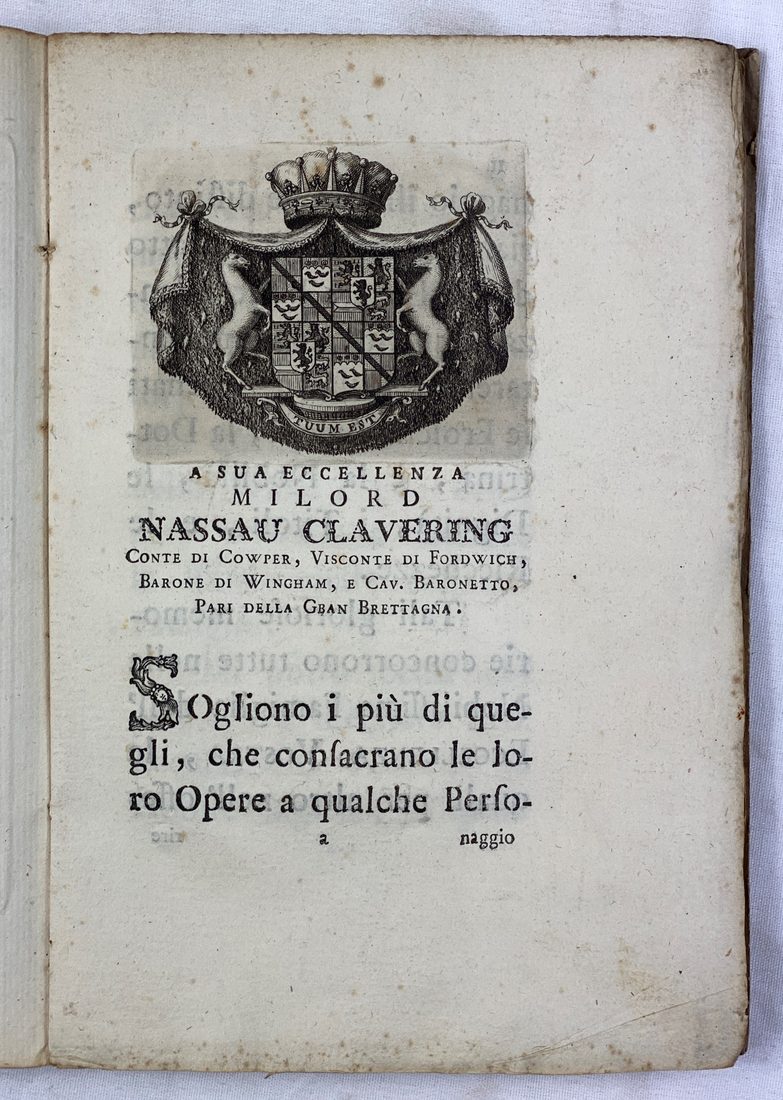
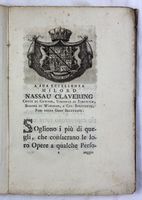
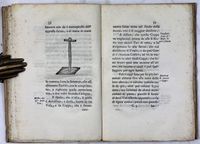
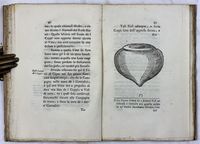
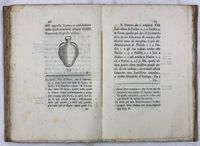
8vo, (220 x 155 mm), original printer cardboard, pp. [2], XVI, 127, [1], illustrations along the text, engraved title page, before the dedicatory letter, at leaf a1r, a chalcographic vignette with coat of arms of the dedicatee, Lord Nassau Clavering, signature a⁸ (π+a1) A-H⁸.
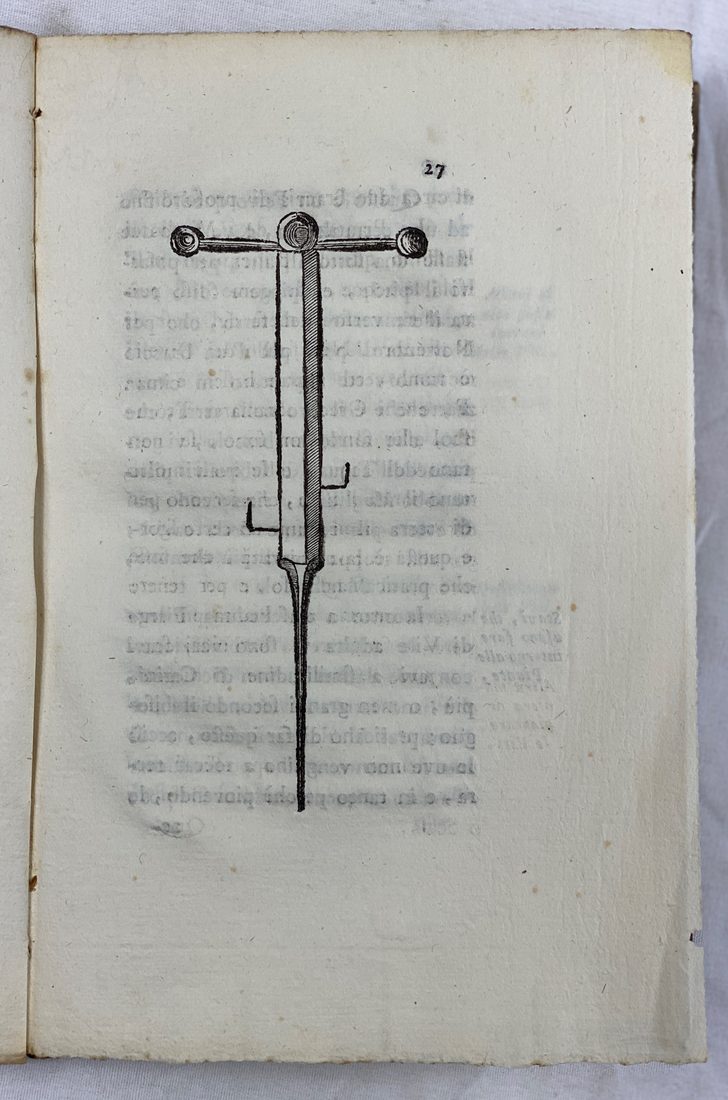
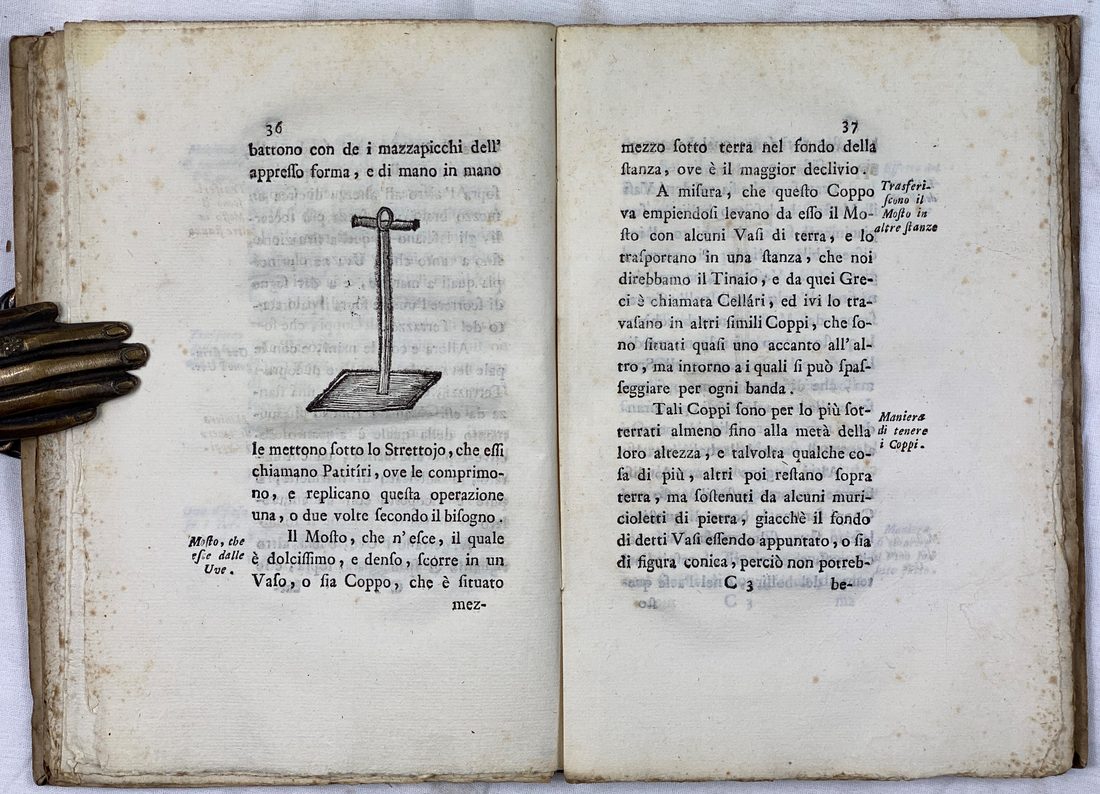
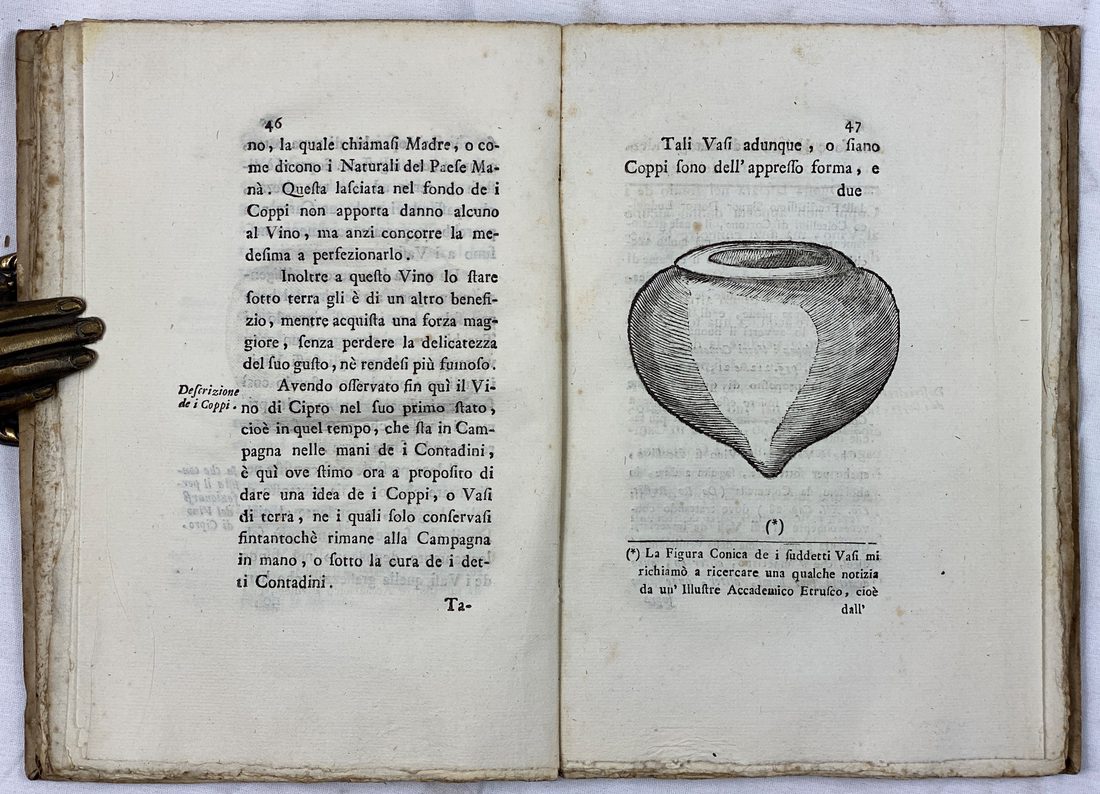
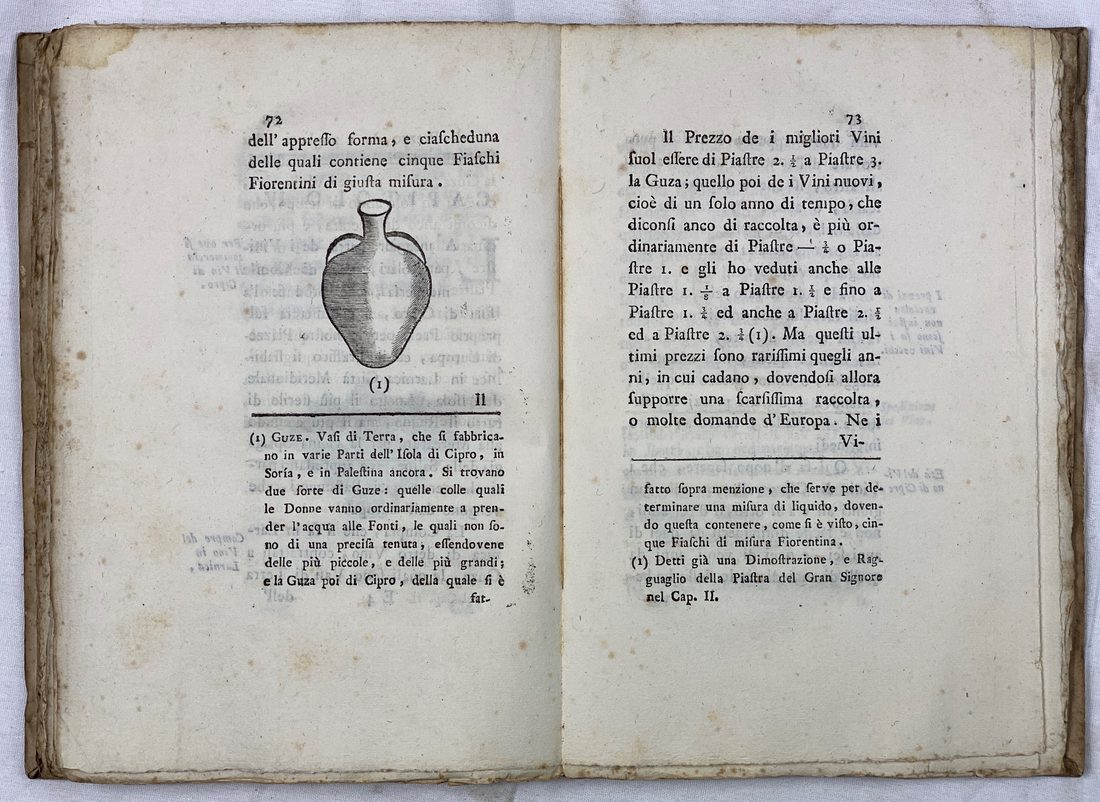
xylographic illustrations along the text
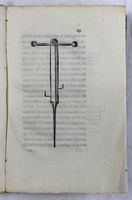
one full page plate, depicting tool for wine production
In his treatise Del vino di Cipro (About the Cyprus Wine) , published in Florence in 1772 by Cambiagi, Mariti dedicates an ample analysis to the wine of Cyprus, discussing a lot about the types and varieties of the vines and wines produced in the different regions of the island and reporting its own "observations" made in the countryside around Larnaca, where it draws indications and procedures to follow in Italy too, to reach the maximus possible efficiency of the crops, as Mariti himself well describe in the Preface to the volume:
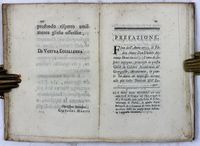
“In questo mio Ragionamento ho avuto il riflesso di appagare non solo la curiosità di qualche dilettante, de i grati, e generosi Vini di Cipro, e di dar la norma per qui allignarli, ma ancora di poter giovare alla Coltivazione, alla Manifattura, e alla Conservazione de i nostri Vini Toscani, e particolarmente per migliorare alcuna sorta di quegli, che oggigiorno sogliono qui farli in scelta maniera, il che mi lusingo possa ottenersi dal genio de i nostri Agricoltori (Mariti, 1772, p. 3). (In this reasoning I had the will to satisfy not only the curiosity of some amateur of the grateful, and generous Wines of Cyprus, giving the rules to list them, but also to be able to improve the Cultivation, the Manufacture, and the Conservation of our Tuscan Wines, and particularly to improve the quality of the wines produced there, using the support from the genius of our Farmers)”
More in details he starts addressing the issue of the poor resistance of Tuscan wines to navigation, deepening the observations already published in the first volume of his “Travels in Cyprus”. Mariti, studying grapes and winemaking processes in use in Cyprus, gives an account of the island's wines, distinguishing them by types, based on the quality of the grapes, the length of the aging process and their conservation, and also giving data and figures relating to the sale of the product both in the East and in the West.
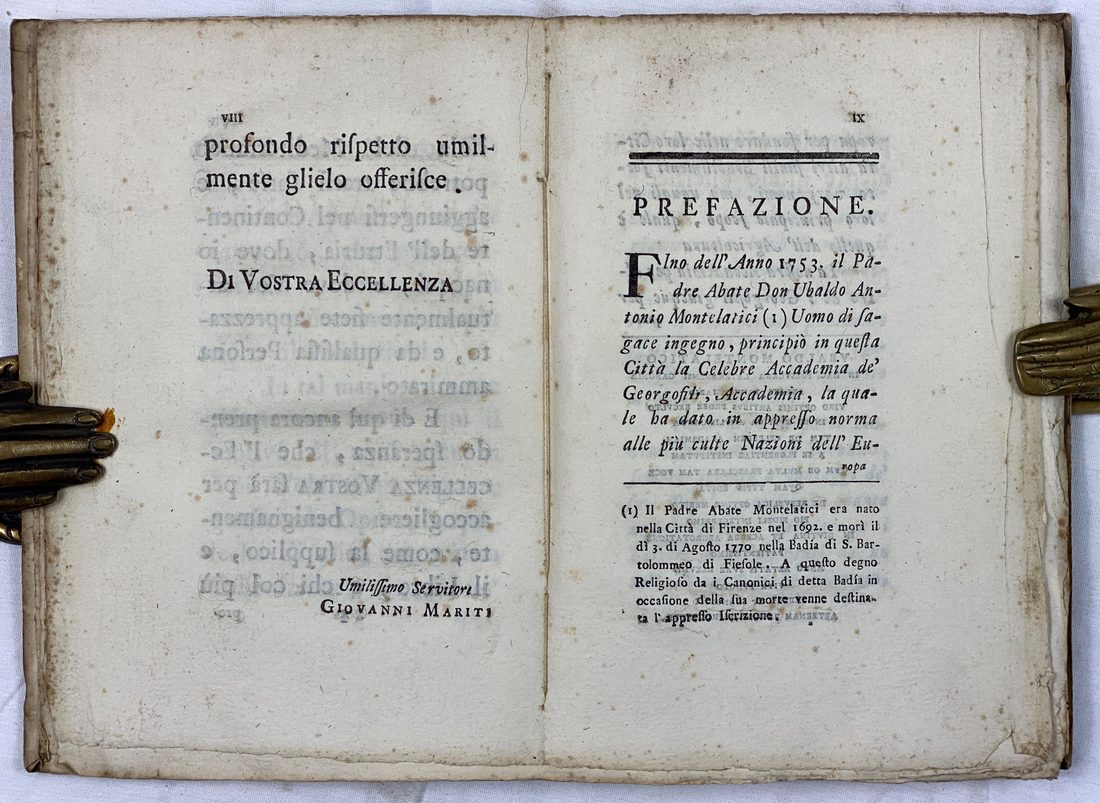
Mariti dedicated this essay on the wines of Cyprus to Lord Clavering, whose arms are engraved at the top of the first leaf of the dedication. The preliminary leaves also include an account of the Accademia dei Georgofili, devoted to the study of agriculture, which was founded in Florence in 1753 and is still active today.
Giovanni Filippo Mariti (1736 –1806) he was an Italian antiquarian, scientist and historian. Intellectual with multiple interests, he became famous in Europe mainly for his travels in the East.
Mariti became interested since his youth in natural sciences, cultivating botany and especially agronomy studies, and in 1772 he became a corresponding member of the Accademia dei Georgofili, founded in Florence on July 4, 1753 by Ubaldo Montelatici, under the impulse of that renewal of agriculture that the Habsburgs-Lorraine hoped for and promoted to remedy the problems that arose in their lands, starting from the first decade of the second half of the century, regarding crops and food supplies.
Mariti lived for seven years at Larnaca in Cyprus, becoming honorary British vice-consul and became increasingly familiar with the wine-making process of the island. A shortened version of this treatise was included in the French translation of his “Travels in the Levant”.
Beside Del Vino di Cipro, he is remembered for the treatise titled Della Robbia sua coltivazione suoi usi, Florence, 1776, dedicated by Mariti to the Grand Duke of Tuscany Pietro Leopoldo, concerning a plant, the Robbia (Madder), cultivated in the East and used for the colouring of clothes, which Mariti hoped to introduce in Europe, and for Odeporico o sia itinerario per le colline pisane, which was published in Florence in two volumes, between 1797 and 1799.
The first volume of this work, (which remained partly unpublished) deals with the agricultural history of the Tuscan hills, the second is dedicated to the history of the water bath (today Casciana Terme). The two volumes are divided into chapters that take the form of letters written to an imaginary friend.
George Clavering-Cowper, 3rd Earl Cowper (1739 - 1789), was an English nobleman and politician. In 1780 he purchased Villa Palmieri in Fiesole, with a splendid view of Florence. Skilled diplomat and politician, he decided to obtain prestige by turning a blind eye on the relationship that his wife had established with the Grand Duke Pietro Leopoldo, from which he managed to obtain the title of Prince of Nassau d'Auverquerque.
The art collection that Count Cowper built during his years in Florence was a great investment of time and money for him. Among the most important works that were part of his collection we mention two paintings by Raphael, the first known with the name of Piccola Madonna Cowper and the other as Madonna Niccolini-Cowper.
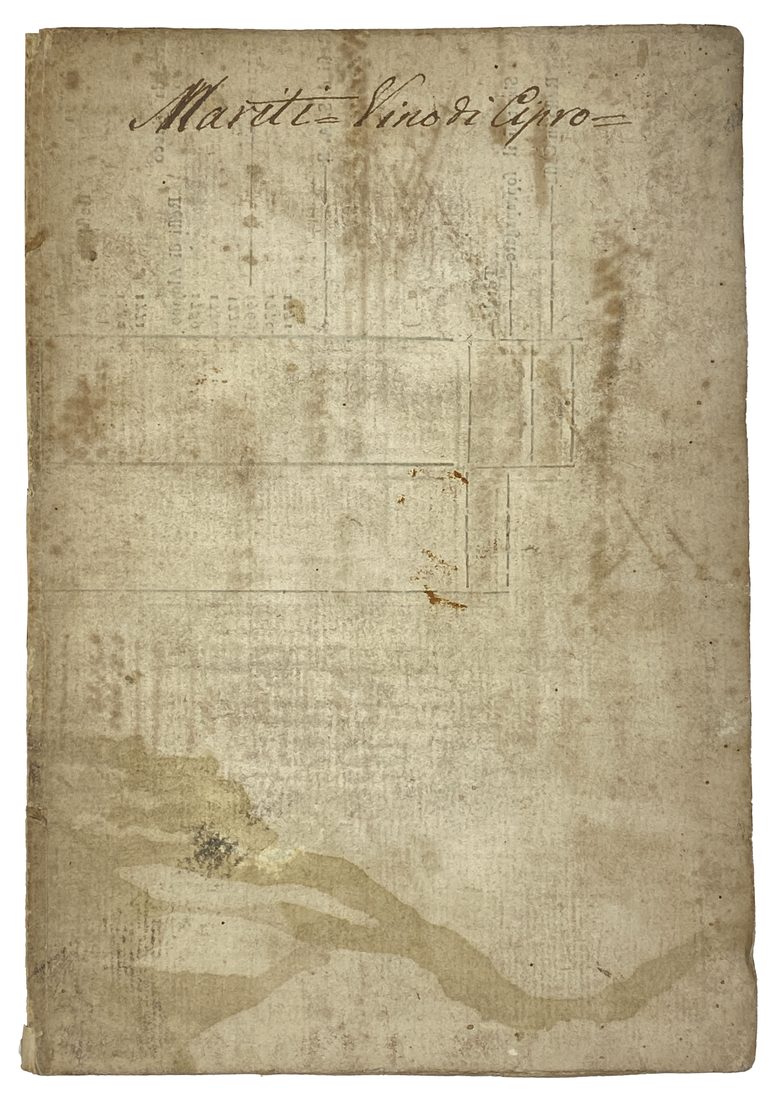
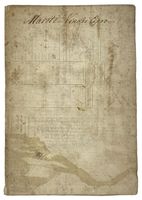
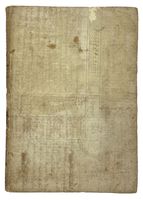
Conditions: fine copy, untrimmed, in its original printer paper board (small restoration at spine).
Provenance: I. Ownership signature dated 1868 at rear inside board. II. Handwritten title at front board and spine.
References: Lastri p.82; Sormanni, Bibl. Vinaria p. 139; Andre Simon, Bibliotheca Gastronomica, page 97, No 1002