Beatae Mariae Virginis officium
| Macro-category | Rare Books and Manuscripts |
| Subcategory | Manuscripts & Books of Hours |
| Author | Piazzetta, Giovanni Battista |
| Place of printing | Venezia |
| Publisher / Maker | Jo. Baptistam Pasquali |
| Year | 1740 |
the renowned «Libro D’ Ore Del Piazzetta»
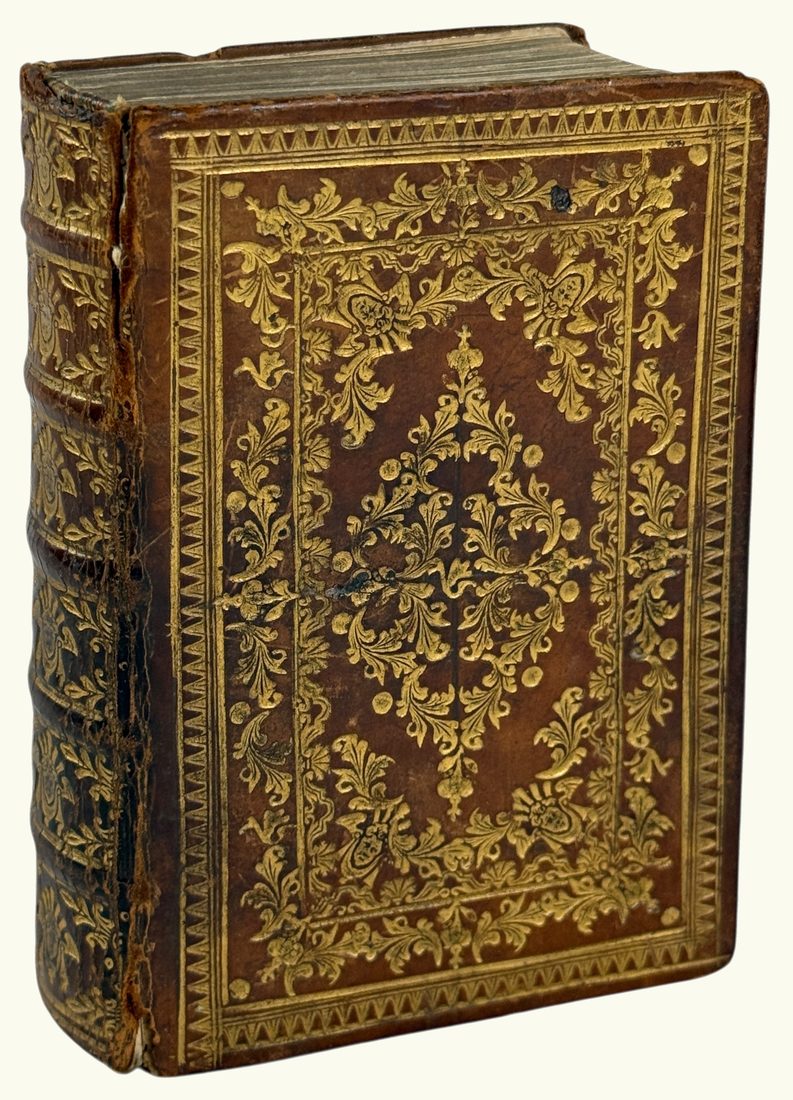
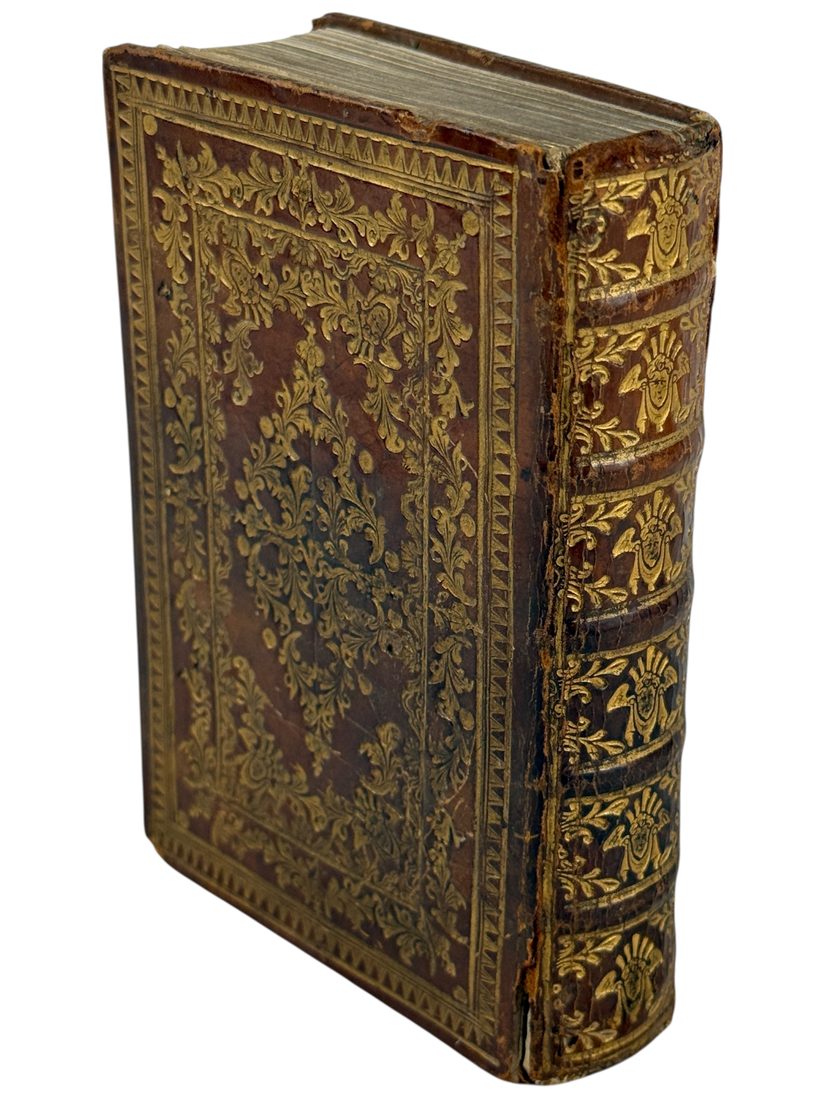
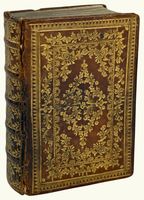
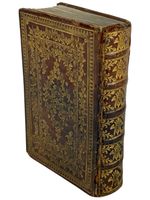
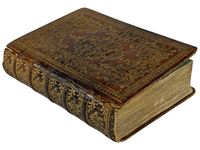
wonderful copy in its original Rococo venetian binding
first edition of one of the most desirable Venetian illustrated
books of the 18th century with an important provenance
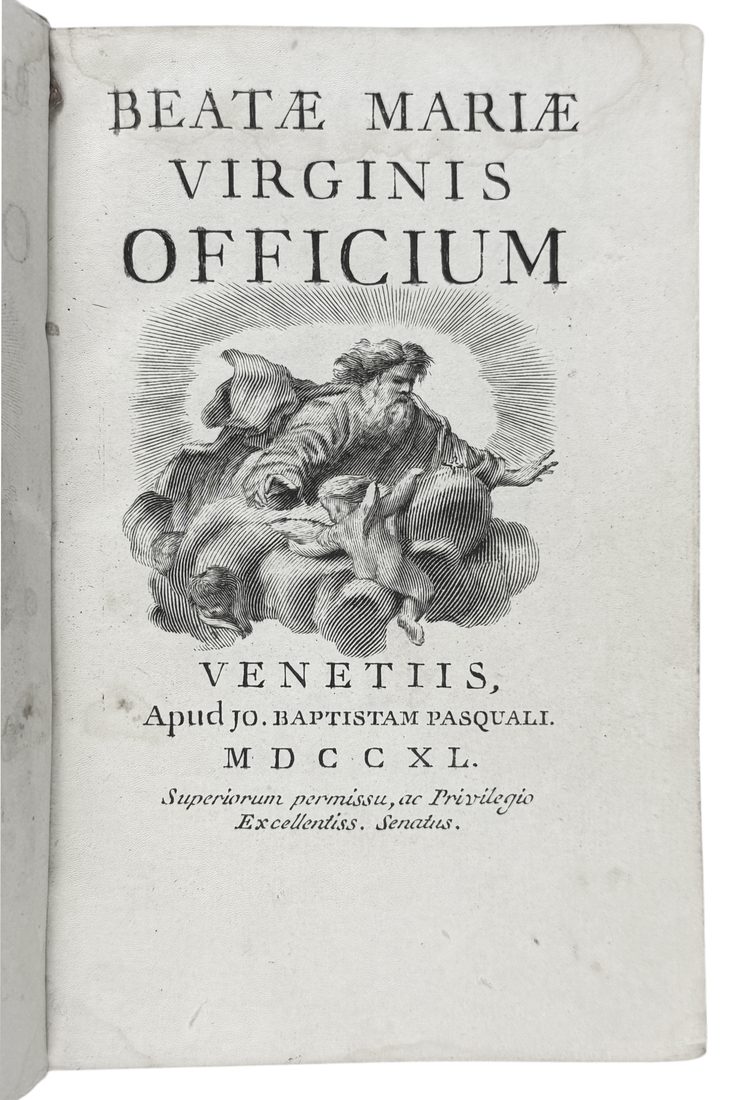
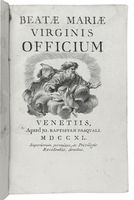
Beatae Mariae Virginis officium. Venetiis: Apud Jo. Baptistam Pasquali, MDCCXL [1740].
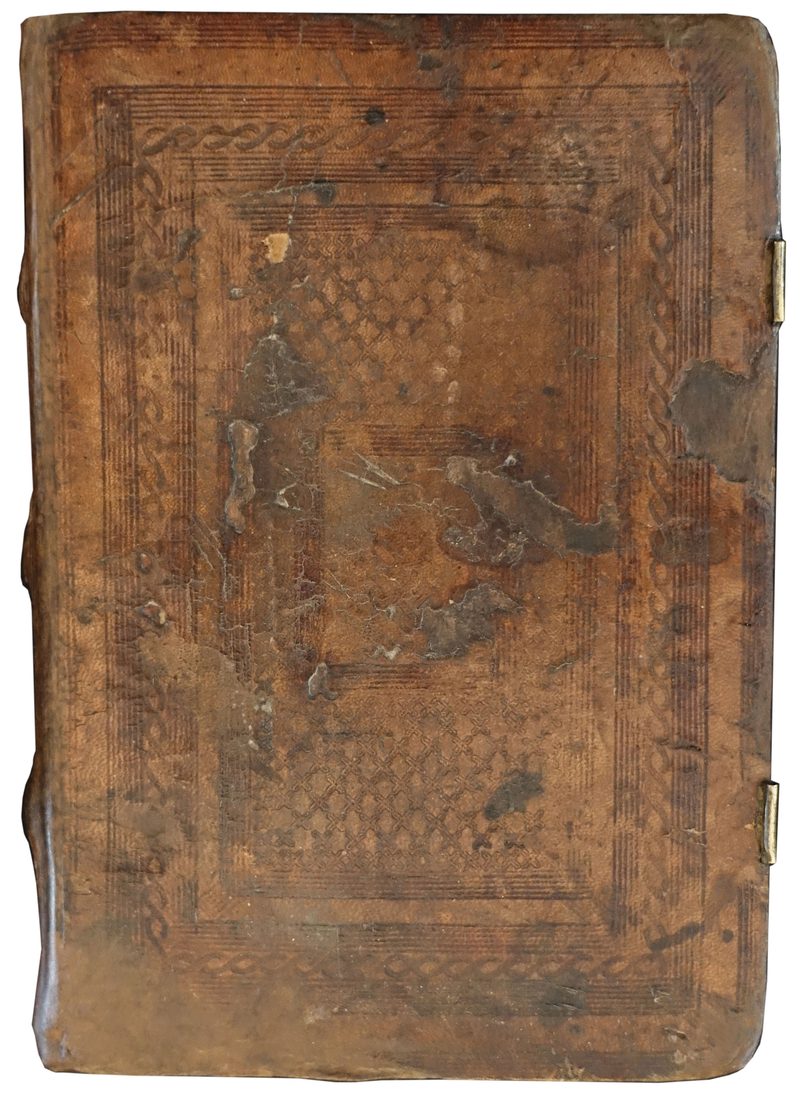
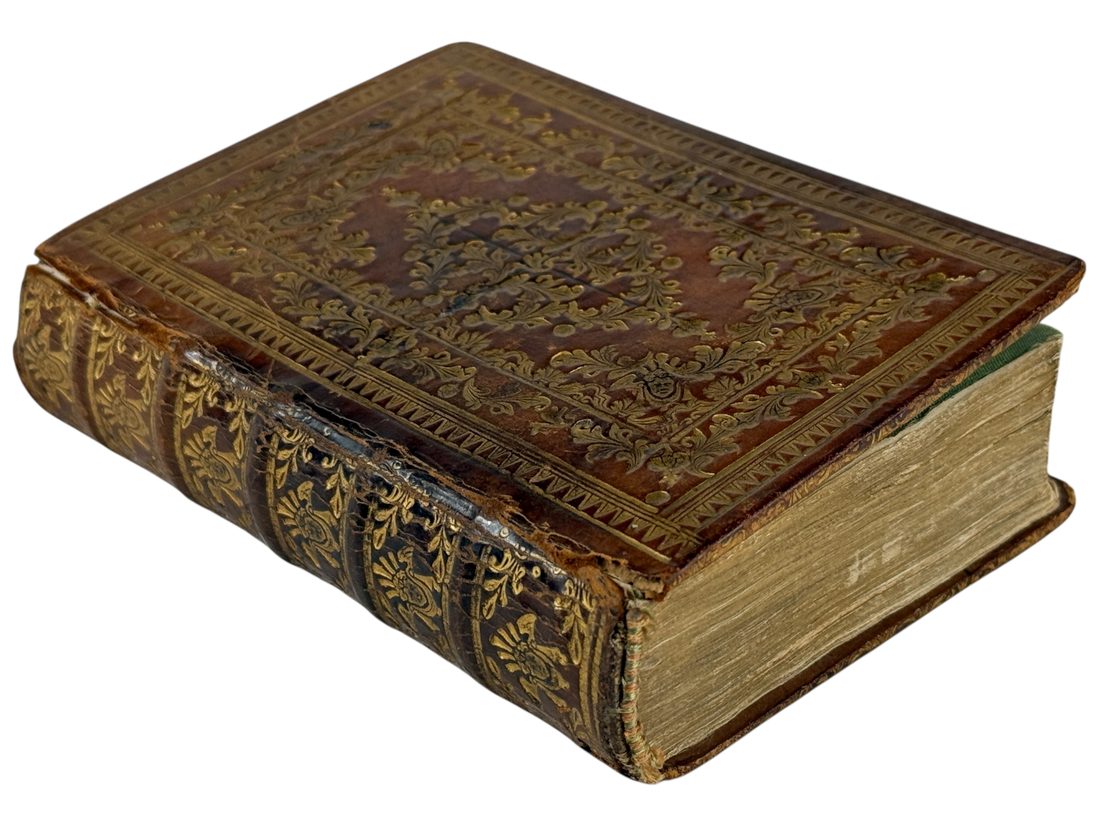
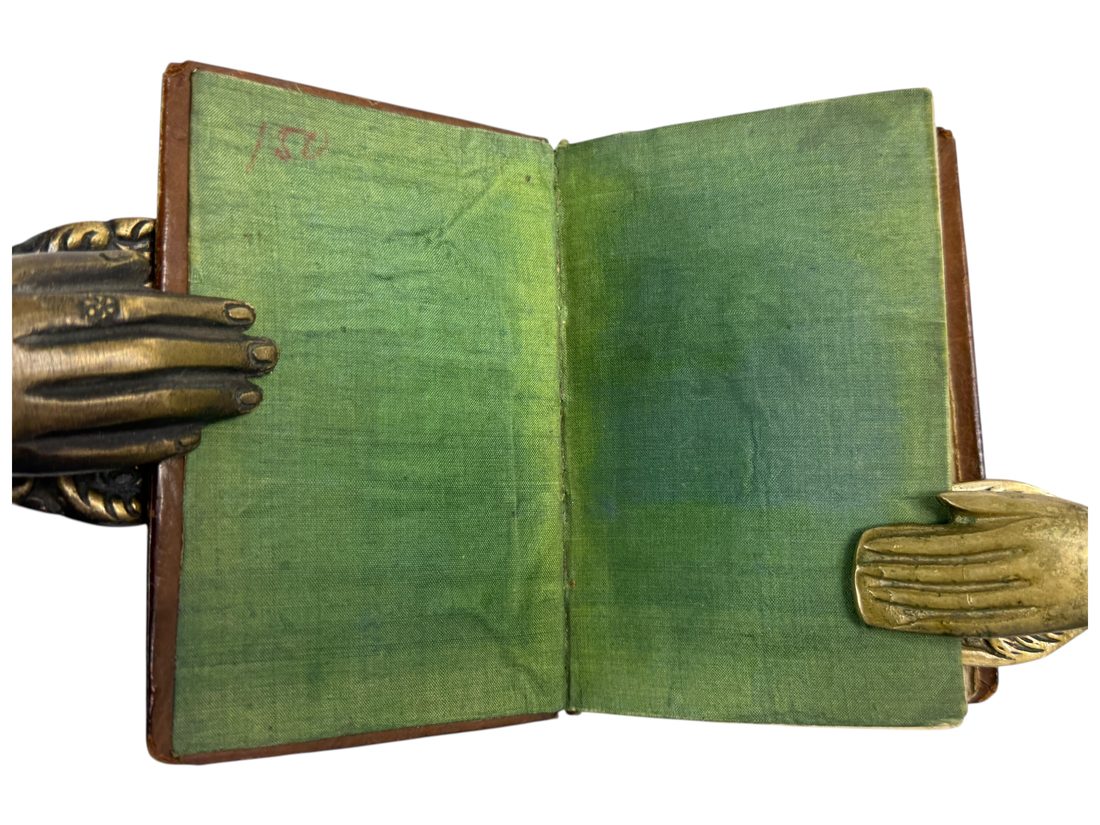
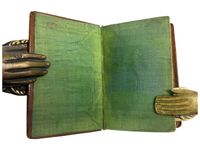
16vo (128 x 80 mm), contemporary Venetian Rococo style full brown leather binding, boards gilt with concentric frames of fillets and rolls, including an outer border of repeated triangular tools, an inner rocaille and foliate frame, and a central ornamental cartouche of foliated sprays; turn-ins gilt. Spine with raised bands, compartments gilt with a repeated small tool featuring a radiant face within foliate sprays. Doublures and flyleaves in green velvet, pp. [40], 427, [5], printed on precious thin paper, engraved frontispiece and vignette on title page. Signature: π4A-2F8.
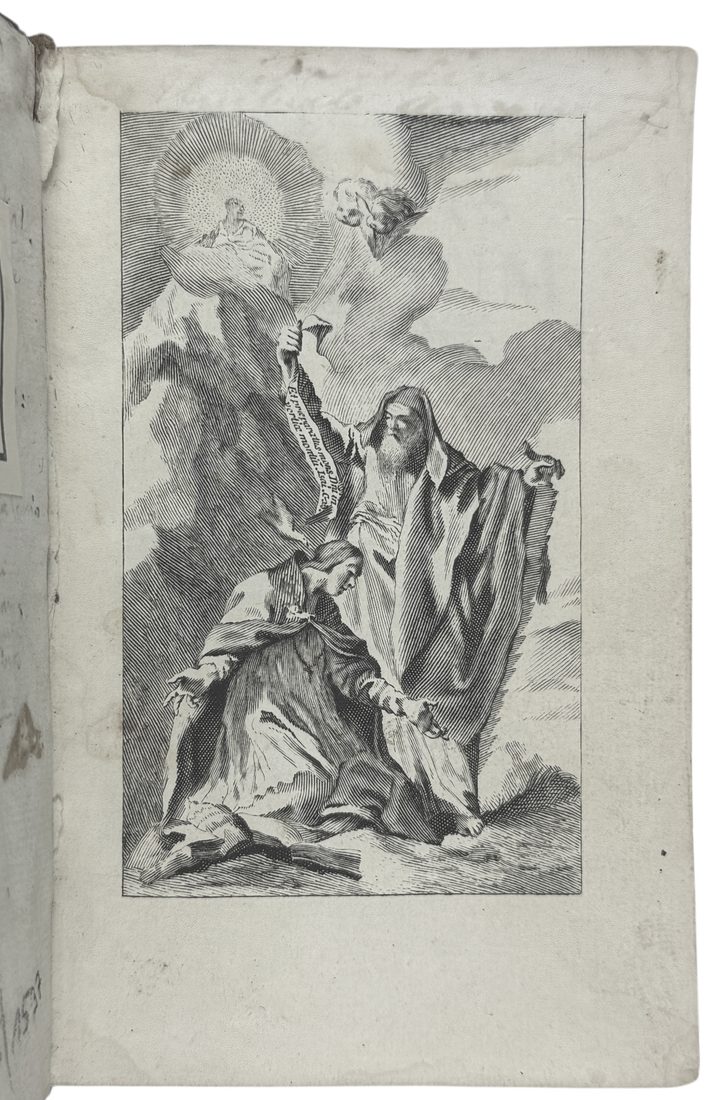
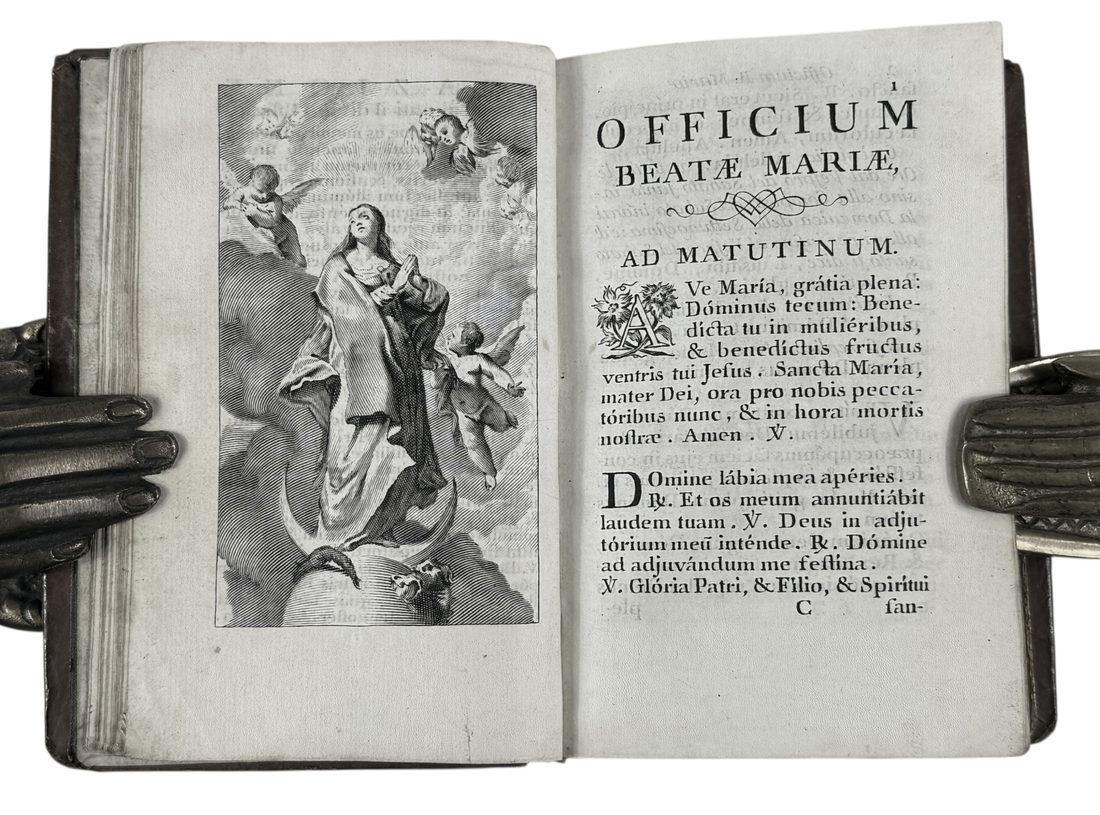
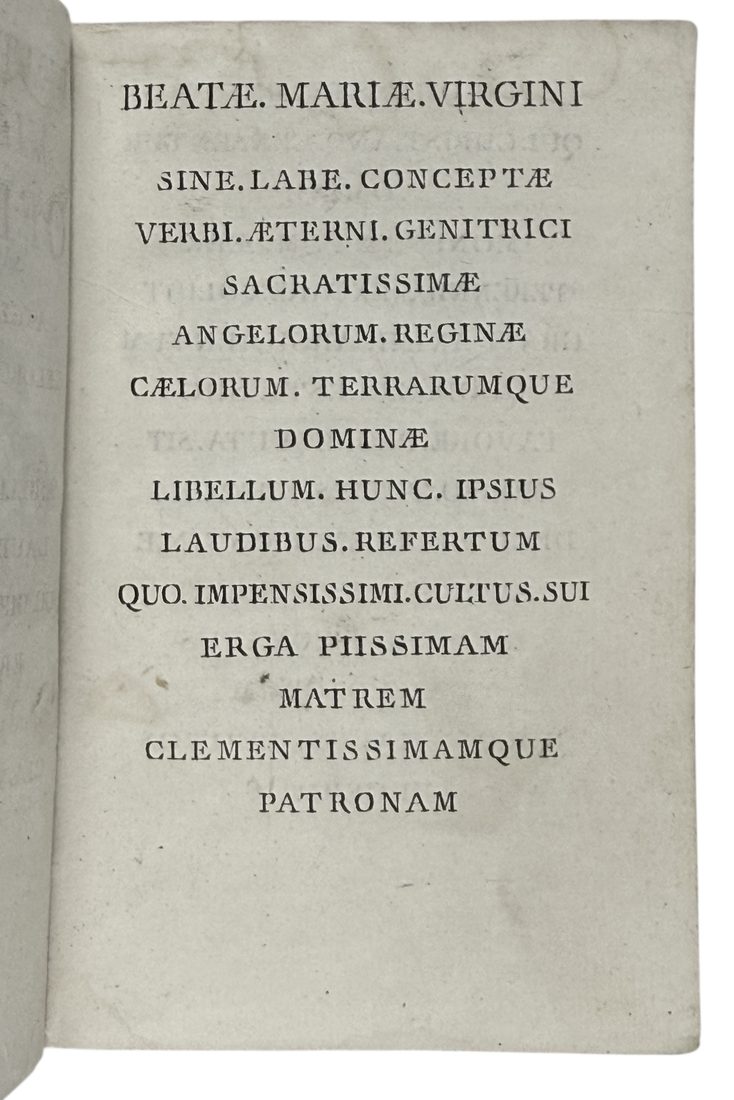
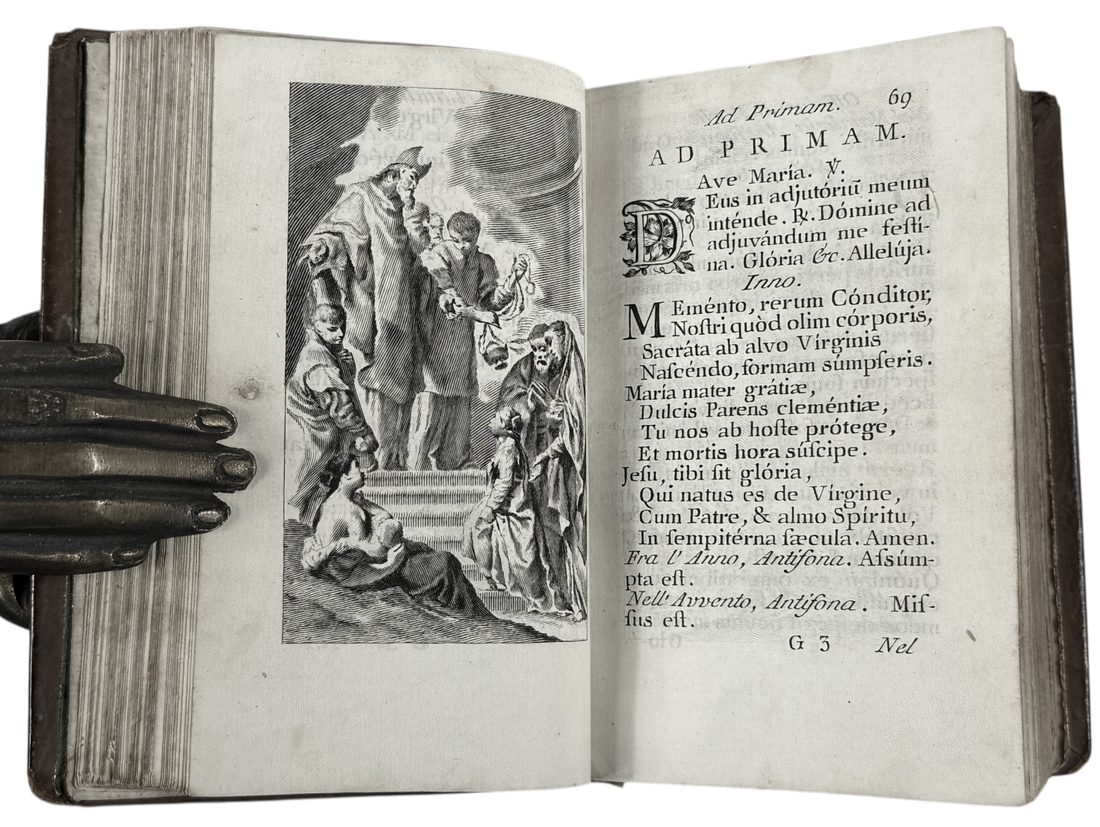
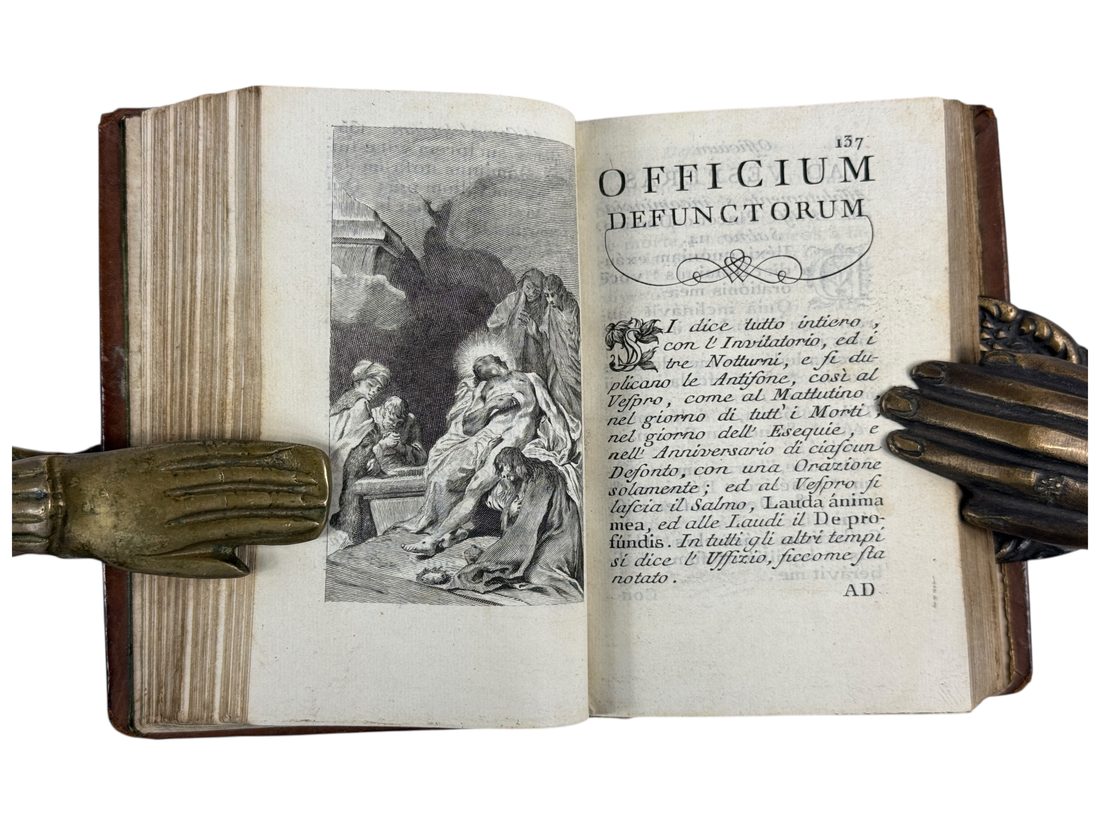
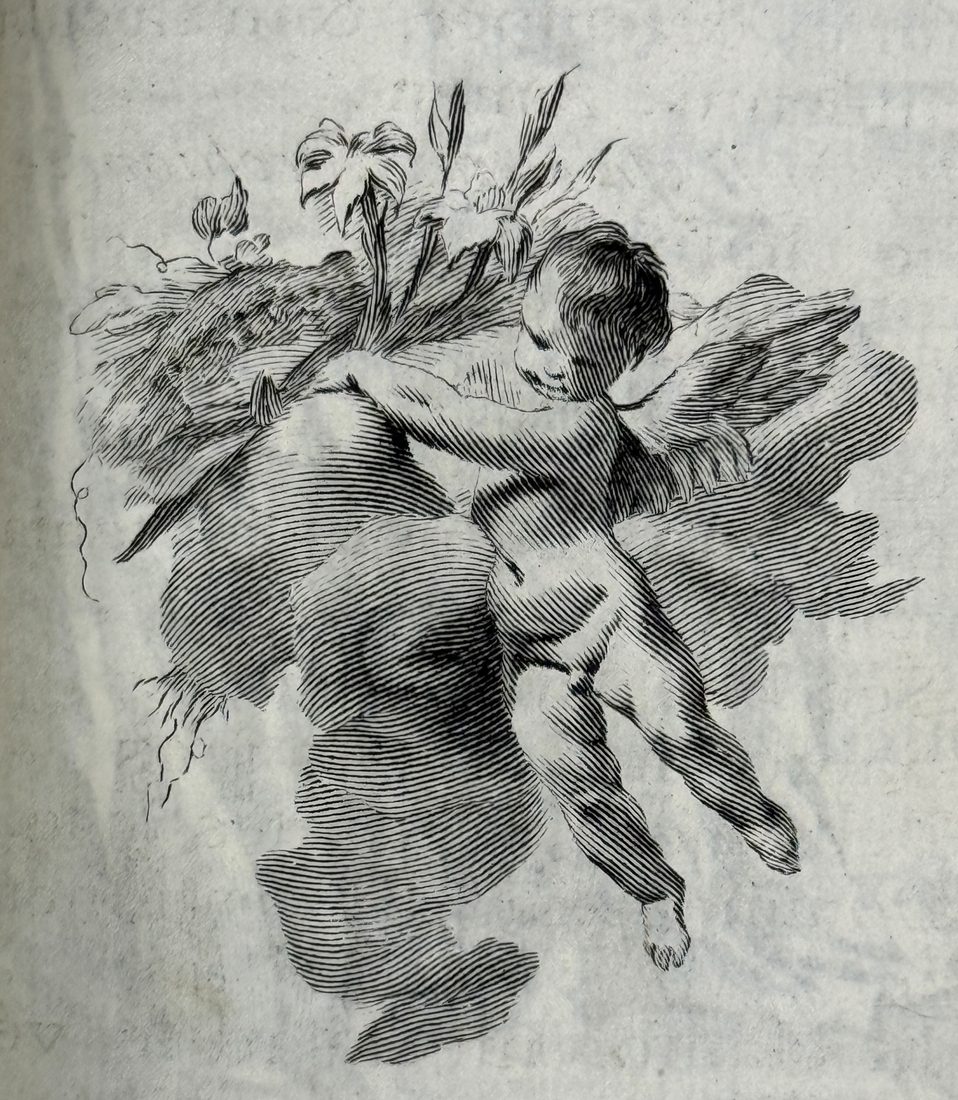
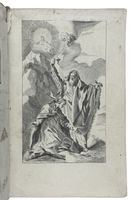
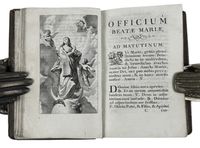
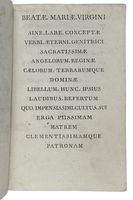
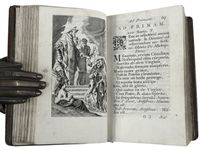
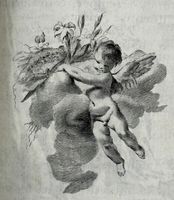
Fifteen full-page engraved plates within the text, and twenty engraved tailpieces (“finalini”). The entire typographic text is engraved (“intaglio”) by Sister Angela Baroni, with additional small decorative elements.
This Officium Beatae Mariae Virginis is a Roman-use devotional book centred on the Little Office of the Blessed Virgin Mary, conceived for private prayer and daily practice. The 1740 Pasquali edition is distinguished not by textual novelty but by its conception as a unified graphic object, where engraved text, vignette design, and narrative imagery are orchestrated as a single visual programme. Its reputation, in the specialised literature and institutional cataloguing, rests on the collaboration between Giovanni Battista Piazzetta, at the height of Venetian Rococo draughtsmanship, and Marco Alvise Pitteri, among the most refined Venetian engravers of the period, with the exceptional contribution of Angela Baroni, the woman engraver responsible for the engraved letterforms and text.
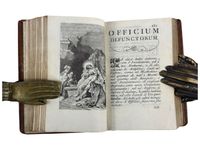
The volume follows the traditional architecture of a Marian office-book for lay devotion, with an introductory Christian instruction, the Officium Beatae Mariae as the central body, the Office of the Dead, Gradual Psalms, the Seven Penitential Psalms with litanies and preces, hymns for the liturgical year, and further offices (notably of the Blessed Sacrament, the Cross, and the Holy Spirit), followed by additional devotional exercises. In this edition, the textual body is not printed typographically but engraved, a choice that materially binds script to image: the page becomes at once prayer-text and print, and the eye encounters devotion through an aesthetic of line, tone, and controlled spacing rather than movable type.
Venice in the first half of the eighteenth century sustained an international market for finely produced books, in which printers, publishers, and artists collaborated to offer objects that were simultaneously learned, devotional, and collectible. Giambattista Pasquali belongs to the group of leading Venetian presses that, in collaboration with prominent artists, produced opulently illustrated volumes for a European clientele, often positioned between scholarly sobriety and luxury execution. In this ecosystem, the Officium of 1740 stands as a particularly concentrated example of “book design” as an integrated art, where illustration is not appended ornamentally but becomes structural, and where the engraved text itself participates in the same aesthetic register as the plates.
Within Venetian Rococo art, Piazzetta’s graphic language, celebrated for its chiaroscuro and emotive modelling, translated unusually well into the burin. Pitteri, closely associated with Piazzetta, was recognised for a technically distinctive method of engraving based on parallel line systems and calibrated deepening, and was an ideal interpreter for drawings conceived in tonal masses. The devotional image thus gains a painterly density within the constraints of line-engraving, and the prayer-book becomes, in effect, a portable gallery of Venetian draftsmanship and its virtuoso translation into print.
Finally, the presence of Angela Baroni as engraver of the text is not merely a technical footnote. Baroni is among the few documented female practitioners active in engraving and letter-cutting, sometimes working in association with other women artists and within the broader Venetian print milieu.
Giovanni Battista Piazzetta: (1683 - 1754) ) Among the greatest exponents of the pathetic-chiaroscuro current, centred on the strong contrasts of light and shadow and on the intense drama of the figures, it profoundly influenced the Venetian culture of the eighteenth century and was among the inspirers of the Tiepolo. He played an important role as book designer and illustrator, that led him to be recognized as the greatest 18th-century sketcher.
Despite the academic activity and public recognition, he died in poverty and loneliness.
Marco Alvise Pitteri (1702 – 1786) he was an Italian engraver best known for the long association that bound him to Piazzetta: working with him, Pitteri perfected his engraving technique, in an attempt to make engraving a true work of art, and not merely the pure reproduction of a painting. His fame reached its peak in 1753, when Carlo Goldoni dedicated the work Il frappatore to him.
Together with Piazzetta, Pitteri created several series of engravings, such as those for the volume Beatae Maria Virginis Officium (1740) and those, very fortunate, known as The Twelve Apostles (1744).
Sister Angela Baroni: belonging to a family of Venetian engravers was a nun, refined engraver of typographic letters, that worked with Isabella Piccini, the first italian female engraver.
Conditions: Small defects at spine-heades and hinges; internally a fine copy
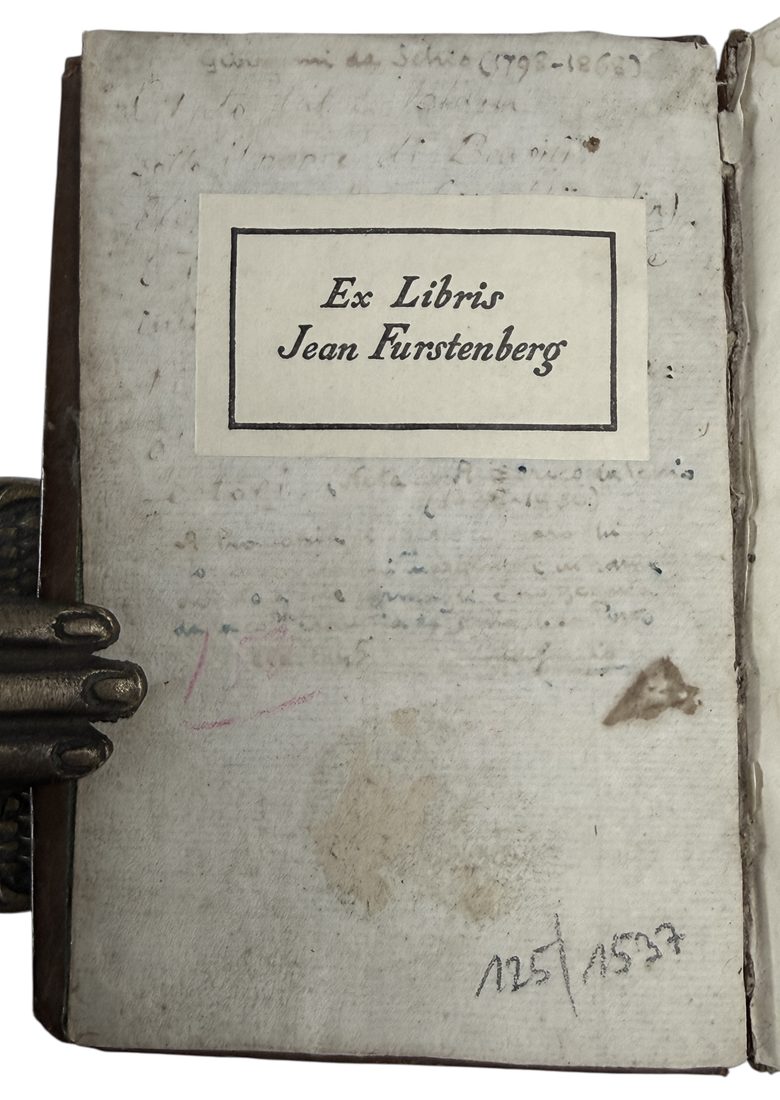
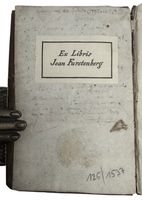
Provenance: Paper label Ex Libris Jean Furstenberg on a preliminary leaf. Jean Fürstenberg (1890–1982) was a German-born banker, writer, and distinguished bibliophile. Born in Berlin as Hans Fürstenberg, he belonged to a prominent Jewish banking family and developed an early and sustained interest in rare books, fine bindings, and illustrated editions. In 1938, following the rise of National Socialism, he left Germany for France, legally transferring his library abroad, and thereafter adopted the name Jean. After the Second World War he settled primarily in Geneva, where he continued to expand and refine his collections, with particular attention to incunabula, French illustrated books, and the history of bookbinding. In 1964 he founded the Fondation Furstenberg–Beaumesnil, donating a substantial part of his library and fostering scholarly access to his collections.
References: Mostra degli incisori veneti del Settecento. Catalogo a cura di Rodolfo Pallucchini, Venezia 1941, p. 101 n. 481-488; G. Morazzoni, Il libro illustrato veneziano del Settecento, Arnoldo Forni Editore, 2010, p. 115-116, «Il gioiello più gentile del bibliopola Pasquali [...] il libretto è prezioso sotto ogni aspetto, essendo il risultato dell'armonica collaborazione di G.B. Piazzetta e di M. Pitteri, due artisti che in quel momento sono i più perfetti rappresentanti della pittura e dell'incisione veneziana» (The kindest jewel in the production of Pasquali [...] the booklet is precious under every aspect, being the result of the harmonious collaboration of G.B. Piazzetta and M. Pitteri, two artists who, at that time, were the most perfect representatives of Venetian painting and engraving); M. De Grassi, Libri illustrati del Settecento veneziano, p. 85; S. Boorsch, Venetian Prints and Books in the Age of Tiepolo, Metropolitan Museum of Art, 1997, no. 98.