The Plates That Missed Their Century
In 1552, in Rome, a set of forty-seven copper plates was engraved. They mapped the human body with a care no one had matched: the kidneys, the great vessels, the small bones of the ear, the nerves branching like river systems. Then most of them were set aside. For roughly a century and a half the anatomy cut into that copper stayed out of sight, known to almost no one. When the plates finally appeared in print, in 1714, readers met images that looked at once a hundred years old and oddly modern.
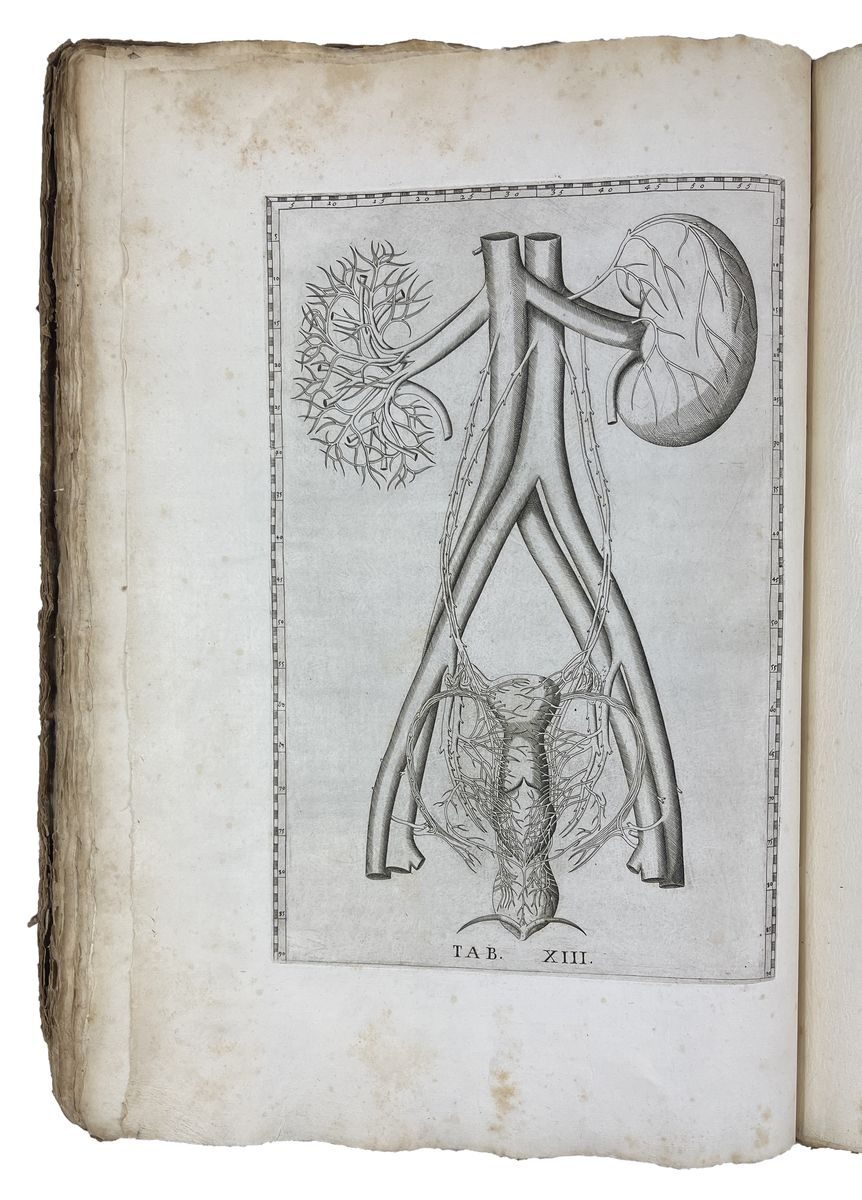
The man behind them was Bartolomeo Eustachi (Eustachius), physician to a duke and a cardinal, and from 1549 professor of anatomy at the Sapienza, the papal university in Rome. He was a Galenist, a follower of the ancient authority Galen, who nonetheless opened human bodies to check what he found. In his lifetime only eight of the plates were published, in the Opuscula anatomica (Venice, 1564), and those eight kept to the kidneys and the blood vessels. The rest he never printed. The knowledge existed. The book did not.
The plates were a collaboration. The drawings were made under Eustachi's eye by Pier Matteo Pini, a relative and draughtsman from Urbino; the copper was cut by the Roman engraver Giulio de' Musi. They were meant for a treatise, De dissensionibus ac controversiis anatomicis, whose text was lost and never saw type. So the images survived without the words that were to explain them: a set of answers to questions no reader could yet read.
When Eustachi died in 1574, the unpublished plates went quiet. The best documented account is almost domestic: they stayed with a descendant of Pini, passing through the family for generations. Early in the eighteenth century Pope Clement XI acquired them (reportedly for 600 scudi) and gave them to his personal physician, Giovanni Maria Lancisi, who by then held the very chair of anatomy at the Sapienza that Eustachi had once occupied. The plates had drifted from an artist's heirs to the Vatican, where Lancisi found them again.
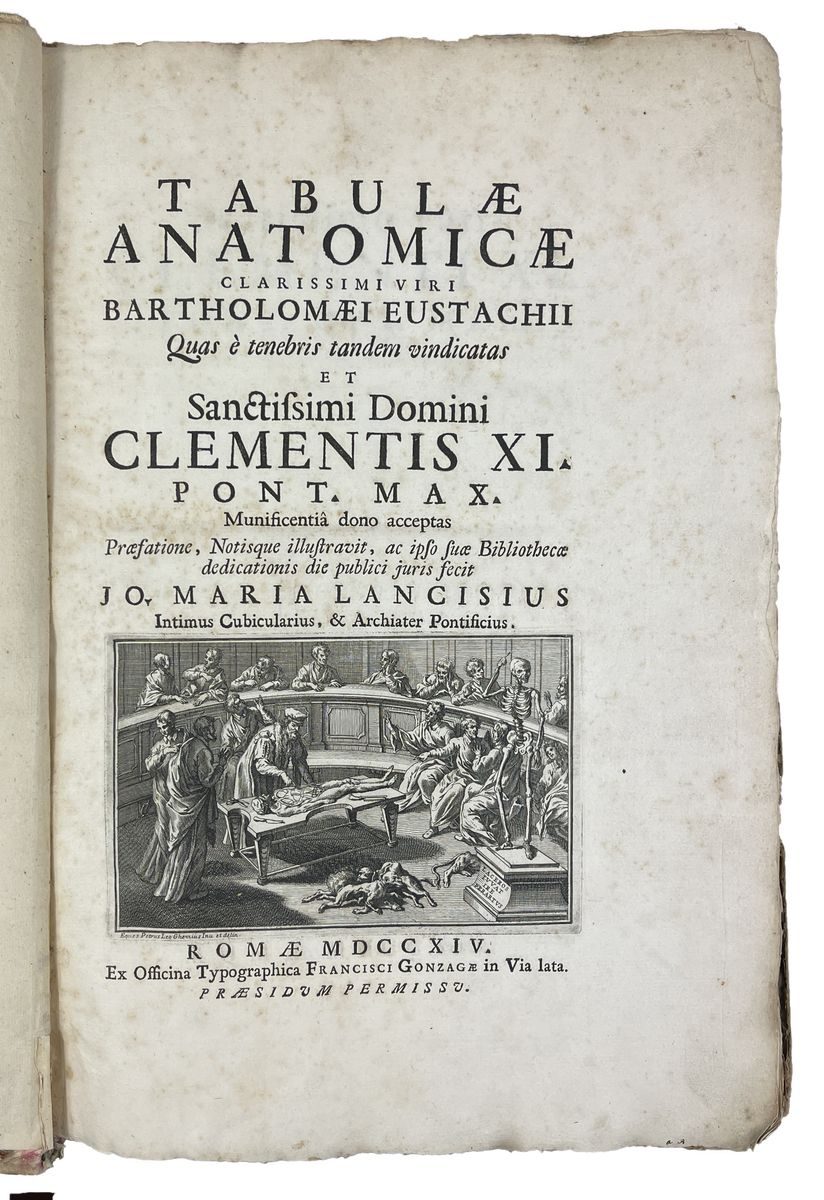
Lancisi published them for the first time in 1714 as the Tabulae anatomicae (Rome), supplying the notes the plates had always lacked. He unveiled them on 21 May 1714, at the opening of his own library, the Biblioteca Lancisiana at the Santo Spirito hospital, before the pope and the Roman court: engravings from the previous century, presented as new.
You can see the plates turned one by one.
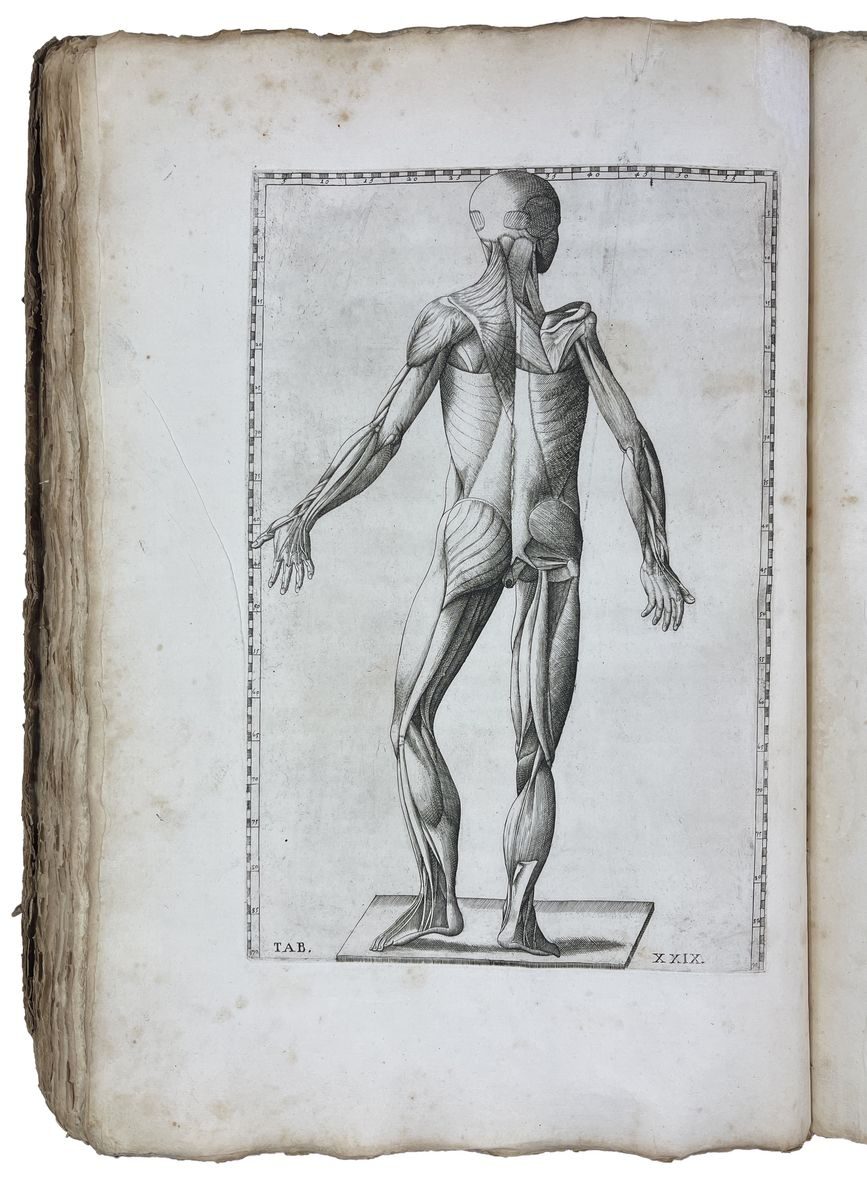
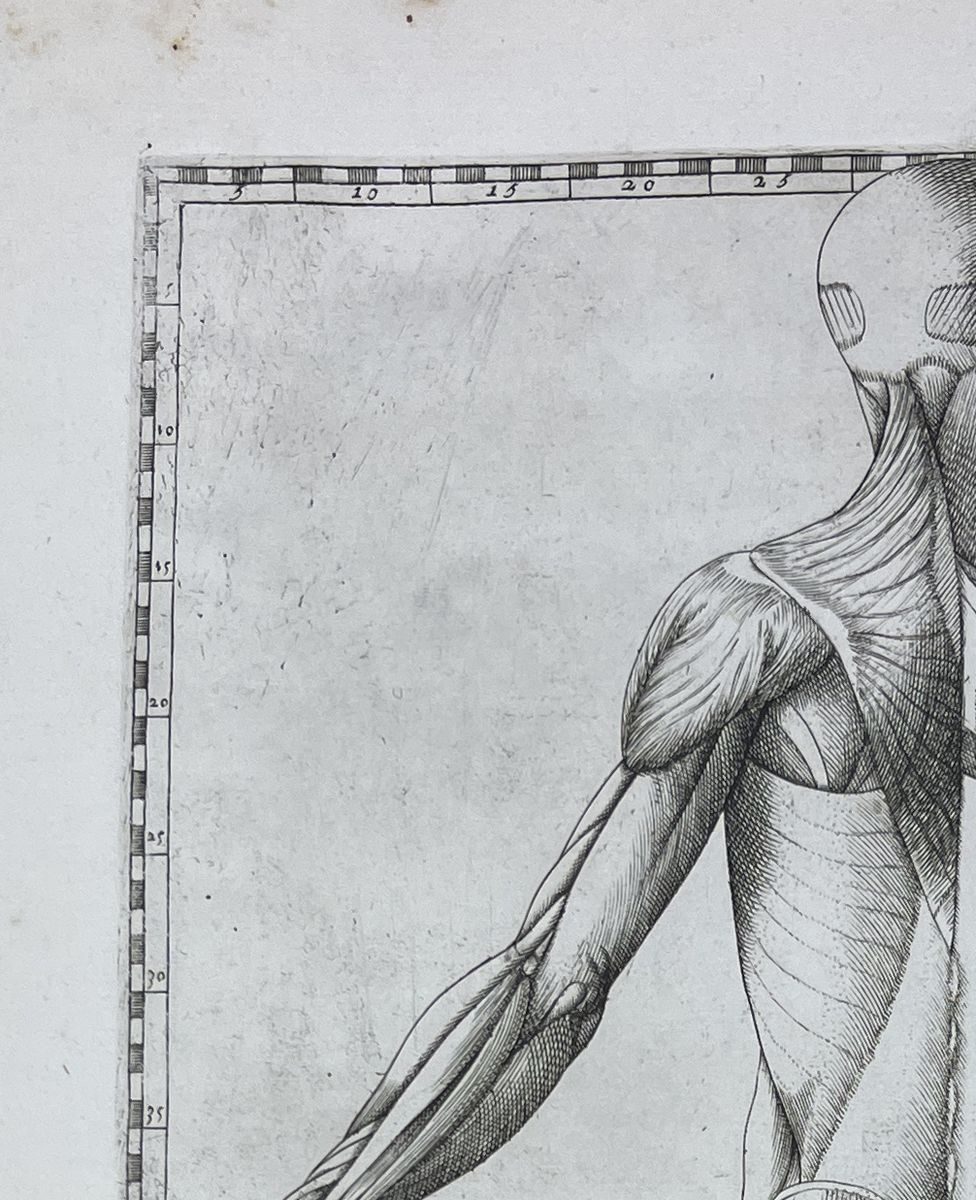
What the audience saw was unusual. Vesalius, whose De humani corporis fabrica had appeared in 1543, had posed his flayed figures like statues in rolling landscapes. Eustachi's figures stand in nothing at all: generic, composite bodies with no scenery, exact in proportion as well as in structure. Each plate is framed on three sides by a numbered ruled border, a grid of coordinates. Any structure could be located from the text by its numbers, the way a point is fixed by latitude and longitude on a map, without a single letter or mark disturbing the image itself. Later anatomists would recognise in this an ancestor of the stereotactic atlas, which locates parts of the body by coordinates rather than labels.
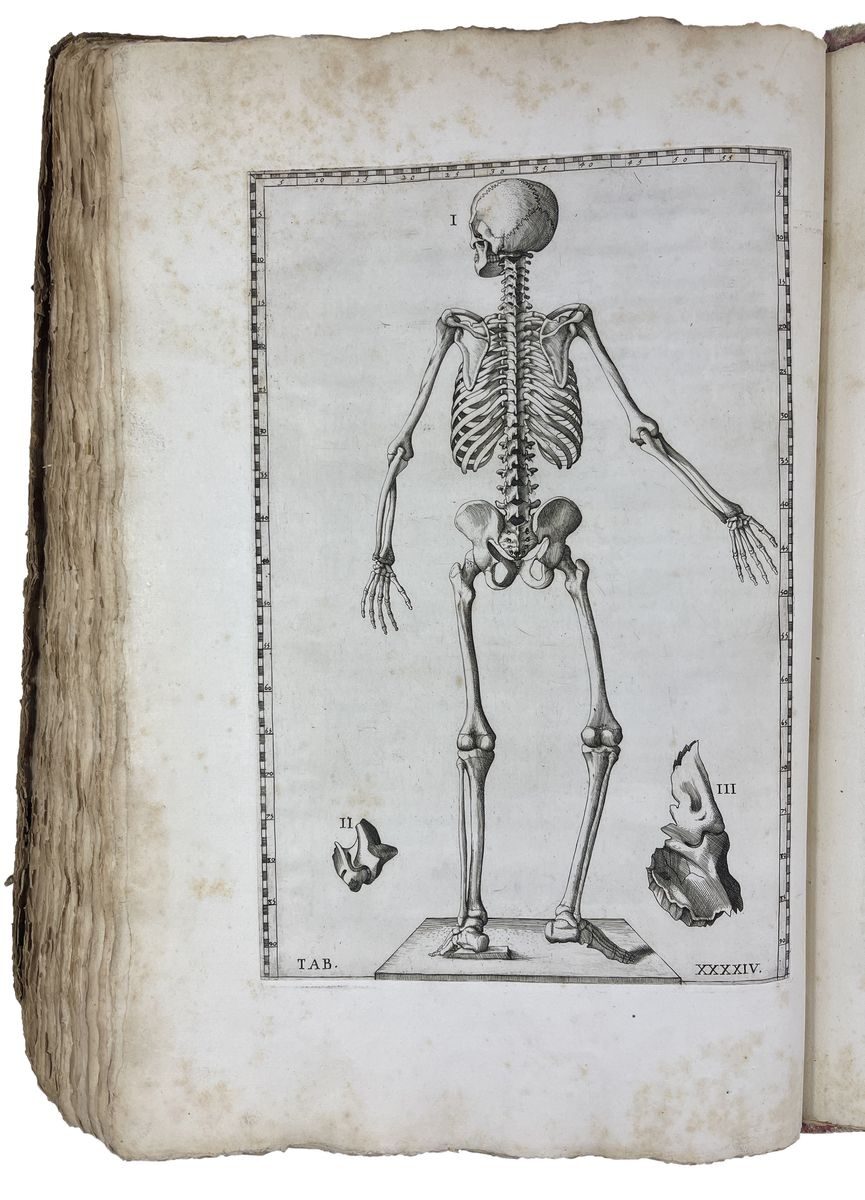
The plates also recorded real findings. Eustachi gave the first accurate account of the auditory tube that still carries his name, the Eustachian tube (known to antiquity, so described rather than discovered), identified the small stapedius muscle of the ear, and produced the first account of the adrenal glands (1563) and the first detailed study of the teeth. One standard reference, Norman's One Hundred Books Famous in Medicine, put the loss as a conditional: had the plates been published when they were made, Eustachi would have ranked with Vesalius as a founder of modern anatomy. A conditional, not a verdict. Because they were not, he became the great anatomist the textbooks almost forget.
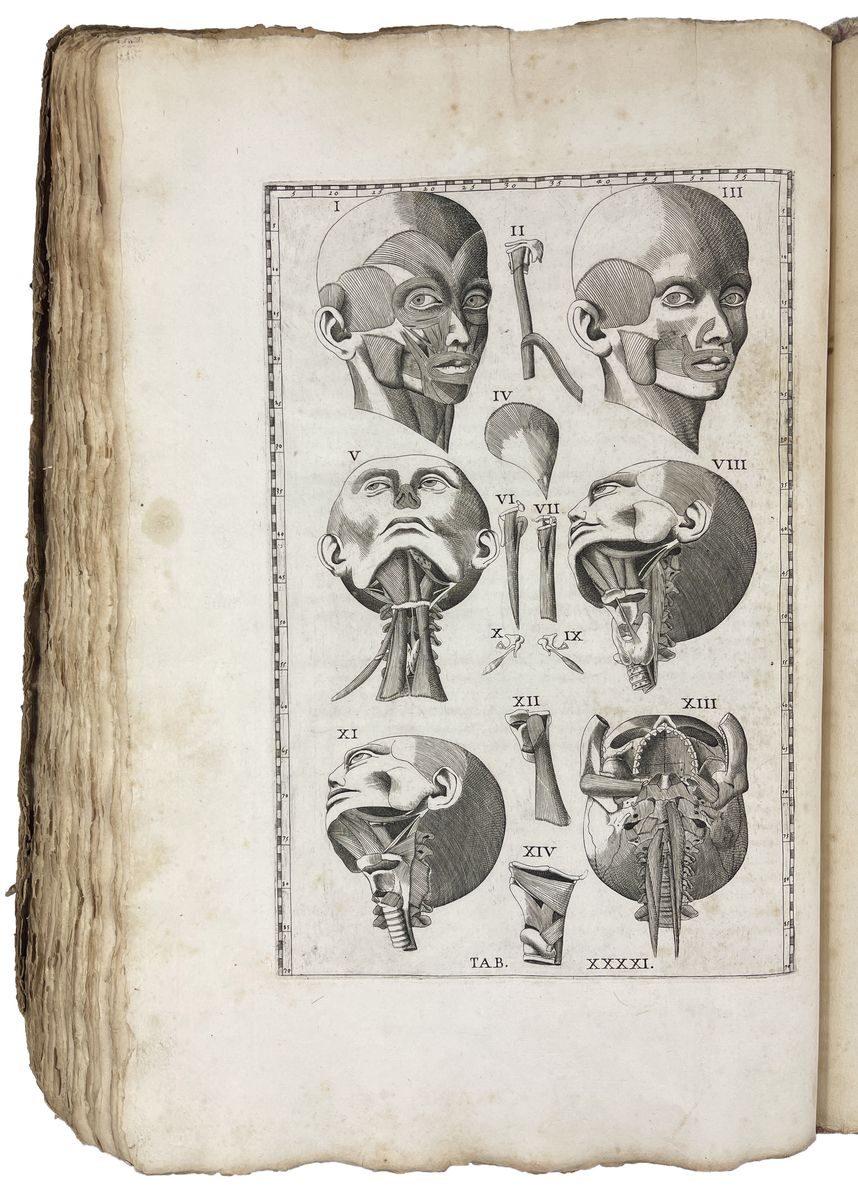
Engraved in 1552, printed in 1714: one hundred and sixty-two years between the copper and the page. Once printed, the plates proved durable, reprinted through the eighteenth century in Amsterdam (1722), Rome (1728) and Leiden (1744), the last with a commentary by the anatomist Albinus. What made the plates look belated to their own century, no landscapes, no ornament, only bodies held in a measuring grid, is precisely what makes them look modern to ours. The book missed its moment. It seems, in the end, to have chosen a better one.