The Bavarian Who Taught Milan to Play Cards
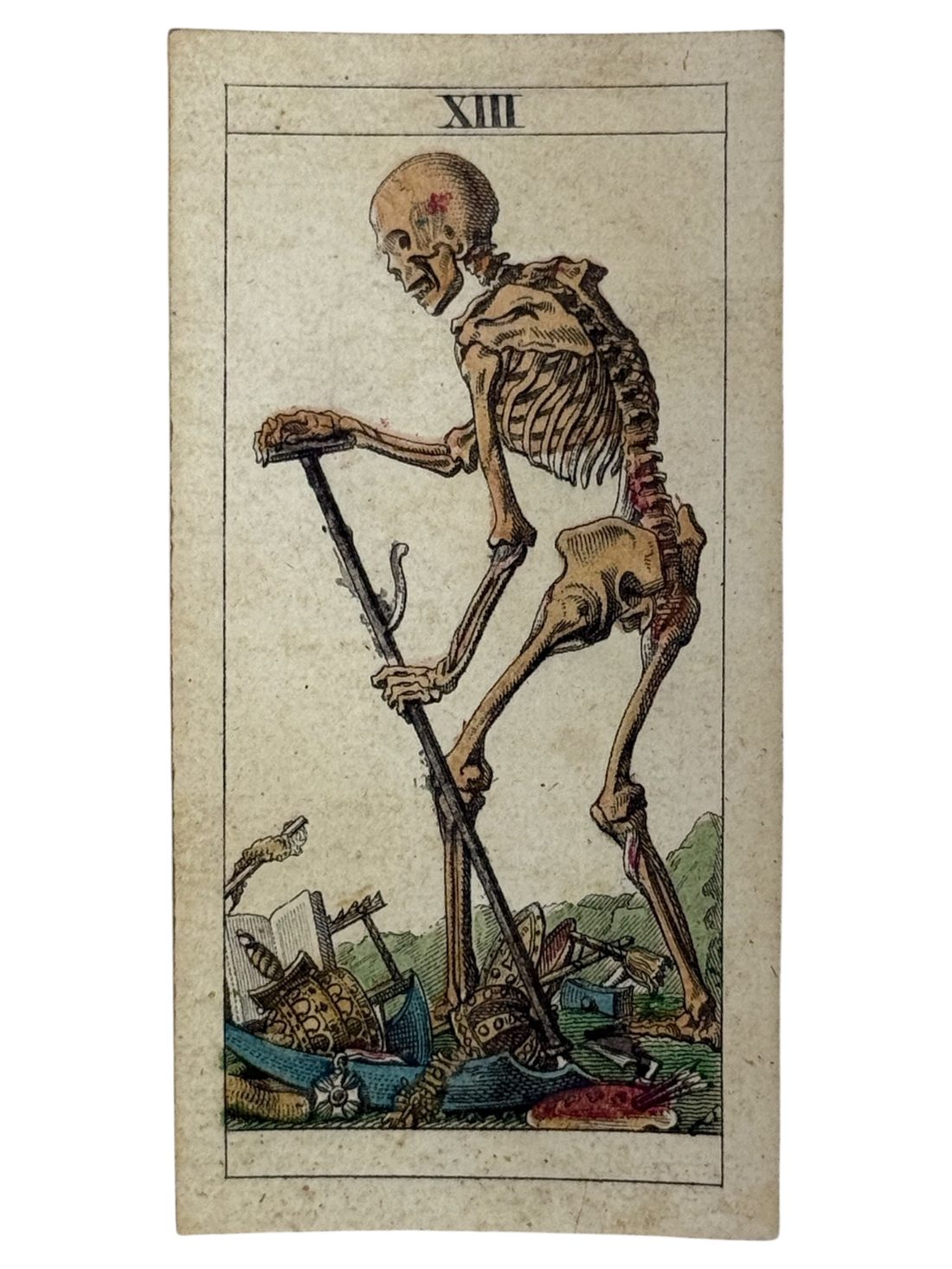
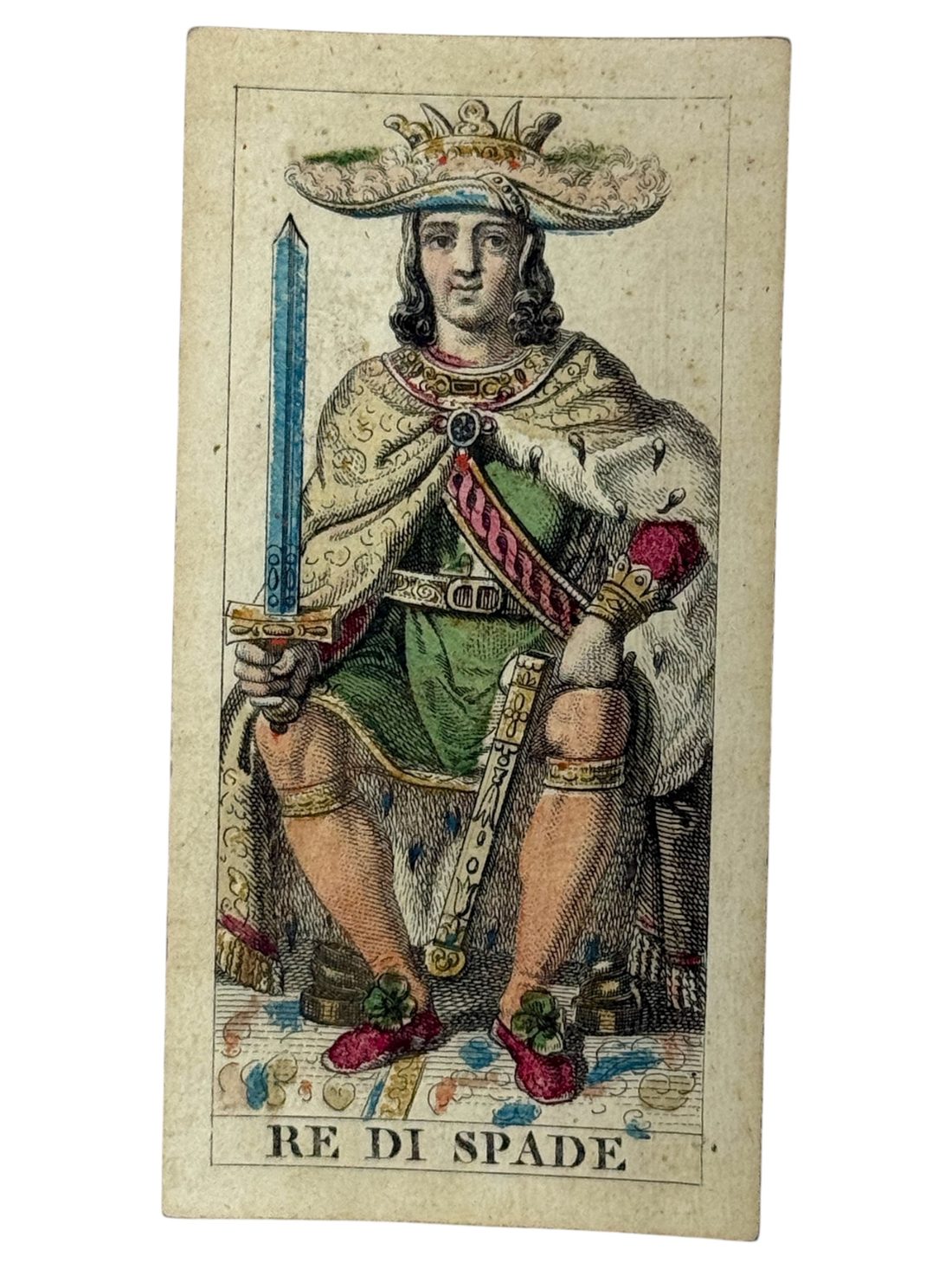
Picture Milan in 1814. Napoleon has fallen, the Austrians are back, and the returning administration is winding up the leftovers of the French regime, including a state-owned playing card factory that had never quite worked. The sensible thing would have been to let it die. Instead, the German engraver who had been running it stepped forward and bought it himself. That decision, taken by a Bavarian printer named Ferdinand Gumppenberg, is the founding act of the modern Milanese school of cardmaking, and the reason a deck of tarot cards designed in his workshop would dominate northern Italy for the rest of the century.
The factory itself was not his creation, and the distinction matters. The Regia Fabbrica di Carte da Gioco, the Royal Playing Card Factory, was established in 1805 by the Napoleonic Kingdom of Italy as a state enterprise, first housed in a paper mill at Vaprio d'Adda and moved to Milan in 1809. It was, in other words, a government monopoly, and by the accounts that survive it struggled as government monopolies often do. In that same year, 1809, Gumppenberg arrived from Munich to take charge of it. He was Bavarian by birth, trained as an engraver, and he brought with him the technical culture of Central European printmaking. When Austria liquidated the state venture in 1814, he acquired it privately, completing the transition over the following few years, and turned a bureaucratic relic into the leading card workshop in Italy. He would remain the dominant Milanese card maker for the next three decades. So he did not found the Fabbrica di Milano; he refounded it, and in doing so he founded something larger: a school, a standard, a way of making cards that the whole of Lombardy would learn to imitate.
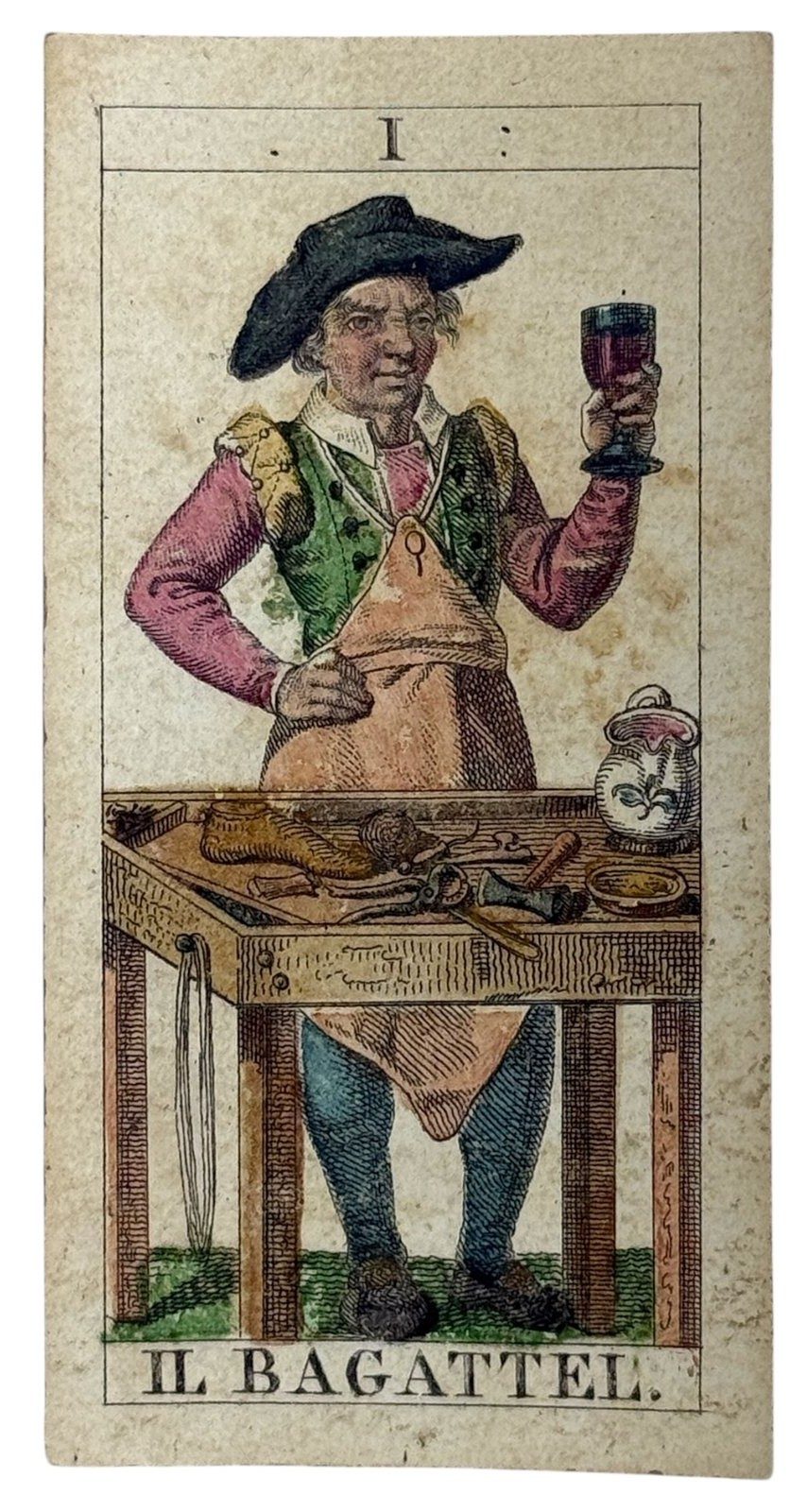
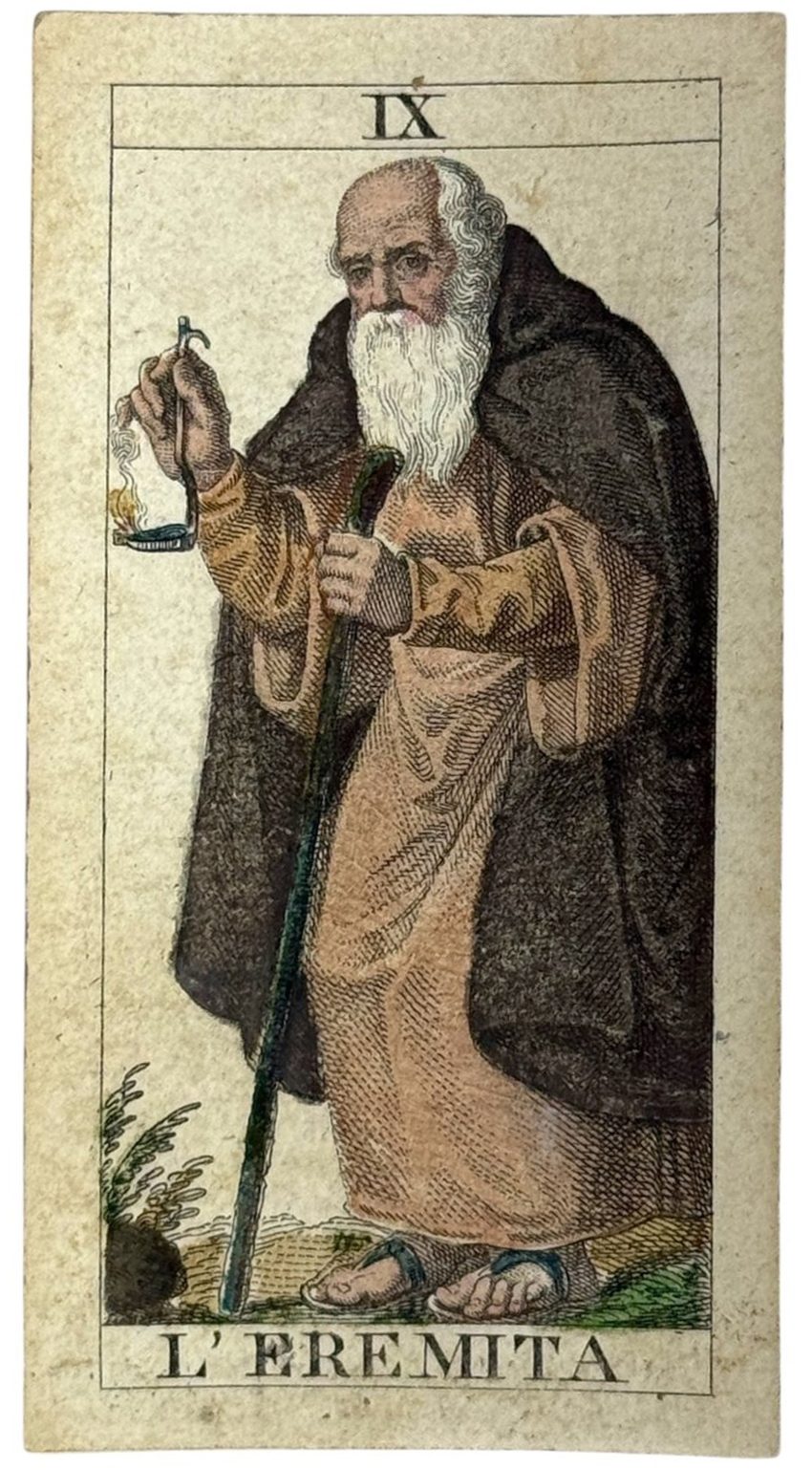
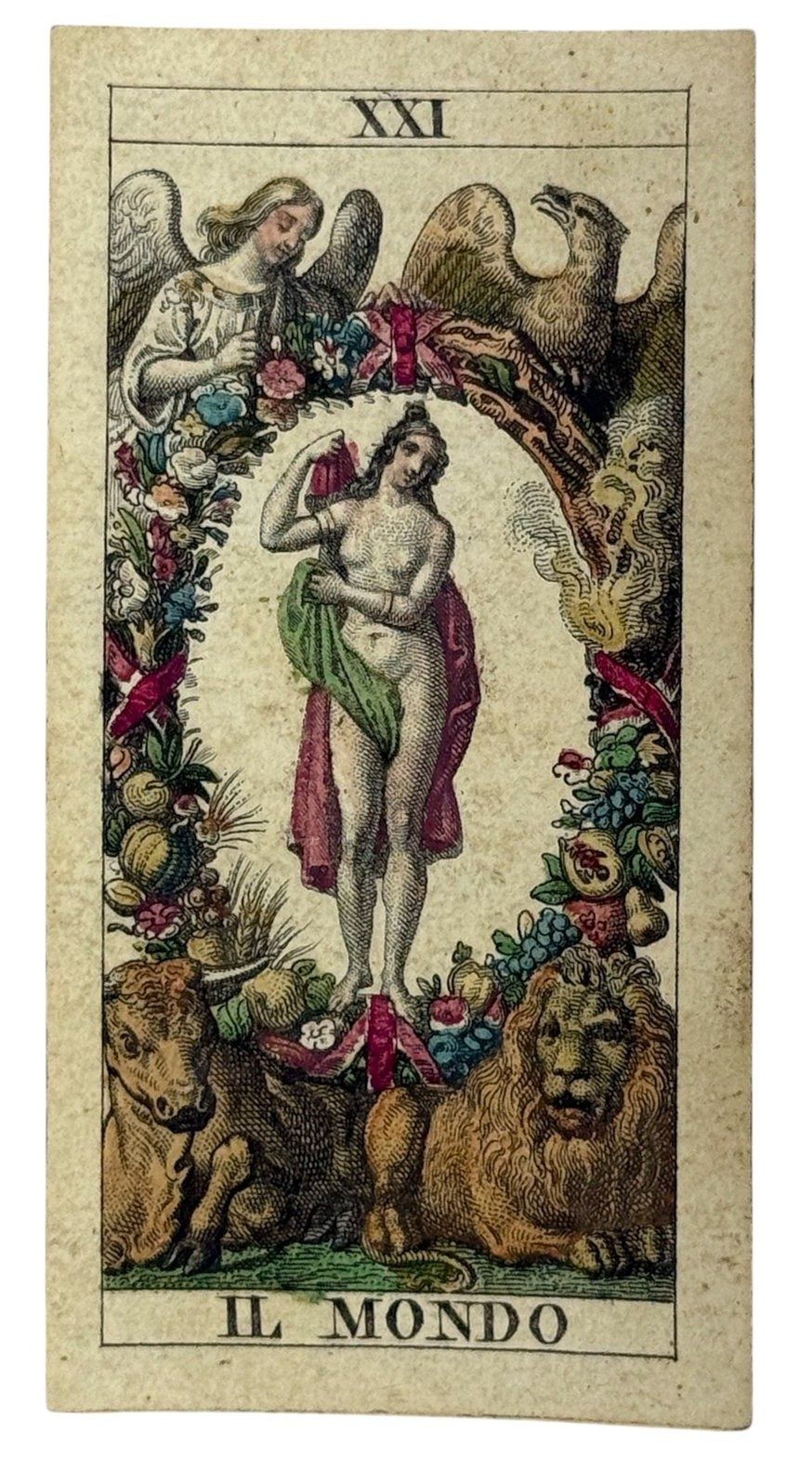
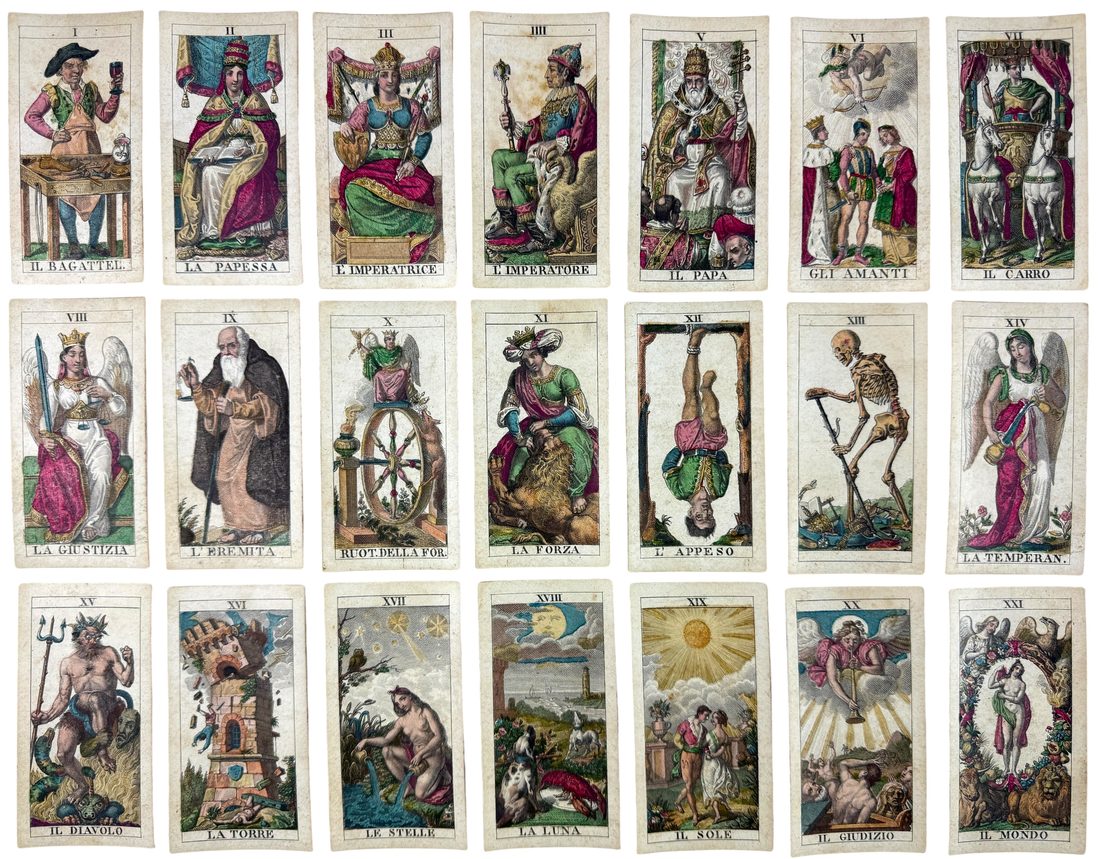
The masterpiece of that school appeared around 1830 to 1835, and even its name is a verdict. The deck now known as the Tarocco Soprafino was never formally titled that way; "soprafino," or "sopraffino," is simply Italian for "super-fine," a nickname the pack earned because contemporaries found it more refined than anything they had seen. Its neutral designation is Tarocco Lombardo or Tarocco Milanese: a complete tarot of 78 cards, the full complement of 56 suit cards and 22 trumps used for the game of tarocchi.
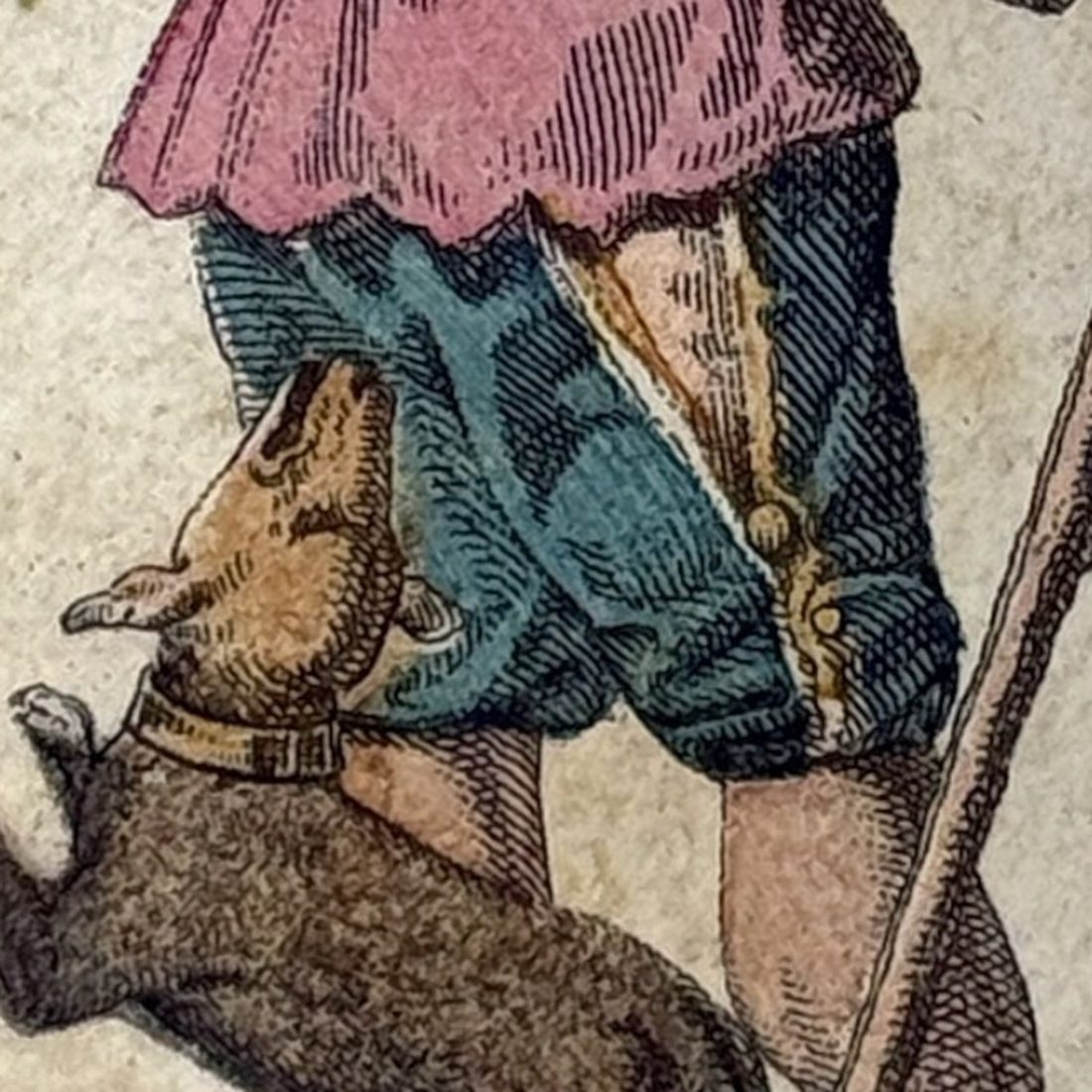
What made it "super-fine" was, quite literally, the line. For centuries, ordinary playing cards had been printed from woodblocks: the printer carves away the wood around the design, and the raised ridges that remain take the ink. It is fast and cheap, and it produces a correspondingly blunt, heavy line. The Soprafino was made the opposite way, by copper engraving, also called intaglio: the design is cut down into a polished copper plate with a steel tool, the incised grooves hold the ink, and the press forces damp paper into them. The result is a line that can swell, taper and flow like a pen stroke. Before Gumppenberg, that expense had been reserved for a handful of luxury decks, such as the fifteenth-century Sola-Busca tarot or the Tarocchino of Bologna engraved around 1660 by Mitelli. Gumppenberg made it the signature of an entire commercial school.
The hand that cut those plates belonged to Carlo Della Rocca, a Milanese engraver about whom the record is frustratingly thin: no known birth date, a death placed only vaguely "after 1824," and a small handful of attributed works. But one fact about him is firmly documented, and it explains everything. He trained under Giuseppe Longhi, the leading neoclassical engraver of Napoleonic Milan, whose academy formed a generation of professional printmakers. A tarot pack drawn by a Longhi pupil is the reason these cards look less like popular ephemera and more like fine reproductive prints. On the cards themselves he signed "C. Della Rocca inc.," the abbreviation for *incisit*, "he engraved this," the standard credit of an intaglio artist.
Here is the measure of what Gumppenberg and Della Rocca achieved: their competitors did not try to surpass the design. They copied it. Through the middle and late nineteenth century, Milanese makers such as Dotti, Milese, Lamperti and Negri carried Della Rocca's figures forward, and the Soprafino imagery remained the recognizable house style of Lombard tarot into the 1890s. It was reprinted by Bordoni in 1889, reproduced by Il Solleone in 1981, and modern facsimiles are still in circulation today. When historians of playing cards call these images the canon of the Milanese school, that is not an aesthetic compliment but a publishing fact: for over sixty years, a tarot card made in Milan looked the way one Bavarian's workshop had decided it should look.
There is a quiet irony worth carrying away. The Napoleonic state built the factory and failed; a foreign craftsman who bought it out of liquidation created something no state could decree, a visual language durable enough to outlive its makers, its dynasty of imitators, and the very kingdoms under which it was printed.